
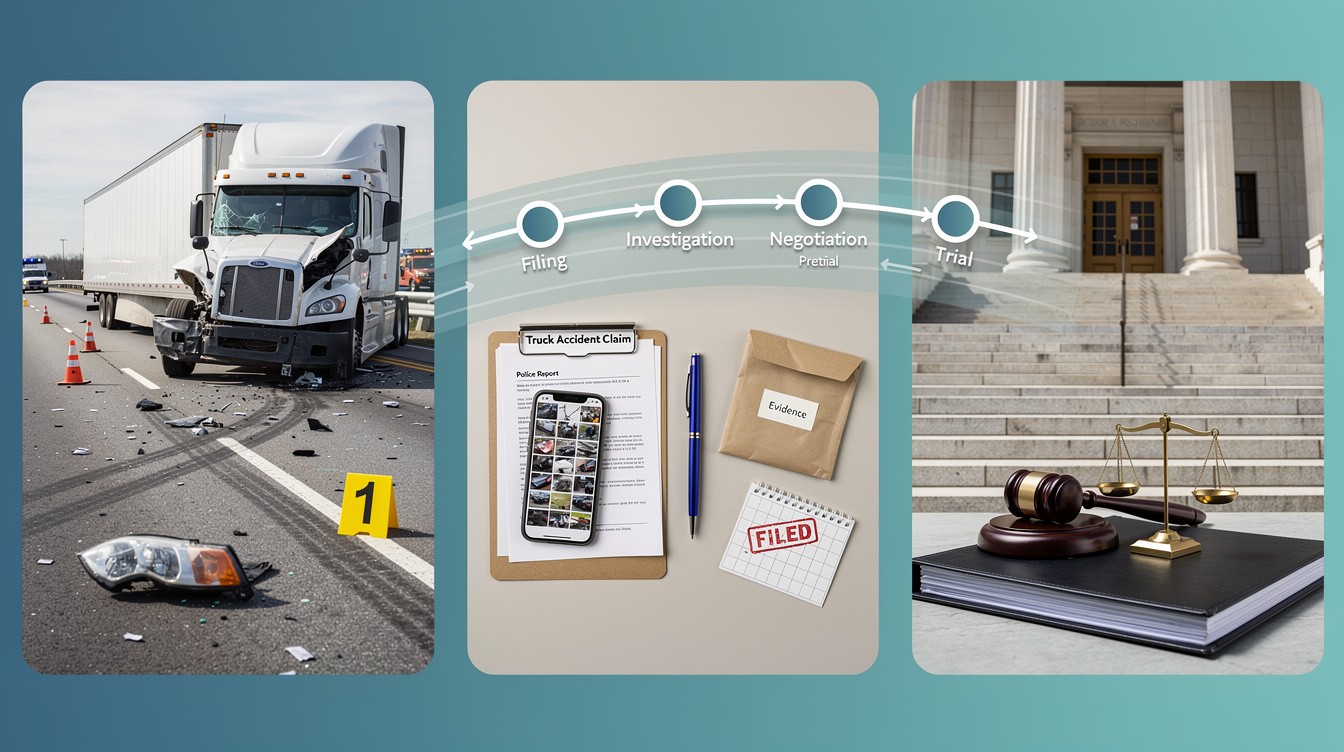
A truck accident can leave you facing mounting medical bills, lost income, and uncertainty about what comes next. The truck accident claim process involves multiple stages, from gathering evidence at the scene to potentially presenting your case in court. We at Schaar & Silva LLP help clients in Santa Cruz County, Sacramento, and Oakland navigate each step with clarity and confidence.
This guide walks you through the entire process so you understand what to expect and how to protect your rights.
What to Do Immediately After a Truck Accident
Act Quickly at the Scene
The first hours after a truck accident are critical. Your actions during this window directly affect your ability to recover damages later. Move to safety if possible-get yourself and passengers away from traffic and moving vehicles. Call 911 immediately, even if injuries seem minor. Police reports create an official record that insurers and courts rely on, and the CHP Traffic Collision Report documents initial fault assessments that can support your claim.
While waiting for police, photograph and video the accident scene from multiple angles. Capture vehicle positions, damage, road conditions, and any visible injuries. Collect dashcam footage if available-many commercial trucks have cameras, and this footage overwrites within 30 days. Obtain contact information from witnesses and the truck driver, including their name, phone number, address, and insurance details.
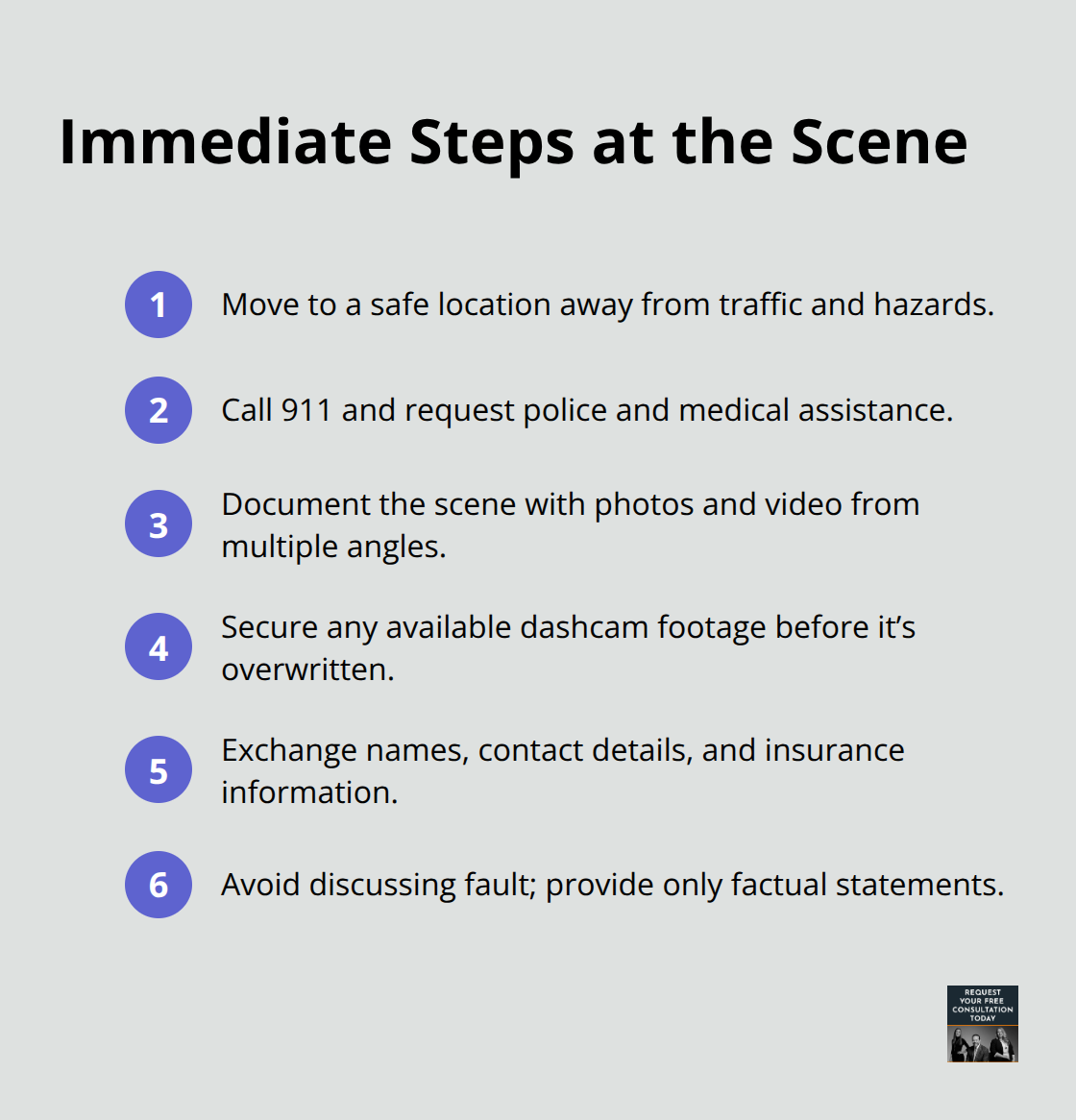
Do not discuss fault or accept blame at the scene; stick to factual statements with police and the other driver.
Prioritize Medical Care and Documentation
Seek medical attention promptly, even if you feel fine. Truck accidents often cause delayed injuries like whiplash or internal bleeding that don’t show symptoms immediately. Medical records create a documented timeline linking your injuries directly to the crash, which is essential for calculating damages. After medical evaluation, notify your insurance company within the timeframe required by your policy-typically within days. Be factual and brief; do not speculate about liability.
Protect Your Legal Rights Early
Contact an attorney before speaking further with insurance adjusters. Adjusters often pressure injured people into early settlements because they know the two-year California statute of limitations deadline creates urgency. An attorney protects you from undervalued offers and handles negotiations while you focus on recovery.
Send a preservation letter to the trucking company immediately, demanding they retain all evidence including electronic logging device data, black box recordings, driver qualification files, and maintenance records. ELD data overwrites every 7 to 14 days, so this letter prevents permanent loss of critical evidence. Your attorney will coordinate this preservation effort and begin the investigation that identifies all liable parties-the driver, the trucking company, cargo loaders, maintenance contractors, and brokers. This foundation sets the stage for building a strong claim.
Building Your Truck Accident Claim
Collect Essential Documents
Truck accident claims rest on solid documentation. Request the CHP Traffic Collision Report from the California Highway Patrol within days of the accident-this report documents the officer’s initial assessment of fault and vehicle positions. Medical records must be comprehensive and timely; treatment gaps weaken your claim because insurers interpret silence as recovery. Obtain all emergency room records, imaging reports, specialist evaluations, and ongoing treatment notes.
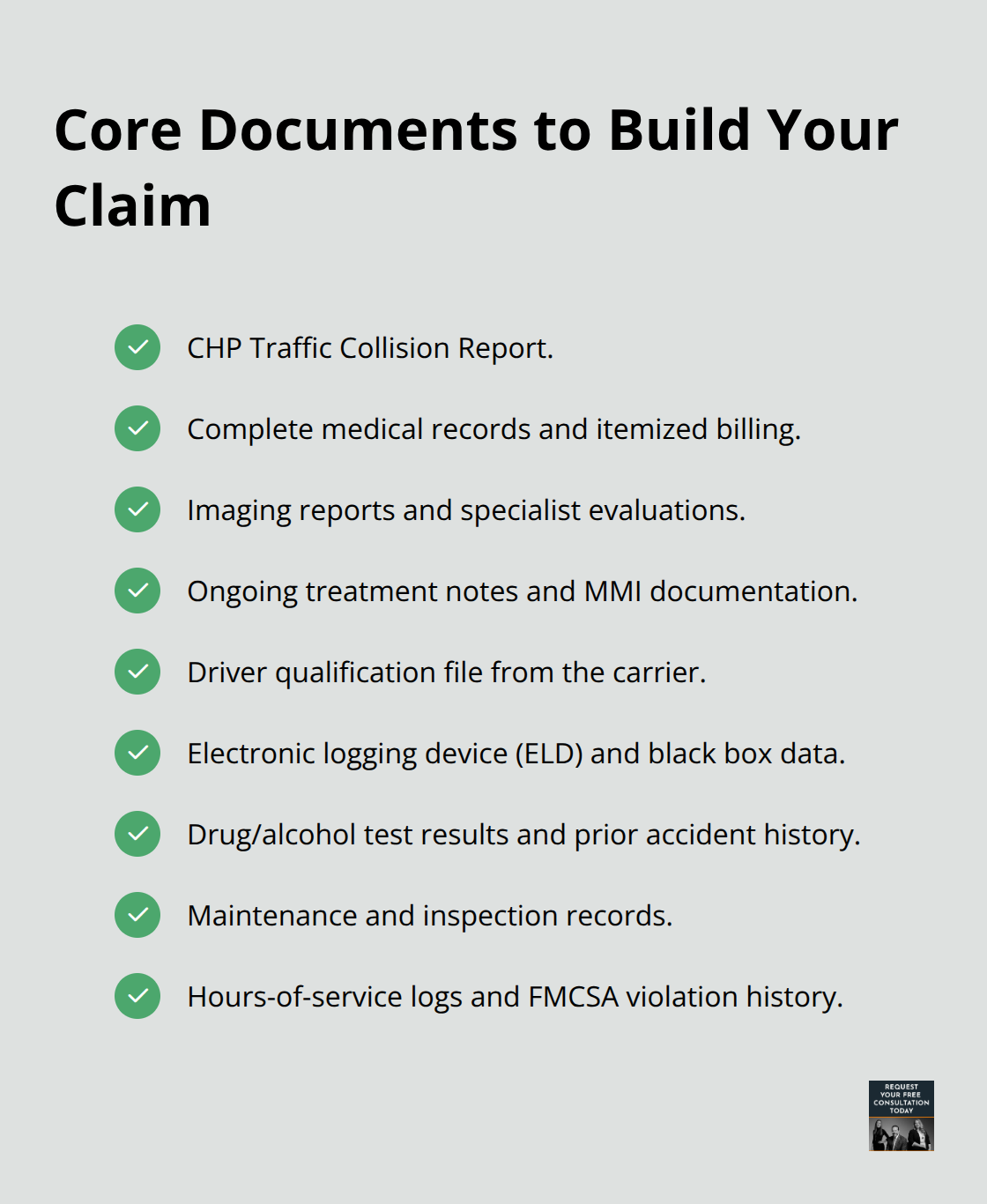
If you’ve reached maximum medical improvement, your medical provider can document this status, which signals when damages should be calculated.
Your attorney will subpoena the truck driver’s qualification file from the trucking company. This file contains the driver’s commercial license, medical certification, drug and alcohol test results, prior accidents, and employment history. The Federal Motor Carrier Safety Administration maintains hours-of-service records and violation history at safer.fmcsa.dot.gov, which often reveals patterns of unsafe operation that support negligence claims.
Calculate Your Damages Accurately
Calculating damages requires precision because undervaluing your claim costs you money. Medical bills form the foundation-gather invoices from hospitals, doctors, physical therapists, and mental health providers. Lost wages include not just time off work but reduced earning capacity if injuries prevent you from returning to your previous job. Non-economic damages cover pain, suffering, and emotional distress; California courts recognize these as legitimate recovery categories.
A truck accident claim typically includes past medical expenses, future medical care (especially critical for spinal or brain injuries requiring long-term treatment), lost income, reduced earning capacity, and non-economic damages.
Identify All Liable Parties
Multiple defendants often share responsibility in truck accidents. The driver may be liable for negligent operation, the trucking company for negligent hiring or maintenance, cargo loaders for improper load securement, and maintenance contractors for equipment failure. Your attorney will identify each party’s role and calculate the full scope of damages before settlement discussions begin. This comprehensive approach prevents accepting partial settlements that leave you responsible for future costs.
As you move forward with documentation and damage calculations, the next stage involves presenting your evidence to insurance companies and deciding whether settlement or trial best serves your recovery.
Settlement or Trial: Making the Right Decision
Insurance adjusters move fast because they understand California’s two-year statute of limitations creates pressure on injured people. They often present initial settlement offers within weeks, banking on the fact that medical bills pile up and desperation sets in. This is precisely why you should not settle before reaching maximum medical improvement.
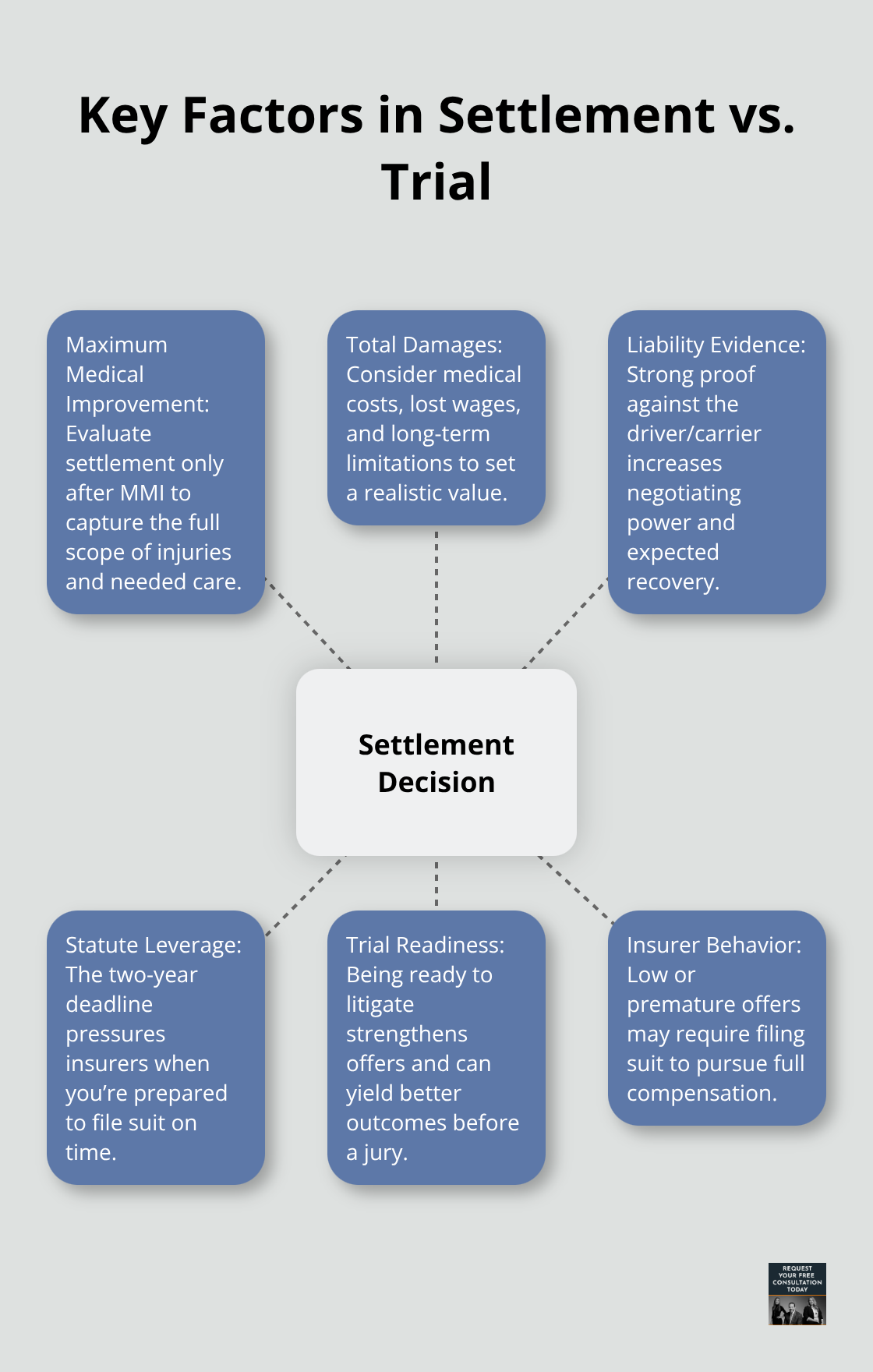
Settling early locks you into a fixed amount and prevents recovery if your condition worsens or requires future surgeries. Your medical provider documents when you’ve reached MMI, signaling the appropriate time to evaluate settlement value. At that point, you have concrete data on total medical costs, lost wages, and permanent limitations. Insurance companies know this timeline too, which is why they push settlements before your full picture emerges. Starting settlement negotiations before the statute of limitations deadline maintains your leverage because the insurer knows you have the option to file suit and go to trial if their offer falls short.
Build Your Evidence Foundation
Settlement discussions hinge on evidence strength and damages clarity. Insurance adjusters will scrutinize your medical records for treatment gaps, which they interpret as recovery periods that weaken your claim. Consistent treatment toward maximum medical improvement strengthens your position significantly. Gather all documentation showing ongoing care, specialist evaluations, and expert causation opinions linking your injuries directly to the crash. The total claim value depends on medical costs, lost wages, and non-economic damages like pain and suffering. California follows pure comparative negligence, meaning you can recover even if partly at fault, with your recovery reduced by your fault percentage. However, strong evidence of the truck driver’s and carrier’s responsibility increases settlement value substantially. A preservation letter sent immediately after the crash protects critical evidence like electronic logging device data, black box recordings, and driver qualification files. This evidence directly supports liability and damages calculations that insurers must account for in settlement offers.
Recognize When Trial Offers Better Recovery
Trial becomes necessary when the insurance company’s offer falls far short of your documented damages. If the insurer refuses maximum compensation despite clear liability and substantial medical evidence, filing suit and pursuing trial maximizes your recovery. The discovery process reveals additional at-fault parties or cargo-related hazards affecting liability and damages calculations. Accident reconstruction professionals, medical experts, and witness testimony build a compelling case before a jury. The process from filing to trial typically takes 12 to 24 months for straightforward cases, longer for catastrophic injuries or multiple defendants. Your attorney identifies all potentially liable parties including the driver, trucking company, cargo loaders, and maintenance contractors. This comprehensive approach prevents accepting partial settlements that leave you exposed to future costs.
Leverage Punitive Damages When Applicable
Punitive damages under California law require clear and convincing evidence of malice, oppression, or fraud and are most likely when a carrier knowingly allowed dangerous conditions or fatigued drivers. Strong evidence from carrier safety records, maintenance failures, and hours-of-service violations supports these higher damage claims that settlement alone may not capture. Carrier safety records in the FMCSA Safety Measurement System and public data at safer.fmcsa.dot.gov reveal patterns of unsafe operation that strengthen your position. When a trucking company ignored known hazards or failed to maintain equipment properly, punitive damages become available to hold them accountable beyond compensatory recovery. This leverage shifts settlement negotiations significantly in your favor because insurers understand juries award punitive damages in cases involving gross negligence or willful misconduct.
Final Thoughts
The truck accident claim process moves through distinct phases, each building toward fair recovery. You protect evidence and seek medical care within hours of the crash, then gather documentation and calculate damages with precision while identifying all liable parties before settlement talks begin. Finally, you decide whether to accept a settlement offer or pursue trial based on evidence strength and the insurer’s willingness to pay what your case is worth.
We at Schaar & Silva LLP guide clients through every stage of this journey, handling preservation letters, investigating liability, and coordinating with medical providers to document injuries thoroughly. We calculate damages accurately so you understand the full value of your claim before any settlement discussion, and we manage discovery and negotiate with insurance companies while preparing for trial if the insurer’s offer falls short. We refuse to pressure you into early settlements before reaching maximum medical improvement, because locking in a fixed amount prevents recovery if your condition worsens.
If you’ve been injured in a truck accident in Santa Cruz County, Sacramento, or Oakland, contact us for a free case evaluation. We work on contingency, meaning you pay no fee unless we win your case, and the two-year statute of limitations creates urgency-acting now with proper legal guidance protects your rights and maximizes your recovery.
