
Truck accidents in California cause devastating injuries and financial losses that demand immediate action. At Schaar & Silva LLP, we’ve helped countless clients navigate California truck accident litigation and recover the compensation they deserve.
This roadmap walks you through the laws, evidence gathering, and strategies that win cases. You’ll learn what insurers won’t tell you and how to build an unbeatable claim.
What Rules Actually Govern Truck Accidents in California
Federal and State Regulations Create Liability
Federal and California state regulations create a complex framework that determines who is liable when a truck crashes. The Federal Motor Carrier Safety Administration sets hours-of-service limits that restrict interstate drivers to 11 hours of driving within a 14-hour window after a 10-hour break. California intrastate rules can differ from these federal standards, and violations of either set of rules establish negligence in court. Weight limits exist for a reason: an 80,000-pound truck requires significantly longer stopping distances than a standard vehicle, especially on downhill stretches common on Northern California highways like I-5 through Redding.
How Overloading and Maintenance Failures Create Liability
Overloaded trucks that exceed legal weight limits create immediate liability because the carrier or loader knew the truck would be harder to control and stop. Maintenance requirements mandate regular inspections of brakes, tires, and steering systems, yet trucking companies routinely skip these to cut costs. When a brake failure or tire blowout causes a crash, the maintenance records tell the story of negligence. Drug and alcohol testing is mandatory for commercial drivers, and failures to conduct proper pre-employment or random testing expose the trucking company to liability even if the driver passed previous tests.
The Four Elements of Truck Accident Liability
Liability in truck accidents hinges on four elements: the truck driver or company owed you a duty of care, they breached that duty, their breach caused your injuries, and you suffered actual damages. California uses pure comparative negligence, meaning you can recover compensation even if you are partially at fault, though your recovery is reduced by your percentage of responsibility. Trucking companies are liable not only for their drivers’ actions but also for their own conduct, such as policies that pressure drivers to violate safety rules or maintenance failures that go unaddressed.
Multiple Parties Can Share Liability
A driver who speeds under deadline pressure, drives while fatigued despite hours-of-service violations, or texts while operating an 80,000-pound vehicle breaches the duty of care owed to others on the road. Cargo loaders who overload or improperly secure cargo create instability that leads to rollovers and jackknife accidents, making them liable parties alongside the driver and company.
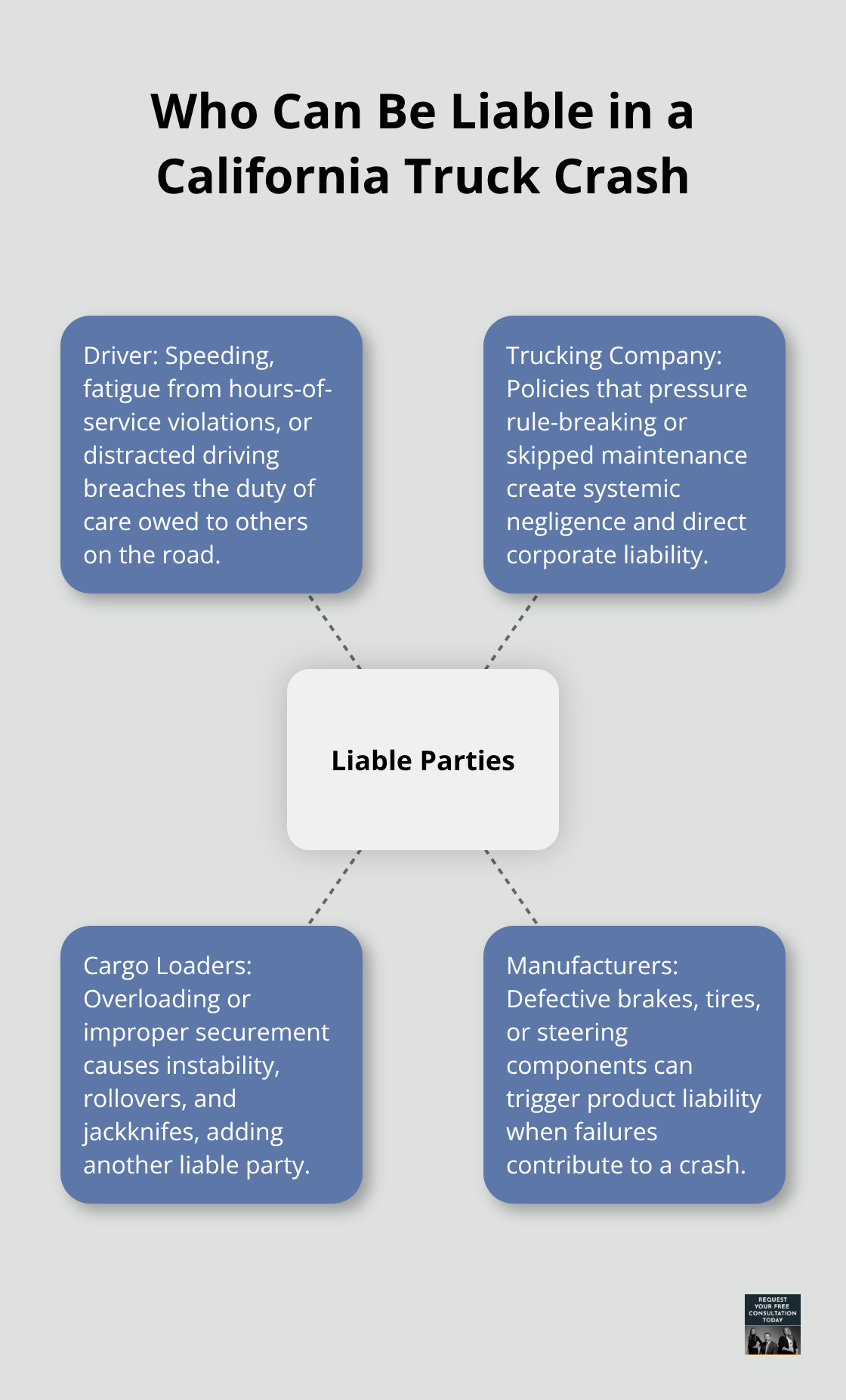
Manufacturers can be held responsible under product liability if defective brakes, tires, or steering components contributed to the crash. The strongest claims identify multiple liable parties because each one represents a potential source of compensation for your medical bills, lost wages, and pain and suffering.
Understanding these liability rules positions you to gather the right evidence and build a case that holds all responsible parties accountable. The next step involves knowing exactly what evidence to collect at the accident scene and how to preserve it before insurers and trucking companies move to protect themselves.
Building Your Case with Hard Evidence
Act Immediately at the Accident Scene
The moment a truck crashes, insurers and trucking companies begin protecting themselves by collecting evidence, contacting witnesses, and securing their records. You must move faster.
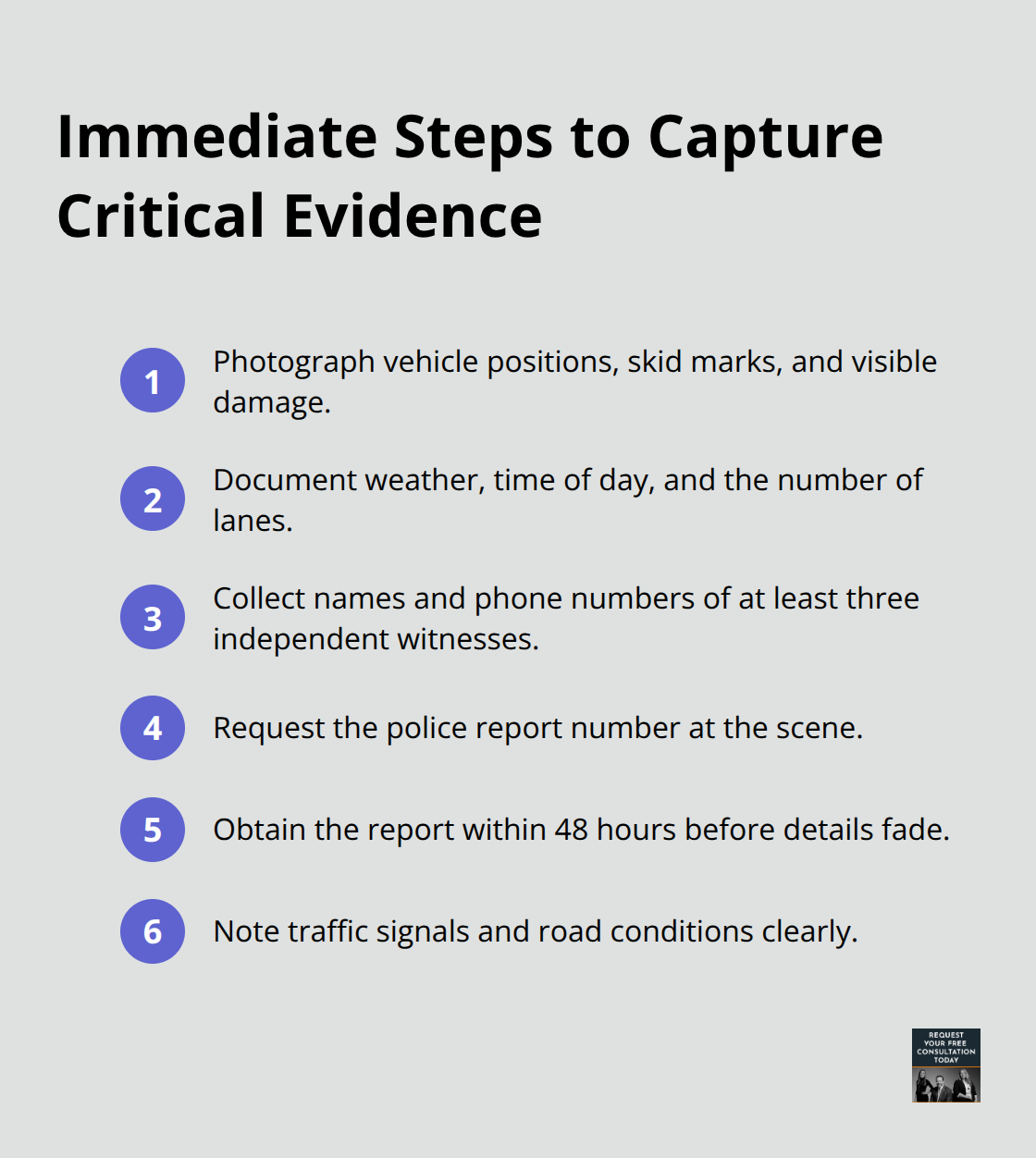
At the accident scene, photograph the truck’s final position, the road conditions, skid marks, traffic signals, and any visible damage to all vehicles involved. Document weather conditions, time of day, and the number of lanes because these details matter in court. Collect the names and phone numbers of at least three independent witnesses who saw the crash happen, not just passengers in your vehicle. Request the police report number at the scene and obtain it within 48 hours because details fade and memories shift.
Preserve the Black Box Data Before It Disappears
The truck’s Event Data Recorder, commonly called a black box, captures critical data including speed, braking patterns, and steering input in the seconds before impact. Trucking companies will attempt to delete or restrict access to this data, so your attorney must send a preservation letter immediately to prevent destruction. This data often proves whether the driver had adequate time to stop or whether mechanical failures caused the crash. Without this evidence, you lose the most objective proof of what happened.
Obtain Driver Logs and Maintenance Records
Driver logs, maintenance records, and dispatch communications reveal whether the trucking company cut corners or pressured drivers to violate safety rules. Federal regulations require carriers to maintain records of driver hours, vehicle inspections, and maintenance for at least three years, yet many companies claim records are lost or unavailable. These records are discoverable in litigation, meaning a court can compel their production even if the company resists. Maintenance failures (brake problems, tire defects, steering issues) establish that the company prioritized cost-cutting over safety.
Hire an Accident Reconstruction Specialist
Accident reconstruction specialists analyze the physics of the crash using the black box data, road conditions, vehicle damage patterns, and witness statements to determine exactly what happened and who caused it. They calculate stopping distances based on the truck’s weight and brake condition, showing whether the driver had time to avoid the crash or whether maintenance failures prevented proper braking. Their written reports and testimony translate technical evidence into clear proof of negligence that juries understand and accept. This expert analysis often determines whether you receive a modest settlement or full compensation.
Connect Multiple Liable Parties to Your Evidence
The strongest claims link evidence directly to each liable party-the driver, the trucking company, cargo loaders, and manufacturers. Police reports, black box data, driver logs, maintenance records, scene photographs, and witness statements form the foundation of your case. When you gather this evidence quickly and preserve it properly, you position yourself to hold all responsible parties accountable for your medical bills, lost wages, and pain and suffering. With your evidence secured, the next step involves understanding how to evaluate settlement offers and prepare for the negotiation and trial strategies that maximize your recovery.
From Settlement Table to Courtroom
Insurance Companies Undervalue Your Claim
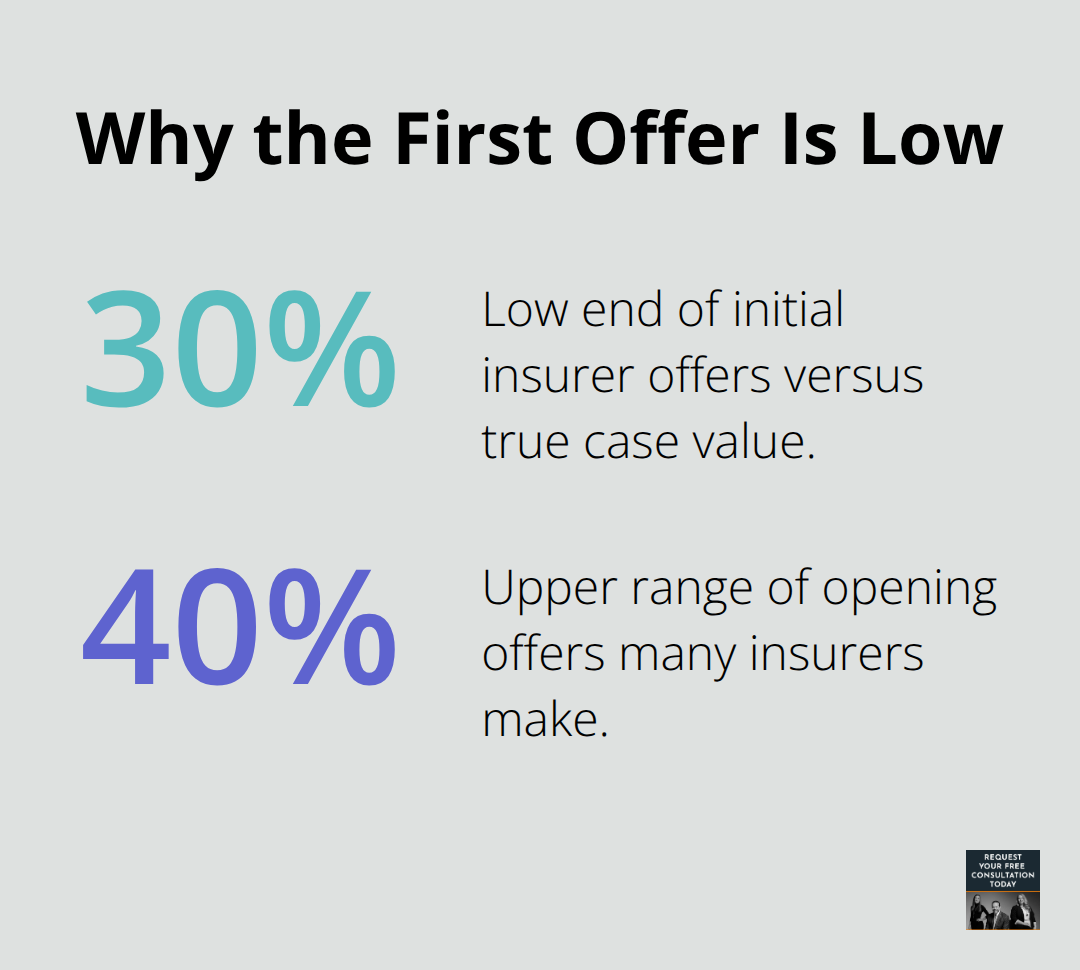
Insurance companies move fast after truck accidents, and their first settlement offer falls far short of what your case is actually worth. Insurers offer 30 to 40 percent of true case value in the opening round, betting that injured victims will accept out of desperation or medical debt.
Calculate your actual damages before you respond to any offer: add medical bills, lost wages from time off work, future medical care, diminished earning capacity, and pain and suffering. The National Highway Traffic Safety Administration reports that average hospital stays for truck accident injuries exceed 10 days, with total medical costs often reaching $100,000 or more for serious injuries. Document every expense and lost income with receipts and employment records because insurers will challenge numbers that lack support.
Depositions Expose Weaknesses in Your Story
During depositions, the insurance company’s attorney will ask detailed questions under oath to find inconsistencies in your account or minimize your injuries. Prepare for this by reviewing your medical records, accident scene photographs, and black box data multiple times before the deposition. Answer only what is asked, never volunteer information, and if you don’t know an answer, say so rather than guessing. This preparation prevents the opposing counsel from catching you off guard or twisting your words later in court.
Discovery Reveals Company Negligence
The discovery process requires both sides to exchange evidence, including driver logs, maintenance records, dispatch communications, and the black box data your attorney preserved immediately after the crash. Poor maintenance practices, hours-of-service violations, and pressure from management to cut corners often surface in writing during this phase. If the trucking company resists producing records, your attorney can file a motion to compel, forcing them to provide evidence or face sanctions from the court.
Trial Strategy Outweighs Settlement Offers
When settlement negotiations stall, trial becomes necessary, and juries in Sacramento and Oakland consistently award higher damages than insurance companies offer beforehand. Present your case chronologically: start with the truck’s condition and maintenance failures, move to the driver’s violation of hours-of-service rules or distraction, show how the black box data proves the crash was unavoidable (given the truck’s weight and brake condition), and conclude with your medical injuries and financial losses. Use the accident reconstruction specialist’s report and diagrams to show the jury exactly what happened in the seconds before impact. Trucking companies often argue the driver made a split-second mistake, but your evidence will show the company created unsafe conditions through neglect or cost-cutting. Cross-examination of the trucking company’s safety manager or maintenance supervisor frequently reveals that the company knew about brake problems, failed inspections, or driver fatigue issues but took no action. These admissions under oath carry enormous weight with juries. The goal is not to win on emotion but to prove through documents, data, and testimony that the trucking company’s actions or inactions directly caused your injuries.
Final Thoughts
Truck accident cases demand speed, evidence, and aggressive representation because insurers and trucking companies move immediately to protect themselves the moment a crash happens. You must act fast to photograph the scene, collect witness statements, and preserve the black box data before evidence disappears. Your attorney sends preservation letters and files discovery requests that force the trucking company to produce driver logs, maintenance records, and dispatch communications revealing negligence.
California truck accident litigation succeeds when you build a case around hard evidence rather than emotion, connecting multiple liable parties to specific evidence that maximizes compensation. The black box data shows what the driver did in the seconds before impact, maintenance records expose whether the company cut corners on brake inspections, and accident reconstruction analysis translates this evidence into clear proof that a jury understands. Medical bills, lost wages, future care costs, and pain and suffering add up quickly in serious cases, and trial often yields higher awards than settlement negotiations because juries hold trucking companies accountable for unsafe conditions they created or tolerated.
We at Schaar & Silva LLP handle the legal complexity while you focus on recovery, assisting with medical bill management through lien services and connecting you with support when emotional trauma surfaces. Contact us for a free consultation to discuss your case and begin building the roadmap to winning.
