
Truck accidents in California often result in serious injuries and substantial financial losses. The settlement process is complex, and insurance companies frequently offer far less than victims deserve.
We at Schaar & Silva LLP help accident victims navigate these claims and recover the compensation they need. This guide walks you through the critical steps to maximize your truck accident settlement.
What to Do Immediately After a Truck Accident
Preserve Electronic Evidence Before It Vanishes
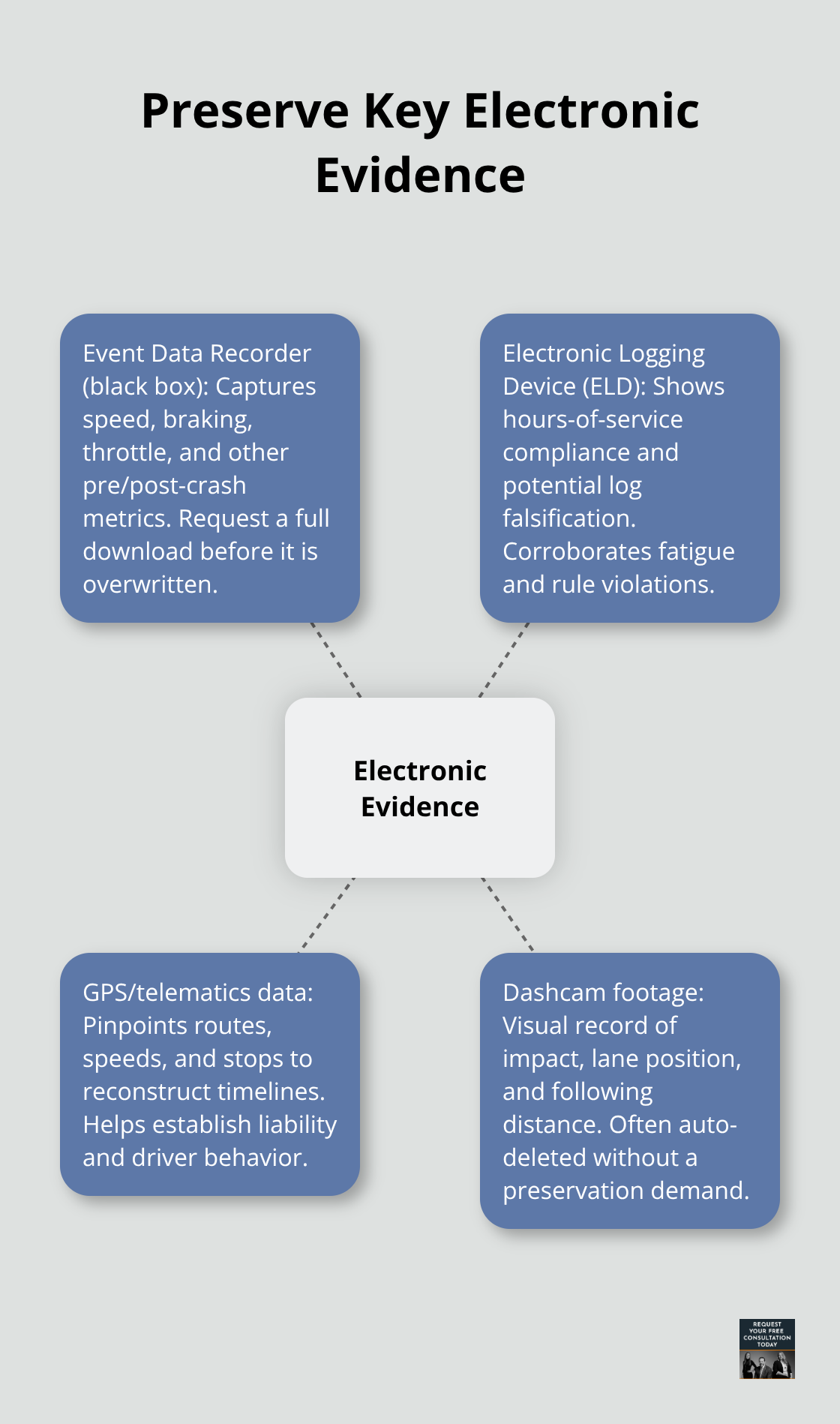
The first hours after a truck accident determine whether you recover maximum compensation or leave money on the table. Black box data, GPS records, and dashcam footage can disappear within hours or days if you don’t act immediately. Your attorney must send a spoliation letter to the trucking company right away to require them to retain all records. This single step has prevented countless cases from collapsing due to missing data. Electronic evidence includes the Event Data Recorder (black box), Electronic Logging Device, GPS data, and dashcam footage-all of which insurers and trucking companies may destroy if you don’t legally compel them to preserve it.
Document the Scene and Collect Witness Information
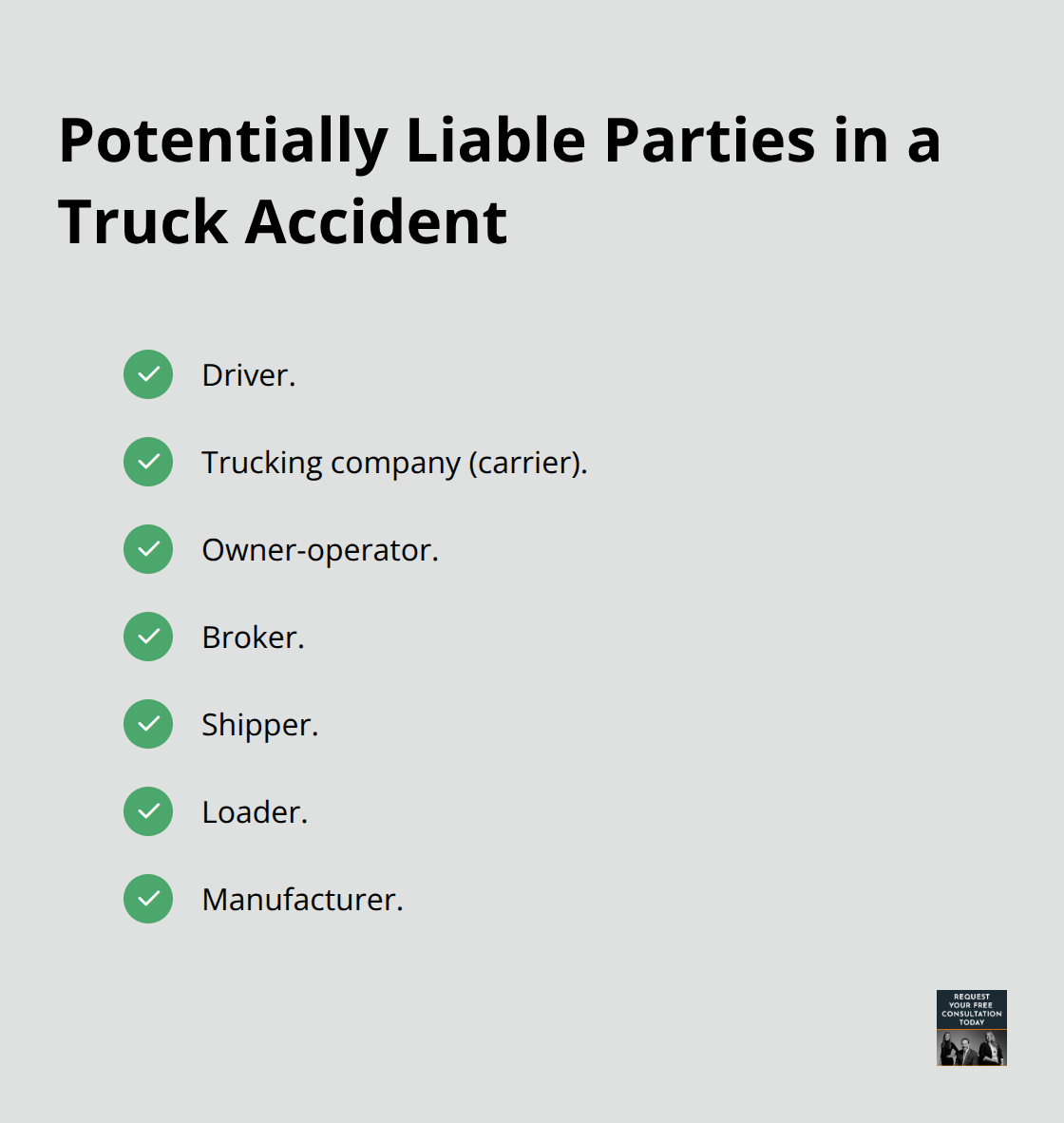
Photograph the accident scene from multiple angles, capturing vehicle positions, road conditions, weather, traffic signals, debris patterns, and any visible injuries. Collect names and phone numbers from all witnesses, including other drivers, pedestrians, and nearby business owners who may have surveillance footage. Document the truck’s license plate, company name, driver information, and insurance details directly from the driver’s documentation. These details form the foundation of your claim and help your attorney identify all potentially liable parties (driver, carrier, owner-operator, broker, shipper, maintenance provider, or manufacturer).
Seek Medical Attention and Build Your Medical Record
Serious conditions like brain injuries or internal bleeding show symptoms hours or days after the crash, so you must seek medical attention immediately even if injuries seem minor. Medical records created on the day of the accident establish the injury timeline that courts and insurers use to calculate damages. Keep every medical document in a dedicated folder including ER reports, imaging results, physician notes, prescriptions, and therapy records. This comprehensive documentation strengthens your claim significantly when you negotiate with insurance companies.
Report the Accident and Protect Your Rights
Report the accident to police and obtain the official report number, which becomes essential evidence for establishing fault and negligence. Within 48 hours, file a report with the California Highway Patrol if the crash occurred on a state highway, as CHP data becomes part of the official record. When contacting your insurance company, provide only basic facts and avoid recorded statements or broad medical authorizations that insurers use to undermine claims. Do not post about the accident on social media, discuss details with other drivers’ representatives, or accept settlement offers before consulting legal representation-insurance companies exploit these mistakes to reduce payouts.
Understanding what happens next requires knowledge of how insurance companies calculate settlement amounts and what factors drive your claim’s value.
What Determines Your Settlement Value
Medical Expenses and Future Care Costs
Insurance companies calculate truck accident settlements using a formula that accounts for medical expenses, lost income, and pain and suffering, but they deliberately undervalue claims by focusing only on past costs while ignoring future medical needs and earning losses. Medical expenses form the foundation of your claim, and California courts recognize that serious injuries like brain damage or spinal cord trauma require ongoing treatment that extends far beyond the initial hospitalization. A physician-prepared life-care plan becomes essential for catastrophic injuries, as it documents future surgeries, therapy, medications, and home care costs that can add hundreds of thousands or millions to your claim’s value. Without this documentation, insurance adjusters will offer settlements based only on ER visits and immediate treatment, leaving you responsible for years of future medical costs.
Liability, Fault, and Multiple Responsible Parties
Liability and fault determination shapes your settlement dramatically because California’s pure comparative negligence rule allows full recovery even when you are partially at fault, but multiple liable parties expand your insurance coverage significantly. Truck accidents typically involve the driver, trucking company, owner-operator, broker, shipper, loader, and potentially the manufacturer, meaning your attorney must identify every responsible party to access all available insurance policies. Federal Motor Carrier Safety Regulations violations like hours-of-service breaches, log falsification, and maintenance defects establish negligence per se, which strengthens your claim considerably and gives you leverage in negotiations.
A fully loaded tractor-trailer weighs up to 80,000 pounds and requires much longer stopping distances than cars, which means speed and following distance violations create obvious liability that insurers cannot dispute.
Lost Wages and Earning Capacity
Lost wages and future earning capacity depend on your age, occupation, and injury severity, so a detailed employment history with tax returns and medical evidence of work restrictions directly increase your settlement amount. Insurance companies often challenge earning capacity claims, making economic analysis necessary to prove how your injuries reduce lifetime income. Your attorney will work with economists to calculate the precise financial impact of your injuries on your career trajectory and lifetime earnings potential.
Pain and Suffering Damages
Pain and suffering damages lack a mathematical formula, but California courts award substantial noneconomic damages for loss of enjoyment of life, particularly in cases involving brain injuries or spinal cord damage that permanently alter daily functioning. Settlement offers typically range from six figures to multimillions depending on injury severity and strategy quality, with cases involving catastrophic injuries regularly exceeding $1 million when proper documentation exists.
Understanding these settlement factors positions you to evaluate offers critically, but building the evidence package that supports your claim’s full value requires a strategic approach that insurance companies will fight at every turn.
How Insurance Companies Undervalue Your Claim
Insurance Adjusters Use Formulas Designed to Minimize Payouts
Insurance adjusters calculate settlements using formulas built to reduce what you actually deserve, and their opening offer typically falls 40-60% below your claim’s true value. When an adjuster contacts you weeks after your accident, they count on your financial pressure-mounting medical bills and urgent cash needs push victims to accept lowball offers immediately. Their standard tactic involves acknowledging liability while simultaneously attacking injury severity, condition permanence, and lost earning capacity. Truck accident settlements in California range from six figures to multimillions, yet adjusters will anchor negotiations at the absolute floor unless documented evidence forces them higher. Reject this pressure entirely.
Build an Evidence Package That Eliminates Their Negotiating Room
The evidence package that shifts power in your favor includes your complete medical record with imaging results, physician treatment notes, and therapy documentation. More importantly, a physician-prepared life-care plan quantifies future medical costs, medications, surgeries, and home care needs that add hundreds of thousands or millions to settlement value. Without this plan, adjusters ignore future care costs entirely and offer only past medical expenses. Federal Motor Carrier Safety Regulations violations discovered during investigation create documented proof of negligence per se, which eliminates their ability to dispute fault and shifts negotiation power decisively in your favor. Cross-reference the trucking company’s driver qualification files, maintenance logs, roadside inspection records, and Electronic Logging Device data against FMCSA safety standards to expose hours-of-service breaches, log falsification, or maintenance defects that establish systematic negligence.
File Suit When Offers Fall Short of Your Documented Damages
When an insurance company’s offer remains significantly below your documented damages, filing suit immediately changes their calculation. Most truck accident cases settle within 9-18 months, but formal discovery, depositions, and trial-ready positioning accelerate settlement offers substantially because insurers recognize that a jury will see the same evidence you’ve assembled.
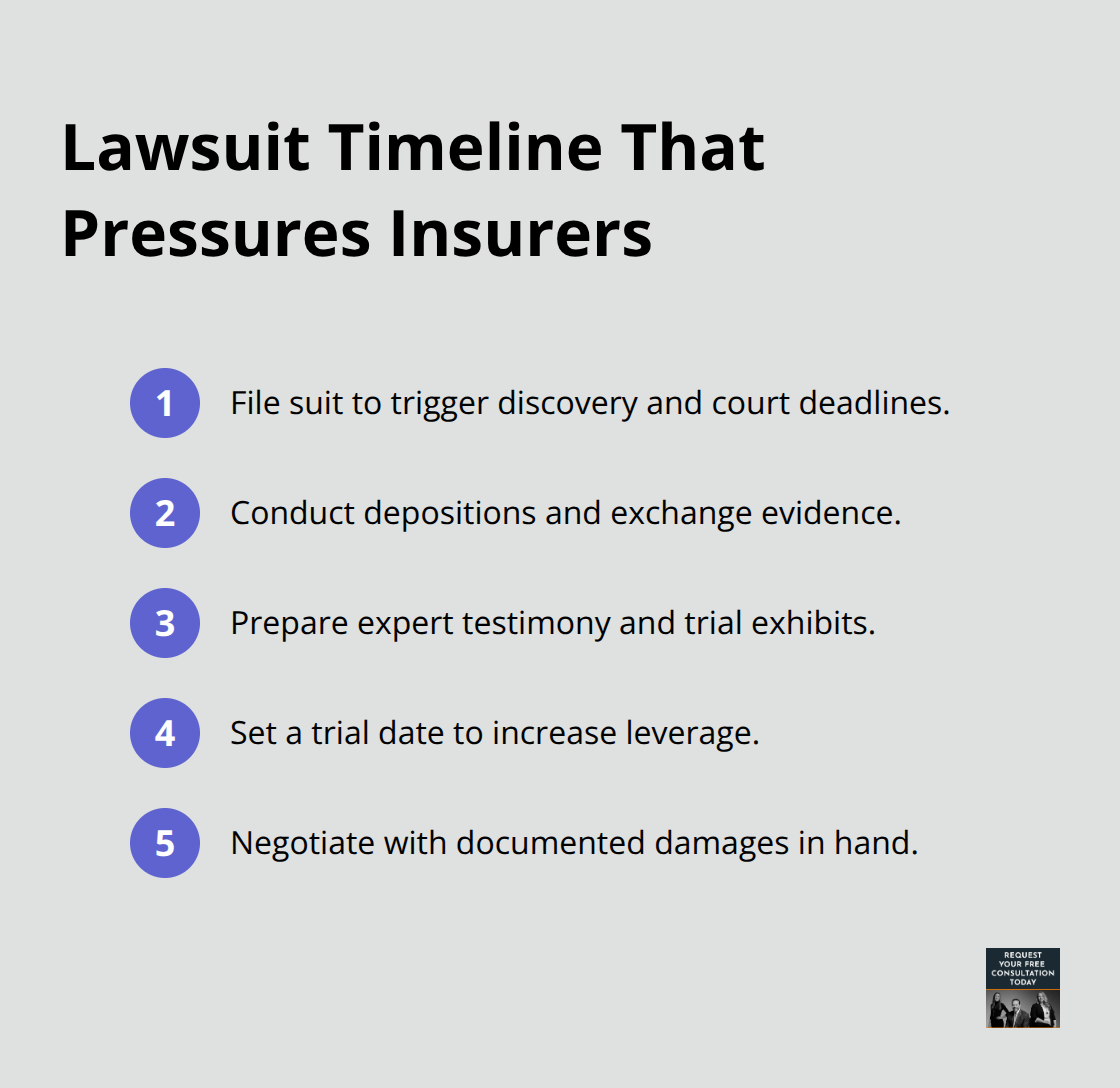
Prepare your case as if you will try it in court, with expert testimony from accident reconstruction specialists, economists calculating lost earning capacity, and medical professionals documenting catastrophic injury impacts on daily life. This preparation demonstrates serious commitment to litigation and willingness to pursue maximum damages through trial, which motivates settlement discussions toward the higher end of your claim’s actual value.
Final Thoughts
Maximizing your truck accident settlement requires immediate action, comprehensive documentation, and refusal to accept insurance company lowball offers. The steps outlined in this guide-preserving electronic evidence, building a complete medical record, identifying all liable parties, and assembling expert testimony-directly determine whether you recover what you actually deserve or leave substantial money on the table. California truck accident settlements range from six figures to multimillions, but only when your claim is backed by documented proof of damages and liability that eliminates negotiating room for insurers.
The most critical mistake victims make is accepting early settlement offers without understanding their claim’s true value. Insurance adjusters count on financial pressure and medical bills to force quick decisions, but filing suit and preparing for trial shifts power decisively in your favor. Most cases settle within 9-18 months once insurers recognize you have the evidence and commitment to pursue litigation.
We at Schaar & Silva LLP help truck accident victims in Santa Cruz County, Sacramento, and Oakland navigate this process from the moment of impact through settlement or trial. Contact us for a free consultation to evaluate your claim’s value and discuss your options, and we work on a contingency basis so you pay nothing unless we recover compensation for you.
