

After a crash, most people focus on vehicle damage and insurance calls. What they miss is that documenting injuries after a crash within hours-not days-can mean the difference between a strong claim and a weak one.
Insurance companies routinely deny or reduce payouts when injury documentation arrives late. At Schaar & Silva LLP, we’ve seen countless cases where delayed records cost people thousands in settlements they deserved.
Why Timing Changes Everything After a Crash
The first 24 to 48 hours after a crash are the most critical window for injury documentation, and insurance adjusters know this. When you delay reporting injuries, adjusters immediately question whether the crash actually caused them or whether you developed symptoms later for unrelated reasons. This skepticism isn’t accidental-it’s built into how insurers evaluate claims.
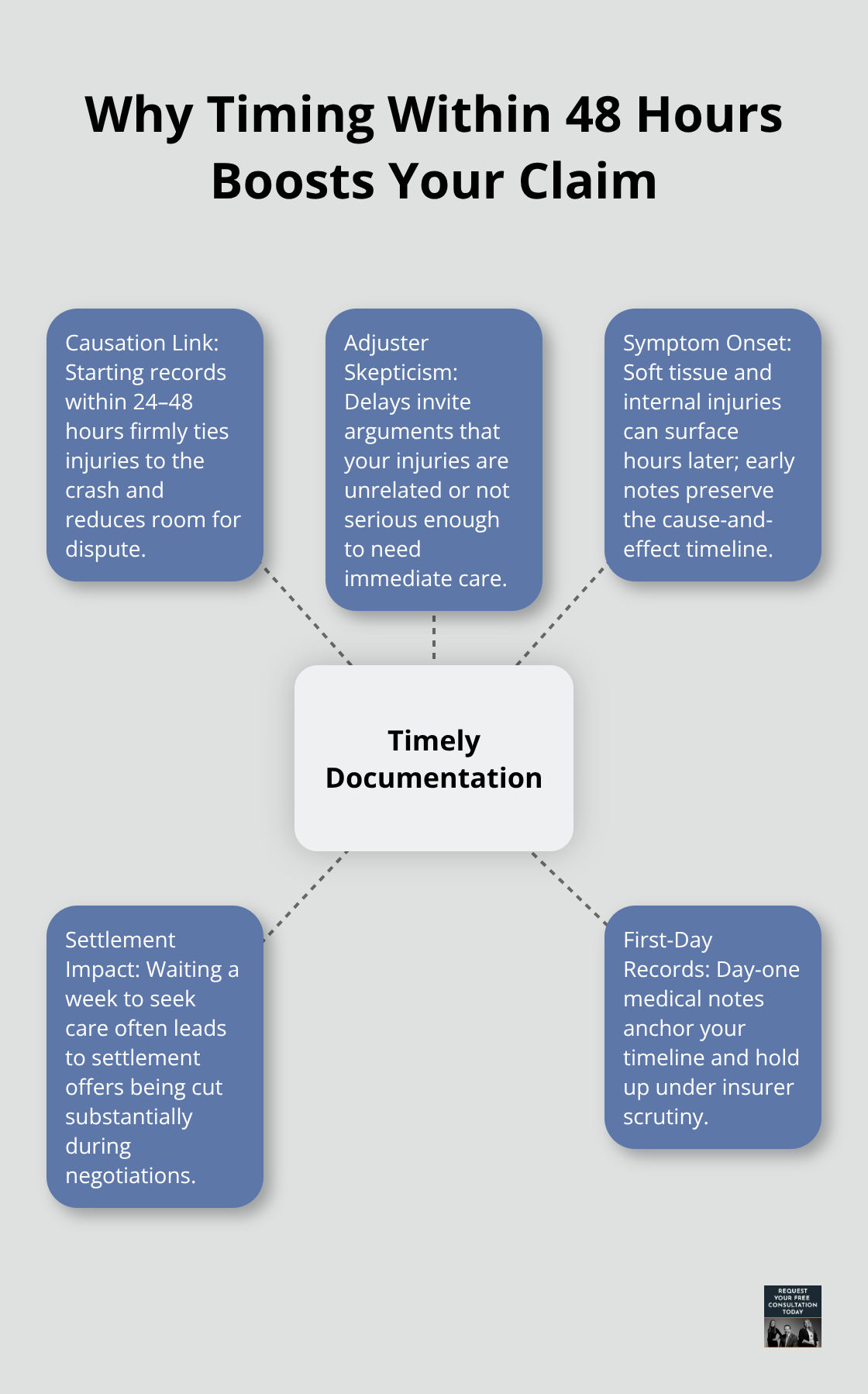
Cases where claimants waited a week to see a doctor often result in settlement offers cut in half because the insurer claimed the injuries weren’t serious enough to warrant immediate attention. The reality is that soft tissue injuries, whiplash, and internal bruising often don’t show symptoms for hours or even a day, but that delay works against you in negotiations. Medical records that start within 24 hours of the crash create an unbreakable connection between the accident and your injuries. When your first doctor’s visit happens days later, the insurer can argue that something else caused your pain. California courts recognize that prompt medical documentation strengthens causation, which is the foundation of any injury claim.
Photographs and Videos Provide Timestamped Evidence
You should take photos of visible injuries immediately after the crash, even if they seem minor. Red marks, swelling, or abrasions photographed within hours provide timestamped evidence that connects your injuries directly to the accident. Use your phone’s timestamp feature and photograph the same areas over the next few days to show how injuries develop or worsen. Video footage from the scene also captures your physical state and any visible pain or difficulty moving. These visual records become powerful evidence that insurers cannot easily dismiss or reinterpret.
Witness Statements About Your Condition Matter
Witness statements about what they observed regarding your physical condition carry significant weight in your claim. Collect contact information from people at the scene and ask them specifically what injuries they noticed you mentioning or displaying. Their observations (recorded within hours while memories remain fresh) corroborate your account and prevent insurers from claiming you exaggerated symptoms later. Written statements or recorded conversations with witnesses create a contemporaneous record that strengthens your position during settlement negotiations.
Medical Records Document the Full Picture
Medical records become your strongest evidence because they document everything: the date of your first exam, the doctor’s observations about your condition, imaging results, and the physician’s opinion linking your injuries to the crash. Gaps in treatment hurt your case substantially. If you stop going to appointments for weeks and then resume, insurers argue you weren’t seriously injured or that something else caused your ongoing symptoms. You must maintain consistent medical treatment through maximum medical improvement, which is when your condition stabilizes and further recovery is unlikely. This continuity proves the severity and duration of your injuries, directly influencing settlement amounts and preventing insurers from minimizing your claim based on treatment interruptions.
What Should You Actually Document Right After a Crash
Photograph Injuries Within the First Hour
Start documenting the moment you’re safe to move. Pull out your phone and photograph every visible injury on your body, no matter how minor it seems. Red marks, swelling, bruising, or abrasions need timestamped images within the first hour after the crash. Most smartphones automatically embed timestamps into photos, which creates undeniable proof of when injuries appeared.
Photograph the same areas again the next morning and on days two through five because soft tissue injuries often worsen over 48 to 72 hours. Insurance adjusters scrutinize claims where injuries mysteriously appear days later, but progressive documentation of worsening swelling or discoloration proves the crash caused the damage. Video adds another dimension-record yourself describing your pain level, which body parts hurt, and what movements cause discomfort.
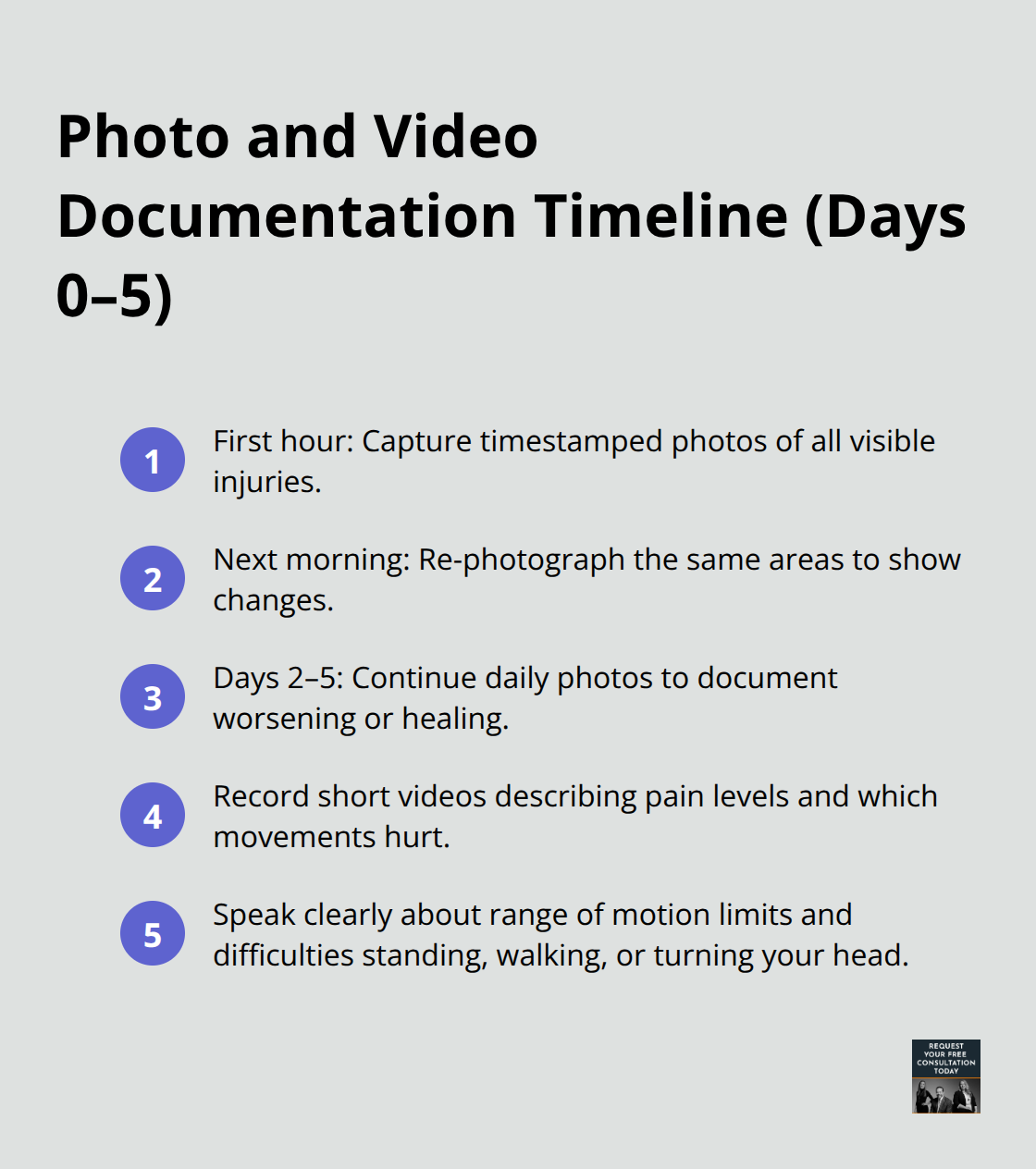
Speak clearly about your range of motion limitations and any difficulty standing, walking, or turning your head. This video becomes powerful evidence that the adjuster cannot reinterpret or dismiss as exaggeration because your own contemporaneous words capture your condition.
Record Specific Symptoms and Pain Details
Write down specific details immediately after taking photos. Don’t just note that you have back pain-document that you have sharp pain in your lower left back when bending forward, that your neck feels stiff and painful when turning right, or that your right shoulder has a burning sensation radiating down your arm. Include the exact time you first noticed each symptom.
Collect names and phone numbers from anyone at the scene who observed your physical condition or heard you describe your injuries. Ask them directly what they noticed about how you were moving or what you said about pain. Their statements recorded within hours carry far more weight than statements collected weeks later when memories fade.
Establish Medical Documentation Immediately
When you arrive at the emergency room or urgent care, inform medical staff about every symptom you experienced, including ones that seem minor. The emergency department record becomes your foundation document that establishes causation between the crash and your injuries.
After that initial visit, schedule follow-up appointments with your primary care doctor within one week. Request imaging studies like X-rays or MRI scans if pain persists, because documented imaging results prove the extent of soft tissue or structural damage far better than subjective pain descriptions alone (this evidence prevents insurers from dismissing your injuries as minor).
Maintain Organized Medical Records
Keep all medical bills, receipts, appointment confirmations, and prescription records in one organized folder-digital or physical. Insurance companies use gaps in medical treatment as ammunition to argue your injuries weren’t serious, so maintaining consistent appointments through your full recovery prevents them from exploiting treatment breaks to reduce your settlement.
Treatment continuity matters more than most people realize. When you stop going to appointments for weeks and then resume, adjusters argue you weren’t seriously injured or that something else caused your ongoing symptoms. You must maintain consistent medical treatment through maximum medical improvement, which is when your condition stabilizes and further recovery is unlikely. This continuity proves the severity and duration of your injuries, directly influencing settlement amounts.
The documentation you create in these early days becomes the foundation that determines whether insurers take your claim seriously or attempt to minimize it. What happens next-how you handle mistakes during this process-can either strengthen or weaken everything you’ve built.
What Derails Injury Documentation Most Often
The Cost of Waiting to See a Doctor
The biggest mistake people make after a crash is waiting days or even weeks before seeing a doctor. This delay creates a gap that insurance adjusters exploit ruthlessly. When you finally receive medical attention seven to ten days after the crash, the adjuster argues your injuries weren’t serious enough to warrant immediate care or that you developed symptoms from something unrelated to the accident. Research from the Journal of Emergency Medicine shows that patients who seek treatment within 72 hours of injury have significantly stronger medical causation evidence than those who delay.
The moment you feel any pain, stiffness, or unusual sensation after a crash, schedule a doctor’s appointment the same day or the next morning. Don’t wait to see if symptoms resolve on their own because that delay becomes a permanent weakness in your claim. Soft tissue injuries and internal trauma often worsen over 48 to 72 hours, and your medical records need to capture that progression from day one.
Social Media Posts Undermine Your Credibility
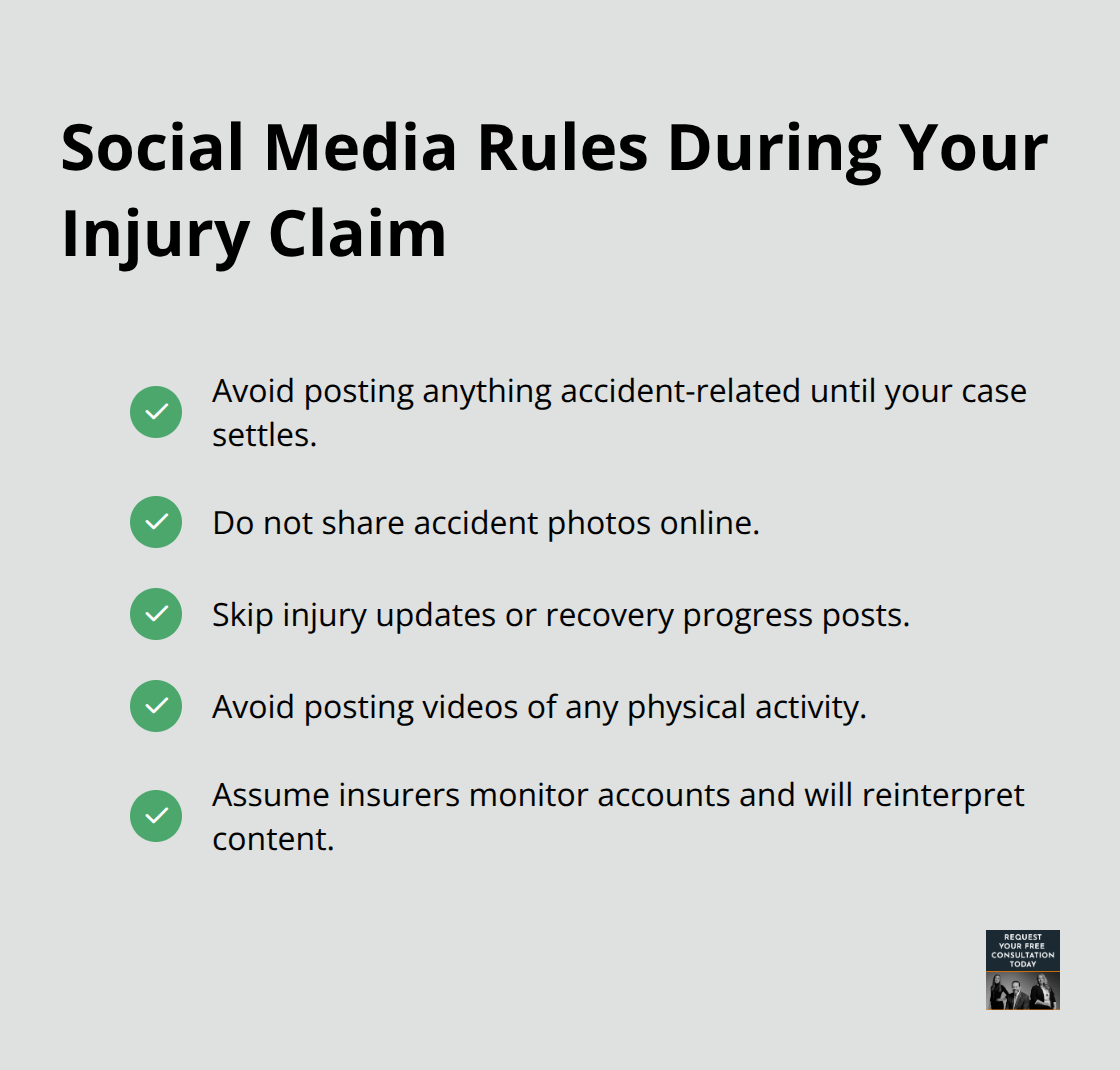
Another critical mistake is posting about the accident on social media. Insurance companies monitor claimants’ social media accounts, and anything you post can be used against you. A photo showing you at a social gathering three weeks after the crash can be twisted to suggest your injuries aren’t serious, even if you were managing pain with medication and needed the outing for emotional support. Videos of you doing any physical activity get screenshotted and presented as evidence that contradicts your injury claims.
The safest approach is to avoid posting anything accident-related on social media until your case settles. Don’t share accident photos, injury updates, or recovery progress online because adjusters will reinterpret that content to minimize your claim.
Disorganized Medical Records Invite Skepticism
Failing to organize medical records is equally damaging. Insurance companies request documentation of all medical treatment, and when you can’t produce organized bills, receipts, and appointment records, adjusters assume you’re hiding something or that treatment wasn’t actually necessary. Keep a dedicated folder (digital or physical) containing every medical bill, prescription receipt, appointment confirmation, imaging results, and doctor’s report. When you maintain this organized record throughout your recovery, you demonstrate that your medical treatment was thorough and consistent.
Minimizing Symptoms to Medical Providers Backfires
The final mistake is downplaying your symptoms to doctors or insurance adjusters. Some people minimize their pain because they don’t want to seem like they’re exaggerating or seeking attention. This is a catastrophic error. If you tell your doctor that your back pain is minor when it’s actually severe, that understatement becomes part of your medical record and the adjuster uses it to argue your injuries aren’t serious.
Tell your medical provider every symptom you experience, including pain that comes and goes, numbness, tingling, or difficulty sleeping. Be completely honest about how injuries affect your daily activities, work capacity, and quality of life. Your medical records are legal documents that will be scrutinized in settlement negotiations, so accuracy and completeness matter far more than appearing stoic or tough.
Final Thoughts
The documentation you create in the hours and days after a crash determines whether your claim receives fair treatment or gets minimized by insurance adjusters. Every photo, medical record, and witness statement builds the foundation that proves your injuries are real, serious, and directly caused by the accident. When you document injuries after a crash with precision and speed, you eliminate the gaps that adjusters exploit to reduce settlements.
Attention to detail separates strong claims from weak ones. The difference between taking photos within the first hour versus waiting until the next day, between seeing a doctor immediately versus waiting a week, between maintaining organized records versus scrambling to find receipts months later-these details directly impact your settlement amount. Insurance companies count on people making mistakes during the critical first days after a crash, knowing that delayed documentation, social media posts, and disorganized records give them ammunition to argue your injuries aren’t serious.
You don’t have to navigate this process alone. We at Schaar & Silva LLP understand how overwhelming the aftermath of a crash can be, and we know exactly what documentation insurers scrutinize. Contact us today to discuss your specific situation and learn how proper documentation can strengthen your claim.
