
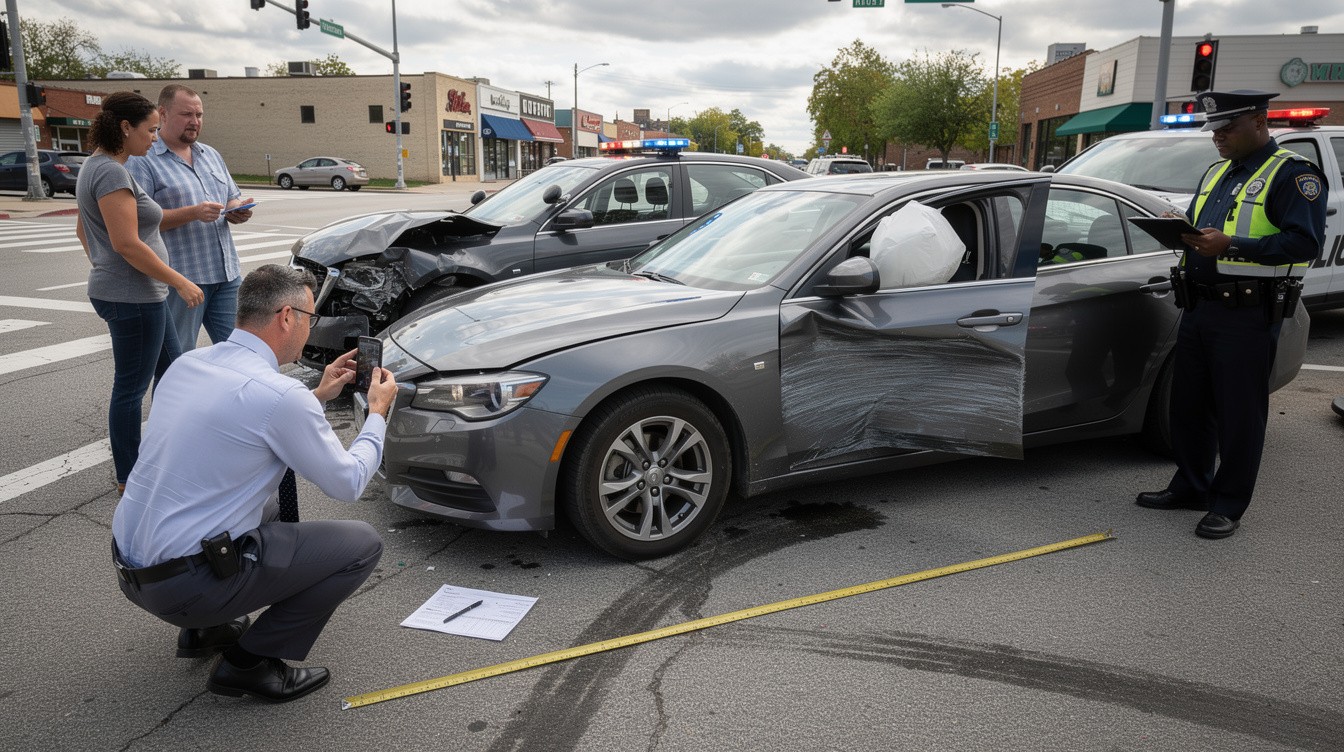
After a crash, figuring out who’s responsible and what compensation you deserve can feel overwhelming. Insurance companies often move quickly to minimize payouts, and California’s comparative negligence rules add another layer of complexity.
At Schaar & Silva LLP, we’ve helped accident victims in Santa Cruz County, Sacramento, and Oakland navigate liability claims and recover the damages they’re entitled to. This guide walks you through how fault gets determined, what you can recover, and the common roadblocks that stand between you and fair compensation.
Who Determines Fault After Your Crash
Police Reports and Their Limitations
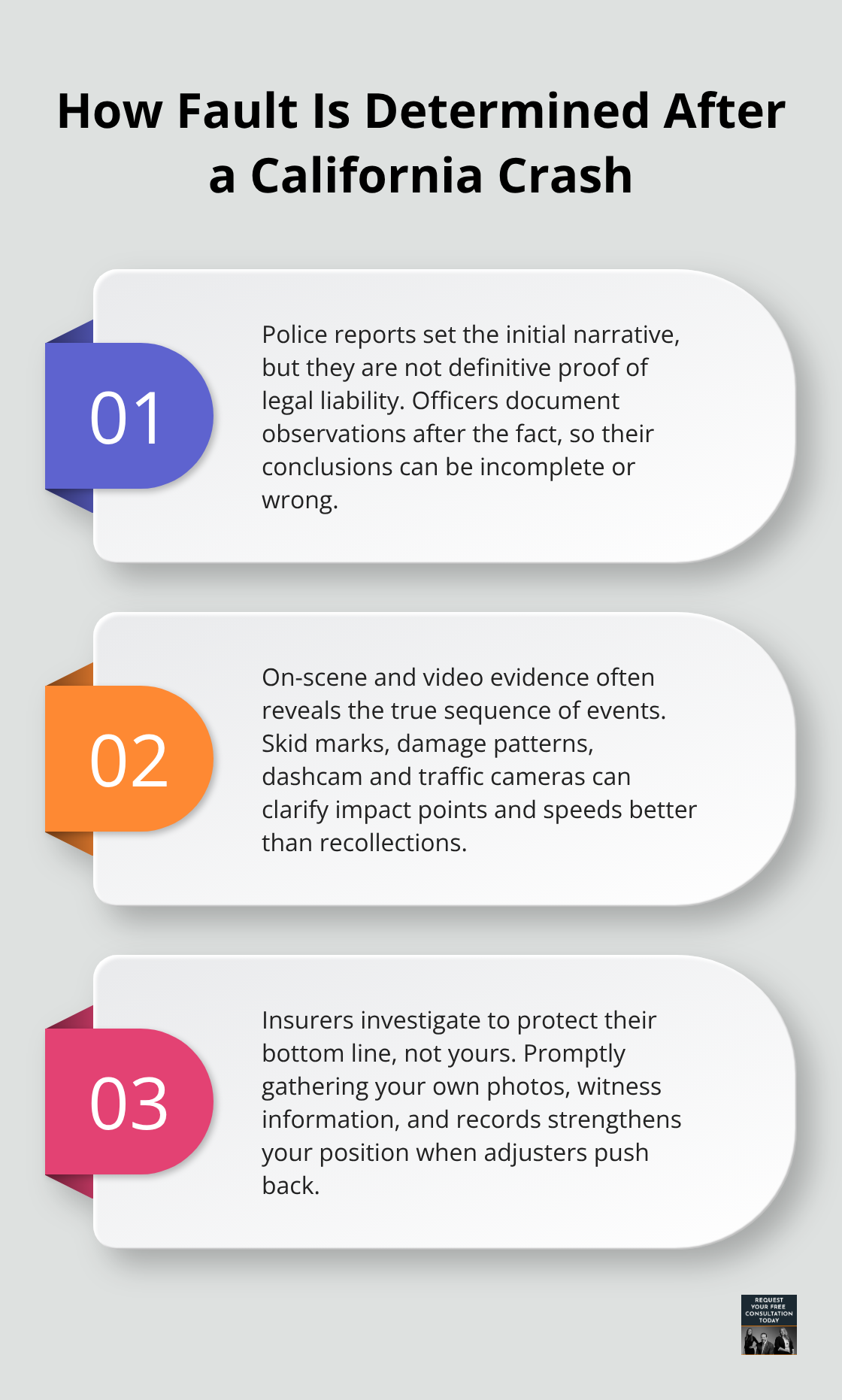
Police reports carry significant weight in establishing liability, but they represent only a starting point. When an officer arrives at a crash scene, they document statements, road conditions, and vehicle positions, then typically assign fault based on traffic law violations. California Highway Patrol and local police departments file these reports within days, and insurance companies rely heavily on them during their investigations. However, a police report alone does not determine legal liability. The officer was not present during the actual collision, and their assessment reflects only what they observed afterward. Insurance adjusters often treat a police report as the foundation for their investigation, not the final determination.
Evidence at the Scene Tells the Real Story
Evidence collected at the crash site frequently contradicts what police reports conclude. Skid marks, vehicle damage patterns, traffic camera footage, and witness statements paint a much clearer picture of how the collision occurred. If a vehicle struck you from behind, the damage pattern on both cars reveals the impact point and relative speeds far more accurately than witness recollections. Modern dashcam footage has become invaluable in Santa Cruz County, Sacramento, and Oakland accident claims, often showing the exact sequence of events that police reports miss.
How Insurance Companies Investigate
Insurance companies conduct their own investigations, sending adjusters to photograph damage and interview witnesses, sometimes weeks after the crash when memories fade and evidence deteriorates. These investigations prioritize protecting the insurance company’s bottom line, not your recovery. They frequently underestimate injuries, mischaracterize how the accident occurred, or find minor comparative fault on your part to reduce payouts. Gathering your own evidence immediately after the crash strengthens your position significantly. Photographs of vehicle damage, road conditions, traffic signals, and visible injuries create a record that insurance companies cannot later dispute or reinterpret. This documentation becomes critical when you move forward with your claim and face pushback from adjusters who want to minimize what they owe you.
What Damages Can You Actually Recover
Medical Expenses and Treatment Costs
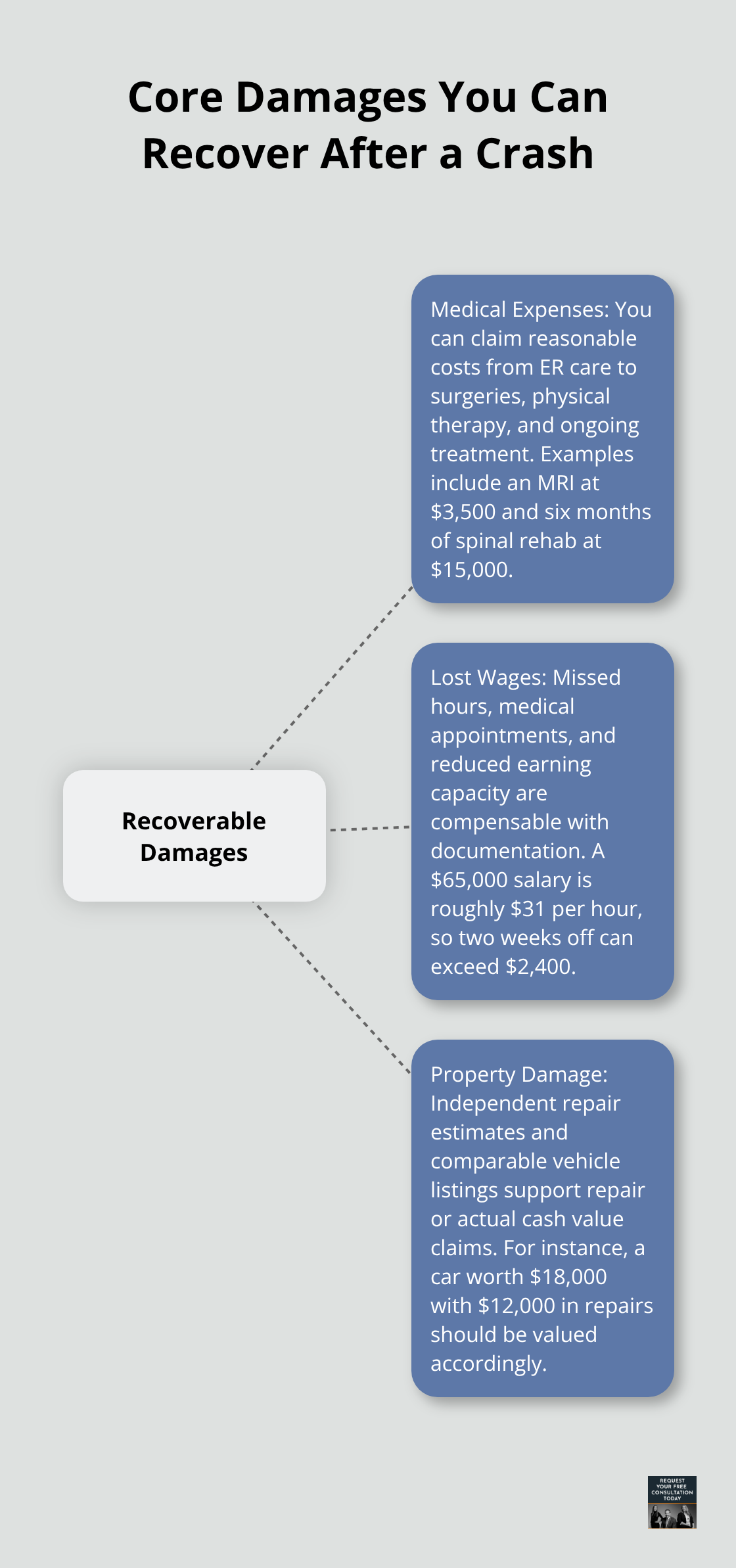
After a crash, you’re entitled to recover specific financial losses directly tied to the accident. Medical expenses represent the most straightforward category. You can recover all reasonable treatment costs from the date of the accident forward, including emergency room visits, surgeries, physical therapy, and ongoing care. If you required an MRI that cost $3,500 or spinal rehabilitation spanning six months at $15,000, those bills get added to your claim.
Insurance adjusters often argue that certain treatments were unnecessary or excessive. You should document every medical recommendation in writing from your healthcare provider, not verbal conversations. Keep receipts and invoices organized by date and provider.
Many accident victims in Sacramento and Oakland make the mistake of delaying treatment to avoid large medical bills, which actually weakens their claim because the injury-to-treatment timeline gets questioned by insurers.
Lost Wages and Income
Lost wages constitute the second major category and require meticulous documentation. If you missed work for recovery or ongoing medical appointments, you can claim every hour or salary lost during that period. A person earning $65,000 annually loses approximately $31 per hour in wages, so even two weeks of missed work totals over $2,400.
Self-employed individuals face greater complexity-you’ll need tax returns, profit-and-loss statements, and client records showing income disruption. Long-term disability or reduced earning capacity due to permanent injury increases the claim value substantially, though proving future lost income demands economic testimony or vocational assessment.
Property Damage and Vehicle Valuation
Property damage claims should reflect fair market repair costs, not the insurance adjuster’s first estimate. You should obtain independent repair quotes from multiple shops in Santa Cruz County before accepting any settlement offer. If your vehicle is worth $18,000 and repairs cost $12,000, you’re entitled to that full amount or the vehicle’s actual cash value, whichever is lower.
Never accept a diminished valuation without pushing back with documented evidence of comparable vehicles in your area. The insurance company’s initial offer rarely reflects what your vehicle actually costs to repair or replace. Your documentation and independent quotes create leverage that forces adjusters to justify their numbers or increase their offers.
These three categories form the foundation of your claim, but the real battle begins when you present this evidence to insurance companies determined to minimize what they owe you.
What Really Stops You From Getting Paid
Insurance Companies Systematically Undervalue Your Claim
Insurance companies have a financial incentive that runs directly opposite to yours. When an adjuster receives your medical bills totaling $28,000 and lost wages of $12,000, they don’t start at $40,000 and negotiate down-they start at $18,000 and hope you accept it without question. This strategy works on accident victims who lack documentation or legal representation. The adjuster’s job is to protect the insurance company’s bottom line, not to help you recover what you actually lost.
How Comparative Negligence Gives Insurers Ammunition
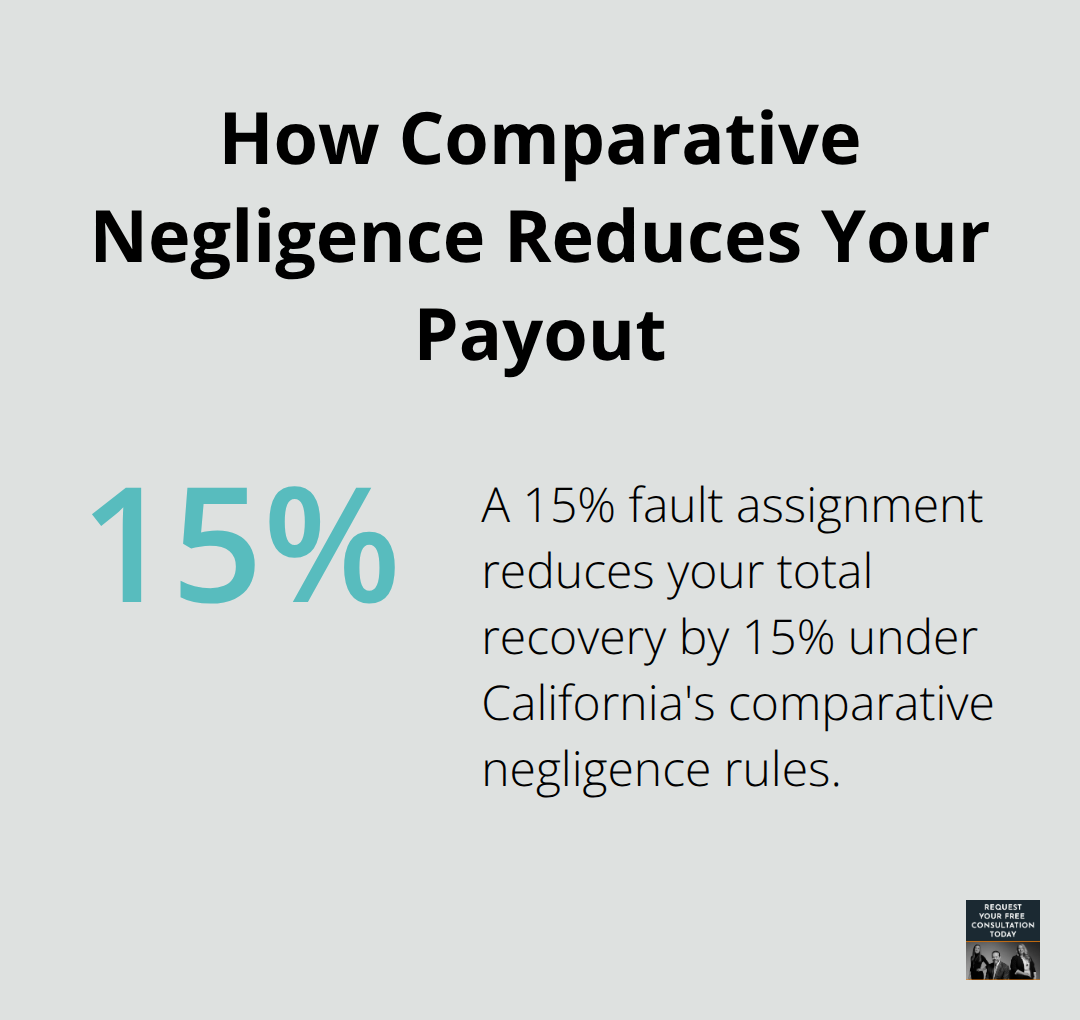
California’s comparative negligence law amplifies this problem significantly. Insurers use it to assign you partial fault, even when you bear minimal responsibility for the crash. If an adjuster claims you were 15 percent at fault for a collision caused primarily by another driver’s reckless behavior, they reduce your recovery by 15 percent immediately. This tactic works because most accident victims don’t understand how California’s negligence rules function or how to counter these claims with evidence.
You can neutralize their attempt to assign you fault if you prove the other driver violated traffic laws or acted recklessly. Documentation of traffic violations, witness statements, and physical evidence at the scene all support your position against comparative negligence arguments.
The Two-Year Deadline Creates Urgency
California law gives you two years from the date of the accident to file a wrongful death claim and typically two years for personal injury claims. This clock starts ticking the moment the crash happens, not when you feel ready to pursue compensation. Many accident victims in Santa Cruz County, Sacramento, and Oakland waste months recovering from injuries before realizing how little time remains to build their case and file suit. Waiting six months to hire representation leaves you only eighteen months to investigate, gather evidence, and potentially litigate. Starting the claims process immediately protects your legal rights and strengthens your negotiating position dramatically.
Documentation Forces Adjusters to Justify Reductions
Insurance companies count on victims accepting lowball offers rather than fighting back. When you present only the bills without organized documentation, adjusters question whether treatments were necessary or if you’re inflating costs. Gathering receipts, medical records, repair quotes, and wage statements immediately after your accident forces adjusters to justify any reduction they propose. If you suffered a brain or spinal injury requiring long-term care, the lifetime cost of treatment far exceeds what most initial settlement offers reflect, yet insurers rarely volunteer this calculation. Your organized evidence creates leverage that compels adjusters to increase their offers or explain their reasoning in writing.
Acting Fast Protects Your Recovery
The practical reality is that insurance companies rely on time and victim confusion to minimize payouts. Accident victims who delay treatment to avoid large medical bills actually weaken their claims because the injury-to-treatment timeline gets questioned by insurers. Those who wait months before gathering evidence find that witnesses have moved away, memories fade, and dashcam footage disappears. Starting your claims process immediately-not after months of recovery-protects your rights and prevents evidence loss that insurers will later exploit to reduce what they owe you.
Final Thoughts
Liability after a crash becomes far easier to prove when you have organized medical records, repair quotes, wage documentation, and police reports all compiled before meeting with insurance adjusters. Most accident victims underestimate how aggressively insurers will fight to minimize payouts, and many accept lowball offers simply because they lack the documentation and legal knowledge to push back effectively. You strengthen your position dramatically when you act immediately after the accident rather than waiting months to start your claims process.
We at Schaar & Silva LLP help accident victims in Santa Cruz County, Sacramento, and Oakland navigate the entire claims process, from gathering evidence to negotiating with insurance companies to filing suit if necessary. Our team manages the legal complexities while you focus on recovery, and we work on contingency, meaning you pay nothing unless we win your case. Starting your claim today protects your rights and prevents the evidence loss that insurers will exploit to reduce what they owe you.
Contact us for a free case review to discuss your accident and determine the best path forward for your recovery.