

After a car accident, figuring out what compensation you’re entitled to can feel overwhelming. Insurance companies often lowball offers, and many accident victims miss out on thousands in recoverable damages.
At Schaar & Silva LLP, we help people in Santa Cruz, Sacramento, and Oakland understand exactly what they can recover-from medical bills and lost wages to pain and suffering. This guide breaks down the types of damages available to you and shows you how to avoid the mistakes that shrink settlements.
What Damages Can You Actually Recover
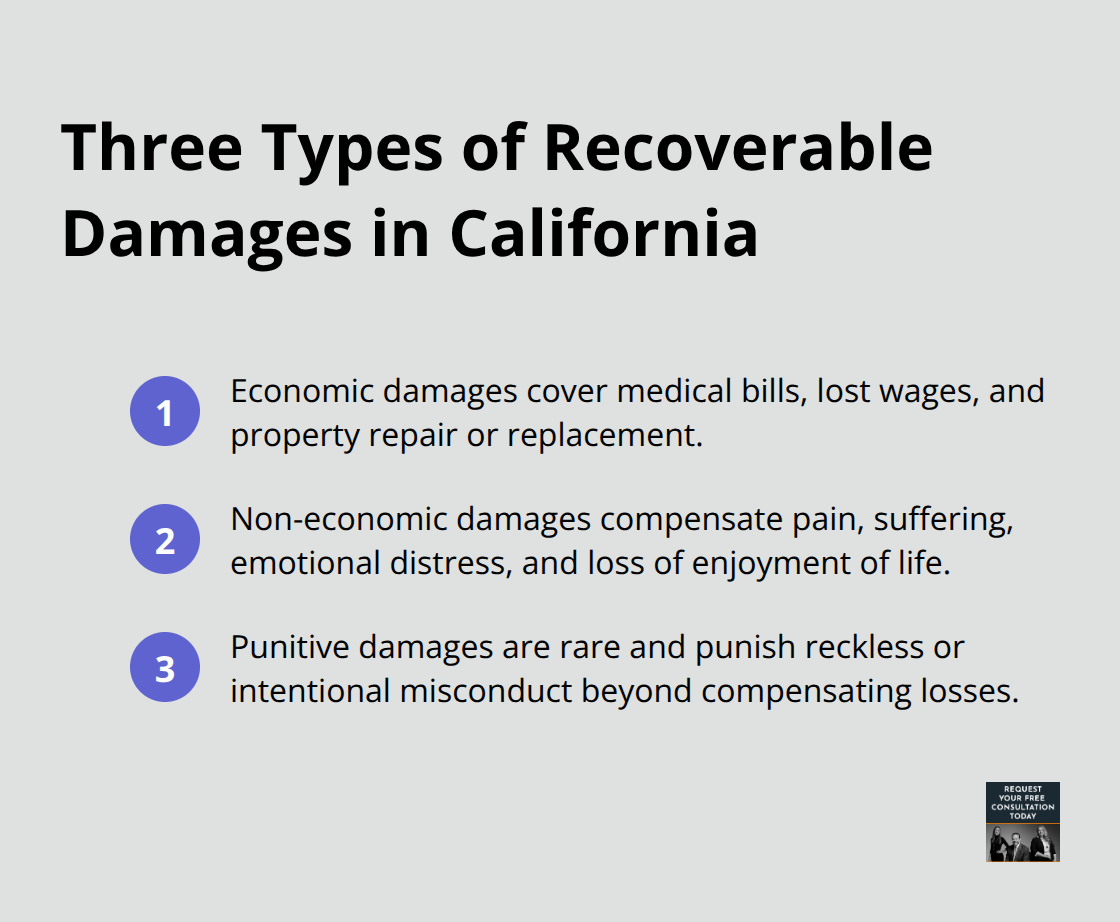
California law allows you to recover three distinct categories of damages after an auto accident, and understanding the difference between them directly affects how much money you receive. Economic damages cover your concrete, measurable losses like medical bills, lost wages, and vehicle repairs. Non-economic damages compensate for pain, suffering, and emotional harm that don’t have a price tag but often represent the largest portion of your settlement. Punitive damages are rare and only apply when the at-fault driver’s behavior was so reckless it warrants punishment beyond compensating your actual losses.
Economic damages form your foundation
Medical expenses form the backbone of almost every auto accident claim. This includes emergency room visits, ambulance transport, hospital stays, surgery costs, physical therapy, prescription medications, and ongoing treatment. If you need equipment like wheelchairs or home care assistance, those costs are recoverable too. The Insurance Information Institute reported that average property damage claims exceeded $3,800 in recent years, but medical costs often dwarf that figure.
Lost wages matter equally-you recover not just the paychecks you missed during recovery but also lost bonuses, commissions, and promotions you would have earned. Document everything with pay stubs, tax returns, and a letter from your employer confirming the income you lost. Future earning capacity adds significant value if your injuries prevent you from returning to your previous job; this requires vocational testimony and economic analysis but can add hundreds of thousands to your claim value.
Vehicle repair or replacement costs, rental car fees, and transportation expenses while your vehicle is unusable all count as recoverable economic damages.
Non-economic damages often exceed medical bills
Pain and suffering represents the largest component of most California settlements because the state has no cap on these damages. This covers physical pain, anxiety, depression, sleep disruption, and loss of enjoyment of life. California courts typically use either the multiplier method (multiplying economic damages by 1.5 to 5 depending on injury severity) or the per-diem method (assigning a daily dollar value to suffering).
For moderate injuries like whiplash, multipliers of 2 to 4 are standard; for severe injuries requiring surgery, multipliers of 4 to 5 or higher apply. Emotional distress from the trauma of the accident itself-fear, anxiety about driving again, PTSD symptoms-is separate from physical pain and adds substantial value. Disfigurement, permanent scarring, or visible injury that affects your appearance and confidence also qualifies. Loss of consortium compensates your spouse for lost companionship and intimacy if the injury affects your relationship.
These damages are harder to quantify than medical bills, which is exactly why insurance companies fight them aggressively and why many victims accept lowball offers without understanding their true value.
Punitive damages apply only to reckless conduct
Punitive damages punish the at-fault driver when their actions were grossly negligent or intentional-not merely careless. Driving under the influence, extreme speeding, or deliberately running a red light might trigger punitive damages, but ordinary negligence does not. California allows these damages without a statutory cap, though courts use reasonableness standards. Most auto accident cases settle without punitive damages because proving gross negligence is a higher bar than proving ordinary fault.
If your case involves reckless conduct, identifying and pursuing this additional recovery avenue requires careful legal analysis. Understanding which damages apply to your specific situation determines whether you recover tens of thousands or hundreds of thousands of dollars-which is why the next section walks you through how to calculate fair compensation for your claim.
How Much Is Your Claim Actually Worth
Start with your documented economic damages
Calculating fair compensation requires you to add up three distinct layers: what you’ve already spent, what you’ll spend in the future, and what your pain is worth in dollars. Medical bills form the easiest component to document because they come with receipts and invoices. Pull together every bill from the emergency room visit, ambulance transport, hospital stay, surgery, physical therapy sessions, prescription medications, and any durable medical equipment like braces or mobility aids. Many accident victims underestimate this figure because they forget follow-up appointments scheduled months after the crash. The Insurance Information Institute reported average bodily injury claims at $26,501, but medical costs frequently run much higher, especially for injuries requiring ongoing treatment.
Calculate lost income and future earning power
Lost wages extend far beyond the paychecks you missed during recovery. You recover bonuses, commissions, and promotions you would have earned if the accident hadn’t happened. Grab your pay stubs, tax returns from the past two years, and ask your employer for a letter confirming the exact income you lost. If your injuries prevent you from returning to your previous job, future earning capacity becomes critical. A vocational expert or economist can calculate how much earning power you’ve lost over your remaining work life, and this single component often adds hundreds of thousands of dollars to your claim value.
Value your pain and suffering accurately
Pain and suffering represents where most accident victims get shortchanged because it’s the hardest to quantify and the easiest for insurance companies to dispute. California courts use two methods to value this component. The multiplier method takes your total economic damages and multiplies them by a number between 1.5 and 5, depending on injury severity. Minor injuries like soft tissue damage typically use a 1.5 to 2 multiplier, moderate injuries like whiplash use 2 to 4, and severe injuries requiring surgery use 4 to 5 or higher.
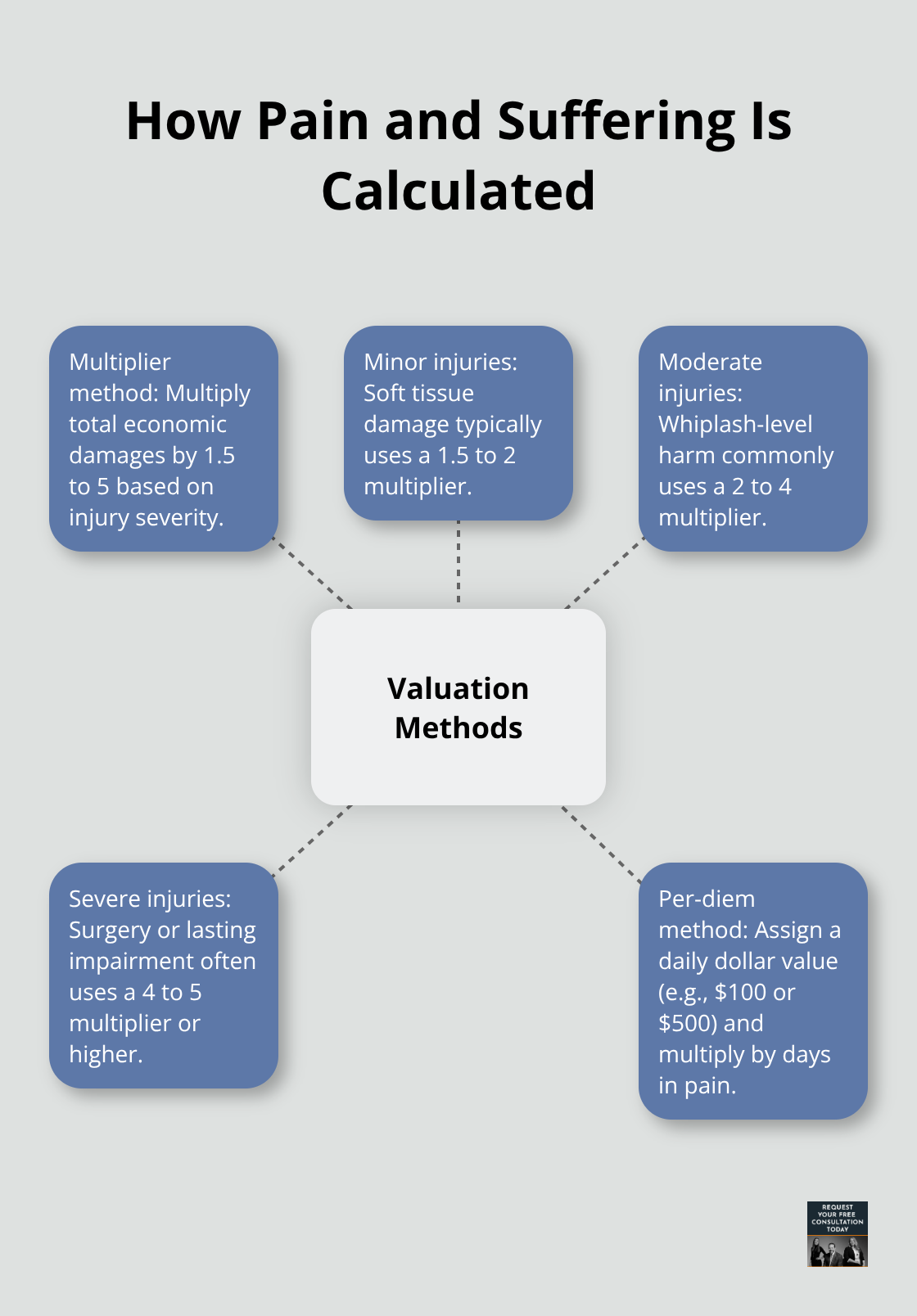
The per-diem method assigns a daily dollar value to your suffering-say $100 or $500 per day-and multiplies that by the number of days you experienced pain.
Settlement ranges vary significantly by injury type. For moderate whiplash injuries, settlements typically fall between $15,000 and $75,000; for lower back or herniated disc injuries, the range is $50,000 to $250,000; for injuries requiring surgery, expect $100,000 to $500,000 or more. Insurance companies almost always offer numbers at the bottom of these ranges, counting on you to accept quickly without understanding what your case is truly worth.
Wait for maximum medical improvement before settling
Settling before you reach maximum medical improvement-the point where your doctor says your condition has stabilized-costs you thousands in recoverable damages. Early settlement means you’re agreeing to a number that doesn’t account for future medical costs, ongoing therapy, or long-term complications that emerge months later. A fair settlement calculation adds economic damages plus a reasonable pain and suffering multiplier, then reduces that total by your percentage of fault under California’s pure comparative negligence rule. If you’re 20 percent at fault for a $100,000 claim, your net recovery is $80,000.
Account for comparative negligence in your final calculation
Getting this calculation right determines whether you recover what you deserve or leave tens of thousands of dollars on the table. Insurance companies rely on victims not understanding how these numbers work together, which is why many people accept offers that fall far short of their claim’s true value. The mistakes you make during recovery-from how you document injuries to what you post on social media-directly impact whether you hit these settlement ranges or fall below them.
Mistakes That Tank Your Settlement Before You Realize It
Insurance companies count on you making three critical errors that slash your settlement value before you ever sit down to negotiate.
Your initial offer is almost always too low
Insurers typically open with numbers 30 to 50 percent below what your claim is actually worth, banking on you being injured, stressed, and eager for quick money. Their first offer reflects what they hope you’ll accept, not what your case deserves. If you have a whiplash injury worth $40,000 to $75,000 based on settlement ranges, the insurer’s opening bid might land at $20,000 to $25,000. Accepting that number means leaving $15,000 to $50,000 on the table before negotiations even begin.
The Insurance Information Institute found that early offers significantly understate damages, especially without legal representation pushing back. You have every right to counter-offer, request additional documentation, and negotiate aggressively until you reach a number that reflects your actual losses plus fair pain and suffering compensation.
Social media posts destroy your credibility instantly
Insurance companies and defense attorneys monitor your Facebook, Instagram, and TikTok accounts specifically to find ammunition against your claim. A photo of you at a friend’s birthday party gets used to argue your injuries aren’t as severe as you claim. A comment about feeling better gets twisted into proof you’re exaggerating pain levels. Even seemingly innocent posts about weekend activities can undermine your credibility when you’re claiming permanent disability.
This isn’t theoretical risk-insurers routinely use social media posts to challenge medical testimony and reduce settlement offers. The safest approach is to avoid posting anything about your accident, injuries, or recovery until your case closes. What you share online becomes permanent evidence that opposing counsel will use against you.
Incomplete documentation gives insurers room to deny costs
Medical records alone aren’t enough to support your claim. You need photographs of visible injuries taken immediately after the accident and during recovery, a detailed symptom journal noting pain levels and functional limitations daily, receipts and invoices for every medical expense, pay stubs showing lost income, and written statements from family members about how the injury affected your daily life.
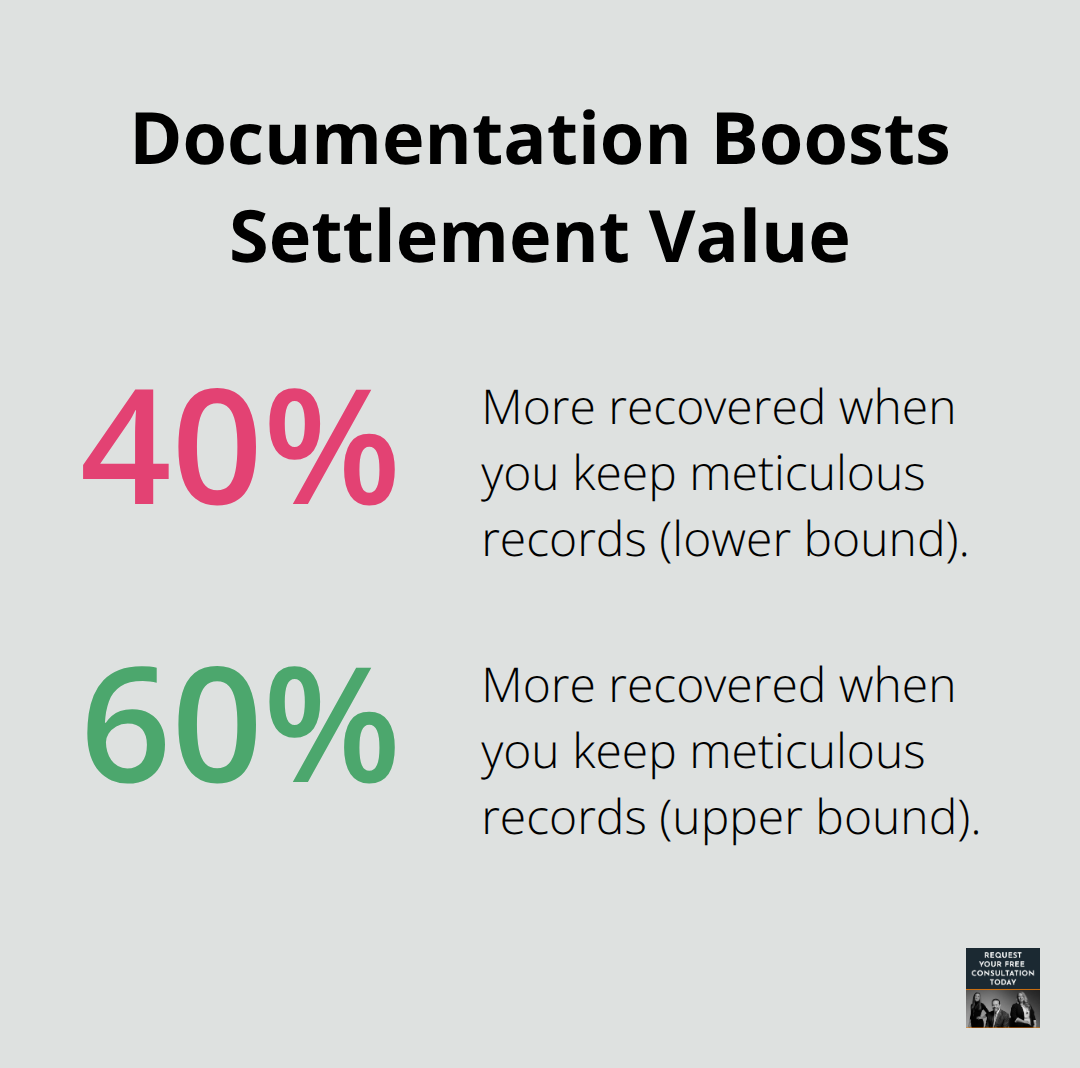
Insurance companies challenge what they can’t see in official documents, and gaps in your documentation give them room to argue that costs or suffering didn’t actually occur. Victims who maintain meticulous records typically recover 40 to 60 percent more than those who rely solely on medical bills and insurance paperwork.
Start documenting everything the moment the accident happens-photos, dates, times, symptoms, and expenses all matter when you calculate your final settlement value.
Final Thoughts
The gap between what insurance companies offer and what you actually deserve often comes down to one factor: whether you have someone fighting for your rights. We at Schaar & Silva LLP have spent years helping accident victims in Santa Cruz, Sacramento, and Oakland recover full compensation after auto accidents that insurers would otherwise deny or minimize. Our approach starts with evidence that transforms your case from medical bills into a compelling financial picture-police reports, medical records, pay stubs, photographs, and expert testimony that quantifies future losses.
We then negotiate directly with insurance companies on your behalf, which changes how adjusters treat your claim. Adjusters respond differently to attorneys who understand settlement ranges, comparative negligence calculations, and the true value of pain and suffering damages than they do to unrepresented victims. We push back against initial offers, request additional documentation, and counter with numbers backed by evidence rather than emotion. Many cases settle at fair values during this phase because insurers recognize we won’t accept pennies on the dollar.
When settlement talks stall, we represent you in court and connect you with medical lien services and psychological support specialists as needed. Contact Schaar & Silva LLP for a free case evaluation and learn exactly what your claim is worth.
