

After a vehicle accident, insurance companies often offer settlements that fall short of your actual losses. We at Schaar & Silva LLP know that vehicle accident compensation claims involve complex calculations and aggressive tactics designed to minimize what you receive.
This guide walks you through the real steps to secure fair pay for your injuries, medical bills, lost wages, and other damages.
What Compensation Can You Actually Recover
Economic and Non-Economic Damages
Vehicle accident compensation in California covers two main categories: economic and non-economic damages. Economic damages include medical expenses, lost wages, property damage, and transportation costs while you recover. Non-economic damages cover pain and suffering, emotional distress, and loss of enjoyment of life.
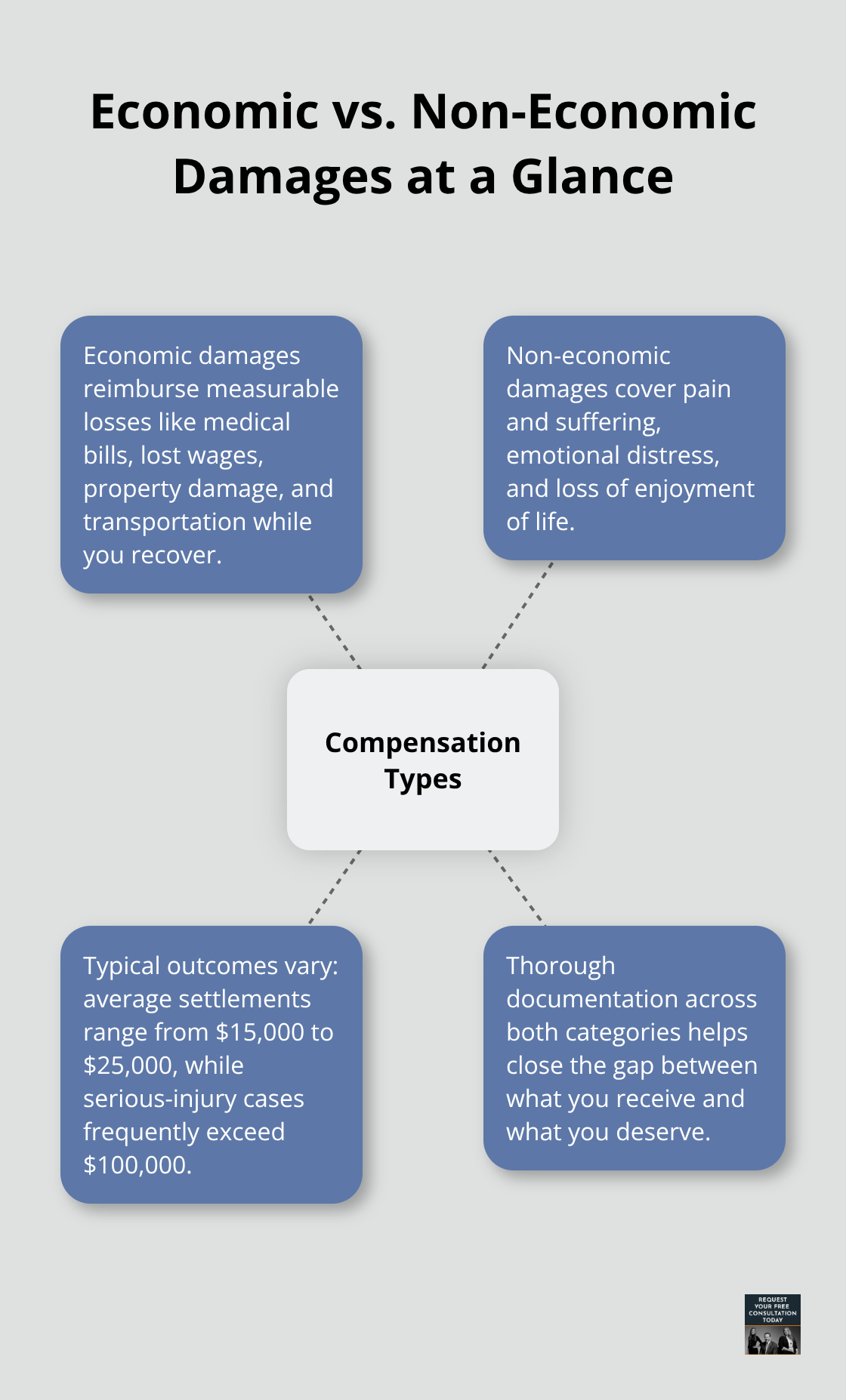
California law allows you to claim both, and the California Judicial Council reports that the average settlement for vehicle accidents ranges from $15,000 to $25,000, though cases involving serious injuries frequently exceed $100,000. The gap between what you receive and what you deserve often stems from how thoroughly you document each category of loss.
Medical Costs Add Up Quickly
Medical bills spiral rapidly after an accident. The average emergency room visit costs $1,200 to $2,500 according to the Journal of Emergency Medicine, and that’s before imaging, surgery, or ongoing physical therapy. Many accident victims underestimate their future medical costs, which is why calculating compensation requires looking beyond immediate treatment to projected recovery expenses over months or years.
California’s Filing Deadlines
California sets strict deadlines for filing claims. You have two years from the accident date to file a personal injury lawsuit, though insurance companies often pressure you to settle within weeks. This artificial urgency works in their favor, not yours. Property damage claims follow a different timeline-you typically have four years, but waiting reduces your bargaining position with insurers.
How Insurers Calculate Settlements
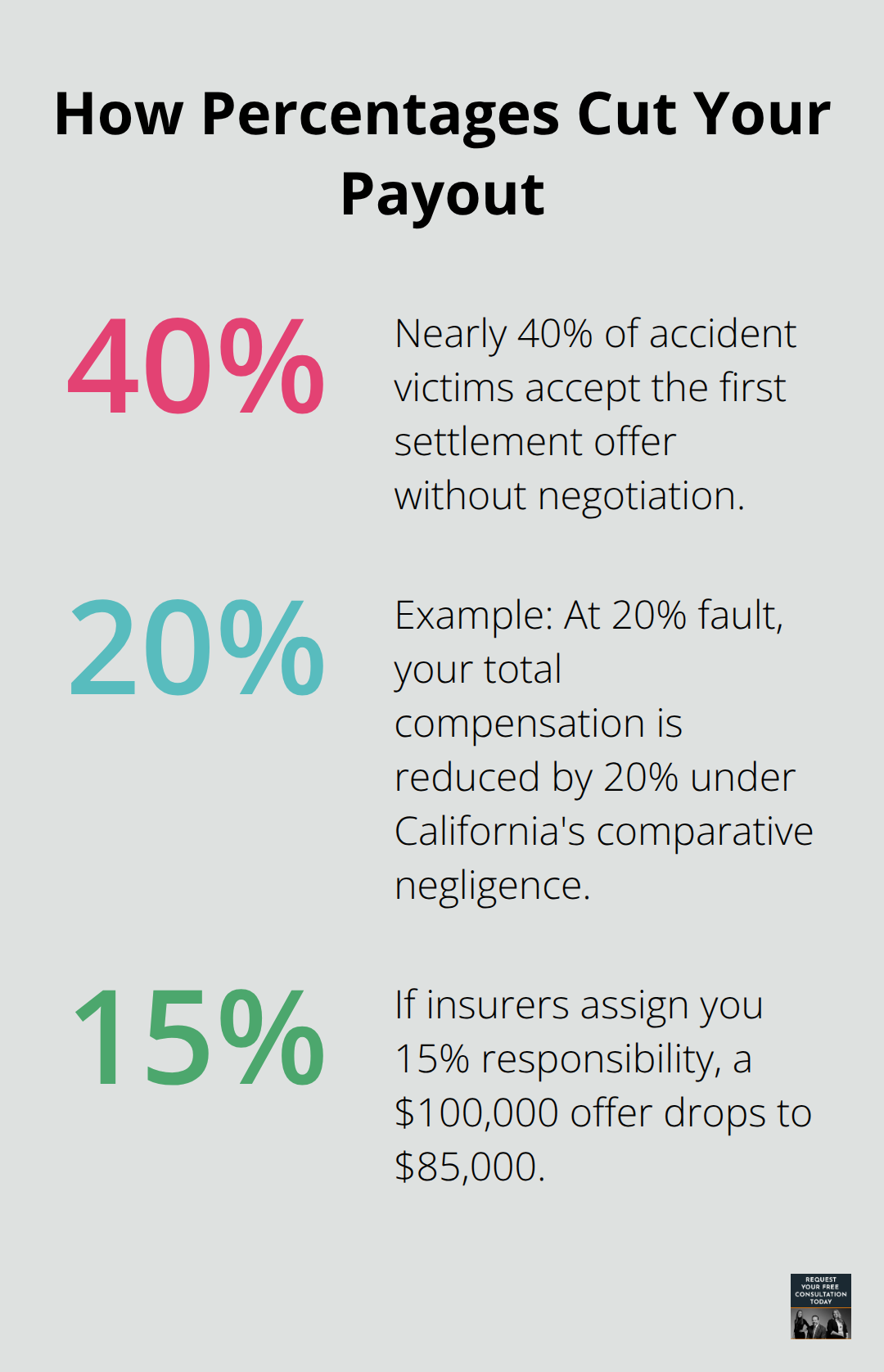
The calculation method insurers use matters significantly. They apply formulas based on medical special damages multiplied by 1.5 to 5 times depending on injury severity, then subtract your deductible and any comparative fault assigned to you. If you’re found 20% at fault under California’s comparative negligence rule, your total compensation reduces by 20%. A $50,000 settlement becomes $40,000. Understanding these calculations helps you recognize when an offer genuinely falls short of your actual losses versus when the insurance company simply lowballs you.
Insurance companies count on accident victims accepting inadequate offers without understanding how these formulas work. The tactics they use to minimize payouts-from delaying responses to questioning medical necessity-require a strong counter-strategy. Recognizing these obstacles is the first step toward protecting your claim.
What Really Stops You From Getting Fair Compensation
Insurance Adjuster Tactics That Reduce Your Payout
Insurance adjusters follow a predictable playbook to reduce what you receive. They request medical records before you finish treatment, hoping gaps in documentation justify lower offers. They delay responses to your calls and emails for weeks, betting you’ll accept a quick settlement out of frustration. According to the National Association of Insurance Commissioners, nearly 40% of accident victims accept the first settlement offer without negotiation, leaving significant money on the table. Most people don’t understand what adjusters actually search for when they review your claim-they hunt for inconsistencies in your medical timeline, gaps between your accident and first treatment, or any statement suggesting your injuries might be pre-existing.
A three-week delay before seeing a doctor gives them ammunition to argue your injuries weren’t serious. They’ll also scrutinize your social media, looking for photos of you at social events as evidence that your pain and suffering claims are exaggerated. California’s comparative negligence law gives them another tool-they assign you partial fault even when evidence doesn’t support it, knowing most people won’t fight back. If they convince you that you bear 15% responsibility, your $100,000 settlement drops to $85,000 instantly.
Building a Liability Case That Holds Up
Proving who caused the accident requires more than your account of what happened. Police reports carry significant weight, but they frequently contain errors or incomplete information. Insurance companies know this and challenge the officer’s conclusions if it benefits their client. Traffic camera footage, witness statements, and accident reconstruction reports become essential, yet accident victims rarely know how to obtain these before an adjuster controls the narrative.
Medical Records: Your Foundation for Fair Valuation
Medical records tell a critical story that many people undervalue. Your medical provider’s notes about your symptoms, the treatment recommendations, and your response to care directly impact how insurers calculate your non-economic damages. If your doctor documents that you suffered significant pain and required ongoing therapy, that supports a higher valuation than if records show minimal treatment. Accident victims who delayed seeking treatment or didn’t follow through on recommended physical therapy often think they’re saving money-this decision costs them tens of thousands in compensation because insurers use treatment gaps to argue injuries weren’t severe.
Accounting for Future Medical Needs
Future medical costs require particular attention. Many people settle without accounting for ongoing physical therapy, specialist appointments, or potential surgeries months down the road. A comprehensive medical evaluation that projects your recovery timeline and future needs becomes the foundation for calculating what you actually deserve, not what an adjuster initially offers. This forward-looking approach to your medical situation determines whether you receive adequate compensation or accept an offer that leaves you paying out-of-pocket for months of additional care.
How to Protect Your Claim From Day One
Document the Accident Scene Thoroughly
The moment after an accident, your actions determine whether you’ll receive fair compensation or accept whatever an insurance company offers. Most people focus on their injuries and miss the critical window where evidence is freshest and witnesses remain available. Start at the accident scene itself. Photograph the vehicle damage from multiple angles, capture the road conditions, weather, traffic signs, and any visible injuries. Take photos of the accident location from different positions to show sight lines and visibility. Get the names, phone numbers, and addresses of every witness, not just their statements. The National Highway Traffic Safety Administration reports that witness accounts fade significantly within 48 hours, and many witnesses become unreachable after a week. Police officers will document the scene, but their reports often omit details that matter for your compensation claim.
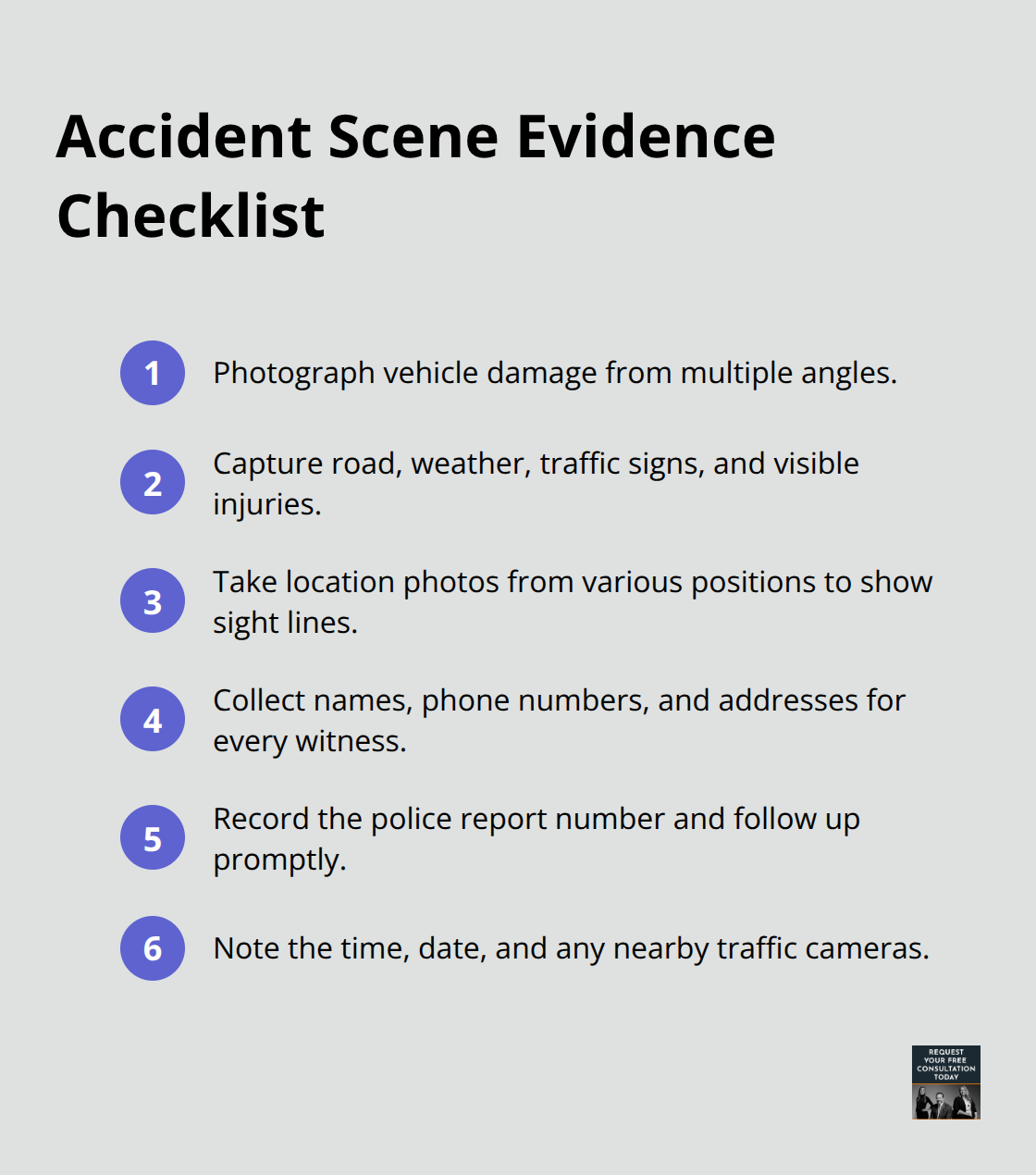
Your photos and witness information fill those gaps when insurance adjusters later question what happened.
Seek Medical Attention Immediately
Seek medical attention the same day as your accident, even if you feel fine. Delayed treatment is the single biggest mistake accident victims make because insurance companies weaponize those delays. When you wait three weeks to see a doctor, adjusters argue your injuries weren’t serious enough to warrant immediate care. Your medical records create a timeline that connects your accident directly to your injuries. Request copies of all medical records, imaging results, and provider notes immediately after each appointment. Document your pain levels, limitations, and how injuries affect your daily activities. Medical providers often focus on treatment rather than documenting severity, so keep your own detailed log of symptoms and functional restrictions. This personal documentation supplements medical records and strengthens your valuation for non-economic damages.
Obtain Critical Evidence Before It Disappears
Gather police reports within days of the accident, not weeks later. Request the accident report number from the responding officer and obtain copies from the Santa Cruz County Sheriff’s Office. Review the report carefully for errors in vehicle descriptions, fault determination, or witness information. Request traffic camera footage from nearby businesses or traffic lights immediately, as retention periods typically range from 30 to 90 days. Accident reconstruction reports carry substantial weight with insurance companies, and obtaining one early signals that you’re building a serious case rather than accepting a quick settlement. If you’re in Santa Cruz County and need guidance navigating medical providers and ensuring your treatment aligns with your claim, the legal team at Schaar & Silva LLP can direct you to medical lien services that handle your bills while your case resolves.
Final Thoughts
Securing fair vehicle accident compensation requires action at every stage, from the accident scene through settlement negotiations. The documentation you gather, the medical treatment you pursue, and the evidence you preserve directly determine whether you receive adequate payment or accept an offer that leaves you short. Insurance companies depend on accident victims making mistakes early-delayed medical care, incomplete scene documentation, and accepting quick settlements without understanding their true losses.
The gap between what insurers initially offer and what your claim actually deserves often reaches tens of thousands of dollars. This gap exists because most people don’t recognize how adjusters calculate settlements or don’t know how to challenge lowball offers. Your medical records, witness statements, police reports, and personal documentation of your injuries and limitations form the foundation for demanding fair payment.
Contact Schaar & Silva LLP to discuss your accident and what you can realistically recover for vehicle accident compensation. We serve Santa Cruz County and understand the specific challenges accident victims face in your area. The consultation helps you understand whether your current settlement offer is fair or whether pursuing your claim further makes financial sense.
