

A car crash leaves you with more than physical injuries-it leaves you with stacks of medical bills that arrive faster than you can process them. At Schaar & Silva LLP, we’ve helped countless accident victims in Santa Cruz County, Sacramento, and Oakland navigate the financial chaos that follows a collision.
The reality is that car crash medical bills can spiral into tens of thousands of dollars within weeks. This guide shows you concrete strategies to reduce what you owe and protect your recovery.
Medical Bills After a Car Crash: What You’re Facing
Emergency and Hospital Costs Add Up Fast
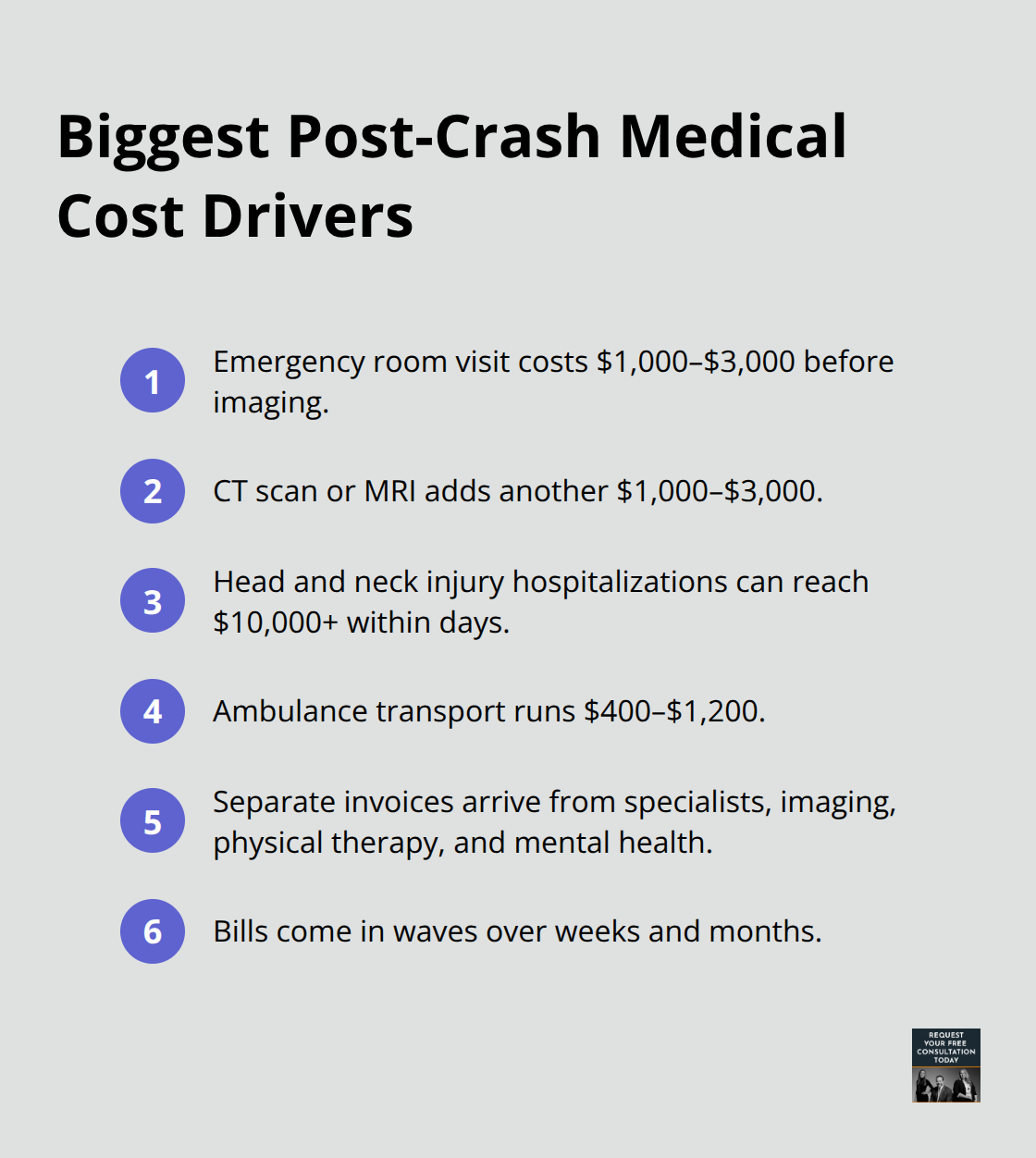
The moment you leave the hospital, medical bills start arriving-and they keep coming. An emergency room visit alone costs between $1,000 and $3,000 before any imaging or treatment, according to standard hospital billing data. If you need a CT scan or MRI to diagnose your injuries, add another $1,000 to $3,000. Head and neck injuries, which are common in car crashes, generate the highest hospitalization costs, sometimes reaching $10,000 or more within the first few days.
The Full Scope of Medical Expenses
You pay for far more than the initial treatment. Ambulance transport runs $400–$1,200 depending on distance and level of care. Specialist visits, physical therapy clinics, imaging centers, and mental health treatment for trauma or PTSD related to the crash all send separate invoices. Bills arrive in waves, not all at once-hospitals send invoices days after discharge, imaging centers bill weeks later, and physical therapy clinics add charges months into your recovery. This staggered billing creates constant financial pressure while you still heal.
The Payment Gap Creates Real Hardship
California law holds the at-fault driver financially responsible for every medical bill, but that responsibility doesn’t mean you get paid upfront. You cover costs now and recover money later from their insurance settlement or a court verdict. Your health insurance may cover some bills immediately, but your insurer will want reimbursement from any settlement you receive. Medical lien providers will treat you now and wait for payment from your case proceeds. Some providers demand immediate payment regardless of fault, which forces you to choose between delaying treatment or paying out-of-pocket while waiting for compensation.
Lost Income and Additional Costs Compound the Burden
The financial burden grows faster than most people anticipate. Lost wages from time away from work pile up alongside transportation costs to medical appointments during recovery. This combination of medical expenses, lost income, and ongoing treatment costs creates a financial crisis precisely when you’re least able to handle it. Understanding your payment options and knowing what you can negotiate directly impacts how much money you actually keep from your settlement-which is why the next section covers concrete strategies to reduce what you owe.
How to Cut What You Actually Owe
Request Itemized Bills and Spot Errors
Hospitals and providers will negotiate medical bills, but only if you ask. Most people assume the invoice they receive is final, which costs them thousands. Request an itemized bill from every provider within 30 days of receiving the statement. Hospital billing departments routinely overcharge for supplies, duplicate tests, or services never rendered. One common error: charging for two emergency room visits when only one occurred, or billing for imaging that was ordered but cancelled. You won’t find these mistakes without the itemized breakdown.
Once you have it, compare each charge against your medical records. If you received a CT scan on a specific date, the bill should match that date. If a provider billed you for a specialist consultation you never attended, dispute it immediately in writing.
Negotiate Directly with Hospitals and Providers
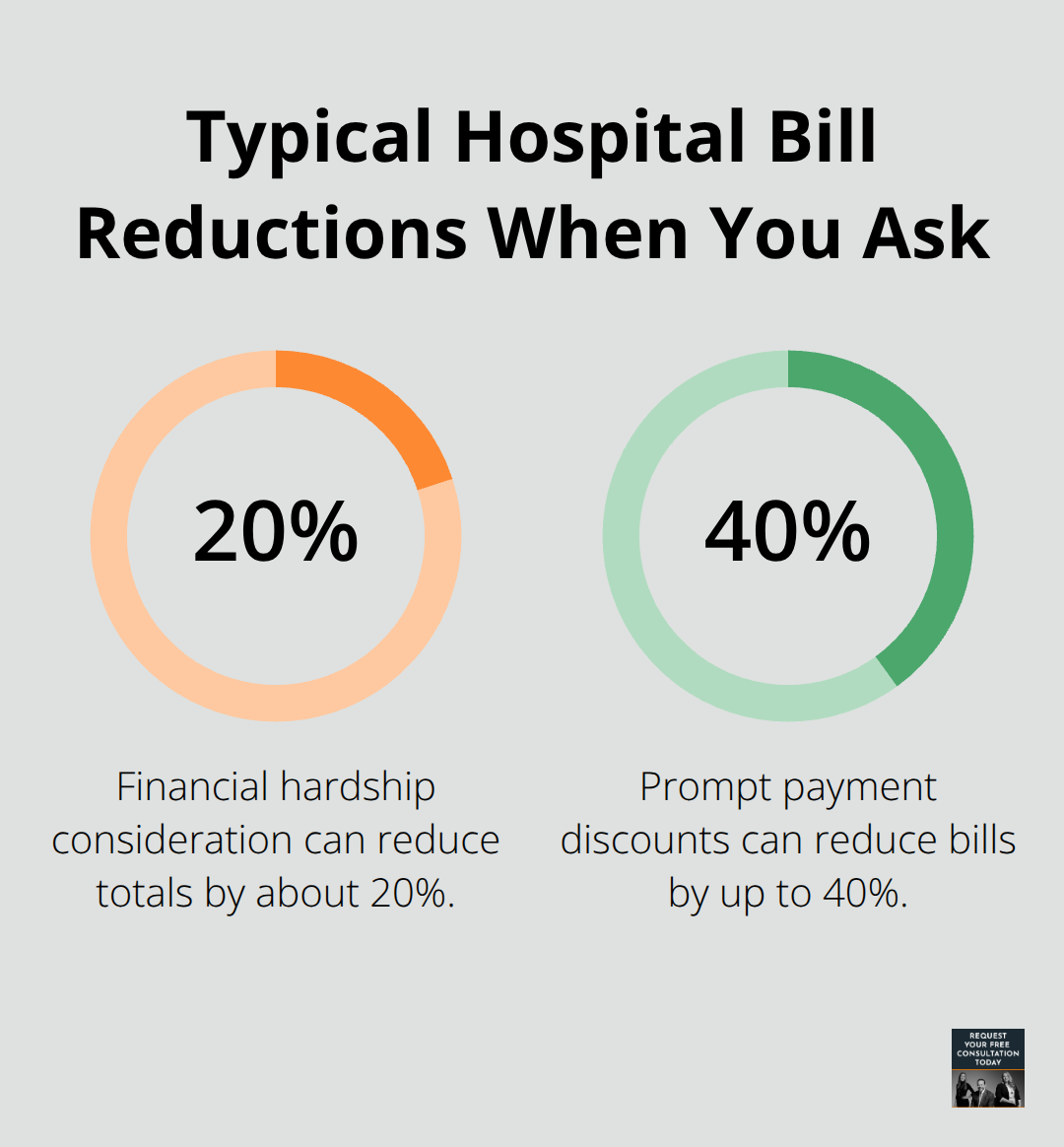
Hospitals operate on thin margins and often reduce bills by 20 to 40 percent when patients request financial hardship consideration or prompt payment discounts. Call the hospital’s financial assistance department and explain your situation directly. Many California hospitals, including those serving Santa Cruz County, Sacramento, and Oakland, have financial assistance programs for patients injured in accidents.
Use Medical Liens to Eliminate Upfront Payment
If a provider refuses to negotiate, medical lien companies will step in and cover treatment costs while your case resolves. These lien providers have relationships with hospitals and imaging centers across California and can often secure better rates than you would negotiating alone. The key difference: when you use a medical lien, the provider gets paid from your settlement, not from your pocket. This removes the pressure to pay immediately and gives you time to focus on healing.
However, not all providers accept liens. Smaller practices and some orthopedic clinics demand upfront payment, while most California hospitals and imaging centers accept liens readily. Call ahead before scheduling treatment to confirm lien acceptance.
Protect Your Credit with a Letter of Protection
If a provider threatens collections or demands payment while your case is active, contact your attorney immediately. A letter of protection prevents bills from going to collections and stops providers from pursuing you during the claim process. This legal tool protects your credit and gives you breathing room while you recover and your case proceeds toward settlement. Understanding these payment protection strategies positions you to handle the insurance claims process more effectively, which determines how much compensation you ultimately recover.
Who Pays for Your Medical Bills After a Crash
Health Insurance Creates a Hidden Cost Through Subrogation
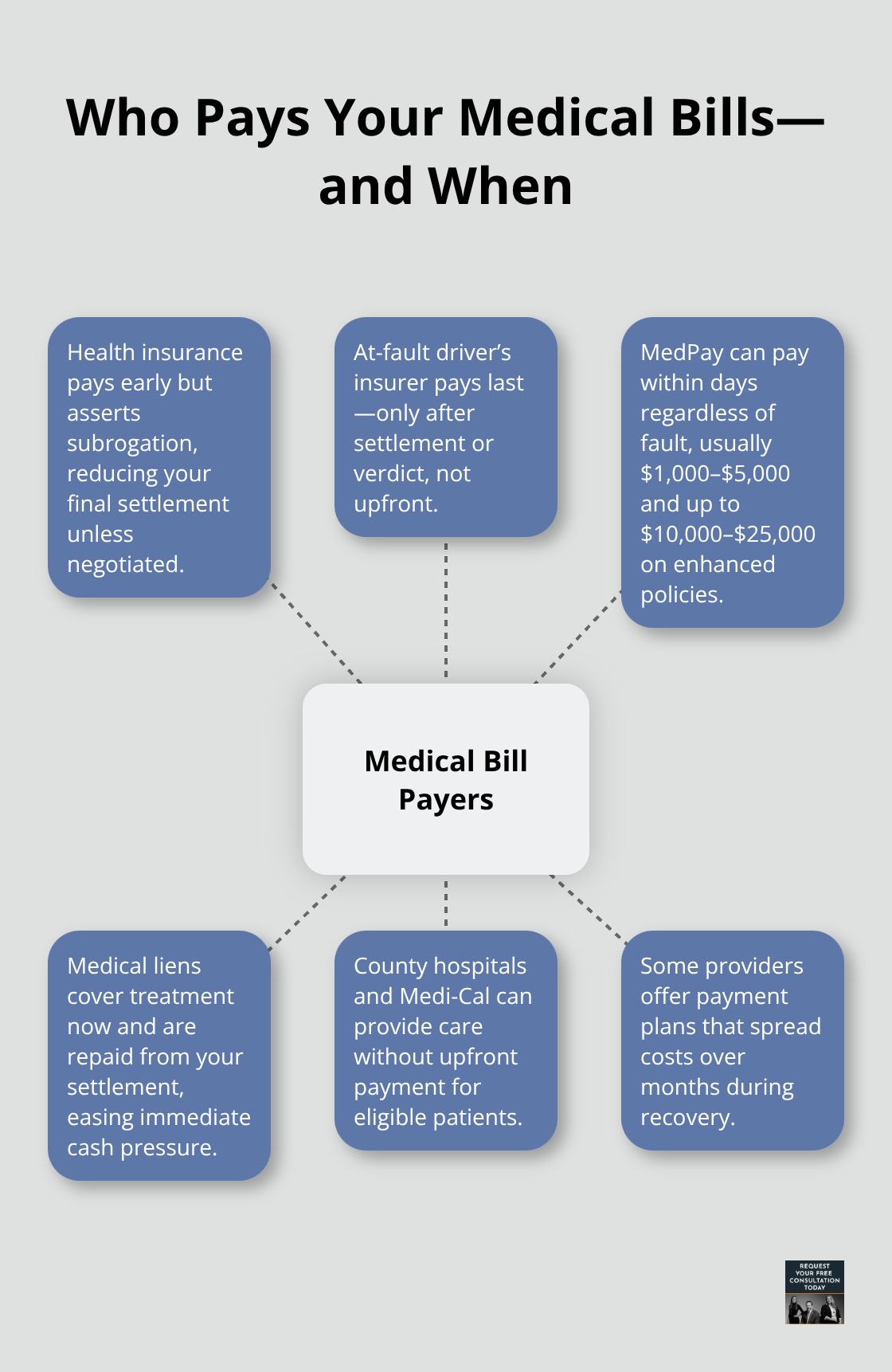
Your health insurance, if you have it, covers medical bills immediately after a crash, but this creates a hidden complication that costs most accident victims thousands of dollars. When your insurer pays your hospital bills, they gain the legal right to seek reimbursement from any settlement you receive from the at-fault driver’s insurance company. This process, called subrogation, means your health insurance company becomes a creditor with a claim against your settlement.
If you settle for $50,000 and your insurer paid $15,000 in medical bills, they will demand repayment of that $15,000 from your settlement proceeds before you see the money. Without skilled negotiation, you lose that full amount.
The At-Fault Driver’s Insurance Pays Last, Not First
The at-fault driver’s insurance company bears the legal responsibility for your medical costs under California’s fault-based system, but they pay only at the end of the claim process, not upfront. This timing gap is why temporary payment solutions matter so much during your recovery. You cover costs now and recover money later from their settlement or a court verdict.
Options When You Lack Health Insurance
If you lack health insurance, your options narrow but don’t disappear entirely. County hospitals in Sacramento and the surrounding region, such as UC Davis Medical Center, accept uninsured patients and work with medical lien providers to delay payment until your case resolves. Medi-Cal covers emergency and follow-up care for qualifying individuals, which eliminates immediate out-of-pocket costs. Medical lien companies will fund your treatment directly with hospitals and imaging centers across Santa Cruz County, Sacramento, and Oakland, then collect from your settlement. Some doctors accept payment plans that spread costs over months, giving you breathing room.
The critical mistake is delaying medical treatment because you lack insurance. Untreated injuries become more expensive to treat later and weaken your damage claim because the insurance adjuster will argue the injury wasn’t serious if you waited weeks to seek care.
MedPay Provides the Fastest Upfront Payment
Your MedPay coverage, if your auto policy includes it, provides the fastest upfront payment option. Standard MedPay covers $1,000 to $5,000 in medical costs with no deductible or co-pay, and enhanced policies reach $10,000 to $25,000 or higher. MedPay pays within days regardless of fault determination, which means you can cover emergency room visits, imaging, and specialist visits immediately while your case develops. MedPay also covers your passengers, so family members injured in the crash benefit from this coverage too.
The downside is that MedPay has limited subrogation rights, meaning your insurer cannot recover as much from the at-fault settlement as a health insurance company can. If you expect serious injuries requiring extensive ongoing treatment, MedPay alone likely won’t cover your full medical needs, so combining it with medical liens or negotiated provider agreements becomes necessary. When evaluating your insurance options, compare what your policy actually covers against what you’ll realistically owe. Most accident victims underestimate their total medical costs and run out of coverage midway through recovery.
Final Thoughts
Medical bills after a car crash demand immediate action, but you hold more power than you realize. The strategies in this guide-requesting itemized bills, negotiating with hospitals, using medical liens, and understanding your insurance options-give you concrete tools to reduce what you owe and protect your recovery. Start with one action: request an itemized bill from every provider within 30 days to catch errors and create the foundation for negotiation.
Your insurance coverage shapes your financial outcome significantly. If you have health insurance, understand that subrogation will reduce your final settlement unless you negotiate those liens down. MedPay offers the fastest payment option if your policy includes it, covering $1,000 to $25,000 depending on your coverage level. If you lack insurance, county hospitals and Medi-Cal provide pathways to care without immediate payment demands, and medical lien providers eliminate upfront payment pressure by covering costs while your case resolves.
Document everything as your case progresses-every medical bill, every lost wage, every transportation cost to appointments. This documentation becomes your evidence when negotiating with the at-fault driver’s insurance company and determines how much compensation you ultimately recover. We at Schaar & Silva LLP help accident victims in Santa Cruz County, Sacramento, and Oakland navigate car crash medical bills while pursuing full compensation, and we direct you to medical lien services that maximize your net recovery. Contact us for a free consultation to evaluate your case and explore the relief options available to you.
