

Car accidents in Oakland happen frequently, and figuring out what your claim is worth can feel overwhelming. The amount you receive depends on several factors, from your medical bills to how California’s liability laws apply to your situation.
At Schaar & Silva LLP, we help accident victims understand what Oakland car accident compensation actually looks like. This guide walks you through the real numbers and rules that shape your settlement.
What Costs and Losses Actually Drive Your Settlement
Medical Expenses Form Your Claim’s Foundation
Your Oakland car accident settlement starts with hard numbers. Medical expenses form the foundation of what you can claim, and they matter far more than most people realize. In California, the average car accident settlement sits around $23,900, but this figure masks enormous variation based on injury type and treatment duration. A minor whiplash case typically settles between $2,500 and $30,000, while serious injuries requiring hospitalization easily push into six figures.
Future medical costs carry as much weight as bills you’ve already paid. If your injury requires ongoing physical therapy, specialist appointments, or imaging over the next five years, those projected expenses belong in your claim. Highland Hospital near E 31st Street operates as Oakland’s Level II trauma center, and treatment there generates documented costs that strengthen your claim’s credibility. Insurance adjusters scrutinize every receipt and medical record, so obtain copies of all bills, discharge summaries, and treatment plans immediately after your accident.
Lost Income and Property Damage Complete Economic Damages
Lost income follows medical expenses as the second pillar of economic damages. You can claim wages lost during recovery and also project future earning capacity if your injury creates lasting limitations. A construction worker sidelined for six months faces different income loss than an office worker, and California courts recognize this distinction.
Property damage rounds out the economic side, covering vehicle repair or replacement at fair market value. Don’t settle for the at-fault driver’s insurer’s initial estimate; get independent repair quotes from trusted Oakland shops. The distinction between collision coverage and your claim against the other driver matters here-collision covers your own repairs regardless of fault, while your liability claim targets the at-fault party’s insurance.
Non-Economic Damages Multiply Your Total Claim Value
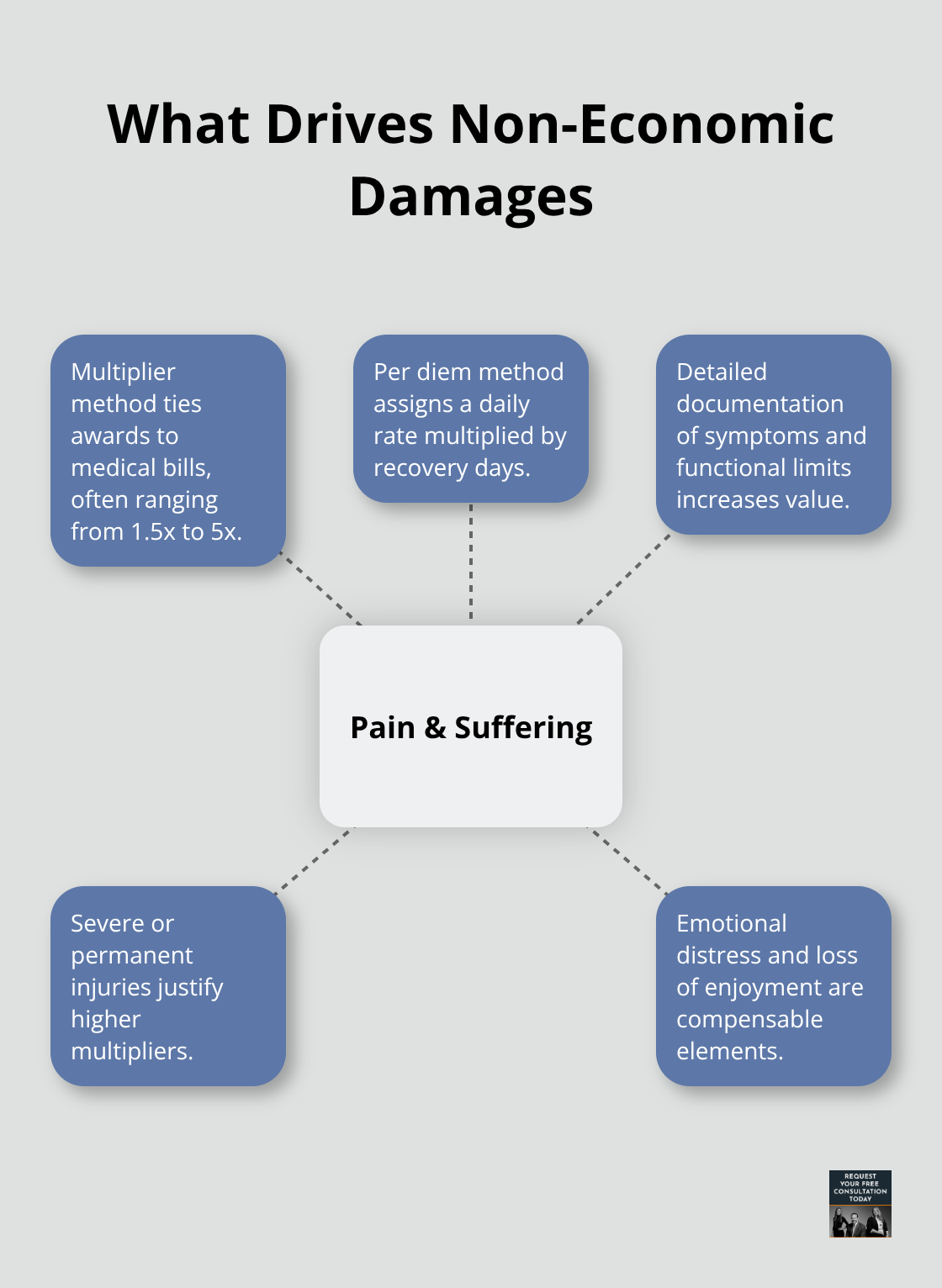
Pain and suffering in Oakland car accidents typically ranges from 1.5 times to 5 times your medical expenses, though severe cases with permanent injury can push far higher. The multiplier method works like this: if your medical bills total $50,000, a conservative multiplier of 1.5 yields $75,000 in pain and suffering, while a 5x multiplier reaches $250,000. The per diem method instead assigns a daily rate to your recovery period-say $500 per day for 180 days of recovery equals $90,000.
Insurance companies favor lower multipliers and shorter recovery timelines, so your documentation of ongoing symptoms, treatment frequency, and functional limitations directly influences the final number. Long-term trauma, permanent scarring, or chronic pain conditions justify higher multipliers because they affect your quality of life indefinitely. Emotional distress and loss of enjoyment of life also feed into non-economic damages; if you can no longer play the sport you loved or attend family events due to pain, that loss has monetary value under California law.
Your attorney’s role here proves critical-experienced legal representation typically yields significantly higher non-economic damage awards than settlements you negotiate alone. Understanding how these three damage categories interact with Oakland’s specific accident patterns and medical infrastructure helps you evaluate what your claim should realistically be worth before you move forward with settlement discussions.
How Oakland’s Location and Laws Shape What You’ll Actually Receive
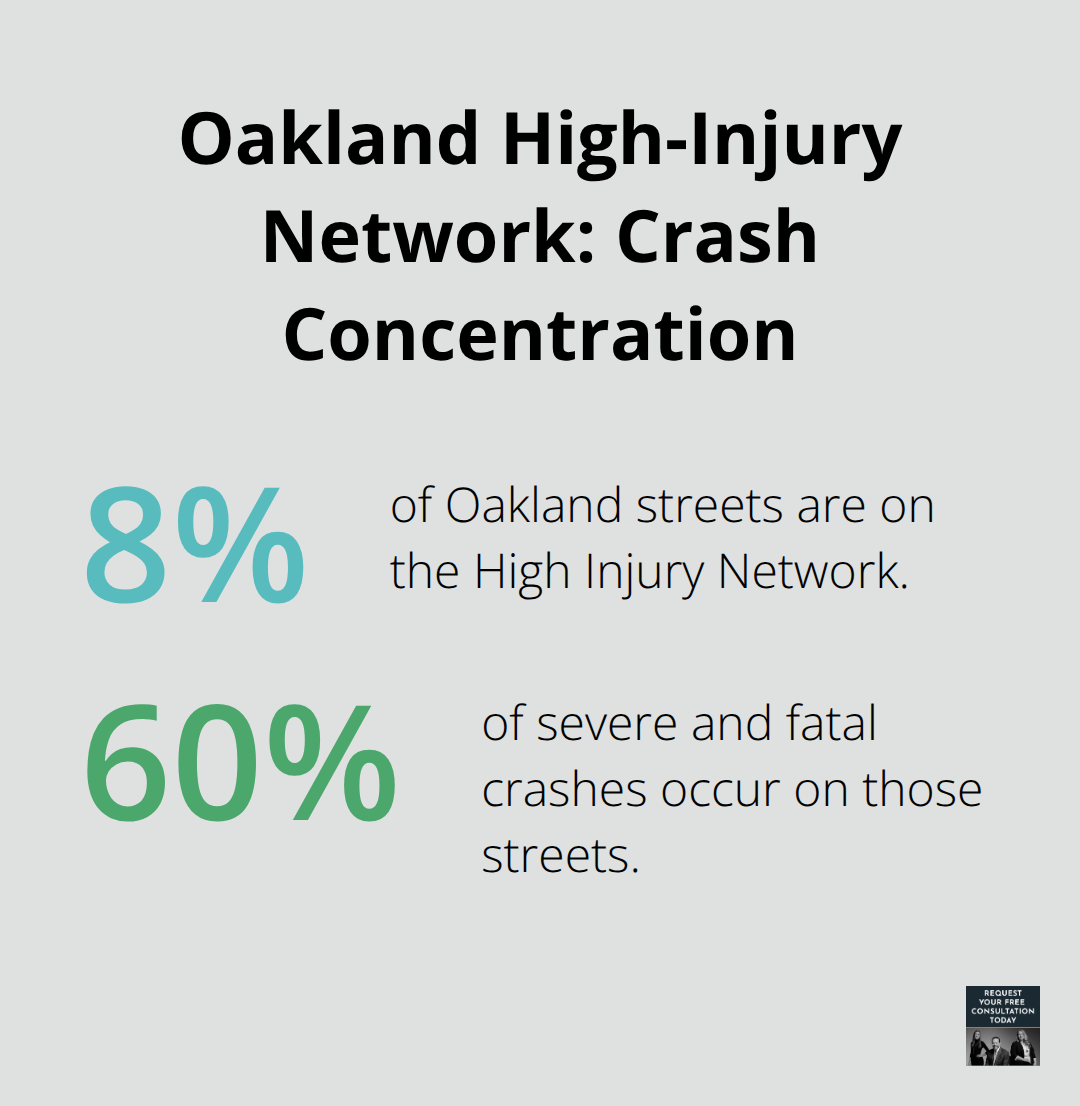
Oakland’s position within the California legal system and its unique traffic environment directly influence settlement values in ways that generic calculators completely miss. The city sits in Alameda County, where Superior Court judges and juries have established patterns in how they evaluate injury cases, and these local precedents matter more than national averages. Oakland also experiences concentrated crash risk on specific corridors-the 2024 High Injury Network analysis found that just 8% of Oakland streets account for 60% of severe and fatal crashes, meaning your accident location dramatically affects both liability strength and injury severity patterns.
High-Risk Corridors Increase Injury Severity and Claim Value
If your crash occurred on one of these high-risk corridors like International Boulevard or San Pablo Avenue, you are statistically more likely to have suffered serious injury, which strengthens your economic damages claim. This geographic concentration also means insurance adjusters in Oakland know which streets produce the worst outcomes, so they cannot credibly dispute that high-risk corridors produce predictable, severe injuries. The concentration of crashes on these corridors creates a documented pattern that supports your claim’s credibility when you negotiate with insurers.
California’s Comparative Negligence Rule Reduces Your Recovery
California’s pure comparative negligence rule operates differently than many states and directly reduces what you receive if you share any fault. Under California Vehicle Code Section 22358.7, the state’s fault-based system requires proving the other driver violated speed laws, distracted driving prohibitions, or other traffic codes to establish negligence. This matters in Oakland because the city’s Safe Oakland Streets initiative and Vision Zero goals have increased police enforcement and public awareness around dangerous driving behaviors, creating more documented evidence of violations.
Medical Care Costs and Treatment Records Strengthen Your Claim
Highland Hospital’s Level II trauma designation means serious Oakland injury victims receive world-class emergency care with fully documented treatment records that insurance companies cannot easily challenge. Treatment costs at Highland and other Alameda County facilities reflect Bay Area medical inflation-expect your medical expense baseline to run 15-20% higher than national averages, which proportionally increases your non-economic damages multiplier since pain and suffering calculations tie directly to medical costs.
The Two-Year Statute of Limitations Demands Immediate Action
The statute of limitations in California gives you exactly two years from your accident date to file a personal injury lawsuit, and this deadline applies regardless of settlement negotiations. Do not delay pursuing your claim while hoping for an insurance company offer, as missing this deadline eliminates your right to recover anything through the court system. The combination of Oakland’s high-injury corridors, documented traffic enforcement patterns, and Bay Area medical costs creates a unique settlement environment where location and timing both matter significantly to your final recovery amount.
What Damages Can You Actually Recover
Economic Damages: Document Every Financial Loss
Economic damages represent the straightforward financial losses you incurred from your Oakland car accident. Medical bills, vehicle repair estimates, lost paychecks, and future medical costs all fall into this category because they have concrete dollar amounts attached. California law treats economic damages as provable losses that must be documented with receipts, invoices, and medical records. When you claim $15,000 in medical expenses, you need discharge summaries and itemized bills from Highland Hospital or other treatment providers to back that number up.
Insurance adjusters will challenge any economic damage claim lacking proper documentation, so collect everything immediately after your accident. Property damage claims require independent repair quotes from Oakland mechanics, not just the at-fault driver’s insurer’s initial estimate, which frequently undervalues repair costs.
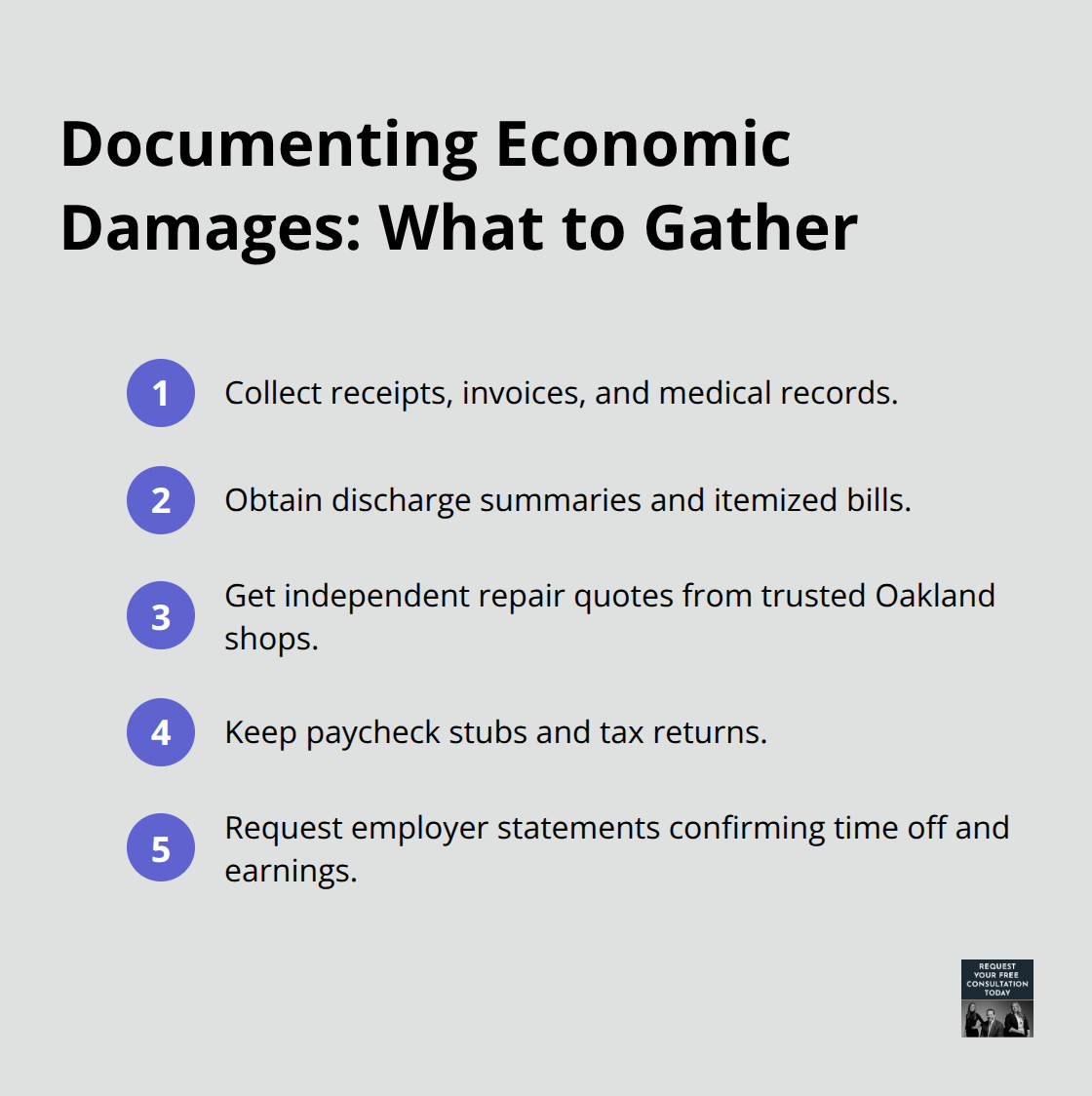
Lost wages demand paycheck stubs, tax returns, and employer statements confirming your actual earnings and recovery time.
Future Costs Multiply Your Claim Value
Future medical expenses and lost income present more complexity because they require medical expert testimony about your prognosis and earning capacity limitations. However, they can dramatically increase your claim’s value if your injury creates permanent restrictions. A worker with a spinal injury faces decades of physical therapy costs and reduced earning capacity, which expert witnesses can quantify and present to insurance companies or courts. These projections transform a modest immediate claim into a substantial recovery that accounts for your long-term reality.
Non-Economic Damages: Pain, Suffering, and Lost Quality of Life
Non-economic damages capture the pain, suffering, and quality-of-life losses that economic damages cannot measure. California allows you to recover for physical pain, emotional distress, loss of enjoyment of activities you loved, and disruption to your relationships. The multiplier method ties non-economic damages directly to your medical expenses, typically ranging from 1.5 to 5 times your documented medical costs, with permanent injuries and long-term recovery justifying higher multipliers.
A $40,000 medical bill with a 3x multiplier yields $120,000 in pain and suffering, while catastrophic injuries with permanent disability can support multipliers exceeding 5x. The per diem approach instead assigns a daily dollar amount to your recovery period, useful when your injury creates months or years of ongoing treatment and functional limitations. Insurance companies aggressively minimize non-economic damages by arguing shorter recovery timelines and lower multipliers, making detailed documentation of your symptoms, treatment frequency, and functional impact essential to counter their tactics.
Punitive Damages: Reserved for the Worst Conduct
Punitive damages remain rare in Oakland car accident cases and require proving the at-fault driver acted with gross negligence or intentional misconduct, not simple carelessness. Extreme speeding in a residential area, driving under the influence, or fleeing the scene might support punitive damages, but ordinary negligence does not qualify. Courts award punitive damages to punish egregious conduct and deter similar behavior, and they can substantially increase your total recovery when the evidence supports them.
Final Thoughts
Your Oakland car accident compensation depends on multiple interconnected factors that extend far beyond a simple online calculator. Injury severity, documented medical expenses, lost income, property damage, and your degree of fault all shape the final number, but location matters equally-if your crash occurred on one of Oakland’s high-injury corridors where 8% of streets account for 60% of severe crashes, your claim carries different weight than accidents on safer streets. California’s pure comparative negligence rule means even partial fault reduces your recovery proportionally, so establishing clear liability through police reports, witness statements, and traffic code violations becomes essential to maximizing what you receive.
The gap between what insurance companies initially offer and what your claim actually warrants often reaches tens of thousands of dollars. Non-economic damages like pain and suffering typically range from 1.5 to 5 times your medical expenses, yet adjusters routinely push toward the lowest multiplier and shortest recovery timeline. Future medical costs and lost earning capacity can transform a modest immediate claim into substantial recovery, but only if medical experts document your prognosis and limitations.
Without proper representation, you leave money on the table. Contact us for a free case evaluation tailored to your Oakland car accident compensation claim. The two-year statute of limitations means acting now protects your right to recover everything your claim deserves.
