
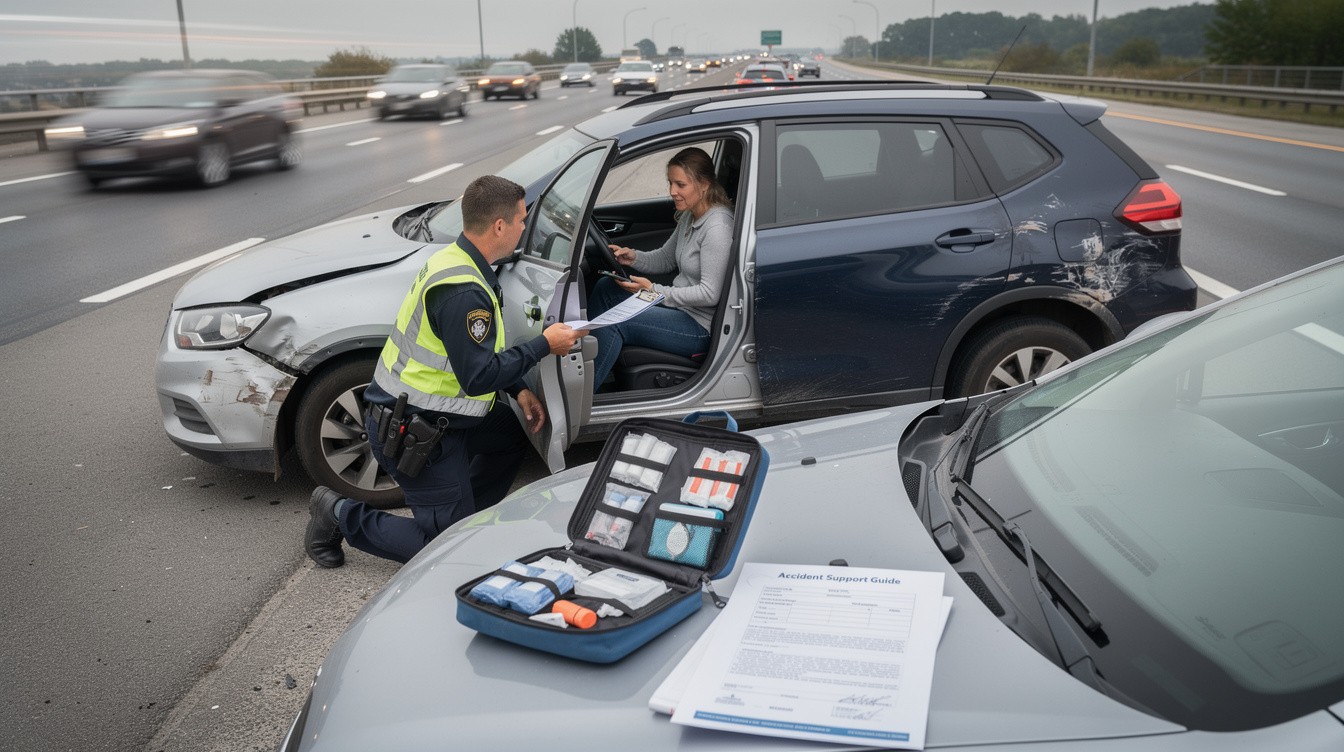
A vehicle accident can turn your life upside down in seconds. Medical bills pile up, insurance companies demand answers, and you’re left wondering what comes next.
We at Schaar & Silva LLP created this guide to connect you with vehicle accident resources in California that actually help. Whether you’re in Santa Cruz County, Sacramento, or Oakland, you’ll find practical steps to take right now and support options available to you.
What to Do Immediately After an Accident
Document the Scene with Photos and Details
The first few hours after a vehicle accident determine whether you’ll have strong evidence for your claim or weak documentation that undermines your case. Most people freeze up, exchange information haphazardly, and leave the scene without the details that matter. Photograph everything at the accident scene: vehicle damage from multiple angles, the overall scene layout, road conditions, traffic signals, and any visible injuries.
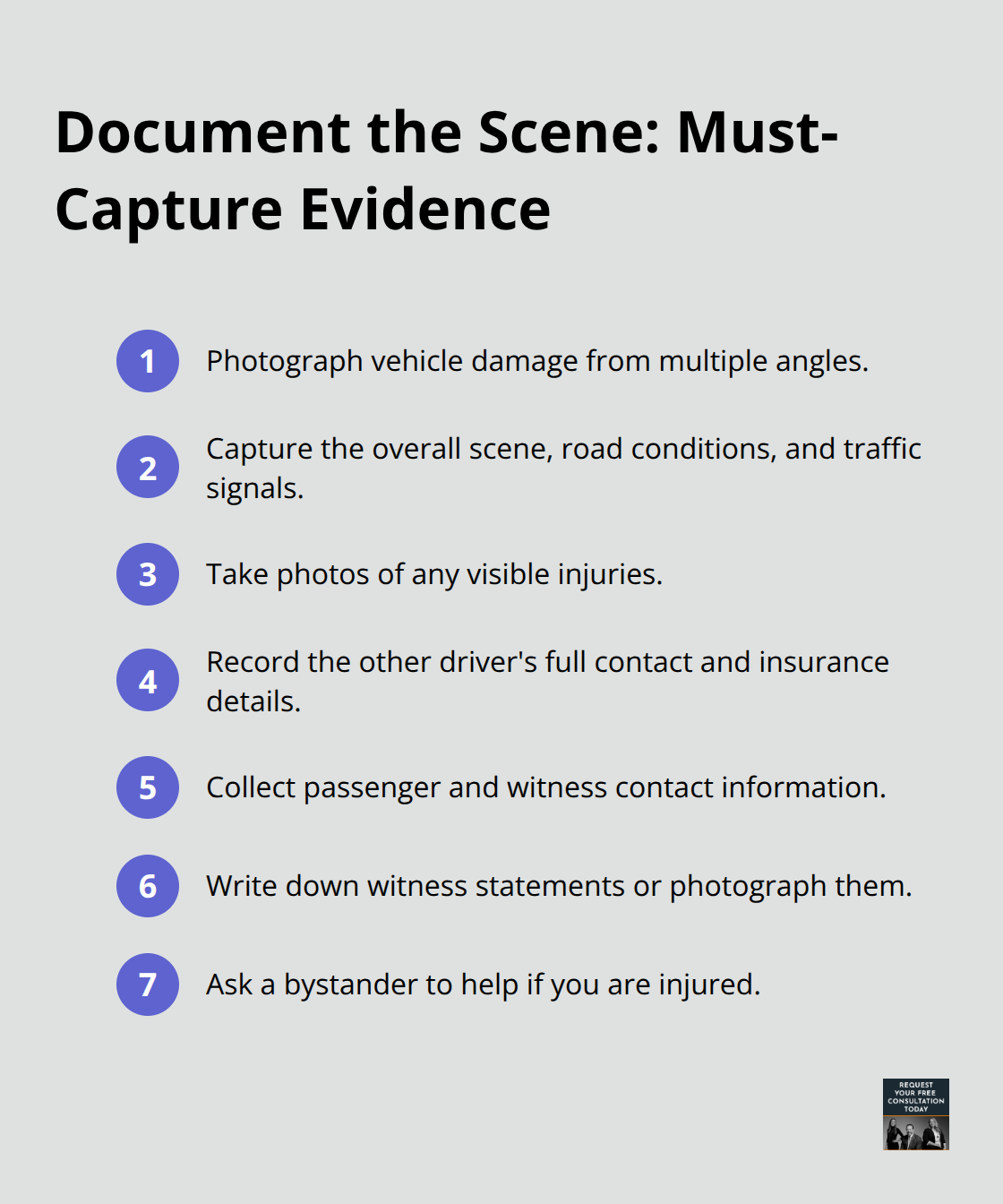
If you’re in Sacramento, where nearly one-third of truck crashes are rear-end collisions according to 2023 city data, photos showing the point of impact prove especially valuable. Write down the other driver’s full name, address, phone number, driver’s license number, vehicle registration, and insurance details. Get the same information from any passengers in their vehicle. Ask nearby witnesses for their contact information and what they saw, then photograph or write down their statements. Do not rely on your memory later. If you’re injured and unable to document the scene yourself, ask a passenger or bystander to take photos with your phone.
File Reports and Notify Authorities
Police reports matter less than you think for liability purposes, but file one anyway by calling the non-emergency line or, if injuries are serious, calling 911. When the officer arrives, stick to facts about what happened, not opinions about fault. Within 10 days, file California’s DMV Form SR-1 if anyone was injured or property damage exceeds $1,000; failure to file results in automatic suspension of your driving privileges according to California DMV requirements. Contact your insurance company promptly, but do not give a recorded statement to the other driver’s insurer without legal counsel. Give only basic information: names, dates, and policy numbers. Avoid detailed narratives that insurers later use against you.
Seek Medical Care and Preserve Evidence
Seek medical evaluation immediately, even if you feel fine. Whiplash, internal injuries, and traumatic brain injuries often show no symptoms for hours or days. Visit an emergency room or urgent care center and describe all pain, even minor discomfort. Keep every medical record, receipt, and follow-up appointment documentation. This paper trail directly supports your damages claim. If you cannot afford immediate care, community health centers across California offer sliding-scale fees. Then contact a personal injury attorney for a free case evaluation. Most firms work on a zero-fee guarantee-you pay nothing unless you win. An attorney preserves critical evidence like truck black-box data, maintenance records, and driver logs that disappear fast, and handles communication with insurers so you avoid costly mistakes while focusing on recovery.
Understanding Your Rights and Compensation
How California’s Negligence Laws Protect You
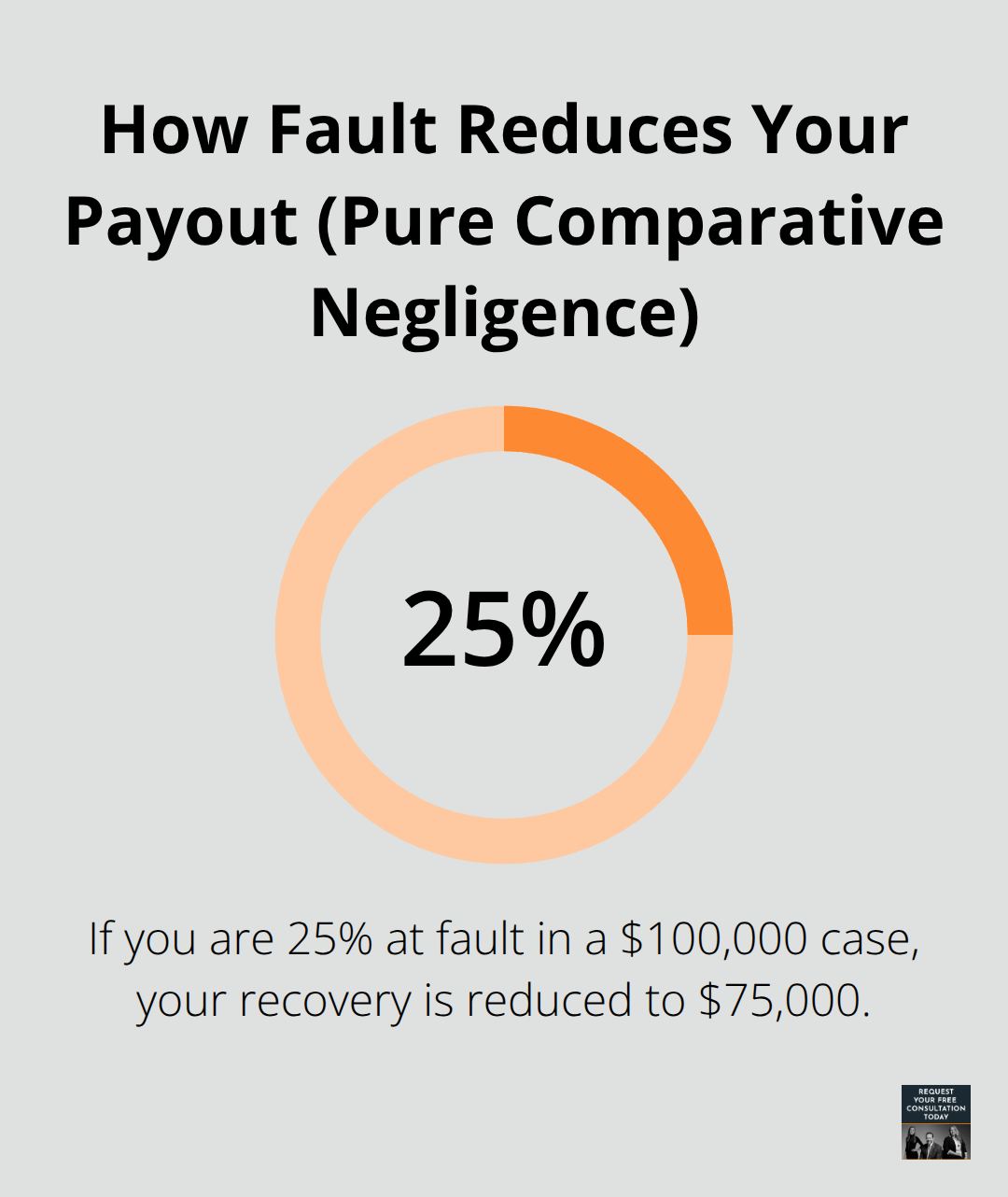
California’s pure comparative negligence law allows you to recover compensation even if you share fault for the accident, but your recovery gets reduced by your percentage of responsibility. If you’re 25% at fault in a case valued at $100,000, you receive $75,000.
Insurance companies aggressively argue you caused the accident to minimize their payout, so this legal protection matters significantly. At-fault drivers and their employers, trucking companies, vehicle manufacturers, cargo owners, and freight brokers can all share liability depending on what caused the crash. In Sacramento, where fatigued drivers, speeding, unsafe passing, and distracted driving cause most accidents according to 2023 crash data, the liable party often isn’t just the driver but the company that hired them or failed to maintain their vehicle.
Insurance Coverage and Policy Limits
California requires minimum liability coverage, and if damages exceed policy limits, you can pursue the at-fault driver personally for the excess amount. Your insurance claim follows a specific evaluation process: the insurer reviews your policy for coverage and exclusions, inspects damage, determines if the vehicle is a total loss based on Actual Cash Value, reviews your medical treatment timeline, analyzes fault, and considers subrogation rights. Total loss occurs when repair costs exceed the vehicle’s pre-crash fair market value. You’re entitled to compensation for past and future medical expenses, lost wages, pain and suffering, emotional distress, and property damage.
Acting Quickly Protects Your Claim
California’s two-year statute of limitations for personal injury claims means you must file a lawsuit within that window if settlement negotiations fail. Acting fast protects your claim because critical evidence like maintenance records, driver logs, dashcam footage, and witness statements disappears quickly. Contact a personal injury attorney immediately after your accident for a free case evaluation. Most attorneys work on a zero-fee guarantee, so you pay nothing unless you win. If you’re in Santa Cruz County, the legal team at Schaar & Silva LLP can help direct you to medical lien services, evaluate property damage claims fairly, and connect you with psychological support while handling the legal complexities of your case. Understanding your rights positions you to pursue fair compensation, but navigating insurance negotiations and liability disputes requires professional guidance to avoid costly mistakes.
Where to Find Medical Care and Support After Your Accident
Emergency Care and Follow-Up Treatment
After a vehicle accident, accessing the right medical care matters more than most people realize. In Sacramento, where 196 injuries occurred in 134 truck accidents during 2023 alone, finding immediate treatment separates those who recover fully from those dealing with long-term complications. Emergency rooms remain your first stop for serious injuries, but follow-up care determines whether you catch delayed injuries like traumatic brain injuries or internal bleeding that show no immediate symptoms.
UCSF Medical Center and Zuckerberg San Francisco General Hospital serve Northern California regions and accept patients regardless of insurance status. If cost concerns you, community health centers across California offer sliding-scale fees based on income, making treatment accessible even without insurance. Kaiser Permanente locations throughout Santa Cruz, Sacramento, and Oakland provide integrated care where your medical records stay in one system, helping your doctors coordinate treatment and your attorney document the injury timeline.
Why Consistent Medical Documentation Matters
Many accident victims avoid follow-up appointments because medical bills intimidate them, but skipping care weakens your compensation claim significantly. Your medical records prove the injury severity that determines your settlement value, so consistent treatment directly impacts your financial recovery. Medical lien services pay your bills now while your case resolves, eliminating the financial pressure that forces people to abandon necessary treatment.
Mental Health Support for Crash Survivors
Crash survivors often experience PTSD, anxiety, and depression that persist long after physical injuries heal, yet many never seek counseling because they underestimate psychological trauma’s impact on their lives. California Victim Compensation Board funds mental health services for accident victims who qualify, covering therapy costs through approved providers. Didi Hirsch Mental Health Services operates across California and offers trauma recovery support, providing sliding-scale therapy sessions and support groups where you connect with others navigating similar recovery.
Accessing Local Mental Health Resources
Call 211 California to access local mental health resources, crisis counseling, and community support services in your area without navigating complex referral systems. The first 72 hours after an accident shape not just your legal claim but your psychological recovery, making early professional support a practical investment rather than an optional luxury.
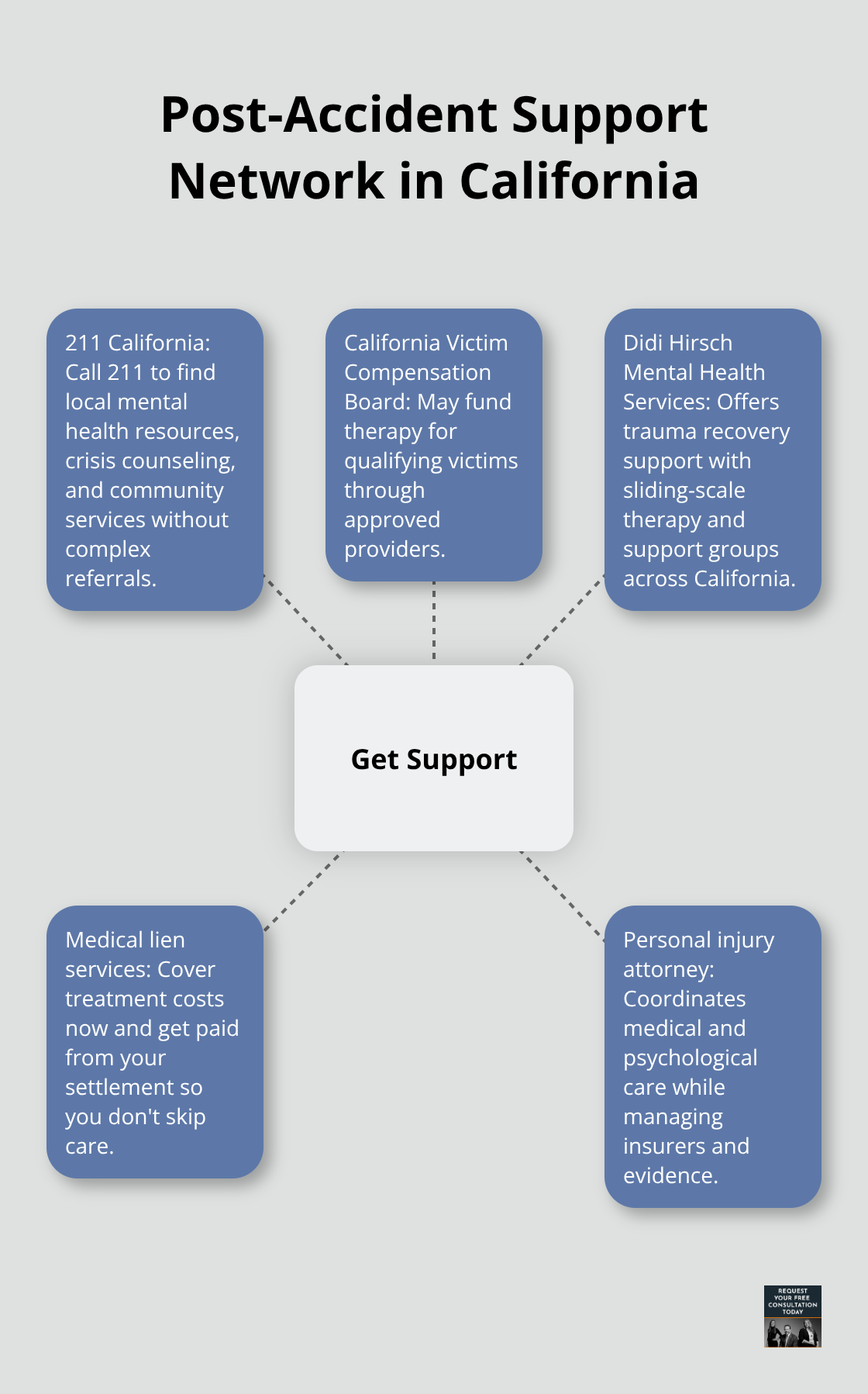
When you work with a personal injury attorney, they coordinate both your medical and psychological care, ensuring nothing falls through the cracks while you focus on healing rather than managing appointments and insurance paperwork.
Final Thoughts
A vehicle accident disrupts your life financially, physically, and emotionally. The steps you take in the first hours and days determine whether you recover fully or struggle with mounting bills and unresolved injuries. Document the scene thoroughly, report to authorities, seek immediate medical care, and contact a personal injury attorney for a free case evaluation.
Vehicle accident resources in California exist throughout Santa Cruz County, Sacramento, and Oakland, from emergency rooms and community health centers to mental health services and financial assistance programs. Medical lien services eliminate the financial pressure that forces accident victims to skip necessary treatment, while counseling support addresses the psychological trauma that often outlasts physical injuries. The California Victim Compensation Board and 211 California connect you with services based on your specific needs without requiring you to navigate complex referral systems alone.
We at Schaar & Silva LLP understand that accident recovery involves more than legal paperwork. Contact us for a free case evaluation and focus on healing while we manage the insurance negotiations, liability disputes, and evidence preservation that protect your compensation.
