
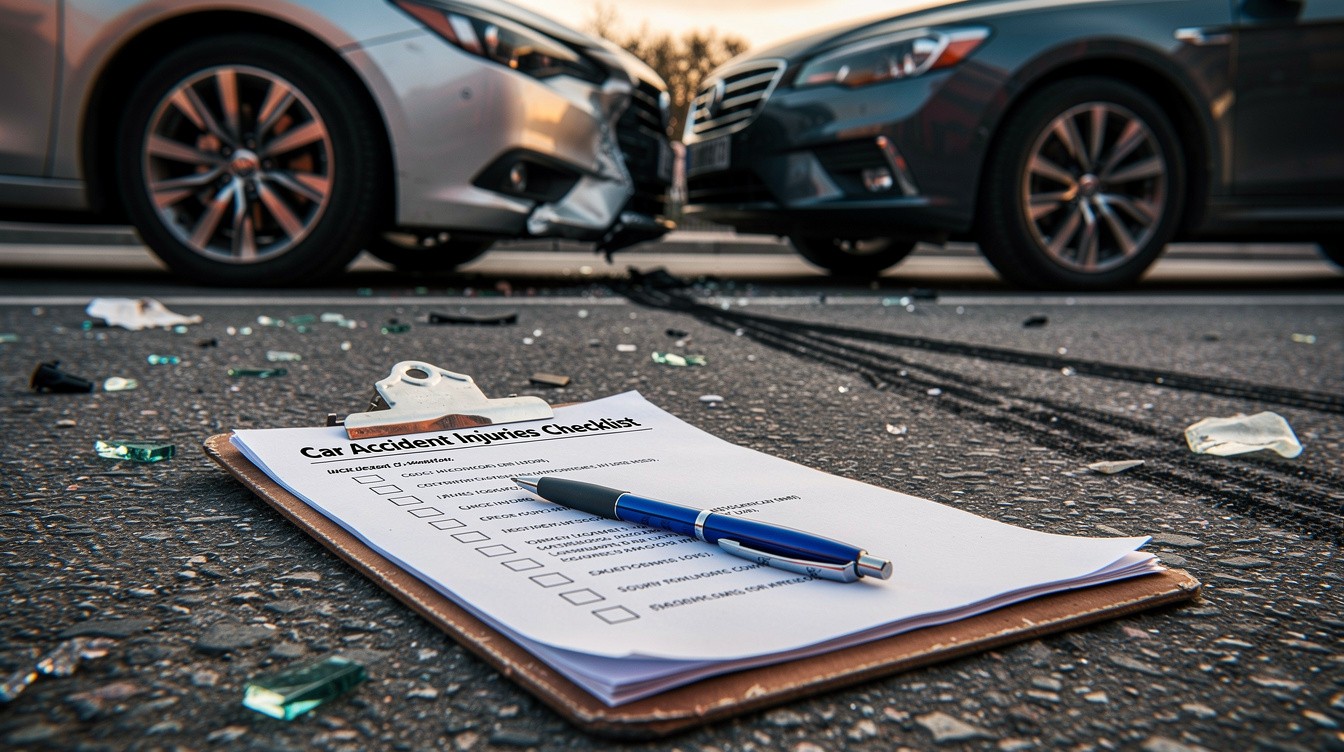
Car accidents happen fast, but the injuries they cause can affect your life for years. If you’ve been hurt in a crash, you’re probably wondering whether you have a valid case and what comes next.
We at Schaar & Silva LLP created this car accident injuries checklist to help you understand your situation. This guide walks you through the injuries you might have, how to prove fault, and the steps that strengthen your claim.
What Injuries Do Car Accidents Typically Cause
Whiplash and Neck Injuries
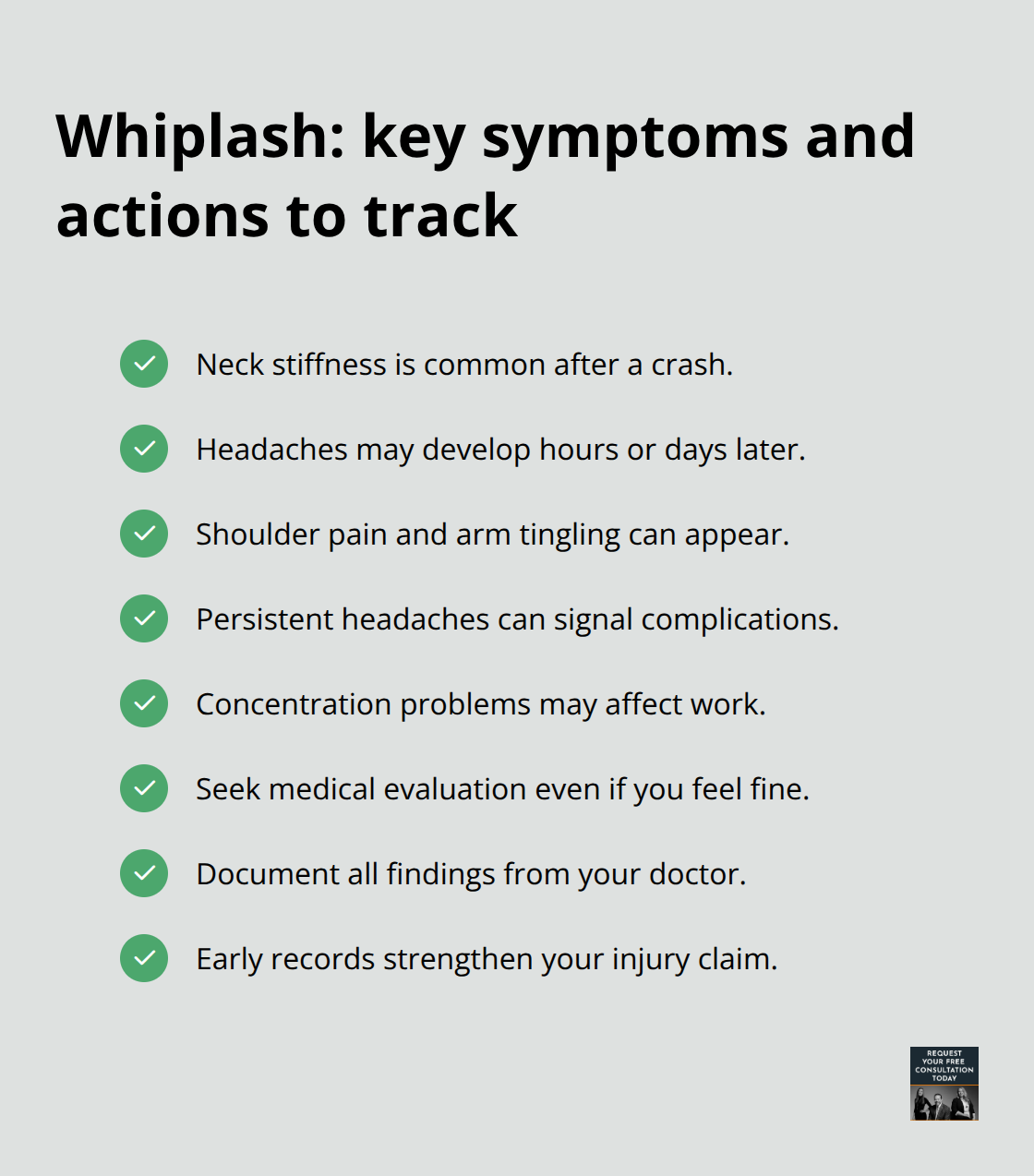
Whiplash stands out as the most common car accident injury, affecting the soft tissues in your neck when your head suddenly jerks forward and backward. The symptoms often appear within hours or days of the crash, not immediately, which catches many people off guard. You might experience neck stiffness, headaches, shoulder pain, or tingling in your arms.
What makes whiplash tricky is that it looks minor on the surface but can cause chronic pain lasting months or even years. Some people develop persistent headaches or concentration problems that impact their ability to work. You should seek medical evaluation even if you feel fine after the crash, since delayed diagnosis weakens your case later. Document everything your doctor finds, no matter how small it seems.
Head and Brain Injuries
Head and brain injuries demand far more attention than most accident victims realize. Brain injuries from car crashes range from concussions to severe traumatic brain injuries, and the damage isn’t always visible on the outside. Less severe brain injuries commonly cause mental fatigue, memory problems, personality changes, speech difficulties, loss of motor control, persistent headaches, and sleep disorders.
The serious cases require extensive medical care, rehabilitation, or permanent nursing care for the rest of your life. These injuries (especially moderate to severe ones) create substantial long-term medical expenses and lost earning capacity that compound over time.
Back and Spinal Cord Injuries
Spinal cord injuries present another category of severe harm that often goes underestimated. These injuries can result in temporary or permanent loss of sensation below the injury site, leading to permanent disabilities like paraplegia or quadriplegia. People with spinal cord injuries typically need ongoing care from physicians, physical therapists, social workers, and psychologists throughout their lives.
The financial impact of these injuries is staggering because they demand lifetime medical support and lost earning capacity. If you suffered any of these injuries and someone else caused the crash through negligence, you have grounds for compensation. Understanding what happened to your body is the first step toward building a strong claim, which brings us to how you actually prove that someone else bears responsibility for your injuries.
What Makes Your Case Legitimate
Proving you have a valid personal injury case requires three concrete elements working together. First, you establish that someone else caused the crash through negligence or reckless behavior. Second, you document that you suffered injuries directly from that crash. Third, you calculate the actual financial losses those injuries created. California law is clear on this, according to the California Courts Self-Help Guide: you must prove every element of your cause of action, and the defendant must understand exactly what they’re defending against.
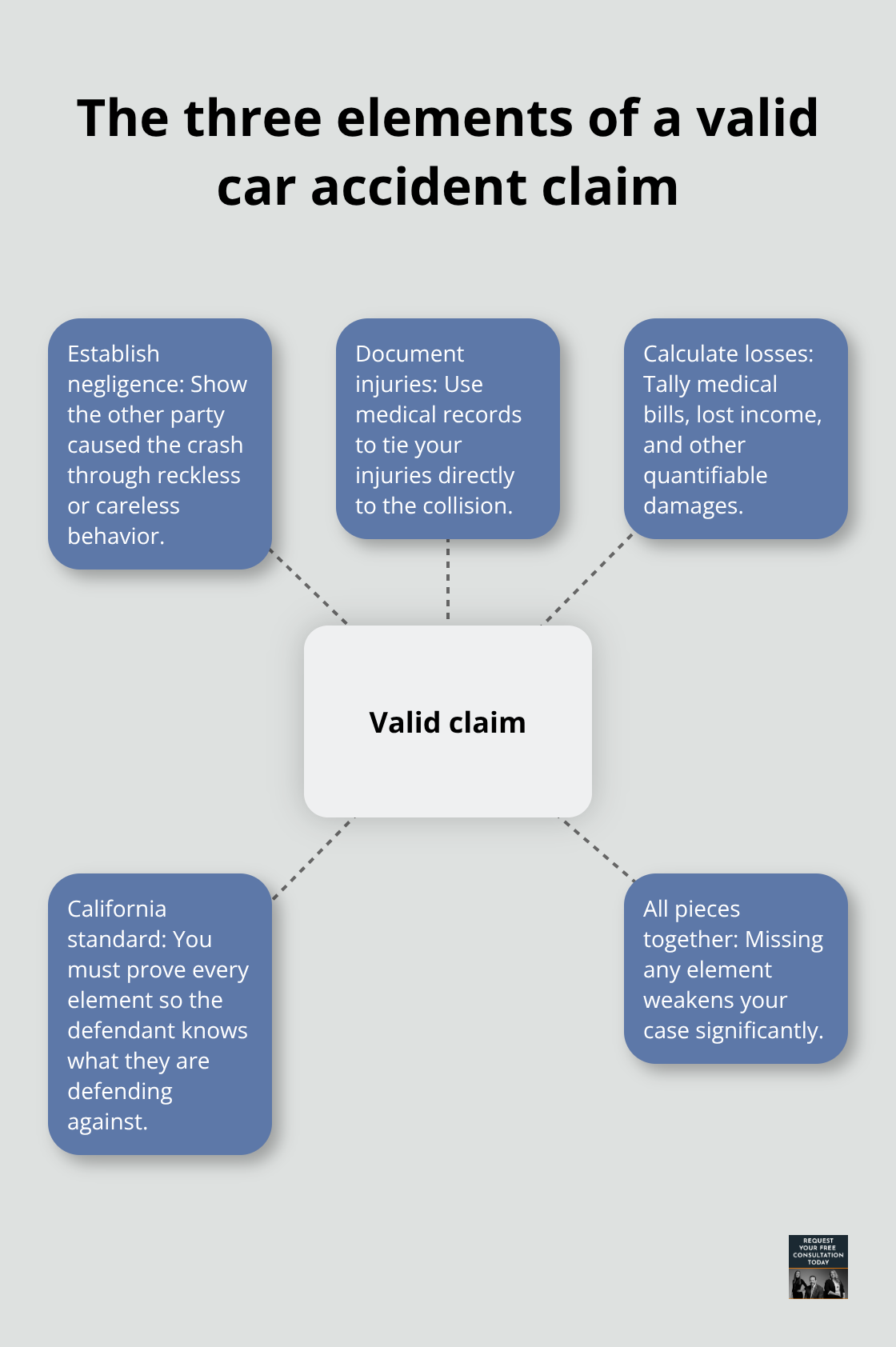
Without all three pieces, your case weakens significantly.
Establishing Fault Through Evidence
Establishing fault means identifying who bears legal responsibility for the crash. Was the other driver speeding, distracted, or violating traffic laws? Did they fail to yield or run a red light? You need specific facts, not assumptions. Police reports provide the official account, but they don’t always assign fault clearly. Witness statements carry substantial weight in court because they come from neutral parties who saw what happened.
Photographs of vehicle damage, road conditions, and accident scene details matter because they corroborate your narrative. Insurance companies investigate these same elements, and if they find clear liability, they typically negotiate settlements rather than fight cases. The statute of limitations for personal injury claims in California is two years from the date of injury, according to the California Courts Self-Help Guide, so you cannot delay gathering this evidence.
Connecting Your Injuries to the Accident
Your medical records are equally critical because they create a direct timeline connecting the crash to your injuries. Doctors’ notes, imaging results, and treatment plans demonstrate that your injuries stem from the accident, not from pre-existing conditions or unrelated events. Insurance adjusters scrutinize this connection relentlessly, looking for gaps they can exploit to reduce your claim value.
Most accident victims focus only on their injuries and miss the documentation that proves fault, which then undermines their ability to recover damages later. When you gather evidence systematically-police reports, witness contact information, medical documentation, and photographs-you build a foundation that withstands scrutiny. This preparation positions you to move forward with confidence as you calculate what your injuries actually cost you financially.
What to Do Immediately After a Car Accident
Seek Medical Evaluation Right Away
Get medical evaluation within the first 24 to 48 hours, even if you feel fine. Many serious injuries like brain trauma, whiplash, and internal bleeding don’t produce immediate symptoms. Hospital or urgent care records create an official medical baseline that ties your injuries directly to the crash, which proves critical later when insurance companies question whether your injuries actually came from the accident. Call 911 if anyone appears seriously hurt. For less obvious injuries, visit your doctor and describe exactly how the crash happened and what you felt during impact. Tell medical staff about every symptom, no matter how minor it seems, because these details become part of your permanent medical record.
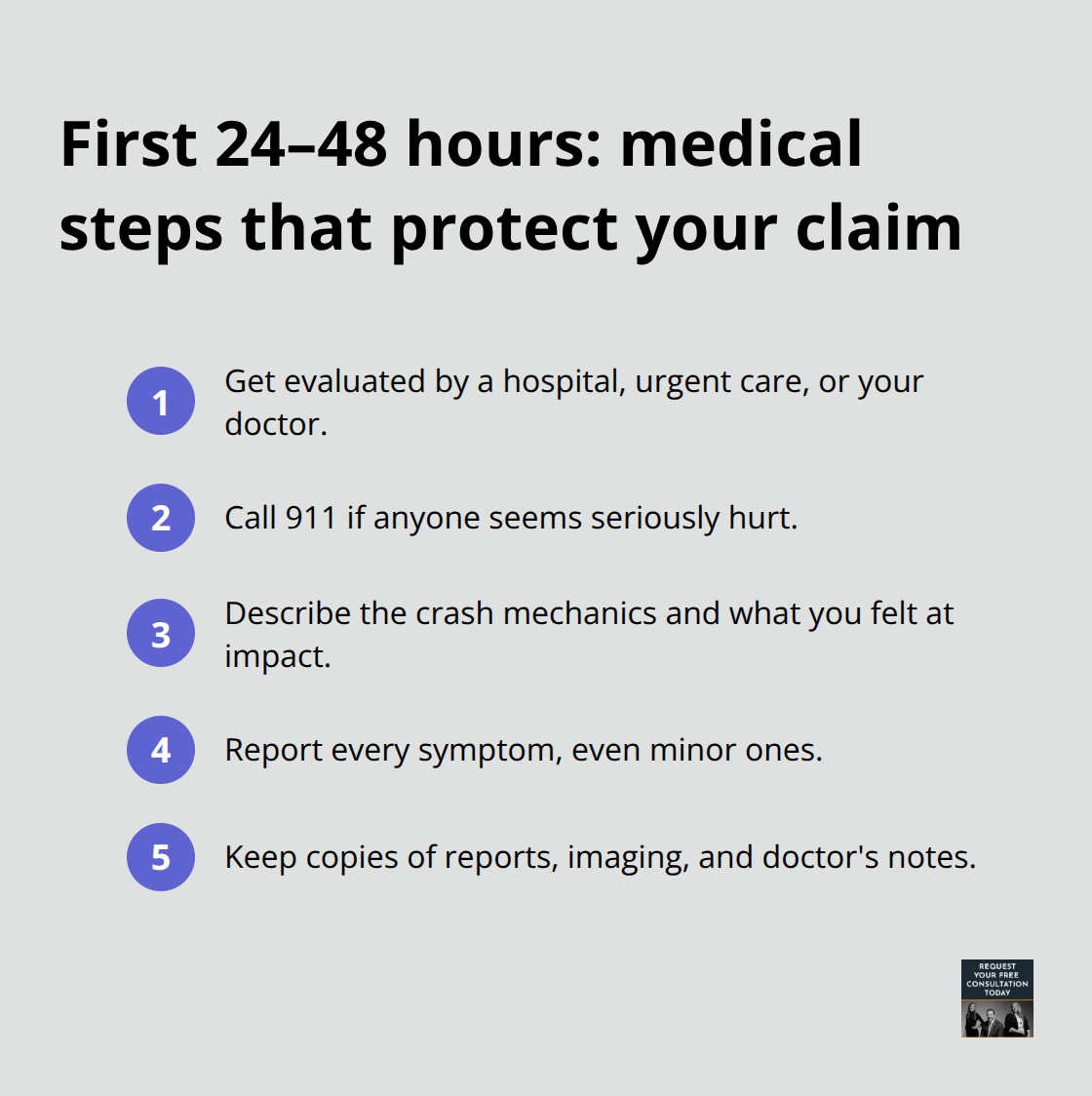
Keep copies of all medical reports, imaging results, and doctor’s notes in one organized folder.
Report to Insurance and Police
Contact your insurance company within hours of the accident, which typically ranges from 24 to 72 hours according to California requirements. Provide factual information about what happened but avoid admitting fault or speculating about causes. The California Courts Self-Help Guide confirms that your insurance may cover some costs or pay for damages, so understanding your coverage and reporting requirements matters immediately. Request a police report number and obtain a copy within a few days, as these reports document the scene and often include witness statements that prove invaluable later.
Document the Scene and Gather Evidence
Take photographs of vehicle damage, road conditions, traffic signals, and any visible injuries before you leave the accident scene. Collect names, phone numbers, and addresses from all witnesses, as their neutral accounts carry substantial weight if your case goes to litigation. Insurance adjusters investigate these same details, and when you provide comprehensive information upfront, you prevent gaps that adjusters could exploit to reduce your settlement offer.
Contact Legal Support
Reach out to a legal professional to evaluate your situation while evidence remains fresh and witnesses are easier to locate. We at Schaar & Silva LLP serve Santa Cruz County and can help you understand your rights, protect your medical information if privacy concerns exist, and meet California’s two-year statute of limitations for filing a personal injury claim. Early legal guidance prevents costly mistakes in how you communicate with insurance companies, what you post on social media, and which medical providers you should see.
Final Thoughts
Your car accident injuries checklist now covers the injuries you might face, how to establish fault, and the immediate actions that protect your claim. The strongest cases combine three elements: clear evidence of negligence, documented medical injuries tied directly to the crash, and calculated financial losses that reflect your actual harm. When you gather police reports, witness statements, and medical records systematically, you eliminate the gaps that insurance companies exploit to reduce settlements.
Legal representation matters because the process involves strict deadlines, complex documentation requirements, and negotiation tactics designed to minimize what you receive. California’s two-year statute of limitations sounds like plenty of time until you realize how quickly evidence disappears and witnesses become harder to locate. An attorney evaluates whether multiple parties bear responsibility, identifies all sources of compensation, and handles communication with insurance adjusters who are trained to undervalue claims.
We at Schaar & Silva LLP serve Santa Cruz County and understand the specific challenges accident victims face in your region. Contact us to discuss your situation and learn what your case might be worth. The sooner you reach out, the sooner we can protect your rights and position you for the recovery you deserve.
