
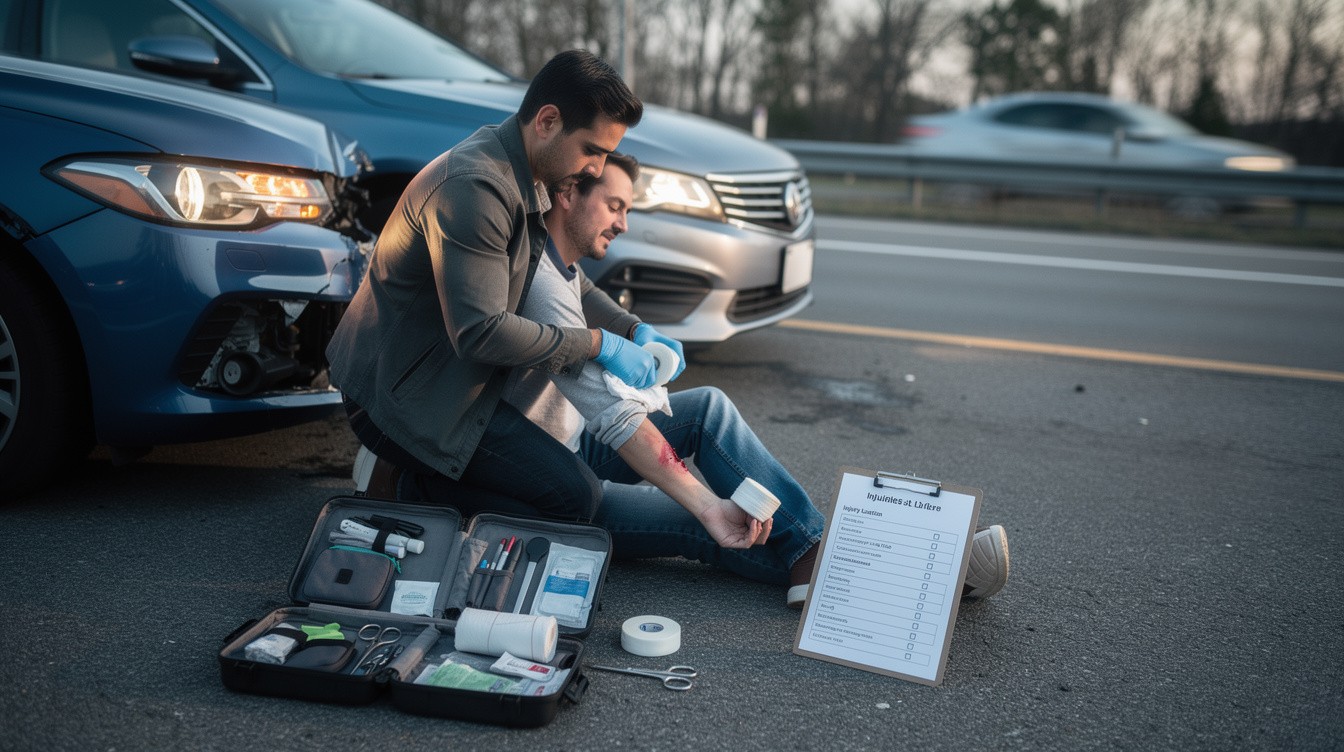
A car crash can leave you disoriented and unsure what to do next. The decisions you make in those first moments-and the hours that follow-directly affect your health, your insurance claim, and any legal action you might pursue.
We at Schaar & Silva LLP have helped hundreds of people in California navigate the aftermath of collisions. This car crash injuries checklist walks you through the essential steps to protect yourself physically and legally.
What To Do at the Crash Scene
Secure the Scene and Call for Help
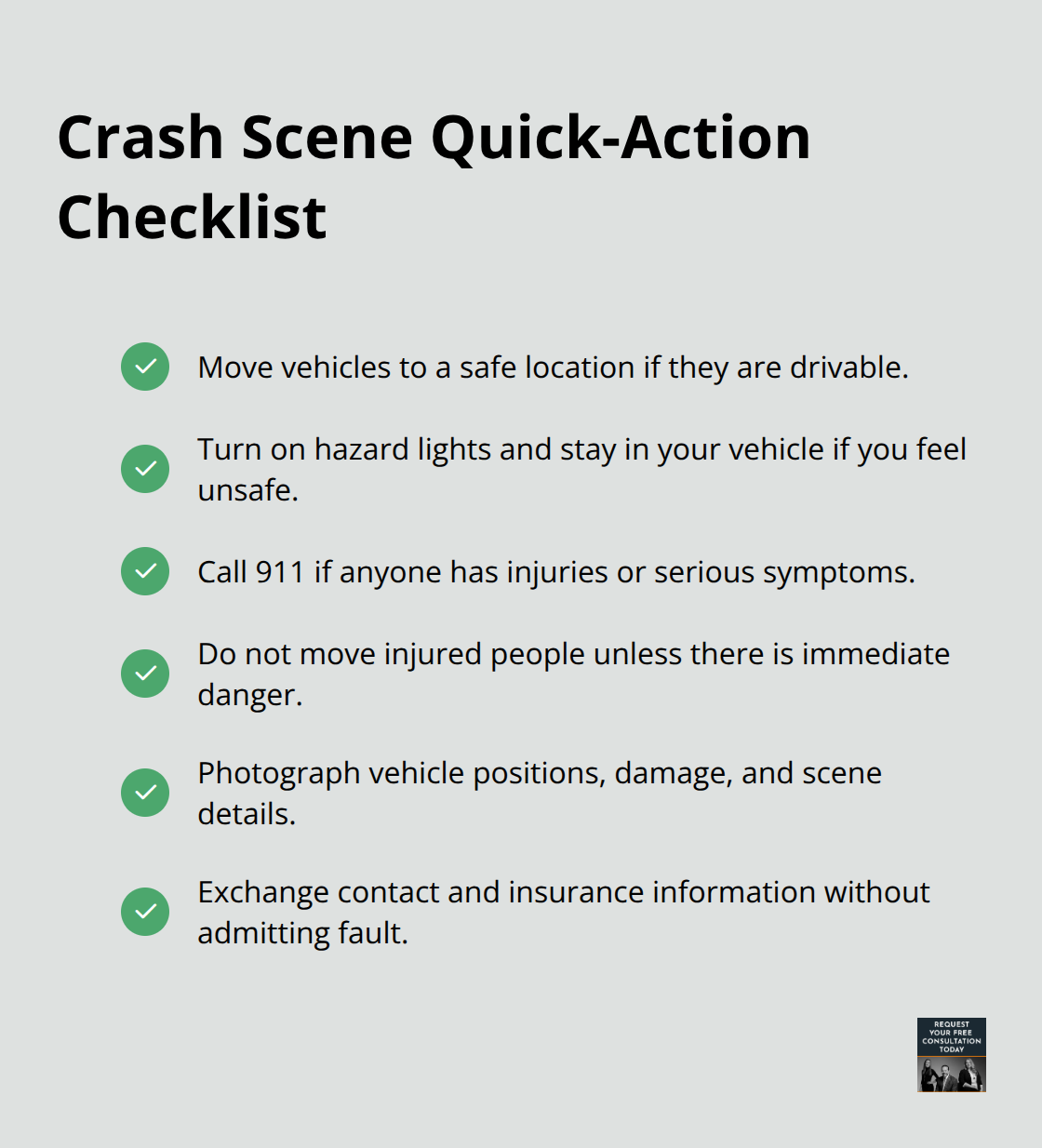
Your first moments after a collision determine how well you protect yourself physically and legally. Stop your vehicle immediately if it’s safe to do so. If you’re in traffic and the vehicles are drivable, move them to the shoulder or a nearby parking lot to prevent additional collisions. Turn on your hazard lights and stay inside your vehicle with the doors locked if you feel unsafe. Call 911 right away if anyone has injuries, difficulty breathing, chest pain, or loss of consciousness. Do not move an injured person unless the vehicle is on fire or in immediate danger. The National Highway Traffic Safety Administration reports that proper scene safety prevents secondary crashes that injure an additional 1.6 million people annually in the United States.
Assess Your Physical Condition
Once emergency services are en route, assess yourself and your passengers for injuries. Some injuries like whiplash, concussions, and internal bleeding don’t show symptoms immediately. Even if you feel fine, document your physical state at the scene by noting any pain, dizziness, or unusual sensations. This early documentation becomes valuable evidence later when you file your claim or pursue legal action.
Capture the Scene with Photos and Video
Take photos and videos of the entire scene before anyone moves their vehicle, even if you’re waiting for police. Photograph the position of both vehicles, the point of impact, skid marks, road conditions, traffic signals, weather, and any debris. Capture wide shots showing the location and close-ups of all vehicle damage. Get photos of the other driver’s license plate, driver’s license, vehicle identification number on the dashboard, and insurance card.
Collect Critical Information
Exchange names, phone numbers, addresses, driver’s license numbers, vehicle makes and models, license plates, and insurance information with the other driver. If there are passengers or witnesses, collect their full names and contact information. Write down the date, time, weather conditions, and street names. Do not admit fault or apologize, as these statements can be used against you in your claim.
The information you gather at this moment forms the foundation for your insurance claim and any potential legal proceedings that follow.
Getting Medical Care After Your Collision
Seek Medical Attention Immediately
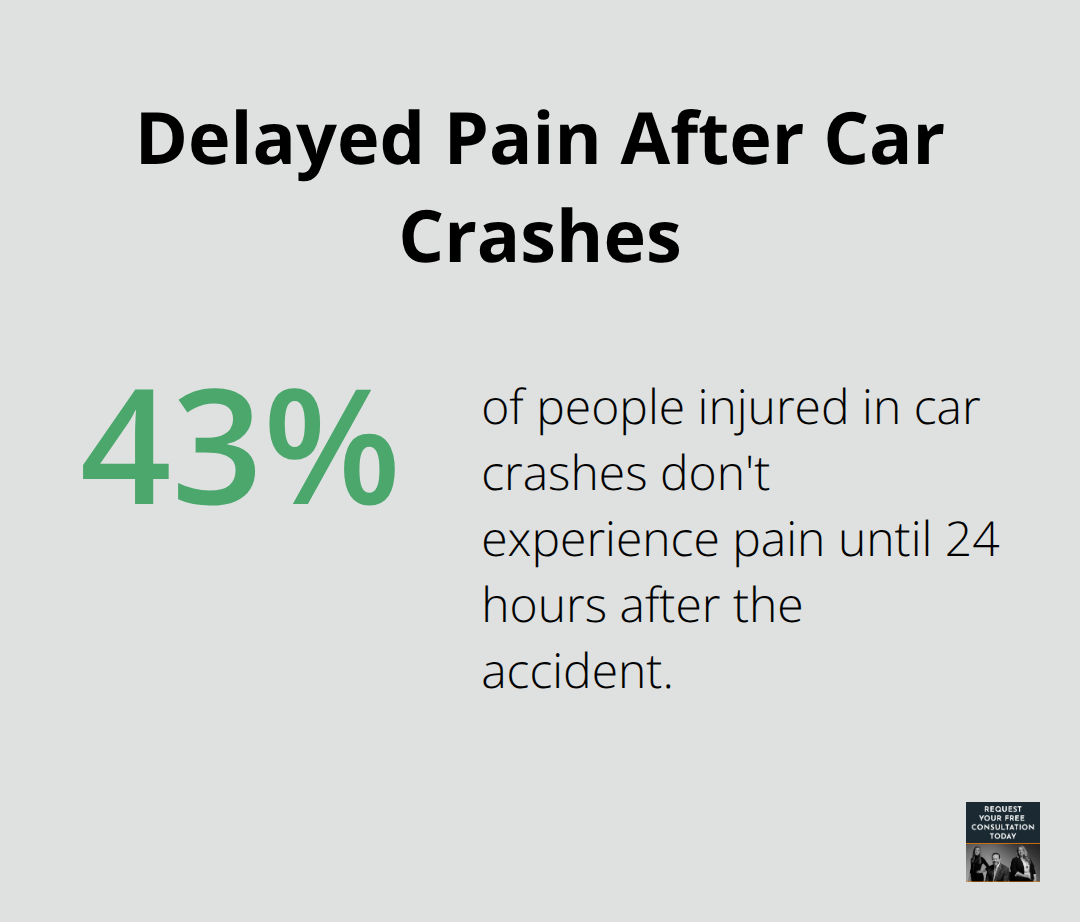
Don’t wait to see a doctor after your collision, even if you feel fine right now. Whiplash, concussions, internal bleeding, and spinal injuries often take hours or days to show symptoms. The Journal of Emergency Medicine found that 43% of people injured in car crashes don’t experience pain until 24 hours after the accident. If you delay medical evaluation, insurance companies may argue that your injuries aren’t serious or weren’t caused by the crash.
Schedule an appointment with your primary care doctor or visit an urgent care clinic within 24 hours. If you experience severe pain, difficulty breathing, loss of consciousness, or numbness in your limbs, go to the emergency room immediately.
Document Your Medical Visit
During your appointment, describe the collision to your doctor and mention all pain and discomfort you’re experiencing. Ask the doctor to note the connection between your symptoms and the accident in your medical records. Request copies of all medical records, test results, and imaging studies before you leave. Keep receipts for every medical expense, including co-pays, prescriptions, and travel costs to appointments.
Organize Your Medical Records
Your medical records form the foundation of your insurance claim and any potential legal action. Create a folder or digital file where you store every medical document, receipt, and record of treatment. Write down the dates of each appointment, the names of healthcare providers you see, and descriptions of your symptoms and how they affect your daily life. If your injuries prevent you from working, ask your employer for documentation of missed work days and lost wages.
Report Injuries to Your Insurance Company
Report your injuries to your insurance company within a few days of the accident, providing factual information about what happened and the medical care you’ve received. Don’t speculate about fault or liability when you call your insurer. Simply state the facts: the date, time, location of the collision, and that you’re seeking medical treatment for injuries. Keep records of these conversations, including the date you called, the representative’s name, and what was discussed.
This documentation protects you throughout the claims process and ensures your injuries are properly accounted for in any settlement or legal proceeding. Once you’ve established your medical treatment timeline and documented your injuries thoroughly, understanding your legal rights becomes the next critical step in protecting your recovery.
Protecting Your Legal Position After a Collision
Obtain and Use the Police Report
Police reports create the official record of what happened at the crash scene, and California law requires officers to document accidents involving injury or significant property damage. Call 911 to report the collision, and when police arrive, provide factual information about what occurred without admitting fault or apologizing. Request the officer’s name, badge number, and the report number before leaving the scene.
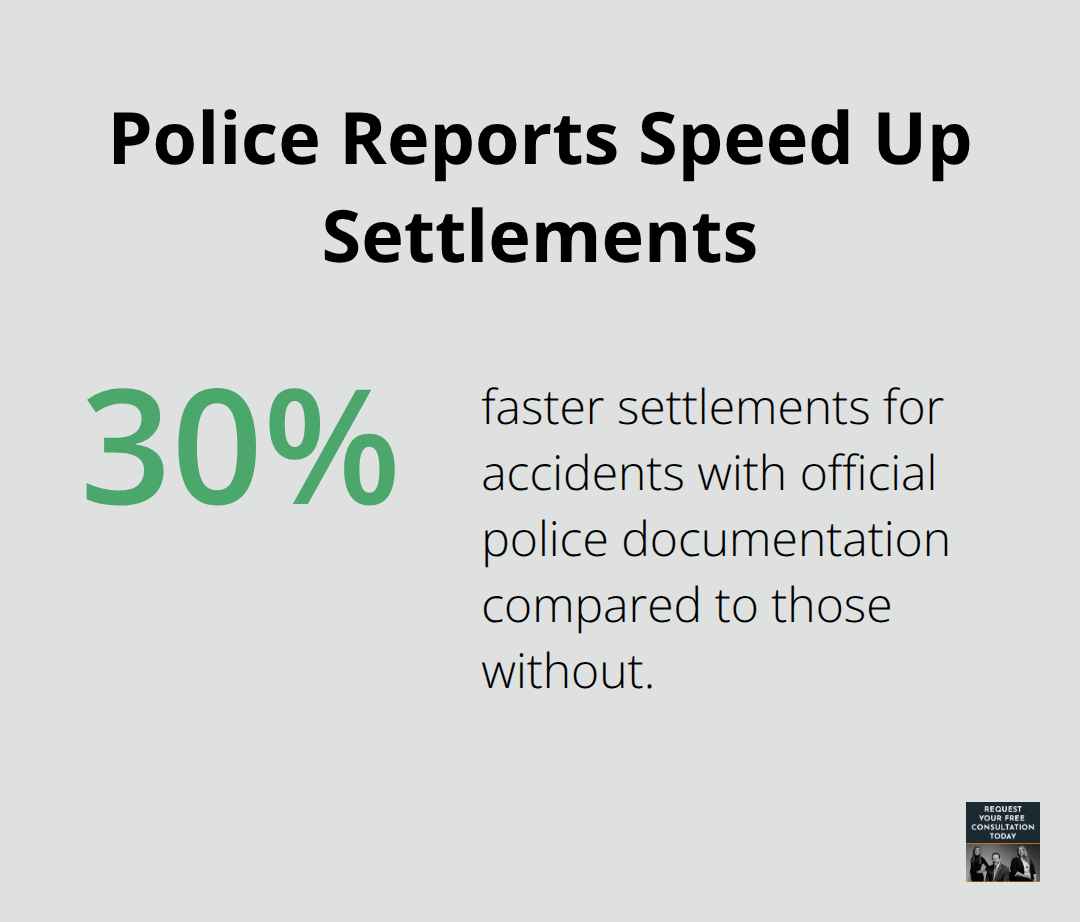
Obtain a copy of the police report within 10 days by contacting your local police department or visiting their website; the report typically costs between $10 and $25. This document becomes essential evidence for your insurance claim and protects you if the other driver later claims you caused the accident. Insurance companies in California use police reports to establish liability, and studies from the Insurance Research Council show that accidents with official police documentation settle 30% faster than those without them.
If an officer cannot attend the scene, you have the right to file a report yourself at your local police station or DMV within the required timeframe.
Understand Fault Under California Law
Determining fault in California follows comparative negligence rules, meaning you can recover compensation even if you’re partially responsible for the accident. However, the percentage of fault assigned to you directly reduces your settlement amount, making it critical to document evidence supporting your version of events. The photos, witness statements, and police report you gathered at the scene all strengthen your position during liability discussions with insurance adjusters.
Know When to Contact an Attorney
Contact an attorney when you’ve suffered significant injuries, the other driver is uninsured or underinsured, the accident involves a commercial vehicle, or liability is unclear. California’s statute of limitations gives you two years to file a personal injury lawsuit, but waiting longer weakens your case by allowing witness memories to fade and evidence to disappear. Consulting with an attorney within 30 days of your accident protects your rights and ensures you understand your options before speaking with insurance representatives.
Protect Yourself During Insurance Conversations
Insurance adjusters often contact injured people directly to obtain recorded statements; you should decline recorded statements and refer the adjuster to your attorney instead. Statements made without legal guidance frequently harm your claim by providing the insurance company with ammunition to minimize your settlement. An attorney protects your rights during settlement negotiations and ensures you understand the full value of your injuries before accepting any offer from the insurance company.
Final Thoughts
The first hours and days after a collision shape your physical recovery and your legal position. Following this car crash injuries checklist protects you in ways that become clear only later, when you file insurance claims or discuss settlement offers with adjusters. The steps you take at the scene-documenting damage, collecting witness information, and refusing to admit fault-directly influence how much compensation you receive and how quickly your case resolves.
Medical care cannot wait, and the 43% of accident victims who experience delayed pain symptoms often regret waiting to seek treatment. Your medical records, combined with the police report and scene photos you gathered, create an undeniable record of what happened and how it affected your health. This documentation proves injury causation to insurance companies and strengthens your position throughout the claims process.
We at Schaar & Silva LLP help Santa Cruz County residents evaluate property damage claims, connect with medical lien services to manage bills during treatment, and access support for trauma that accompanies serious accidents. Contact us to discuss your case and learn how we protect your rights while you focus on healing. California’s two-year statute of limitations means time matters-reaching out within 30 days of your accident preserves evidence and clarifies your options before speaking with insurance representatives.
