

After a car accident, you face a critical decision: settle your claim or pursue a trial. The path you choose directly affects how much compensation you receive and how quickly you get it.
At Schaar & Silva LLP, we help people in Santa Cruz County, Sacramento, and Oakland understand their car accident settlement options so they can make informed decisions. This guide walks you through what settlements involve, what factors influence your payout, and how to negotiate effectively.
Settlement or Trial: Which Path Fits Your Case
Understanding What Settlement Means
A settlement closes your case when you and the at-fault driver’s insurance company agree on a compensation amount without going to court. You receive a lump sum payment, typically within 10 to 21 business days after signing the release. The process moves faster and offers more predictability than trial. Most car accident cases in California settle within 3 to 6 months, depending on injury severity and how quickly your medical treatment completes. Minor injuries often resolve in 3 to 6 months, while moderate injuries stretch to 6 to 12 months.
How Trials Differ in Time and Cost
A trial means a judge or jury decides your case after hearing evidence and arguments. Trials consume 1 to 4 years or longer if liability is disputed or injuries are catastrophic. The financial difference is stark. Settlement costs you roughly 33 to 40 percent in attorney fees plus any outstanding medical liens that reduce your net payout. Trials add court costs, expert witness fees, and extended legal work-expenses that can consume 40 percent or more of your final award. The Insurance Research Council reports that represented claimants recover significantly more than unrepresented ones, but settlement negotiations reward thorough documentation from day one.
Why Medical Treatment Completion Matters Most
Reaching Maximum Medical Improvement before settling matters most. Settling before your treatment ends can cost tens of thousands in future medical expenses you cannot recover. Complete your medical care first, then negotiate from a position of strength with full knowledge of your long-term costs.
How Liability Clarity Affects Your Timeline
Liability clarity determines settlement speed more than any other factor. Rear-end collisions and red-light violations settle quickly because fault is obvious. Disputed liability cases drag on because insurers request repeated documentation, bring in new adjusters, or challenge your account of what happened. Commercial vehicle accidents involving trucks or rideshare services add layers of corporate defendants and multiple insurance policies, which extends timelines but often justifies higher settlements.
Building Leverage Through Evidence and Organization
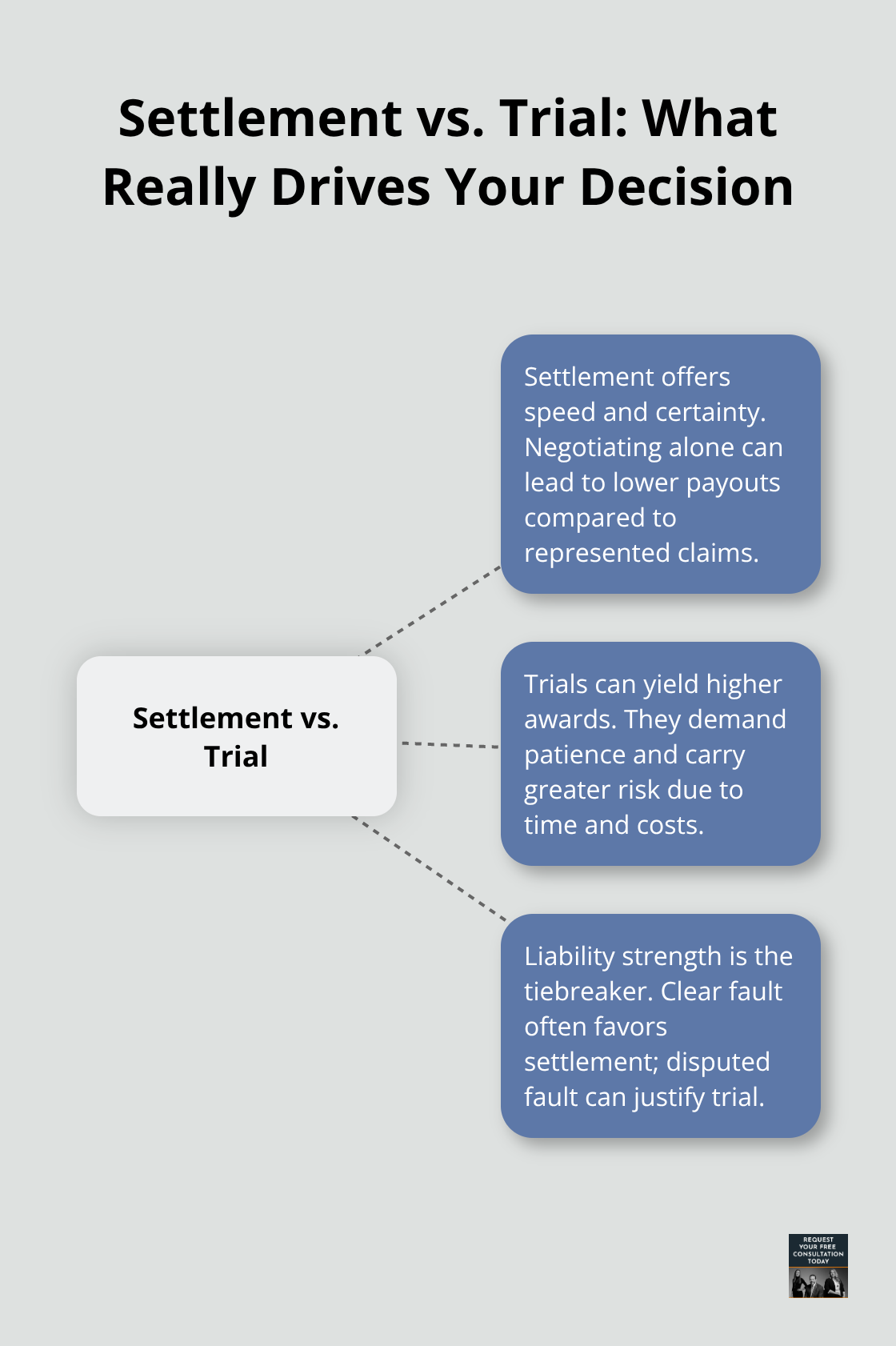
Strong evidence accelerates settlements. Dashcam footage, police reports with clear fault findings, and detailed witness statements reduce negotiation time to 60 to 90 days after you submit your demand package. Disorganized documentation invites delay. Insurance adjusters exploit gaps by requesting the same records repeatedly or disputing injury severity. Organize medical records, bills, wage-loss documentation, and receipts before your attorney sends the demand. If damages exceed a single insurance policy, pursuing underinsured motorist coverage or other responsible parties may require a lawsuit, pushing settlement into trial territory. The choice between settlement and trial hinges on three realities: settlement offers speed and certainty but lower payouts if you negotiate alone, trials offer higher potential awards but demand patience and risk, and liability strength determines which path makes financial sense for your specific accident. Understanding these factors prepares you to evaluate the settlement offers you receive and decide whether accepting them aligns with your recovery goals.
What Determines Your Settlement Payout
Medical Expenses Form Your Settlement Foundation
Your settlement amount hinges on three measurable factors: injury severity, income loss, and property damage. Medical expenses form the foundation of your claim. A soft tissue injury from a low-speed collision typically costs $3,000 to $8,000 in medical bills, resulting in a settlement of $9,000 to $24,000 when multiplied by a typical 3x factor for pain and suffering. Severe injuries requiring surgery or ongoing physical therapy push medical bills to $50,000 or higher, multiplying your settlement proportionally.
The critical move is completing all medical treatment before settling. Stopping therapy early signals to the insurer that your injuries were minor, regardless of your actual condition. Insurers scrutinize treatment gaps and use them to argue that remaining symptoms are unrelated to the accident. Document every appointment, prescription, and specialist visit to build an undeniable timeline of your medical needs.
Lost Wages and Income Loss
Lost wages matter more than many accident victims realize. If you earned $4,000 monthly and missed three months of work, your wage loss claim totals $12,000. Some insurers accept this straightforwardly; others challenge it by requesting pay stubs, employer letters, and tax returns. The stronger your documentation, the faster insurers process your wage loss claim without dispute.
Property Damage Valuation and Medical Liens
Property damage claims require fair market valuation, not your original purchase price. A 2015 Honda Civic worth $12,000 before the crash and declared a total loss should be valued at $12,000 based on current market data for that year, mileage, and condition, not the $18,000 you paid five years earlier.
Medical liens reduce your net settlement significantly. If your health insurer or a medical provider placed a lien on your case, they claim a portion of your settlement before you receive it. At Schaar & Silva LLP, we assist in evaluating property damage and help direct you to services that manage medical liens, often negotiating them downward to maximize your final payout.
Underinsured Motorist Coverage and Policy Limits
Underinsured motorist coverage enters the equation when damages exceed the at-fault driver’s policy limits. A settlement of $100,000 against a $15,000 policy means you can pursue your own underinsured motorist coverage for the remaining $85,000, provided your policy includes it. This calculation determines whether accepting the initial settlement makes sense or whether pursuing additional coverage justifies the delay. Understanding these three components-medical expenses, lost income, and property damage-positions you to evaluate settlement offers accurately. The next section explains how to gather the documentation and evidence that insurers demand during negotiations.
How to Build a Winning Negotiation Strategy
Start Collecting Evidence Immediately
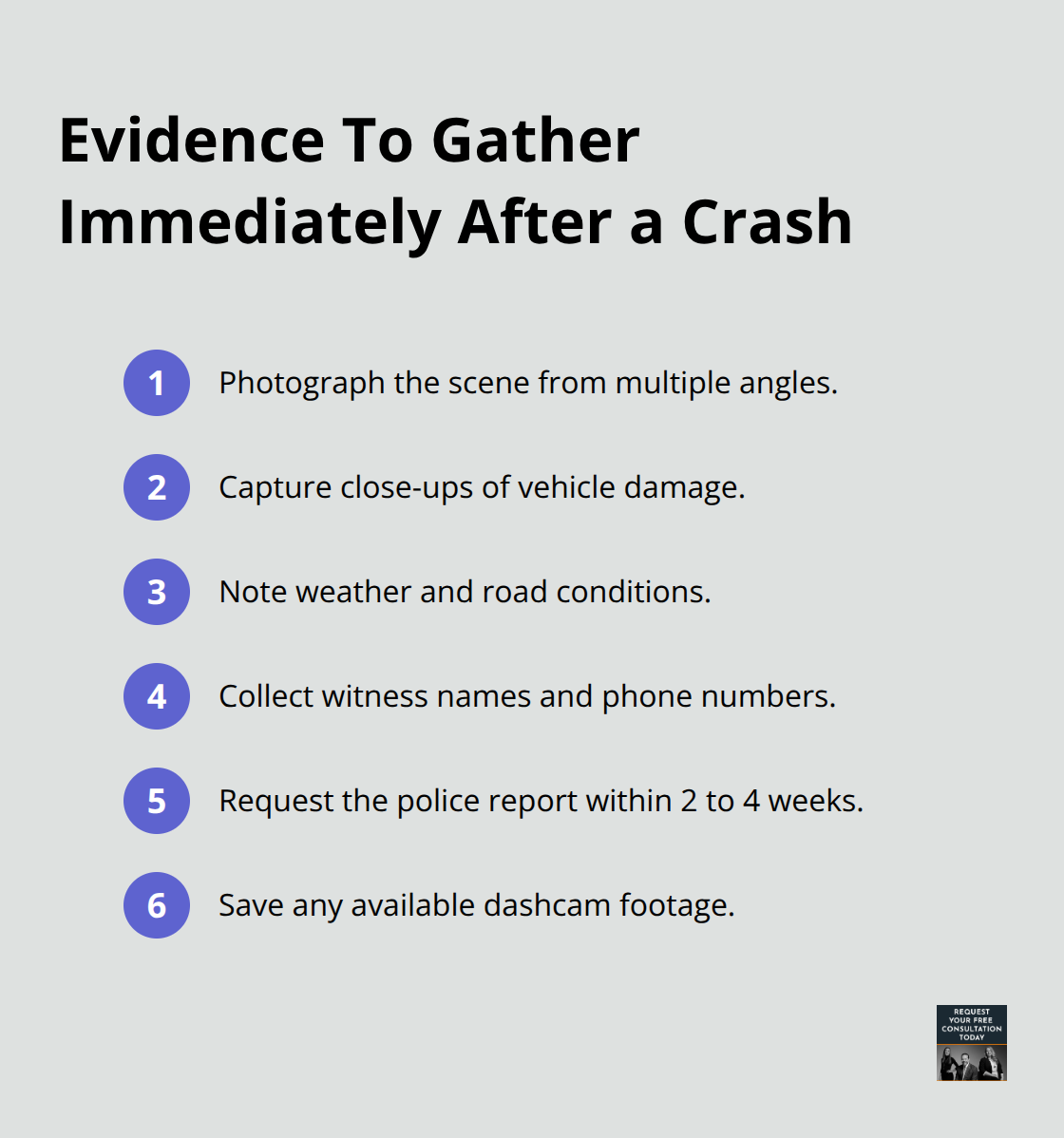
Documentation determines settlement outcomes more than negotiating skill. Insurance adjusters operate from a simple principle: strong evidence costs them money, weak documentation saves them money. Start collecting records immediately after your accident. Photograph the accident scene from multiple angles, capture vehicle damage, note weather conditions, and collect witness names and phone numbers before they leave. Request the police report as soon as it becomes available, typically within 2 to 4 weeks. Dashcam footage, if available, accelerates settlements dramatically by removing liability disputes entirely.
Organize Your Medical and Financial Records
Organize medical records chronologically, keep every bill and receipt, document all lost wages with pay stubs and employer letters, and maintain a symptom diary showing how your injuries affect daily activities. Insurance adjusters exploit documentation gaps by requesting the same records repeatedly or claiming records are missing. One complete, organized file eliminates these delay tactics. Before your attorney submits a demand package, verify that every medical appointment, prescription, diagnostic test, and specialist consultation appears in your records. Missing records signal incomplete treatment and weaken your negotiating position.
Submit a Strong Demand Package
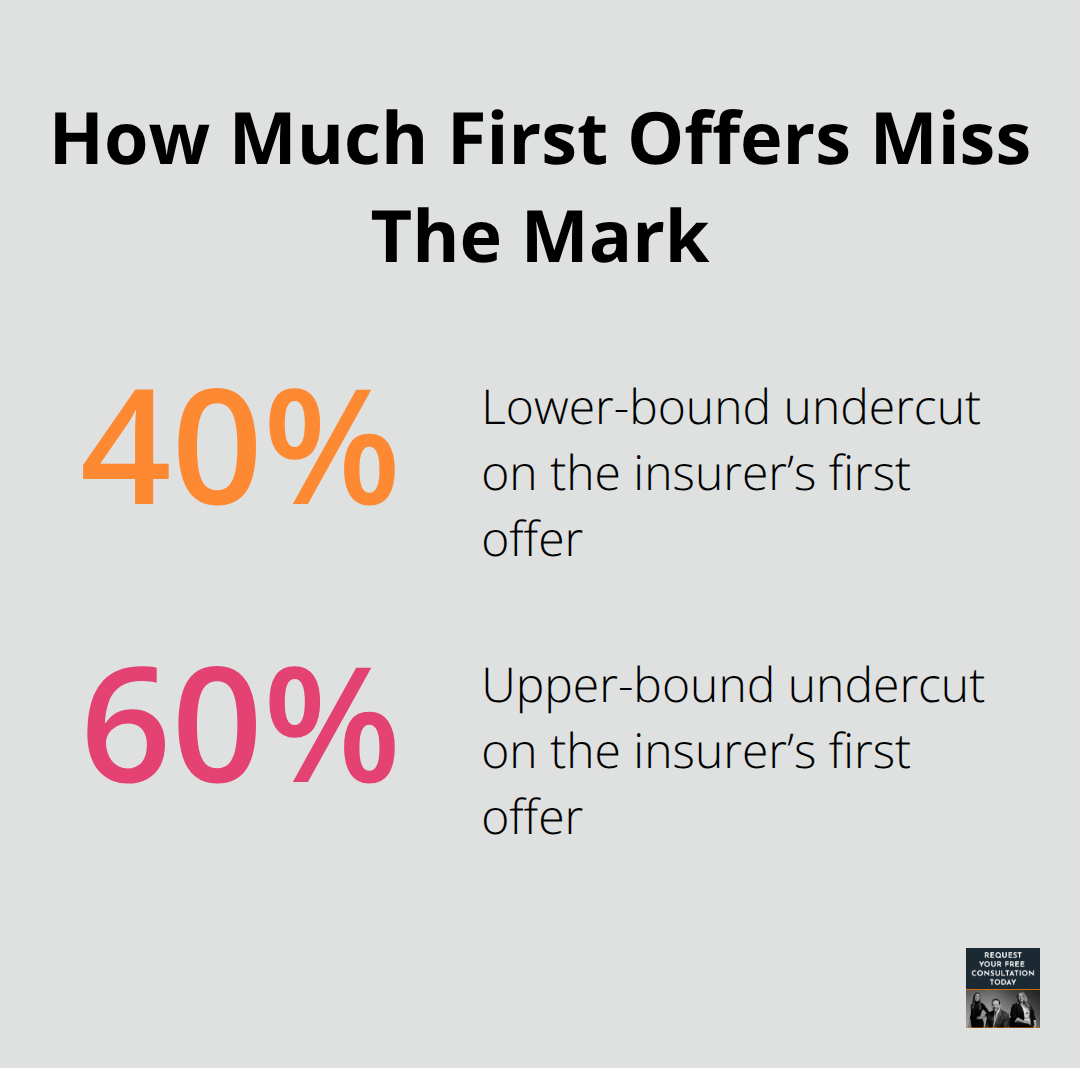
When your attorney sends the demand package, expect a response within 30 days. The insurer’s first offer typically undercuts fair value by 40 to 60 percent. Reject lowball offers immediately.
Accepting the first settlement offer teaches the insurer that aggressive tactics work, and you lose leverage permanently. Counter their offer with specific justifications: medical bills totaling $47,000 with ongoing physical therapy, wage loss of $18,000 from three months missed work, and property damage of $22,000 for vehicle repairs. Demand packages that cite exact figures backed by documentation force insurers to justify rejections rather than dismiss your claim outright.
Navigate Multiple Counter-Offers
Settlement negotiations typically require 3 to 5 counter-offers before reaching agreement. If the insurer refuses to move beyond their initial position after multiple counters, your attorney may recommend filing a lawsuit to demonstrate serious intent. Many cases settle during discovery or litigation rather than through pre-suit negotiation because a filed lawsuit signals that you will not accept unreasonable offers. We at Schaar & Silva LLP evaluate settlement offers against the full value of your claim and advise whether accepting aligns with your recovery goals or whether pursuing litigation maximizes compensation.
Final Thoughts
Your car accident settlement options depend on three factors: injury severity, evidence strength, and liability clarity. Settlements offer speed and certainty, typically closing within 3 to 6 months for minor injuries and 6 to 12 months for moderate ones. Trials demand patience, often stretching 1 to 4 years, but can yield higher awards if liability is disputed or damages are substantial.
Complete your medical treatment before settling, as stopping therapy early signals weakness to insurers and costs you thousands in unrecovered future care. Organize documentation from day one-medical records, wage-loss proof, property damage estimates, and witness statements-because insurance adjusters exploit disorganized files by requesting records repeatedly or disputing injury severity. Strong evidence accelerates settlements to 60 to 90 days after your demand package arrives, while weak documentation invites delay and lower offers.
Reject the first settlement offer, as initial proposals typically undercut fair value by 40 to 60 percent. Counter with specific figures backed by documentation, and expect 3 to 5 counter-offers before reaching agreement. We at Schaar & Silva LLP help people in Santa Cruz County, Sacramento, and Oakland evaluate settlement offers against the full value of their claims and advise whether accepting aligns with recovery goals-contact us for a free consultation to assess your specific accident and build a strategy that maximizes your compensation.
