
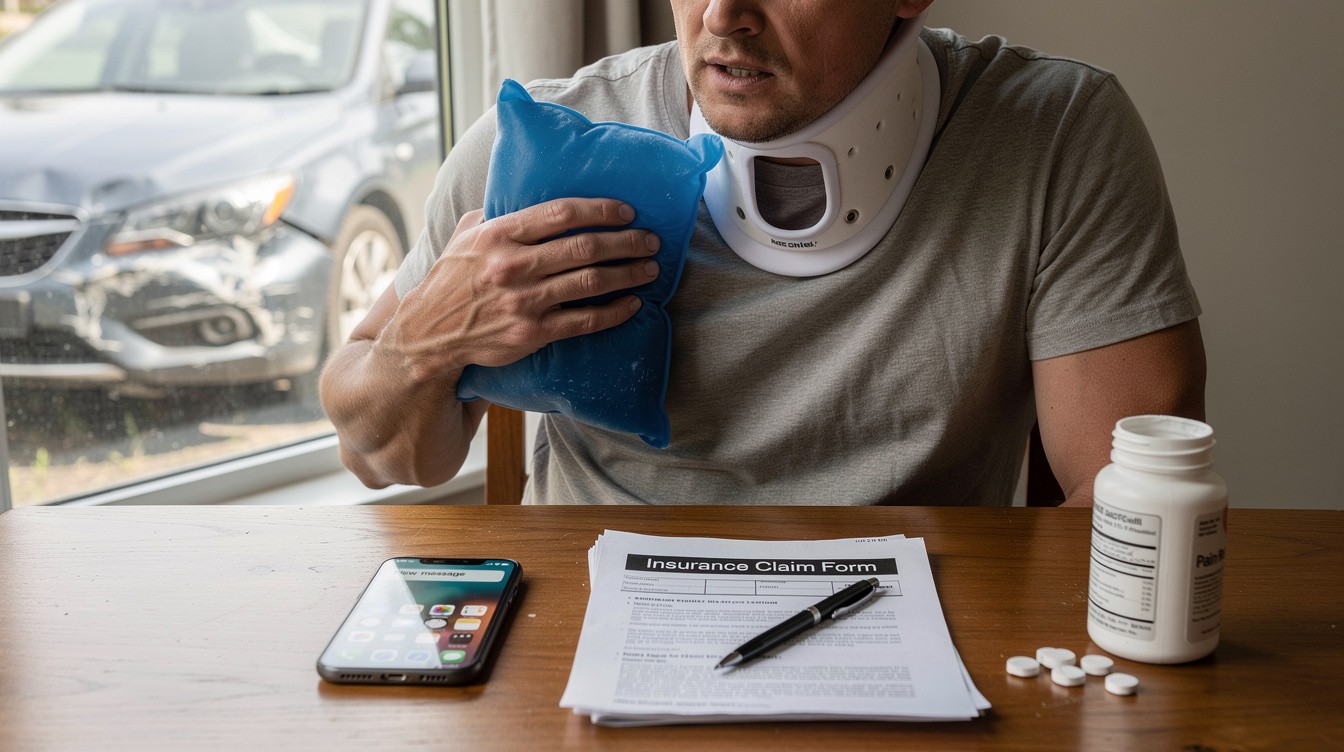
A car accident can leave you dealing with pain that makes even simple movements difficult. The weeks ahead involve managing that pain while handling medical appointments, insurance calls, and legal matters all at once.
We at Schaar & Silva LLP know that car accident pain tips matter most when you’re trying to recover without draining your savings. This guide walks you through practical relief strategies you can use right now, from your first hours after the crash through your entire recovery.
What Should You Do in the First Hours After a Crash
Act Fast with Ice Therapy
The first few hours after a car accident determine how well you manage pain in the days ahead. Apply ice wrapped in a cloth to injured areas for 15 minutes at a time, with at least 15 minutes between applications. Ice reduces inflammation and numbs acute pain, which is why emergency rooms and physical therapists recommend it as a first response. Continue ice therapy for the first 48 hours after your accident.
Transition to Heat After 48 Hours
After the first two days pass, heat therapy becomes more effective because inflammation has started to decrease and your muscles need blood flow to heal properly. Heat therapy improves circulation and relaxes muscle tension, so apply heat for 15 to 20 minutes several times daily during days three through seven of recovery.
Choose the Right Over-the-Counter Medication
Over-the-counter pain medications can help you function while healing happens, but approach them strategically. Ibuprofen and naproxen reduce both pain and inflammation simultaneously, making them more effective than acetaminophen for car accident injuries. Take ibuprofen 400 to 600 milligrams every 6 to 8 hours, or naproxen 220 milligrams every 8 to 12 hours, with food to protect your stomach. Never exceed the maximum daily dose listed on the package. These medications work best when combined with ice or heat therapy rather than used alone.
Recognize When Home Care Isn’t Enough
Skip the pharmacy visit entirely if you experience severe pain, chest tightness, difficulty breathing, abdominal pain, or persistent headaches after your crash. Go to an emergency room immediately in these situations because they indicate injuries beyond what home care can address. Even if pain feels mild, get a medical evaluation within 24 hours of your accident because whiplash, internal injuries, and head trauma don’t always announce themselves right away. A healthcare provider can order X-rays or CT scans to identify hidden damage before it worsens. Document everything your provider finds during this evaluation because these medical records directly support your injury claim later.
Connect with Resources for Advanced Care
When you’re ready to explore additional pain management beyond ice, heat, and over-the-counter medication, advanced care options (like physical therapy, chiropractic treatment, and acupuncture) can accelerate your recovery. Medical lien services help you access these treatments without financial stress during your recovery, and the legal team at Schaar & Silva LLP can connect you with these resources in Santa Cruz County.
Moving Your Body While You Recover
Starting movement within the first few days after your accident accelerates healing far more than bed rest alone. Physical therapy research shows that patients who begin gentle movement within 72 hours of injury experience faster pain reduction and better long-term outcomes than those who wait. Your goal isn’t to return to normal activity immediately-it’s to maintain mobility and prevent your muscles from stiffening as inflammation decreases.
Begin Gentle Movement Early
Gentle stretching for 10 to 15 minutes, two to three times daily, keeps your range of motion intact without aggravating fresh injuries. Start with movements that don’t cause pain, like slow neck rotations if you have whiplash, or gentle knee bends if your legs hurt.
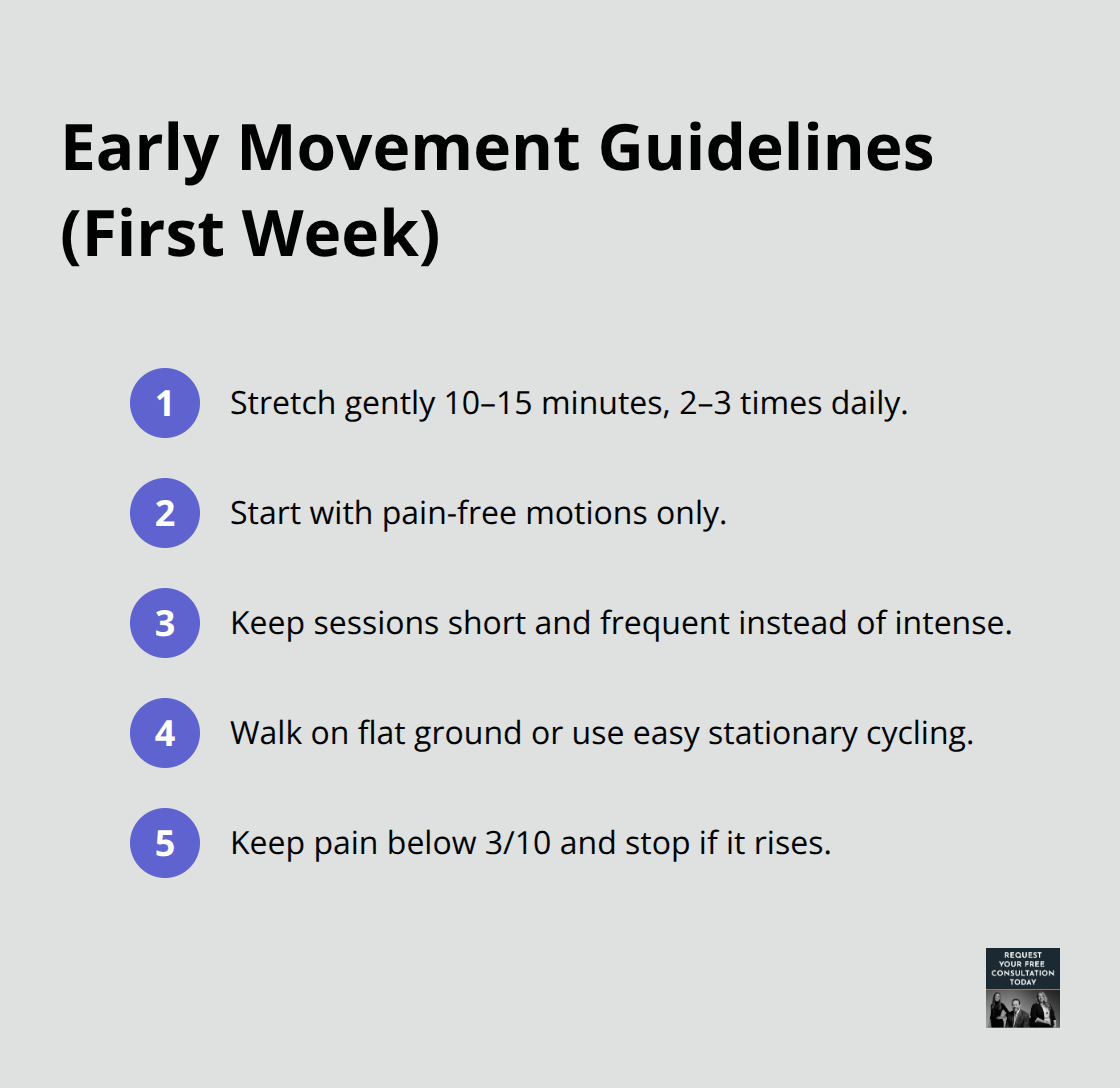
Low-impact exercises such as walking on flat ground for 10 to 15 minutes daily or stationary cycling at a comfortable pace rebuild strength without shocking your injured tissues. The key is consistency over intensity-three short sessions daily beat one long workout. Pain should stay below a 3 out of 10 during these activities; if it climbs higher, you’re pushing too hard.
Work with a Physical Therapist Early
A physical therapist teaches you exercises tailored to your specific injuries rather than generic stretches you find online. During your first appointment, describe your accident details, the movements that hurt most, and your goals for recovery. Your therapist will assess your range of motion, strength, and pain patterns, then design a program matching your injury type and healing stage. If you have whiplash, your therapist focuses on neck stabilization and shoulder mobility. For back injuries, the emphasis shifts to core strengthening and spinal support.
Most insurers cover physical therapy when ordered by your doctor, and many therapists accept medical liens, meaning you don’t pay upfront while your case resolves. Attend sessions twice weekly for six to eight weeks-this frequency produces measurable improvements in function and pain levels. Between appointments, perform your prescribed exercises at home; skipping this work halves your progress. Document which exercises you complete each day and how your pain responds, information your therapist uses to adjust your program and that supports your injury claim’s severity.
Track Your Pain with Real Numbers
Stop describing pain as “bad” or “moderate” and start using the 0-to-10 numeric pain scale at the same time each day. Record your pain level before morning activity, after physical therapy sessions, and before bed for a full week. Note what activities triggered pain spikes-climbing stairs, sitting at a desk, sleeping position changes-and which movements brought relief. This data reveals patterns your healthcare provider needs to adjust your treatment plan.
More importantly, detailed pain documentation directly strengthens your injury claim because it proves your suffering was real and ongoing. Insurance adjusters and judges see hundreds of vague claims; specific numbers backed by daily logs demonstrate credibility. Take a photo of your pain journal weekly to preserve the evidence. If emotional distress accompanies your physical pain-anxiety about driving, sleep disruption from discomfort, depression from activity limitations-record those experiences too. The combination of physical pain documentation plus emotional impact creates a complete picture of your recovery journey that supports fair compensation for your claim.
Organize Medical Records for Your Claim
Your physical therapy notes, pain logs, and healthcare provider assessments form the foundation of your injury documentation. Collect copies of every medical record, bill, and treatment note from your appointments and file them in one organized folder (digital or physical). Create a spreadsheet listing each medical visit, the date, the provider’s name, the treatment received, and the cost. This organization matters because insurance companies request these documents repeatedly, and having them ready speeds up your claim process. When you work with legal representation in Santa Cruz County, organized medical records help your attorney build a stronger case for fair compensation.
How to Pay for Medical Care While Your Claim Waits
Medical bills pile up fast after a car accident, and waiting months for your claim to resolve shouldn’t force you to choose between treatment and financial stability. Medical liens solve this problem directly. A medical lien allows healthcare providers to treat you now and receive payment later from your settlement, eliminating the need for upfront payment during recovery. This arrangement works because your provider agrees to wait for compensation until your case concludes, then receives payment from the settlement funds before you do. The advantage is immediate access to necessary care without draining savings or going into personal debt.
Understanding Medical Liens and Payment Options
Medical liens function as a bridge between your immediate healthcare needs and your future settlement. Your provider delivers treatment while you recover, and the lien holder waits for reimbursement from your case resolution. This structure protects both you and the healthcare provider because the lien creates a legal claim against your settlement funds. Ask your provider directly whether they accept medical liens and what documentation they need from you or your attorney. Many providers have streamlined processes for lien cases because they handle accident injuries regularly, so clear early communication prevents billing surprises later.
If a provider refuses to work with liens, ask about payment plans that spread costs over months without interest. Some hospitals and clinics offer financial assistance programs for uninsured or underinsured patients that reduce bills by 20 to 50 percent based on income, so ask directly about these programs even if you have insurance. Never ignore a medical bill hoping it disappears; unpaid medical debt damages your credit score and complicates settlement negotiations later.
Track Every Medical Expense with Precision
Start a spreadsheet on day one listing each provider visit, the date, the service provided, and the exact amount charged. Include emergency room visits, physician appointments, physical therapy sessions, imaging costs like X-rays or MRIs, medications, and any alternative treatments like acupuncture or chiropractic care. Don’t assume your insurance covers everything; many policies have deductibles, copays, and coverage limits that leave gaps. Request itemized bills from each provider rather than accepting summary statements, because itemized bills reveal overcharges and duplicate billing that happen frequently. Take photos of every receipt and document, then file digital copies in a dedicated folder organized by provider name and date.
This level of detail protects you because insurance companies scrutinize medical expenses during settlement negotiations, and detailed records prove every charge was legitimate and necessary for your recovery. Your spreadsheet becomes evidence that supports your claim’s value when settlement discussions begin.
Inform Providers About Your Claim Status
Contact each healthcare provider’s billing department within one week of your first visit and inform them you’re pursuing a personal injury claim. Provide the name of the at-fault driver’s insurance company and your claim number if you have it. Ask specifically whether they accept medical liens and what documentation they need from you or your attorney. Many providers have established processes for lien cases because they handle accident injuries regularly, so clear early communication prevents billing surprises later.
When you work with Schaar & Silva LLP in Santa Cruz County, our team can help direct you to medical lien services that facilitate payment of your bills until your case resolves. This support removes the administrative burden from your shoulders while you focus on healing.
Final Thoughts
Your car accident pain recovery involves three parallel tracks: managing physical pain through ice, heat, medication, and movement; organizing medical care and expenses through documentation and medical liens; and building a strong injury claim with detailed records. These car accident pain tips work best when combined rather than used in isolation-ice therapy paired with gentle stretching produces faster results than either approach alone, and physical therapy combined with daily pain tracking creates evidence that supports your claim’s credibility. Medical lien services paired with organized billing records eliminate financial stress during your recovery months.
Legal support matters during recovery because your attorney handles the administrative burden while you focus on healing. We at Schaar & Silva LLP connect you with medical lien services that facilitate payment of your bills until your case resolves, removing the financial pressure that slows recovery. Our team evaluates property damage claims to ensure fair valuation and directs you toward psychological support when emotional trauma accompanies your physical injuries.
Maintain your physical recovery routine even when pain decreases, because stopping therapy too early leads to setbacks that extend your overall recovery timeline. Continue documenting your pain levels, medical visits, and expenses throughout your claim process because detailed records directly influence settlement amounts. Contact Schaar & Silva LLP in Santa Cruz County to discuss how legal support accelerates your path from pain management to full recovery and fair compensation.
