
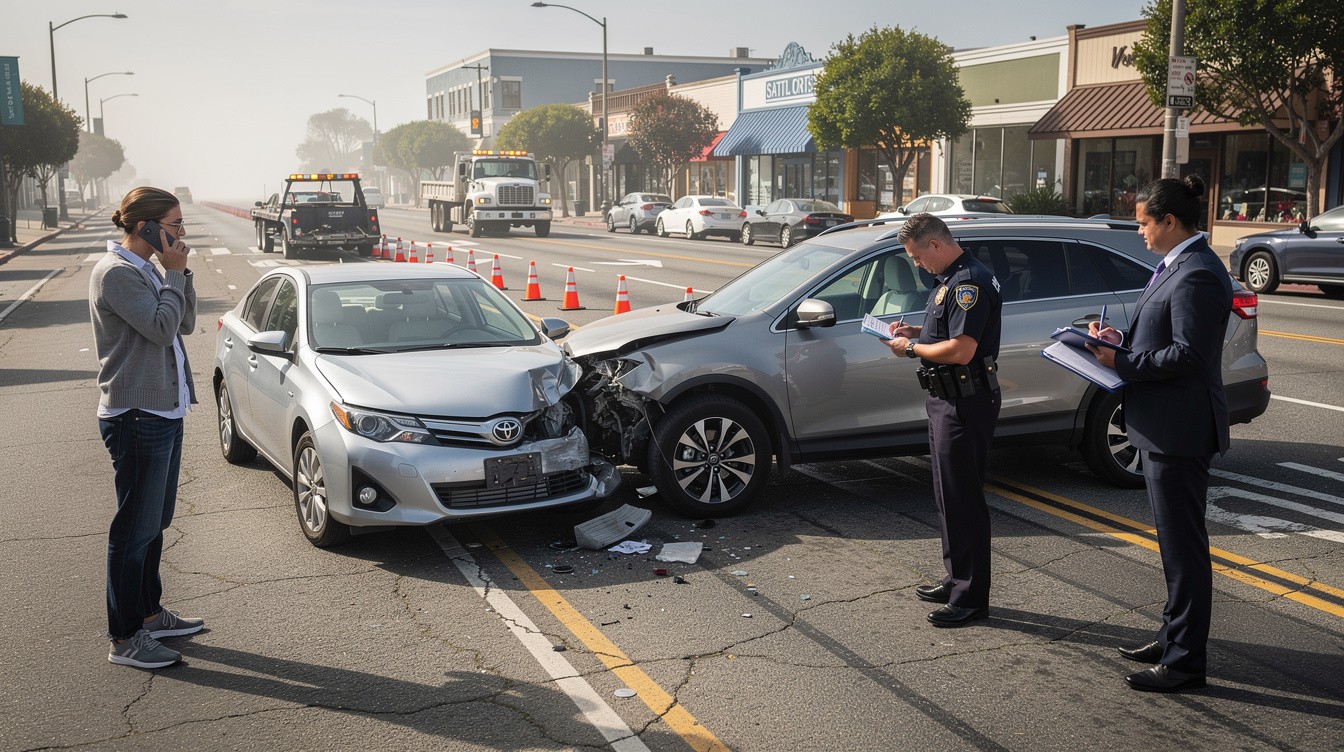
An accident with an uninsured motorist in Santa Cruz can leave you confused about your rights and next steps. You might wonder if you’re protected or how to recover damages when the other driver lacks insurance.
At Schaar & Silva LLP, we help accident victims navigate these situations and understand their options. This guide walks you through what uninsured motorist coverage means, how to file a claim, and the steps to take right after an accident.
Who Is Uninsured and Why Santa Cruz Drivers Need to Know
Understanding Uninsured and Underinsured Motorists
An uninsured motorist is someone operating a vehicle without active liability insurance coverage. In California, liability insurance is mandatory, yet about 15% of drivers on Santa Cruz roads ignore this requirement. Underinsured motorists carry insurance but with limits too low to cover serious injuries or property damage. The distinction matters because your response to each situation differs, and your protection depends on having the right coverage in place.
The Santa Cruz Reality: Local Statistics That Matter
Santa Cruz County faces a real problem with uninsured drivers. Nationally, about 15.4% of motorists were uninsured in 2023 according to the Insurance Research Council, but California’s rate sits slightly lower at around 15%. However, Santa Cruz County has recorded specific incidents showing the local risk: in 2021 alone, the county logged 13 hit-and-run accidents and ranked 3rd statewide for bicycle-involved incidents with 49 crashes. These statistics underscore why uninsured motorist coverage protects you when the at-fault driver has no insurance.
How Uninsured Motorist Coverage Protects You
Uninsured motorist bodily injury coverage pays your medical expenses, lost wages, and pain and suffering up to your policy limits. Uninsured motorist property damage coverage, which you must purchase separately, typically caps around $3,500 and covers vehicle repairs when the other driver is uninsured. California requires insurers to offer uninsured motorist coverage, though you can decline it in writing-a decision we at Schaar & Silva LLP strongly advise against given Santa Cruz’s uninsured driver prevalence.
Why Your Liability Coverage Isn’t Enough
Many drivers mistakenly believe their regular liability coverage protects them in these scenarios, but it does not. Your liability coverage pays the other person’s damages when you cause an accident, not yours. Matching your uninsured motorist limits to your liability limits provides equivalent protection. If you’re hit by an uninsured or underinsured driver, filing a UM claim with your own insurer often simplifies recovery compared to pursuing the at-fault driver directly, particularly when that driver cannot be located or lacks assets.
Taking Action: What Happens Next
The steps you take immediately after an accident determine how smoothly your claim proceeds and what compensation you ultimately recover.
Protecting Your Rights After an Uninsured Driver Accident
File Your Claim Quickly and Strategically
Contact your insurer within 24 hours of the accident, not days later, since delays weaken your position. When you call, state clearly that the other driver was uninsured and provide your policy number, the accident date, location, and the other driver’s information if you collected it. Do not give a recorded statement to the insurer before speaking with an attorney, as insurers use these statements to limit payouts. According to California Department of Insurance data, claims with comprehensive documentation settle about 40% faster on average, so gather police reports, medical records, repair estimates, and witness statements before submitting anything.
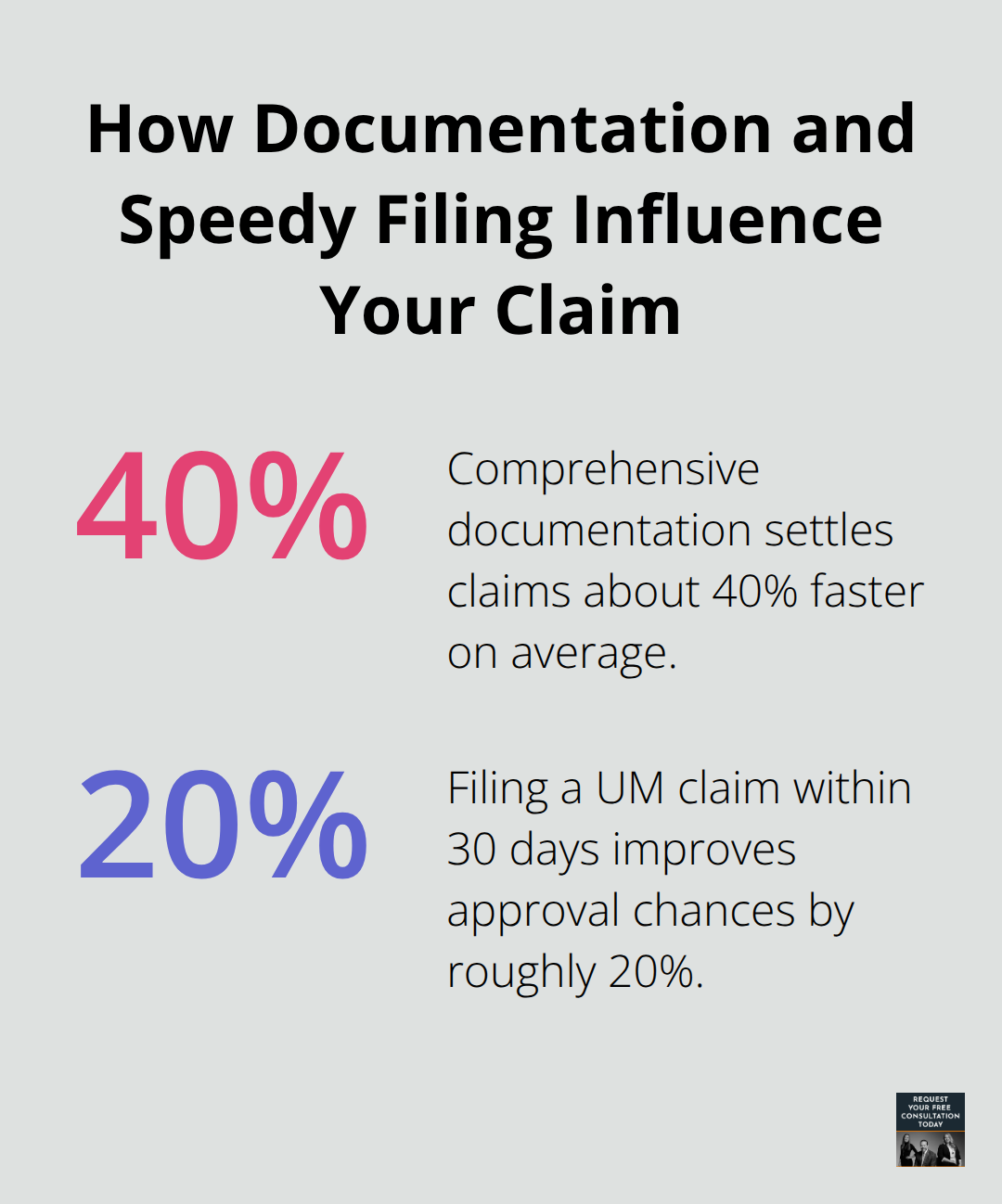
File your uninsured motorist claim within 30 days to improve approval chances by roughly 20%, and stay within the two-year statute of limitations for personal injury claims in California or you lose the right to recover entirely.
Document Everything at the Scene
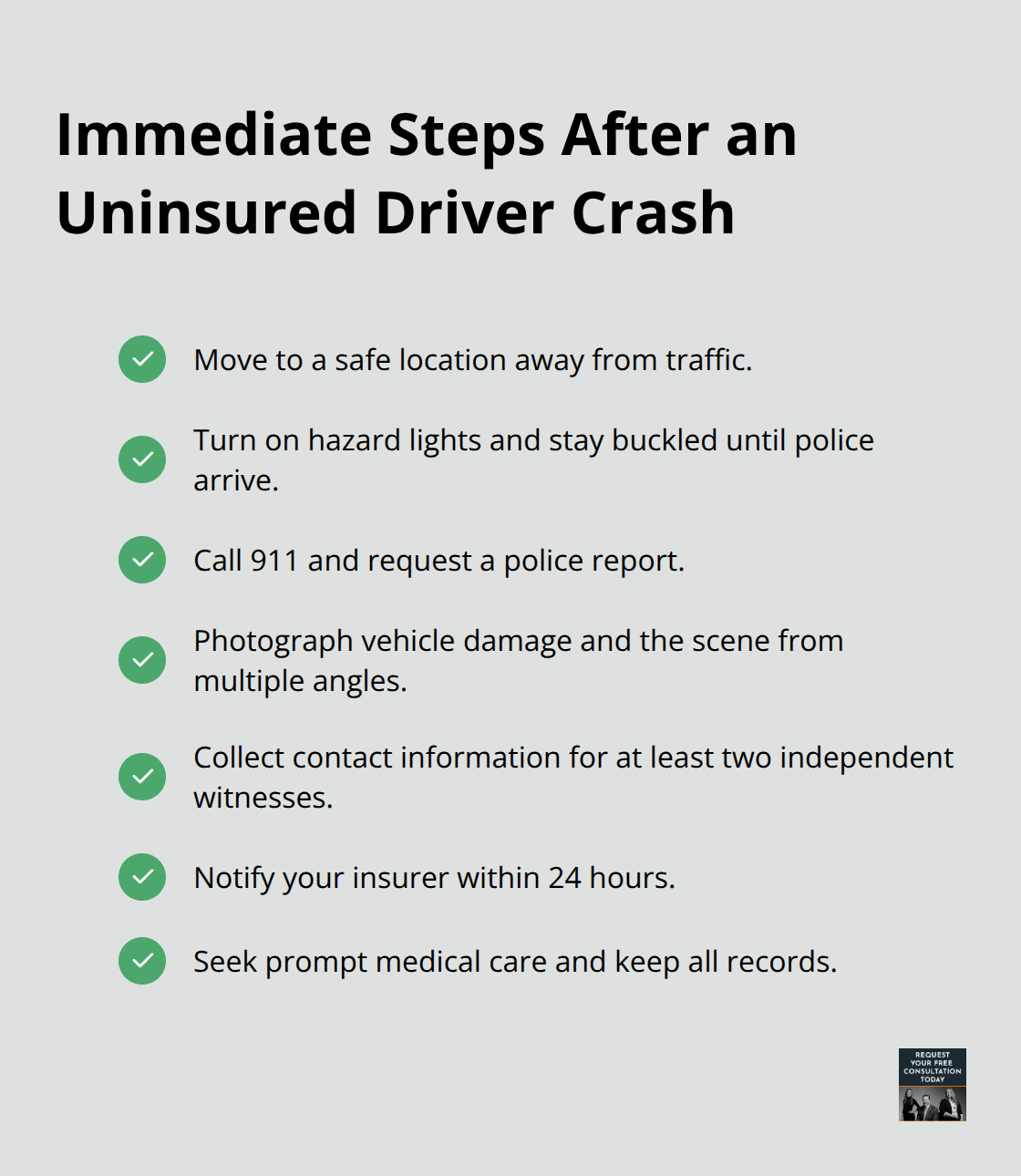
Call 911 if anyone is injured and obtain the police report number, as police-documented accidents significantly improve outcomes. Photograph the damage to your vehicle, the accident scene, road conditions, and traffic signs. Collect the names, phone numbers, and addresses of at least two independent witnesses who saw the crash. If the other driver remained at the scene, write down their name, address, license number, license plate, and vehicle identification number, though do not admit fault or discuss the accident details.
Address Medical Care and Lost Wages
Seek medical attention promptly even if you feel fine, since up to 40% of accident victims experience delayed symptoms and insurers may deny claims if you wait days to seek treatment. Document every medical visit, prescription, and expense, and keep records of any missed work with pay stubs or written statements from your employer. If medical bills burden you during recovery, we at Schaar & Silva LLP can connect you with medical lien services to cover bills while your case resolves, allowing you to focus on healing rather than immediate payment.
Know When Legal Action Becomes Necessary
When the insurer disputes fault, injury severity, or whether the other driver was truly uninsured, you may need to pursue legal action. Gather police reports and witness statements to support your claim, as these documents strengthen your position considerably. The damages you can recover include medical expenses, lost wages, pain and suffering, and vehicle repair costs up to your policy limits, depending on coverage and injury severity. Understanding these options positions you to make informed decisions about your next move.
What to Do Right After an Uninsured Driver Hits You
The minutes and hours following an accident with an uninsured motorist determine your claim’s success. Your first priority is safety, not blame or insurance details.
Prioritize Safety and Call Police
If the collision happens on a busy road or highway, move your vehicle to a safe location away from traffic if possible and if it’s safe to do so. Turn on your hazard lights and stay inside your vehicle with your seatbelt on until police arrive. Call 911 immediately if anyone is injured, and always request a police report even for minor accidents. The police report documents the uninsured status of the other driver and creates an official record that insurers heavily weight when evaluating claims.
Without this report, you weaken your position significantly.
Collect Critical Information at the Scene
While waiting for police, do not admit fault, apologize, or discuss the accident details with the other driver. Keep conversations brief and factual: exchange only names, phone numbers, license numbers, license plate information, and vehicle identification numbers. Take photographs of all vehicle damage, the accident scene, road conditions, weather, traffic signs, and street names from multiple angles. These photos provide visual proof of impact severity and scene conditions that insurers use to validate injury claims.
Witness statements carry enormous weight in uninsured motorist claims, so collect contact information from at least two independent people who saw the crash happen. Ask each witness to briefly describe what they saw, but do not coach them or suggest what happened. Once police complete their report, obtain the report number and file date immediately.
Notify Your Insurer Within 24 Hours
Contact your insurance company within 24 hours and state clearly that the other driver was uninsured. Provide your policy number, the accident date and time, location, police report number, and the other driver’s information. Do not give a recorded statement to your insurer before consulting with an attorney, as these statements can be used to deny or reduce your payout. Instead, tell your insurer you will provide a complete statement after you have had time to gather documentation and medical records.
Document Medical Care and Lost Income
Seek medical attention promptly even if you feel fine, because up to 40% of accident victims experience delayed symptoms like whiplash, back pain, or headaches that appear days later. Insurers scrutinize delays in medical care and may argue that injuries resulted from something other than the accident. Document every medical visit, test, prescription, and bill, and keep records of any missed work with pay stubs or written employer statements (this documentation directly supports your damage calculations and improves settlement speed).
Final Thoughts
An accident with an uninsured motorist in Santa Cruz leaves you facing medical bills, vehicle repairs, and uncertainty about recovery. The protection you have depends on the decisions you made before the crash happened. If you carry uninsured motorist coverage matching your liability limits, you have a clear path forward through your own insurance claim.
The steps you take in the hours and days after an accident determine your claim’s outcome. Calling police, documenting the scene, collecting witness information, seeking prompt medical care, and notifying your insurer within 24 hours create a foundation for success. These actions generate the evidence insurers need to approve claims quickly and fairly, while delays and incomplete documentation invite disputes over fault, injury severity, and causation that can drag out your recovery for months.
Your insurance company will scrutinize your claim, and disputes arise frequently in uninsured motorist cases. When the insurer questions whether the other driver was truly uninsured, challenges your injury claims, or offers a settlement far below your actual damages, you need someone who understands California law and knows how to push back effectively. We at Schaar & Silva LLP help accident victims in Santa Cruz recover the compensation they deserve through fair vehicle valuation and claim resolution, so contact us for a free consultation to discuss your accident and learn what your case is worth.