
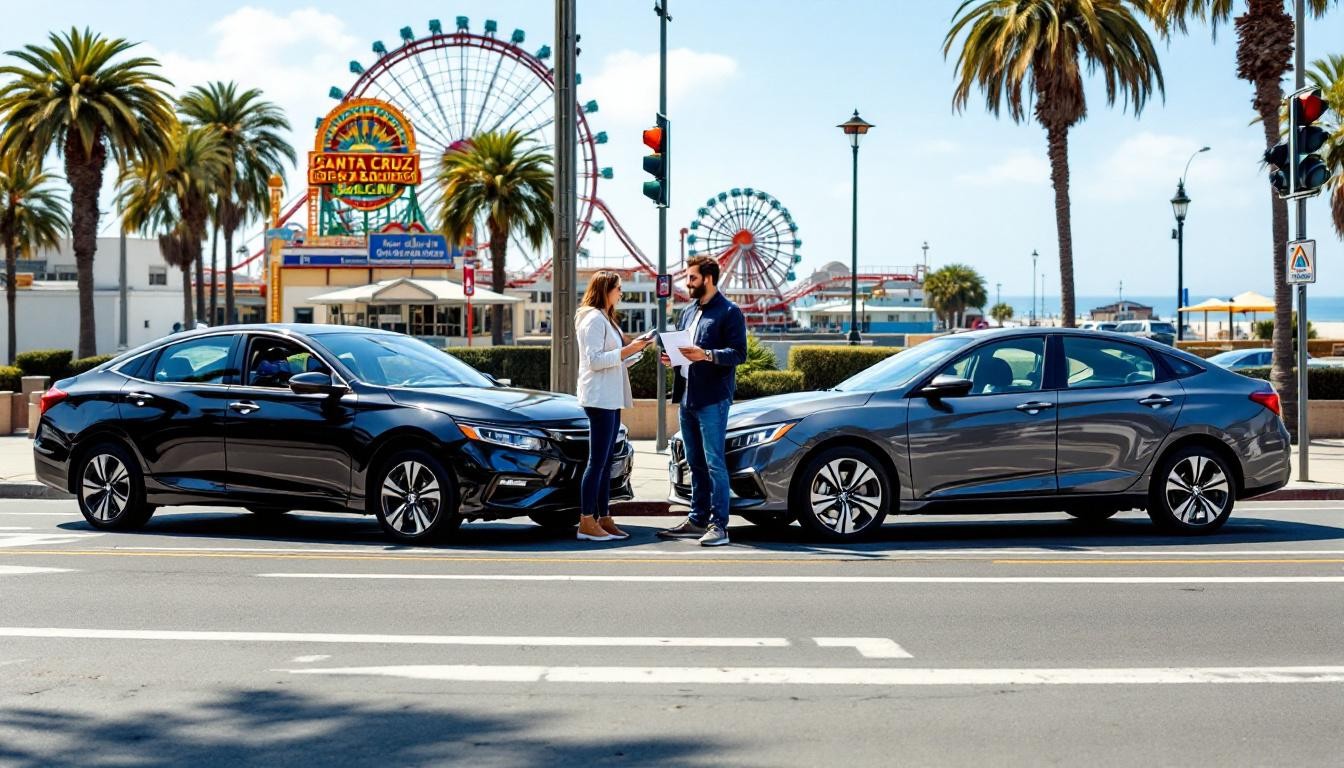
Getting hit by an uninsured driver in Santa Cruz leaves you vulnerable and confused about your next steps. Uninsured motorist coverage exists to protect you when the other driver lacks insurance, but filing a claim requires knowing the right process.
At Schaar & Silva LLP, we guide clients through Santa Cruz uninsured motorist claims every week. This guide walks you through filing with your insurer, negotiating settlements, and deciding whether to pursue legal action.
What UM Coverage Actually Protects in Santa Cruz
UM coverage fills a gap that standard liability insurance leaves wide open. When an uninsured driver hits you in Santa Cruz, their lack of insurance means you have no source to recover damages. UM coverage pays your medical expenses, lost wages, pain and suffering, and vehicle damage directly from your own policy, up to your coverage limits. The Insurance Research Council reports California’s uninsured motorist rate exceeds 16 percent, and Santa Cruz County faces additional exposure due to tourist traffic and congested coastal roads where hit-and-run incidents occur more frequently. This reality makes UM protection essential, not optional.
Why UM Coverage Matters More Than You Think
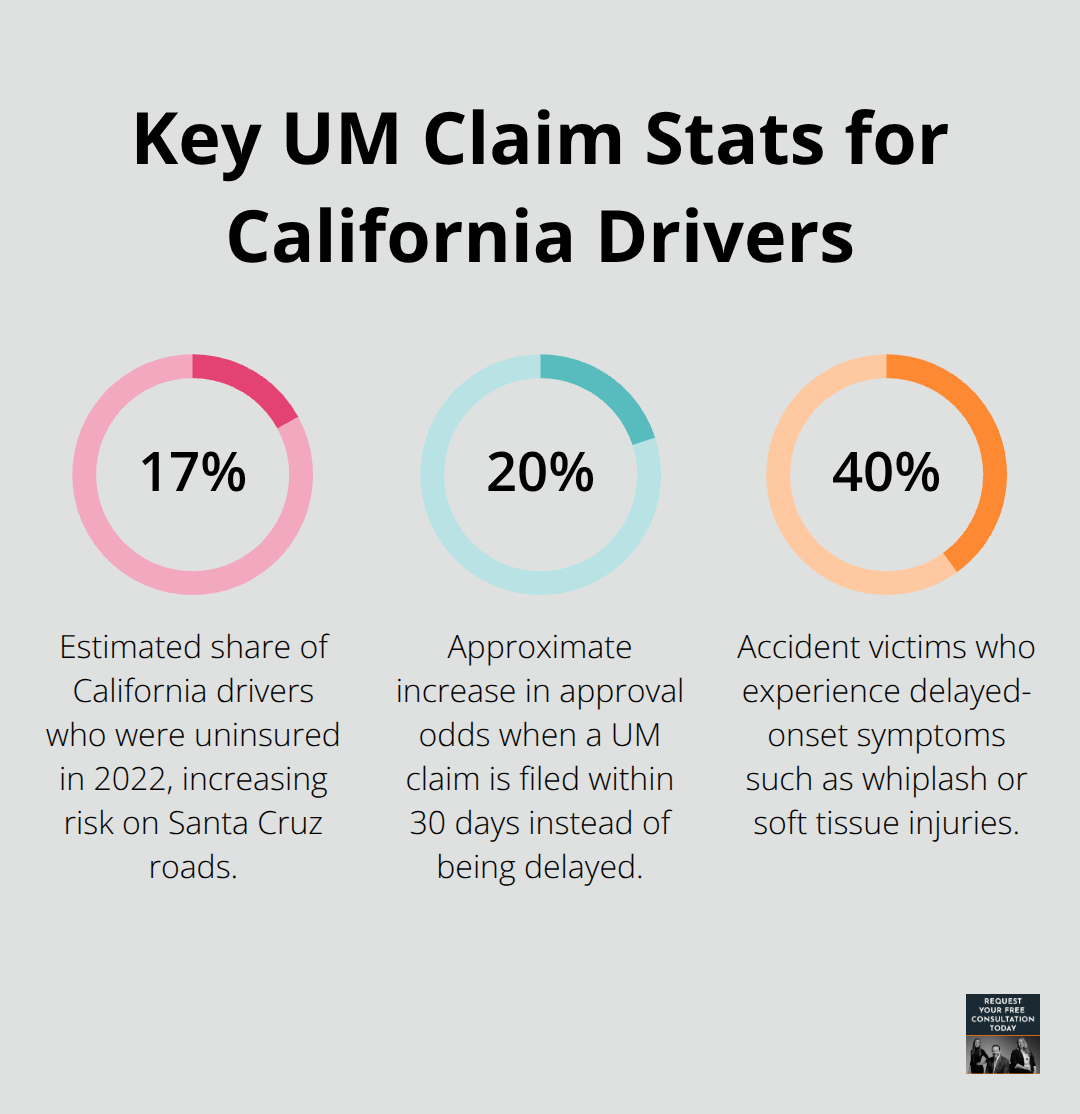
California law requires insurers to offer UM coverage when you purchase auto insurance, but many drivers reject it to save a few dollars monthly-a decision that can cost tens of thousands after a crash. Property damage under UM generally caps around $3,500, so if your vehicle is worth more, collision coverage serves as backup protection. The financial stakes are real: an estimated 17 percent of California drivers were uninsured in 2022 according to state data, meaning you face substantial risk on Santa Cruz roads.
How UM Stacks Against California’s Minimum Requirements
California Vehicle Code §16028 mandates minimum liability coverage of $30,000 per person and $60,000 per accident for injuries, plus $15,000 for property damage. Many Santa Cruz drivers carry only state minimums, which leaves them dangerously underprotected when hit by an uninsured motorist. Your UM limits should match your liability limits to prevent a coverage gap-this alignment ensures you have adequate financial protection if you become the victim.
UM Claims Work Differently Than Standard Liability Claims
The difference between a UM claim and a standard liability claim is straightforward: with liability, you pursue the other driver’s insurance; with UM, you pursue recovery through your own insurer instead. This shifts the burden but also gives you more direct control over the timeline and documentation process. When you file a UM claim, you provide evidence to your own carrier rather than negotiating with a defendant’s insurance company, which simplifies the process but requires thorough documentation and quick action.
Understanding how UM coverage protects you sets the foundation for what comes next: the actual steps you must take to file your claim successfully.
Steps to File a UM Claim with Your Insurer
Act Within the First 24 Hours at the Scene
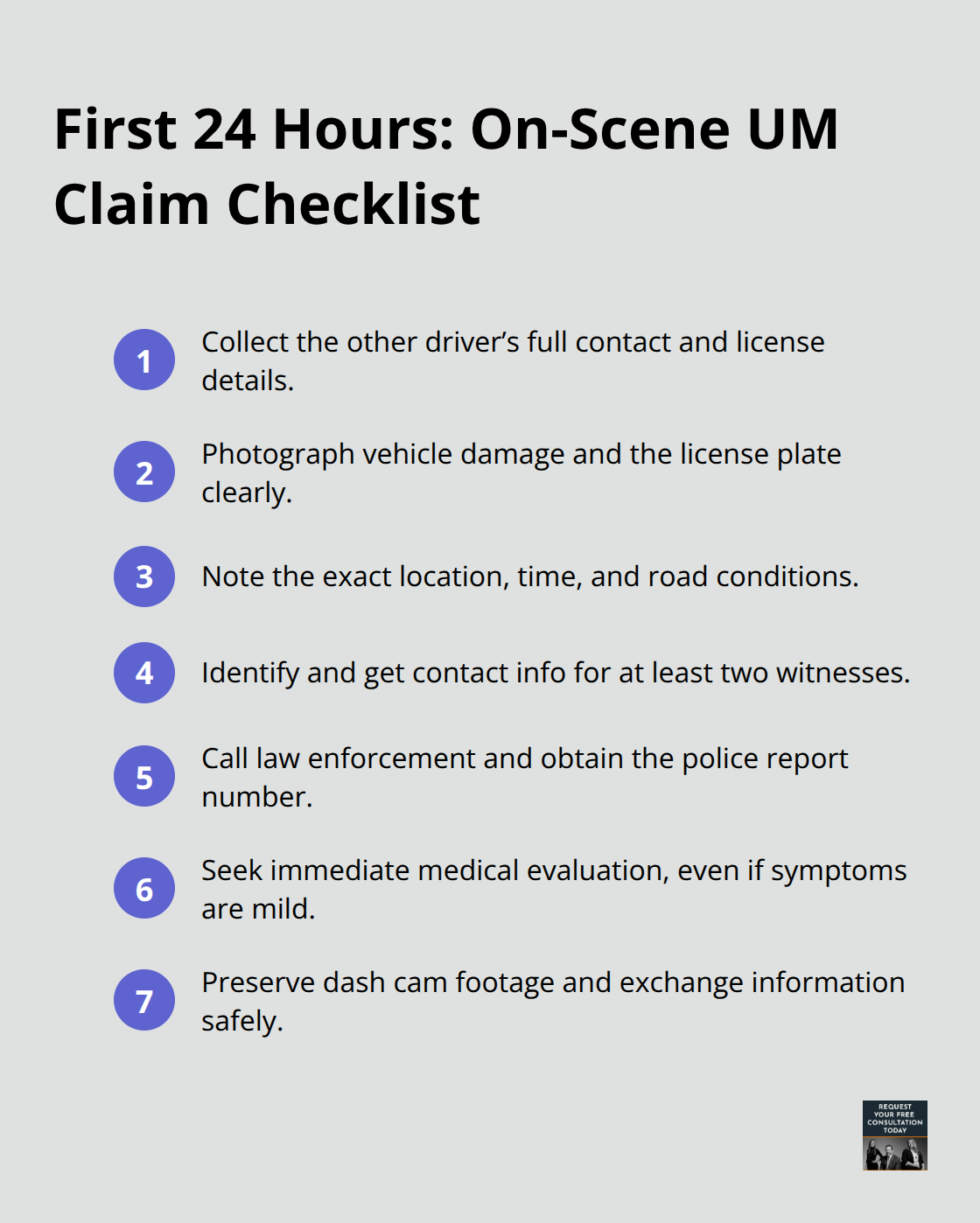
The first 24 hours after an uninsured motorist hits you determine whether your claim succeeds or fails. At the accident scene, collect the other driver’s name, address, license number, and vehicle identification number. Photograph the damage from multiple angles, capture the license plate clearly, and note the exact location and time. Obtain contact information from at least two witnesses-their statements often matter more than anything else when your insurer investigates.
Request the police report from the California Highway Patrol or local Santa Cruz law enforcement; this document becomes the cornerstone of your claim and signals to your insurer that you took the accident seriously. Without a police report, insurers scrutinize claims more heavily and approval odds drop significantly. File a police report even for minor crashes-do not assume the other driver will do it.
Report to Your Insurer Within 24 Hours
Notify your insurance company within 24 hours, not days or weeks. The California Department of Insurance reports that filing within 30 days improves approval odds by about 20 percent compared to delayed reporting. When you call, provide your policy number, the accident date and location, the other driver’s information, and a brief description of injuries or damage. Emphasize that the other driver was uninsured and that you are activating your UM coverage.
Gather Medical Records and Financial Documentation
Seek medical evaluation immediately, even if you feel fine. UCSF Medical Center research shows approximately 40 percent of accident victims experience delayed-onset symptoms like whiplash or soft tissue injuries that emerge days later. Obtain treatment notes, diagnoses, and bills from every medical provider-emergency rooms, urgent care clinics, physical therapists, and specialists.
Track lost wages by collecting pay stubs and a letter from your employer confirming time missed. Build a single organized folder containing the police report, all medical records and receipts, accident scene photos, witness statements, repair estimates, and wage documentation. Insurance companies often propose low initial settlements that undervalue claims by 30 to 50 percent.
Respond to Settlement Offers with Evidence
When you receive an offer, respond with a formal demand letter that references the police report, witness statements, and medical evidence to prompt serious evaluation. If the insurer delays, denies, or significantly undervalues your claim, legal representation becomes your next option-many Santa Cruz attorneys work on contingency and offer free initial consultations. The decision to pursue litigation depends on whether your damages exceed your UM coverage limits and whether the at-fault driver has assets to satisfy a judgment.
When to Pursue a Lawsuit for Your UM Claim
Assess Whether Your Damages Exceed UM Coverage
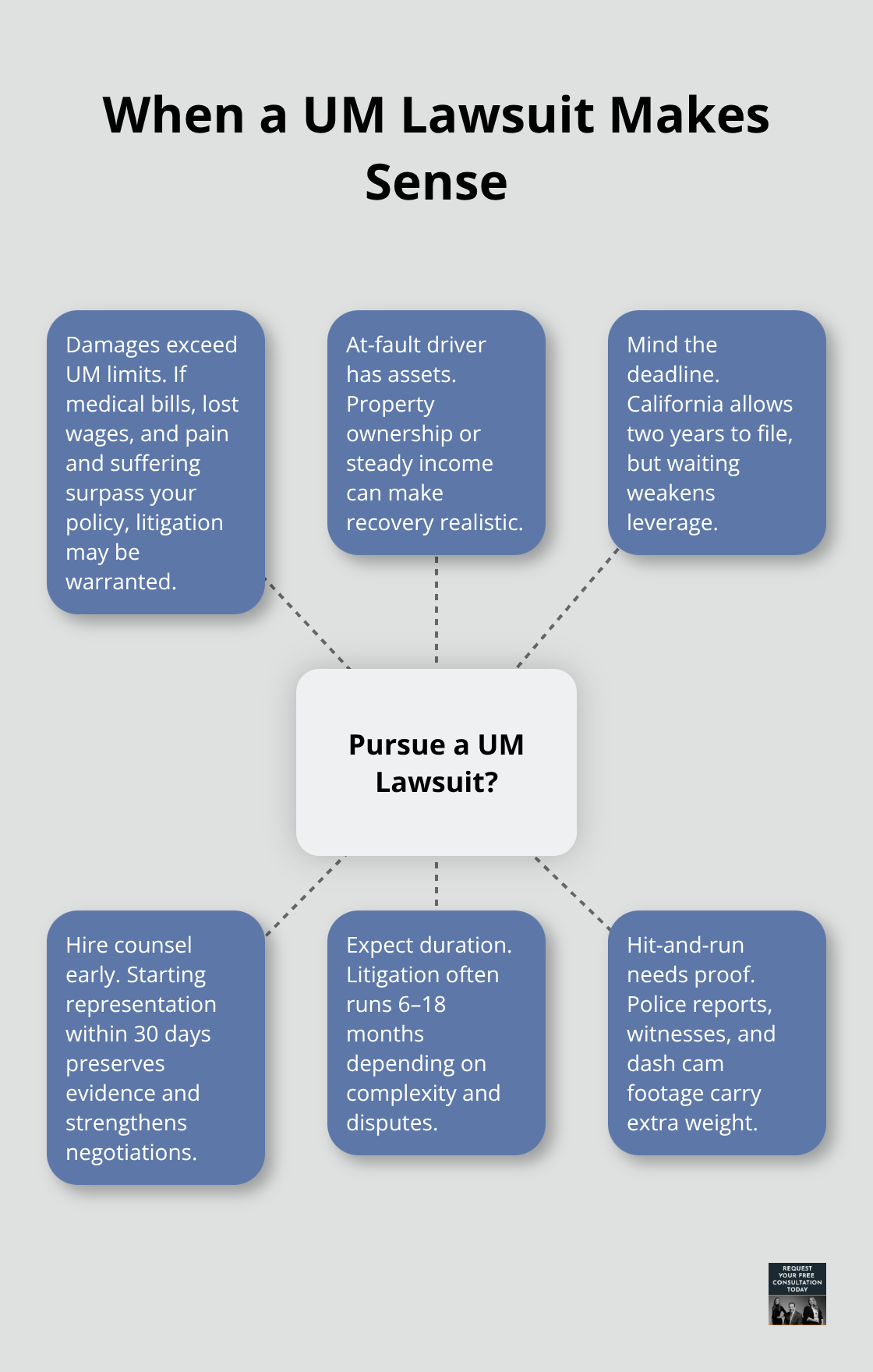
A lawsuit makes sense only when your UM coverage limits fall short of your actual damages and the at-fault driver has identifiable assets to recover from. If your claim settles within your policy limits, litigation wastes time and money. The real decision point arrives when medical bills, lost wages, and pain and suffering exceed what your insurer offers under UM coverage.
Santa Cruz crash victims with serious injuries-surgeries, long-term physical therapy, permanent disability-frequently face this scenario.
Calculate your total damages first: add emergency care costs, ongoing treatment, lost income, vehicle repairs, and a reasonable estimate for pain and suffering. If this total significantly exceeds your UM limit and the uninsured driver owns property or has stable employment, a lawsuit becomes worth pursuing. Conversely, if the at-fault driver is judgment-proof with no assets or income to garnish, winning a verdict means nothing.
Understand California’s Two-Year Statute of Limitations
California law gives you two years from the accident date to file a personal injury lawsuit, but waiting until near that deadline weakens your negotiating position substantially. Insurance companies know you’re under pressure and offer lowball settlements as deadlines approach. Starting legal representation within 30 days of the crash keeps evidence fresh, witness memories reliable, and your leverage strong throughout settlement discussions.
Litigation typically lasts 6 to 18 months depending on case complexity and whether the defendant contests liability. Early action often prompts insurers to reevaluate their position and move toward fair settlement offers.
Handle Hit-and-Run Cases with Extra Documentation
Hit-and-run cases require special attention because California law demands proof of the uninsured status within 30 days for UM claims to proceed smoothly. If you cannot locate the at-fault driver, your UM coverage still applies, but documentation becomes even more critical-the police report, witness statements, and dash cam footage carry extra weight. These materials strengthen your claim when the other driver remains unknown.
Evaluate the At-Fault Driver’s Financial Capacity
Many Santa Cruz attorneys evaluate the at-fault driver’s financial reality during free consultations before recommending litigation. Winning a judgment against someone with no assets produces no recovery. Research the defendant’s employment history, property ownership, and income stability to determine whether a lawsuit will yield actual compensation. This assessment shapes your decision to pursue court action or accept a settlement offer.
Final Thoughts
Filing a UM claim after an uninsured driver hits you in Santa Cruz requires speed, organization, and complete documentation. The strongest Santa Cruz uninsured motorist claims follow a practical early plan: act within the first 24 hours, file with your insurer within 30 days, and organize every receipt and document into a single folder. This approach accelerates settlement and prevents gaps that insurers exploit to deny or undervalue claims.
Your decision to pursue litigation depends on whether your damages exceed UM coverage limits and whether the at-fault driver has assets to satisfy a judgment. California’s two-year statute of limitations gives you time, but waiting weakens your negotiating position significantly. Starting legal representation within 30 days of the crash keeps evidence fresh and witness memories reliable, which matters far more than rushing to file suit near the deadline.
We at Schaar & Silva LLP handle uninsured motorist claims regularly and understand the financial and emotional toll these accidents create. Our team offers medical bill assistance, property damage claim evaluation, and connections to specialists for your recovery. Contact us for a free case evaluation to discuss your specific situation with an attorney who can explain whether settlement or litigation makes sense for your damages.
