
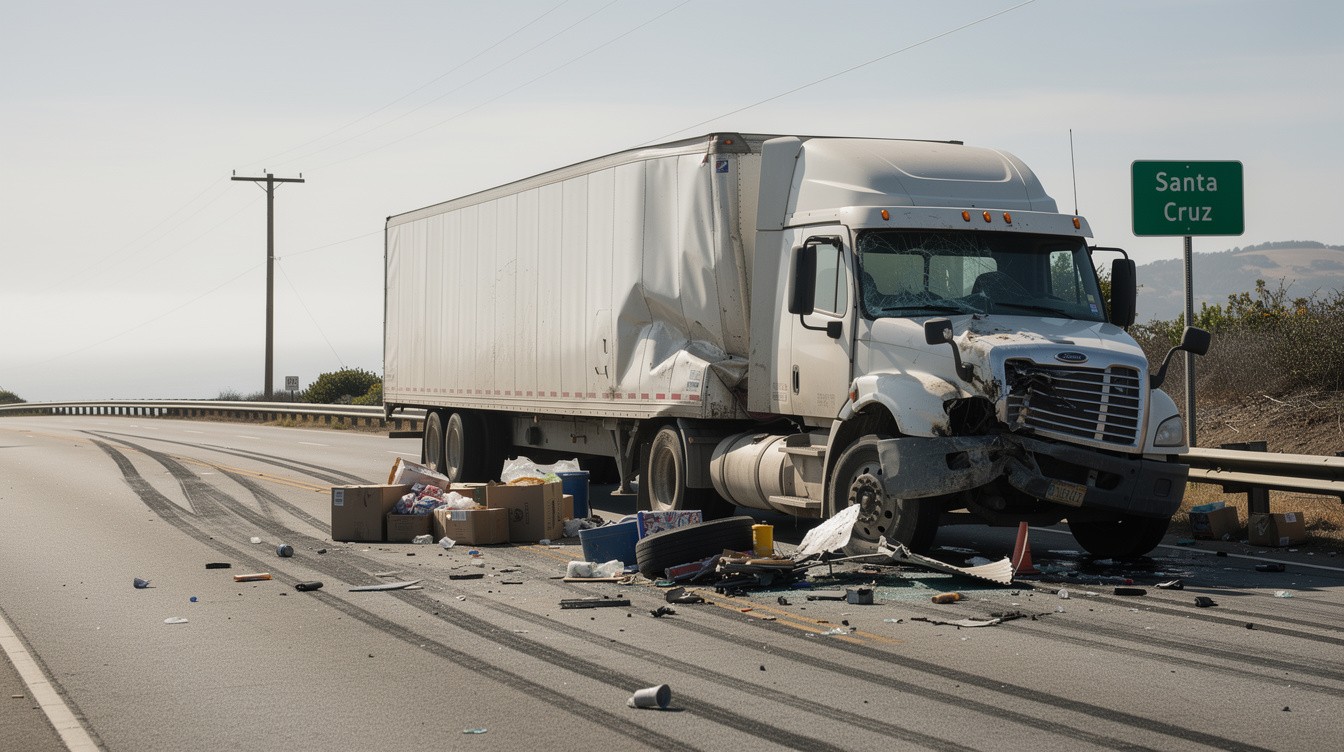
Truck crashes in Santa Cruz leave victims facing medical bills, lost income, and vehicle repairs that pile up fast. The compensation you’re entitled to depends on several factors, from how serious your injuries are to who was at fault.
At Schaar & Silva LLP, we help accident victims understand what damages they can claim and how to get paid. This guide walks you through the types of compensation available, what affects your settlement amount, and the steps to secure what you deserve.
What Damages Can You Recover After a Truck Crash
Medical Expenses: Your Immediate and Long-Term Costs
Truck crashes in Santa Cruz County generate three main categories of damages that victims can claim. Medical expenses form the first and often largest category. After a truck collision, you face immediate hospital bills, emergency room visits, and diagnostic imaging costs that can easily reach $10,000 to $50,000 or more depending on injury severity. The real financial burden emerges months or years later through ongoing treatment. Physical therapy sessions, specialist appointments, prescription medications, and surgical procedures add up quickly. If your injuries require long-term care such as in-home nursing or rehabilitation services, those costs extend far beyond the initial accident.
You should document every medical expense from day one, including receipts, insurance statements, and medical records. Many victims underestimate future medical needs and settle too early, leaving themselves vulnerable when complications arise later. The legal team at Schaar & Silva LLP can help direct you to medical lien services that facilitate the payment of your bills until your case is resolved, allowing you to focus on healing rather than immediate payment pressure.
Lost Income and Earning Capacity
Lost income represents the second major damage category and often gets overlooked by accident victims focused on immediate medical concerns. If the truck crash prevents you from working, you can claim compensation for wages lost during recovery. California law recognizes this loss as legitimate compensation. Beyond immediate lost wages, you can also claim loss of earning capacity if your injuries permanently reduce your ability to earn at your previous level.
For example, if you worked in construction and the crash caused permanent nerve damage affecting your hands, you might transition to lower-paying work for the rest of your career. That lifetime income difference is compensable. Self-employed individuals should track income records, tax returns, and business documentation to establish earnings loss.
Property Damage: Vehicle Repair and Replacement
Property damage forms the third category and includes your vehicle repair or replacement costs. After a truck crash, you deserve compensation for the fair market value of your vehicle before the accident, not just repair estimates. If your vehicle is totaled, insurers must pay you the actual cash value. If repairs are possible, you can claim the full cost of restoration to pre-accident condition.
Request multiple repair estimates to establish fair pricing, and keep all documentation from mechanics and insurance adjusters. Schaar & Silva LLP assists in evaluating the extent of property damage and helps you receive a fair valuation for your loss. Understanding what each damage category covers positions you to identify all compensation you can pursue.
What Determines Your Settlement Amount
How Injury Severity Shapes Your Compensation
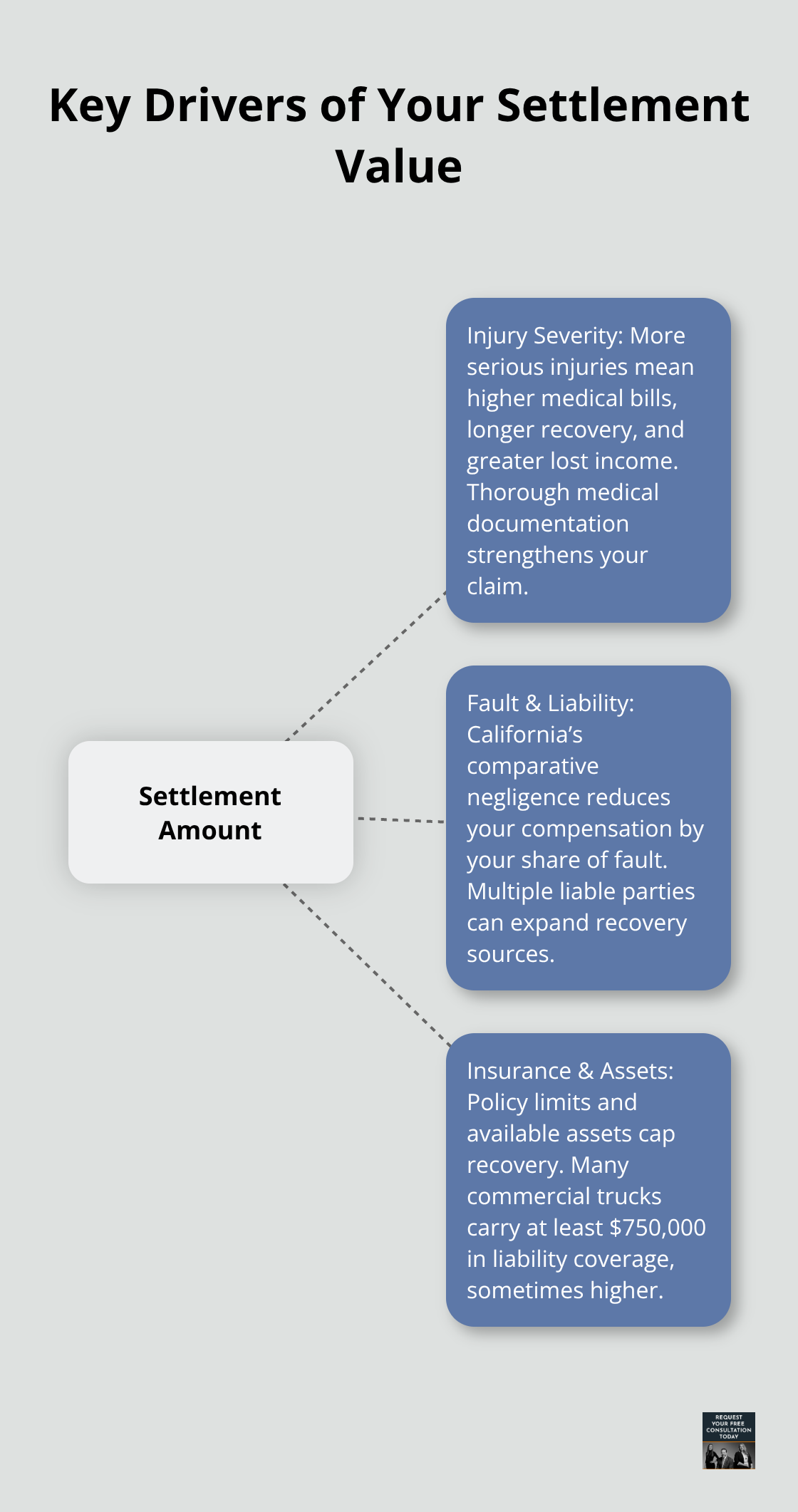
Your compensation after a truck crash in Santa Cruz depends heavily on how severe your injuries are and how the accident happened. Injury severity directly shapes your settlement because more serious injuries generate higher medical bills, longer recovery times, and greater lost income. A broken arm might cost $15,000 to $30,000 in total damages, while a spinal cord injury can exceed $500,000 when accounting for lifetime care needs. Insurance adjusters use injury severity as the primary lever to calculate offers, so detailed medical documentation matters enormously. You should collect every diagnosis, imaging report, and treatment plan on record because gaps in your medical file give insurers room to lowball your claim.
Fault Determination and Liability
Fault determination affects your settlement just as much as injury severity. California follows comparative negligence rules, meaning your compensation reduces by your percentage of fault. If you were 20 percent at fault for the crash, you receive 80 percent of your damages. Truck crashes often involve multiple liable parties including the driver, the trucking company, the cargo loader, or equipment manufacturers, which complicates fault analysis significantly.
The Federal Motor Carrier Safety Administration enforces strict regulations on truck maintenance, driver hours, and cargo weight through the California Code of Regulations, and violations of these rules strengthen your liability case. You should collect evidence immediately including photos of the crash scene, witness statements, police reports, and the truck’s maintenance records to establish clear fault.
Insurance Coverage and Available Assets
Insurance coverage limits and the defendant’s available assets ultimately cap what you can recover. Most commercial trucks carry minimum liability insurance of $750,000 under federal requirements, but many carry higher limits. If the trucking company has substantial assets, your attorney can pursue additional recovery beyond insurance proceeds. Underfunded defendants or drivers with minimal coverage create recovery limitations that no legal strategy can overcome, so early investigation of available assets prevents disappointment later in your case. Understanding these three factors positions you to evaluate what your specific case might be worth and what obstacles you may face in recovery.
How to Secure Your Truck Crash Compensation
Collect Evidence Immediately After the Accident
Securing compensation after a truck crash in Santa Cruz requires a methodical approach that starts within hours of the accident. The first critical step involves collecting evidence at the scene before details fade and vehicles are moved. Photograph the crash location from multiple angles, including road conditions, traffic signals, and vehicle positions. Capture close-ups of vehicle damage, skid marks, and any visible debris. Obtain contact information and statements from witnesses immediately, as their memories remain sharpest in the first moments after impact. Request the police report number and file a formal report with local authorities-the Santa Cruz County Sheriff’s Office maintains crash records that become essential documentation for your claim. Collect the truck driver’s commercial driver’s license information, the trucking company’s details, and insurance information. Document your own injuries by taking photos of visible wounds and obtaining medical records from every healthcare provider you visit.
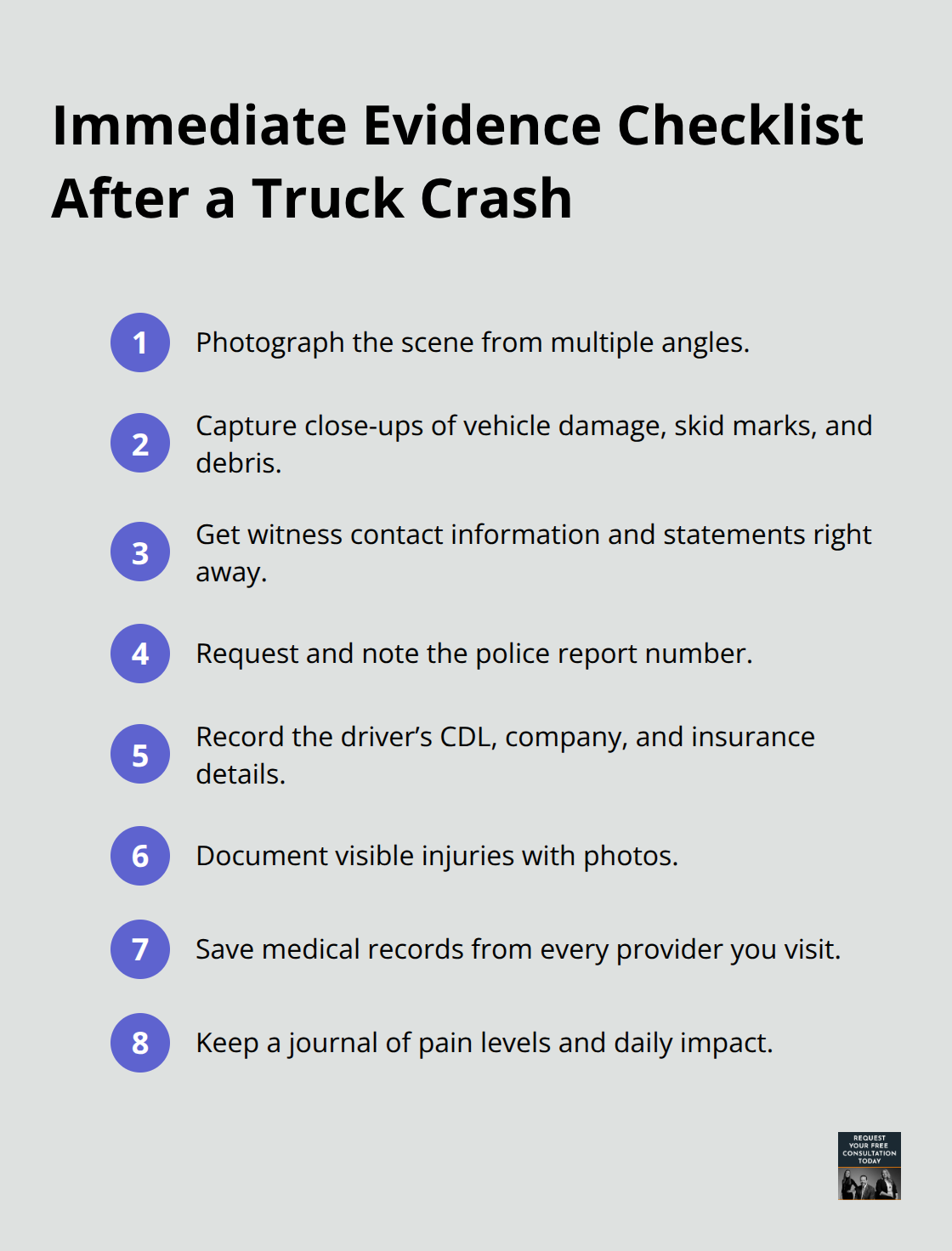
Keep a detailed journal of your recovery timeline, pain levels, and how injuries affect your daily activities. This contemporaneous documentation carries far more weight with insurance adjusters than vague recollections months later. Insurance companies receive hundreds of claims annually and immediately evaluate which cases have solid evidence versus weak documentation, so thorough evidence collection directly influences settlement offers.
Understand Insurance Company Tactics
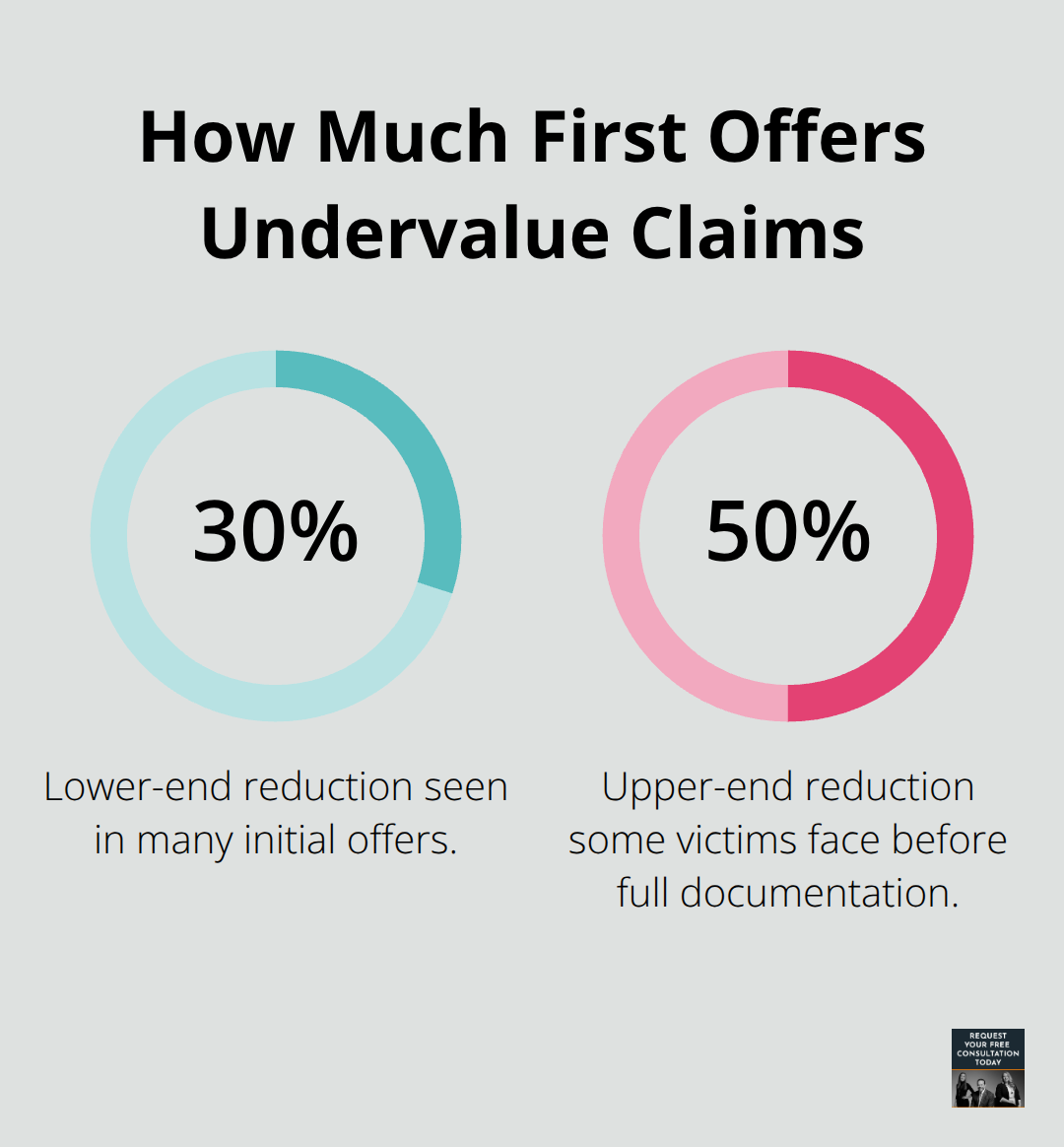
Negotiating with insurance companies demands a clear understanding that their goal differs fundamentally from yours. Insurance adjusters are trained to minimize payouts, and the initial offer typically falls 30 to 50 percent below what cases ultimately settle for when properly documented.
Never accept the first offer or communicate directly with adjusters without written records of every conversation. Respond to all insurer requests in writing and keep copies of every document you submit. If your injuries are moderate to severe, hiring a legal team strengthens your negotiating position dramatically because insurers know experienced attorneys will pursue litigation if settlement discussions stall.
Know Your Timeline and Legal Deadlines
The California personal injury statute of limitations provides two years to file a claim, but waiting too long weakens your case as evidence degrades and witnesses become unavailable. If negotiations reach an impasse and the insurer refuses fair compensation, filing a lawsuit becomes necessary. Most truck accident attorneys work on contingency fees, meaning you pay nothing upfront and only pay fees if your case succeeds, eliminating financial barriers to pursuing full compensation through the courts.
Final Thoughts
Truck crash damages in Santa Cruz leave victims facing financial and physical recovery that extends far beyond the initial accident. The compensation framework we’ve outlined covers medical expenses, lost income, and property damage, with settlement amounts determined by injury severity, fault, and available insurance coverage. Your path to recovery depends on gathering solid evidence, understanding insurance company tactics, and recognizing when professional legal support becomes necessary.
We at Schaar & Silva LLP remove the burden of navigating complex regulations and negotiating with insurers while you focus on healing. We help direct you to medical lien services that cover your bills until your case resolves, evaluate property damage claims to guarantee fair valuations, and connect you with psychological support specialists because emotional trauma from truck crashes deserves treatment alongside physical injuries. The two-year statute of limitations in California means time matters-waiting too long weakens your case as evidence disappears and witnesses become unavailable.
Contact Schaar & Silva LLP for a free consultation to discuss your truck crash case and evaluate your claim. Bring your documentation, photos, medical records, and insurance information to your consultation so we can outline a path forward. You don’t have to navigate this alone.
