
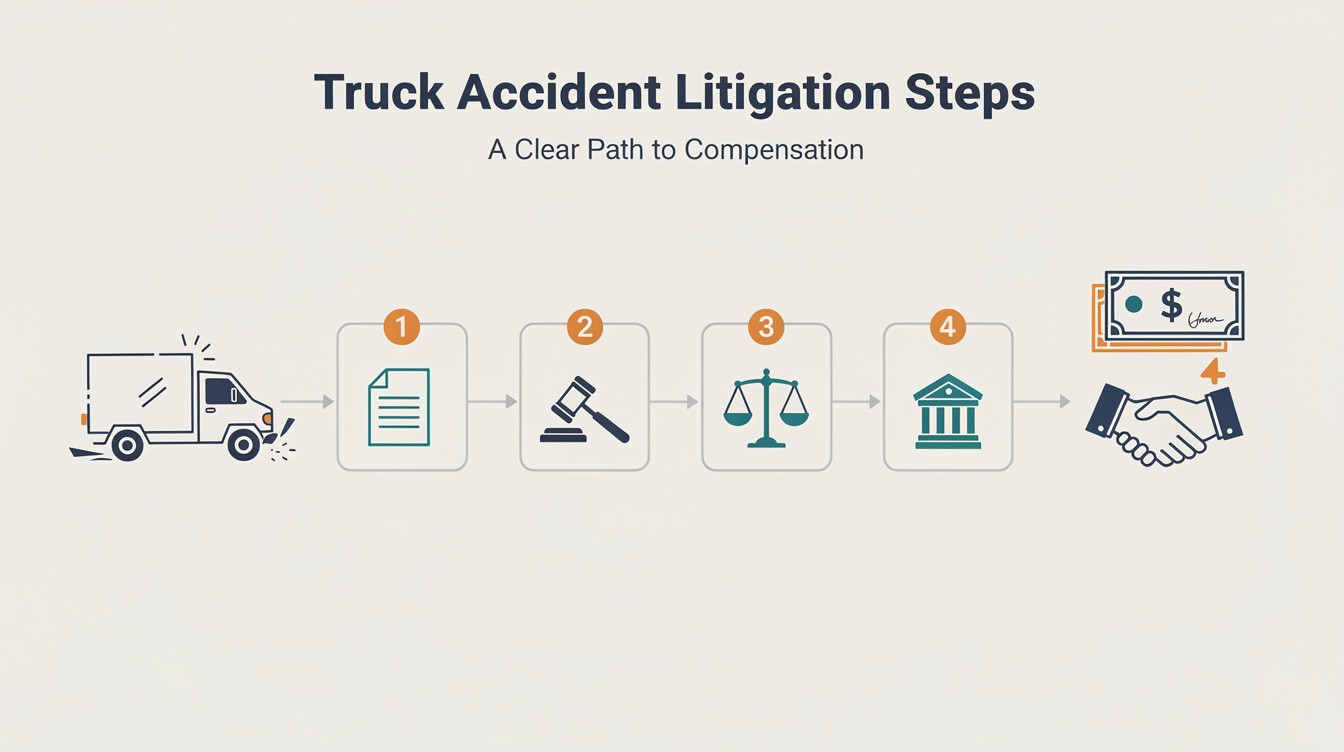
Truck accidents cause serious injuries and financial losses that demand immediate action. The path from accident to compensation involves specific truck accident litigation steps that most people don’t understand.
At Schaar & Silva LLP, we’ve guided countless clients through this process. This guide breaks down each phase so you know exactly what happens next.
What Evidence Matters Most Right After a Truck Accident
Act Fast to Preserve Critical Evidence
The first hours after a truck accident determine whether you’ll have the evidence needed to win fair compensation. Most people miss critical details because they don’t know what to prioritize. At the scene, photograph vehicle positions, road conditions, tire marks, and any visible injuries before anything moves. Police will arrive and file a report, but that report often contains gaps or officer assumptions rather than facts. Request a copy immediately and review it for accuracy. If the officer misidentified the truck driver’s company or missed speed limit signs, those errors can weaken your case later.
Send a preservation letter to the trucking company immediately demanding they retain all black box data, driver logs, maintenance records, and dash cam footage. Without this letter, companies can legally destroy evidence. The truck’s electronic control module (commonly called a black box or event data recorder) captures speed, braking patterns, and acceleration data in the seconds before impact.
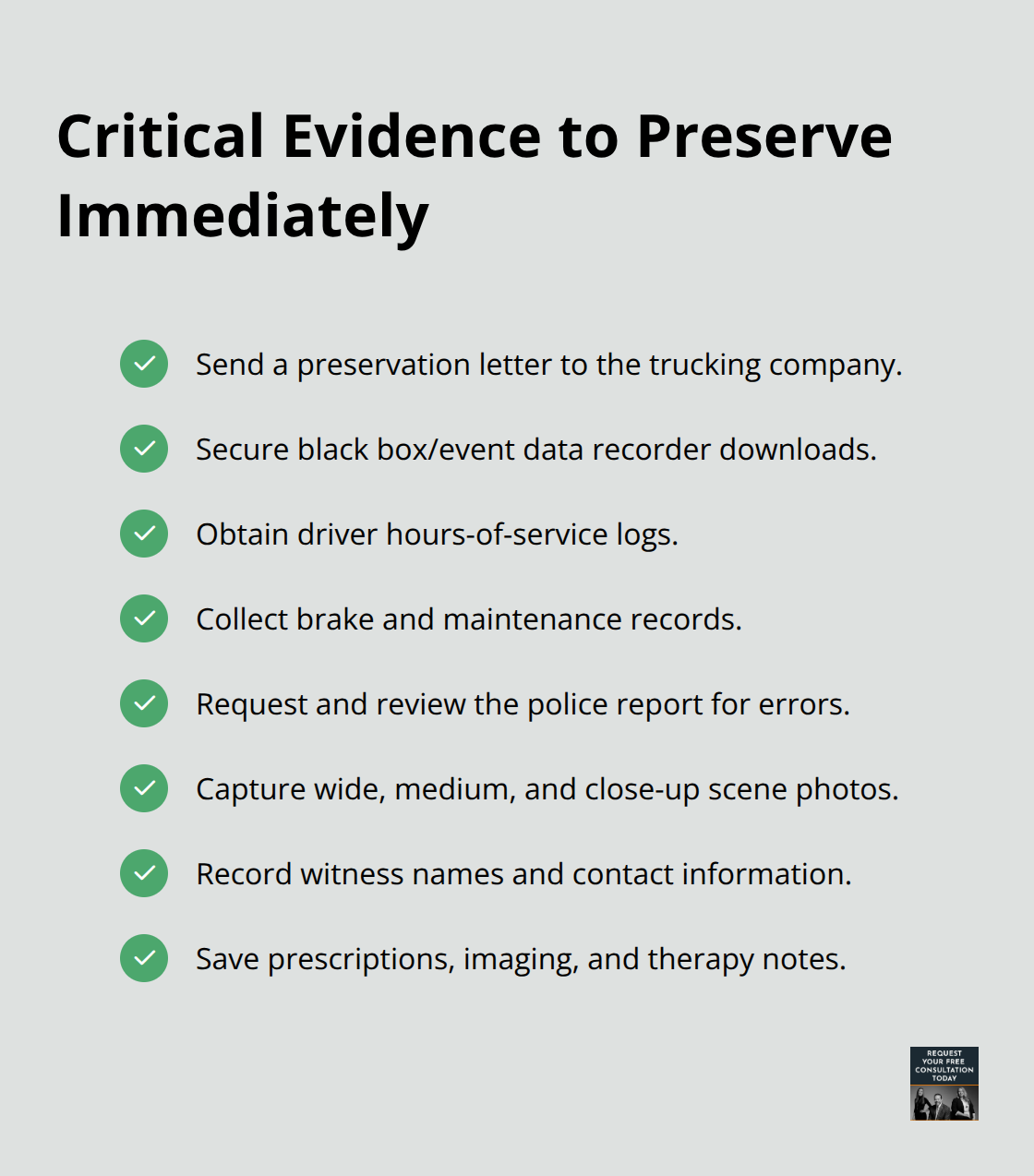
This data overwrites itself within weeks if not preserved. The Federal Motor Carrier Safety Administration requires trucking companies to maintain driver logs showing hours of service, which reveal whether the driver violated rest requirements. Brake maintenance records show whether the truck had mechanical failures. These documents are your strongest tools for proving negligence because they’re factual records, not opinions.
Collect Witness Information Before People Leave
Witness statements carry enormous weight because they come from neutral observers. Collect full names, phone numbers, and email addresses from anyone who saw the crash happen. Many people disappear after an accident, so obtaining their information on the spot is non-negotiable. Their accounts can contradict what the truck driver or company later claims about how the accident occurred.
Document the Scene With Strategic Photography
Photograph the accident scene properly to make the difference between a strong case and a weak one. Take wide shots showing the overall scene, medium shots of vehicle damage patterns, and close-ups of specific damage areas. Road conditions matter tremendously, so photograph wet pavement, potholes, debris, or poor lighting if present. If the truck hit you from behind, the damage location on your vehicle tells the story of speed and impact angle. Photograph the truck’s license plate, company name, and any visible company logos or markings. Document the truck driver’s appearance, the condition of the truck’s tires, and whether cargo appears secured properly. This visual record prevents the trucking company from later claiming the truck was in perfect condition.
Build Your Medical Documentation Record
Medical records become your proof of injury severity and causation. Seek medical evaluation immediately, even if you feel fine, because some injuries like whiplash or internal bleeding appear hours or days later. Keep every receipt, every imaging report, every prescription, and every therapy note. The average truck accident settlement in California ranges from $100,000 to $500,000 for serious injuries, but only when medical documentation supports the injury claims. Insurance companies scrutinize gaps in treatment, so consistent medical follow-up strengthens your position throughout negotiations. Your medical file becomes the foundation for everything that follows in the litigation process.
Who Is Actually Responsible for Your Truck Accident
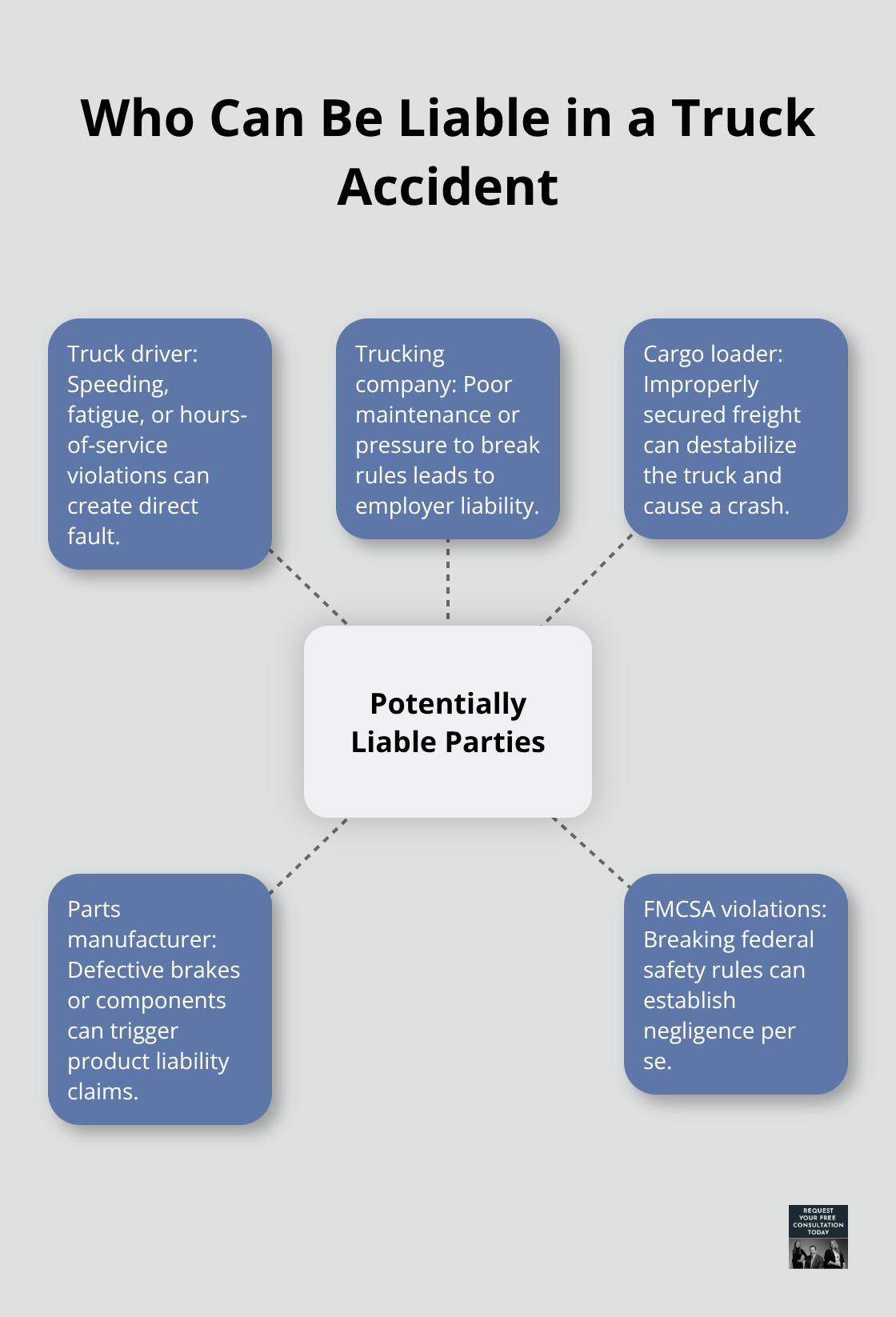
Truck accidents rarely involve just one liable party, and identifying everyone responsible determines how much compensation you ultimately receive. The truck driver might be at fault for speeding or fatigue, but the trucking company could be liable for failing to maintain brakes or for pressuring drivers to violate hours of service rules. A cargo loader might have secured freight improperly, causing the truck to become unstable. A parts manufacturer could have sold defective brakes. The Federal Motor Carrier Safety Administration establishes regulations that trucking companies must follow, and violations of these rules can establish negligence per se-meaning the violation itself proves negligence without requiring additional proof.
Multiple Parties Mean Multiple Insurance Policies
When you identify all potentially liable parties early, you multiply the insurance policies available to cover your damages, which directly increases your settlement value. Many victims accept settlements from just the truck driver’s coverage and miss millions available from the trucking company’s policy or from manufacturers. California law allows you to pursue compensation from all responsible parties, so a thorough investigation at the start pays dividends throughout your case.
Black Box Data and Driver Logs Tell the Real Story
Your truck’s black box data and the driver’s logs reveal the truth about what happened in the seconds before impact. The event data recorder captures speed, throttle position, brake application, and steering angle during the crash sequence. Driver logs show whether the driver exceeded the 11-hour daily driving limit or the 14-hour on-duty limit established by federal regulations. These aren’t opinions or estimates-they’re recorded facts that prove violations. Maintenance records document whether the trucking company performed required inspections or ignored known mechanical problems. When you find that a company ignored brake defects documented in service records, that evidence transforms a simple accident into gross negligence.
Medical Documentation Creates Your Injury Timeline
Medical documentation must be equally meticulous because insurance companies challenge injury claims aggressively. Your medical records should show consistent treatment, progression of recovery or ongoing symptoms, and clear connections between the accident and your injuries. A gap of three months between the accident and your first treatment visit gives insurers ammunition to claim your injuries weren’t serious. Conversely, medical records showing immediate hospitalization, imaging studies confirming injuries, and ongoing physical therapy create an undeniable injury timeline.
How Documentation Affects Your Settlement Value
California courts recognize economic damages including medical expenses, lost wages, and future care costs, plus non-economic damages for pain and suffering. The strength of your medical documentation directly determines whether you recover $100,000 or $500,000 for the same injury type because documented severity persuades judges and juries far more effectively than your word alone. Once you’ve identified all liable parties and assembled your evidence, the next phase involves presenting your case strategically to the insurers who will ultimately decide your settlement amount.
How Insurance Companies Respond to Your Claim
Your demand letter initiates the settlement phase, and the insurance company’s response determines whether you negotiate from strength or weakness. A strong demand letter details every medical expense, lost wage, and pain-and-suffering calculation backed by the evidence you’ve gathered. The letter should cite specific facts from black box data, driver logs, and medical records rather than making general arguments about negligence. Insurance adjusters receive hundreds of demand letters monthly, and vague demands attract low settlement offers. When your demand letter shows that the truck driver exceeded the 11-hour daily driving limit documented in federal logs, or that maintenance records prove the company ignored known brake defects, the adjuster recognizes you’ve built a case that could survive trial.
Settlement Timelines and Initial Counteroffers
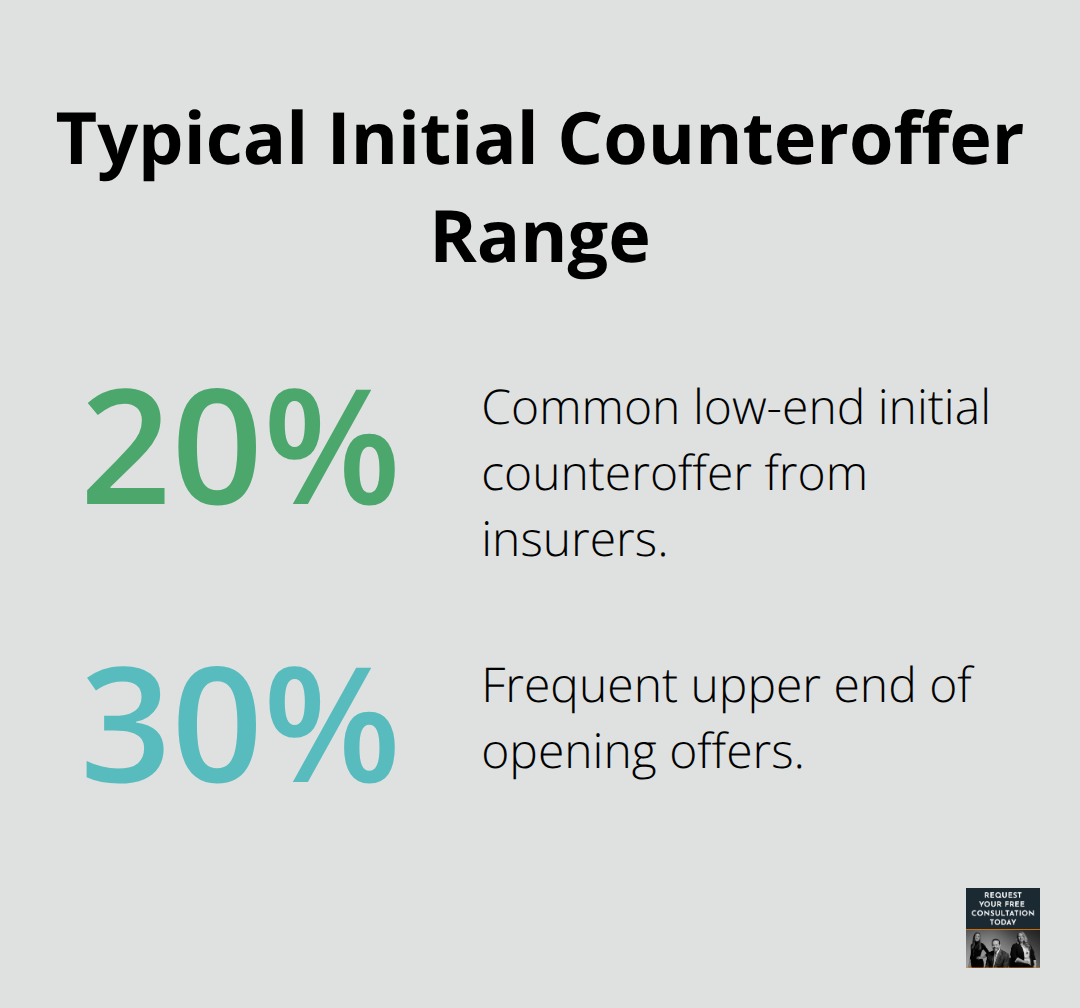
Most truck accident cases in California settle between six and sixteen months after the accident, but settlement speed depends entirely on how thoroughly you’ve documented liability and damages. The insurance company will likely respond with a counteroffer far below your demand, sometimes offering 20 to 30 percent of what you requested. This counteroffer isn’t their final position; it’s their opening move in negotiation.
Your attorney counters with specific rebuttals showing why their valuation ignores documented medical costs or undervalues future care needs. If you suffered a traumatic brain injury requiring ongoing cognitive rehabilitation, their initial offer of $75,000 becomes indefensible when medical records show $150,000 in treatment costs alone, plus years of lost earning capacity.
Discovery and Depositions Strengthen Your Position
Discovery and depositions occur during this negotiation phase, and these tools either strengthen your position or expose weaknesses in your case. During discovery, both sides exchange documents including medical records, employment records proving lost wages, accident reconstruction reports, and the trucking company’s internal communications about the driver or vehicle maintenance. Depositions involve sworn testimony where the truck driver, company safety manager, or other witnesses answer questions under oath before trial. The opposing attorney will ask aggressive questions designed to contradict your account or minimize injury severity, so your attorney prepares you thoroughly beforehand. If the truck driver admits during deposition that he hadn’t slept in eighteen hours, that testimony becomes powerful evidence at trial or during settlement negotiations. If the company’s safety manager testifies that they ignored a known brake problem, that admission often settles the case immediately because no jury would side with such negligence. Many cases settle during or immediately after depositions once both sides understand how strong or weak their positions actually are.
Filing a Lawsuit When Settlement Stalls
If settlement negotiations stall and the insurance company refuses reasonable offers, filing a lawsuit becomes necessary. In California, you have two years from the accident date to file suit, so timing matters strategically. Filing a lawsuit signals that you’re prepared for trial and won’t accept lowball offers, which often prompts insurers to increase settlement proposals significantly. The actual trial process rarely occurs because fewer than five percent of personal injury cases proceed to verdict, but preparing your case as if trial is inevitable strengthens your negotiating position throughout settlement discussions.
Final Thoughts
Truck accident litigation steps follow a predictable path once you understand what happens at each stage. You gather evidence immediately, identify all liable parties, build your case with medical documentation and black box data, then negotiate from a position of strength. Insurance companies test your resolve with low offers, but your documented evidence forces them to increase settlements substantially.
Professional legal representation matters because truck accident cases involve multiple parties, federal regulations, and insurance companies trained to minimize payouts. You need someone who understands how to read black box data, interpret driver logs, and identify violations of Federal Motor Carrier Safety Administration rules. An attorney handles all communication with insurers, preventing you from accidentally weakening your case through statements the company can use against you later, and they manage the timeline strategically to pressure settlement or prepare for trial.
The difference between accepting a $100,000 settlement and negotiating $400,000 often comes down to having someone who knows how to present your case effectively. Contact Schaar & Silva LLP to discuss your truck accident case and learn how we can help you recover the compensation you deserve.
