
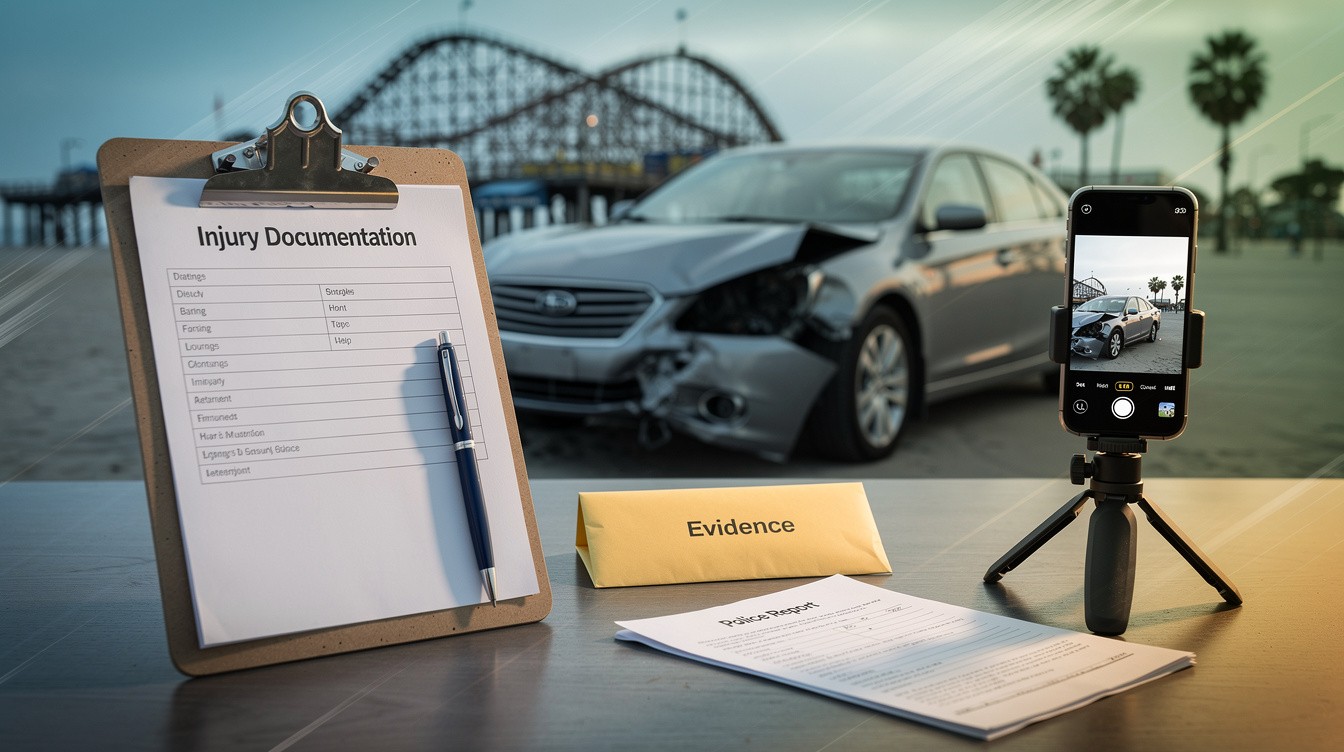
After a car accident in Santa Cruz, the paperwork and medical details pile up fast. Most people don’t realize that thorough Santa Cruz injury documentation can make or break their claim.
We at Schaar & Silva LLP have seen how organized records turn weak cases into strong ones. This guide walks you through exactly what to collect and how to organize it.
What to Document at the Accident Scene
Photograph Vehicle Damage from Multiple Angles
The moments right after a crash are chaotic, but what you photograph then determines how strong your claim becomes. Start with your phone camera and capture every angle of vehicle damage before anything moves. Take wide shots showing the overall scene, close-ups of dents and broken parts, and photos from multiple sides of both vehicles. If the sun creates glare, adjust your position. If it’s dark, use your phone’s flash or ask someone to hold a light source steady.
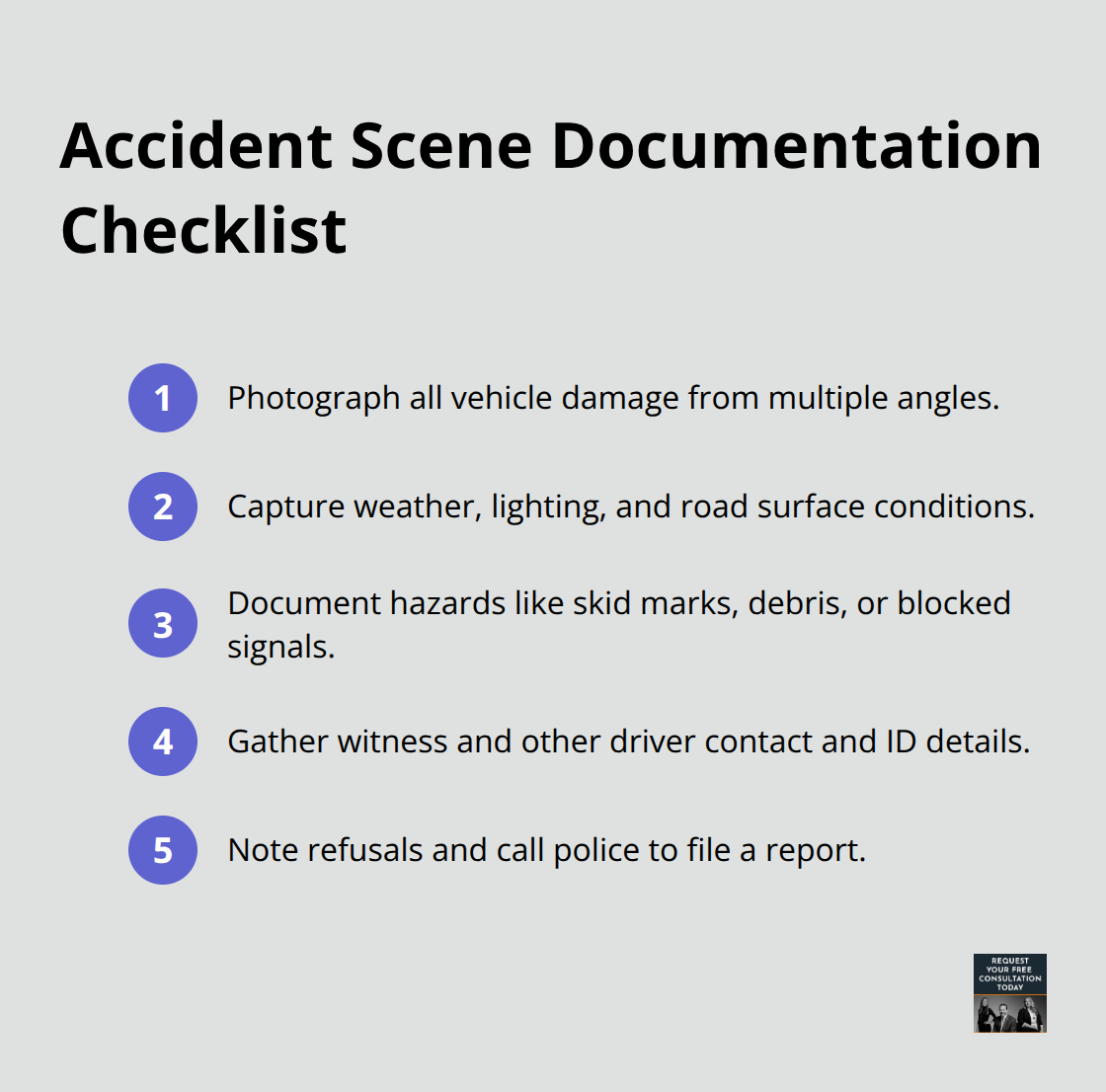
These photos become irreplaceable evidence because conditions change quickly-tow trucks arrive, weather shifts, and the scene gets cleaned up. Insurance adjusters and judges weigh photographic evidence heavily because it captures the moment objectively, without interpretation.
Record Weather Conditions and Road Hazards
Weather and road conditions matter far more than most people realize. Photograph the pavement surface where the collision happened-is it wet, dry, or covered with debris? Take pictures of any rain, fog, or poor lighting at the time. Note skid marks, potholes, broken curbs, or obstructed traffic signals in your photos. These details support claims that hazardous road conditions or municipal negligence contributed to the crash.
Collect Contact Information from Witnesses and the Other Driver
Collect the names, phone numbers, and email addresses of every witness, even someone who only saw part of the incident. Ask each witness what they saw specifically, and write down their account in your notes or voice memo immediately while memory is fresh. If a witness is reluctant to provide contact details, ask them to at least tell you their name so you can reference them in your accident report.
Police reports sometimes contain witness statements, but you want your own direct contact information because witnesses can disappear or become unreachable later. Get the other driver’s full name, phone number, address, driver’s license number, license plate, vehicle identification number, insurance company name, and policy number. Take a photo of their driver’s license and insurance card. Ask for their employer information in case a company vehicle was involved.
If the other driver refuses to provide information, note their refusal and the time, then contact police to file a report. This documentation protects you because it creates a clear record before anyone’s memory fades or stories change. Once you’ve gathered this scene evidence, your next priority shifts to the medical side-documenting every treatment and symptom that follows the accident.
Medical Records and Treatment Documentation
Keep All Hospital and Doctor Visit Records
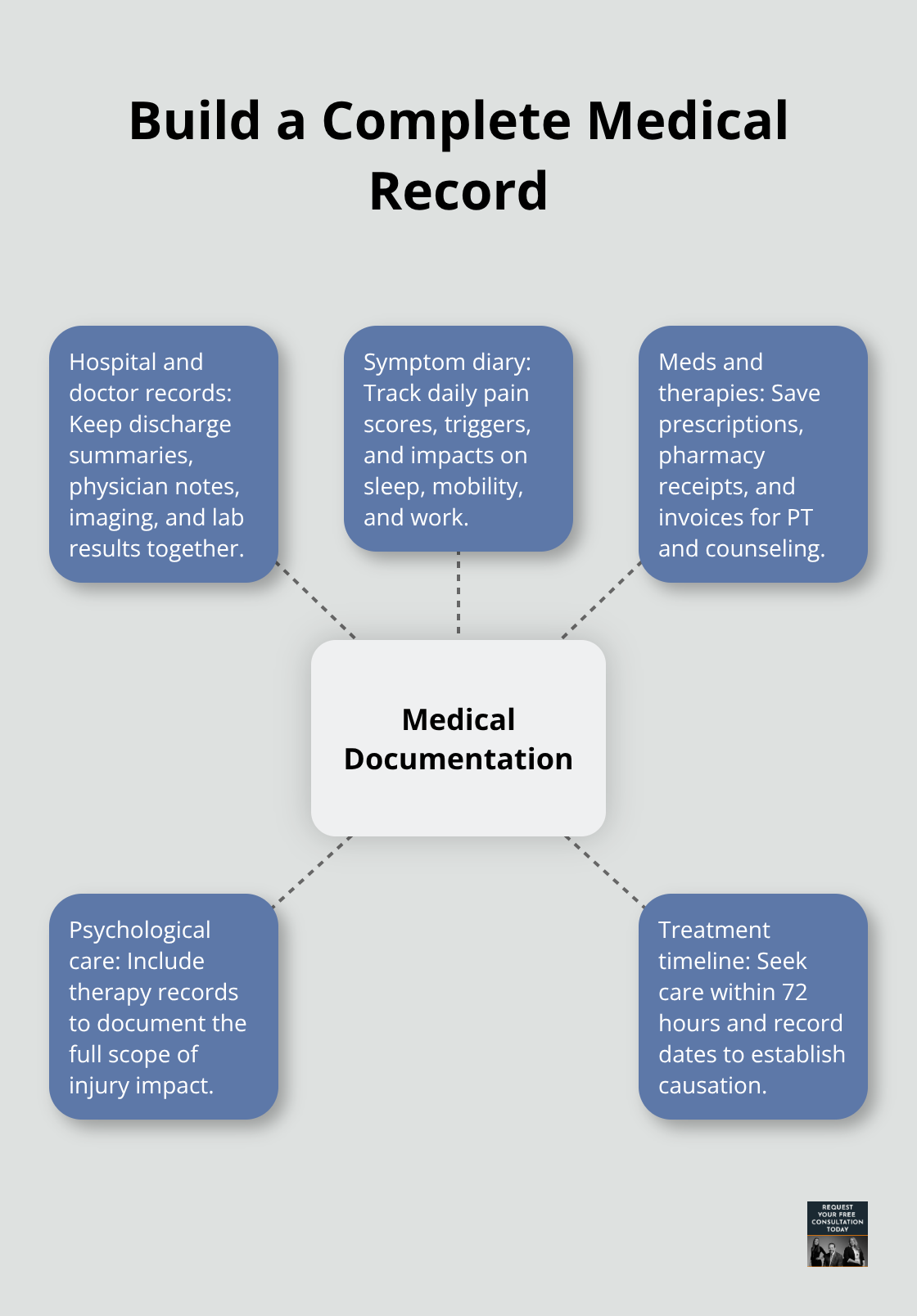
Getting organized with your medical documentation immediately after a crash sets the foundation for your entire claim. Start keeping a dedicated folder-physical or digital-where you store every medical record the moment you receive it. This includes discharge summaries from emergency room visits, physician notes from follow-up appointments, diagnostic imaging reports like X-rays or MRIs, and lab results. Insurance companies and judges scrutinize medical records to establish the direct link between your accident and your injuries, so completeness matters enormously.
The American Journal of Public Health found that documented medical treatment within 72 hours of an accident strengthens injury claims significantly because it creates an immediate, credible record rather than delayed treatment that insurers often dispute. If you waited days or weeks to seek care, that gap weakens your position, so seek medical attention quickly and maintain records of that timeline.
Document Ongoing Symptoms and Pain Levels
Track your symptoms with the same detail you’d apply to any important health matter. Create a simple daily log noting pain levels on a scale of one to ten, which specific activities triggered discomfort, and how symptoms changed week to week. Include observations about sleep disruption, reduced mobility, or difficulty performing work tasks-these details paint a picture of how the accident affected your daily life.
Write down specific incidents when pain flared up or when you couldn’t complete normal activities. Note whether symptoms improved or worsened over time. This documentation becomes powerful evidence because it shows the actual impact of your injuries on your day-to-day existence, not just what medical tests reveal.
Maintain Records of Prescription Medications and Therapies
Prescription medications and therapies deserve their own section in your documentation file. Keep original pharmacy receipts, medication bottles showing prescription dates and dosages, and any invoices from physical therapy clinics or mental health providers. If you received psychological support following the accident-which is far more common than many people acknowledge-maintain those records too.
Insurance companies often undervalue psychological treatment, but documented therapy sessions strengthen your claim by showing the full scope of injury impact. Store these records alongside your medical files so everything stays accessible when you need to reference your complete treatment history. Once you’ve organized your medical documentation, the next step involves gathering financial records that prove the accident’s cost to you.
Building Your Injury Documentation File
Organize Bills and Receipts for Medical Expenses
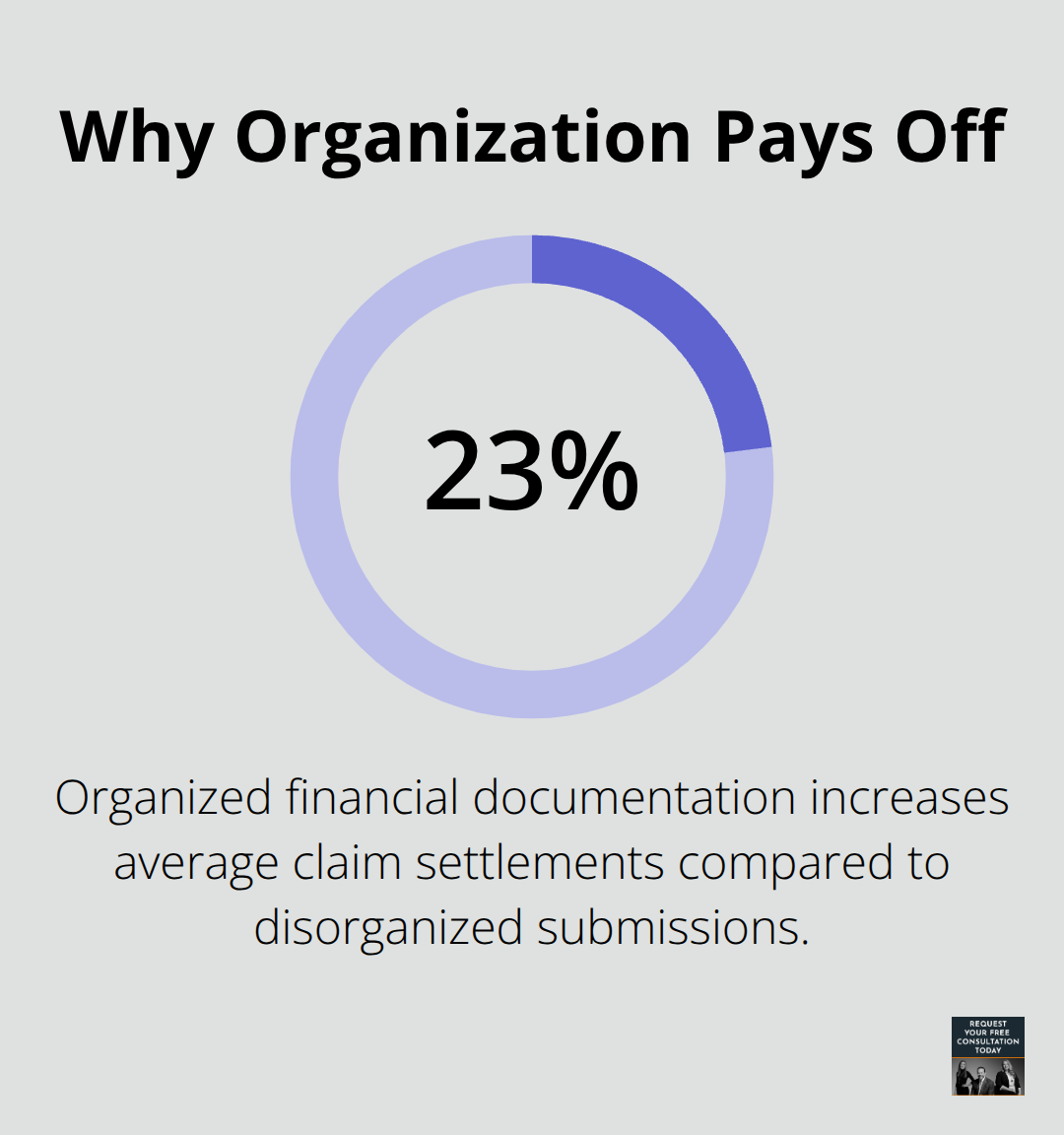
Medical bills arrive in waves after a car accident, and most people shove them into a drawer without realizing how critical organization becomes. Create a spreadsheet or simple document listing every medical expense with the date, provider name, service type, and amount paid. Include invoices from emergency rooms, hospitals, physical therapists, chiropractors, and pharmacies. The National Association of Insurance Commissioners reports that organized financial documentation increases claim settlements by an average of 23 percent compared to disorganized submissions.
Track each bill carefully. When you show insurers a clear timeline of expenses tied directly to your accident injuries, they take your claim more seriously because the connection between the crash and your costs becomes undeniable.
Track Lost Wages and Income Documentation
Lost wages matter equally but often get overlooked. Contact your employer’s payroll or human resources department and request documentation showing how many days you missed work and what you would have earned during that period. If you’re self-employed, gather bank statements, tax returns, or client invoices showing your normal income pattern, then document the specific dates you couldn’t work.
The Bureau of Labor Statistics indicates that accident victims lose an average of 11 work days in the first month after a crash, and those lost earnings are fully recoverable damages. Insurance companies scrutinize wage loss claims heavily, so your employer’s written statement carries far more weight than your own estimate.
Save Communication Records with Insurance Companies
Save every email, text message, and written communication with insurance adjusters, claims representatives, and the other driver’s insurance company. Screenshot conversations and store them in a dedicated folder because these records prove what was promised, what was denied, and what timeline was discussed.
Insurance companies sometimes claim they never received documents or never made certain statements-your saved communications protect you against those denials. Detailed communication records become the deciding factor when disputes arise about what was actually agreed upon.
Final Thoughts
The documentation you gather after a car accident in Santa Cruz directly determines how much compensation you receive. Insurance companies pay attention when you present organized, complete records that show the accident’s full impact on your life. Scattered notes and missing receipts signal weakness, while thorough Santa Cruz injury documentation demonstrates that you take your claim seriously and understand what happened to you.
We at Schaar & Silva LLP have handled hundreds of cases where victims won significantly larger settlements simply because they organized their evidence properly. The difference between a weak claim and a strong one often comes down to whether you kept those photos, medical records, wage statements, and communication logs in one accessible place. When you walk into a negotiation with complete documentation, insurance adjusters know you’re prepared and serious.
We at Schaar & Silva LLP can help you organize your evidence and navigate the claim process so you don’t have to manage it alone. We assist with medical bill guidance, property damage evaluation, and connecting you with support services you may need. Contact us to discuss your situation and learn how we can support your recovery and your claim.
