
A car accident turns your life upside down in seconds. Medical bills pile up, insurance companies send confusing letters, and you’re left wondering what happens next.
At Schaar & Silva LLP, we’ve helped thousands of people in Santa Cruz County, Sacramento, and Oakland navigate the car accident claim process from start to finish. This guide walks you through each step so you know exactly what to do and when to do it.
What to Do Right After an Accident
Act Fast in the Critical First Hours
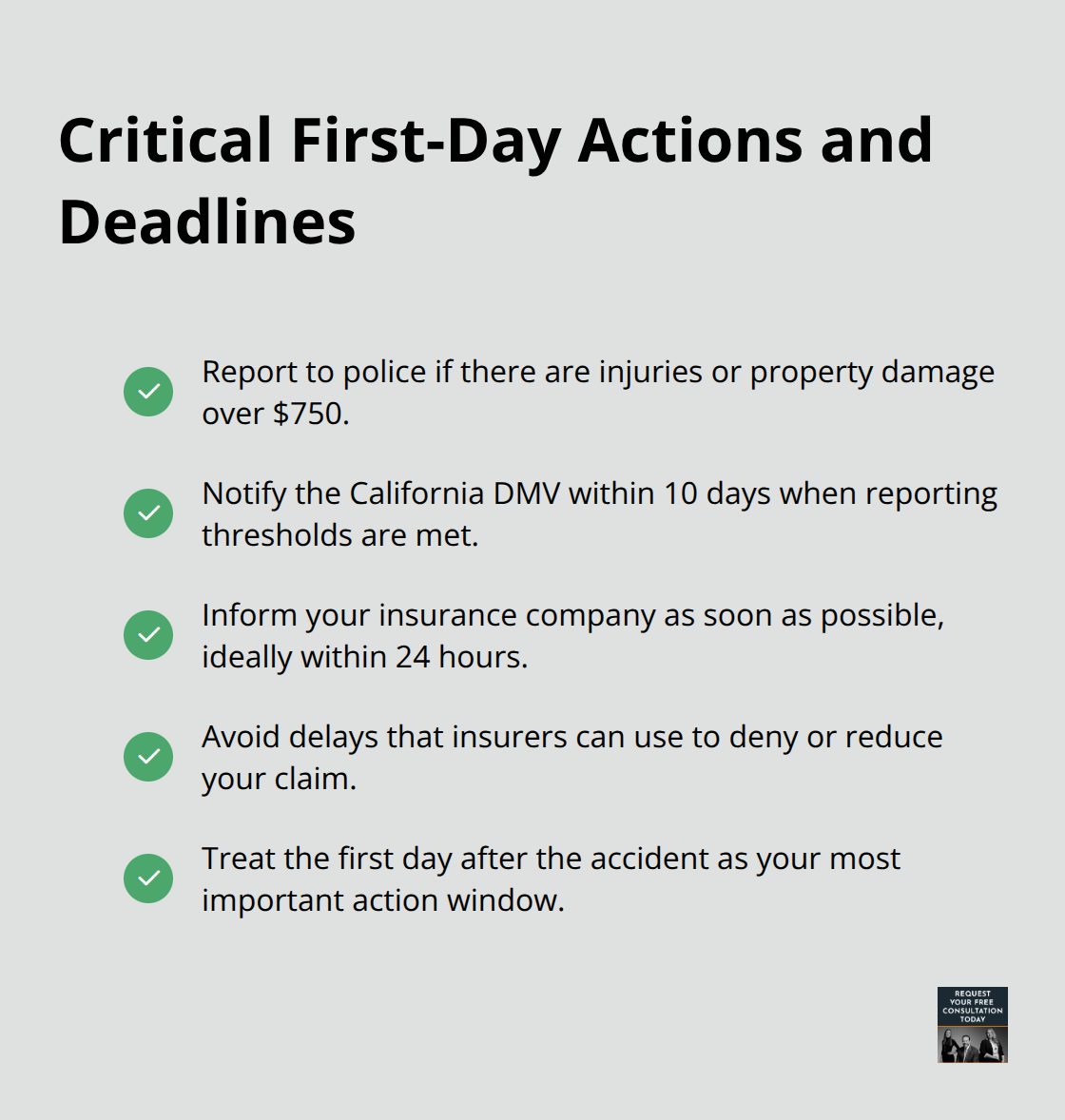
The first moments after a car accident determine how strong your claim becomes. Most people freeze or panic, which leads to missing critical information that insurance companies need to process your claim fairly. California law requires you to report accidents to police if there are injuries or property damage exceeding $750, and you must notify the California Department of Motor Vehicles within 10 days if those thresholds are met. Your insurance company also needs notification as soon as possible, ideally within 24 hours. Delaying these reports can give insurers reasons to deny or reduce your claim, so treat the first day after an accident as your most important window for action.
Photograph and Document Everything at the Scene
Photography provides your strongest evidence at the scene. You should take photos of vehicle damage from multiple angles, the accident location, road conditions, traffic signs, and any visible injuries. Video footage works even better because it captures the overall scene and context. You must get the names, phone numbers, driver’s license numbers, license plate numbers, and vehicle identification numbers from every other driver involved. If witnesses are present, collect their contact information before they leave, as locating them later becomes nearly impossible. When police arrive, get the officer’s name and badge number, then request the police report number so you can obtain the full report within days.
Protect Your Rights at the Scene
You should not admit fault or sign any statements at the scene, even if you think the accident was your responsibility, because insurance adjusters will use your words against you during claim settlement. The California Department of Insurance recommends writing down all information immediately while details are fresh. Avoid signing agreements to pay another party’s damages or to waive your deductible before discussing with your insurer.
Notify Your Insurance Company Strategically
You must notify your insurance agent within hours of the accident, not days. Provide them with the police report number and basic facts, but avoid recorded statements until you’ve gathered all your documentation and understand the full extent of injuries or damage. Many insurance companies pressure accident victims into early recorded statements when they’re still in shock and don’t realize the long-term impact of their injuries. This is where the next phase of your claim becomes critical-understanding what information you’ll need to build a strong case.
Your Claim Options After a Car Accident
The Insurance Claim Path: Speed Over Initial Offers
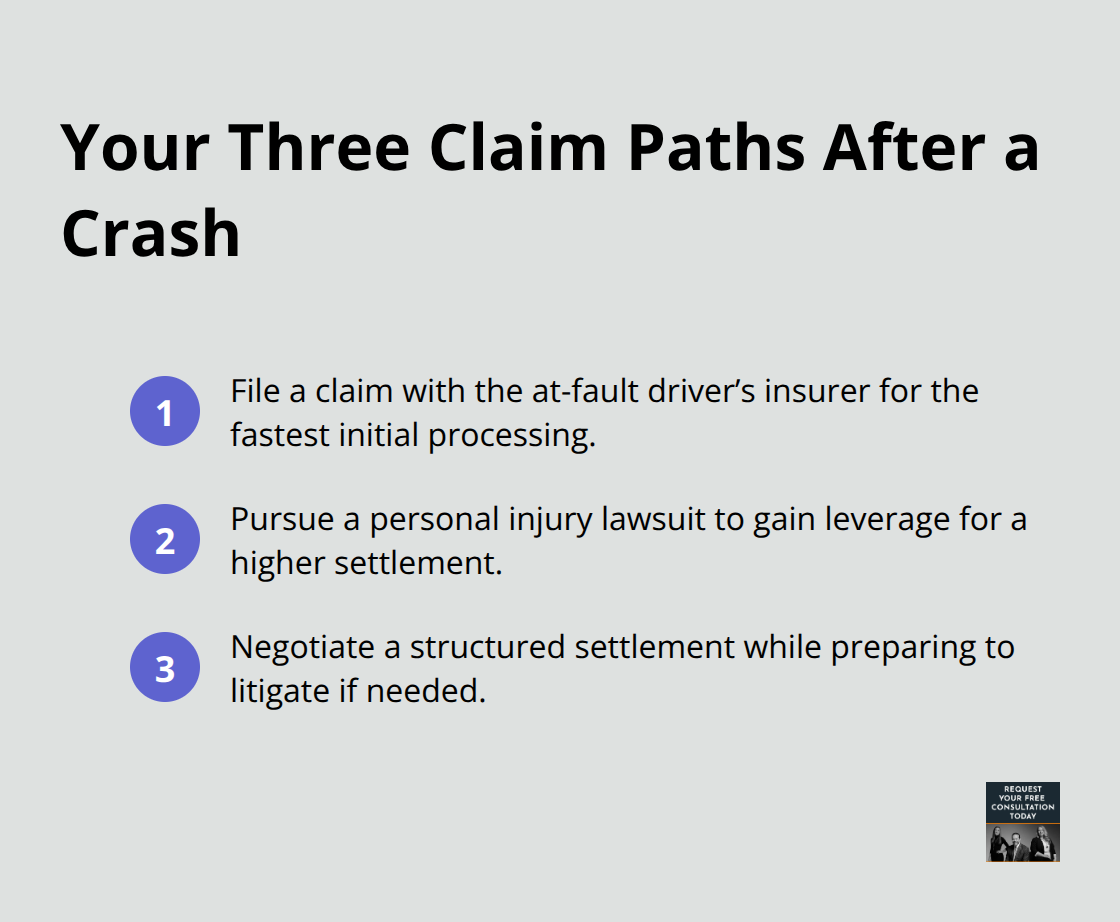
After an accident, you face three distinct paths forward, and choosing the right one determines how much money you recover and how quickly you get it. The first path involves filing a claim directly with the at-fault driver’s insurance company. This is the fastest route for most people because insurance companies are designed to process claims quickly. California law requires insurers to acknowledge your claim within 15 days and make a determination within 40 days after you submit proof of loss, according to the California Department of Insurance’s Fair Claims Settlement Practices.
You’ll submit your documentation, the insurer’s adjuster will inspect the damage, and they’ll issue a settlement offer. The catch is that insurance companies lowball initial offers regularly. Their adjusters know that most accident victims are desperate for money and will accept less than they deserve. When the insurer’s initial offer arrives, treat it as an opening negotiation, not a final number. You have the right to challenge their valuation by obtaining competitive repair estimates for property damage or by presenting additional medical evidence for injury claims. If you disagree with their damage assessment, many policies include an appraisal provision where two appraisers and a neutral umpire determine the actual cash value, with the mutually agreed amount becoming binding on both parties.
The Lawsuit Path: Leverage Through Legal Action
The second path is pursuing a personal injury lawsuit against the at-fault driver. This path takes longer but often results in significantly higher settlements because the threat of trial forces insurers to offer fair numbers. Most personal injury cases settle before trial, but the lawsuit itself gives you leverage. The insurer’s position changes dramatically once you file legal papers because they face real costs and uncertainty. This approach works best when the at-fault driver’s insurance policy limits are low relative to your actual losses or when liability is disputed.
The Negotiated Settlement Path: Combining Both Approaches
The third path, and often the most effective, involves negotiating a structured settlement agreement that combines elements of both approaches. You file a claim with the insurance company while simultaneously preparing to file a lawsuit if their offer doesn’t reflect your actual losses. Many accident victims benefit from having legal representation during these negotiations because insurance adjusters change their settlement positions dramatically when they know an attorney is involved. Having someone advocate on your behalf shifts the power dynamic in your favor. The insurer recognizes that you’re serious about pursuing full compensation, not just accepting whatever they initially offer.
How Legal Representation Changes the Negotiation
Insurance adjusters respond differently when they communicate with attorneys rather than unrepresented accident victims. An attorney’s involvement signals that you understand your rights and won’t accept unfair valuations. This reality alone often results in substantially higher settlement offers without requiring a lawsuit. Your attorney can also identify damages you might overlook (lost wages, future medical care, pain and suffering) that the insurer hopes you won’t claim. The negotiation process becomes more balanced because both sides have professional representation and understand the legal standards for fair compensation.
With your claim path chosen and your negotiation strategy clear, the next critical step involves building the actual case that supports your settlement demand or lawsuit.
Building Your Case and Gathering Evidence
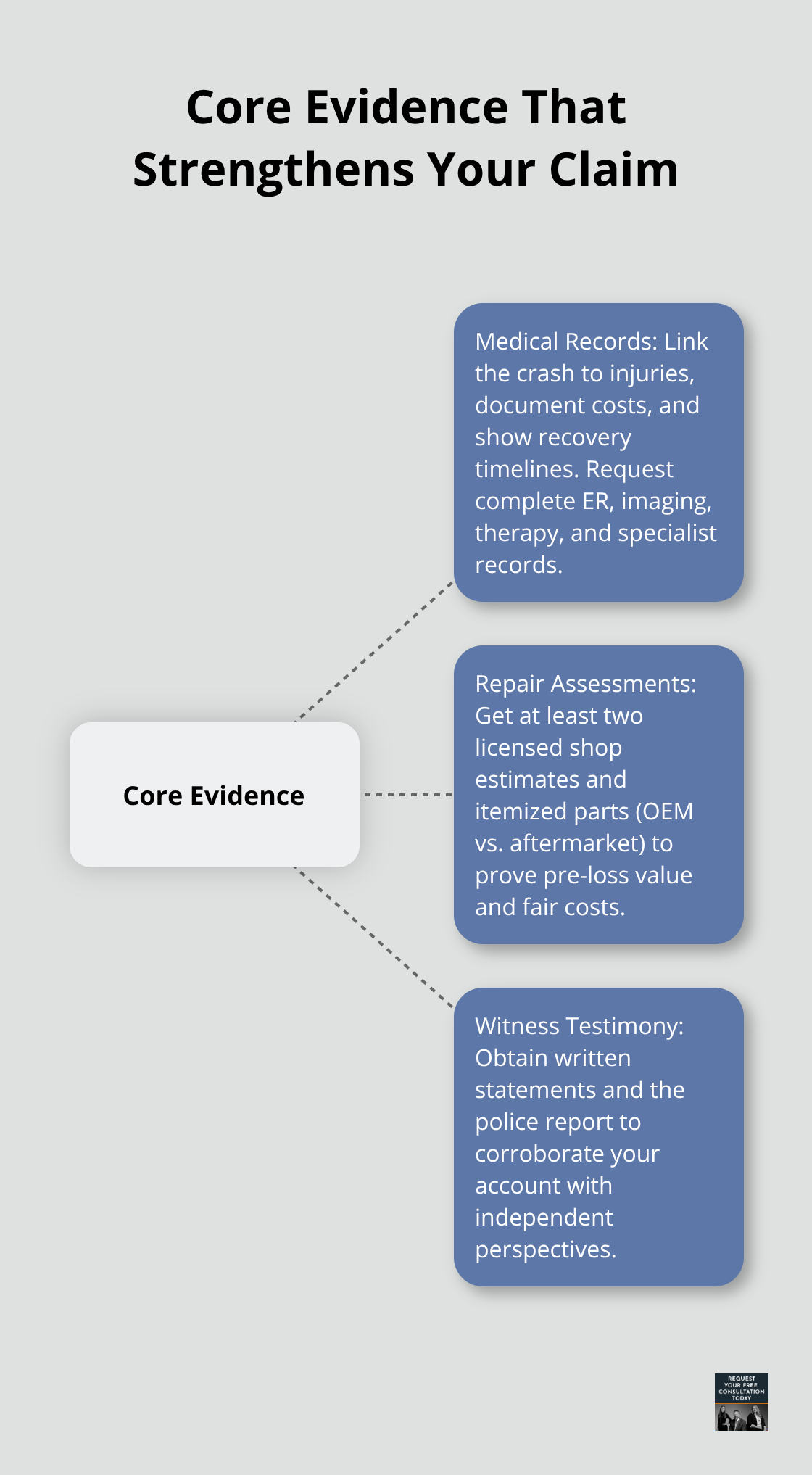
Your claim’s strength depends entirely on the evidence you compile in the weeks following the accident. Insurance adjusters make settlement decisions based on documentation, not on how injured you feel or how unfair the situation seems. The three categories of evidence-medical records, repair assessments, and witness testimony-each serve different purposes in your claim, and missing any one of them significantly weakens your negotiating position.
Medical Records Establish Your Injury Connection
Medical records establish the connection between the accident and your injuries while documenting treatment costs and recovery timeline. You must request complete medical records from every provider who treated you, including emergency room reports, imaging results, physical therapy notes, and any specialist consultations. The California Department of Insurance requires insurers to respond to proof of loss within 40 days, meaning you need organized medical documentation ready to submit before that deadline arrives.
For brain and spinal injuries specifically, treatment at facilities like the UCSF Brain and Spinal Injury Center provides medical documentation that reflects evidence-based care protocols recognized by insurers as legitimate treatment standards. This type of documentation substantially strengthens claims involving neurological injuries because it demonstrates structured, multidisciplinary care rather than isolated treatment visits.
Property Damage Documentation Proves Vehicle Value
For property damage, you should obtain at least two repair estimates from licensed shops rather than accepting the insurer’s initial valuation without challenge. Many accident victims accept the insurer’s first estimate as final, but competitive estimates often reveal undervaluation by $500 to $3,000 depending on damage severity. Insurance adjusters know that most people won’t push back on their initial numbers, so they lowball estimates expecting victims to accept them.
The insurer’s adjuster will inspect your vehicle damage and may re-inspect later if additional damage surfaces. You have the right to choose your repair shop, and insurers must inform you of this right. Repairs must restore your car to its pre-loss condition at fair costs, with invoices identifying each part’s type (OEM versus aftermarket).
Police Reports and Witness Statements Corroborate Your Account
Police reports provide independent accounts that corroborate your version of events. You should contact the police department within one week of the accident to obtain the report number, then purchase a copy for your records. The officer’s assessment of fault carries significant weight in settlement discussions because it represents an objective third party’s evaluation.
Witness statements matter enormously because insurance adjusters know that unrelated witnesses have no incentive to lie, unlike the accident victim. If you collected witness contact information at the scene, reach out within days while details remain fresh in their memory. Written statements from witnesses are stronger than verbal confirmations because they create permanent documentation that adjusters can reference during claim evaluation.
Organize Documentation for Maximum Impact
You should organize all documentation chronologically in a single folder or digital file, making it simple to provide complete evidence to insurance adjusters or attorneys during settlement negotiations. Insurance adjusters trust third-party documentation far more than victim statements alone, so your job is to compile comprehensive records before settlement negotiations begin. This organized approach demonstrates that you take your claim seriously and have prepared thoroughly, which often influences how adjusters value your case.
Final Thoughts
The car accident claim process moves through predictable stages once you understand what happens at each step. Your documentation becomes the foundation of everything that follows, transforming your claim from a verbal complaint into concrete evidence that insurance adjusters must address. Police reports, medical records, repair estimates, and witness statements work together to establish your case before the California Department of Insurance’s 40-day determination deadline arrives.
Insurance companies count on accident victims becoming desperate and accepting lowball offers quickly, but complete documentation shifts the power dynamic in your favor. You can confidently reject initial settlement offers and demand fair valuations because you’ve prepared thoroughly. This preparation also protects you if your case involves brain or spinal injuries, where medical documentation from recognized treatment facilities strengthens your position significantly.
We at Schaar & Silva LLP help people throughout Santa Cruz County, Sacramento, and Oakland navigate the car accident claim process while managing both recovery and compensation simultaneously. We assist with property damage claims, connect you with medical lien services to manage bills during recovery, and handle the legal negotiations that insurance adjusters take seriously.
