
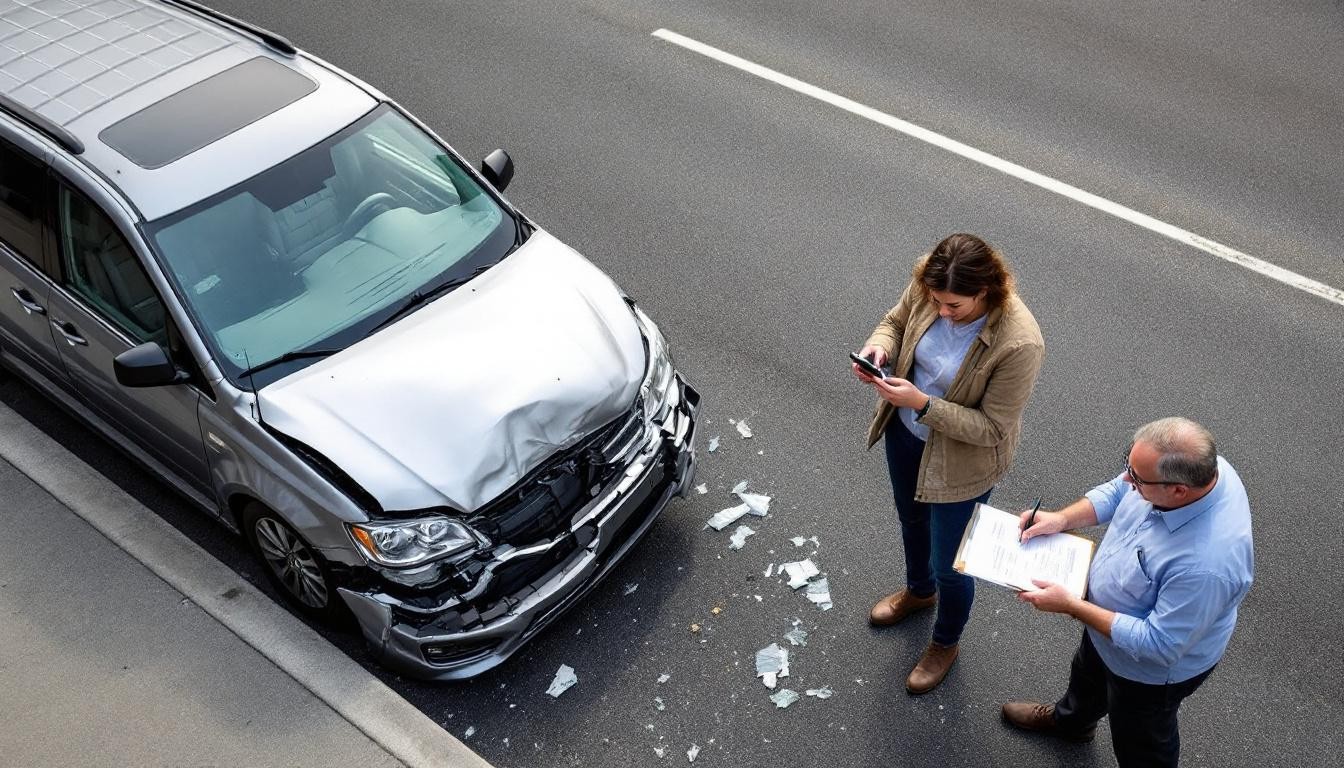
A car or truck accident in Santa Cruz County leaves you shaken and facing immediate decisions about vehicle damage, medical care, and insurance claims. The steps you take in the first hours and days after a wreck directly affect your recovery and your ability to get fair compensation.
We at Schaar & Silva LLP have helped countless Santa Cruz residents navigate this process. This guide walks you through documenting your damage, filing your claim, and protecting your rights.
What to Do Right After a Crash
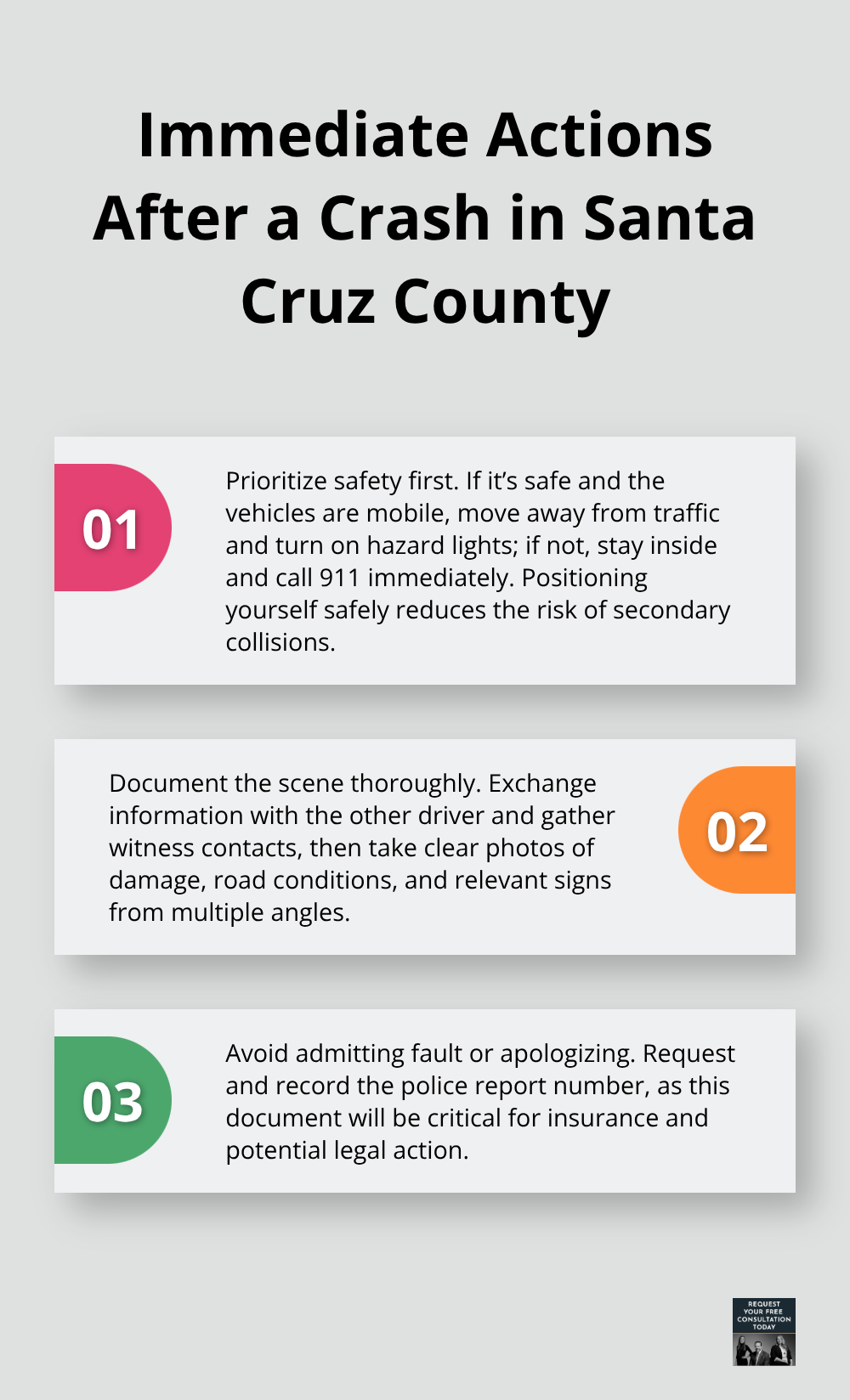
The first minutes after a wreck determine what happens next. Your immediate actions affect your safety, your insurance claim, and any potential legal case. Move yourself and passengers away from traffic if the vehicles are still mobile and it’s safe to do so. If anyone is injured or the vehicles cannot move, stay inside with hazard lights on and call 911 immediately. The Santa Cruz County Sheriff’s Office will dispatch officers to document the scene, and their police report becomes one of your most important documents for insurance and legal purposes. Turn off your engine to reduce fire risk, and if nighttime or low visibility, turn on your headlights.
Get Information Before You Leave
Exchange names, phone numbers, addresses, driver’s license numbers, and insurance policy information with the other driver. Take photos of their driver’s license and insurance card with your phone rather than writing everything down by hand, which introduces errors. Write down the other vehicle’s license plate, make, model, and color. If witnesses are present, get their contact information too, as witness statements carry significant weight in claim disputes. If the other driver refuses to provide information or becomes hostile, do not escalate the situation-call police non-emergency at 831-471-8580 if officers haven’t already been dispatched, and document what happened in writing immediately after. Never admit fault or apologize for the accident, as these statements can be used against you later in insurance negotiations or litigation.
Document Everything at the Scene
Take photos and videos of all vehicle damage from multiple angles, including close-ups of dents, broken glass, and tire marks. Photograph the accident location, road conditions, traffic signs, and weather. Get photos of the other vehicle’s damage as well, as this corroborates the impact force and helps establish what happened. If you have injuries, photograph visible bruises or wounds at the scene and in the following days as they develop. Request the police report number from the officer at the scene so you can retrieve the full report later from the Santa Cruz County Sheriff’s Office. The report typically becomes available within 5 to 10 business days and includes the officer’s assessment of fault, which influences your insurance settlement. Do not leave the scene until you have exchanged all information and photos are taken, as conditions change with traffic, weather, or cleanup.
Secure Your Police Report
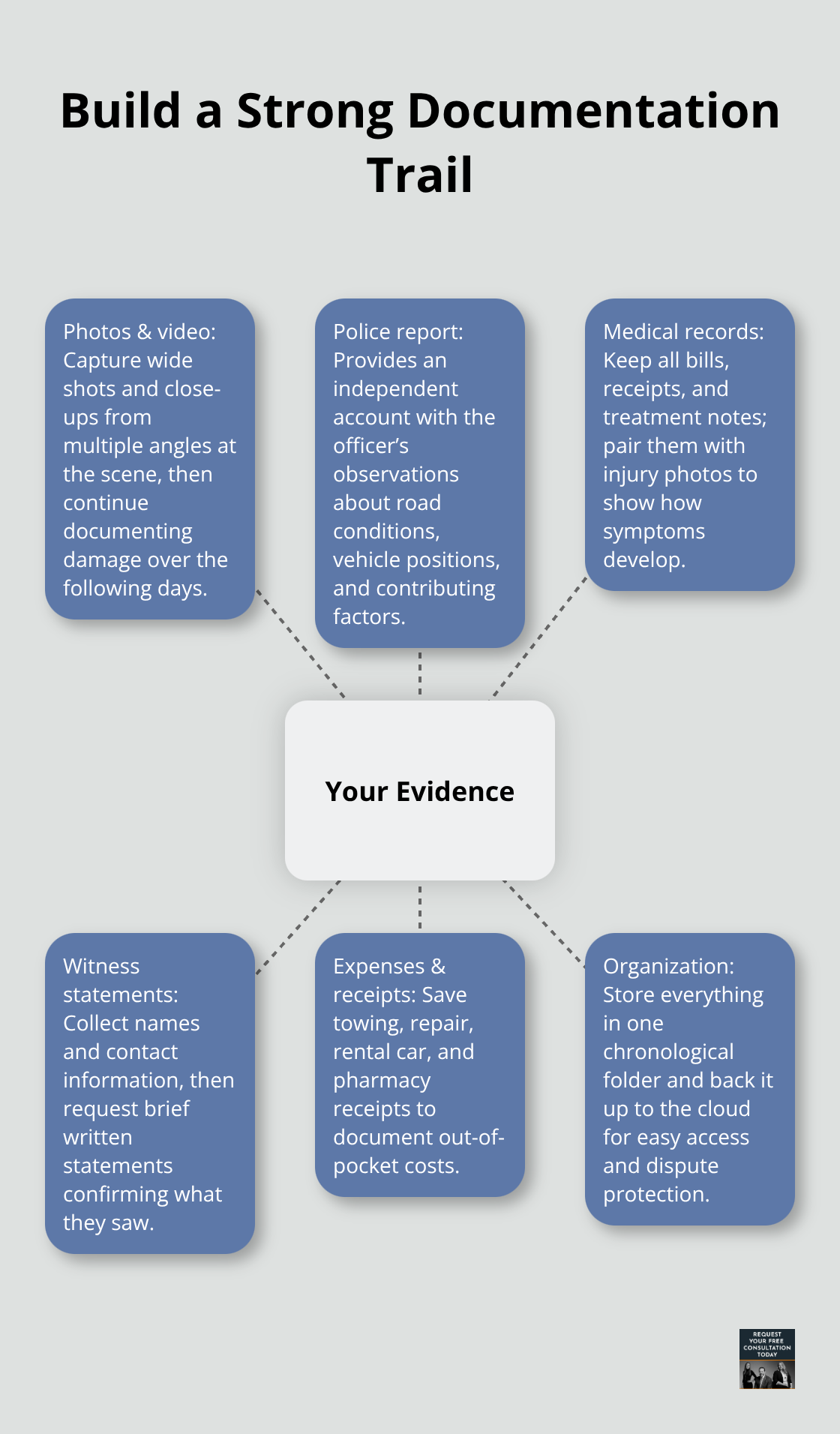
Contact the Santa Cruz County Sheriff’s Office within days of your accident to obtain the official police report. The report number you collected at the scene helps you locate it quickly. This document provides an independent account of what happened and carries weight with insurance adjusters and, if needed, in legal proceedings. The officer’s observations about road conditions, vehicle positions, and contributing factors all support your claim.
Your next step involves notifying your insurance company and gathering the documentation they need to process your claim fairly.
Building Your Documentation Trail
Capture Vehicle Damage from Every Angle
Photography and video create your most reliable evidence after a wreck. The Santa Cruz County Sheriff’s Office report documents what the officer observed, but your photos and videos show the damage, scene conditions, and impact evidence that no report can fully capture. Take photos immediately at the scene from at least six different angles for each vehicle involved, including wide shots showing the accident location and close-ups of every dent, scratch, broken window, and tire mark. Record video footage while you walk slowly around both vehicles and narrate the damage you observe. Include photos of road signs, traffic signals, weather conditions, and road surface quality since these details support your account of what happened. Continue photographing your vehicle’s damage over the next several days as bruising becomes more visible on the paint and structural issues emerge.
Insurance adjusters review these photos to determine repair costs, so clarity and completeness directly affect your settlement amount.
Store copies in multiple locations, including cloud storage, so you retain access even if your phone is lost or damaged. This redundancy protects your evidence and prevents disputes about what damage existed at the time of the accident.
Organize Medical Records and Expenses
Keep every receipt, bill, and explanation of benefits from doctors, physical therapists, hospitals, and pharmacies because insurers scrutinize medical costs and often dispute charges they consider excessive or unrelated to the accident. Create a folder (digital or physical) where you compile all medical documentation in chronological order. Insurance companies use these records to calculate fair compensation, and gaps or missing documents can reduce your settlement. If injuries developed after the accident, photograph visible bruises and wounds as they develop since delayed symptoms are common in vehicle collisions. Medical records paired with photos create a compelling narrative about the accident’s impact on your health.
Collect Witness Statements and Police Reports
Write down the names and contact information for anyone who witnessed the accident while you’re still at the scene, then follow up with a phone call or email asking them to provide a brief written statement about what they saw. Witness statements carry significant weight in claim disputes, especially if the other driver contests fault. Request your police report from the Santa Cruz County Sheriff’s Office using their Public Records Request feature, which allows you to obtain the official report and verify the officer’s findings. The report typically arrives within 5 to 10 business days and becomes essential when negotiating with your insurance company or pursuing legal action. The officer’s observations about road conditions, vehicle positions, and contributing factors all strengthen your claim.
Your organized documentation now positions you to file your property damage claim with confidence and supporting evidence that insurers cannot easily challenge.
Filing Your Claim After a Vehicle Accident
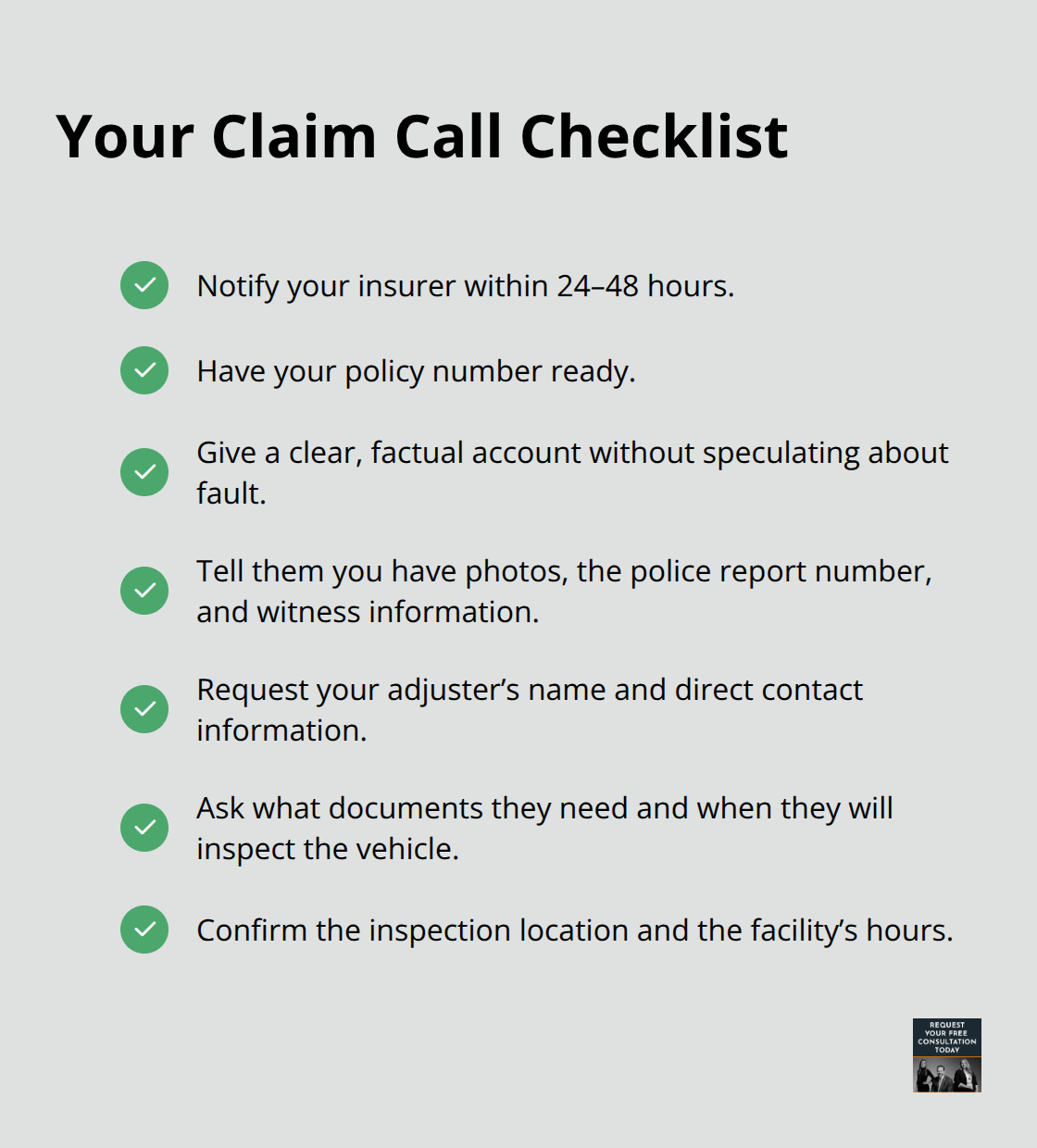
Contact your insurance company within 24 to 48 hours of your accident, not days later. Most policies require prompt notification, and delays can give insurers grounds to deny your claim entirely. When you call, have your policy number ready and provide a clear account of what happened without speculation about fault. Tell the insurer you have photos, the police report number, and witness information available. Insurance adjusters process hundreds of claims monthly, and those with complete documentation upfront move faster through the system. Request the name and direct contact information of your assigned adjuster so you can follow up without navigating phone trees. Ask specifically what documentation they need and when they expect to inspect your vehicle.
Scheduling the Insurance Inspection
Many insurers offer mobile inspection services, which is convenient but means your vehicle must be accessible and safe to photograph. If your car is undriveable and parked at a repair shop or towing facility, inform the adjuster of the exact location so they can schedule their inspection efficiently. Provide clear directions and confirm the facility’s hours to prevent scheduling conflicts. The adjuster will photograph your vehicle from multiple angles and compare the damage to repair estimates you submit.
Submitting Your Documentation Package
Your photos from the accident scene matter far more than you might think. Adjusters use them to verify damage consistency, assess impact severity, and cross-check against repair estimates. The police report provides independent corroboration of what happened and influences how much weight the adjuster gives to your account versus the other driver’s version. Medical records prove the accident caused your injuries rather than preexisting conditions, which directly affects your compensation. Receipts from 831 Towing, repair shops, or rental car companies document your out-of-pocket expenses and support your claim for full recovery.
Organize these documents in chronological order in a single folder, either physical or digital, and send them to your adjuster as one complete package rather than trickling them in over weeks. Adjusters move on to the next claim quickly, and incomplete submissions get deprioritized. If the adjuster requests additional information, respond within two business days to prevent your claim from stalling.
Understanding Your Deductible
Your deductible is the amount you pay out of pocket before your insurance covers repair costs. Most Santa Cruz County drivers carry a $500 or $1,000 deductible on collision coverage, though some choose higher deductibles to lower monthly premiums. If your repair bill is $3,500 and your deductible is $1,000, your insurer pays $2,500 and you cover the remaining $1,000. Repair shops know this calculation well and will itemize your estimate to show what you owe versus what insurance covers.
Knowing Your Coverage Limits
Your coverage limit is the maximum amount your insurer will pay for vehicle damage, typically ranging from $15,000 to $30,000 for standard policies. If your vehicle is worth $12,000 but your repair bill exceeds $15,000, the insurer may declare it a total loss and offer you the actual cash value of your vehicle rather than paying for repairs. Request a detailed repair estimate from at least two body shops in Santa Cruz County so you have leverage if the insurance adjuster’s valuation seems low. Underinsured drivers who carry minimum coverage often find their insurer refuses to cover the full repair bill, leaving them responsible for thousands in unexpected costs. If you face a dispute over your vehicle’s value or coverage, the legal team at Schaar & Silva LLP can evaluate your property damage claim and help you pursue fair compensation.
Moving Forward After Your Accident
Start by following your doctor’s treatment plan without delay, since many accident injuries worsen if left untreated and gaps in medical care give insurance companies reasons to dispute your injury claims later. Schedule follow-up appointments even if you feel fine initially, as whiplash, back injuries, and internal bruising often emerge days after impact. Keep detailed records of every appointment, prescription, and therapy session because these documents directly support your compensation claim. If medical bills pile up while your case resolves, the team at Schaar & Silva LLP can help you understand medical lien services that allow providers to wait for payment until your settlement arrives.
Your vehicle damage Santa Cruz claim may resolve quickly if liability is clear and your documentation is complete, or it may require negotiation if the other driver disputes fault. Insurance companies undervalue vehicles, refuse to cover legitimate repairs, and deny claims entirely far more often than most drivers realize, yet many people accept unfair settlements simply because they don’t know they can challenge them. If your insurer falls short, the legal team at Schaar & Silva LLP evaluates property damage claims and helps you pursue fair compensation.
Maintain organized records in one central location throughout your recovery process, keeping your police report, insurance correspondence, medical records, repair estimates, receipts, and photos together where you can access them quickly. This organization protects you if disputes arise months later and makes it easier to work with legal counsel if needed. Your documentation becomes the foundation of your recovery, so treat it as seriously as your medical care and vehicle repairs.
