

You were in a car accident. Now you’re facing insurance claims, medical bills, and uncertainty about what comes next. A car accident police report is your foundation for protecting your rights and strengthening your claim.
We at Schaar & Silva LLP have helped countless Santa Cruz County residents navigate this process. This guide walks you through filing a report, obtaining it, and using it to your advantage.
What Is a Police Report and Why It Matters
Definition and Purpose of a Police Report
A police report is an official document prepared by the responding officer at the scene of your accident. It records the date, time, location, vehicles involved, driver and witness information, injuries, property damage, weather and road conditions, and the officer’s narrative of what happened. The report also includes a diagram showing vehicle positions at impact and any citations issued. This third-party record becomes your foundation for insurance claims and potential legal action because it captures statements and observations while they’re fresh, before anyone has time to change their story or memory fades.
Why California Law Makes Police Reports Essential
In California, you’re not legally required to file a police report for every accident, but the moment your accident involves injuries, significant property damage, or disputes about fault, reporting becomes essential. Insurance adjusters rely heavily on police reports to verify details, assess damage and injuries, and determine fault under California’s comparative negligence system. When the report supports your account, insurers tend to move faster and offer better settlements.
What Happens Without a Police Report
Without a police report, you’ll need to gather photos, medical records, witness statements, and analyses on your own, which delays resolution and weakens your negotiating position. The officer’s preliminary fault assessment in the report isn’t legally binding, but it heavily influences insurance decisions and potential legal outcomes. Having a timestamped, neutral record protects you if the other driver changes their story later, providing a stable timeline and facts that hold up under scrutiny.
Filing a Report in Santa Cruz County
For accidents in Hollister, Santa Cruz, Watsonville, or Capitola, each department has its own procedures. Contact the Hollister Police Department at 831-636-4331, Santa Cruz Police Department at 831-471-1131, Watsonville Police Department at 831-471-1151, or Capitola Police Department at 831-475-4242. The appropriate agency will walk you through the filing process and answer questions specific to your situation. Once you understand what a police report contains and why it matters, the next step is learning exactly how to file one in your area.
How to Report Your Accident in Santa Cruz County
Immediate Steps at the Scene
The moment the accident happens, your priority is safety and calling 911 if anyone is injured or if vehicles block traffic. Once emergency responders arrive, tell the officer exactly what you saw and experienced without speculation. Stick to facts: what you were doing before impact, how the collision occurred, and what you observed immediately after. The officer documents your statement, and this becomes part of the permanent record.
Identifying the Right Agency in Your Area
In Santa Cruz County, each police department handles reports slightly differently, so you need to know which agency covers your location. Hollister Police Department accepts reports at 831-636-4331, Santa Cruz Police Department at 831-471-1131, Watsonville Police Department at 831-471-1151, and Capitola Police Department at 831-475-4242. If your accident happened outside city limits, contact the San Benito County Sheriff’s Office at 831-636-4080 or Santa Cruz County Sheriff’s Office at 831-471-1121.

Filing Online or by Phone
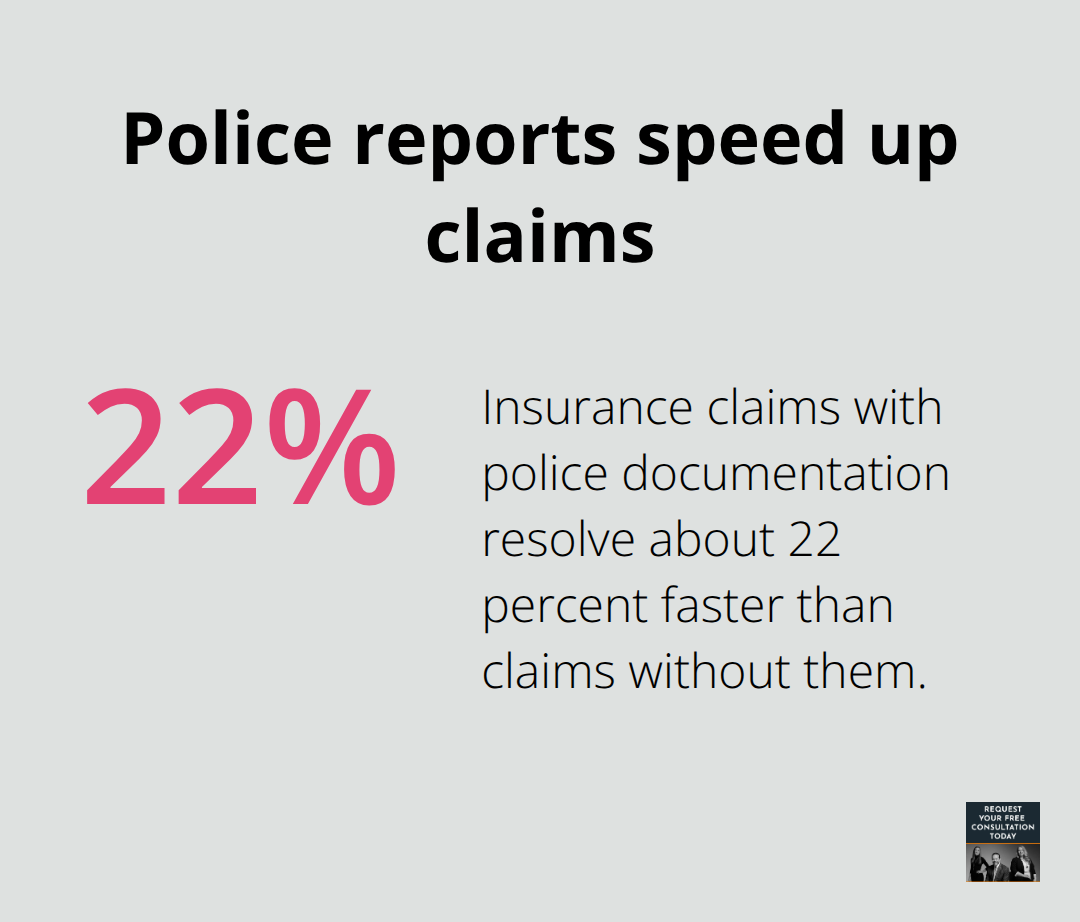
Many departments now offer online reporting for non-emergency incidents with no known suspects and no involvement of state freeways, which means you can file from home and print a copy immediately. This matters because police reports typically become available within 3 to 10 business days after filing, but online submission often accelerates this timeline. The National Safety Council found that insurance claims with police documentation resolve about 22 percent faster than claims without them, so getting your report filed quickly pays real dividends.
Preparing Your Information
When you contact the police or file online, have your driver license, vehicle registration, and insurance information ready. Provide the accident date, time, and exact location including cross streets or mile markers. If you have a case or incident number from the scene, include it. Describe what happened in sequence: where you were traveling, what you were doing, what you saw the other vehicle do, and the point of impact. Mention weather conditions, road hazards, traffic signals, and visibility if they were factors. Include names and contact information for any witnesses who saw the collision.
What the Officer Documents
When the officer investigates or when you file online, they gather vehicle information from all parties, photograph damage, note road conditions, and record statements from drivers and witnesses. The officer will not determine legal fault, but their observations about traffic violations, road conditions, and vehicle positions will influence how fault assignment occurs under California’s comparative negligence rules. If the other driver disputes what happened or their insurance company claims you caused the accident, that police report becomes your protection because it captures the scene and statements while memory remains fresh and before anyone has incentive to change their story. Once you file your report, the next step is obtaining and reviewing the document to verify its accuracy and identify any information that could affect your claim.
How to Obtain and Review Your Police Report
Request Your Report from the Right Department
Your police report sits in a database the moment the officer files it, but you need to know exactly where to request it. In Santa Cruz County, the process differs by location. The Santa Cruz Police Department handles requests at 155 Center Street, Santa Cruz, or by calling 831-420-5030. If your accident occurred in Hollister, contact the Hollister Police Department at 831-636-4331. Watsonville Police Department handles reports at 831-471-1151, and Capitola Police Department at 831-475-4242. For accidents outside city limits, the San Benito County Sheriff’s Office at 831-636-4080 or Santa Cruz County Sheriff’s Office at 831-471-1121 will have your report.
Most departments now allow online requests, which means you can submit your request from home without waiting on hold. Have your accident date, time, location, and any incident number ready when you contact them. Expect to pay between $10 and $25 for a copy, depending on the agency and report length. Many departments mail reports within 5 to 10 business days, though online submissions often arrive faster.
Understand What Information Your Report Contains
Your report contains specific details that directly affect your claim. The officer records the date, time, exact location, weather conditions, road surface, lighting, traffic signal status, and each vehicle’s direction of travel at impact. The report lists every driver’s name, address, license number, insurance company, and policy number, plus the same information for passengers and witnesses. You’ll find vehicle descriptions, license plates, and damage estimates.
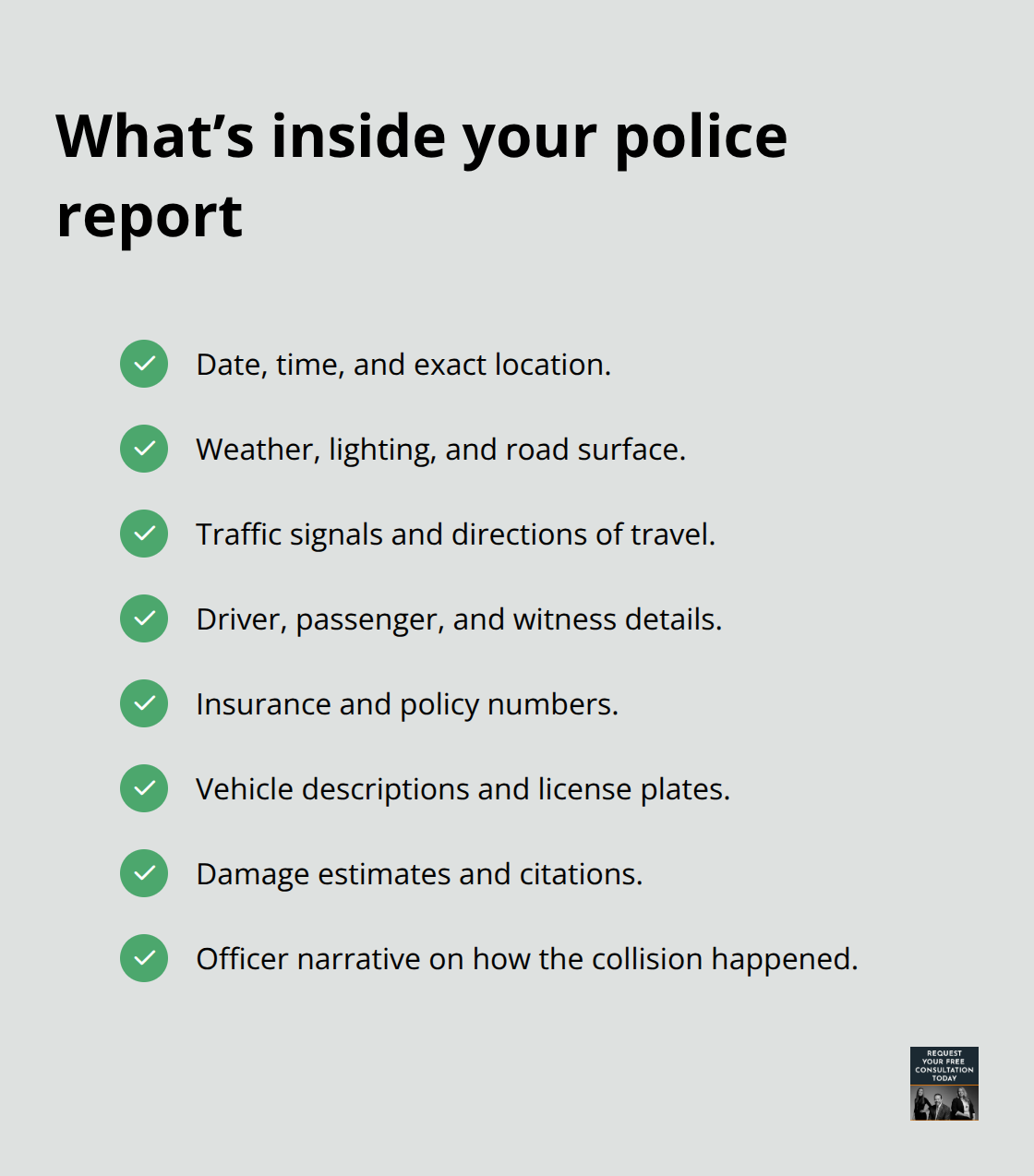
Most critically, the report includes the officer’s narrative describing how the collision happened and any citations issued. This narrative section carries significant weight because insurance adjusters rely on it to understand the sequence of events and assign fault under California’s comparative negligence rules.
Spot Errors That Damage Your Case
Errors creep into reports and damage your case. Misspelled names, wrong insurance information, incorrect intersection addresses, or conflicting statements between what you told the officer and what appears in the report can slow your claim significantly. The moment you receive your report, read it carefully against what actually happened. If the officer wrote that you were traveling north when you were traveling south, or listed the wrong cross street, or misspelled your name or insurance company details, these errors undermine your credibility with the insurance adjuster.
File Corrections Immediately
File a supplemental report or request corrections immediately through the department’s system. Bring supporting materials like photos from the scene, witness contact information, or your own notes documenting what was wrong. Some departments allow you to submit a written statement correcting the record. The sooner you address inaccuracies, the less damage they do to your settlement negotiations and claim timeline. If you need guidance on how to challenge specific errors or strengthen your position with the insurance company, we at Schaar & Silva LLP can review your report and help you identify gaps or inconsistencies that affect your claim.
Final Thoughts
A car accident police report stands as the single most important document you’ll have after a crash. It provides the neutral, timestamped record that protects you when memories fade, stories change, or insurance companies push back on your claim. Without it, you fight uphill to prove what happened and convince your insurer to pay fairly, but with it, you have an official foundation that speeds claims by roughly 22 percent and strengthens your negotiating position.
Once you have your report in hand, review it carefully for errors that undermine your credibility. Misspelled names, wrong addresses, or inaccurate insurance details slow settlement and weaken your case, so file corrections immediately with supporting materials like photos or witness information. Then share the report with your insurance company and keep a copy for your records.
If your accident involved injuries, significant property damage, or disputes about fault, contact Schaar & Silva LLP to discuss your case. We serve Santa Cruz County residents and review your car accident police report for gaps or inconsistencies that could hurt your claim, connect you with medical lien services to manage bills while your case resolves, and evaluate property damage to help you receive fair valuation.
