
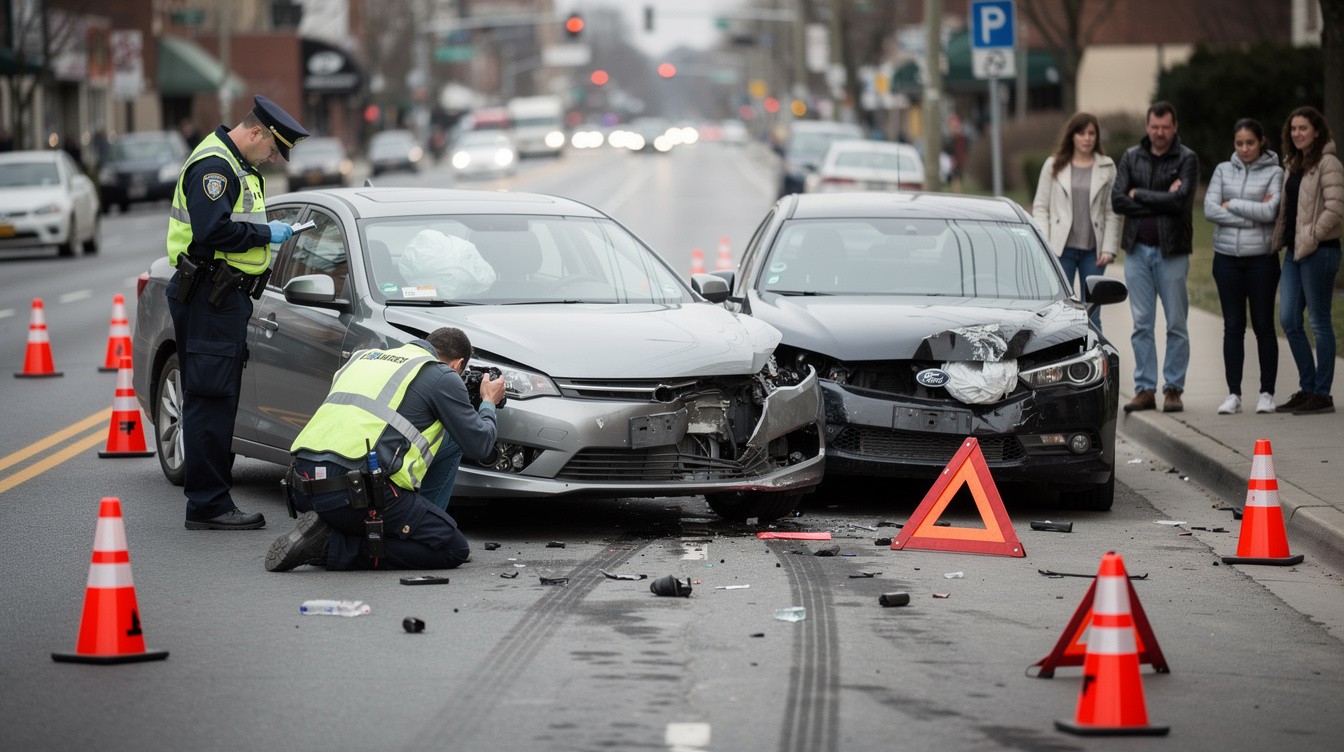
A rear end collision in Santa Cruz can leave you confused about what happens next. California law has clear rules about who bears responsibility in these accidents, and understanding those rules directly affects your insurance claim and compensation.
At Schaar & Silva LLP, we help accident victims navigate these situations every day. The difference between knowing the law and not knowing it can mean thousands of dollars in your pocket.
Who Pays in a Santa Cruz Rear End Collision
California law starts with a strong assumption: the driver who hits you from behind bears responsibility. California Vehicle Code Section 21703 prohibits following too closely, and Section 22350 sets a basic speed law. These statutes create a legal presumption that places liability squarely on the rear driver. However, this presumption is not absolute, and understanding when it breaks down matters enormously for your claim. In Santa Cruz County, fault determinations depend on specific facts, not blanket rules. The 2018 court decision in Shiver v. Laramee reinforced this principle, showing that every collision requires a fact-by-fact evaluation. What seems straightforward at first glance often becomes complicated once evidence emerges.
The Police Report Does Not Determine Your Compensation
Many people believe a police report automatically settles fault. It does not. A police report documents what officers observed at the scene, but insurance companies and courts conduct independent investigations. Police officers rarely witness collisions; they arrive afterward and piece together what happened from physical evidence and witness statements. Your insurance adjuster will examine vehicle damage patterns, skid marks, traffic camera footage, and dashcam recordings to reach their own conclusion about fault. If the police report contradicts the physical evidence, the evidence wins.
You should collect your own documentation immediately after the collision. Photograph all vehicle damage from multiple angles, the accident scene, traffic signs, and road conditions. Contact any witnesses at the scene and obtain their phone numbers and email addresses. Request the official police report number so you can obtain the full report later. This independent documentation protects your claim if the police report contains errors or incomplete information.
When the Rear Driver Actually Is Not at Fault
The front driver can shift liability through specific actions. If the front driver suddenly brakes without reason, reverses unexpectedly, or changes lanes unsafely into your path, fault can transfer to that driver despite the rear-position presumption. Non-functioning brake lights on the front vehicle also matter significantly; if your brake lights do not work, a following driver may not see you stop.
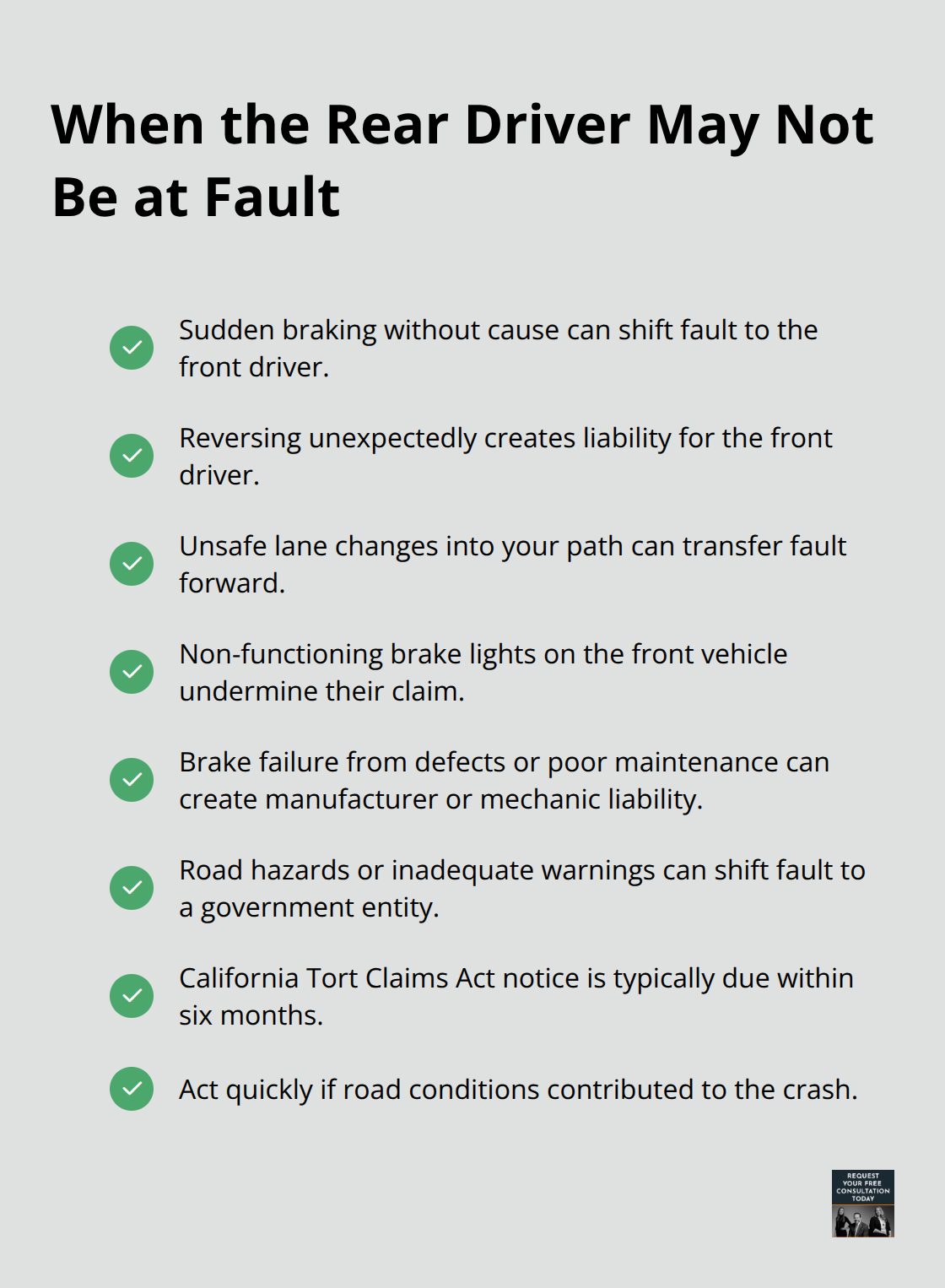
Vehicle defects present another liability pathway. If your brakes failed due to a manufacturing defect or inadequate maintenance by a repair shop, the manufacturer or mechanic may bear responsibility instead of you. Road hazards create additional complications. Potholes, debris, or inadequate warning signs maintained by local agencies in Santa Cruz County can make government entities liable under product liability theories. Claims against government agencies face strict deadlines under the California Tort Claims Act, typically requiring notice within six months of the accident. Act quickly if road conditions contributed to the collision.
How Fault Affects Your Recovery Options
Understanding who bears fault directly shapes what compensation you can recover. California uses pure comparative negligence, which means you can recover damages even if you share partial fault, though your recovery amount is reduced by your percentage of responsibility. The specific facts of your collision-vehicle damage patterns, witness accounts, and evidence from event data recorders-determine how much fault a court or insurance company assigns to each party. When multiple vehicles collide in a chain-reaction crash, fault allocation becomes more complex. Investigators reconstruct the sequence of impacts using damage patterns, skid marks, video footage, and witness statements to determine which driver caused which collision. The rear-most driver is not automatically liable for all collisions in the chain. These distinctions matter because they directly affect settlement amounts and your ability to recover medical expenses, lost wages, vehicle repair costs, and pain and suffering damages. The legal team at Schaar & Silva LLP can help you navigate these complexities and ensure you understand how fault determinations affect your specific situation.
How Fault Affects Your Settlement and Compensation
Fault Percentages Control Your Recovery Amount
Fault determination in Santa Cruz rear-end collisions directly controls the money you receive. Insurance companies use fault percentages to calculate settlement offers, and this calculation is not negotiable without evidence supporting a different allocation. If you are found 100 percent at fault, you receive zero dollars from the other driver’s insurance, even if you suffered severe injuries. If you are 30 percent at fault under California’s pure comparative negligence rule, your total recoverable damages are reduced by 30 percent. This means a case worth $100,000 in total damages becomes $70,000 in your pocket. The difference between a 20 percent fault finding and a 40 percent fault finding on a $50,000 injury claim equals $10,000 out of your compensation.
The number 100% seems to be not appropriate for this chart. Please use a different chart type.
Evidence Determines Fault Percentages
These percentages are not arbitrary; they stem from evidence like vehicle damage patterns, event data recorder data from your vehicle showing speed and braking, dashcam footage, and witness statements about what each driver did before impact. Insurance adjusters examine whether you were distracted, speeding, or following too closely. They request your cell phone records and telematics data from your vehicle to establish your actions at the moment of collision. The front driver’s brake light functionality, sudden braking without cause, or unsafe lane changes all shift fault away from you. Documentation you gather immediately after the accident-photos of the damage, the scene, traffic signals, and road conditions-directly influences how adjusters weight evidence in your favor.
Chain-Reaction Crashes Require Separate Fault Analysis
Chain-reaction crashes complicate fault allocation significantly. If three vehicles collide, investigators determine which driver caused which impact to allocate fault separately for each collision rather than assigning all blame to the rear-most vehicle. This distinction matters because it prevents you from absorbing liability for impacts you did not cause.
How Fault Shapes Your Compensation Options
Medical expenses (both current and future), lost wages, vehicle repair or replacement costs, and pain and suffering damages all depend on what percentage of fault the insurance company or court assigns to you. If a government agency in Santa Cruz County failed to maintain roads or warn of hazards, that entity becomes a defendant in your claim, but you must file notice within six months under the California Tort Claims Act or lose your right to recovery. Vehicle defects also alter fault allocation; if your brakes failed due to manufacturer negligence or a repair shop’s inadequate maintenance, that party bears liability instead of you. The strength of your evidence determines whether you recover full damages, partial damages, or nothing. Road conditions, vehicle maintenance records, and third-party negligence all create pathways to shift liability away from you and toward responsible parties.
What Really Determines Your Rear End Collision Outcome
Vehicle Damage Patterns Reveal Impact Speed and Fault
Vehicle damage patterns tell the story that insurance adjusters read first, and they interpret it differently than you might expect. The location and severity of damage to both vehicles reveal impact speed, angle of collision, and whether the vehicles were braking at the moment of impact. Insurance companies reconstruct the collision sequence from this damage assessment and assign fault percentages accordingly. A rear bumper crushed inward with minimal front-end damage on the striking vehicle suggests high-speed impact with little braking, which strengthens the case against the rear driver. Conversely, if the front vehicle shows damage inconsistent with a rear-end collision, adjusters question whether the rear driver actually caused the impact or whether the front driver suddenly reversed or changed lanes.
Repair costs establish the severity of impact, which correlates directly to negligence. A $15,000 repair bill versus a $3,000 repair bill tells different stories about collision force and fault allocation. Santa Cruz County repair shops document damage patterns in their estimates, and these estimates become evidence in your claim. Request detailed repair estimates that describe damage locations and severity rather than accepting generic repair quotes.
Medical Documentation Strengthens Your Injury Claims
Medical documentation carries equal weight in fault determination, though most people overlook this connection. Insurance adjusters examine treatment dates, gaps in medical care, and the types of injuries you sustained to assess whether the collision actually caused your injuries or whether pre-existing conditions explain your symptoms. If you waited two weeks before seeking treatment after a rear-end collision, adjusters question injury severity and may reduce settlement offers accordingly.
Treatment records showing consistent medical appointments, imaging studies like X-rays or MRIs, and specialist evaluations like physical therapy demonstrate injury legitimacy and strengthen your claim for compensation. Insurance companies cross-reference your medical records with your vehicle damage; if you claim severe injuries from a low-impact collision with minimal vehicle damage, adjusters become skeptical. Conversely, high-impact collisions with minimal medical documentation raise red flags about claim credibility. Follow up with a physician immediately after the accident, even if you feel fine, because adrenaline masks injury symptoms. Document all treatment, including dates, providers, and diagnoses, because these records directly influence settlement calculations.
Insurance Policy Limits Control Your Maximum Recovery
Insurance policy limits and coverage types create the financial ceiling for your recovery regardless of fault determination. California requires minimum liability coverage of $15,000 per person for bodily injury, but most drivers carry this bare minimum, which means a serious injury claim quickly exceeds available insurance funds. If the at-fault driver carries only $15,000 in liability coverage and your medical expenses total $40,000, you absorb the $25,000 gap unless you carry uninsured or underinsured motorist coverage.
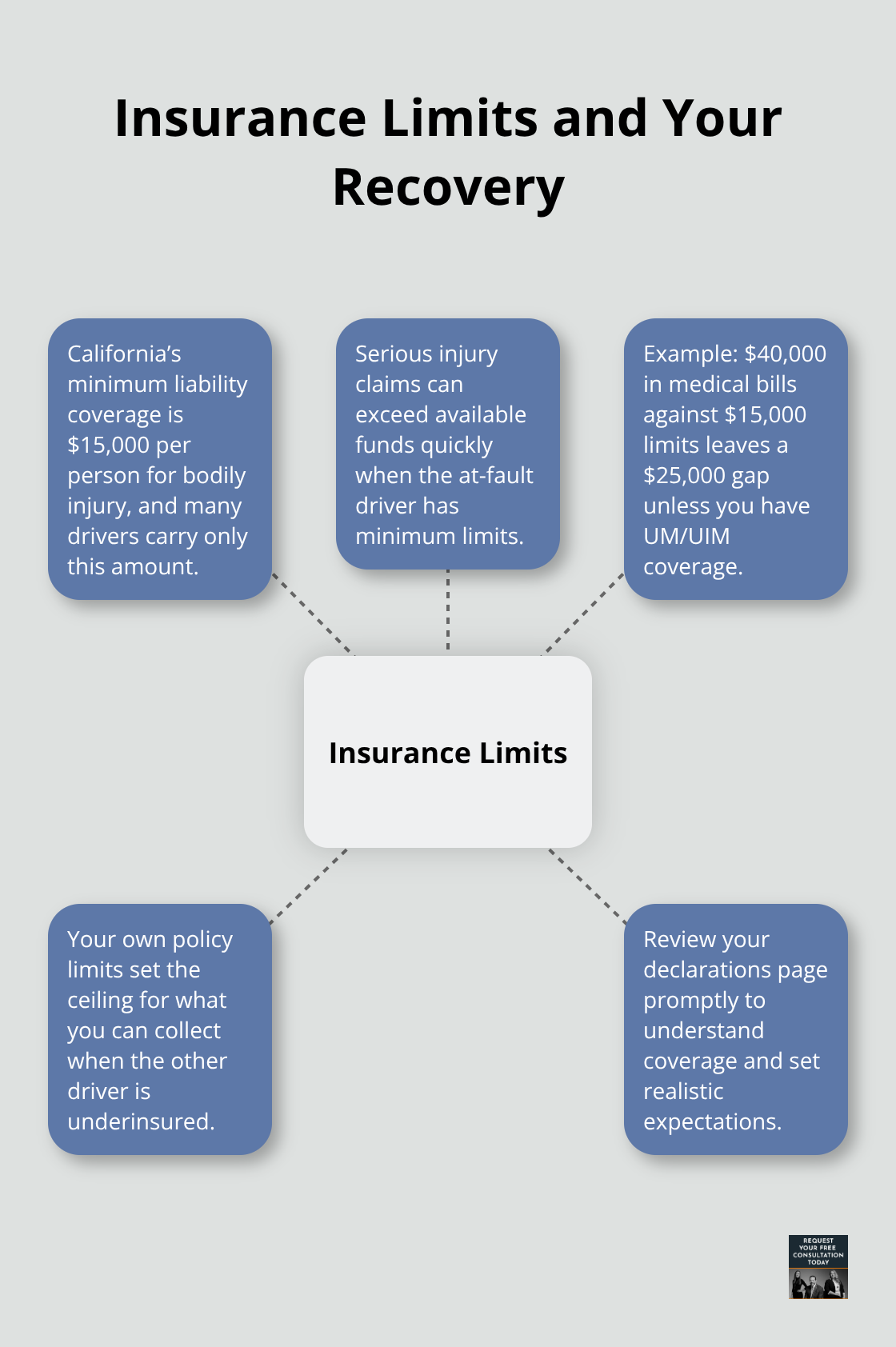
Your own insurance policy limits matter equally because they determine your maximum recovery if the other driver lacks sufficient coverage. Check your policy declarations page immediately after the accident to understand your coverage type and limits; this knowledge shapes realistic settlement expectations.
Final Thoughts
Rear-end collision Santa Cruz cases hinge on one critical reality: fault determines your financial recovery. California’s presumption against the rear driver is strong but not unbreakable, and the specific facts of your accident-vehicle damage patterns, medical documentation, police reports, and event data recorder evidence-shape how much compensation you actually receive. Insurance companies reduce your settlement by your percentage of fault, which means a 30 percent fault finding costs you thousands of dollars compared to a 20 percent finding on the same injury claim.
Your immediate actions after the collision directly influence your outcome. Call 911 if anyone needs medical attention, move vehicles to safety if possible, exchange information with the other driver, photograph all vehicle damage and the accident scene, obtain witness contact information, and request the police report number. Contact your insurance company promptly and provide your policy number, a detailed accident description, the date and location, and the police report number-do not leave your claim in someone else’s hands.
We at Schaar & Silva LLP handle the complexities you face after a rear-end collision in Santa Cruz County. Our team assists with medical bill management, evaluates property damage fairly, and connects you with support specialists if you need them. Contact us to discuss how we can help you recover the compensation you deserve.
