

If you’ve been in a car accident in Santa Cruz County, California, you need to understand how comparative negligence California rules work. Even if you’re partially at fault, you may still recover compensation-but your settlement will be reduced based on your percentage of fault.
At Schaar & Silva LLP, we help accident victims navigate these complex rules and fight for fair settlements. The difference between understanding comparative negligence and not understanding it can mean thousands of dollars in your pocket.
How California’s Pure Comparative Negligence Works
California adopted pure comparative negligence in 1975 through a landmark court decision, and this rule fundamentally changes how accident settlements work in Santa Cruz County. Under this system, you can recover compensation even if you’re partially responsible for the crash. The catch is straightforward: your settlement gets reduced by your percentage of fault. If you’re found 30% at fault for a $100,000 claim, you recover $70,000. If you’re 50% at fault, you recover $50,000. This differs dramatically from states that bar recovery entirely if you’re more than 50% responsible.
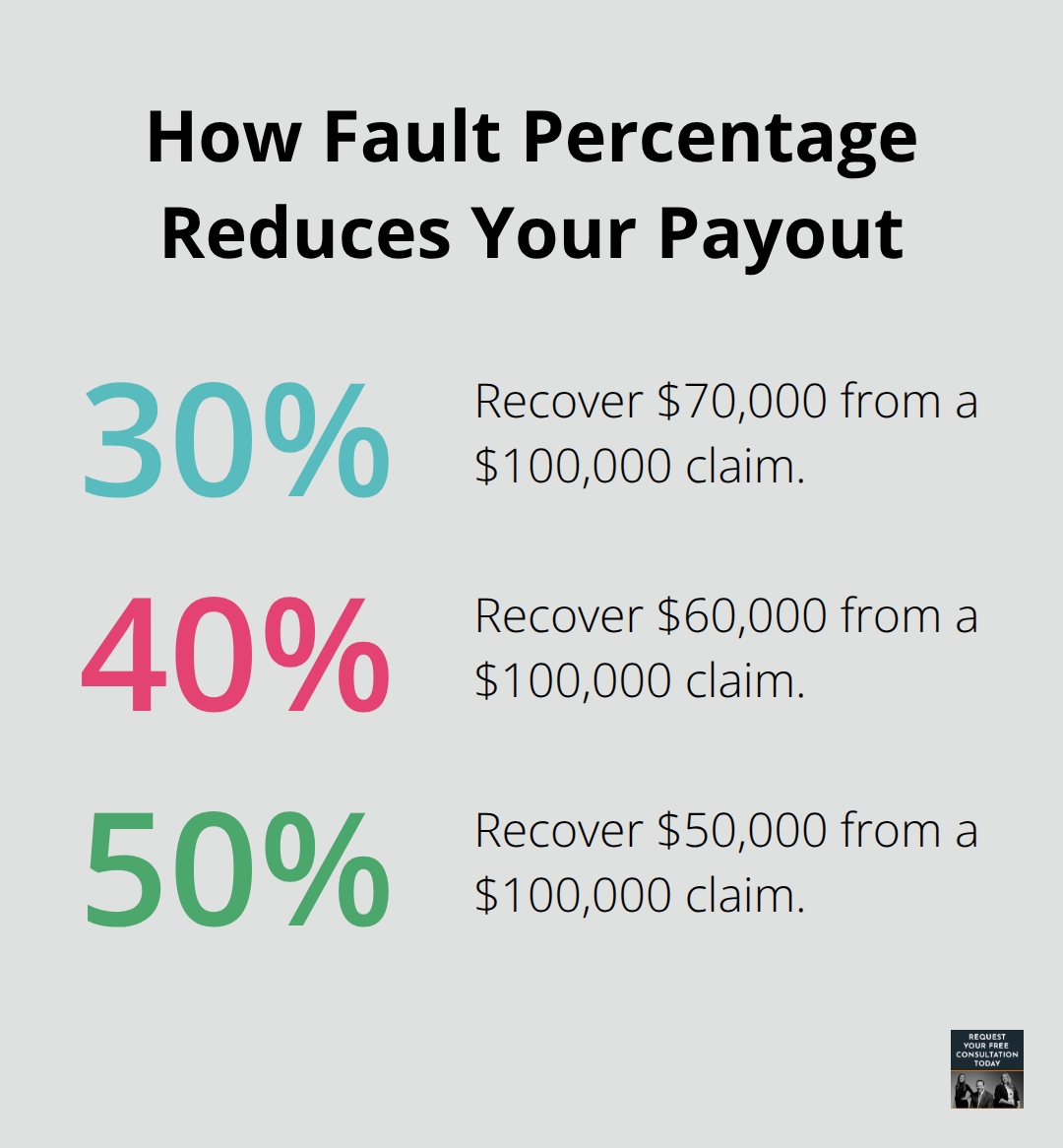
California’s approach means fault allocation directly translates to dollars lost from your settlement, making the percentage assigned to you one of the most important numbers in your case.
Understanding How Fault Percentages Get Determined
Fault percentages aren’t pulled from thin air. Insurance companies and courts examine police reports, photos, witness statements, vehicle damage patterns, traffic laws, and driver behavior leading up to the crash. If you were speeding or ran a red light, that counts against you. If the other driver was distracted or violated a traffic law, that counts against them. The process is adversarial-insurers try to assign you as much fault as possible to reduce their payout. Electronic data from your vehicle, dashcam footage, and eyewitness testimony become critical evidence in this allocation process.
Why Fault Percentages Matter to Your Wallet
The difference between 30% and 50% fault can easily mean $20,000 to $30,000 in lost compensation on a six-figure claim. This is why many accident victims in Santa Cruz benefit from having legal representation review their case before accepting an initial settlement offer. An attorney can challenge the insurer’s fault assignment with additional evidence and push back against inflated percentages assigned to you.
Why This Rule Favors You More Than Most States
Most states impose a 50% or 51% fault bar, meaning you recover nothing if you’re equally or more responsible than the other party. California’s pure comparative negligence eliminates that barrier entirely. You can be 99% at fault and still recover 1% of damages from the other party if they share any responsibility. This plaintiff-friendly framework has been California law for nearly 50 years and reflects a policy choice that accident victims deserve a path to recovery regardless of their degree of fault. However, this advantage only helps you if the other party actually bears some responsibility.
When Shared Fault Creates Real Recovery Opportunities
The real value of California’s comparative negligence rule emerges when fault is genuinely shared or when the other driver’s actions contributed significantly to the collision. If you caused the crash entirely, comparative negligence won’t change that outcome. But if both parties share responsibility, you still walk away with compensation. This is where the next step becomes critical: gathering strong evidence that proves the other party’s negligence and limits the fault assigned to you.
How Your Fault Percentage Shrinks Your Settlement
Fault percentages directly reduce what you receive in compensation, and the math is unforgiving. If you’re found 30% at fault for a $100,000 claim, you walk away with $70,000. At 40% fault, you get $60,000. At 50% fault, you get $50,000. This isn’t theoretical-it’s how California courts and insurance companies calculate your final payout. The insurance adjuster assigned to your case will build a narrative around your actions at the scene, your driving history, and any traffic violations you committed. They’re not neutral. Their job is to assign you as much fault as possible because every percentage point they add to your share directly reduces what their company pays out. On a $200,000 claim, the difference between 25% and 35% fault costs you $20,000 in lost compensation.
How Insurance Adjusters Build Their Fault Case
Insurance adjusters determine fault by examining police reports, vehicle damage patterns, traffic camera footage, and witness statements. They note if you were speeding, failed to maintain proper distance, or violated any traffic laws. They also look at the other driver’s actions, but they interpret ambiguous facts in their favor whenever possible.
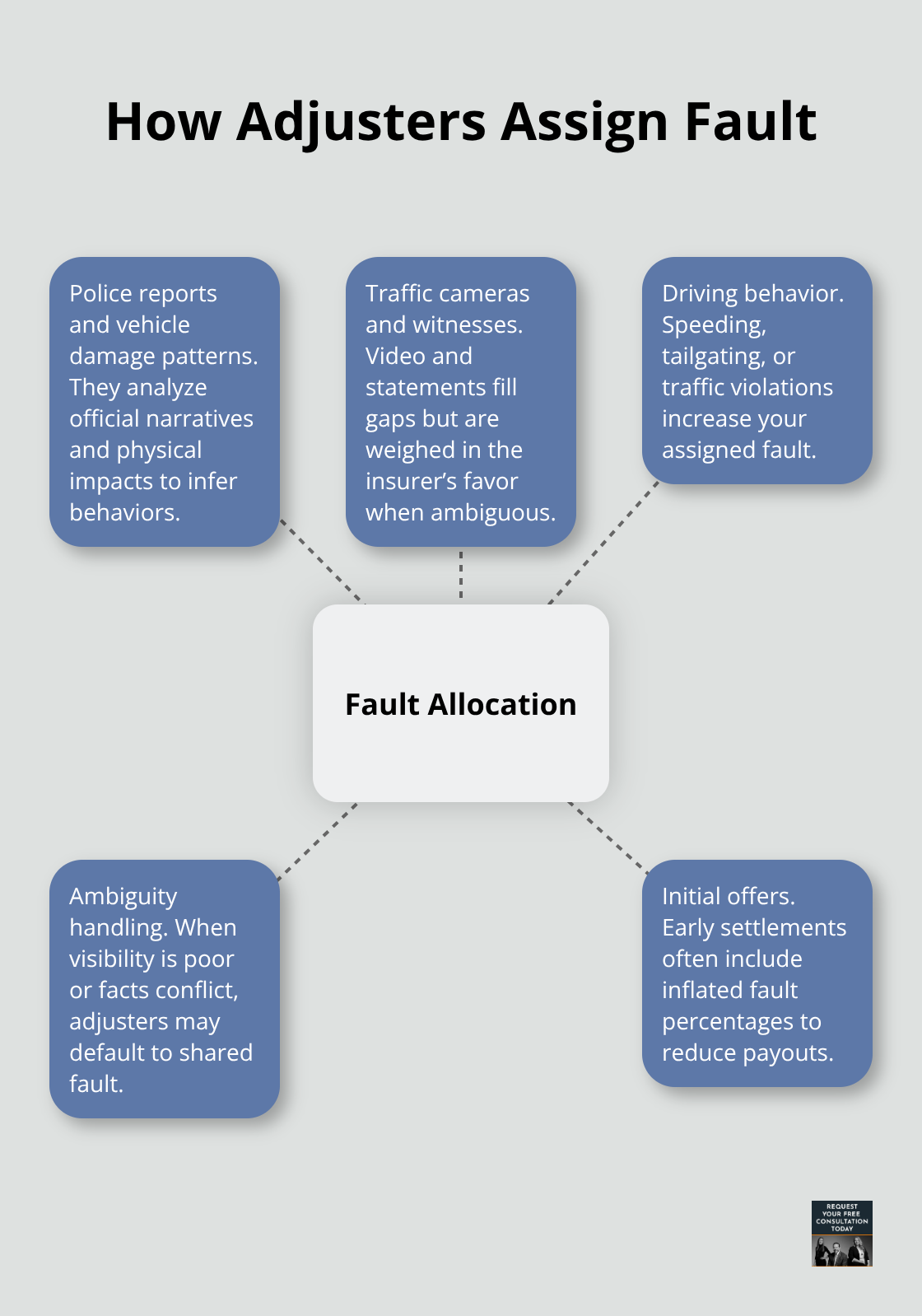
If visibility was poor and both drivers claim they didn’t see the other vehicle, the adjuster may assign shared fault even if the other driver was clearly distracted. Insurance companies know most accident victims don’t understand this leverage, which is why initial settlement offers often come with inflated fault percentages attached.
Evidence That Counters Inflated Fault Assignments
Electronic data from your vehicle’s event data recorder, dashcam footage from your car or nearby businesses, and detailed witness statements become your best defense against inflated fault percentages. This objective evidence weakens the adjuster’s narrative and forces them to justify their fault allocation with concrete facts rather than assumptions. Police reports and photographs from the scene also matter, but they often contain incomplete information that adjusters exploit to your disadvantage.
Truck Accidents in Santa Cruz County Present Unique Complications
Accidents on Highway 17 involving trucks present distinct challenges. According to the American Trucking Associations, crash severity increases by about 40% in mountainous terrain, which means injuries are often more severe and settlements larger. This also means insurance companies fight harder over fault percentages because the dollar amounts are higher. If a truck driver violated Federal Motor Carrier Safety Administration hours-of-service rules, that creates presumptive evidence of negligence that weakens their claim that weather or road conditions caused the crash. Electronic logging device records and event data disappear if not preserved quickly through a formal preservation letter, so immediate legal action becomes essential.
Why Timing Matters for Evidence Preservation
Gathering evidence immediately after your accident is critical because electronic data vanishes without formal preservation steps. The longer you wait, the more likely critical information disappears from truck systems or gets overwritten. A preservation letter triggers a legal duty to maintain electronic logging device records, maintenance logs, and other data that could prove the other party’s negligence. This evidence directly impacts how much fault the adjuster can assign to you and strengthens your negotiating position. Understanding what evidence exists and how to preserve it separates accident victims who recover fair settlements from those who accept reduced payouts based on inflated fault percentages.
Building Your Evidence Before the Adjuster Sets Your Fault Percentage
The moment after your accident is when your case is won or lost. Insurance adjusters move fast, and they assign you a fault percentage based on whatever evidence sits in front of them first. If you wait weeks to collect information, the adjuster has already locked in their narrative, and changing their mind becomes exponentially harder.
Collect Evidence at the Scene Immediately
Start collecting evidence at the scene itself. Take photos of vehicle damage from multiple angles, road conditions, traffic signals, and street signs. Obtain the names and phone numbers of every witness who saw the crash, not just their statements. If nearby businesses have security cameras pointed at the intersection, note the addresses immediately because that footage disappears within days at most establishments.
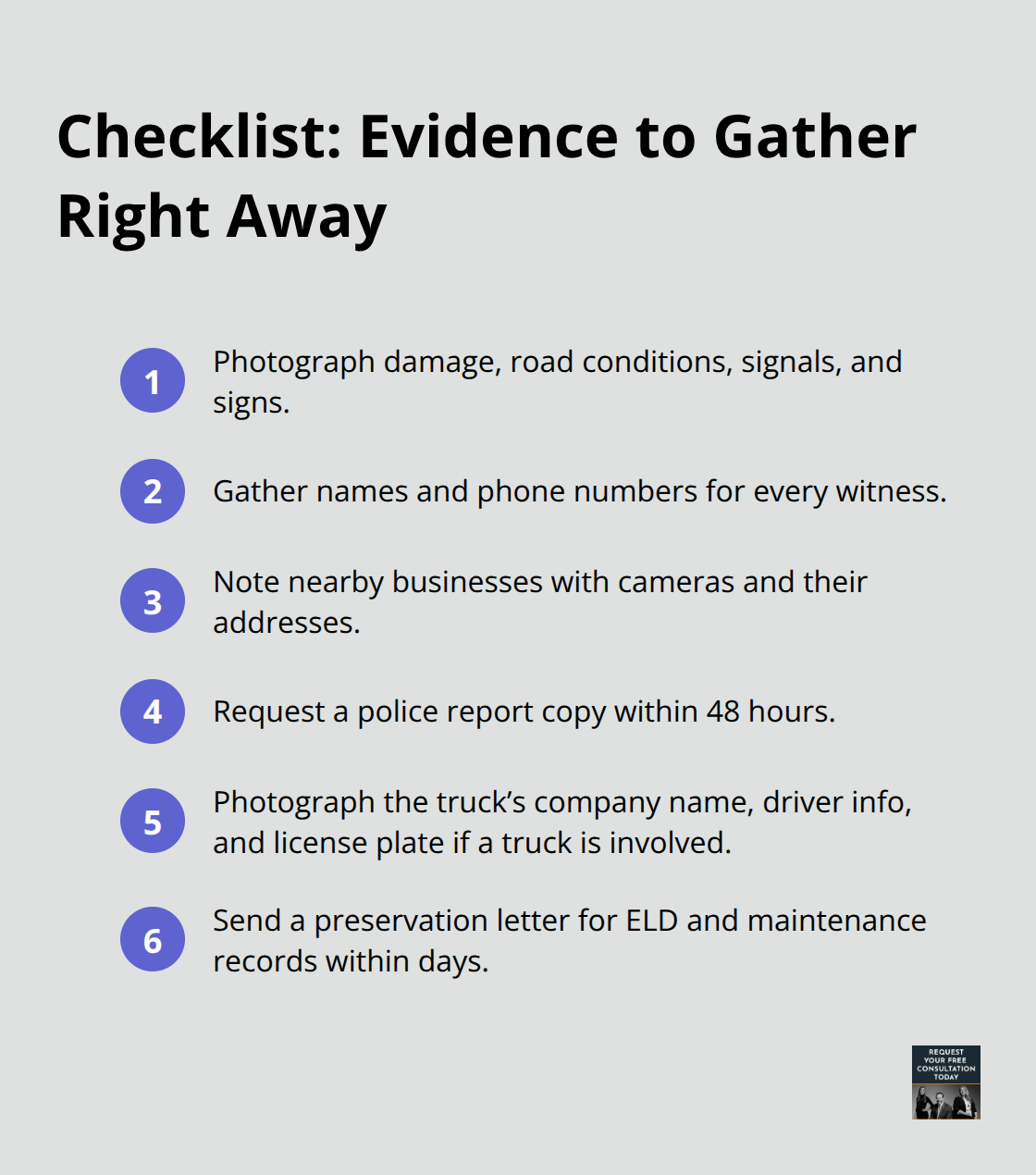
Request a police report copy within 48 hours and review it carefully for inaccuracies. Police reports contain critical information, but they often remain incomplete or contain errors that favor the other driver’s version of events. If a truck was involved, photograph the company name, driver information, and license plate. Electronic logging device records and maintenance logs exist only if you preserve them through a formal letter within days of the crash. This objective data (showing hours-of-service violations or brake system failures) directly undermines any fault assignment the carrier tries to pin on you.
Document Your Injuries With Medical Records
Document your own injuries immediately with photos and medical records. Insurance companies know that victims who delay treatment are easier to blame for the accident because adjusters argue you weren’t hurt that badly. Seek medical attention within 24 hours, even if you feel fine. Adrenaline masks injuries that emerge days later, and medical records create a timestamped record that protects you against claims that your injuries came from something else entirely.
Control Your Statements at the Scene
Your own actions at the scene matter as much as the evidence you collect. Never admit fault or apologize for the accident, even if you think you might be partially responsible. Statements like “I didn’t see you” or “I’m so sorry” can be twisted into admissions of negligence during settlement negotiations. Stick to factual descriptions of what happened.
Tell the police officer what you did, where you were going, and what you observed about the other vehicle’s movements. If you were following traffic laws, state that explicitly. If the other driver ran a red light or crossed into your lane, describe that precisely. Write down everything you remember while it’s fresh, including the exact time, weather conditions, road surface, and any distractions you or the other driver had. This written record becomes invaluable when your memory fades months later.
Preserve Dashcam and Electronic Evidence
If you have a dashcam, back up the footage to cloud storage immediately because some devices overwrite old footage automatically. A dashcam showing the other driver’s actual negligence is worth more than any witness statement because it remains objective and cannot be misinterpreted. For truck accidents, electronic logging device records and maintenance logs vanish without formal preservation steps. The longer you wait, the more likely critical information disappears from truck systems or gets overwritten. A preservation letter triggers a legal duty to maintain these records (and other data) that could prove the other party’s negligence. This evidence directly impacts how much fault the adjuster can assign to you and strengthens your negotiating position.
Work With Legal Representation to Counter Fault Arguments
Understanding what evidence exists and how to preserve it separates accident victims who recover fair settlements from those who accept reduced payouts based on inflated fault percentages. The difference between accepting an adjuster’s initial fault percentage and fighting back with strong evidence typically means tens of thousands of dollars in your settlement. Legal representation becomes essential in cases where fault is disputed or where the other party bears clear responsibility. At Schaar & Silva LLP, we help clients preserve this evidence and use it to counter inflated fault assignments from insurance companies.
Final Thoughts
California’s comparative negligence framework gives you a genuine path to recovery even when you share fault for an accident. Unlike most states that bar recovery entirely if you’re equally responsible, California allows you to recover compensation reduced only by your percentage of fault. The evidence you collect in the hours and days after your accident directly determines whether you recover fair compensation or accept a reduced settlement based on inflated fault percentages.
Dashcam footage, witness statements, police reports, and electronic data from vehicles become your strongest defense against adjuster narratives designed to shift blame onto you. For truck accidents on Highway 17, preservation letters that protect electronic logging device records and maintenance logs can mean the difference between a six-figure settlement and a fraction of what you deserve. Timing matters because evidence disappears without formal preservation steps, and once it’s gone, no amount of legal skill can recover it.
Contact us for a free consultation to discuss how your accident fits within California’s comparative negligence framework and what your case might be worth. We at Schaar & Silva LLP help clients preserve critical evidence, counter inflated fault assignments, and navigate insurance company tactics designed to reduce payouts. Our team connects you with medical lien services to handle bills during your recovery and assists with property damage claims so you can focus on healing rather than fighting with adjusters.
