
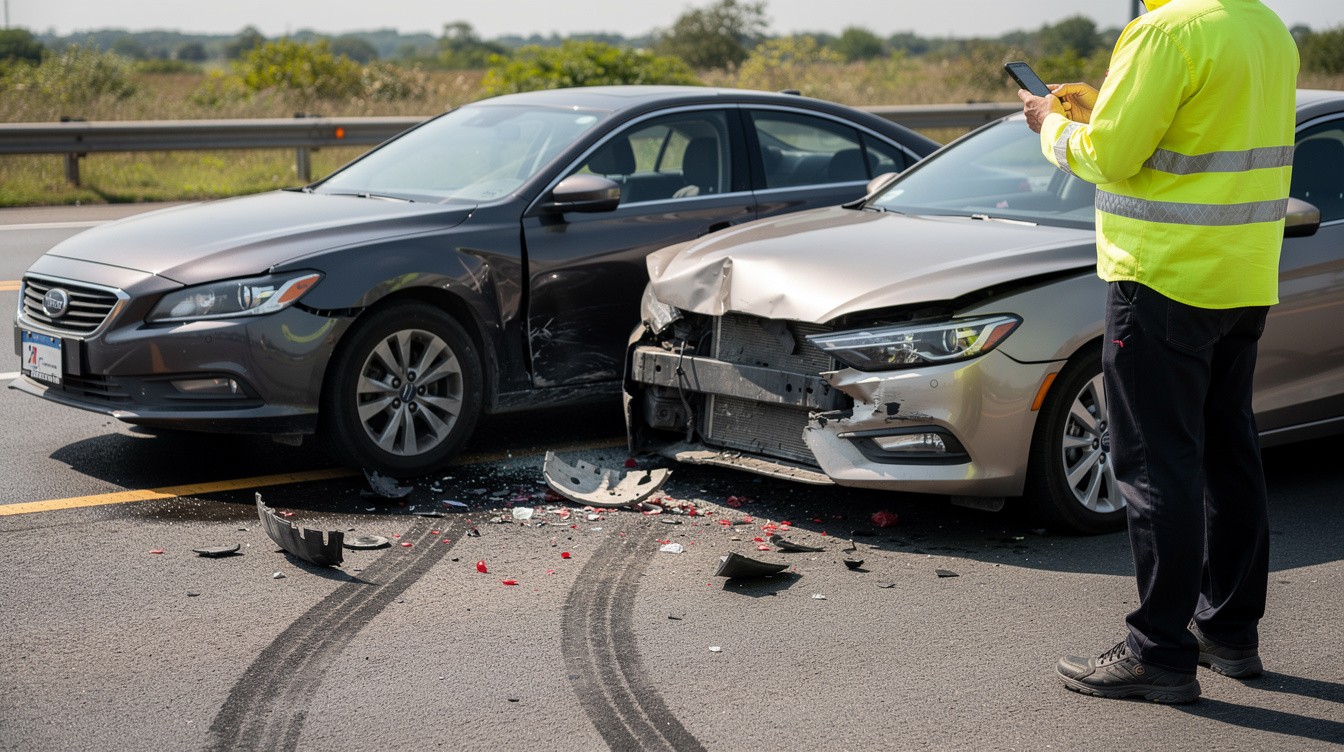
A rear end collision can happen in seconds, leaving you shaken and unsure what to do next. The moments after impact are critical for protecting your health and your legal rights.
We at Schaar & Silva LLP have helped countless people in Santa Cruz County, Sacramento, and Oakland navigate the aftermath of rear end collisions. This guide walks you through the essential steps to take right now.
What to Do Right Now After a Rear End Collision
Your first priority is your physical safety and the safety of your passengers. If anyone is injured, call 911 immediately. Do not wait to see if symptoms develop later. According to the National Highway Traffic Safety Administration, rear end collisions account for nearly 29% of all two-vehicle crashes, and many injuries from these impacts appear hours or even days after the accident.
Move to Safety
Once emergency services are en route, move your vehicle out of traffic if it is safe to do so. If your car cannot be driven, turn on your hazard lights and stay inside with your seatbelt fastened until help arrives. Never stand between vehicles or in a traffic lane. Your position matters-staying in your vehicle protects you from additional impacts while you wait for responders.
Document Everything at the Scene
Take photos of the entire accident scene before anything is moved. Photograph the damage to both vehicles from multiple angles, the license plates of all vehicles involved, the road conditions, traffic signs, and skid marks if visible. Get the other driver’s name, phone number, address, driver’s license number, license plate number, insurance company name, and policy number. Write down the make and model of their vehicle and the time of day. If there are witnesses, get their contact information as well.
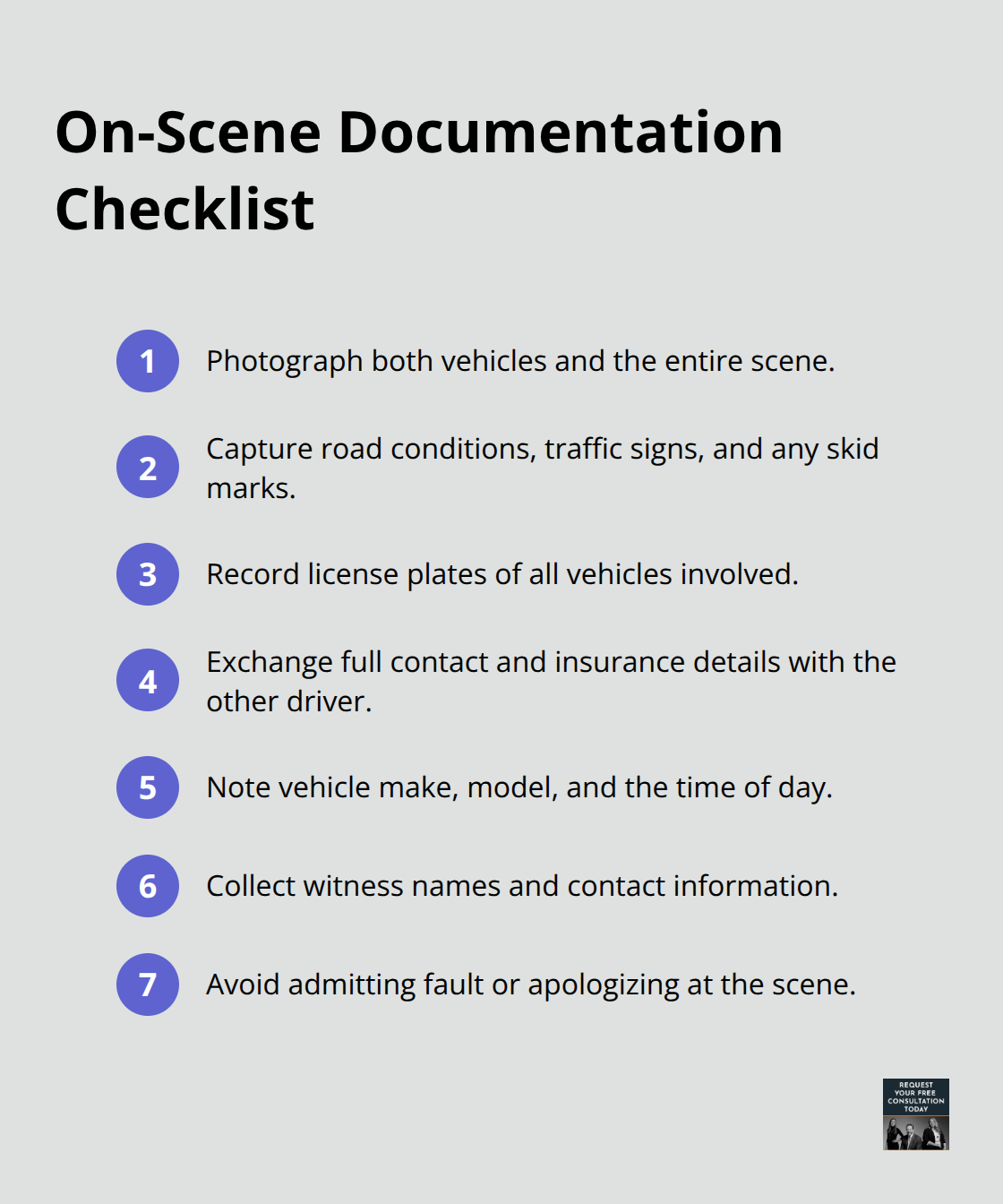
Do not admit fault or apologize for the accident, as these statements can be used against you later. The California Department of Insurance reports that documentation gathered at the scene significantly strengthens insurance claims and protects your legal position.
File Your Claim Promptly
Contact your insurance company within 24 hours of the collision. Most insurance policies require prompt notification. Provide them with the information you collected at the scene, but do not sign anything until you fully understand what you are agreeing to. If you sustained injuries or significant property damage, consult with a personal injury attorney before accepting any settlement offer. An attorney can review the circumstances of your collision and advise you on whether the insurance company’s initial offer reflects the true value of your claim. This step becomes especially important when medical bills mount or your injuries prevent you from working.
Liability and Insurance Claims After a Rear End Collision
California Law Favors You in Rear End Collisions
California law makes rear end collisions straightforward when determining fault. The driver who hits you from behind is almost always liable, regardless of why you stopped. California Vehicle Code Section 21704 requires drivers to maintain safe following distances and control their vehicles at all times. This legal presumption works heavily in your favor, which is why insurance companies rarely dispute fault in these cases. However, rare exceptions exist, such as if your brake lights were completely non-functional or you reversed into the other vehicle. Document your vehicle’s condition at the scene, including photos of working brake lights, to eliminate any possibility of the other driver claiming you caused the collision.
File Your Claim Within the Required Timeframe
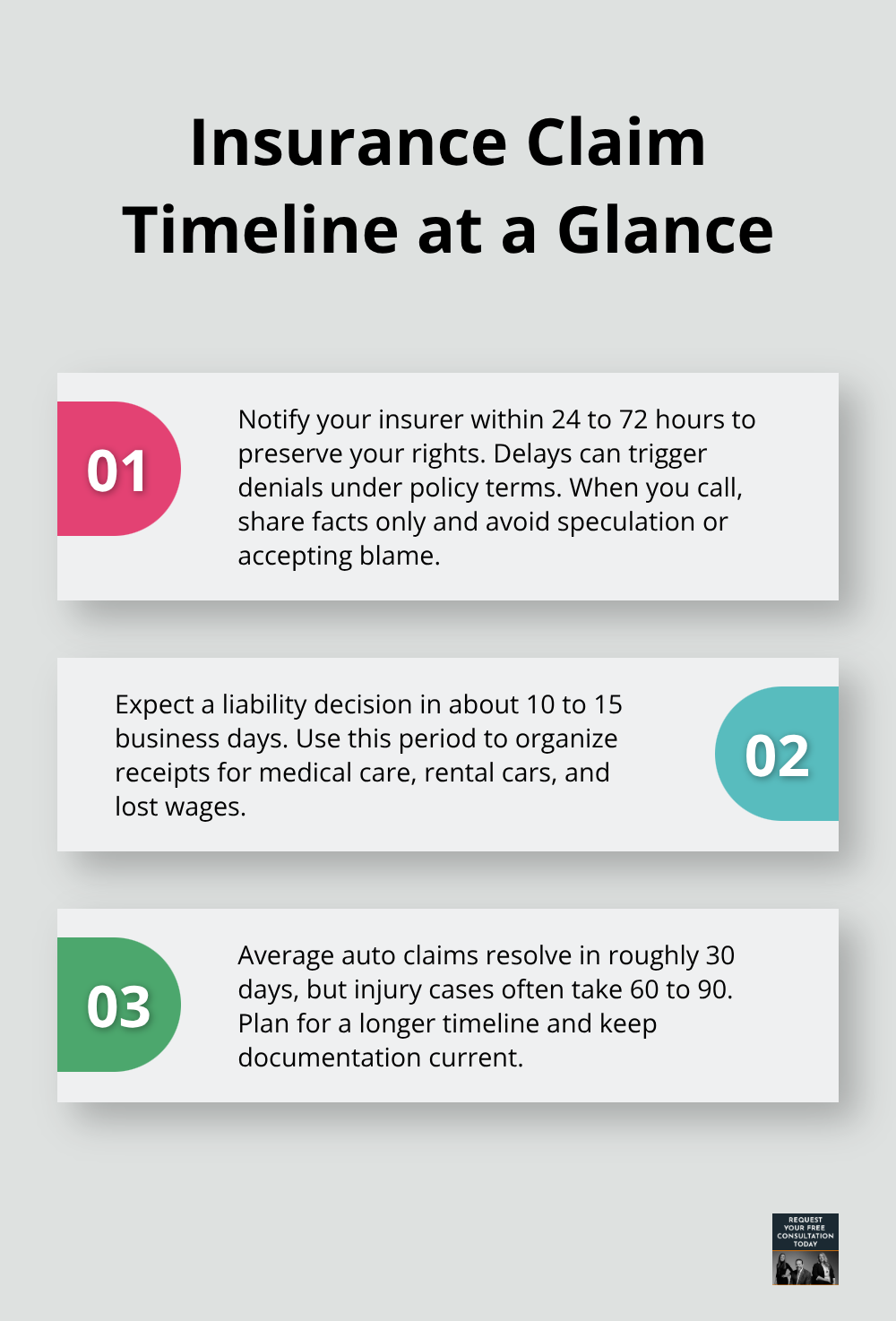
Your insurance claim begins the moment you contact your insurer, so timing matters significantly. Most policies require notification within 24 to 72 hours, and delaying this step gives insurers reason to deny your claim. When you call, provide only factual information: the date, time, location, and basic details about the collision. Do not speculate about injuries or accept blame. The insurance adjuster will contact the other driver, review photos, and typically issue a liability determination within 10 to 15 business days. During this waiting period, keep detailed records of all expenses related to the accident, including rental car costs, medical treatment, and lost wages. According to the Insurance Information Institute, the average auto insurance claim takes 30 days to resolve, but claims involving injuries often extend to 60 to 90 days.
Protect Yourself From Insurance Company Tactics
If the other driver’s insurance company contacts you directly, do not provide a recorded statement without consulting an attorney first. Recorded statements can be used against you later, even when you are not at fault. Insurance companies sometimes use statements to minimize injury claims or dispute medical treatment costs. The other driver’s insurance company will offer a settlement, typically within 30 to 45 days if liability is clear. This initial offer frequently falls short of your actual damages, especially when injuries are involved. Medical expenses from rear end collisions average between $10,000 and $25,000 according to data from the American Medical Association, yet insurance companies often settle for far less.
Evaluate Settlement Offers Carefully
Before accepting any offer, calculate your total losses: emergency room bills, follow-up doctor visits, physical therapy, prescription medications, vehicle repair or replacement costs, and lost income. If your injuries are minor with minimal medical treatment, the initial offer may be acceptable. If you have substantial medical bills, ongoing treatment, or lost work time, the settlement is likely inadequate. An attorney can review settlement offers and advise whether they reflect the true value of your claim. This step becomes especially important when medical bills mount or your injuries prevent you from working, which is why many accident victims in Santa Cruz County turn to legal representation before accepting any settlement.
Medical Treatment and Compensation for Injuries
Common Injuries From Rear End Collisions
Rear end collisions cause specific injuries that often develop over time, which is why waiting to seek medical care is a serious mistake. Whiplash ranks as the most common injury, affecting the neck and upper back through sudden acceleration-deceleration forces. The Journal of Orthopaedic Surgery and Research found that 83% of rear end collision victims experience whiplash symptoms, yet many don’t seek treatment immediately because pain intensifies hours or days after impact.
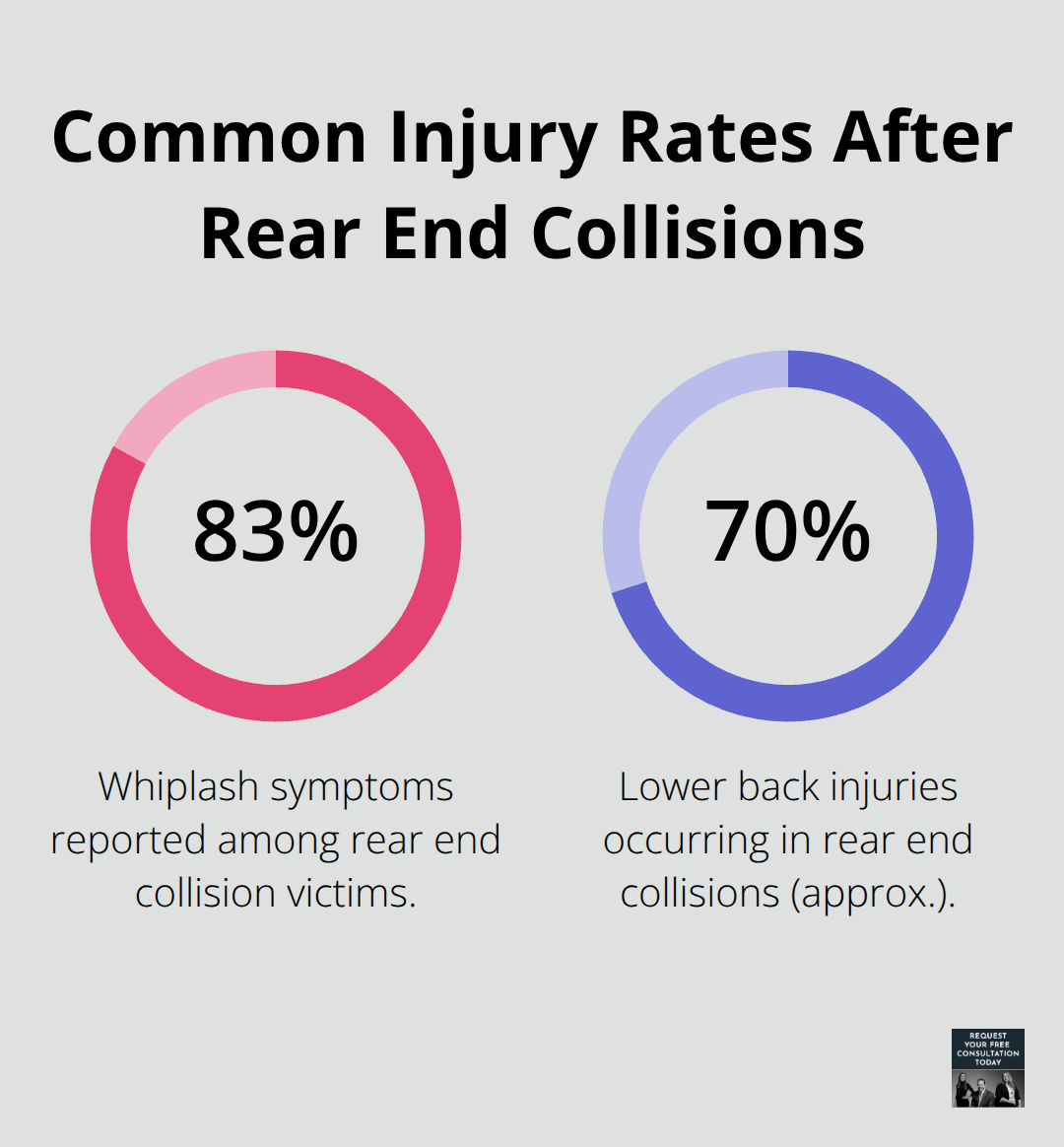
Lower back injuries occur in approximately 70% of rear end collisions, frequently involving herniated discs that require ongoing physical therapy or imaging. Traumatic brain injuries and concussions happen when your head strikes the headrest or side window, and these injuries carry serious long-term consequences including cognitive problems, headaches, and memory issues. Broken ribs, shoulder injuries, and knee damage also result from the violent deceleration your body experiences.
Start Treatment Immediately
You should begin medical treatment within 48 hours of your collision, even if you feel fine. Emergency room visits create an official medical record linking your injuries directly to the accident, which strengthens your claim significantly. Your insurance company scrutinizes treatment delays and uses them to argue your injuries are minor or unrelated to the crash.
Document Every Medical Expense
You must track every medical expense meticulously because these costs form the foundation of your compensation claim. Keep receipts from emergency room visits, specialist consultations, diagnostic imaging like MRI or CT scans, physical therapy sessions, prescription medications, and any medical equipment you purchase. The American Medical Association reports that rear end collision victims average between $10,000 and $25,000 in medical expenses, though catastrophic injuries easily exceed $100,000.
Track lost wages if injuries prevent you from working, including time off for appointments and recovery. Property damage compensation covers vehicle repair costs, rental car expenses while yours is being repaired, and diminished vehicle value if repairs don’t restore it to pre-accident condition.
Calculate Your Total Damages
Pain and suffering damages compensate you for physical pain, emotional distress, and reduced quality of life caused by your injuries. Insurance companies calculate pain and suffering using multipliers, typically ranging from 1.5 to 5 times your medical expenses depending on injury severity. Your actual damages often exceed what the other driver’s insurance company initially offers, which is precisely why consulting with an attorney before accepting any settlement protects your financial recovery.
If you sustained injuries or significant property damage, an attorney can review the circumstances of your collision and advise you on whether the insurance company’s initial offer reflects the true value of your claim. We at Schaar & Silva LLP can help direct you to medical lien services that facilitate payment of your medical bills until your case resolves, allowing you to receive necessary treatment without financial hardship during your recovery period.
Final Thoughts
A rear end collision disrupts your life in ways that extend far beyond the initial impact. The steps you take in the hours and days following the crash determine whether you recover your losses fully or accept less than you deserve. Start by prioritizing your health, seeking medical treatment within 48 hours, and maintaining detailed records of your recovery journey while you contact your insurance company promptly and gather all evidence from the scene.
California law strongly favors you in rear end collision cases, but only if you build a solid foundation of documentation and medical records. The insurance company’s first settlement offer rarely reflects your true damages, as medical bills, lost wages, pain and suffering, and property damage add up quickly-often reaching amounts far beyond what adjusters initially propose. Before accepting any offer, calculate your complete losses and understand what you are giving up.
An attorney reviews the circumstances of your collision, evaluates settlement offers, and advises whether you should negotiate further or pursue additional compensation. Many accident victims in Santa Cruz County, Sacramento, and Oakland discover that consulting with a lawyer before accepting a settlement results in significantly higher compensation. Contact Schaar & Silva LLP to discuss your case and understand your options for moving forward.
