
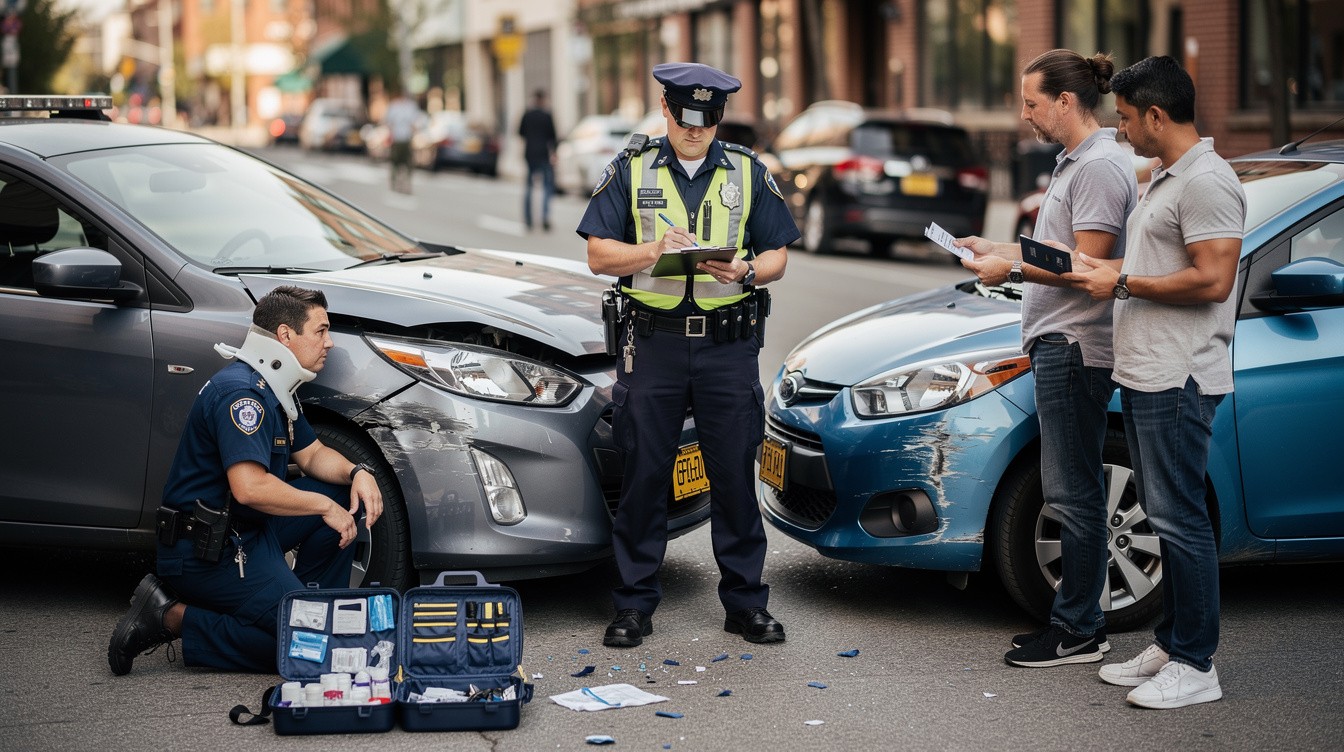
After a car accident, your percentage of fault directly determines how much money you can recover. California’s comparative negligence rules allow you to collect damages even if you’re partially responsible, but the amount shrinks based on your fault level.
We at Schaar & Silva LLP have seen countless claims where clients lost thousands because they didn’t understand how fault percentages work. This guide shows you exactly how courts assign fault and what mistakes can increase your negligence percentage.
How California’s Pure Comparative Negligence Rule Works
The Core Principle Behind Pure Comparative Negligence
California allows you to recover damages even if you caused part of the accident. Under the pure comparative negligence rule established by Li v. Yellow Cab Co. in 1975, your recovery gets reduced by your percentage of fault, but you don’t lose everything. If you’re 30% at fault for a $100,000 claim, you receive $70,000. If you’re 99% at fault, you still recover $1,000. This system differs fundamentally from the old contributory negligence rule that many states still use, which bars any recovery if you’re even slightly at fault.
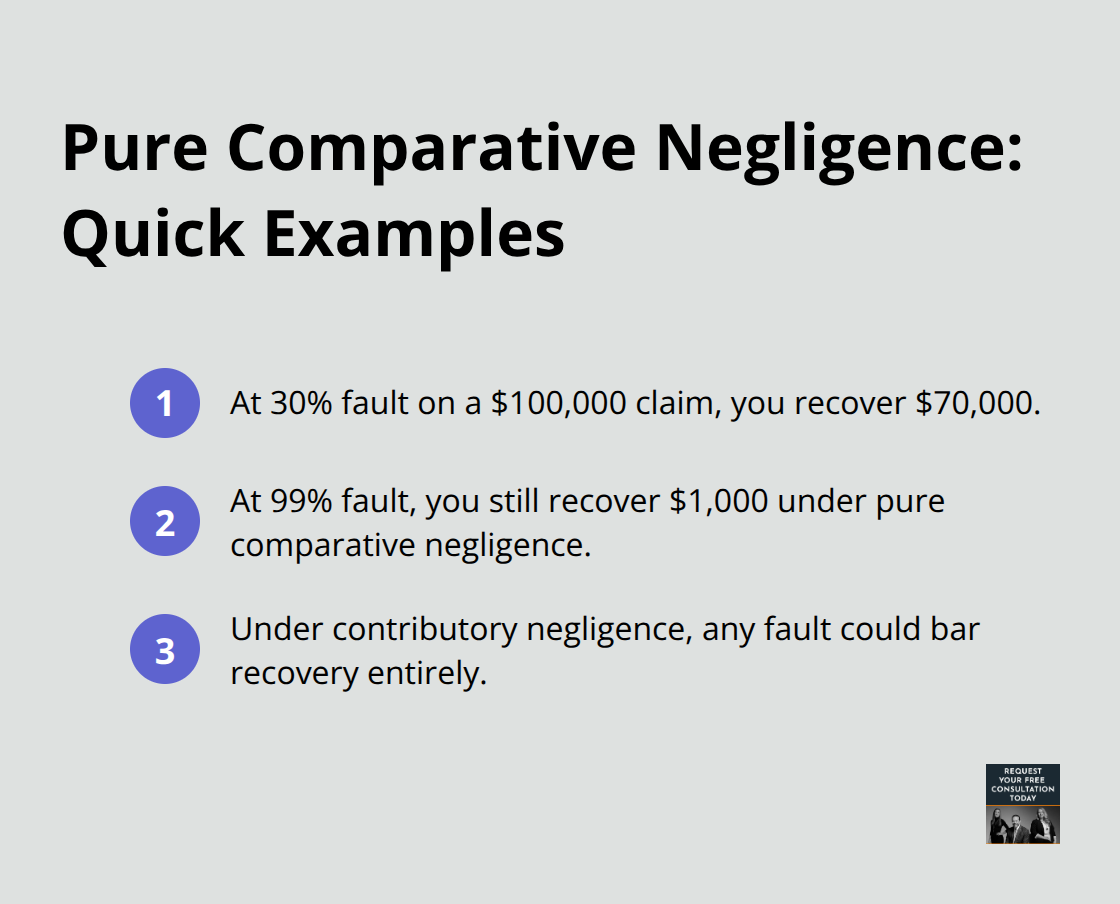
California rejected that approach because it punished injured people for minor mistakes while letting negligent drivers escape liability entirely.
How Courts Assign Fault Percentages
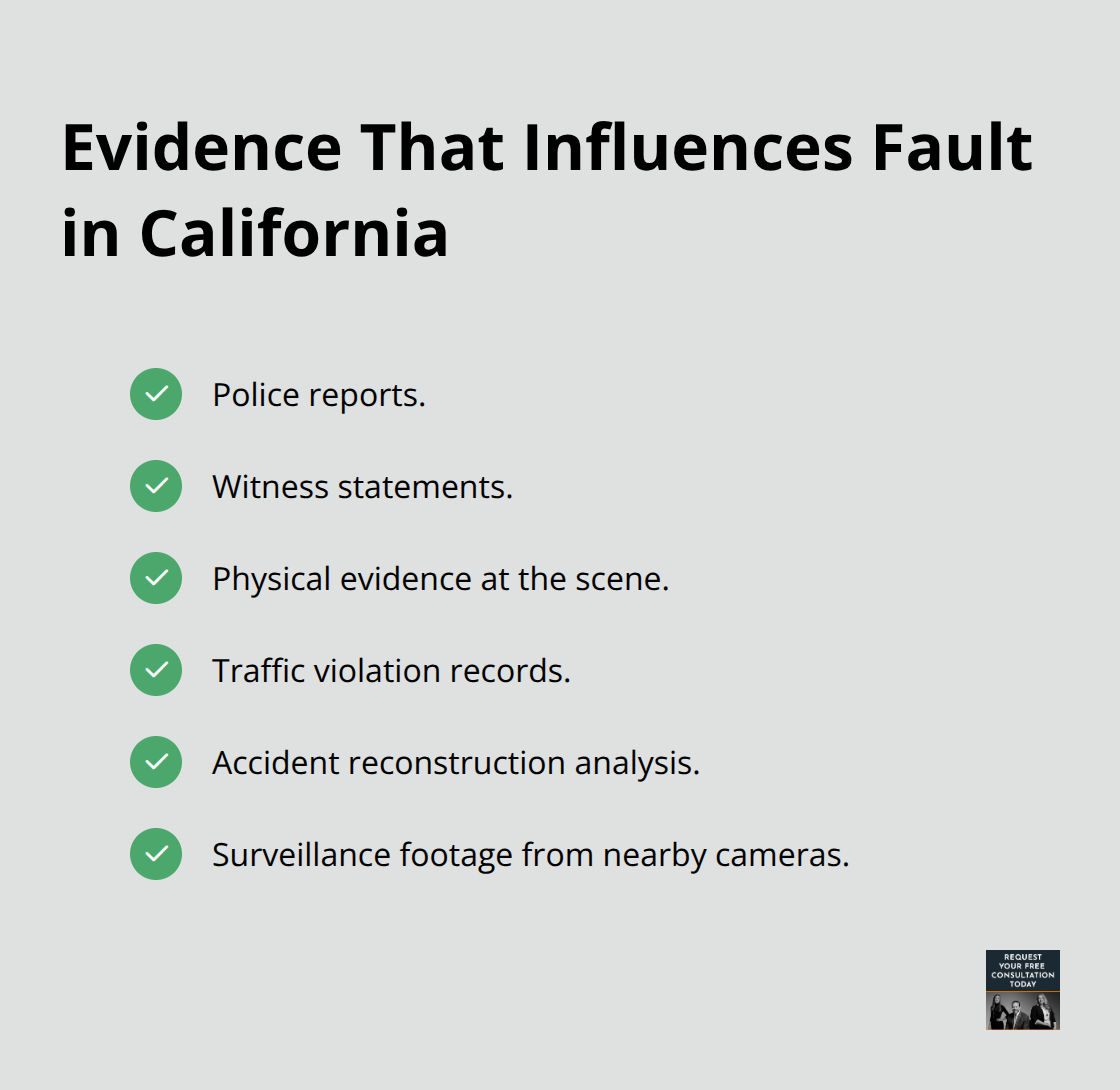
Courts determine fault percentages by examining police reports, eyewitness testimony, physical evidence like skid marks and debris patterns, traffic violations, and accident reconstruction analysis. Insurance adjusters weaponize this process by lowering your recovery through inflated fault percentages. They cite minor violations like not wearing a seatbelt or speeding, dispute whether your injuries came from the accident, and push for 50/50 splits without solid evidence.
Documenting Evidence Immediately After the Accident
The key actionable step is documenting everything immediately after the accident: photograph the scene, collect witness contact information, obtain the police report, and seek medical evaluation promptly. Surveillance footage from nearby cameras provides objective proof that counters adjuster tactics. Traffic violations by the other driver (such as running a red light or speeding) create strong presumptions of their fault.
How Your Fault Percentage Scales Your Final Payout
Your fault percentage matters because it directly scales your final payout. A $200,000 claim with 40% fault yields $120,000, while 60% fault reduces it to $80,000. Accident reconstruction experts carry significant weight in court and can challenge initial fault determinations if the evidence supports a different allocation. Gathering this evidence early-when witnesses’ memories remain fresh and physical evidence stays intact-strengthens your position considerably, as delaying weakens your ability to counter inflated fault assessments.
How Fault Percentages Change Your Recovery
How Courts and Adjusters Determine Fault
Courts determine fault percentages by examining police reports, witness statements, physical evidence at the scene, traffic violations, and accident reconstruction analysis. Insurance adjusters weaponize this process aggressively. They cite minor violations like not wearing a seatbelt, dispute causation between the accident and your injuries, and push for 50/50 fault splits without evidence.
A rear-end collision where your brake lights were out might result in you being assigned 20% fault even though the other driver hit you from behind. A left-turn scenario where you proceeded on green but didn’t yield to a speeding driver can yield a 60/40 fault split favoring you, yet the adjuster may still argue you should bear 50% responsibility.
Why Adjusters Lock in Fault Determinations Early
The reality is that adjusters make their initial fault determination quickly and rarely adjust it upward, even when new evidence emerges. This means your first opportunity to counter inflated fault percentages happens before litigation hardens their position. Traffic violations by the other driver, such as running a red light or speeding, create strong presumptions of their fault that are difficult for adjusters to overcome.
The Dollar-for-Dollar Impact on Your Payout
Your fault percentage directly scales your final payout dollar-for-dollar. A $100,000 claim with 30% fault yields $70,000 net recovery. That same claim at 60% fault leaves you with only $40,000. A $200,000 case with 40% fault results in $120,000, while 60% fault drops it to $80,000. The impact compounds when you factor in Proposition 51, which limits non-economic damages like pain and suffering to each defendant’s proportional fault in multi-defendant cases. If your injuries total $150,000 in economic damages and $100,000 in pain and suffering, and you are found 35% at fault, you lose $35,000 from economic damages but lose the full $35,000 from non-economic damages under Prop. 51 rules.
How Evidence Strengthens Your Fault Position
Accident reconstruction experts carry substantial weight in court and can challenge initial fault determinations when evidence supports a different allocation. You must gather evidence immediately after the accident-photographs, witness contact information, surveillance footage from nearby cameras, and medical records linking injuries to the collision-to strengthen your position considerably. Delaying weakens your ability to counter inflated fault assessments as witnesses’ memories fade and physical evidence deteriorates. The evidence you collect in those first hours after the accident often determines whether you recover $70,000 or $40,000 from a six-figure claim.
How You Sabotage Your Own Claim
The mistakes that increase your negligence percentage happen within hours of the accident, often when you’re confused, injured, and desperate to resolve the situation quickly. What you say at the scene, what you post online, and what you agree to without legal review can reduce your recovery by tens of thousands of dollars. Insurance adjusters count on you making these errors because each one strengthens their position to assign you more fault than the evidence supports.
Statements at the Accident Scene Become Evidence Against You
When a police officer arrives and asks what happened, you feel obligated to explain your side. Many accident victims say things like “I didn’t see the other car coming” or “I was going a bit fast,” thinking they’re being honest and helpful. Insurance adjusters and opposing counsel weaponize these statements as admissions of negligence. A statement like “I didn’t see them” gives the other driver’s insurer ammunition to argue you weren’t paying attention, regardless of whether they ran a red light or violated traffic laws.
You should provide only basic factual information to police: your name, contact details, vehicle information, and insurance details. Anything beyond that about how the accident happened should wait until you’ve consulted with an attorney. The police report itself is sufficient for initial fault determination; your detailed explanation to the officer becomes evidence the other side uses against you.
Social Media Posts Create Permanent Ammunition for Adjusters
Social media creates a permanent record that adjusters actively search for and misuse. If you post about the accident, photos from the scene, or comments about your injuries, adjusters screenshot everything. A post saying “I’m so relieved to be alive and just have minor bruises” contradicts a later claim for significant pain and suffering damages. A photo showing you smiling at a friend’s gathering weeks after the accident gets presented to a jury as evidence your injuries weren’t as serious as you claimed, even if you were having a good moment during recovery.
Adjusters also look for posts where you mention fault: admitting you were distracted, saying you were speeding, or joking about running late all become exhibits in the insurance file used to increase your negligence percentage. The safest approach is to keep your accident and recovery completely private on social media until your case resolves.
Early Settlement Offers Lock You Into Low Fault Percentages
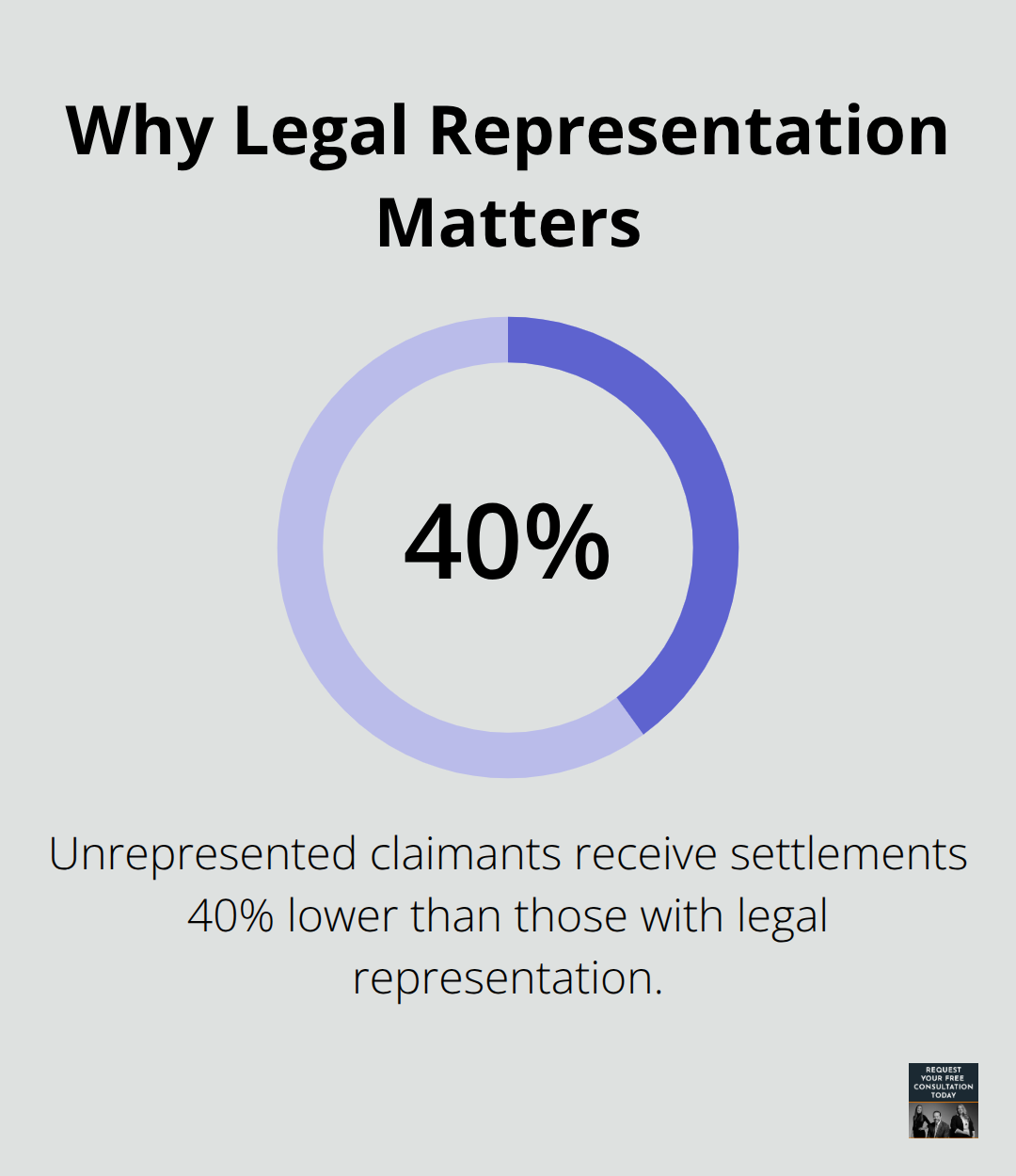
Settlement offers without legal guidance are designed to lock you into a low fault percentage and minimal payout before you understand what your claim is actually worth. Insurance companies make their initial offers within weeks, before you’ve finished medical treatment and before you know the full extent of your injuries. A study by the American Association for Justice found that unrepresented claimants receive settlements 40 percent lower than those with legal representation.
Accepting an early offer means you’ve agreed to a specific fault percentage that becomes difficult to challenge later, and you’ve waived future claims for complications or long-term effects that emerge months down the road. An adjuster might offer $15,000 for what they claim is a 50/50 fault split, when the actual evidence supports you being only 25% at fault on a $100,000 claim, which would net you $75,000. Once you sign the settlement agreement, you cannot reopen the fault determination or pursue additional damages.
Consult an Attorney Before Responding to Settlement Offers
Waiting to consult with an attorney before responding to settlement offers protects your right to challenge inflated fault percentages with evidence like traffic violation records, accident reconstruction analysis, and witness statements that strengthen your position considerably. At Schaar & Silva LLP, we serve Santa Cruz County and help clients navigate these critical early decisions that determine whether they recover fair compensation or accept pennies on the dollar.
Final Thoughts
Your fault percentage determines your final payout in California auto injury claims. Comparative negligence rules allow you to recover damages even if you’re partially responsible, but every percentage point of fault reduces your recovery dollar-for-dollar. A $100,000 claim drops from $70,000 at 30% fault to $40,000 at 60% fault, and the difference between understanding how fault works and making critical mistakes in those first hours after an accident can cost you tens of thousands of dollars.
Insurance adjusters count on your confusion to lock you into inflated fault percentages before you understand what your injuries are actually worth. Statements to police officers, social media posts, and early settlement agreements without legal review all strengthen their position to assign you more fault than the evidence supports. They make low initial offers, cite minor violations to inflate your fault, and push for quick settlements that prevent you from gathering evidence that would support a lower fault percentage.
Contact Schaar & Silva LLP for a free case evaluation before you respond to any settlement offers or give recorded statements to insurance adjusters. We serve Santa Cruz County, Sacramento, and Oakland, and we’ll review the police report, examine the evidence, and tell you whether the fault percentage the adjuster assigned matches what the facts actually support. We work on contingency, meaning you pay nothing unless we recover compensation for you.
