
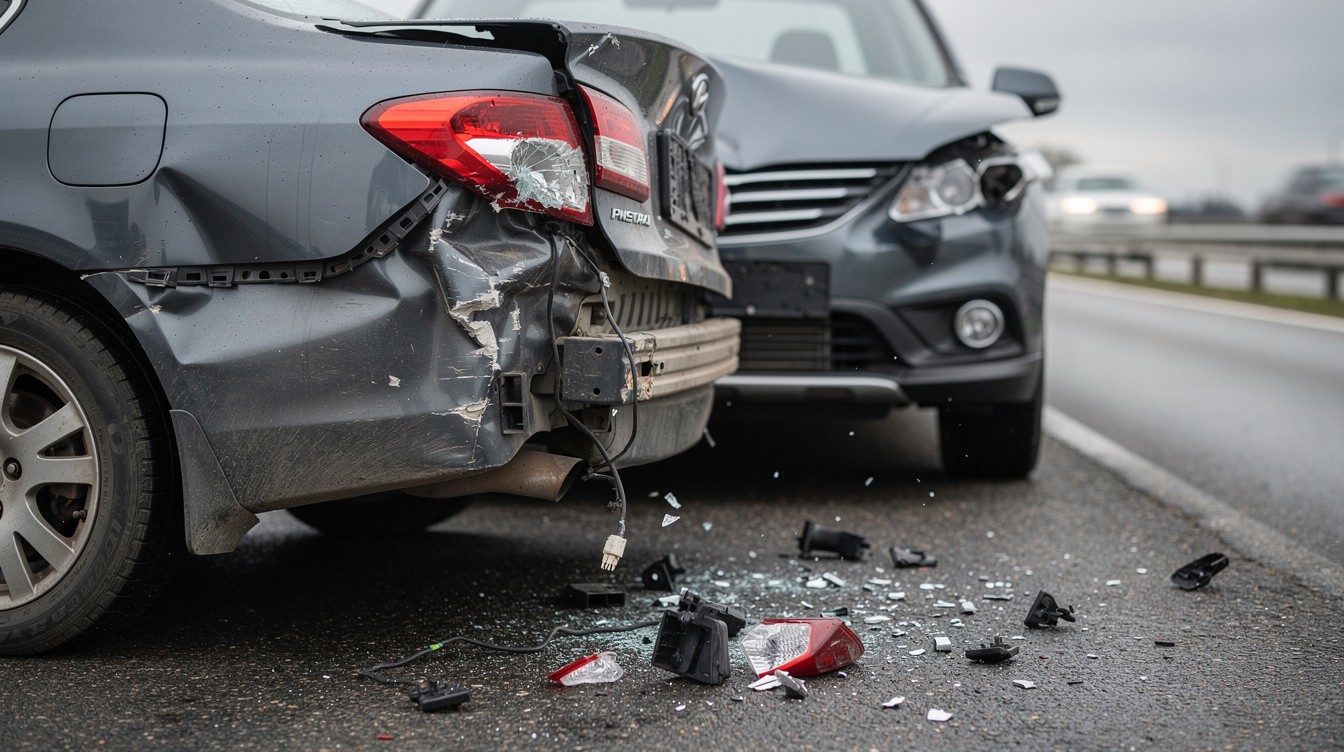
A rear end collision can happen in seconds, but the aftermath often takes months to resolve. You’re dealing with injuries, insurance companies, and questions about what happens next.
We at Schaar & Silva LLP have helped hundreds of accident victims in Santa Cruz, Sacramento, and Oakland navigate these situations. This rear end collision guide walks you through the steps that matter most.
What to Do Right After a Rear End Collision
Act Quickly at the Scene
The first minutes after a rear end collision determine how strong your claim becomes. Many accident victims make decisions in those moments that weaken their position later. Your immediate actions matter more than you might think.
Call 911 if anyone is injured or if property damage exceeds $750, as required by California law according to the California Department of Insurance. Stay at the scene and do not leave before police arrive. While waiting, take photos of vehicle damage from multiple angles, the accident scene, road conditions, and the other vehicle’s license plate and registration. Video footage captures the full context of what happened better than still photos alone.
Collect Critical Information
The other driver’s name, address, phone number, driver’s license number, vehicle registration information, and insurance details all belong in your documentation. Write down the names and contact information of any witnesses who saw the collision. If witnesses leave before police arrive, you lose critical evidence that could support your version of events.
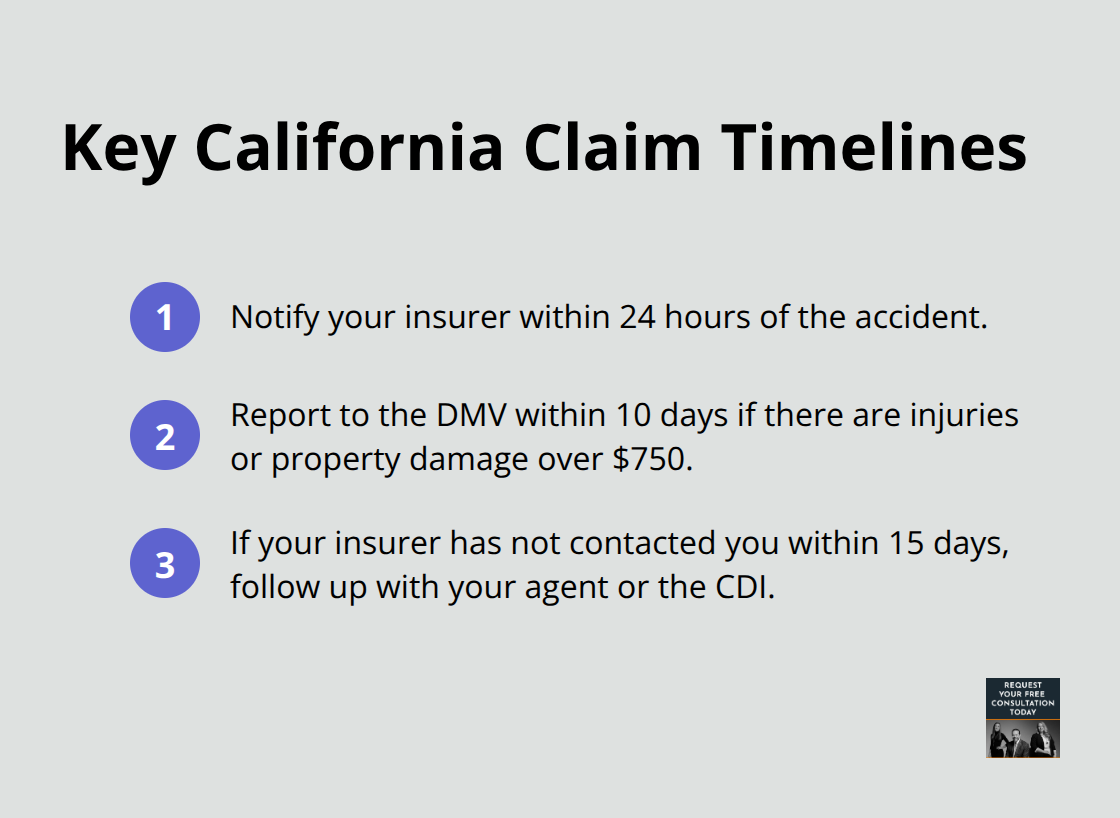
Do not discuss fault or sign any statements at the scene, even if the other driver seems friendly or apologetic. Notify your insurance company within 24 hours of the accident and provide them with the documentation you gathered. The California Department of Insurance states you must report the accident to the DMV within 10 days if anyone was injured or if property damage exceeds $750, or you risk license suspension.
Preserve Evidence That Proves Negligence
The information you collect at the scene becomes the foundation for your insurance claim and any legal action that follows. Many rear end collision victims fail to preserve evidence properly, which later limits their compensation.
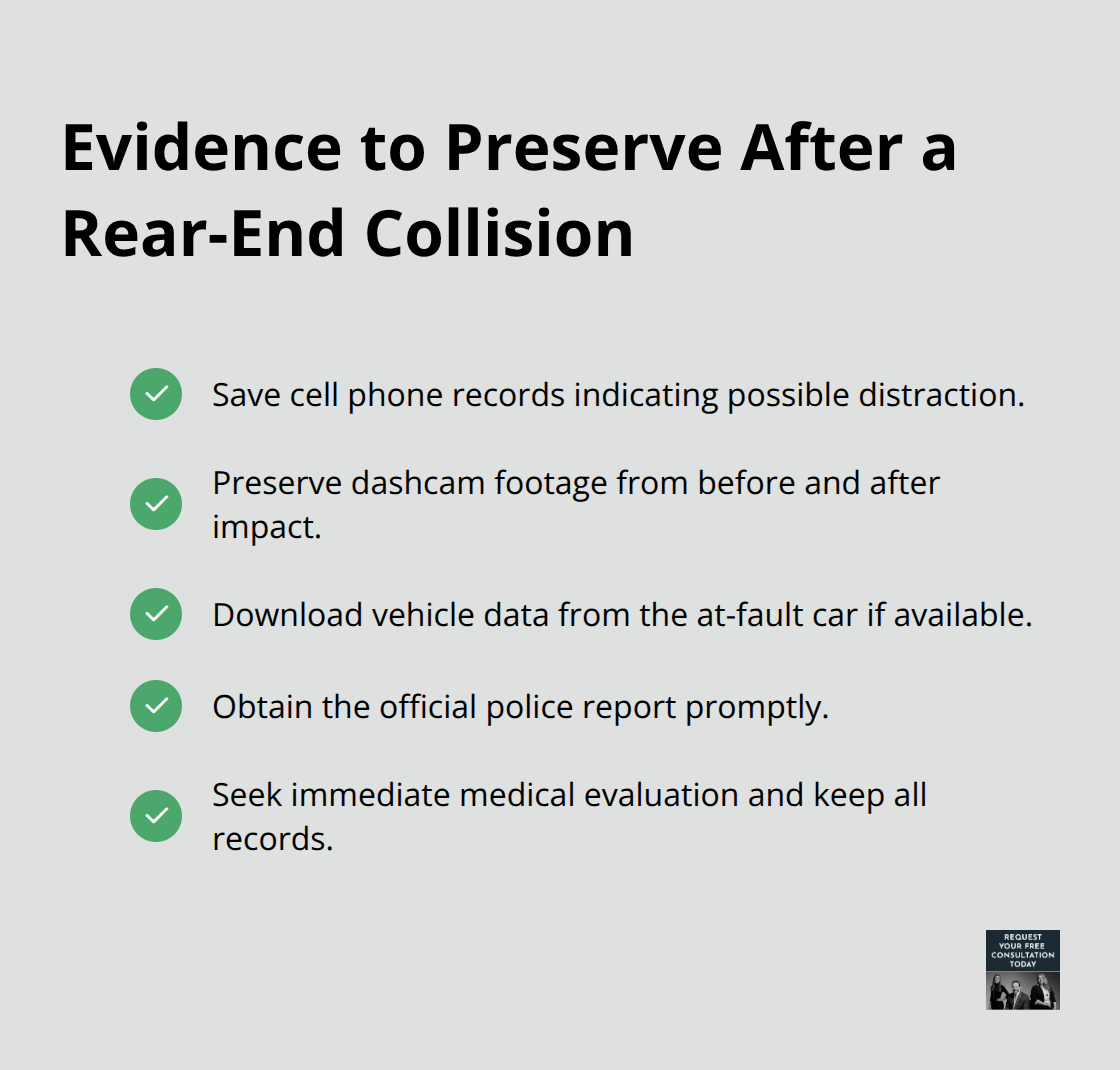
Cell phone records showing distracted driving, dashcam footage, and vehicle data from the at-fault driver’s vehicle prove negligence. Police reports document the officer’s observations and sometimes include the other driver’s admissions about following distance or speed. Medical records created immediately after the accident establish the link between the collision and your injuries, even if symptoms appear mild at first.
Seek Medical Care and Document Everything
Insurance companies know that victims who delay medical care or fail to document injuries receive smaller settlements. Seek medical attention promptly after the accident, even if you feel fine, because many injuries from rear end collisions like whiplash appear hours or days later.
Preserve all documentation including medical bills, receipts for medications, records of lost wages, and repair estimates for your vehicle. Store photos, videos, witness statements, and the police report in a safe location. If you delay gathering this evidence, witnesses may become unavailable, details fade from memory, and important documentation disappears. The stronger your evidence collection, the better position you have when negotiating with insurance adjusters or pursuing legal action.
Understanding how insurance companies evaluate your claim requires knowledge of California’s liability rules and what compensation actually looks like in rear end collision cases.
Understanding Liability and Insurance Claims
The Presumption of Fault in Rear End Collisions
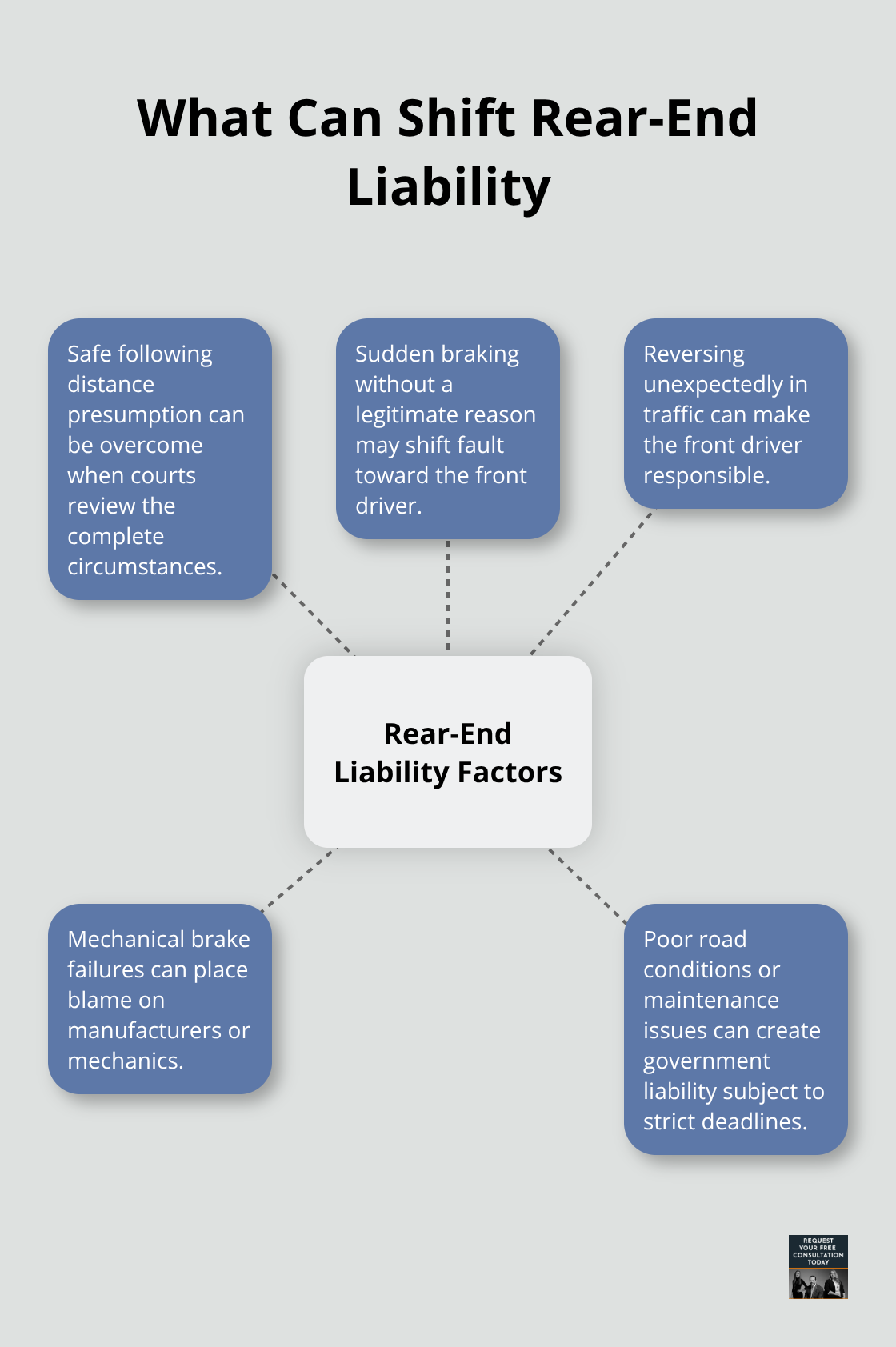
California Vehicle Code § 21703 establishes that the rear driver bears responsibility in rear end collisions because that driver must maintain a safe following distance. This presumption carries significant weight, but courts do not treat it as absolute. The rear driver initially carries the burden of proving fault, yet judges evaluate liability based on all available evidence rather than assumptions alone. The 2018 case Shiver v. Laramee demonstrated that fault determination requires examining the complete circumstances surrounding the accident. Your brake lights, whether you braked suddenly without legitimate reason, or if you reversed unexpectedly in traffic can all shift liability in your direction. Mechanical failures in the rear driver’s vehicle (such as brake failure from a manufacturing defect) can place responsibility on the manufacturer or mechanic instead. Poor road conditions or maintenance problems may create liability under California’s premises liability rules, though the California Tort Claims Act imposes strict deadlines for filing such claims.
How Insurance Companies Evaluate Your Claim
Insurance companies deploy claims teams trained specifically to minimize payouts. When you file a claim, your insurer will request detailed information and may seek written or recorded statements. The California Department of Insurance requires insurers to respond within a reasonable timeframe; if they do not contact you within 15 days, you can contact your agent or the CDI for assistance. The adjuster will inspect damage and prepare a repair estimate.
If additional damage appears during repairs, the insurer may re-inspect or request supplemental estimates for the work.
Determining Vehicle Value and Dispute Resolution
For total loss vehicles, insurers typically pay the lesser of repair costs or actual cash value, which represents the fair market value a knowledgeable buyer would reasonably pay. If you dispute the total loss settlement, most policies include an appraisal provision where each side selects an appraiser and an umpire. The umpire’s decision becomes binding if the appraisers cannot agree on a value.
How Comparative Negligence Affects Your Recovery
Under California’s pure comparative negligence rule, each party’s recovery is reduced by their percentage of fault. If you are 20 percent at fault, your recovery decreases by 20 percent. Damages you may recover include past and future medical expenses, lost wages, vehicle repairs or replacement, and pain and suffering. An attorney can help you understand how this rule applies to your specific situation and preserve evidence that strengthens your position before you speak with insurance adjusters. Early investigation significantly influences settlement outcomes, which is why timing matters when you reach out for legal guidance.
Medical Care After a Rear End Collision Cannot Wait
Why Symptoms Appear Later, Not Immediately
Whiplash, herniated discs, and traumatic brain injuries occur frequently in rear end collisions, yet many victims delay medical attention because they feel fine immediately after the crash. This mistake costs money later. Adrenaline masks pain and swelling that develops over hours or days, which means symptoms you ignore on day one become major health problems by week two. The California Department of Insurance emphasizes seeking medical care promptly after any accident, even for mild symptoms, because treatment delays directly reduce your settlement amount. Insurance adjusters know this pattern well and use gaps in your medical timeline against you during negotiations. If you wait three weeks before seeing a doctor, the insurance company will argue your injuries were not serious or were caused by something else entirely.
Building Your Medical Record from Day One
Medical records created immediately after the accident establish the direct link between the collision and your physical condition, which is why timing matters more than how you feel. The documentation you create during treatment becomes the foundation for your compensation claim. Every doctor visit, physical therapy session, prescription, and imaging study must be preserved and organized because insurance companies scrutinize medical expenses line by line. If your treatment extends beyond six months, track lost wages from work absences with pay stubs or employer statements showing the dates you missed work.
Understanding Non-Economic Damages in Your Claim
Many rear end collision victims underestimate the value of non-economic damages like pain and suffering, which often represent 50 to 75 percent of total compensation in moderate to severe cases. These damages account for the physical discomfort, emotional distress, and lifestyle changes that result from your injuries. Insurance companies calculate these amounts based on your medical treatment duration and severity, so comprehensive medical documentation directly increases what you can recover. The stronger your medical record, the stronger your position when negotiating with adjusters or pursuing legal action.
Getting Help With Medical Providers and Documentation
We at Schaar & Silva LLP help Santa Cruz County residents connect with medical providers who understand accident cases and document injuries in ways that strengthen your claim. Our team can also direct you to medical lien services that facilitate payment of your bills until your case is resolved, which removes the financial burden while you focus on healing. Your recovery should be your priority, but the way you pursue that recovery determines whether you receive full compensation or settle for far less than your case is worth.
Final Thoughts
Handling a rear end collision alone puts you at a disadvantage against insurance companies that deploy trained adjusters to minimize payouts. Statements you make early in the process can be used against you later, and adjusters are skilled at getting you to say things that reduce your claim value. We at Schaar & Silva LLP guide you through every conversation with the insurance company and handle negotiations on your behalf, so you avoid costly mistakes that weaken your position.
This rear end collision guide covers the steps that matter most after your accident, from evidence preservation to medical documentation to understanding how California’s comparative negligence rule affects your recovery. Taking those steps correctly and getting legal support early determines whether you receive full compensation or settle for far less than your case is worth. We connect you with medical lien services that pay your treatment bills until your case is resolved, removing the financial burden while you recover.
Contact Schaar & Silva LLP for a free case evaluation to understand your options and what your claim is actually worth.
