
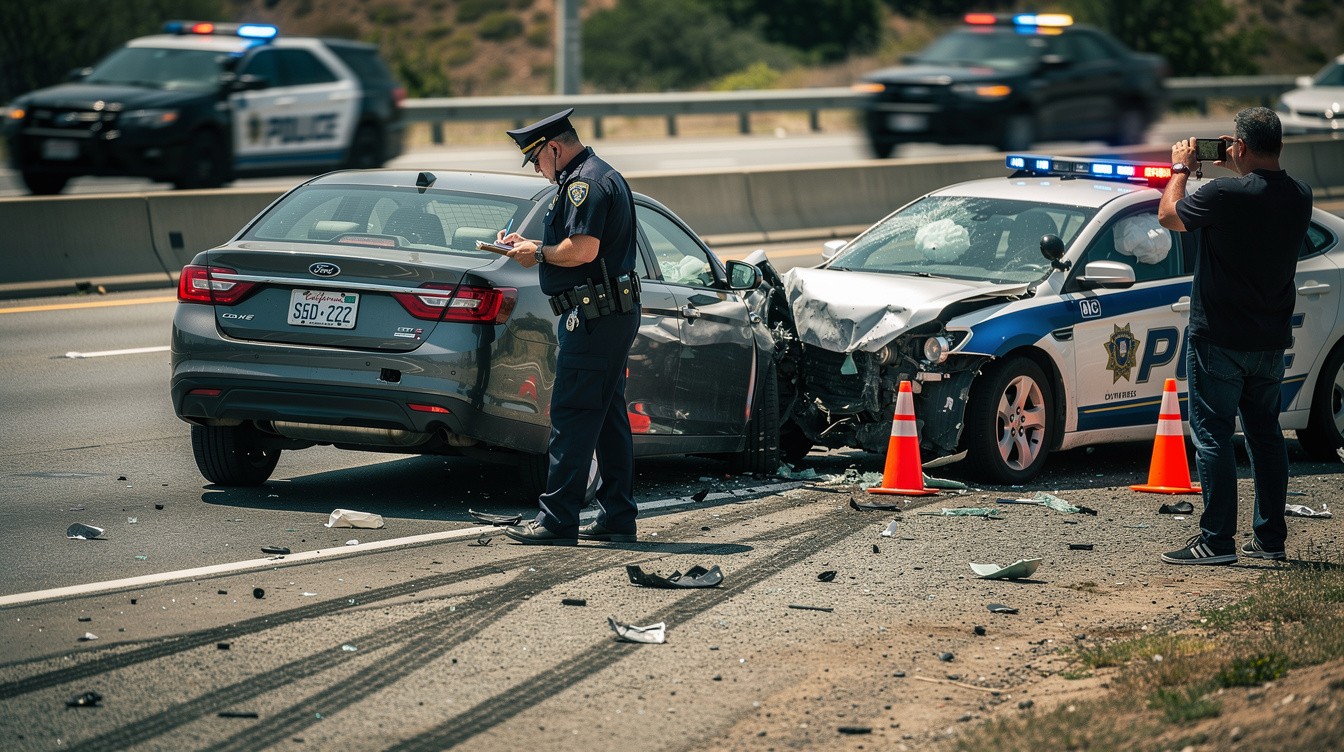
A vehicle accident in California creates immediate questions about who’s responsible and what happens next. Road collision liability in California isn’t always straightforward, especially when multiple parties share fault.
At Schaar & Silva LLP, we’ve helped countless accident victims understand their rights and recover fair compensation. This guide walks you through how fault gets determined, what your insurance covers, and the mistakes that can derail your case.
Who Determines Fault When You’re in a California Accident
California’s At-Fault System
California uses an at-fault system, which means the driver who caused the crash bears financial responsibility for damages. Determining fault isn’t always obvious, though. In rear-end collisions, the trailing driver is typically at fault because they failed to maintain a safe following distance. Left-turn crashes are far more complex-fault depends on traffic signals, right-of-way rules, and whether the turning driver had a protected green arrow.
How Police Reports and Evidence Shape Fault Determination
Police reports matter here, but they’re not final judgments. Officers document what they observe, but insurance companies and courts make the actual fault determination based on evidence. Witness statements carry significant weight, especially when multiple people saw the same event unfold. If three witnesses say the other driver ran a red light and only one says they didn’t, that’s powerful evidence.
Photos taken at the scene are equally important-they show vehicle damage patterns, road conditions, traffic signals, and skid marks. Damage location on vehicles often reveals which car hit which first. A front-end impact on your vehicle paired with rear damage on theirs suggests you were hit from behind, not the reverse.
Pure Comparative Negligence in California
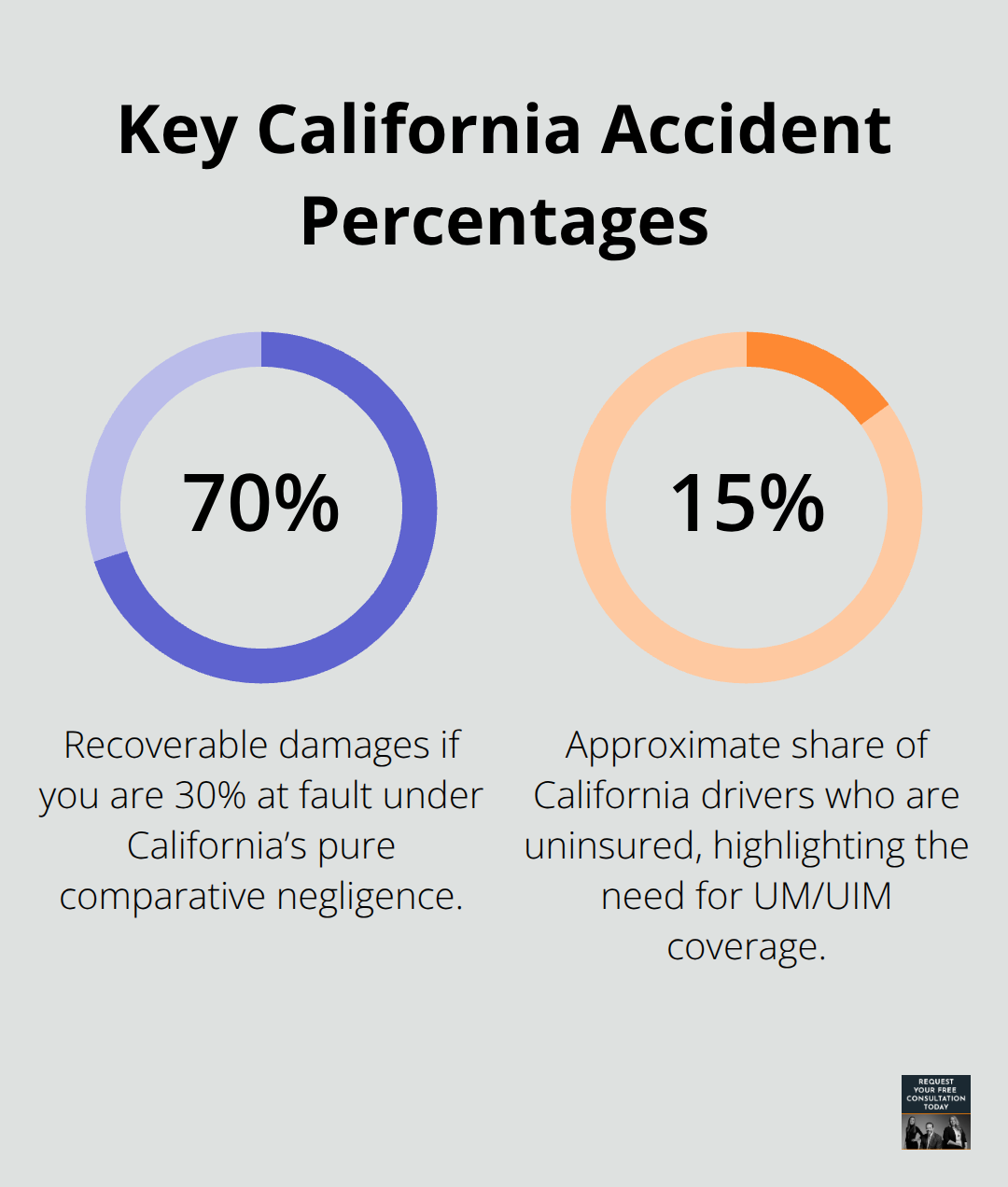
California follows pure comparative negligence, which is critical to understand. This means you can recover damages even if you’re partially at fault for the accident. If you’re 30 percent responsible and the other driver is 70 percent responsible, you can still recover 70 percent of your damages. Your compensation gets reduced by your percentage of fault, but you don’t lose your right to recover entirely. This is dramatically different from some states with stricter fault rules.
The Four Elements of Negligence
The four elements courts examine to establish negligence are duty of care, breach of that duty, causation, and actual damages. Every driver has a duty to operate their vehicle safely and follow traffic laws. A breach occurs when someone speeds, ignores stop signs, drives distracted, or maintains a vehicle poorly. Causation connects that breach directly to the crash.
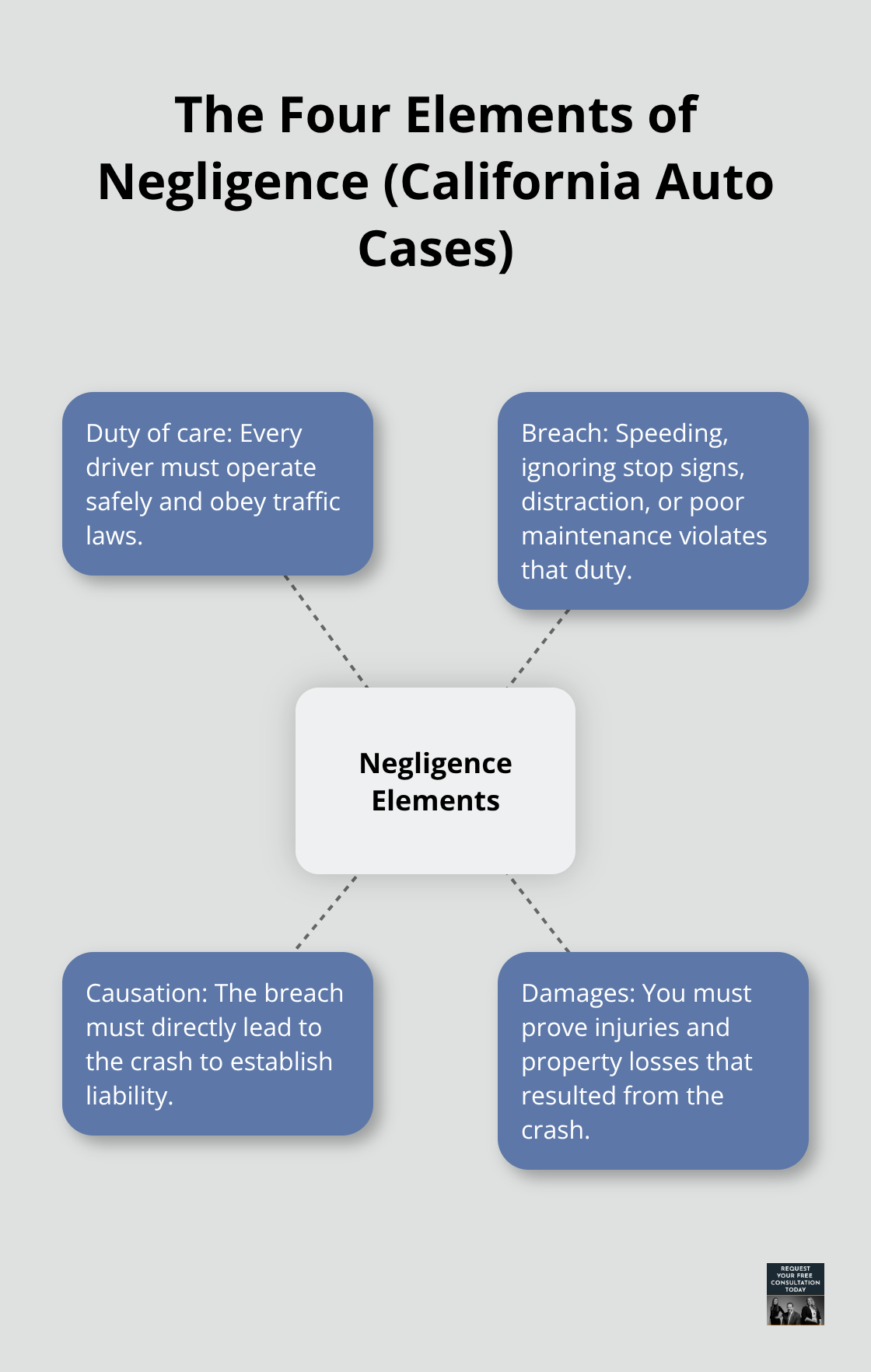
Damages are the injuries and property loss that resulted.
Common Liability Factors and Protecting Your Case
Common liability factors include speeding, running red lights, distracted driving, impairment, aggressive driving, and failing to maintain the vehicle. Insurance adjusters will ask you to provide recorded statements about what happened. Avoid giving these statements before consulting an attorney-they can be used against you later, even if you think you’re being helpful. What you say in those early moments can significantly impact your ability to recover fair compensation, which is why legal guidance matters before you speak with anyone from the insurance company.
What Your Insurance Actually Covers After a Crash
After a collision, your insurance policy becomes your roadmap for recovery, but most drivers misunderstand what their coverage actually includes. California requires minimum liability coverage of $30,000 per person and $60,000 per accident if multiple people are injured, plus $15,000 for property damage according to California Vehicle Code 16020. These minimums are dangerously low for serious injuries. If you cause a crash that injures two people with $50,000 in medical bills each, your $30,000 per-person limit leaves a $70,000 gap that victims can pursue directly against your personal assets. Insurance adjusters know most people don’t understand their limits, which is why they often use this confusion to their advantage during settlement negotiations. Your declaration page shows your actual limits, deductibles, and coverage types-review it now before you need it. Many drivers discover gaps in their coverage only after an accident occurs.
How Adjusters Investigate and Value Your Claim
Insurance companies don’t determine fault the way courts do. Adjusters use their own investigation methods, including scene photos, vehicle damage patterns, police reports, and witness statements, but their goal is minimizing payout, not finding truth. They may inspect damage, request repair estimates, or hire their own investigators. The Fair Claims Settlement Regulations require insurers to acknowledge claims within 15 days and respond to communications within 15 days, with valid claims typically settling within 30 to 40 days after proof of loss is submitted. However, this timeline assumes straightforward cases. Contested liability cases take far longer. If the other driver’s insurance company disputes fault, your claim stalls while they build their position. This is where documentation matters enormously. Photos showing traffic signals, road conditions, vehicle positions, and damage patterns speak louder than verbal explanations.
Understanding Property Damage Settlements
For property damage, insurance pays the lesser of repair costs or actual cash value-the fair market value your vehicle would command in its current condition before the crash. If you owe more on your vehicle loan than it’s worth and the car is totaled, gap insurance protects you from owing the difference, though this coverage is optional and rarely purchased until people need it.
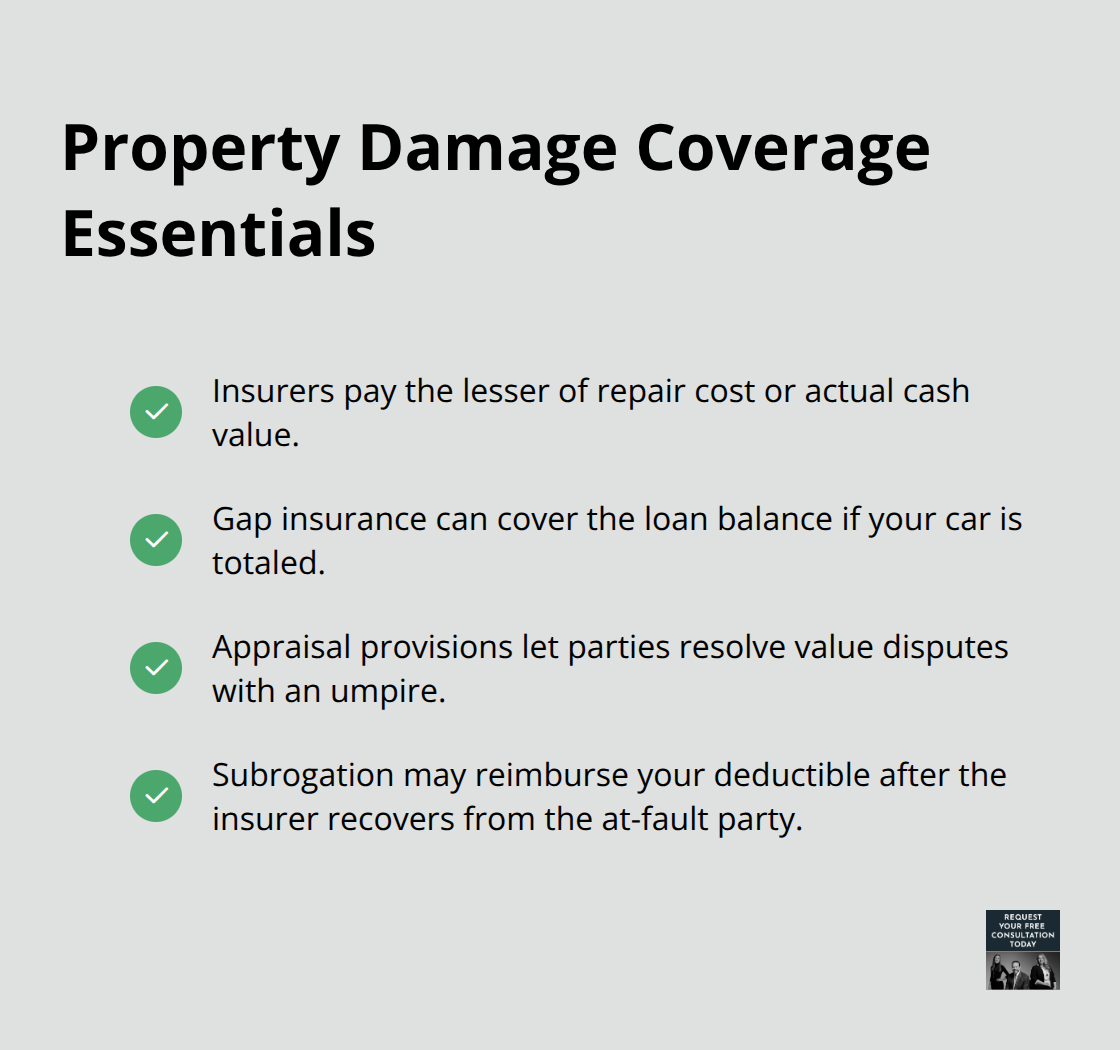
An appraisal provision in many policies allows either party to demand an appraisal when disagreement arises; two appraisers select an umpire, and the agreed amount becomes binding. Subrogation allows insurers to recover paid claims from at-fault third parties, and you may recover your deductible if recovery occurs.
Filing a Claim and Protecting Your Rights
You must report a collision to law enforcement within 24 hours if anyone is injured or killed, and you must file a Report of Traffic Accident with the DMV within 10 days if property damage exceeds $1,000 or anyone is injured. Failure to report suspends your driving privilege. Filing an insurance claim is straightforward-contact your insurer, provide the police report number, and submit documentation. However, filing a claim does not lock you into accepting their settlement. Many accident victims make the critical mistake of accepting quick settlement offers without understanding the full scope of their damages. If you have ongoing medical treatment, pain and suffering, or lost wages, accepting a fast settlement means forfeiting compensation for future harm. This is especially true in brain and spinal injury cases where long-term effects may not appear for months or years.
Non-Economic Damages and Uninsured Motorist Coverage
California does not cap non-economic damages like pain and suffering in motor vehicle cases, meaning severe injuries can warrant substantial compensation beyond medical bills. Uninsured or underinsured motorist coverage becomes essential when the at-fault driver carries insufficient insurance. About 15 percent of California drivers are uninsured, leaving victims with uncovered losses unless they purchased UM/UIM coverage themselves.
If you are hit by an uninsured driver, your own UM/UIM coverage steps in to cover damages up to your policy limits. When reviewing cases, we at Schaar & Silva LLP often find that victims settled far too quickly without understanding their rights under California’s pure comparative negligence system. An attorney can identify all liable parties, value future medical needs, and negotiate from genuine strength rather than accepting the adjuster’s first offer. The mistakes you make during settlement negotiations directly shape whether you recover fair compensation or leave money on the table-which is why understanding common pitfalls before they happen matters far more than trying to fix them afterward.
Mistakes That Derail Your Liability Claim
What you say and do immediately after a crash shapes your entire case outcome. Many accident victims unknowingly sabotage their ability to recover fair compensation within the first hours after impact.
Admitting Fault Destroys Your Settlement Position
Speaking to the other driver or insurance adjusters without legal guidance is the single biggest mistake we see. When you admit fault, apologize, or say anything suggesting responsibility, adjusters use those words as evidence against you in settlement negotiations. A simple statement like “I’m sorry” or “I wasn’t paying attention” gets quoted back to you months later when the insurance company denies your claim or reduces your settlement.
You don’t need to explain what happened to anyone except law enforcement and your attorney. If the other driver asks what occurred, provide only basic information: your name, phone number, and insurance details. Anything beyond that serves their interests, not yours. Police officers document the scene independently, so your detailed explanation adds nothing except liability exposure.
Even seemingly innocent comments become problematic. Saying “my brakes felt soft” or “I thought I saw movement” carries implications that your vehicle was improperly maintained or that you weren’t fully attentive. These statements undermine your credibility and give adjusters ammunition to reduce your recovery.
Recorded Statements Give Adjusters Ammunition
Insurance companies request recorded statements, claiming the process is routine. It isn’t routine for you. Adjusters are trained investigators; you are not. They ask leading questions designed to extract admissions. Anything you say can and will be used to minimize your payout. Decline recorded statements until legal representation is in place.
Documentation Failures Cost Thousands in Lost Compensation
Photographs taken at the scene preserve evidence that disappears within days. Vehicle damage patterns, road conditions, traffic signal positions, weather, and vehicle positioning all matter for establishing fault. If you don’t photograph the scene, adjusters control the narrative through their own investigators’ photos and reports.
Take pictures of both vehicles from multiple angles, capturing the point of impact clearly. Photograph the surrounding area, including traffic signals, road markings, and any debris. Get contact information and photos of witness identification documents if possible, not just names and phone numbers.
Medical records are equally critical. Document every medical appointment, treatment, and expense from day one. Many accident victims delay seeking treatment because they feel okay initially, then develop pain weeks later. Insurance companies use these gaps to argue your injuries weren’t serious or weren’t caused by the crash. If you wait three weeks to see a doctor after an accident, adjusters claim your injuries must have been minor or unrelated. Immediate medical evaluation creates a documented link between the crash and your condition.
Keep receipts for all accident-related costs: rental car charges, transportation to medical appointments, medications, and medical equipment. Insurance companies dispute damages they can’t see, so every receipt strengthens your claim. Maintain a daily impact journal documenting pain levels, mobility limitations, emotional effects, and how injuries affect your work and personal life. This contemporaneous record is far more credible than trying to reconstruct six months of suffering from memory during settlement negotiations.
Quick Settlement Offers Lock You Into Permanent Loss
Insurance companies make their first offer quickly, banking on victims’ desperation or ignorance. If you’re injured, facing medical bills, and losing work income, that quick check feels like relief. It’s actually a trap. A settlement ends your ability to pursue further compensation, regardless of what develops later.
In brain and spinal injury cases, long-term effects emerge months or years after impact, making early settlements particularly dangerous. Diminished earning capacity, chronic pain management, and future medical needs aren’t visible in the first weeks post-accident. Accepting $15,000 to settle a spinal injury claim forecloses your right to recover the $200,000 in future medical care that becomes necessary later.
Insurance adjusters know this advantage and exploit it. They pressure victims to settle quickly before they consult attorneys or understand the true value of their claims. The Fair Claims Settlement Regulations require insurers to respond within 15 days and generally settle valid claims within 30 to 40 days, but this timeline works against you by encouraging rushed decisions.
Before accepting any settlement offer, understand your total damages: current medical bills, projected future treatment, lost wages, diminished earning capacity, pain and suffering, and emotional distress. California doesn’t cap non-economic damages in motor vehicle cases, meaning severe injuries warrant far more compensation than most adjusters initially offer. If you’ve already accepted a settlement without legal review, consult an attorney immediately.
Final Thoughts
Road collision liability in California demands immediate action at every stage, from the accident scene through settlement negotiations. The mistakes you avoid in the first hours after impact directly determine whether you recover fair compensation or accept far less than your case warrants. An attorney stops direct communication between you and insurance companies, eliminating the casual statements that undermine your position and protecting your rights when adjusters apply pressure.
Building a strong case requires systematic evidence preservation through photographs, medical records, receipts, and impact journals. We at Schaar & Silva LLP conduct thorough investigations that identify all liable parties and value future damages victims often overlook, particularly in brain and spinal injury cases where long-term effects emerge months or years after impact. Settlement negotiations shift dramatically when legal representation enters the picture, as insurance companies recognize that represented clients understand their rights and won’t accept lowball offers.
The difference between accepting a quick settlement and pursuing fair compensation often reaches tens of thousands of dollars. Contact Schaar & Silva LLP to discuss your case and understand what your claim is actually worth.
