

After a car accident, you face a critical decision: settle your claim or pursue a trial. Each path has different financial outcomes, timelines, and risks.
We at Schaar & Silva LLP help accident victims in Santa Cruz County, Sacramento, and Oakland understand their car accident settlement options so they can make informed choices based on their specific situation.
Settlement or Trial: What Actually Happens
Understanding Your Two Paths Forward
Settling your claim means accepting a negotiated payment from the insurance company in exchange for releasing them from further liability. Going to trial means a judge or jury decides the outcome after hearing evidence and arguments. The Insurance Researchers Council found that represented claimants recover about 3.5 times more than unrepresented claimants, even after attorney fees-a gap that reflects how significantly your approach to this decision matters. Most cases filed in court still resolve through settlement rather than trial, so filing suit can sometimes accelerate negotiations and lead to a better offer.
Timeline and Financial Reality
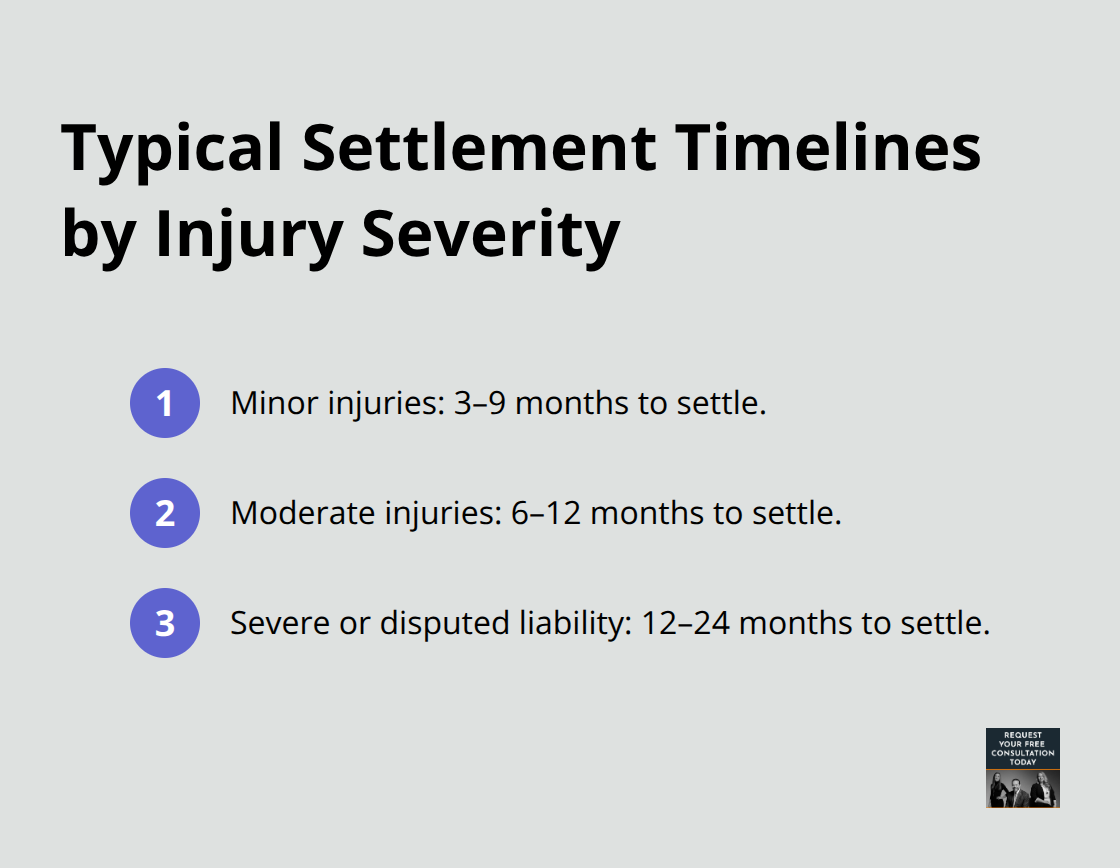
Settlement typically takes three to nine months for minor injuries, six to twelve months for moderate injuries, and twelve to twenty-four months for severe injuries or disputed liability.
Trial preparation and court proceedings add substantial time and expense, with costs ranging from thousands to tens of thousands of dollars depending on case complexity. Settlement offers certainty: you know exactly what you receive and when. Trial outcomes remain unpredictable, and even a jury verdict favoring you may face appeals that extend resolution for months or years.
How Insurance Companies Evaluate Your Claim
Insurance companies analyze medical records, wage loss documentation, police reports, and liability evidence to assess your claim. They evaluate your medical prognosis and the strength of your evidence against them. Clear liability-like a rear-end collision or documented red-light violation-typically settles faster because the insurer faces minimal risk at trial. Disputed fault or multi-party scenarios require extensive investigation and delay resolution considerably.
What Slows Down or Accelerates Settlement
Insurance companies know that trial uncertainty pressures claimants, so they often use delay tactics (repeatedly requesting medical records, assigning new adjusters, or contesting medical necessity) to pressure you into accepting lower offers. You control the settlement timeline by organizing documentation thoroughly and maintaining consistent medical treatment. Dashcam footage, witness statements, and police citations accelerate settlement discussions because they eliminate guesswork about fault. Insurance adjusters move faster when liability is undeniable and your damages are well-documented with medical bills, wage loss statements, and organized medical records.
When Settlement Makes Sense-and When Trial Does
If you’ve reached Maximum Medical Improvement (the point where your condition stabilizes and further treatment won’t improve your status), you can send a detailed demand package that typically generates an insurer response within thirty days. Straightforward cases often settle sixty to ninety days after the demand. Pursuing trial makes sense when the insurer’s offer falls significantly below your documented damages, liability is clear but the insurer refuses fair negotiation, or your injuries are severe enough that a jury would likely award substantially more than the settlement offer. Understanding which path fits your situation requires examining the specific details of your case-something that becomes clearer when you evaluate the types of settlement agreements available to you.
Types of Settlement Agreements
Lump Sum Settlements: Immediate Payment
Most accident victims receive a lump sum settlement, where the insurance company pays the entire agreed amount in a single check, typically issued within ten to twenty-one business days after you sign the release form. This approach offers simplicity and immediate access to funds, though the money takes an additional two to six weeks to clear after deposit once attorney fees and medical liens are deducted.
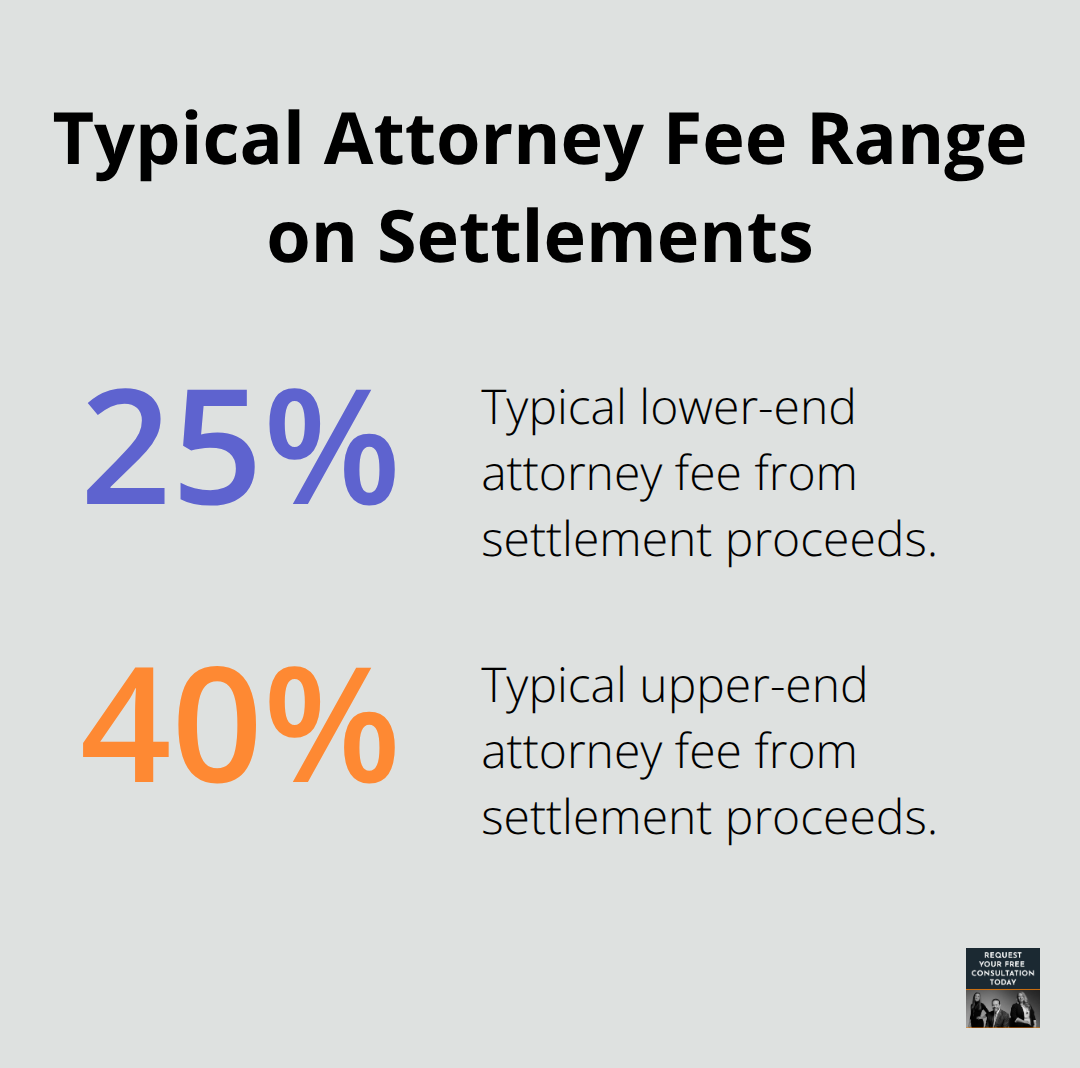
The net amount you receive depends on what comes off the top: medical liens (claims from healthcare providers who treated you), any insurer reimbursements, your attorney’s fee (typically twenty-five to forty percent of the settlement), and unreimbursed case costs. A lump sum works best when you need funds quickly and can manage the money responsibly.
Structured Settlements: Payments Over Time
If your settlement is substantial and you’re concerned about managing a large lump sum or want to protect funds for long-term medical care, a structured settlement offers an alternative where you receive periodic payments over months or years rather than one payment. Structured settlements make sense when you have ongoing medical needs, expect future treatment costs, or want to ensure funds last through your recovery period.
However, structured settlements typically pay less overall than lump sum settlements because the insurance company invests the money and keeps the returns. This trade-off between lower total value and payment security matters significantly when you’re planning your recovery.
Medical Liens: Deferring Payment Until Settlement
When you cannot pay medical bills upfront, healthcare providers sometimes agree to wait for payment until your settlement resolves, creating a lien against your eventual recovery. This arrangement keeps you from facing collection agencies or credit damage during your case, but it also means a portion of your settlement goes directly to medical providers rather than to your bank account.
Medical lien services facilitate these arrangements, allowing you to receive necessary treatment without the financial burden of immediate payment. We at Schaar & Silva LLP can direct you to medical lien services that help with this process.
Matching Your Settlement Type to Your Situation
Your specific injury severity, the settlement amount, and your financial situation should drive this choice rather than what sounds easiest. Choose a lump sum if you need funds quickly and can manage the money responsibly. Consider a structured settlement if ongoing medical costs or future treatment is likely. Explore medical liens if current bills are straining your finances while your case proceeds. Each option carries different financial and practical implications that affect not only how much money you ultimately keep, but also how that money supports your recovery-a consideration that becomes even more important when you examine the specific factors that should influence your entire settlement decision.
Factors That Influence Your Settlement Decision
Injury Severity and Medical Clarity
Injury severity dictates how you should approach settlement more than any other factor. Minor soft tissue injuries stabilize within two to four months, allowing you to settle relatively quickly once treatment concludes. Moderate injuries requiring ongoing physical therapy or specialist care extend your timeline to six to twelve months, giving you time to understand long-term medical costs before accepting an offer.
Severe injuries involving surgery, spinal damage, or brain trauma demand a different strategy entirely. You should never settle before reaching Maximum Medical Improvement-the point where your condition stabilizes and doctors confirm no further treatment will improve your status. Settling prematurely means accepting compensation for medical costs you cannot yet predict, often resulting in severe financial hardship when unexpected complications arise months later. The financial difference is substantial: accepting an offer too early for a severe injury case can cost you tens of thousands of dollars in uncovered future treatment.
Liability Clarity and Your Negotiating Position
When liability is straightforward (rear-end collision, clear red-light violation, documented police citation), you hold a stronger negotiating position and should push harder for a fair settlement rather than accepting initial lowball offers. Disputed liability cases require different thinking. If the other driver contests fault or multiple parties share responsibility, your case becomes more complex and settlement timelines stretch to twelve to twenty-four months.
You face a choice: settle for less now to avoid trial uncertainty, or invest time and money gathering stronger evidence (dashcam footage, accident reconstruction, witness statements) to improve your negotiating position. Liability clarity determines how much leverage you actually possess when negotiating with the insurance company.
Financial Pressure and Your Recovery Timeline
Your financial situation determines which settlement path makes sense. If you cannot afford to wait and need funds immediately, settling even a disputed liability case at a modest discount becomes practical despite the injustice of accepting less than you deserve. If you have financial cushion and can wait, gathering stronger evidence typically yields significantly better settlement offers because insurers recognize you can credibly threaten trial.
Your recovery timeline matters here too. If ongoing medical treatment prevents you from working, your lost wages mount quickly, creating financial pressure that sometimes justifies accepting a lower settlement to stop the financial bleeding. If you can return to work while your case proceeds, you maintain more negotiating leverage and should hold out for fair compensation.
Final Thoughts
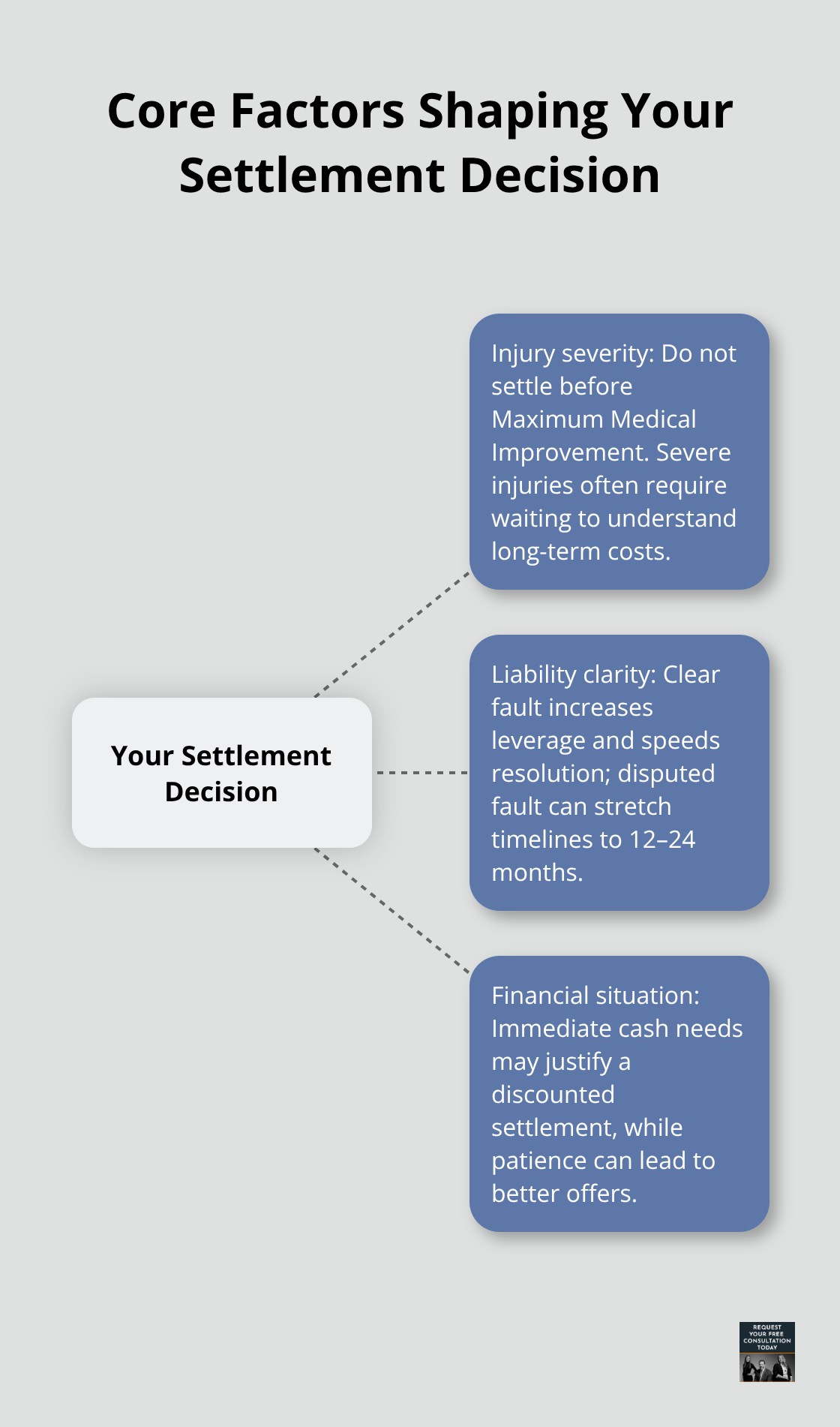
Your car accident settlement decision rests on three core factors: your injury severity, liability clarity, and financial situation. Minor injuries with clear fault typically warrant quick settlement within three to six months, while severe injuries or disputed liability demand patience to reach Maximum Medical Improvement before accepting any offer. If financial pressure forces an immediate decision, settling at a discount beats prolonged financial hardship, but if you have breathing room, holding firm for fair compensation usually pays off because insurers recognize credible trial threats.
The car accident settlement options available to you-lump sum, structured payments, or medical liens-each serve different recovery needs. Lump sum settlements work when you need immediate funds and can manage money responsibly, structured settlements protect long-term medical costs, and medical liens keep treatment accessible when upfront bills strain your finances. Your choice should match your actual recovery timeline and financial reality, not what sounds simplest.
We at Schaar & Silva LLP help accident victims in Santa Cruz County, Sacramento, and Oakland navigate these decisions with clarity and handle insurer communications so you focus on healing. Contact us to discuss your car accident settlement options and receive a timeline tailored to your injuries and circumstances.
