

A car accident in Santa Cruz County can leave you facing medical bills, lost wages, and pain that feels overwhelming. You deserve compensation that reflects what you’ve actually lost, but getting there requires understanding how the system works.
We at Schaar & Silva LLP have helped countless accident victims navigate Santa Cruz injury compensation claims. This guide walks you through the process, shows you common pitfalls to avoid, and explains what actually determines your settlement amount.
What Compensation Categories Apply to Your Santa Cruz Injury Claim
Five Damage Categories That Protect Your Recovery
Injury compensation in Santa Cruz breaks down into five distinct categories, and understanding each one protects you from leaving money on the table. Medical expenses cover past and future treatment, including emergency room visits, surgery, physical therapy, imaging, prescriptions, and ongoing care tied directly to your accident. Lost income accounts for wages you missed during recovery, and California courts recognize lost earning capacity if your injuries prevent you from returning to your previous job or earning level. Property damage covers vehicle repairs or replacement, though you need repair estimates and photos to support this claim. Pain and suffering compensation addresses the physical discomfort and emotional toll of your injuries, and California law allows this as a separate damages category from medical costs alone. Out-of-pocket recovery costs include transportation to medical appointments, home care services, medical equipment, and other expenses you paid directly related to your injury.
How Insurance Companies Approach Your Claim
Insurance companies approach your claim with their own financial interests in mind, which is why they often push quick settlements before you understand the full scope of your injuries. They count on you accepting their initial offer within days of the accident, when you’re still in pain and uncertain about long-term effects. In Santa Cruz County, you have the right to pursue fair compensation through negotiation, and most claims resolve this way without going to trial.
The Filing Timeline and Documentation Requirements
The filing process typically starts with notice to the at-fault driver’s insurance company within 30 days of your accident, followed by gathering medical records, police reports, and evidence of your losses. California’s statute of limitations gives you two years from the accident date to file a personal injury lawsuit if settlement talks stall, but this deadline moves quickly. Documentation matters tremendously during this timeline-photos of the accident scene, witness statements, medical discharge notes, and proof of missed work all strengthen your position when negotiating with insurers (and they often make the difference between a lowball offer and fair compensation). The legal team at Schaar & Silva LLP can coordinate these steps with you, handle communications with insurance adjusters, and push back against inadequate offers so you’re not pressured into accepting less than your claim warrants.
Mistakes That Tank Your Settlement
Insurance adjusters count on you making decisions too fast, and the three biggest errors happen right after your accident when you’re vulnerable and uncertain.
The First Settlement Offer Trap
Accepting the first settlement offer costs accident victims thousands of dollars. Adjusters send initial offers within days of your claim, deliberately timing them when you’re still in acute pain and desperate for money to cover medical bills and rent. These opening offers typically land at 30 to 50 percent below what your claim actually warrants, according to data from the National Association of Insurance Commissioners.
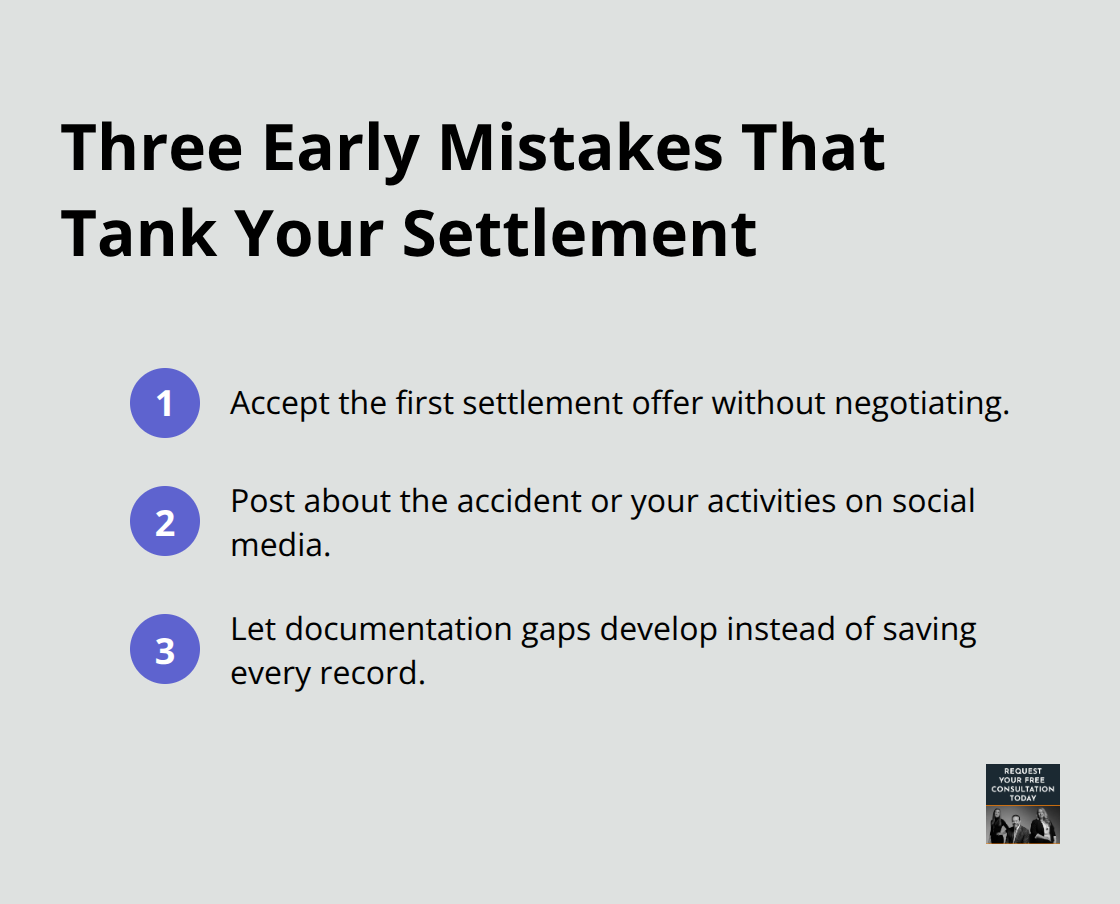
The adjuster frames this as a final offer when it absolutely isn’t-they’re testing whether you’ll take it without pushback. Most injury claims in Santa Cruz resolve through negotiation, meaning room exists to fight for more, but only if you reject that first number. Clients who locked in settlements worth half what proper documentation could have won them cannot undo that decision once they sign the release.
Social Media Posts Work Against You
Social media posts about your accident create evidence that works against you, even when you think you’re just venting to friends. Insurance companies and defense attorneys screenshot your posts, photos, and activity to suggest you’re not as injured as you claim. A post showing you at a restaurant or hiking trail gets weaponized as proof your injuries aren’t severe, regardless of context or what pain you felt that day.
Documentation Gaps Leave You Defenseless
Failing to document your injuries and expenses from day one leaves you unable to prove what actually happened and what it cost you. Medical records form your foundation-keep copies of discharge notes, imaging results, prescription receipts, and bills from every provider involved in your care. Photograph visible injuries, save all transportation receipts to appointments, collect written statements from witnesses who saw the accident occur, and document time away from work with specific dates and lost income amounts.
Without this evidence, you’re asking an adjuster to take your word for your losses, and they won’t. The difference between a thorough paper trail and scattered documentation often determines whether you recover fair compensation or walk away with far less than you deserve. Building strong evidence now protects your claim when settlement negotiations begin.
Factors That Influence Your Settlement Amount
How Injury Severity Shapes Your Compensation
Injury severity dominates settlement calculations, and insurers measure this through specific medical findings rather than your pain descriptions alone. A whiplash diagnosis without imaging receives a different valuation than whiplash confirmed by MRI showing disc herniation, and a fracture requiring surgery commands substantially higher compensation than a hairline fracture treated with a cast. Santa Cruz claims involving concussions or traumatic brain injury typically settle for 40 to 60 percent more than soft-tissue injuries because the long-term consequences are documented and measurable. Permanent scarring, nerve damage, or reduced range of motion all increase your settlement because they create ongoing life impact beyond initial treatment.
The adjuster won’t simply accept your word about injury severity. They want discharge summaries from your emergency room visit, imaging reports with specific findings, surgical records if applicable, and follow-up treatment notes showing you required physical therapy or specialist care. Organize these medical documents chronologically so the insurance company sees the full picture of what your body endured.
Lost Income and Reduced Earning Capacity
Your earning capacity loss hits settlement amounts harder than most accident victims realize. If your injuries prevent you from working for three months, that’s straightforward lost wage calculation based on your paystubs and employer verification. But if nerve damage or chronic pain limits your ability to return to your previous job-forcing you into lower-paying work or part-time employment-California courts recognize this reduced earning capacity as separate damages.
A construction worker earning $65,000 annually who can no longer perform physical labor has a substantially larger claim than someone temporarily unable to work clerical duties. Document your job duties before the accident, get your employer to confirm the specific work you performed, and if your injuries prevent you from returning to that role, obtain a medical opinion stating this limitation. Insurance companies will push back on earning capacity claims, so solid medical evidence combined with employment records becomes your foundation.
Evidence Quality Determines Your Recovery
The quality of your evidence throughout the entire claim process determines whether you recover fairly or accept a fraction of what you’re actually owed. Photograph the accident scene immediately, collect witness contact information while they’re still present, and preserve all medical records from day one. These actions fundamentally shape your settlement outcome when negotiation time arrives.
Final Thoughts
Your Santa Cruz injury compensation claim rests on three pillars: understanding what you can recover, avoiding the mistakes that destroy settlements, and having someone who knows how insurance companies operate. Start now by collecting every document you have-medical records, accident scene photos, witness statements, and proof of lost income form the foundation of your claim. Don’t wait weeks to organize these materials, because insurers move fast and you need your evidence ready before settlement talks begin.
Reject the first settlement offer that arrives at your door. Initial offers are deliberately low, designed to test whether you’ll accept without pushback, and most Santa Cruz injury compensation claims resolve through negotiation when you push back properly. The difference between accepting that opening number and negotiating fairly often amounts to thousands of dollars you leave on the table. If you haven’t sought medical care yet, do that immediately-even minor injuries can develop into serious conditions, and an early medical record protects your claim later.
The team at Schaar & Silva LLP handles communication with insurance adjusters so you don’t navigate this alone. We coordinate your medical care, gather evidence that strengthens your position, and push back against inadequate offers while you focus on recovery. Contact us today to discuss what your claim is actually worth.
