

After a car accident, understanding the auto crash settlement timeline helps you know what to expect at each stage. The path from initial claim to final resolution involves multiple steps, and knowing these stages reduces confusion and frustration.
At Schaar & Silva LLP, we’ve guided countless accident victims through this process. This guide walks you through the real timeline you’ll face, from filing your claim to receiving your settlement or judgment.
What Happens in the First 30 Days After Your Crash
The first month after an accident determines whether your claim moves forward smoothly or stalls. Within the first week, contact an attorney to preserve evidence and protect your rights. Insurance companies begin their investigation immediately, and delays on your end hand them ammunition to devalue your case. California law requires you to report crashes to the DMV within 10 days if someone is injured or property damage exceeds $1,000 using Form SR-1. Your attorney will send a representation letter to the at-fault driver’s insurer, which stops them from contacting you directly and gives them notice that you have legal representation.
Gathering the Right Evidence Immediately
Photograph the accident scene from multiple angles, including vehicle damage, road conditions, traffic signals, and visible injuries. Collect contact information from all witnesses-not just their names but phone numbers and email addresses. If dashcam or surveillance footage exists, request it within days because businesses often delete footage after 30 days. Get a copy of the police report within two weeks; California law grants you access to this document, and it carries significant weight in settlement negotiations.
Medical records matter more than you might think. Start treatment immediately after the crash, even for injuries that seem minor. The Insurance Research Council reports that represented claimants recover about 3.5 times more than unrepresented claimants, and medical documentation is the backbone of that difference. Gaps between the accident and first treatment give insurers room to argue that injuries weren’t serious.
Organizing Your Documentation and Meeting Deadlines
Create a single folder with scans of all accident-related documents: the police report, insurance information, medical bills, prescription receipts, wage loss statements from your employer, and photos of vehicle damage and injuries. Cloud storage protects this information if your phone or computer fails. Your attorney needs complete medical records from all providers, and requesting these takes 30 to 90 days depending on the healthcare system. Start these requests immediately; delays here directly delay settlement negotiations.
Maintain a treatment timeline with dates, providers, and symptoms. Insurers scrutinize gaps in care, and consistent documentation strengthens your position. California’s two-year statute of limitations for personal injury claims means you have time, but filing early signals seriousness to the insurer and protects against evidence loss.
Protecting Your Claim During Early Stages
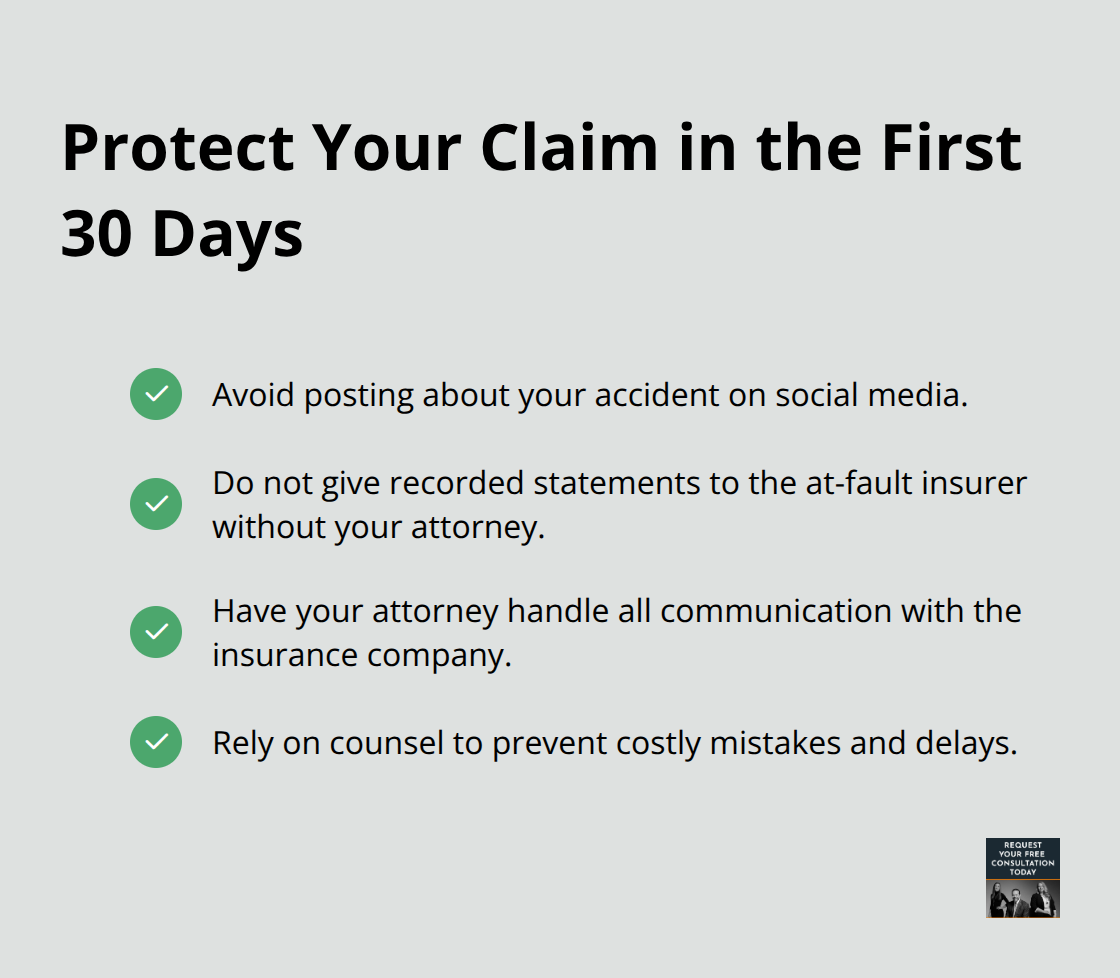
Avoid posting about your accident on social media; insurers monitor social accounts for statements that contradict injury claims. Do not give recorded statements to the at-fault insurer without your attorney present, even if they seem friendly. These statements are used against you during settlement negotiations. Your attorney shields you from damaging statements and handles all communication with the insurance company, which accelerates the process and prevents costly mistakes.
Within 30 days, your attorney will have gathered the police report, collected witness statements, and obtained initial medical records. This foundation sets the stage for the next phase, where your medical treatment and documentation drive the timeline forward.
How Insurance Companies Make Settlement Offers
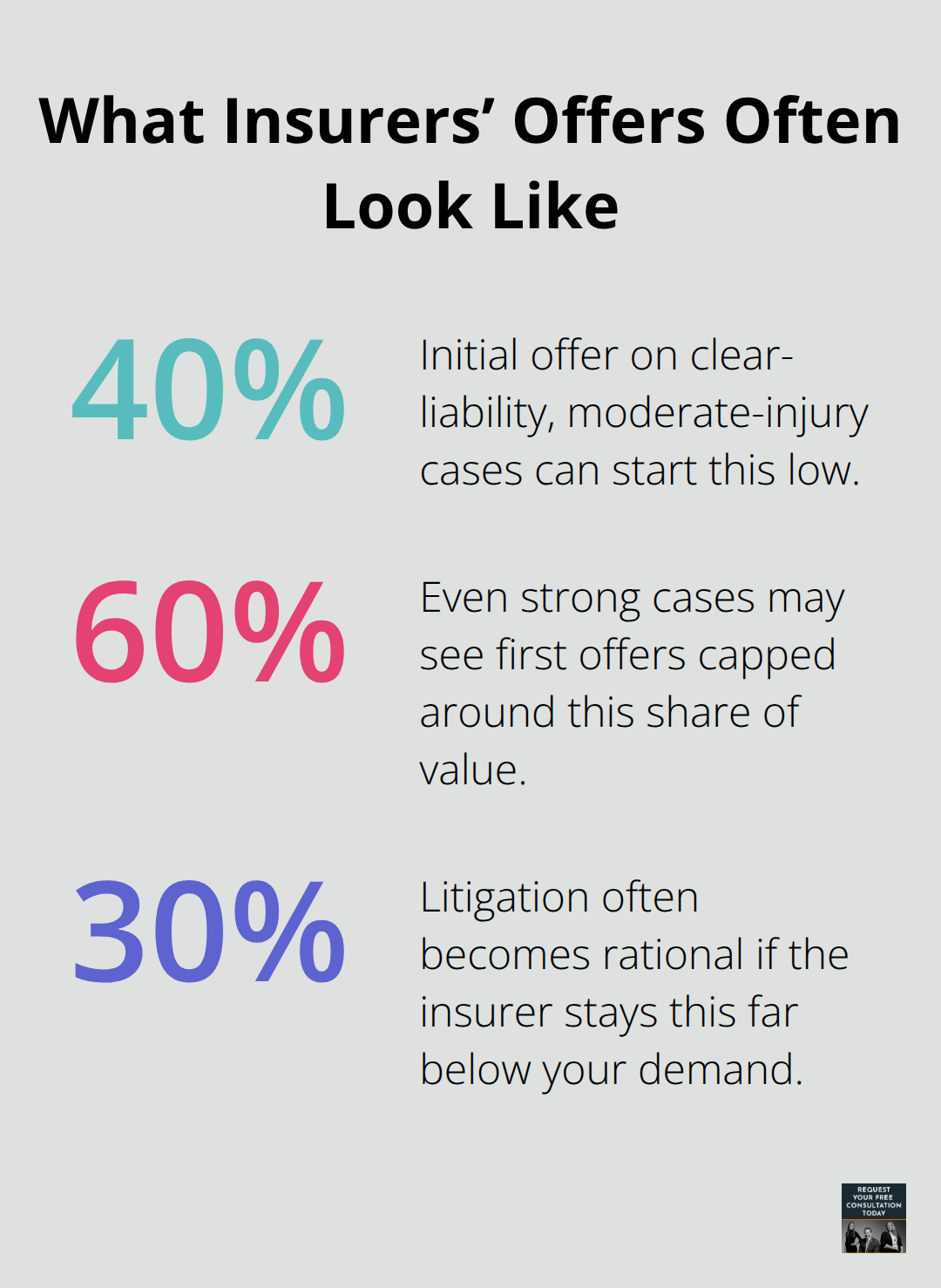
After your attorney submits the demand package following your medical treatment, the insurance company typically responds within 30 days with an initial offer. This first offer is rarely their best offer. Insurers operate on a calculated strategy: they lowball initial proposals to test whether you’ll accept quickly or push back. The Insurance Research Council data shows that represented claimants recover about 3.5 times more than unrepresented ones, and much of that difference comes from rejecting weak first offers and negotiating effectively. Straightforward cases with clear liability and moderate injuries often see initial offers at 40 to 60 percent of the actual claim value. If your accident involved a rear-end collision with documented injuries and medical bills totaling $15,000, expect an opening offer around $6,000 to $9,000. This gap exists because insurers know most unrepresented claimants lack the patience or knowledge to counter aggressively.
Your attorney will immediately identify gaps in their offer: undervalued pain and suffering, incomplete wage loss calculation, or failure to account for future medical costs.
Why Insurers Lowball Initial Offers
Insurance adjusters handle hundreds of claims simultaneously, so they deploy systematic underestimation tactics. They undervalue non-economic damages, which is where most settlement value lives for moderate injury cases. Pain and suffering, emotional distress, and lost quality of life represent the largest portion of your claim, yet insurers consistently minimize these categories in opening proposals. They count on claimants accepting quickly rather than fighting for fair compensation.
Negotiation Rounds and Realistic Timelines
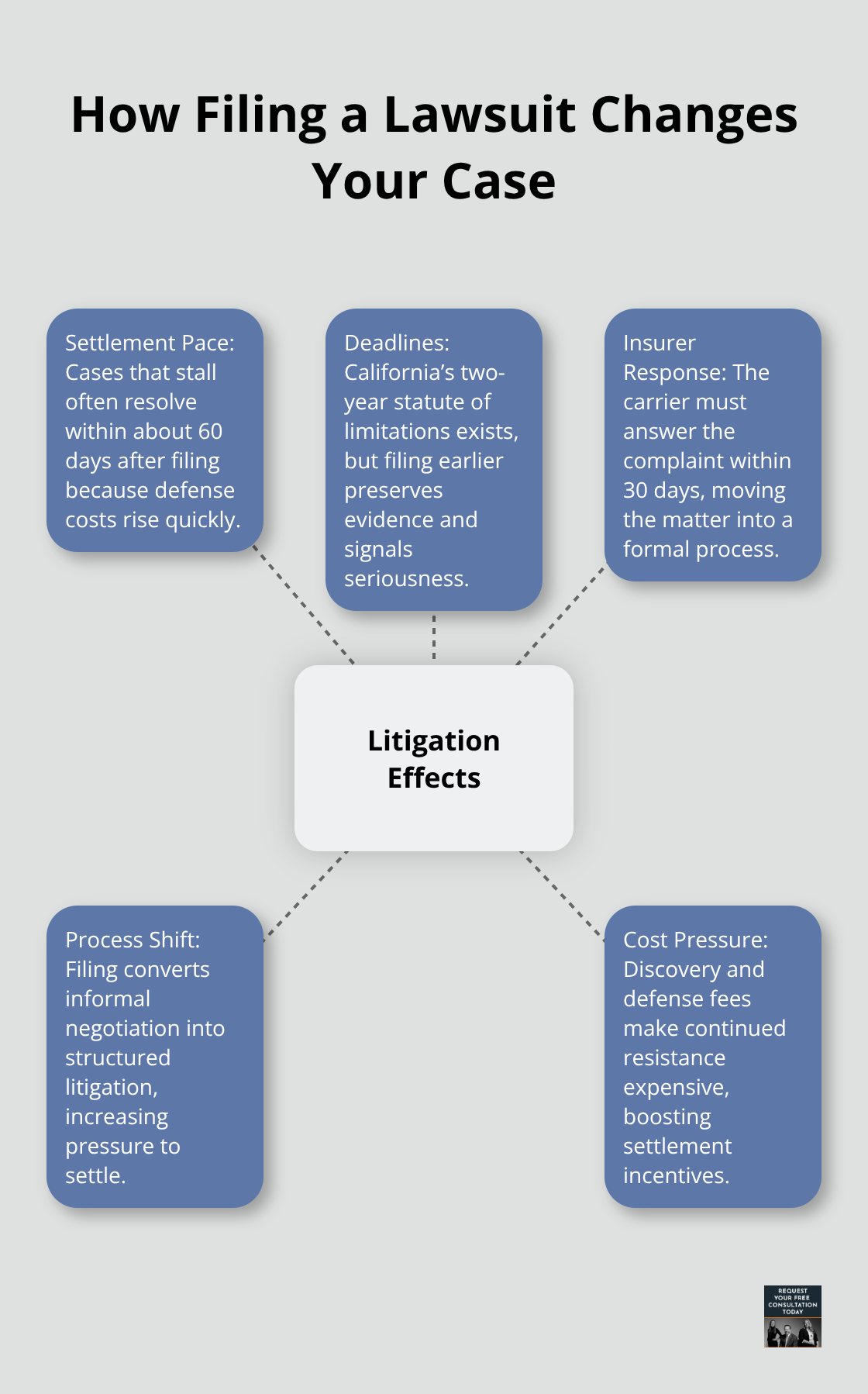
Most settlements require three to five rounds of back-and-forth negotiation spanning weeks to months. Each round involves your attorney countering with additional documentation, medical expert opinions, or wage loss calculations that justify higher compensation. California’s two-year statute of limitations creates artificial urgency only near the deadline, which is why insurers often drag negotiations toward month 18 or 19 before moving significantly. The key to accelerating this phase is demonstrating readiness to litigate. When your attorney files a lawsuit, most cases still settle during discovery rather than proceeding to trial, but the filing itself changes insurer behavior dramatically. Cases that stall in negotiation often resolve within 60 days after a lawsuit is filed because litigation costs the insurer money in defense attorney fees and discovery expenses.
Evaluating Settlement Offers Against Your Damages
You should reject any settlement offer that doesn’t account for documented medical expenses, lost wages, and reasonable pain and suffering compensation. If the insurer’s final offer remains 30 percent below your demand after multiple rounds, litigation is often the more rational choice than accepting undercompensation. The decision to accept or reject hinges on three factors: whether all medical treatment is complete and Maximum Medical Improvement (MMI) is documented, whether the offer covers all proven damages, and whether you can afford to wait months longer for a potentially better outcome through trial. Once you sign a release, reopening the claim becomes impossible, so this decision carries permanent weight.
When Litigation Becomes the Better Path
Filing a lawsuit transforms settlement negotiations because most cases still resolve through settlement after a lawsuit begins, yet the filing itself changes how insurers value your claim. When negotiations stall after three to five rounds of back-and-forth offers and the insurer’s position remains 30 percent or more below your documented damages, litigation becomes rational. The filing triggers discovery, which costs the insurer money in defense attorney fees and forces them to produce evidence they’ve been withholding. Cases that languish in negotiation for eight to twelve months often settle within 60 days after a lawsuit is filed because litigation expenses create genuine pressure on the insurer’s bottom line. California’s two-year statute of limitations means you have time, but filing early in the process signals seriousness and prevents evidence degradation. Your attorney will file a complaint in California Superior Court, and the at-fault driver’s insurance company must respond within 30 days. This formality shifts the dynamic from informal negotiation to structured legal process, and most insurers recognize that settlement costs less than defending a case through trial.
Discovery Exposes Hidden Evidence and Shifts Leverage
Discovery is the formal exchange of evidence where both sides produce documents, medical records, accident reports, and witness statements under oath. Your attorney will send interrogatories-written questions the insurer must answer under penalty of perjury-and requests for production of documents that force disclosure of internal communications and damage valuations. Depositions follow, where your attorney questions the insurance adjuster, accident reconstruction experts, or medical professionals under oath, and these sessions often expose contradictions in the insurer’s position. The discovery process typically runs four to eight months depending on case complexity, but it frequently produces settlement leverage because insurers’ internal documents reveal their true damage assessment. If their own experts calculated your damages at $85,000 but they offered $55,000, that gap becomes ammunition at trial. Most cases settle during discovery rather than proceeding to trial because both sides gain realistic insight into case strength through this evidence exchange.
Expert Analysis Strengthens Your Position
Your attorney will retain accident reconstruction experts if liability remains disputed, and these experts can charge $3,000 to $10,000 for detailed analysis including vehicle damage patterns, vehicle dynamics, and roadway conditions. The cost alone motivates insurers to settle rather than proceed. Medical experts also testify about injury severity, treatment necessity, and long-term prognosis, which directly impacts damages calculations. When insurers face credible expert testimony that supports your claim, their willingness to negotiate increases substantially because trial risk becomes real.
Trial Preparation Intensifies Settlement Pressure
Trial preparation intensifies settlement pressure because trial costs both sides tens of thousands of dollars in attorney time, expert fees, and court expenses. Your attorney will prepare witness outlines, organize exhibits, and develop opening and closing statements that frame your damages persuasively for a jury. Jury selection occurs days before trial, and jurors’ questions about your case often reveal their likely verdicts, giving both sides final signals about settlement value. Fewer than five percent of personal injury cases proceed to actual jury verdict because the uncertainty of trial outcome motivates settlement in the final weeks before trial date. If the insurer’s final offer remains inadequate as trial approaches, your attorney will advise whether proceeding to verdict makes financial sense based on jury composition and case presentation.
Final Thoughts
Your auto crash settlement timeline typically spans three to nine months for straightforward cases with clear liability and moderate injuries, though serious injuries, disputed fault, or multiple defendants extend resolution to twelve months or longer. The single most important factor controlling your timeline is reaching Maximum Medical Improvement before settlement negotiations conclude, because settling while still undergoing treatment forfeits your right to recover future medical costs and can cost tens of thousands of dollars. Complete documentation accelerates negotiations since insurers cannot delay on missing records, while clear liability evidence like dashcam footage or police citations moves cases to settlement within sixty to ninety days after your demand letter.
Insurance stall tactics including repeated record requests, new adjusters restarting review, and deliberate delays are common, which is why filing a lawsuit often accelerates resolution by creating genuine settlement pressure through discovery costs. After settlement is reached, payment arrives within ten to thirty days of signing the release, with your attorney depositing funds into a trust account and then disbursing your net amount after deducting medical liens, health insurance reimbursements, and case costs. Understanding these deductions helps you plan for your actual recovery rather than the gross settlement figure.
Contact an experienced attorney within the first week after your crash to preserve evidence and avoid costly mistakes that extend your timeline. We at Schaar & Silva LLP provide free consultations to evaluate your auto crash settlement timeline and clarify your next steps based on your specific injuries and liability circumstances. Your recovery depends on having skilled representation from the start, so reach out today to discuss your case.
