
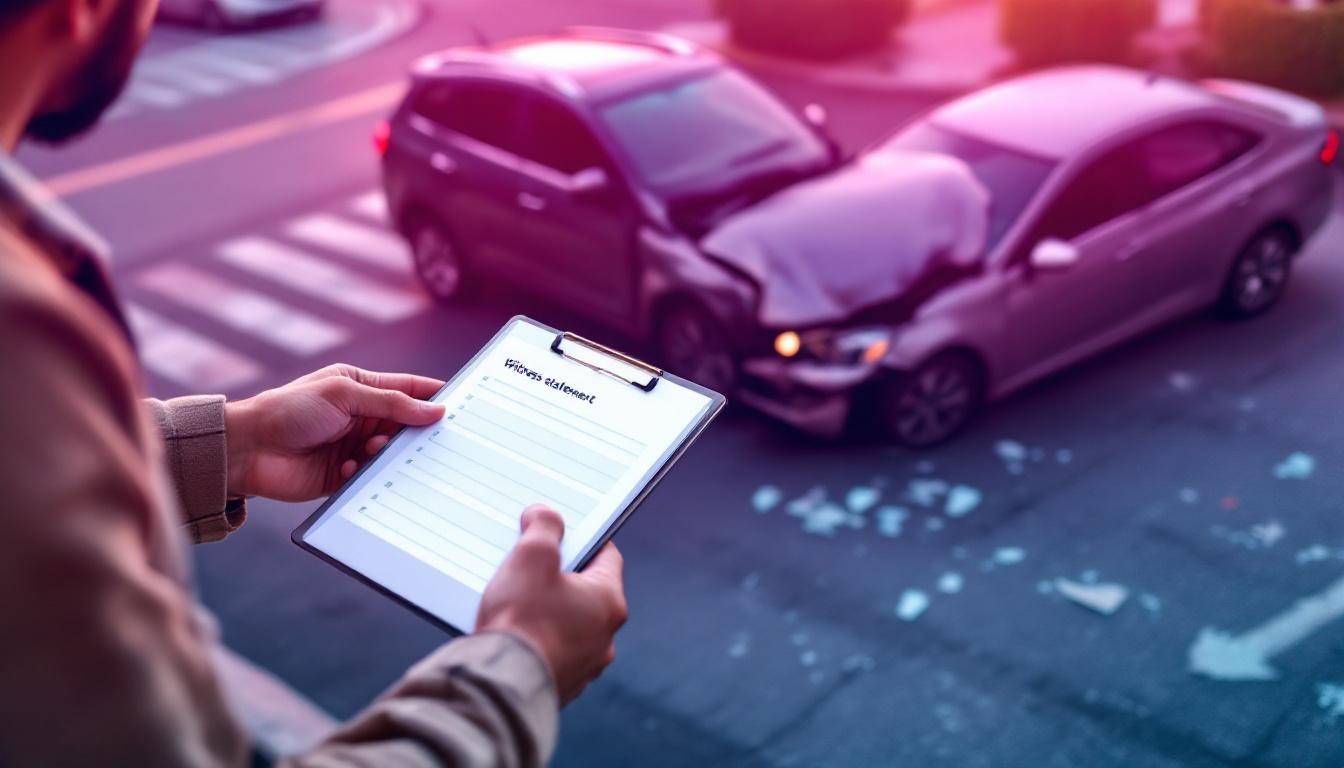
A witness statement in an accident can shift the entire direction of your case. Insurance companies know this, which is why they scrutinize every detail of what bystanders saw and heard.
We at Schaar & Silva LLP have handled hundreds of accident claims in Santa Cruz County, Sacramento, and Oakland. The difference between a strong settlement and a weak one often comes down to how well witness evidence is collected and presented.
What Makes a Witness Credible in Court
Courts do not treat all witnesses equally. A neutral bystander who observed the collision from a clear vantage point carries far more weight than a friend of the injured party standing across the street. Judges and juries understand that bias, memory lapses, and poor positioning undermine testimony. California Evidence Code 1235 and 1236 govern how prior statements are admitted, but the real battle happens before trial-during settlement negotiations with insurance companies.
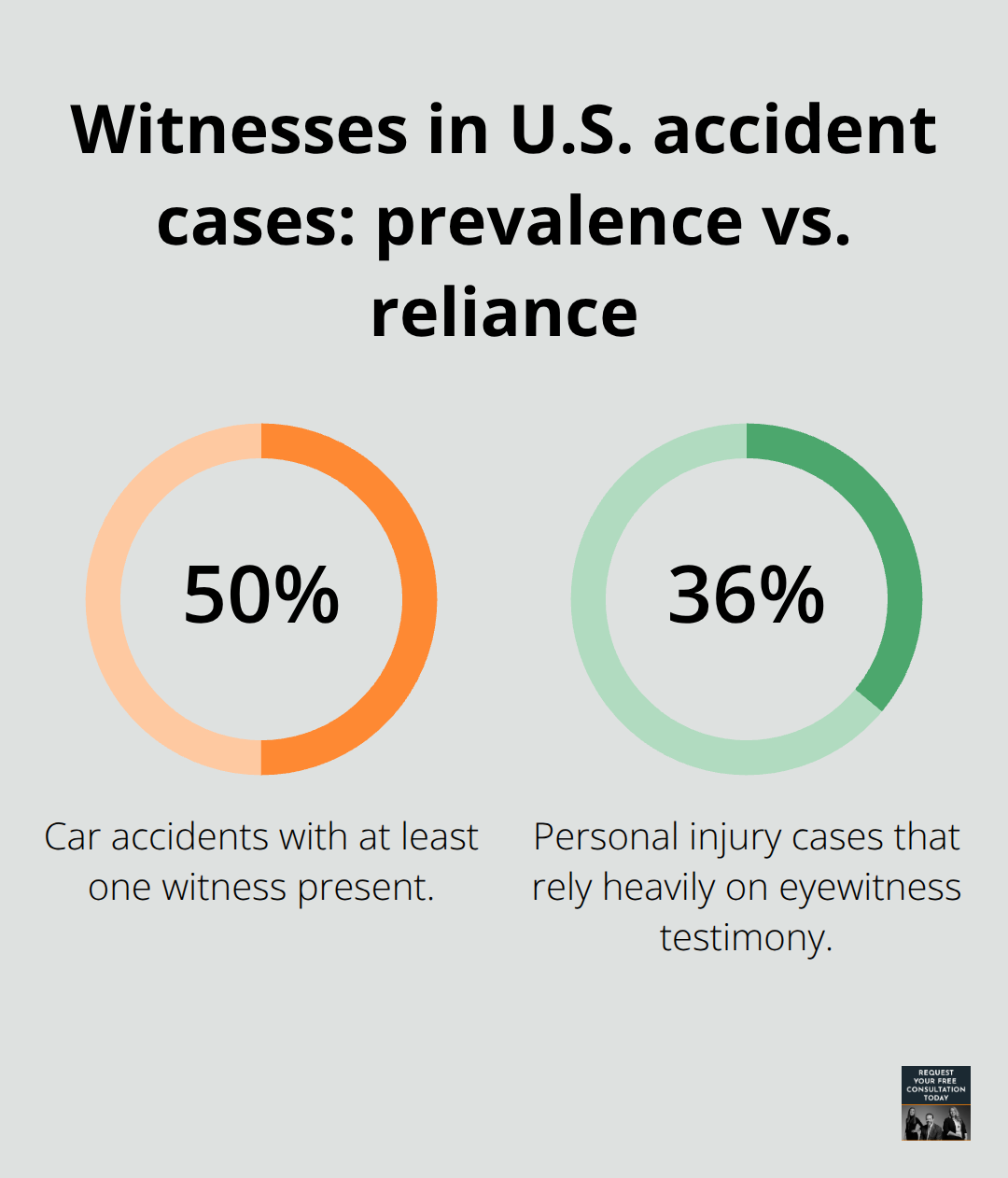
Insurers scrutinize witness credibility intensely because strong, independent testimony can force them to pay higher settlements rather than risk a jury verdict. About 50% of car accidents involve at least one witness, yet only around 36% of personal injury cases rely heavily on eyewitness testimony when reconstructing events. This gap exists because many witnesses provide weak or conflicting accounts. Distance from the collision, obstructions, lighting conditions, and weather all affect what a witness actually saw versus what they think they saw.
A witness standing 50 feet away on a sunny afternoon will be more credible than someone a block away during dusk.
Insurance adjusters exploit this ruthlessly-they highlight that a witness had a poor vantage point, was distracted, or had a relationship to the injured party. The moment you mention a witness is your friend or coworker, their credibility takes a hit. Neutral strangers are exponentially more valuable because they have no stake in the outcome.
How Memory Fades and Insurers Capitalize on It
Human memory degrades quickly after trauma. Within 24 to 48 hours, witnesses forget critical details or unconsciously fill gaps with assumptions. If you wait a week to collect a statement, the witness may have already revised their account in their own mind. This is why collecting statements immediately at the scene matters-names, phone numbers, brief descriptions of what happened.
When statements are recorded within hours and then compared to later depositions, any inconsistencies become ammunition for the defense. Insurers will point to a witness who said the light was yellow at first but later said it was red, claiming the entire testimony is unreliable. One inconsistency can damage the credibility of an otherwise solid witness. Formal documentation early captures accounts while details are fresh: written statements signed by the witness, sworn declarations, or video recordings. These formal records also help satisfy California’s hearsay rules if the witness later becomes unavailable to testify.
Independent Witnesses Versus Biased Ones
Witnesses with no connection to either party command respect from judges, juries, and insurance companies. A passing driver who stopped to help carries infinitely more weight than the injured person’s spouse. Biased witnesses (friends, family, coworkers) are viewed skeptically because their testimony appears motivated by loyalty rather than truth. Insurance defense teams will hammer biased witnesses during cross-examination, questioning whether they’re being truthful or just trying to help someone they care about.
Multiple independent witnesses are ideal because they corroborate each other’s accounts and reduce the impact if one witness’s credibility gets challenged. If you have three neutral bystanders all saying the other driver ran a red light, the insurer’s denial of liability becomes indefensible. Conversely, relying on a single witness-especially one with ties to you-greatly increases settlement risk. The insurer will argue that one biased person’s word against the at-fault driver’s word leaves liability unclear, which justifies a lower offer.
Why Witness Quality Determines Your Settlement Leverage
The strength of your witness evidence directly shapes what insurance companies will offer. Strong, independent testimony forces adjusters to take liability seriously and propose fair settlements. Weak or biased witness accounts give insurers the opening they need to dispute fault and reduce payouts. This is where the next step in your case becomes critical-how you actually collect and preserve that witness evidence matters as much as the witnesses themselves.
Capturing Witness Information Before It Disappears
The moment after a collision is chaotic. Adrenaline, shock, and pain cloud judgment. Most people at accident scenes do one of two things: they leave immediately or they stand around without collecting any information. This is a critical mistake.
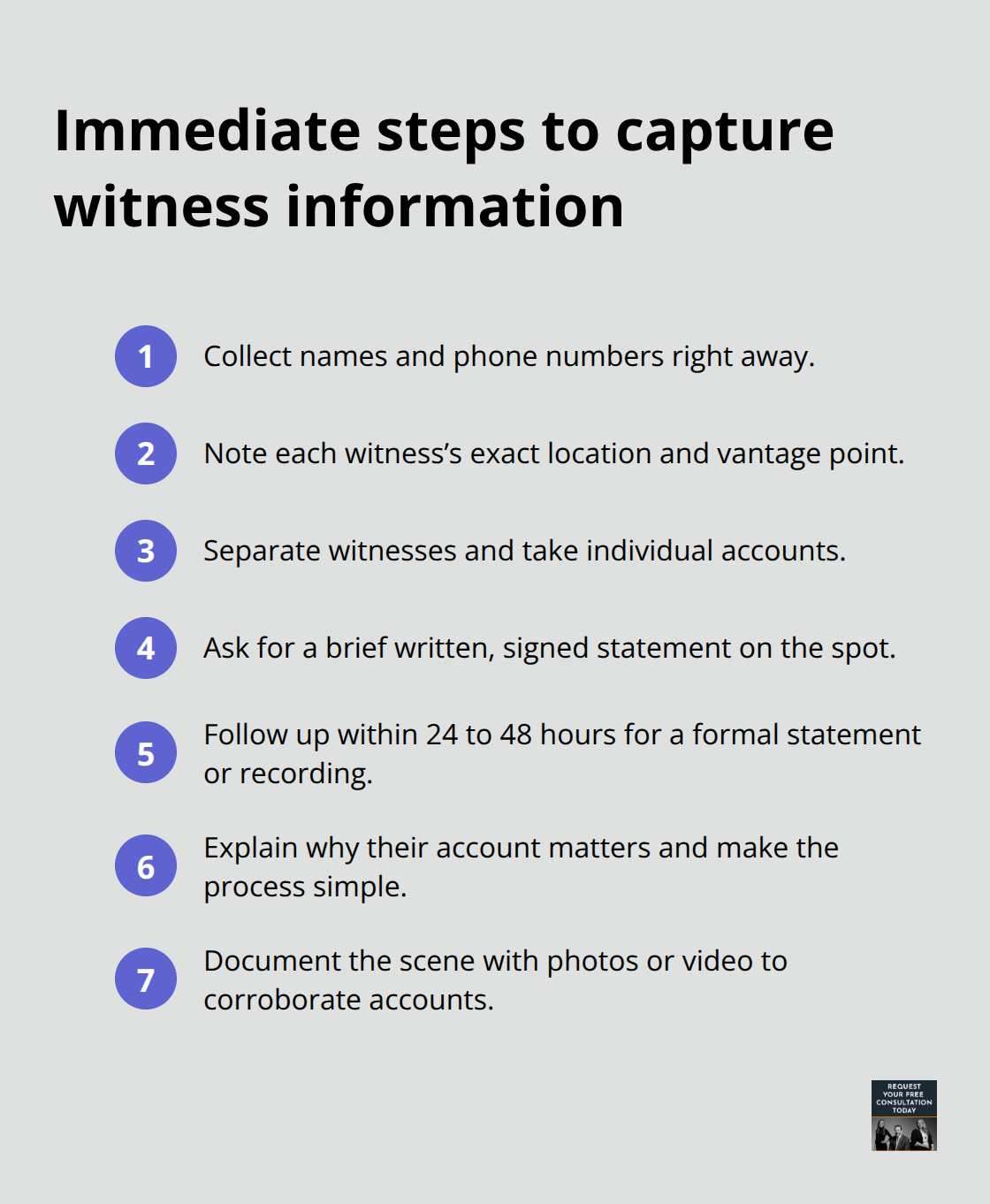
If you can safely remain at the scene, your first priority is getting names and phone numbers from anyone who witnessed the crash.
Write down their full names, phone numbers, email addresses if available, and their exact location when the collision happened. A witness standing near the traffic signal saw something different than someone half a block away. Note where they positioned themselves relative to the vehicles. If multiple witnesses are present, separate them and collect individual accounts rather than letting them discuss what happened first-talking before giving statements causes memory contamination and inconsistency.
When you call 911, the police report will list some witnesses, but not all. Bystanders who helped but did not stay for police questioning often get forgotten. If someone leaves a business card or offers information verbally, that is not enough. Get it in writing or record it on your phone immediately. Within 24 to 48 hours, contact each witness again and ask them to provide a written statement or agree to a recorded conversation. Explain that their account is important and that memory fades quickly. Most people will cooperate if you make it simple and respectful.
Formal Statements Outweigh Casual Notes
A text message saying “the other car ran the red light” holds no weight in court. California Evidence Code 1235 and 1236 govern how prior statements can be used, and informal accounts rarely qualify. What matters is a signed, dated statement that identifies the witness, describes what they observed, and ideally includes their contact information and occupation.
Even better is a sworn declaration or recorded statement where the witness explicitly confirms they are telling the truth. If a witness is willing, ask them to sign and date their written account. If they prefer to speak rather than write, record the conversation on your phone and ask permission first. A video recording of a witness describing the collision while standing at the scene carries significant weight because it captures their demeanor, tone, and immediate recollection.
How Physical Evidence Strengthens Witness Accounts
Photos and video of the accident scene-vehicle positions, debris, skid marks, traffic signals, weather conditions-corroborate what witnesses say happened. If the witness mentions the light was green, a photo showing the signal color at that moment strengthens their credibility immensely. Courts and insurance companies treat formal, contemporaneous evidence far more seriously than casual statements given weeks later.
The difference between a settlement offer of $15,000 and $50,000 often hinges on whether witness statements are documented professionally or left as loose notes. Treat witness collection as a legal task, not a casual conversation. Insurance adjusters know that strong documentation creates liability exposure for them, which is why they push back harder against well-preserved witness evidence.
What Happens When Statements Lack Proper Documentation
Weak witness records give insurance companies the opening they need to challenge credibility and reduce payouts. A handwritten note with no date, no signature, and no clear identification of the witness becomes nearly impossible to use in settlement negotiations or court. The insurer will argue that you cannot verify who wrote it, when they wrote it, or whether they actually witnessed anything. Formal documentation eliminates these objections and forces the insurer to address the substance of what the witness actually saw rather than attacking the form of the statement.
What Weakens Witness Testimony
Witness statements crumble under scrutiny when they contain inconsistencies, contradictions, or gaps that insurance adjusters exploit. If a witness says the traffic light was green in their first statement but mentions it might have been yellow when deposed months later, the insurer will use that shift to dismantle their entire account. Even minor variations-saying the car was going 40 miles per hour versus 45-can be weaponized to suggest the witness is unreliable or misremembering. Human memory is fragile. Within 24 to 48 hours after a collision, witnesses forget critical details or unconsciously fill gaps with assumptions. A witness who waits a week to provide a formal statement may have already revised their recollection multiple times in conversation with friends or family, contaminating their own memory. When multiple witnesses provide conflicting details about fundamental facts (whether the light was red or green, which vehicle entered the intersection first, the speed of impact), insurance companies seize on these discrepancies to claim liability is unclear and justify lower settlement offers.
Timing Destroys Witness Credibility
Delays in collecting witness statements guarantee degradation. The longer you wait to obtain formal accounts, the more opportunity memory has to fade and inconsistencies to develop. A statement collected at the scene or within hours captures details while they remain sharp. A statement collected weeks later reflects reconstructed memory, not observed reality. Insurance adjusters understand this and will attack any witness statement obtained after substantial delays, arguing that the witness cannot possibly remember with accuracy. If you wait until litigation is underway to finally interview a witness, the insurer’s defense team will highlight that gap and suggest the witness has had months to forget or revise their account. Additionally, if a witness has been in contact with you or other parties to the accident before providing a formal statement, that communication creates contamination. The insurer will argue that the witness’s account reflects influence from conversations rather than independent recollection.
How Insurers Exploit Witness Weaknesses
Insurance adjusters have years of experience identifying the cracks in witness testimony and exploiting them relentlessly. They will request the witness’s full background, employment history, and any prior legal involvement to find grounds for impeachment. A witness who works in a field unrelated to accident investigation carries less weight than one with relevant experience. The insurer will question whether the witness was distracted, fatigued, or impaired at the time of the collision. If the witness admits to any distraction (checking a phone, talking to someone nearby, focusing on something other than the road), the adjuster will argue their perception was compromised. Distance from the collision is another standard attack. A witness 100 feet away will be challenged more aggressively than one standing 20 feet away. Poor lighting conditions, weather, obstructions, and traffic congestion all become reasons to diminish witness credibility. The insurer will also scrutinize any relationship between the witness and the injured party. A coworker, friend, or family member becomes a target for bias arguments. Even a distant acquaintance can be characterized as having motivation to support the injured person’s account. When witnesses have criminal records or reputation issues, the insurer will highlight these facts to suggest they are inherently unreliable.
Physical Evidence Contradictions Undermine Testimony
If a witness account contradicts physical evidence like vehicle damage patterns, skid marks, or surveillance footage, the insurer will weaponize that contradiction to cast doubt on the entire claim. A witness who swears the impact occurred at low speed but vehicle damage shows a high-speed collision becomes a liability rather than an asset. The insurer’s strategy is straightforward: highlight every inconsistency, question the witness’s vantage point, probe their relationship to the injured party, and suggest their account has deteriorated over time.
Documentation Standards That Prevent Attack
Formal, contemporaneous documentation-signed statements, recorded interviews, or sworn declarations collected within 48 hours-eliminates many attack vectors.
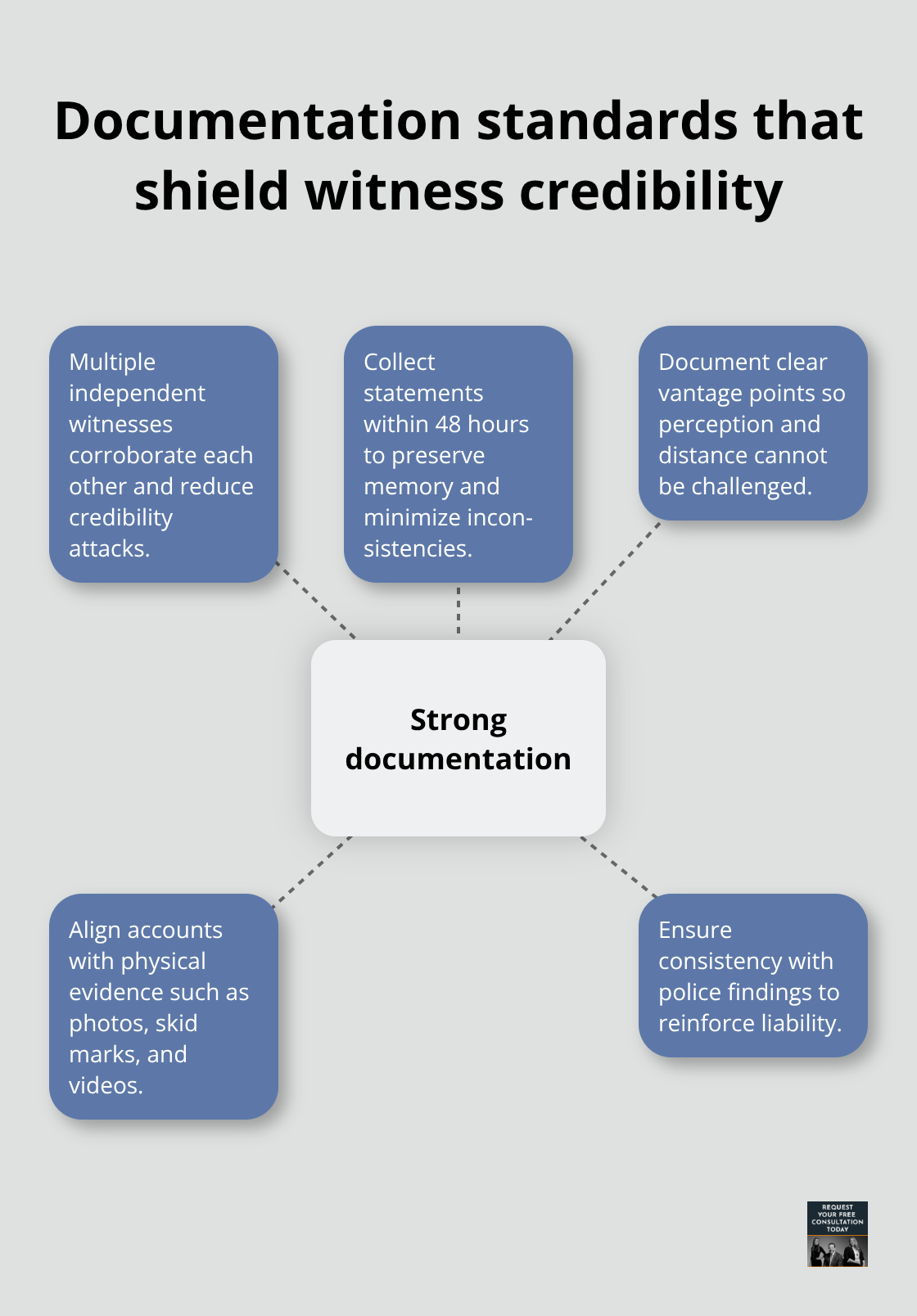
Weak documentation, casual notes without dates or signatures, and delayed collection all invite the insurer to challenge credibility aggressively. The most effective defense against these attacks is multiple independent witnesses with clear vantage points, formal documentation collected immediately, and accounts that align with physical evidence and police findings.
Final Thoughts
A witness statement accident shifts liability from disputed to clear-cut when you have multiple independent witnesses with consistent accounts. Insurance companies lose their ability to claim the facts are unclear, and they know that strong documentation forces them to pay fairly. We at Schaar & Silva LLP have seen this pattern repeatedly in Santa Cruz County, Sacramento, and Oakland-the difference between a settlement that covers your medical bills and one that actually compensates you for your injuries comes down to how thoroughly you documented what bystanders saw.
Insurance companies will challenge your claim aggressively if witness evidence is weak or poorly documented. They will attack credibility, highlight inconsistencies, and exploit any gaps in your documentation to reduce what they owe you. Strong witness evidence eliminates these openings and makes it nearly impossible for the insurer to argue that liability is ambiguous or that fault is shared.
If you have been injured in a car accident and witnesses observed what happened, contact us to discuss how we can help preserve that evidence and build a case that delivers fair compensation.
