

Car accidents leave victims facing medical bills, lost income, and physical pain. Understanding car accident liability and how California’s laws work is the first step toward getting fair compensation.
At Schaar & Silva LLP, we help accident victims navigate the recovery process. This guide walks you through how fault is determined, what damages you can claim, and what actions protect your rights.
How Fault Really Works in California
California’s Fault System and Comparative Negligence
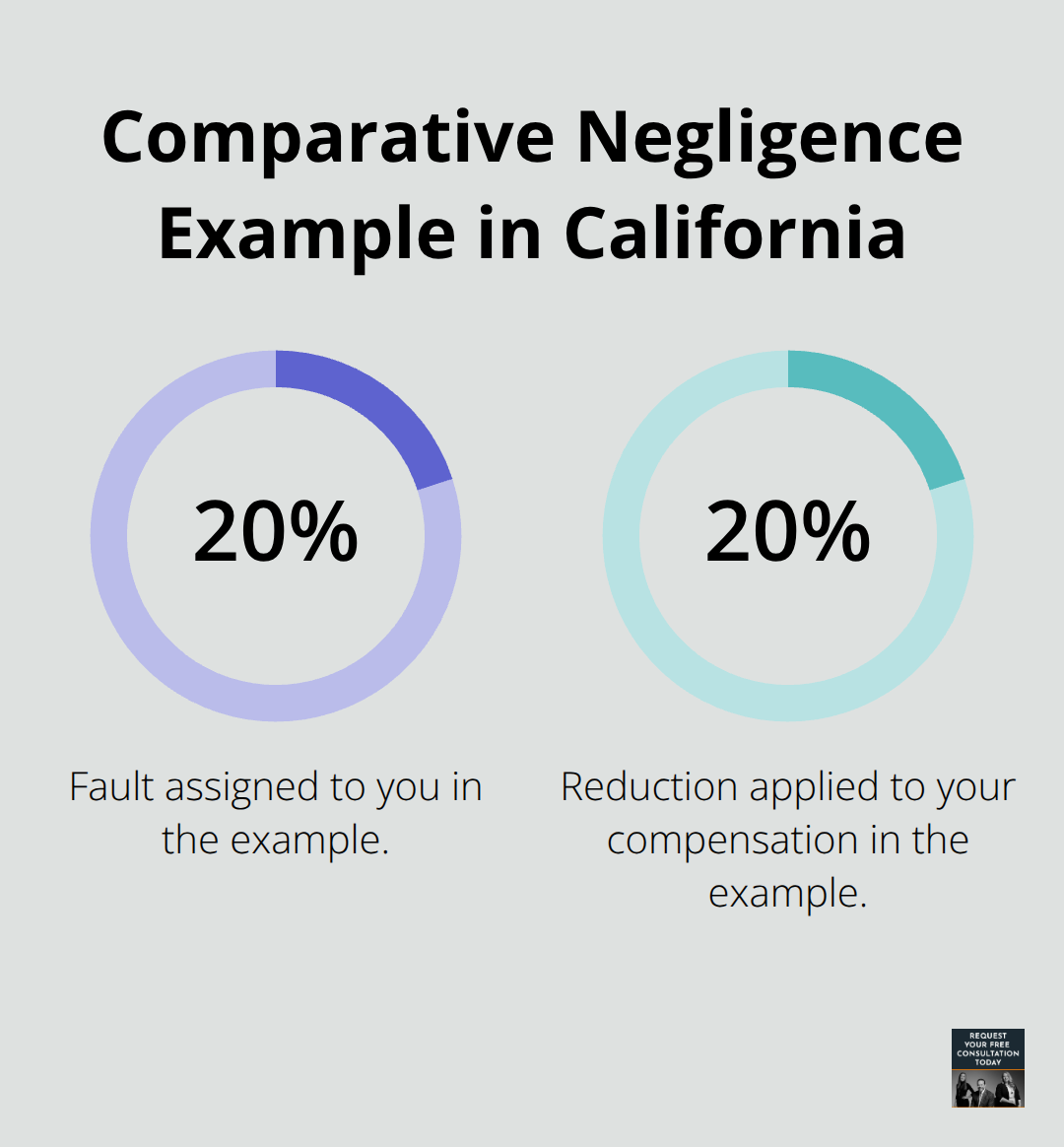
California’s fault system holds the driver who caused the accident responsible for damages. Determining who actually caused the accident requires solid evidence-police reports, witness statements, photos from the scene, and traffic law violations all establish liability. The at-fault driver’s insurance company investigates the crash, and their findings directly impact your compensation amount. If you share partial responsibility for the accident, California’s comparative negligence rule still allows you to recover damages, though your award gets reduced by your percentage of fault. For example, if you’re deemed 20% responsible, your compensation is reduced by 20%. This means both drivers can pursue recovery even when fault is shared, creating a path forward for most accident victims.
Evidence That Determines Fault
Evidence forms the foundation of any fault determination. Police reports carry significant weight because officers document road conditions, traffic signals, vehicle damage patterns, and driver statements at the scene. Witness statements provide independent perspectives that insurance adjusters rely on heavily when drivers disagree about what happened. Photos of vehicle damage, road markings, and scene conditions help reconstruct exactly how the collision occurred. Traffic law violations prove particularly powerful-if the other driver ran a red light, failed to yield, or exceeded the speed limit, these violations establish fault clearly.
Gathering Evidence Immediately After an Accident
The first hours after an accident are critical for evidence collection. Take photos from multiple angles, capture road conditions and traffic signals, and obtain contact information from all witnesses present. Request the police report number so you can obtain the full report later. Don’t rely on memory alone because details fade within days. The sooner you gather evidence and consult with legal representation, the stronger your position becomes when negotiating with insurance companies or pursuing court action if necessary.
Understanding how California determines fault sets the stage for the next critical step: knowing what types of damages you can actually recover from the at-fault party.
What Damages Can You Actually Recover
Medical Expenses and Long-Term Care Costs
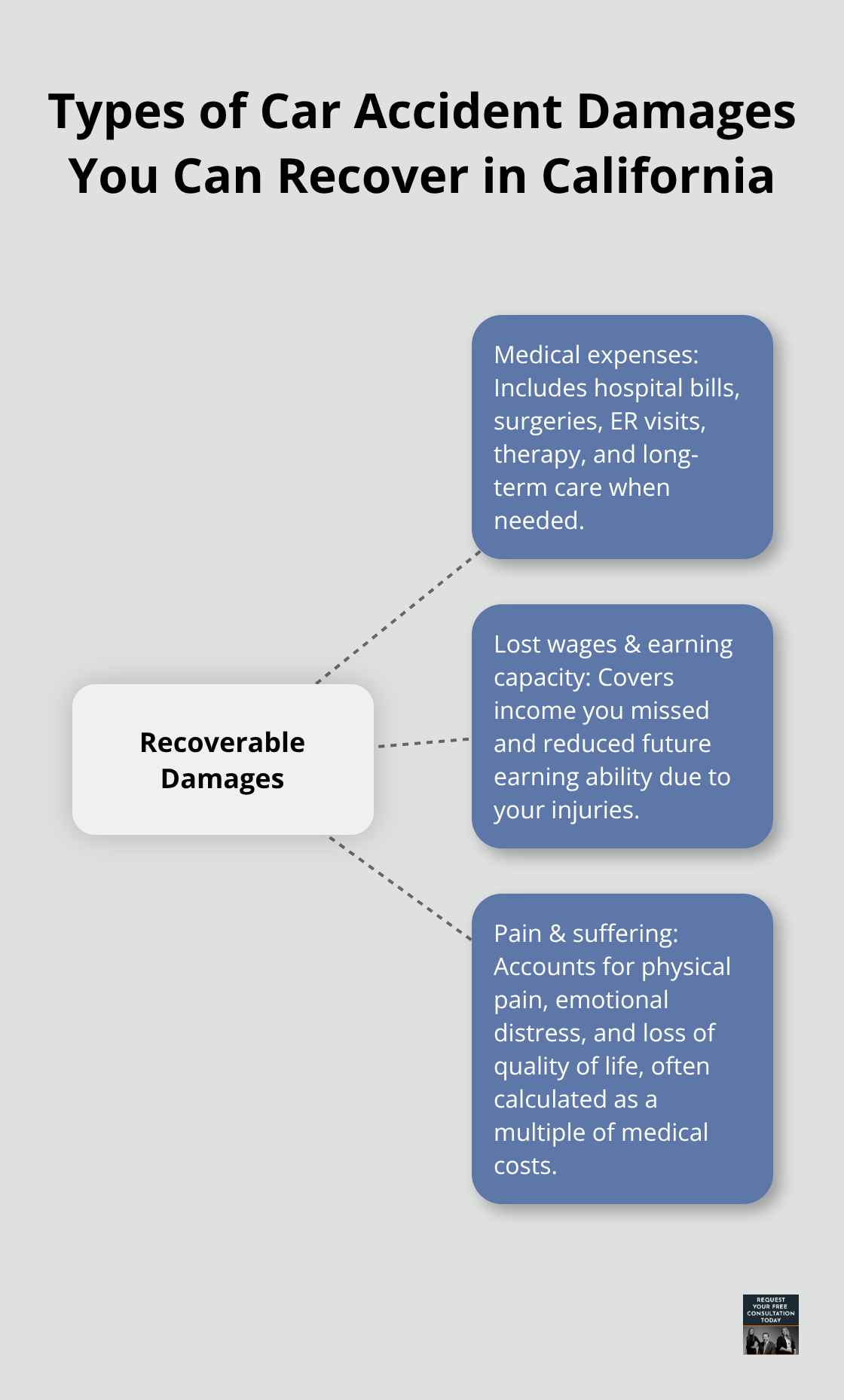
Car accident damages fall into three distinct categories that California courts recognize, and understanding the difference between them directly impacts how much compensation you receive. Medical expenses represent the most straightforward category-hospitals, surgeries, physical therapy, emergency room visits, and ongoing treatment all count. If you suffered a brain injury or spinal injury requiring long-term care, these costs accumulate quickly. The CDC reports that the average hospitalization for a traumatic brain injury costs between $35,000 and $45,000, and that’s before rehabilitation or ongoing therapy. Spinal injuries often require even more intensive treatment, with some cases exceeding $100,000 in the first year alone.
You can recover every dollar spent on medical care directly caused by the accident, including future medical expenses your doctors project you’ll need. Documentation matters enormously here-keep every medical bill, prescription receipt, and treatment record because insurers scrutinize medical claims heavily.
Lost Wages and Earning Capacity
Lost wages represent your actual income lost while recovering from injuries, calculated from your pay stubs and tax returns. If the accident prevents you from working long-term, you can claim loss of earning capacity, which accounts for reduced ability to earn in your career. Insurance companies examine employment records carefully to verify these calculations, so organize your financial documentation before submitting claims.
Pain and Suffering Compensation
Pain and suffering compensation is where opinions diverge sharply. California allows recovery for physical pain, emotional distress, and loss of quality of life, but insurance companies fight these claims aggressively because no receipt proves their value. Courts typically award pain and suffering at multiples of your medical expenses-anywhere from two to five times your medical bills depending on injury severity, though catastrophic injuries like wrongful death claims often justify higher multiples.
Why Underestimating Damages Costs You Money
The critical mistake most accident victims make is underestimating their damages, particularly pain and suffering. Many people accept quick settlement offers from insurance adjusters without understanding what their case is actually worth. For serious injuries like brain damage or spinal cord trauma, you need professional assessment of your long-term needs and earning potential. Insurance companies employ adjusters trained to minimize payouts, so treating your claim as a negotiation you can handle alone typically leaves money on the table.
Gathering organized documentation from day one-medical records, pay stubs, treatment plans, photos of injuries-builds a stronger position whether you settle or pursue court action. The statute of limitations gives you two years from the accident date to file a claim, but waiting costs you because evidence deteriorates and witnesses become harder to locate. Understanding what your damages actually total positions you to pursue fair compensation through settlement negotiations or litigation.
What to Do Right After an Accident
Protect Your Safety and Document the Scene
The moments immediately following a car accident determine whether you build a strong case or leave yourself vulnerable to insurance company tactics. Your first priority is safety and calling emergency services if anyone is injured. What happens next directly impacts your ability to recover fair compensation.
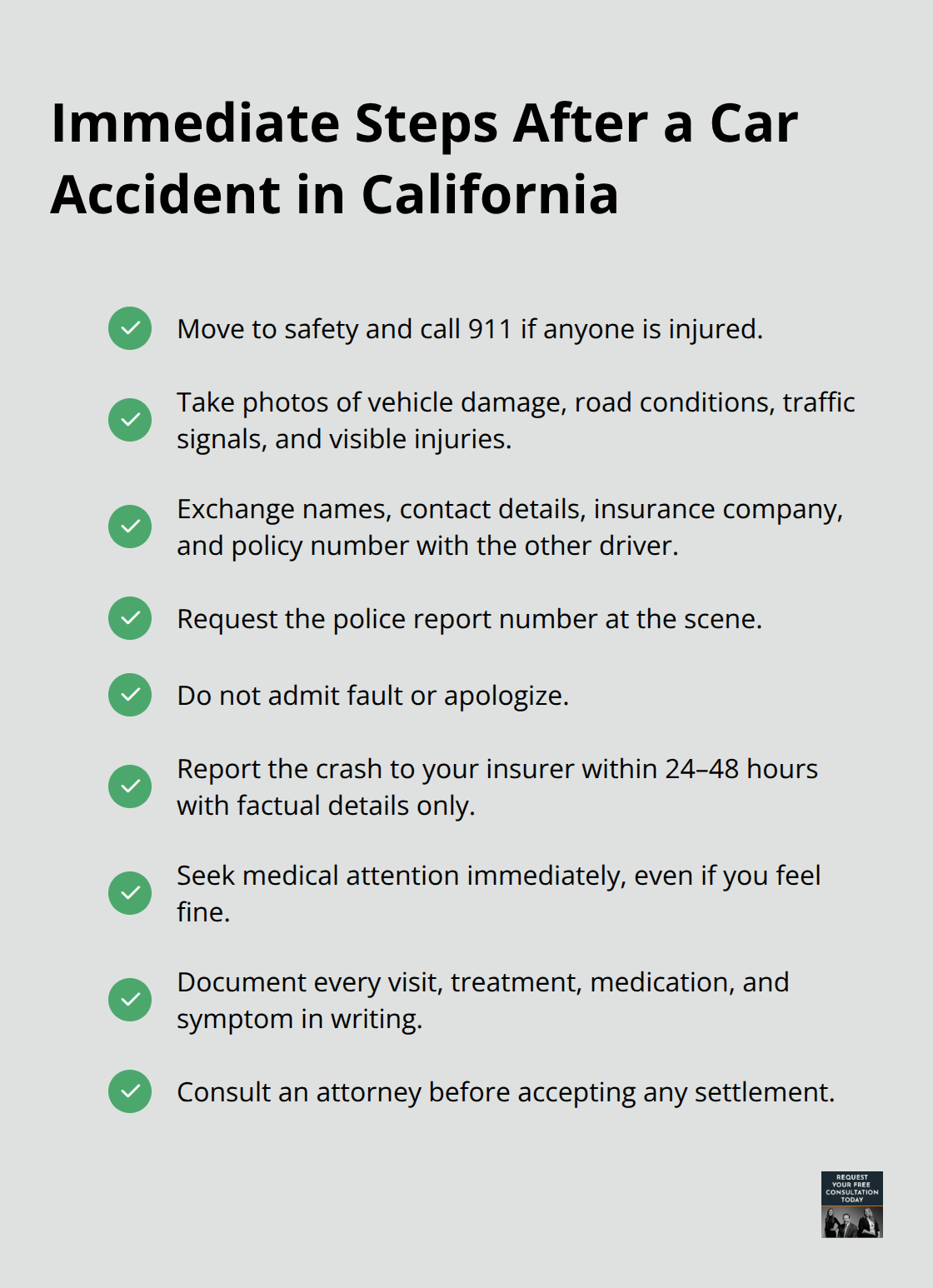
Take photos of vehicle damage from multiple angles and capture the overall scene including road conditions and traffic signals. Photograph any visible injuries before swelling occurs. The National Highway Traffic Safety Administration emphasizes that scene documentation is one of the strongest predictors of successful claims because it creates an objective record before memories fade or stories change. Exchange contact information with the other driver, including their name, phone number, address, insurance company, and policy number. Request the police report number at the scene so you can obtain the official report later, which carries substantial weight with insurance adjusters.
Avoid Common Mistakes at the Scene
Do not admit fault or apologize for the accident because insurance companies use such statements against you during claim negotiations. Do not accept any settlement offer at the scene, and do not sign anything beyond basic information exchange. These early decisions protect your legal position when negotiating with insurers later.
Report and Seek Medical Attention
Report the accident to your insurance company within a reasonable timeframe, typically within 24 to 48 hours, and provide factual details without speculation. Seek medical attention immediately, even if you feel fine, because many injuries like concussions or internal injuries develop over hours or days after impact.
Document every medical visit, treatment, medication, and symptom in writing because medical records form the backbone of your damages claim. If you suffered a brain injury or spinal injury, these early medical records establish the baseline for calculating long-term care costs and earning capacity losses. Medical documentation proves particularly important when insurance adjusters question the severity of your injuries.
Consult Legal Representation Before Settling
Consult with an attorney before accepting any insurance settlement because adjusters routinely offer less than cases are worth, particularly when serious injuries are involved. The statute of limitations clock starts ticking immediately, giving you two years to file a claim, but acting quickly preserves evidence and witness availability while details remain fresh and accurate. At Schaar & Silva LLP, we handle the negotiation process with insurance companies so you avoid costly mistakes during settlement discussions.
Final Thoughts
Car accident liability in California operates on clear principles, but navigating the system alone leaves most victims with less compensation than they deserve. The fault-based system holds the at-fault driver responsible, comparative negligence allows partial recovery even when you share blame, and documented evidence determines outcomes. Medical expenses, lost wages, and pain and suffering all count toward your damages, though insurance adjusters routinely undervalue claims, particularly for serious injuries like brain damage or spinal cord trauma.
The two-year statute of limitations creates urgency that most accident victims underestimate. Acting quickly preserves evidence, secures witness statements while memories remain accurate, and positions you to negotiate from strength rather than desperation. Insurance companies employ trained adjusters whose job is minimizing payouts, not ensuring you receive fair compensation.
If you’ve been injured in a car accident in Santa Cruz County, Sacramento, or Oakland, contact us to discuss your case. We handle the legal complexities of car accident liability so you focus on recovery. Your compensation should reflect the full extent of your losses.
