

Car accidents in Santa Cruz County send thousands of people to emergency rooms each year, with head trauma accounting for nearly 30% of all serious crash injuries.
Common head injuries from car accidents range from mild concussions to life-threatening brain trauma that can change your life forever. We at Schaar & Silva LLP see how these injuries affect families throughout our community.
Getting the right medical care immediately can make the difference between full recovery and permanent disability.
Types of Head Injuries from Car Accidents
Concussions Strike Without Warning Signs
Concussions affect approximately 75% of all traumatic brain injuries from car accidents, according to the CDC. These injuries happen when your brain bounces inside your skull during impact, even at speeds as low as 15 mph. The National Highway Traffic Safety Administration reports that most people with concussions never lose consciousness, which makes these injuries easy to miss. Your brain can suffer damage even when you feel fine immediately after the crash.

Skull Fractures Create Life-Threatening Emergencies
Severe head trauma occurs in roughly 16,980 adults annually from motor vehicle crashes nationwide (based on NASS-CDS data). Skull fractures happen when the force exceeds what your bones can absorb, often causing brain bleeding or swelling. These injuries require immediate surgery and intensive care. The fatality rate jumps dramatically when skull fractures involve brain penetration or multiple fracture lines across the skull.
Whiplash Damages More Than Your Neck
Whiplash forces your head to snap forward and backward violently, which causes brain injury even without direct head impact. This motion creates the same brain trauma as a direct blow, leading to concussion symptoms that appear hours or days later. Medical studies show that whiplash-related brain injuries account for nearly 40% of persistent post-concussion symptoms. The rapid acceleration and deceleration damage delicate brain tissue and disrupt normal brain function (particularly affecting memory and concentration abilities).
These different types of head injuries produce distinct symptoms that victims and their families need to recognize quickly.
How Do You Recognize Head Injury Symptoms
Watch for These Physical Signs Right After Impact
Your body sends clear warnings within the first hour after a car crash. The Mayo Clinic reports that immediate symptoms include severe headaches that worsen over time, repeated vomiting, and confusion about where you are or what happened. Dizziness makes standing difficult, while vision problems like double or blurred images signal brain trauma. Slurred speech and difficulty with simple tasks mean your brain suffered damage from the impact.
Hidden Symptoms Surface Days After Your Accident
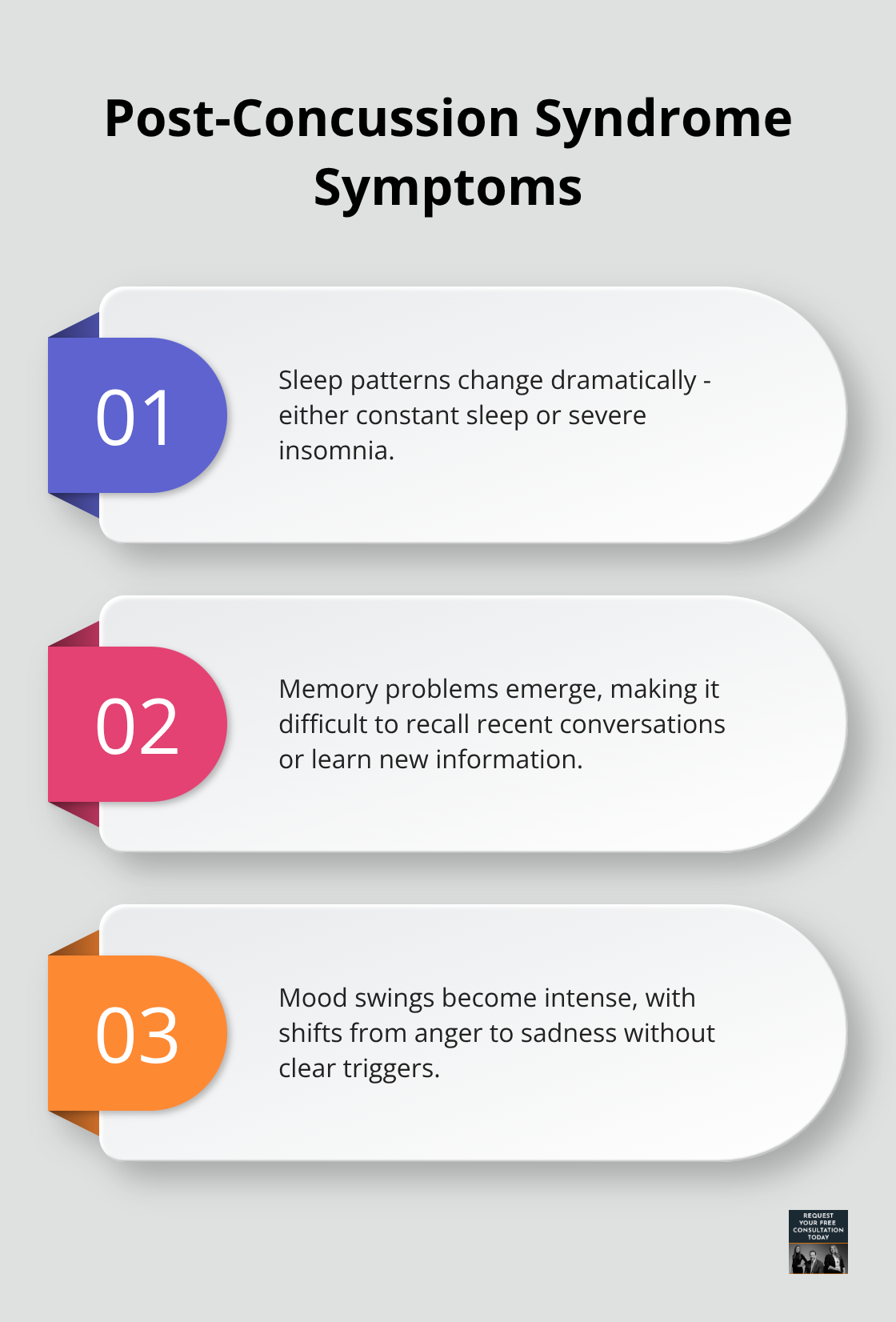
Post-concussion syndrome affects nearly 15% of car accident victims, with symptoms that appear 7 to 10 days after the crash (according to medical research). Your sleep patterns change dramatically – either constant sleep or severe insomnia. Memory problems emerge when you cannot recall conversations from earlier that day or struggle to learn new information. Mood swings become intense, with shifts from anger to sadness without clear triggers.
Get Emergency Care for These Critical Warning Signs
The Brain Injury Association of America states that seizures, loss of consciousness that lasts more than 30 seconds, and clear fluid that drains from your nose or ears require immediate hospital care. Weakness in your arms or legs on one side of your body indicates serious brain damage. Persistent vomiting beyond the first few hours and pupils that are different sizes signal life-threatening brain swelling (which needs emergency surgery).
Medical professionals at emergency rooms perform CT scans and neurological tests to assess brain damage severity. The first 48 hours determine your recovery trajectory and make quick medical evaluation essential for protection of your long-term brain function. Proper treatment starts with accurate diagnosis, which leads directly to the medical care options available for head injury recovery.
What Medical Treatment Do Head Injuries Require
Emergency Care Saves Brain Function
Emergency departments at Dominican Hospital and Watsonville Community Hospital treat over 200 head injury cases monthly from Santa Cruz County car accidents. Medical teams perform CT scans within 15 minutes of arrival to detect brain bleeding or swelling that requires immediate surgery. Neurosurgeons operate within the first hour when intracranial pressure exceeds 20 mmHg (which happens in roughly 15% of severe cases according to the Brain Trauma Foundation). Hospitalization lasts an average of 8 days for moderate brain injuries, with intensive care teams monitoring patients for the first 48 hours to prevent secondary brain damage from oxygen loss or blood pressure drops.
Recovery Programs Restore Daily Functions
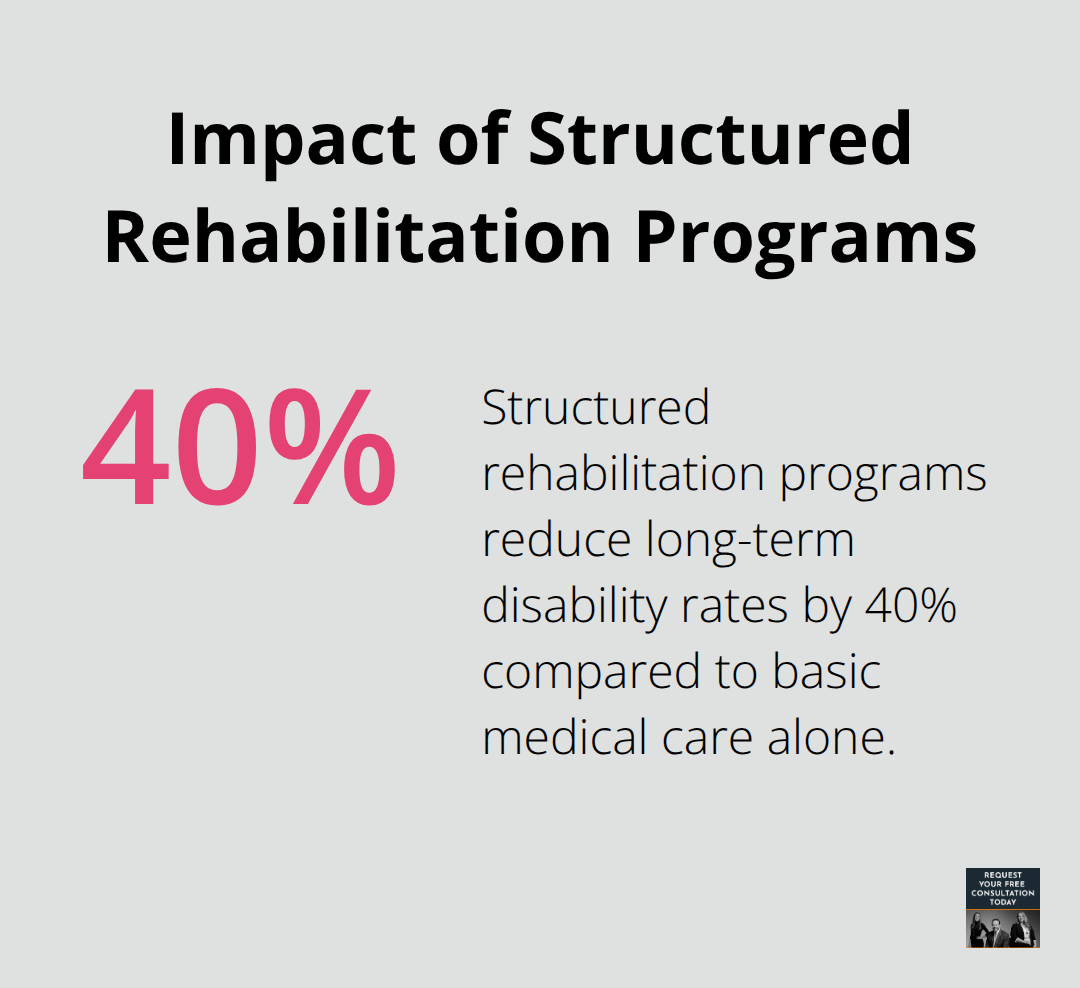
Physical therapy begins within 72 hours of injury stabilization at rehabilitation centers like Sutter Health Pacific. Speech therapists address memory and concentration problems that affect 60% of concussion patients beyond 30 days post-accident. Occupational therapy focuses on basic tasks like cooking and driving, with most patients requiring 3-6 months of structured treatment. Neuropsychological testing occurs at 6-week intervals to measure cognitive improvement and adjust therapy intensity. The Journal of Neurotrauma shows that structured rehabilitation programs reduce long-term disability rates by 40% compared to basic medical care alone.
Ongoing Support Prevents Complications
Long-term medical monitoring continues for 2-5 years after moderate to severe head injuries through neurology clinics. Monthly appointments track symptom changes like persistent headaches, sleep disorders, and mood fluctuations that develop in 25% of cases after the first year. Medication management addresses seizure prevention, with doctors prescribing anti-epileptic drugs for 18 months minimum when brain scarring occurs. Family counseling helps relatives understand behavioral changes and communication difficulties that persist in 30% of traumatic brain injury survivors (according to the Brain Injury Association of America). Extensive medical treatment is often necessary for car accident victims with serious injuries.
Final Thoughts
Common head injuries from car accidents demand immediate medical attention to prevent permanent brain damage. The first 48 hours after your crash determine your recovery outcome and make emergency evaluation essential for your future health and cognitive function. Quick medical response protects your brain from secondary damage that worsens outcomes.
Head injury victims in Santa Cruz County possess legal rights to compensation for medical bills, lost wages, and rehabilitation costs. Insurance companies often minimize brain injury claims, but documented medical evidence from emergency rooms and rehabilitation centers strengthens your case significantly. Medical records from hospitals like Dominican Hospital provide the proof you need for fair compensation.
We at Schaar & Silva LLP understand how head trauma affects families throughout our community (and we see these cases regularly in Santa Cruz County). Our team assists with medical bill management, evaluates property damage claims, and connects you with support during recovery. Schaar & Silva LLP serves Santa Cruz County families who need legal help after car accident injuries change their lives forever.
