

A car accident can leave you facing medical bills, lost income, and vehicle repairs you didn’t expect. Understanding automobile injury compensation helps you recover what you’re actually owed.
At Schaar & Silva LLP, we’ve helped accident victims in Santa Cruz County, Sacramento, and Oakland navigate the claims process and avoid costly mistakes. This guide walks you through the types of damages you can claim, the steps to take, and what to watch out for.
What Damages Can You Actually Recover
Medical Expenses and Future Care
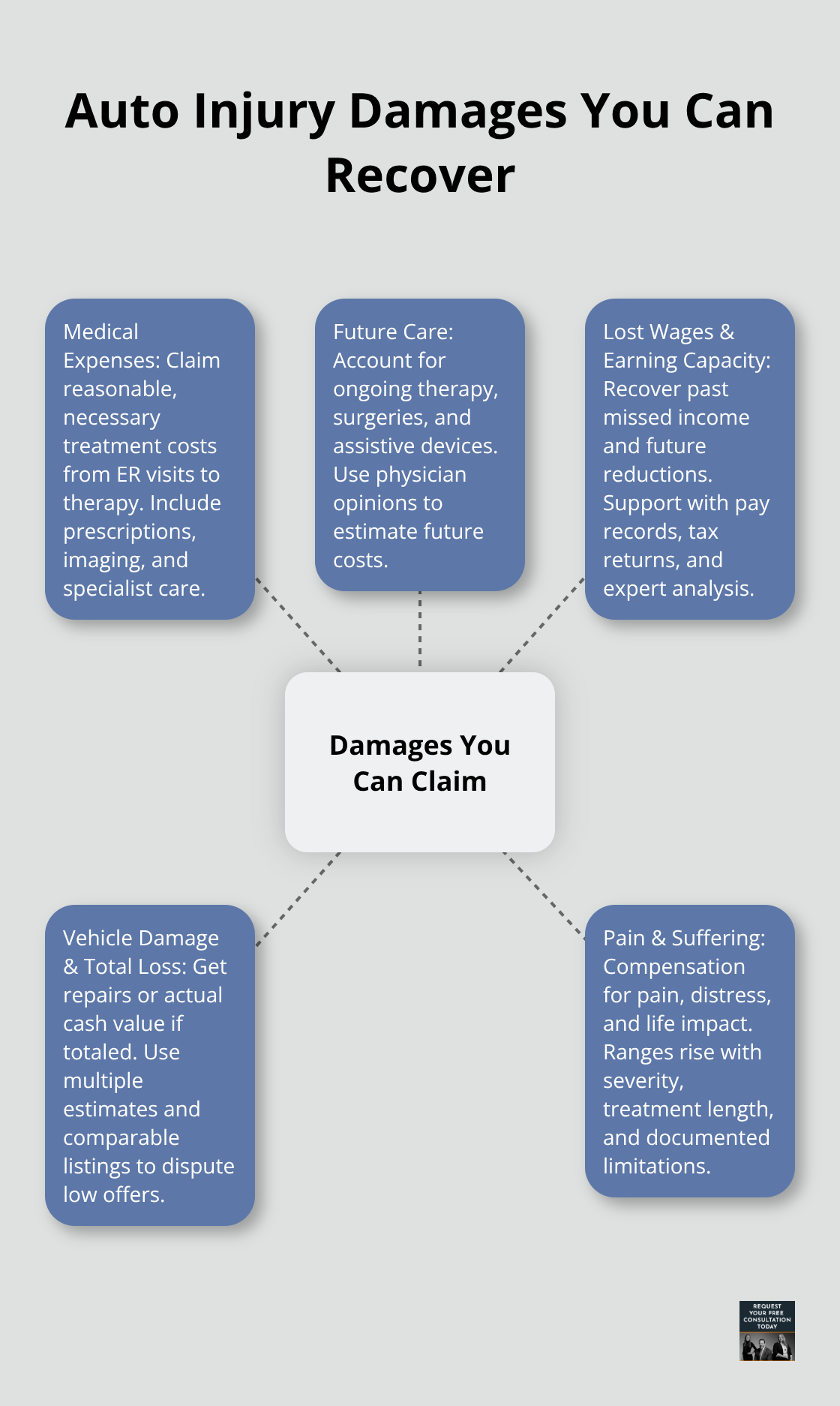
Medical bills pile up fast after an accident. Hospital visits, surgery, physical therapy, imaging scans, and medication costs reach thousands of dollars within weeks. You can claim all reasonable and necessary medical expenses that result directly from your accident, including current treatment and future care you’ll need. If you require ongoing physical therapy for a back injury or future surgeries for a spinal condition, those anticipated costs are recoverable too.
The key is documenting everything. You must keep every medical record, receipt, and bill. Insurance companies scrutinize medical claims heavily, so gaps in your documentation weaken your case. You should obtain detailed treatment summaries from each provider showing the injury, treatment provided, and how it relates to your accident.
Lost Wages and Earning Capacity
Lost wages represent income you couldn’t earn because of your injuries. If you missed work during recovery, were unable to return to your job, or lost earning capacity due to permanent disability, you can claim this. California courts recognize both past lost wages and future earning potential. A carpenter with a permanent hand injury loses not just the weeks off work but the lifetime income reduction from inability to perform the job.
You must document your lost wages with pay stubs, tax returns, and employer statements confirming missed work days and your normal earning rate. Self-employed individuals need tax documents and accounting records showing average monthly income before the accident.
Vehicle Damage and Total Loss Claims
Vehicle damage claims cover repair costs or the vehicle’s actual cash value if it’s totaled. The insurer typically pays the lesser of repair cost or the car’s fair market value at the time of loss. You should get multiple repair estimates from reputable shops, as insurers often push back on high quotes. If the vehicle is declared a total loss, the insurer calculates actual cash value based on make, model, mileage, and condition.
This valuation frequently underestimates what owners believe their vehicle was worth, so you should research comparable vehicles in your area using resources like NADA Guides or Kelley Blue Book to challenge lowball offers.
Pain and Suffering Damages
Pain and suffering damages compensate for the physical pain, emotional distress, and reduced quality of life from your injuries. California places no cap on these damages in auto accident cases, unlike some states. Whiplash injuries commonly settle between $5,000 and $20,000 depending on treatment costs and severity. Moderate concussions typically yield $20,000 to $30,000. Broken bones range from $30,000 to $100,000 based on fracture severity and recovery time. Herniated discs often settle $50,000 to $100,000 or higher with ongoing symptoms. Traumatic brain injuries and spinal cord injuries reach six figures or more.
The settlement amount depends on injury severity, medical expenses, lost wages, and how thoroughly you document your suffering through medical records and personal testimony about daily impact. Understanding these damage categories helps you prepare a stronger claim, but the actual process of pursuing compensation involves specific steps that separate successful claims from weak ones.
How to Move Your Claim Forward After an Accident
Act Immediately at the Scene
The first 48 hours after your accident determine whether your claim succeeds or fails. Stop at the scene, call 911 if anyone is injured, and notify police immediately. Obtain the other driver’s name, phone number, address, driver’s license number, and license plate. Photograph vehicle damage, road conditions, traffic signs, and the accident scene from multiple angles. If witnesses are present, collect their contact information and ask them to describe what they saw. California law requires you to report accidents involving injuries or property damage exceeding $750 to the DMV within 10 days-mark this deadline on your calendar now. Contact your insurance agent or insurer within 24 hours and provide a detailed account of the accident. Do not speculate about fault or accept blame, and never sign statements at the scene from the other party or their insurer.
Understand the Insurance Timeline
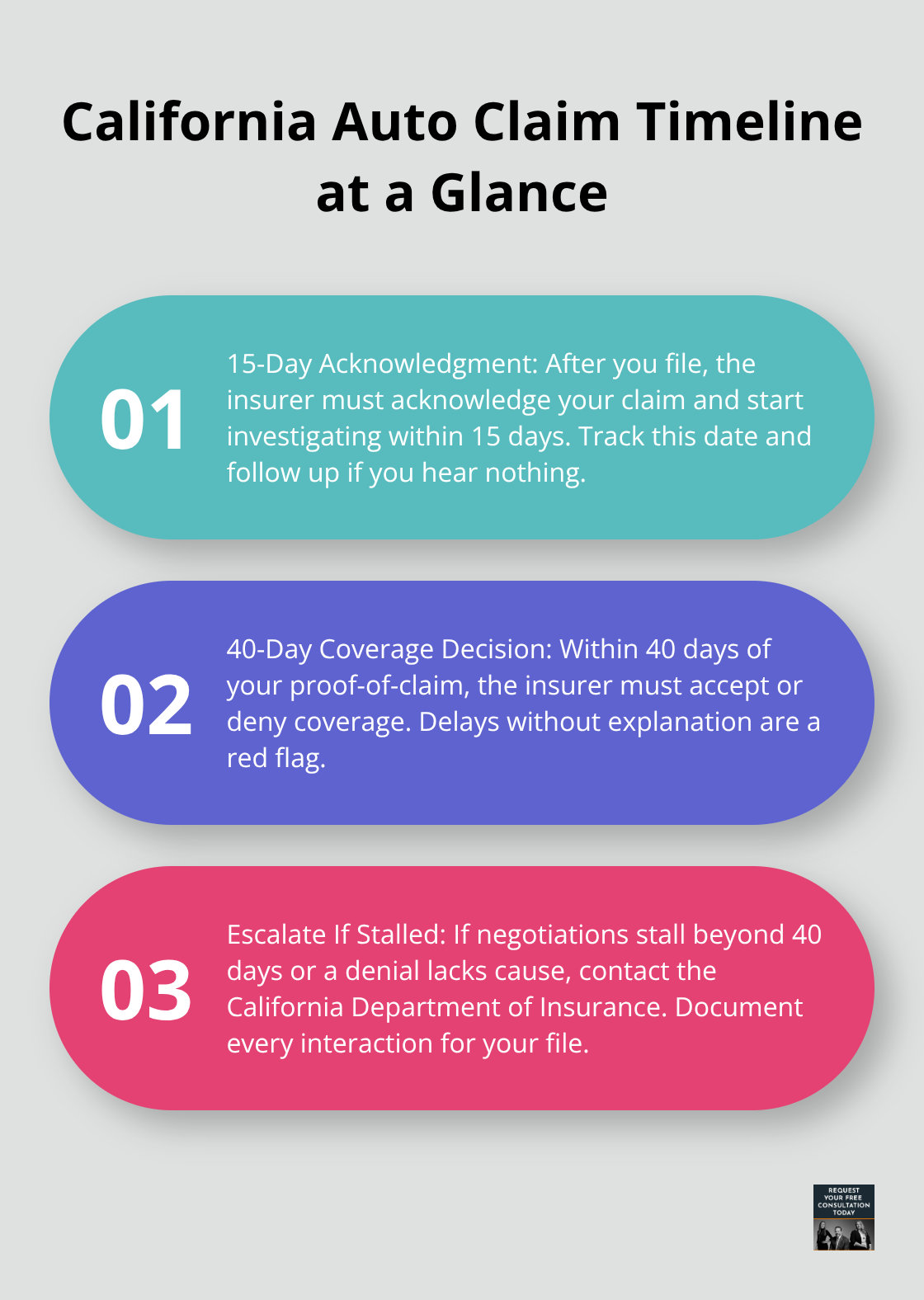
Once you file a claim, the insurer has 15 days to acknowledge it and begin investigation according to California’s Fair Claims Settlement Practices. Within 40 days after you submit proof of your claim, they must accept or deny coverage. This timeline matters because delays often signal resistance. If settlement negotiations stall beyond 40 days or the insurer denies your claim without cause, contact California’s Department of Insurance for assistance.
Build Your Documentation
Documentation wins claims. Collect every medical record, bill, and receipt from day one of treatment. Your doctor must document how your injuries connect to the accident, so provide accident details during your first visit. Keep a log of missed work days with your employer’s confirmation of your normal pay rate, or provide tax returns if self-employed. Photograph bruises, scars, and visible injuries regularly. This evidence strengthens your position when negotiating with the insurer.
Negotiate Strategically with Insurers
When negotiating with the insurer, their first offer is typically 30 to 50 percent below what your claim is worth, so do not accept it. The insurer will request detailed information including medical expenses, lost wages, and repair estimates. If you disagree on the vehicle’s value, most policies include an appraisal provision where each side selects an appraiser and an umpire determines the final binding amount (with costs split equally). Challenge lowball valuations by researching comparable vehicles in your area using resources like NADA Guides or Kelley Blue Book.
Pursue Legal Action When Necessary
Filing a lawsuit becomes necessary when the insurer refuses fair settlement. An attorney can file within California’s two-year statute of limitations and pursue damages through court, though most cases settle before trial when represented by counsel. The mistakes you make during negotiations and documentation directly impact whether you recover full compensation or accept far less than you deserve.
Decisions That Sabotage Your Settlement
Why Your First Offer Falls Short
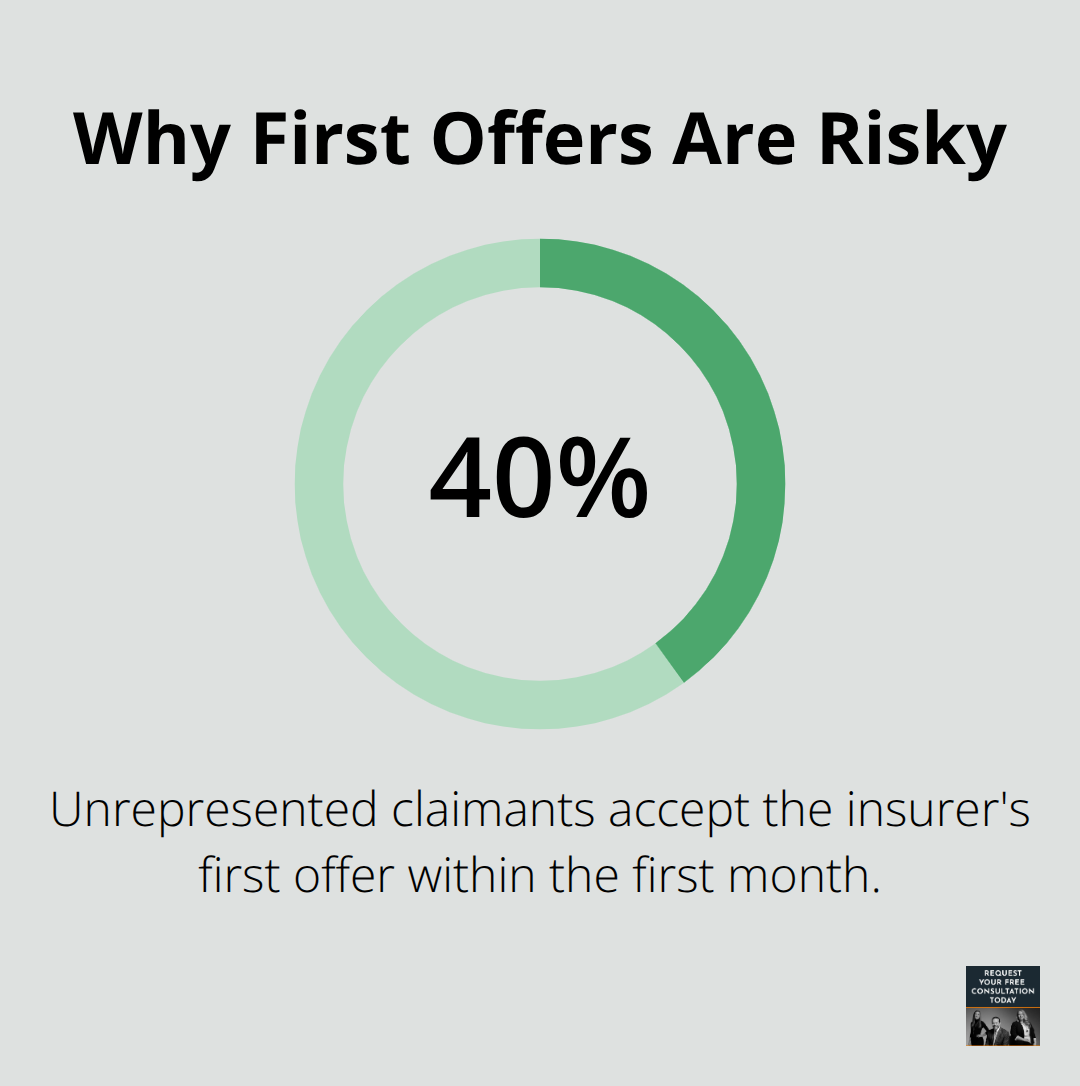
The difference between a strong settlement and a weak one often comes down to three or four critical decisions you make in the weeks after your accident. Insurance adjusters count on accident victims making these mistakes because each one weakens your negotiating position and reduces what you ultimately recover. The first settlement offer from an insurer averages 30 to 50 percent below actual claim value, yet roughly 40 percent of unrepresented claimants accept this initial proposal within the first month.
This happens because victims feel pressure to resolve the claim quickly and lack confidence in their valuation. Never accept the first offer. Insurers deliberately start low knowing most people lack the patience or documentation to push back. Your counteroffer should rest on documented medical expenses, lost wages, comparable vehicle values from NADA Guides or Kelley Blue Book, and pain and suffering ranges for your injury type.
Settlement Ranges by Injury Type
Whiplash cases settle between $5,000 and $20,000, moderate concussions between $20,000 and $30,000, and broken bones between $30,000 and $100,000 depending on severity. Herniated discs often reach $50,000 to $100,000 or higher with ongoing symptoms. Traumatic brain injuries and spinal cord injuries reach six figures or more. If the insurer refuses to move closer to these ranges after you present evidence, that signals bad faith and justifies legal action.
Documentation Gaps Destroy Claims
Documentation gaps destroy claims just as effectively as accepting lowball offers. Accident victims who skip medical appointments or delay treatment create obvious holes that adjusters exploit to deny or reduce claims. Every missed appointment tells the insurer your injuries weren’t serious enough to prioritize.
You must obtain detailed medical records from each provider showing the direct connection between your accident and your treatment, not just billing statements. Keep a personal log documenting daily pain levels, mobility limitations, and how injuries affect work and daily activities since these details support pain and suffering claims.
Social Media and Direct Communication Mistakes
Social media posts about your accident or recovery are weaponized against you constantly. Insurance investigators screenshot posts showing you at social events, exercising, or appearing happy, then argue these contradict your injury claims. Do not post about your accident, injuries, treatment, or recovery on any platform.
Speaking directly with the other party’s insurance adjuster without representation is equally damaging because anything you say becomes part of the claim record and can be used against you. Adjusters are trained to ask leading questions that elicit statements minimizing your injuries or admitting partial fault. You should refer all communications to your attorney or insurer. These four mistakes compound each other, transforming a potentially strong $50,000 claim into a $15,000 settlement or denial.
Final Thoughts
Automobile injury compensation covers medical expenses, lost wages, vehicle damage, and pain and suffering, but only if you navigate the claims process correctly. Insurance companies profit by paying claims as little as possible, so their initial offers are deliberately low and their adjusters are trained to minimize your injuries. The decisions you make in the weeks after your accident determine whether you recover full damages or accept a fraction of what you deserve.
We at Schaar & Silva LLP have helped accident victims in Santa Cruz County, Sacramento, and Oakland recover the compensation they actually deserve by handling the legal intricacies while you focus on healing. We assist with property damage claims to verify fair vehicle valuations, help direct you to medical lien services so bills don’t pile up while your case resolves, and connect you with psychological support specialists who understand trauma from accidents. Your next step is straightforward: contact Schaar & Silva LLP to discuss your accident and what compensation you can pursue.
Bring documentation of your medical treatment, lost wages, and vehicle damage so we can evaluate your claim and explain what you’re entitled to recover. We handle negotiations with the insurer so you’re not pressured into accepting less than you deserve, and the statute of limitations gives you two years to file a lawsuit. Acting now preserves evidence and strengthens your position.
