
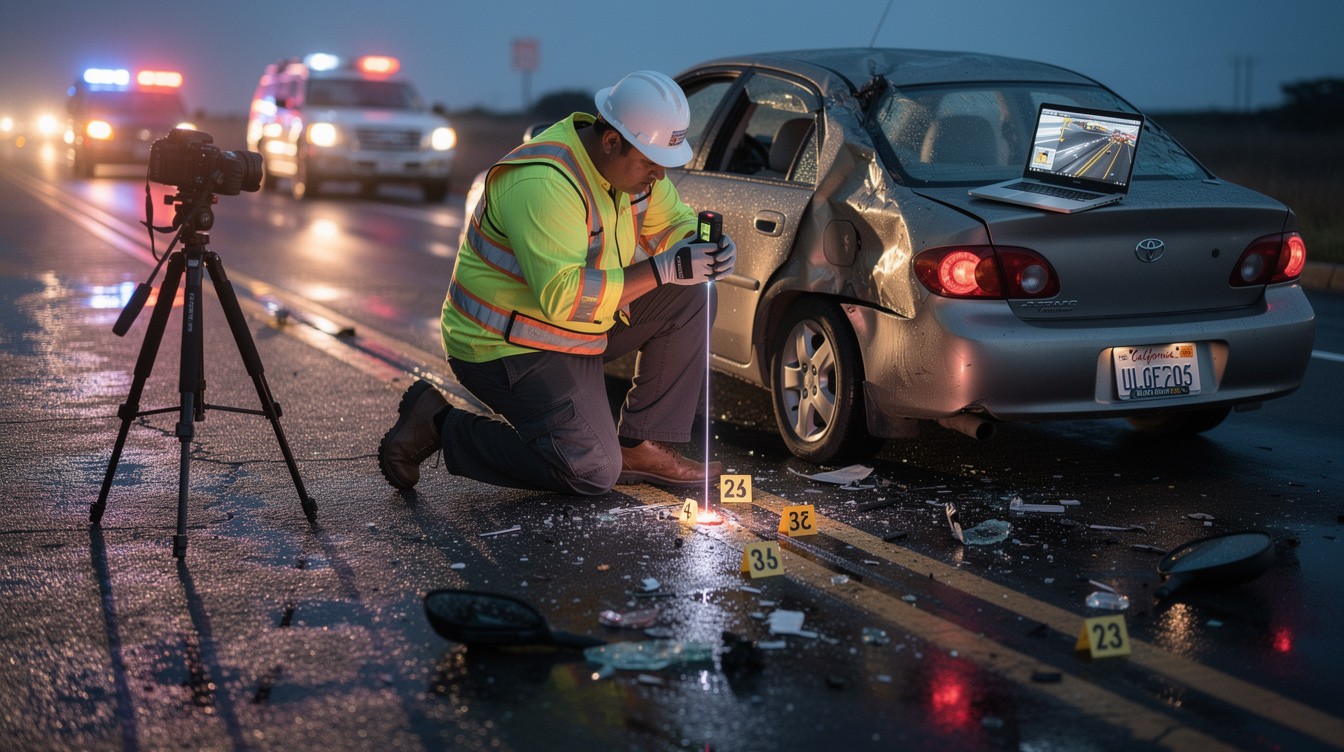
After a serious accident, you need concrete evidence to prove what actually happened. Physical evidence from the scene tells a story that insurance companies and courts take seriously.
At Schaar & Silva LLP, we’ve seen how accident reconstruction expert California professionals can transform a case by analyzing vehicle damage, road conditions, and physics data. This analysis often makes the difference between a weak claim and one that holds up under scrutiny.
How Accident Reconstruction Reveals What Really Happened
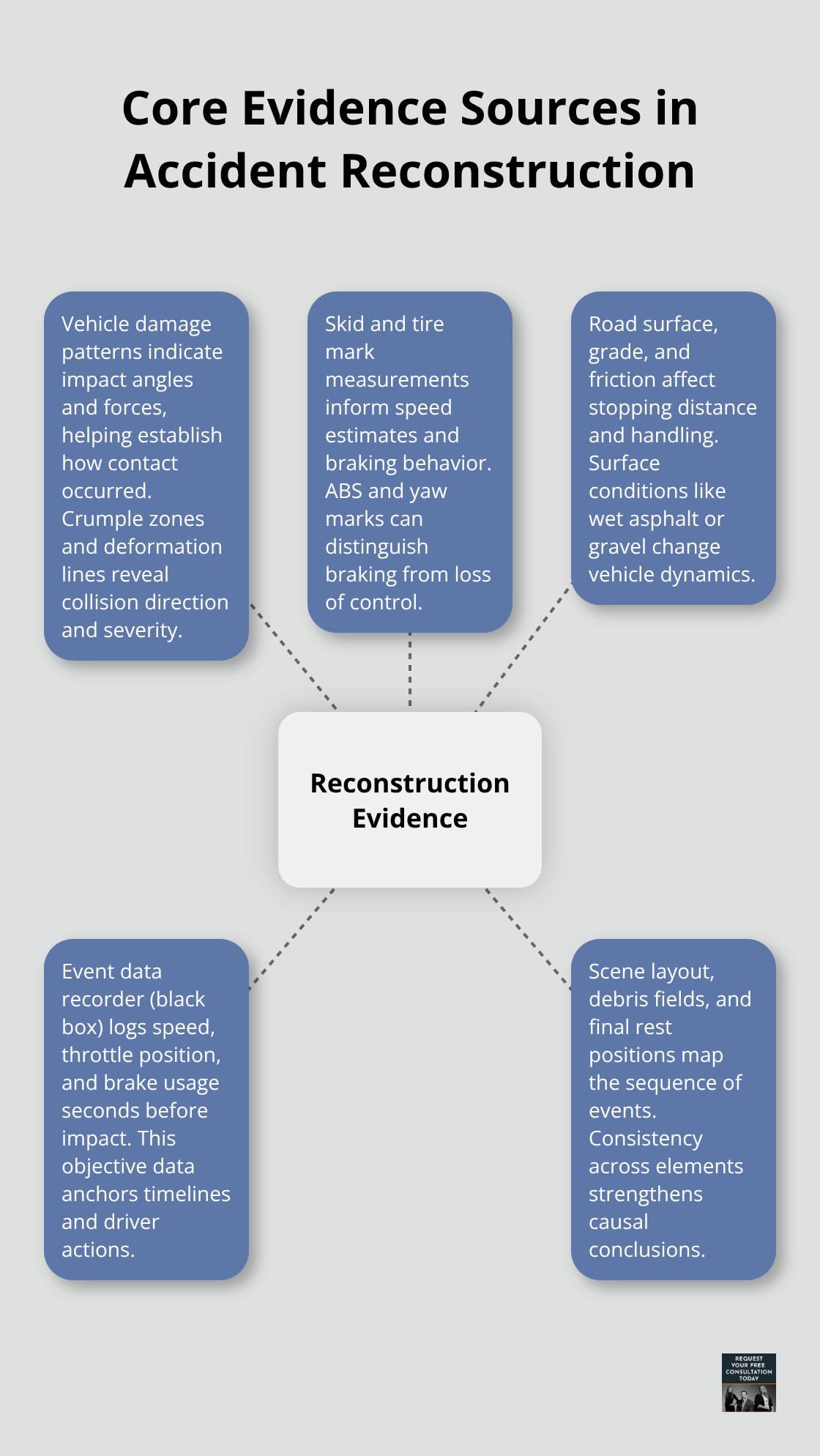
Accident reconstruction professionals use physics, engineering analysis, and physical evidence to determine exactly how a crash occurred. They examine vehicle damage patterns, measure skid marks, analyze road surface conditions, and review data from vehicle black boxes to establish speed, braking force, and impact angles. This isn’t guesswork-it’s applied science that courts recognize as credible testimony.
When you’re injured in a crash, the insurance company’s initial narrative often favors their policyholder. Reconstruction work counters that bias by presenting objective, measurable data about fault and liability.
Why Vehicle Data Matters More Than Witness Statements
Modern vehicles contain black box data recorders that capture critical information during a crash, including speed at impact, throttle position, and whether brakes were applied. This data is factual and cannot be disputed or misremembered the way witness accounts can be. A reconstruction professional downloads this information using specialized equipment and interprets what it reveals about driver behavior in the seconds before collision.
In California accident cases, this data often becomes the strongest evidence because it eliminates the human tendency to rationalize or misremember events. Insurance adjusters know this, which is why they move quickly to secure vehicles-they want to prevent this analysis from happening.
Physical Evidence Tells a Consistent Story
Road markings, tire marks, vehicle position after impact, and debris scatter patterns all follow predictable physics laws. A qualified reconstruction professional measures these elements at the scene or from photographs and uses them to map the sequence of events. Environmental factors like road grade, surface friction, lighting conditions, and weather conditions during the crash all influence how vehicles behave during collision.
When reconstruction analysis shows that the other driver’s speed was incompatible with their claimed version of events, or that road conditions made their reaction time impossible, that evidence becomes difficult for insurance companies to challenge. These findings establish a foundation for the next critical step: using this scientific analysis to determine who actually bears responsibility for the accident.
How Reconstruction Data Strengthens Your Claim
Reconstruction analysis directly impacts how much money you recover from your accident. When a professional analyzes vehicle data, physical evidence, and road conditions, they create an objective record that insurance companies cannot easily dismiss. This scientific foundation shifts negotiations in your favor because insurers know that weak liability positions become expensive in court. In California, cases supported by reconstruction data settle for significantly higher amounts than those relying solely on witness accounts and police reports. The data shows what happened; interpretation becomes secondary when the physics speak for themselves.
The Settlement Negotiation Advantage
Insurance adjusters make initial settlement offers based on incomplete information. They often lowball injury claims when liability appears unclear or contested. Reconstruction analysis changes this dynamic immediately.
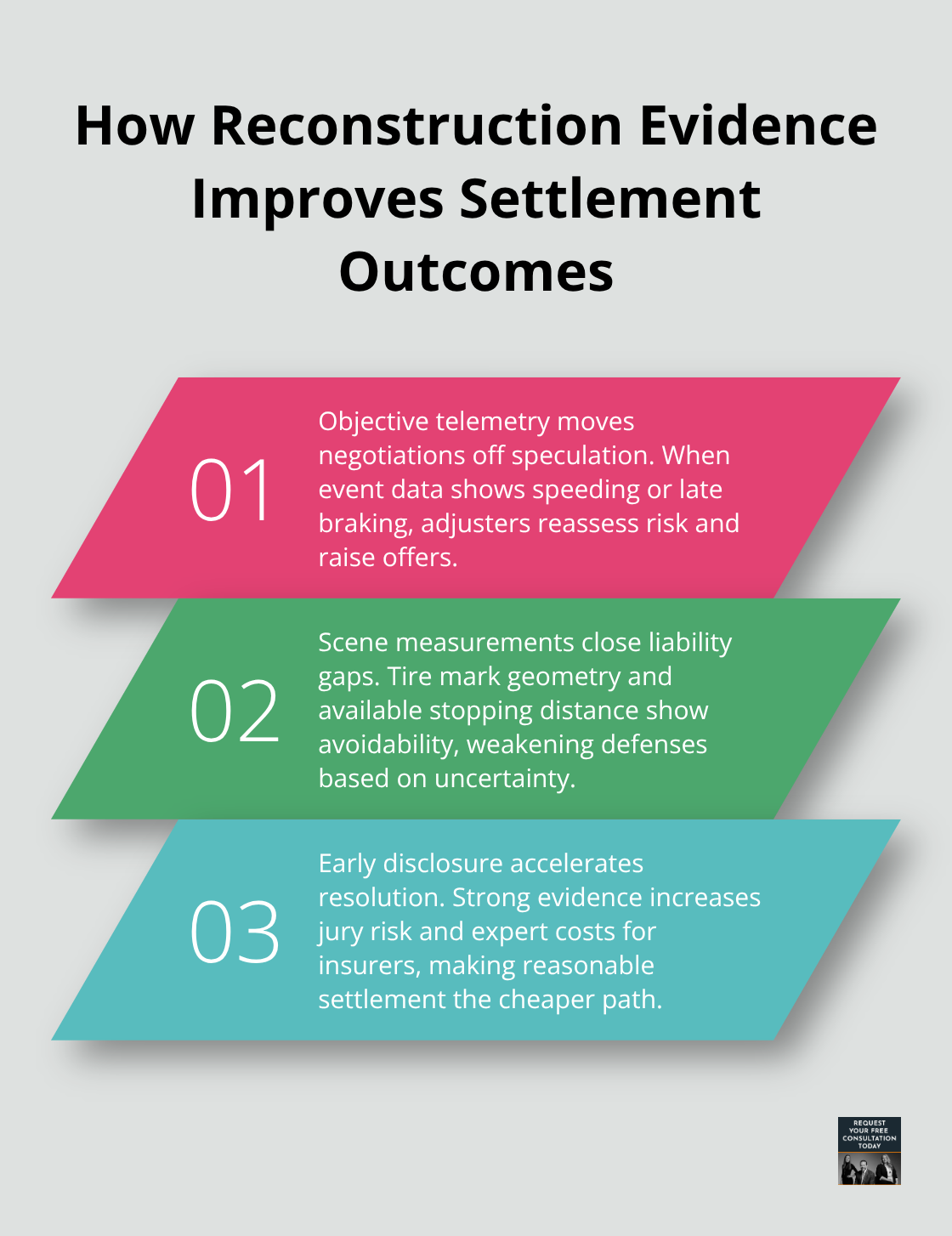
When you present black box data showing the other driver traveled 15 miles per hour over the speed limit at impact, or when tire mark measurements prove they had adequate distance to brake but did not, the adjuster’s negotiating position weakens substantially. Introducing reconstruction evidence early in negotiations typically accelerates settlement discussions and increases the final offer. Adjusters recognize that a jury would likely find this evidence compelling, making extended litigation more expensive for their company than a reasonable settlement. The cost of hiring their own reconstruction professional to challenge your findings adds another layer of expense they prefer to avoid.
Building Credibility in Court
If your case reaches trial, reconstruction testimony carries substantial weight with juries because it removes emotion and relies on measurable facts. A professional who can explain how vehicle speed was calculated from black box data, or how skid mark length proves the other driver had time to avoid the collision, presents information that jurors understand and trust. California courts regularly admit reconstruction testimony under evidence rules because it is based on established engineering principles and physics. Juries in Santa Cruz, Sacramento, and Oakland have consistently weighted this scientific evidence heavily when determining fault and damages. Without this analysis, your case depends on competing narratives and credibility assessments that favor neither party clearly. With reconstruction evidence, the narrative becomes objective and difficult to contradict effectively during cross-examination.
Why Insurance Companies Fear Reconstruction Evidence
Insurers understand that reconstruction analysis eliminates the ambiguity they exploit in weaker claims. When physical evidence contradicts their policyholder’s account, they face a choice between settling reasonably or spending thousands on expert testimony that may not hold up under scrutiny. The financial calculus shifts dramatically in your favor. Most adjusters would rather close a case with reconstruction evidence than risk a jury verdict based on that same evidence. This reality makes reconstruction analysis one of the most powerful tools available in personal injury claims throughout California.
The strength of your evidence determines not only whether you win, but how much you recover. Understanding what happens when reconstruction findings contradict the other driver’s story reveals why the next step-avoiding common mistakes in how this analysis is conducted-matters so much to your outcome.
Common Mistakes in Accident Reconstruction and How to Avoid Them
Misinterpreting Physical Evidence at the Scene
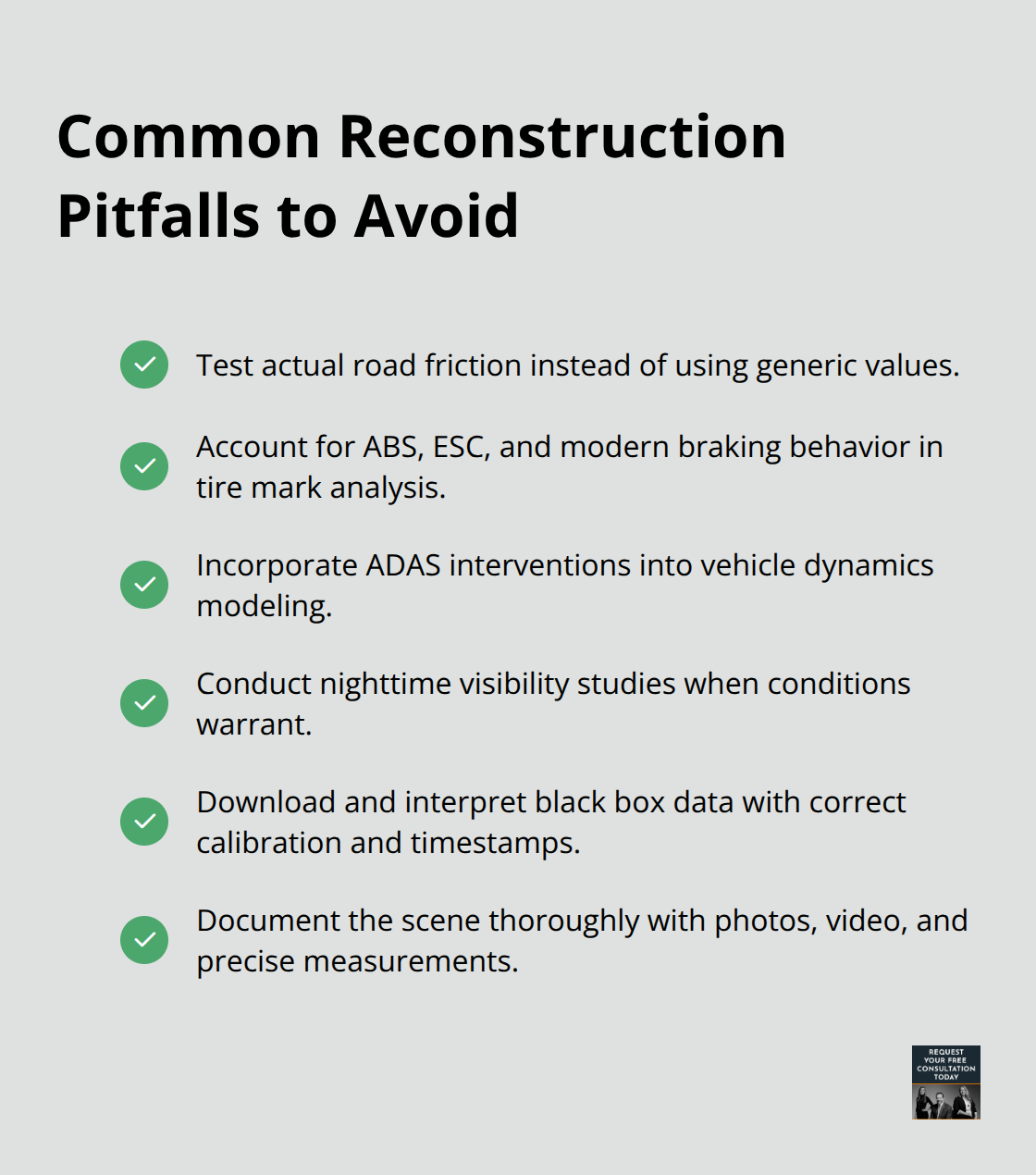
Reconstruction analysis appears straightforward until you examine how it actually gets conducted. Insurance companies and some investigators cut corners that undermine the entire analysis, and these mistakes directly reduce what you recover from your claim. The most damaging error occurs when someone measures physical evidence without accounting for how vehicles actually behave during impact. Tire marks do not always indicate braking distance in the way most people assume. A vehicle with anti-lock braking systems produces different mark patterns than older vehicles without this technology.
Road surface conditions matter enormously-wet asphalt generates different friction coefficients than dry concrete, and this difference can shift calculated speeds by 10 to 15 miles per hour. Some investigators use generic friction values instead of testing the actual road surface where the accident occurred. This single mistake inflates or deflates liability calculations substantially.
Advanced Driver Assistance Systems and Vehicle Dynamics
Modern vehicles with electronic stability control or automatic braking systems respond to emergency situations differently than vehicles without these features. If the analysis assumes traditional physics without accounting for ADAS intervention, the conclusions become unreliable. Advanced Driver Assistance Systems present complications that many reconstruction professionals overlook entirely.
Environmental factors create additional pitfalls that careless analysis misses. Nighttime visibility analyses require specific calculations about street lighting, vehicle headlight effectiveness, and pedestrian visibility under darkness. Some investigators skip this work entirely, assuming standard daytime visibility applies to nighttime crashes. This oversight becomes critical in Sacramento and Oakland accident cases where street lighting varies dramatically between neighborhoods.
Black Box Data Handling and Interpretation
The cost of flawed reconstruction work compounds throughout your case. Insurance adjusters exploit weak analysis by challenging every conclusion, which delays settlement and forces you toward trial. A reconstruction professional must download vehicle black box data correctly, interpret it accurately, and explain what throttle position, brake pressure, and speed tell you about driver behavior. Mishandling this data-failing to account for sensor calibration or misreading timestamps-invalidates the entire analysis.
Thorough scene documentation through photographs, videography, and when appropriate, photogrammetry and drone imaging creates an independent verification layer that prevents later disputes about what physical evidence actually showed. Santa Cruz County cases particularly benefit from this documentation approach because investigators can reference precise measurements months or years after the accident occurred.
Legal Requirements and Traffic Analysis
The reconstruction professional you select must understand California vehicle codes and how they apply to speed limits, right-of-way rules, and traffic signal timing. Determining who had the green light at an intersection requires analysis of signal timing data, witness statements, and vehicle positioning-not guesswork. When reconstruction analysis fails to address these legal requirements alongside the physics, the conclusions lack the credibility needed for settlement negotiations or trial presentation.
Final Thoughts
Accident reconstruction analysis transforms how your personal injury claim gets evaluated and resolved. The scientific evidence gathered from vehicle data, physical measurements, and environmental analysis creates an objective foundation that insurance companies cannot easily dismiss. When reconstruction findings contradict the other driver’s account, your negotiating position strengthens immediately, and settlement offers typically increase substantially.
Protect the physical evidence by documenting the scene thoroughly through photographs and video before vehicles are moved or repaired. Request that your vehicle not be released to a salvage yard until a qualified accident reconstruction expert in California has examined it. Obtain the police report and any available witness statements quickly, as memories fade and details become harder to verify later.
Contact Schaar & Silva LLP to discuss how reconstruction analysis can strengthen your claim and what your case may be worth based on the evidence available. Our team connects you with medical lien services to address mounting bills while your case progresses and assists with property damage claims to ensure fair valuation. We serve Santa Cruz County and understand the specific challenges accident victims face in your region.
