
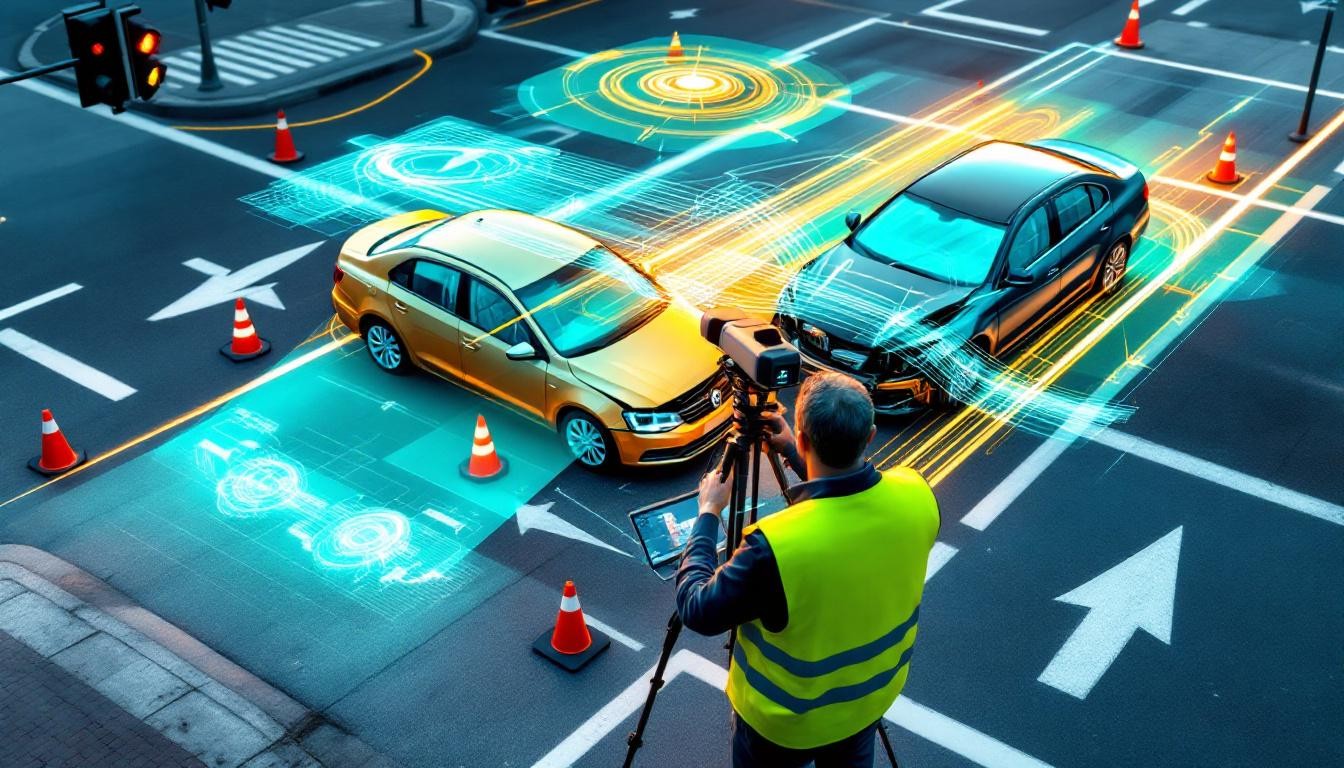
When a crash happens in Santa Cruz County, Sacramento, or Oakland, the physical evidence at the scene tells a story that most people miss. An accident reconstruction expert can read that story-from skid marks to vehicle positioning to impact damage-and reveal exactly what happened before, during, and after the collision.
This evidence becomes powerful when you’re fighting for fair compensation. We at Schaar & Silva LLP have seen how reconstruction findings shift settlements and strengthen claims that might otherwise stall.
How Experts Read the Physical Evidence
Vehicle Damage Reveals Impact Dynamics
Accident reconstruction experts examine vehicle damage with forensic precision, measuring crush patterns, deformation angles, and structural failure points to calculate the exact forces involved at impact. The location and severity of damage reveals the point of impact and the direction of force-information that contradicts what witnesses often believe happened.
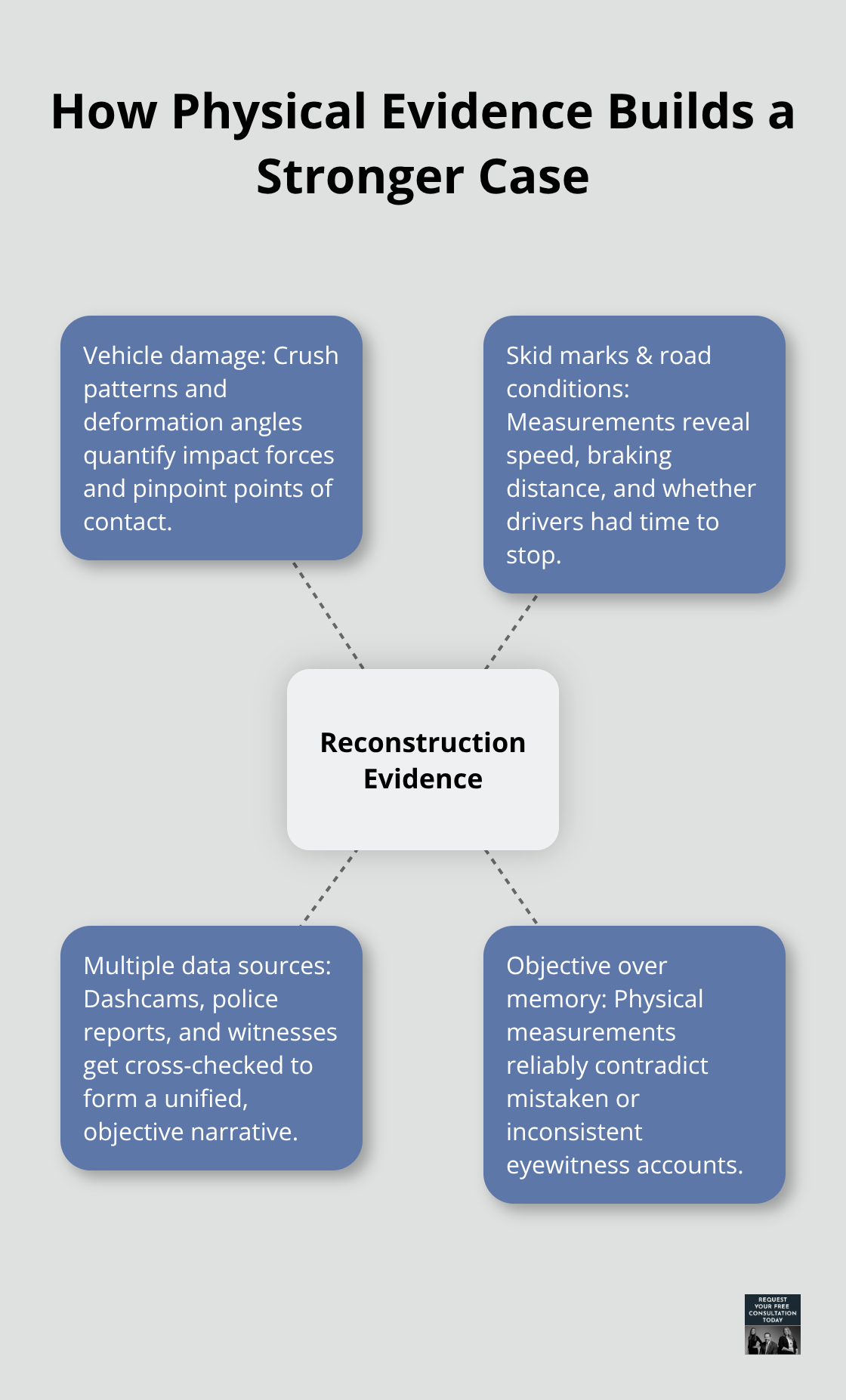
A vehicle crushed on the driver’s side tells a completely different story than one with frontal damage, and experts pinpoint impact angles to within a few degrees. When you fight a liability dispute, this physical evidence becomes your strongest argument because it remains objective and measurable, not dependent on memory or perception.
Skid Marks and Road Conditions Establish the Timeline
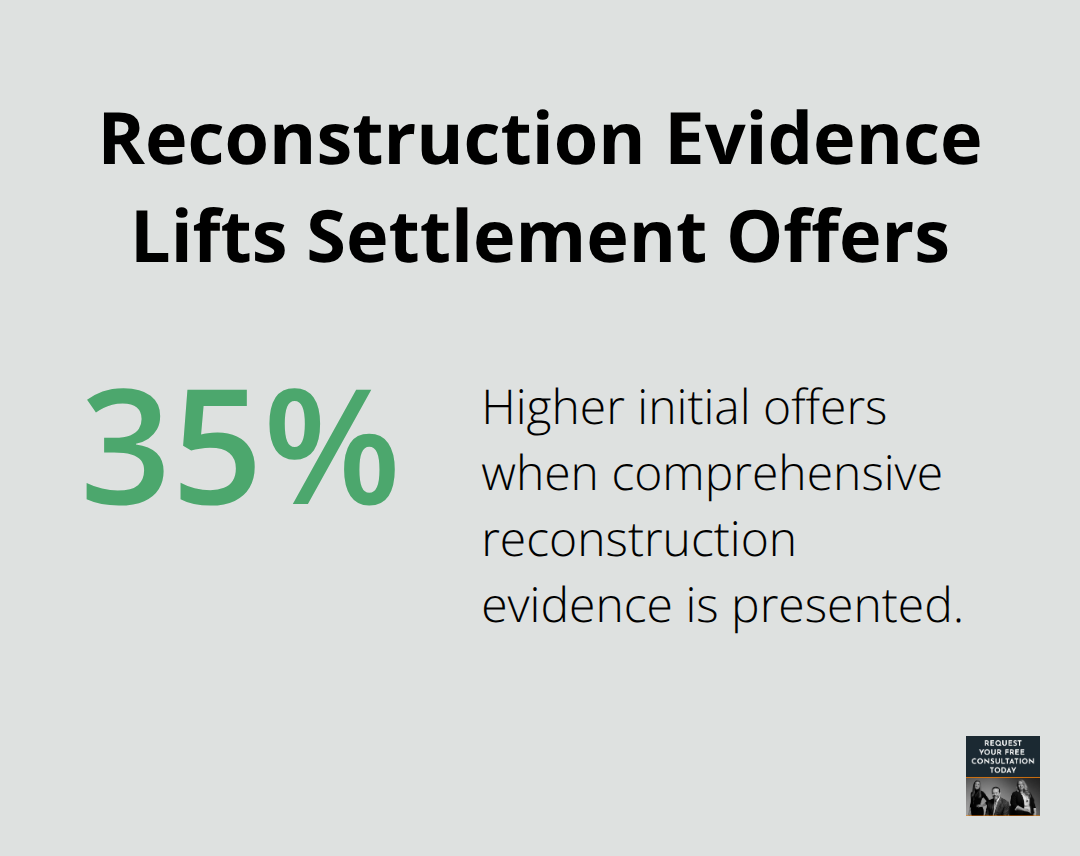
Skid marks, tire marks, and road surface conditions provide the timeline of what drivers did before collision occurred. Experts measure these marks precisely using photogrammetry and 3D laser scanning to determine braking distances, speed estimates, and whether a driver had time to stop. Road conditions matter significantly-wet pavement, gravel, or debris all affect braking capability and vehicle control. The Insurance Research Council found that cases incorporating comprehensive reconstruction evidence settle for approximately 35 percent higher initial offers than those relying solely on witness testimony.
Multiple Data Sources Strengthen Your Case
Dashcam footage, when available, gets analyzed frame-by-frame to verify physical evidence and establish exact timing. Police reports provide the baseline, but reconstruction experts often find inconsistencies between what officers documented and what the physical evidence actually shows. Witness statements help fill gaps, though experts know from experience that eyewitness accounts frequently contradict the facts. When multiple data sources align-dashcam footage matching skid marks matching vehicle damage (creating a unified narrative)-the reconstruction becomes nearly unassailable in settlement negotiations or trial.
This convergence of physical evidence sets the stage for understanding how experts determine fault and liability in your specific accident.
How Physical Evidence Determines Who Was At Fault
Speed Calculations Expose Driver Negligence
Speed calculations from vehicle damage and skid marks form the foundation of fault determination, and these calculations prove far more reliable than what any witness claims they saw. Reconstruction experts use crush analysis to determine impact speeds with mathematical precision, measuring the depth and direction of deformation to calculate the forces involved at collision. When a vehicle shows severe crush damage concentrated on one side, the expert can estimate speed within a narrow range because the physics of metal deformation follows predictable patterns. Braking distance becomes critical in establishing liability because it reveals whether a driver had adequate time and opportunity to avoid the crash. The Insurance Research Council documented that cases with comprehensive reconstruction evidence settle for roughly 35 percent higher initial offers than those without expert analysis.
If skid marks show a driver braked only 20 feet before impact when physics indicates 60 feet were available at that speed, the evidence points directly to negligence. This objective data cuts through disputes and contradicts drivers who claim they did everything possible to stop.
Vehicle Positioning Reveals Pre-Crash Movements
Vehicle positioning and final rest locations provide spatial proof of pre-crash movements and driver actions that witnesses misremember or misinterpret. Experts measure the distance from impact point to where each vehicle came to rest, calculating momentum transfer and post-impact trajectory to understand exactly where the collision occurred and which vehicle occupied which lane. A vehicle that ended up 80 feet away reveals different impact dynamics than one that stopped 20 feet away, and these measurements establish whether a driver was in their proper lane or had crossed into oncoming traffic. Positioning evidence also reveals whether drivers attempted evasive maneuvers, as sudden directional changes leave distinct marks on pavement and create specific damage patterns that contradict claims of unavoidable collisions.
Pedestrian Impact Evidence Pinpoints Liability
When pedestrian accidents occur, final rest position of the person involved combined with vehicle damage location pinpoints the exact moment and angle of impact, information that determines whether the driver had visibility and time to react. The Journal of Transportation Safety found that plaintiffs using reconstruction testimony prevailed in 73 percent of disputed liability cases compared to just 52 percent without expert analysis, a stark difference driven largely by the persuasive power of physical positioning evidence that leaves no room for interpretation. This same evidence foundation applies to multi-vehicle collisions, where impact angles and positioning patterns reveal which driver initiated the chain of events and which drivers bore responsibility for secondary impacts.
What Reconstruction Experts Find in Multi-Vehicle and Pedestrian Crashes
Blind Spots Create Measurable Liability
Blind spots cause far more collisions than most drivers realize, and reconstruction experts prove this by analyzing vehicle positioning, sight lines, and driver positioning at the moment of impact. When a vehicle merges into another lane or turns across traffic, the expert measures the exact angle of approach, calculates what the driver could have seen from their seating position, and identifies whether large vehicles like trucks or SUVs blocked visibility of smaller cars. The FMCSA reported 164,347 crashes involving trucks and buses in 2023, many stemming from visibility failures that reconstruction analysis exposes with precision. Experts use 3D laser scanning and photogrammetry to recreate the driver’s field of view from the exact moment before collision, showing whether a car existed in a blind spot or whether the driver simply failed to look. This evidence matters enormously in settlement negotiations because it transforms vague claims about not seeing another vehicle into measurable proof that visibility was genuinely obstructed or that the driver never attempted to check their mirrors and blind spots.
Environmental Conditions Affect Visibility and Fault
Road conditions amplify visibility problems significantly. Rain, fog, or sun glare reduce sight distance, and reconstruction experts factor these environmental conditions into their analysis of what drivers could reasonably have perceived. A driver who claims they never saw an oncoming vehicle faces powerful contradictory evidence when reconstruction shows clear visibility and adequate sight lines at the moment of impact. Experts document weather conditions, time of day, and lighting at the crash scene to establish what visibility actually existed, not what drivers claim they experienced.
Chain Reactions Reveal Sequence and Liability
Chain reaction crashes reveal complex liability patterns that single-vehicle analysis cannot establish, and reconstruction proves which driver initiated the sequence and which drivers bear secondary responsibility. When three or more vehicles collide, the first impact often forces one vehicle into a second vehicle, creating disputes over who caused the overall accident and who bears liability for injuries in the third vehicle. Experts measure impact angles and final rest positions for each vehicle to establish the sequence of collisions, determining whether the middle vehicle was struck first or whether it contributed to the chain by failing to avoid the initial impact.
Pedestrian Impact Dynamics Expose Driver Negligence
Pedestrian accidents demand specialized reconstruction because the human body leaves distinct impact signatures. Contact points on the vehicle, pedestrian final rest position, and clothing or personal item scatter patterns all reveal the angle and speed of impact. Injuries sustained in pedestrian collisions correlate directly to impact dynamics, so reconstruction experts work alongside biomechanical specialists to assess whether reported injuries align with the forces calculated from vehicle damage and impact positioning. NHTSA’s enhanced Event Data Recorder specifications now capture 20 seconds of pre-crash data at 10 Hz sampling frequency, providing detailed information about vehicle speeds, braking, and steering inputs that clarify driver actions in multi-vehicle scenarios where accident reconstruction experts and thorough investigations become essential for establishing liability.
Final Thoughts
Accident reconstruction experts transform physical evidence into objective proof that settles disputes and strengthens claims. The data they extract from vehicle damage, skid marks, positioning, and environmental conditions reveals what actually happened at the moment of impact, cutting through conflicting witness accounts and driver claims. Cases with comprehensive reconstruction evidence settle for approximately 35 percent higher initial offers, and plaintiffs using reconstruction testimony prevail in 73 percent of disputed liability cases compared to 52 percent without expert analysis.
Your personal injury claim gains credibility when reconstruction findings support your version of events. An accident reconstruction expert can establish that the other driver exceeded safe speeds, failed to brake adequately, or occupied a lane they had no right to occupy. In pedestrian accidents, reconstruction pinpoints impact angles and forces that correlate directly to your injuries, proving the collision was severe enough to cause the harm you sustained. For multi-vehicle crashes, reconstruction reveals which driver initiated the chain reaction and which drivers bear secondary responsibility, clarifying liability when multiple parties share fault.
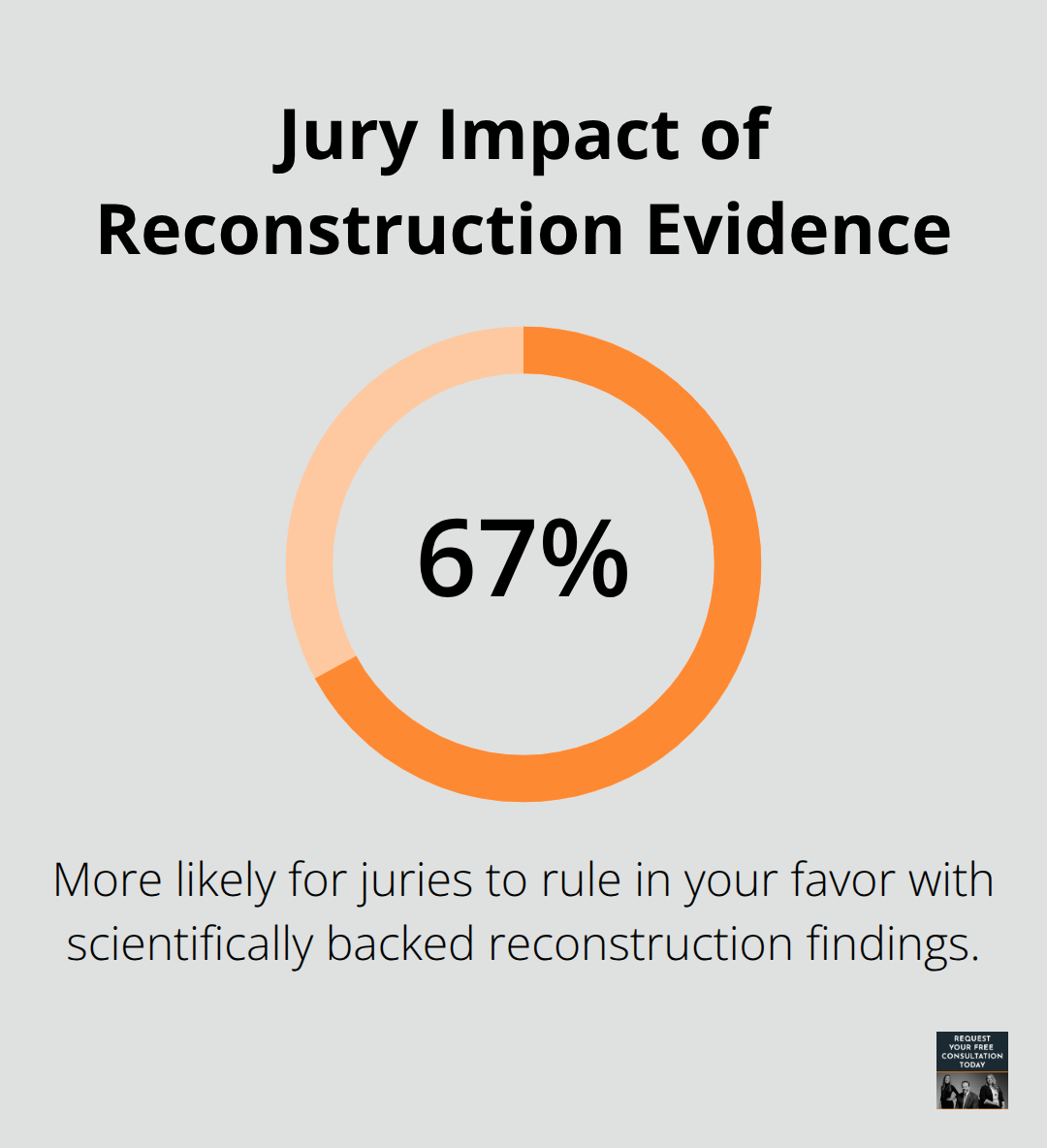
Settlement negotiations shift dramatically when you present reconstruction evidence to insurance adjusters, who know that juries are 67 percent more likely to rule in your favor with scientifically backed reconstruction findings. The cost of hiring an accident reconstruction expert typically ranges from $5,000 to $15,000, but the return on investment in decisive cases reaches approximately 7 to 1.
Contact us for a free case review to discuss whether accident reconstruction could enhance your claim and help you secure the compensation you deserve.
