
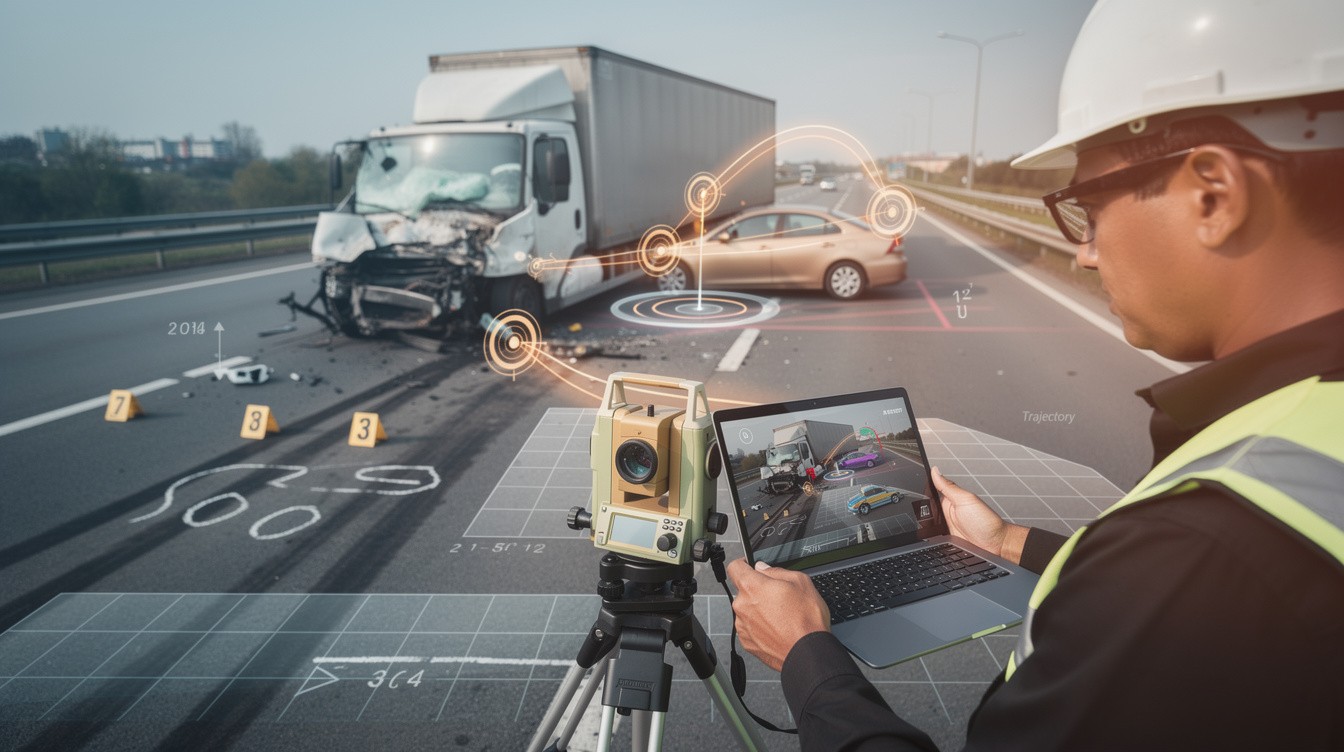
When a truck or auto accident happens, the physical evidence tells a story that insurance companies and courts need to understand. An accident reconstruction professional analyzes crash scenes, vehicle damage, and road conditions to determine exactly what occurred.
We at Schaar & Silva LLP work with these professionals to build strong cases for our clients in Santa Cruz County, Sacramento, and Oakland. Their findings often make the difference between a denied claim and fair compensation.
What Reconstruction Professionals Actually Analyze
Collecting Physical Evidence at the Scene
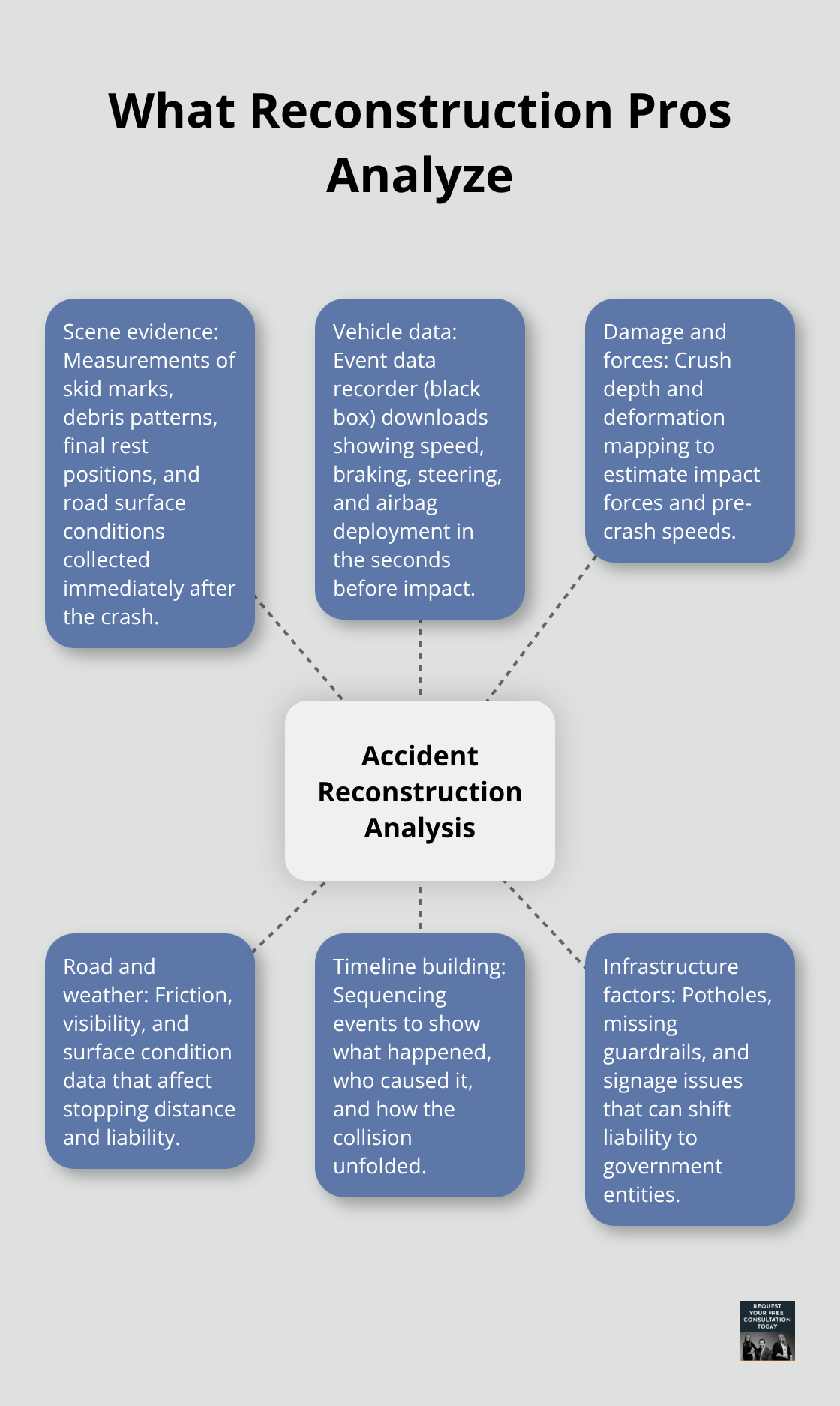
Accident reconstruction professionals collect physical evidence directly from the crash scene, and this step determines everything that follows. They measure skid marks, photograph debris patterns, document vehicle final resting positions, and record road surface conditions within hours or days of the collision. The National Highway Traffic Safety Administration emphasizes that preserving this evidence early matters because road conditions change, debris gets cleared, and vehicle positions shift. In California, rain and seasonal flooding alter road surface data within 24 hours, making immediate scene documentation critical for cases in Santa Cruz County and the surrounding regions.
Extracting Data from Vehicle Systems
Modern trucks and cars record critical information automatically through event data recorders (commonly called black boxes), which capture vehicle speed, brake application timing, steering input, and airbag deployment in the seconds before impact. Reconstruction professionals pull this data and analyze it because insurance companies increasingly demand access to it-it removes guesswork from liability disputes. This electronic information often contradicts what drivers claim happened, providing objective proof of pre-crash actions.
Analyzing Vehicle Damage and Impact Forces
Vehicle damage reveals far more than surface-level information about where cars made contact. Reconstruction professionals measure crush depth, document deformation patterns, and analyze how metal bent or folded during impact to calculate the forces involved and estimate pre-crash speeds. They examine whether potholes, missing guardrails, or poor road markings contributed to the crash-information that can shift liability toward government entities responsible for road maintenance.
Reading the Road and Weather Conditions
Road conditions matter enormously, particularly in Northern California where fog reduces visibility and wet pavement changes stopping distances dramatically. Skid marks and tire impressions show braking behavior, evasive maneuvers, and whether a driver had time to react. Weather data from the National Weather Service for the specific time and location of your accident gets factored into speed estimates and visibility assessments.
Building Your Case Timeline
This comprehensive analysis transforms scattered physical evidence into a coherent timeline that shows exactly what happened, who caused it, and how the collision unfolded. When reconstruction findings contradict insurance company denials or driver statements, they provide the objective foundation needed to move your case forward.
How Reconstruction Findings Shift Power Back to You
Insurance Companies Face Objective Evidence
Reconstruction professionals provide the objective evidence that shifts power back to you when an insurance adjuster denies your claim or offers far less than you deserve. Insurance companies rely on their own hired investigators to minimize payouts, but when you have a reconstruction professional’s detailed analysis, you’re no longer just making arguments-you’re presenting measured facts that hold up in court. In California, courts recognize reconstruction findings as admissible under Evidence Rule 702 when the professional demonstrates relevant experience and uses scientifically sound methods. This means the insurance company cannot simply dismiss your case; they must address the reconstruction data point by point, which typically forces them to negotiate seriously rather than delay or lowball you.
How Data Transforms Settlement Negotiations
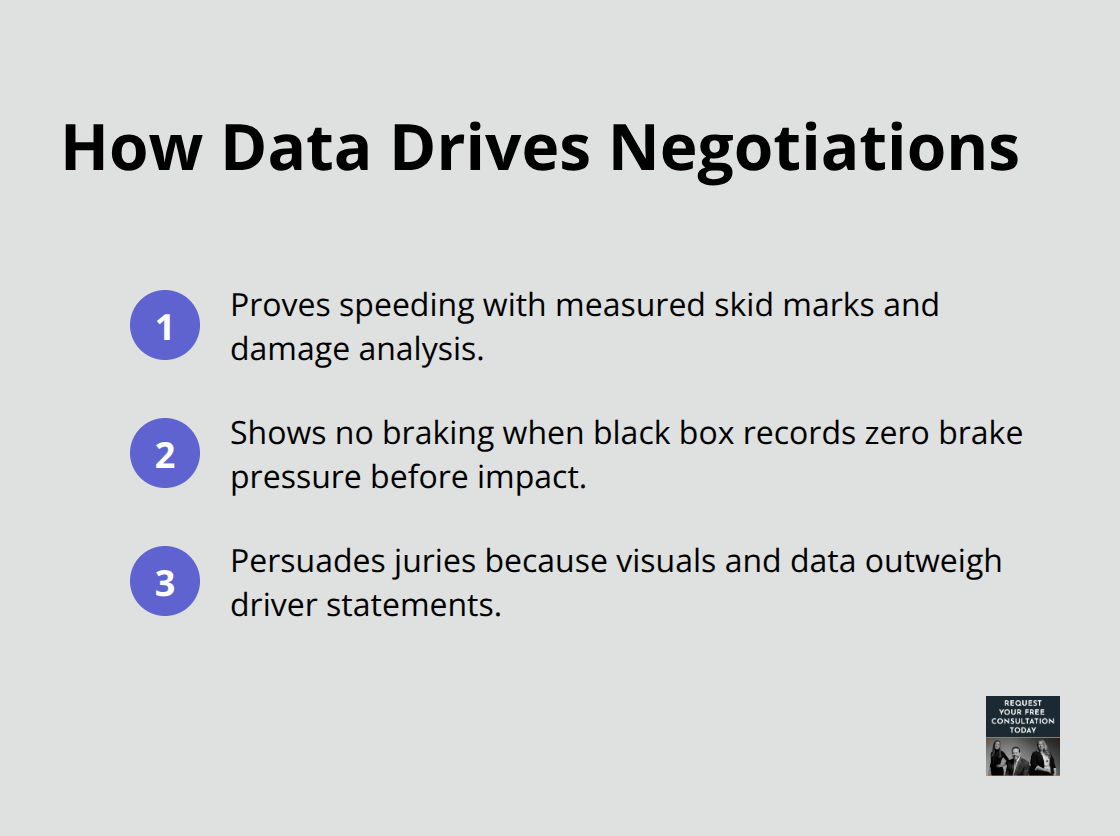
The practical advantage becomes clear during settlement discussions. When a reconstruction professional documents that the at-fault driver traveled 47 miles per hour in a 35 mph zone based on skid mark analysis and vehicle damage patterns, the insurance company knows a jury would see that data and award higher damages. Similarly, if reconstruction reveals that a truck’s brakes showed no evidence of application before impact-because electronic data from the vehicle’s black box shows zero brake pressure in the three seconds preceding the collision-that driver’s claim of emergency braking collapses. Insurance adjusters understand that juries trust visual evidence and data more than driver statements.
Why Visual Evidence Wins in Court
A reconstruction professional’s 3D model or diagram shows the exact sequence of impact, vehicle positions, and forces involved, making your case tangible and credible. This transforms what might have been a $15,000 settlement offer into negotiations in the $50,000 to $100,000 range for moderate injury cases, depending on your specific damages. Without reconstruction, you’re asking an adjuster to believe your version of events; with it, you’re showing them facts they cannot ignore.
The Speed Advantage in Case Resolution
Reconstruction evidence accelerates case resolution because insurers recognize the cost and risk of going to trial against documented physical evidence. When insurance companies face a professional analysis that contradicts their narrative, they shift from defensive posturing to serious negotiation. This acceleration matters most in cases involving serious injuries or fatalities, where the stakes demand immediate clarity about liability and damages. Understanding why your claim was rejected and how to respond strengthens your position when reconstruction data enters the discussion.
The next step involves understanding what specific findings reconstruction professionals uncover in truck and auto accident cases-and how those findings directly impact the compensation you receive.
What Reconstruction Professionals Actually Find
Speed Analysis Reveals True Impact Velocity
Reconstruction professionals uncover findings that directly contradict what drivers and insurance companies claim happened. Speed analysis reveals the actual velocity at impact by measuring skid marks, vehicle damage depth, and final resting positions, then comparing those measurements against crash test data from the National Highway Traffic Safety Administration. In a typical truck accident case in Sacramento, reconstruction might show that a semi-truck traveled 62 miles per hour in a 45 mph zone based on 187 feet of skid marks and crush damage patterns, whereas the truck driver claimed he was traveling at safe speeds. Electronic data from the truck’s onboard computer often confirms this speed discrepancy by showing no brake application occurred during the seconds before impact.
Driver Error and Mechanical Failures
Driver error becomes obvious when reconstruction shows that a vehicle failed to brake at all, or braked only in the final milliseconds before collision. Mechanical defects surface when damage patterns reveal that brake components showed corrosion, fluid leaks, or manufacturing failures that prevented proper stopping. Reconstruction professionals examine whether worn brake pads, failed hydraulic lines, or defective steering components contributed to the crash, shifting liability from the driver to the vehicle manufacturer or maintenance provider.
Weather and Road Conditions Impact Liability
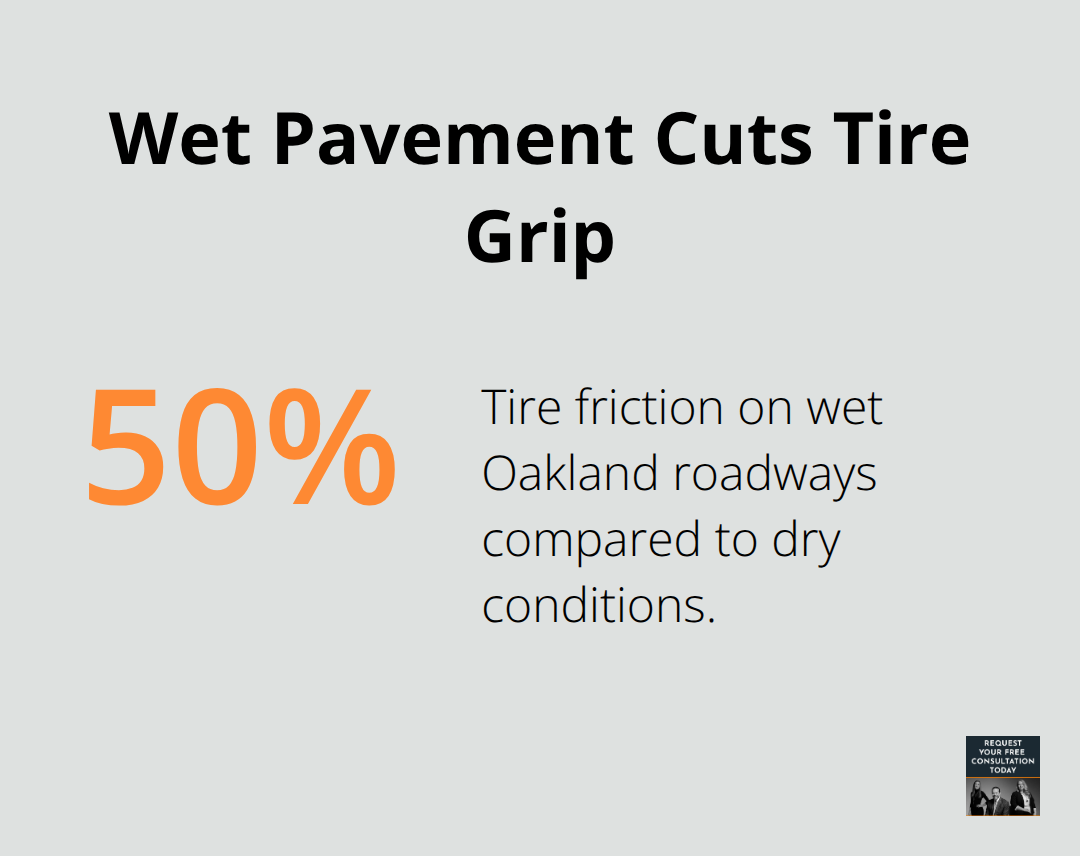
Road conditions and weather create measurable impacts on accident causation that reconstruction professionals quantify through analysis of friction coefficients, visibility data, and surface conditions. A wet roadway in Oakland reduces tire friction to approximately 50 percent of dry conditions, meaning a vehicle that stopped in 80 feet on dry pavement would require 160 feet on wet asphalt at the same speed.
Reconstruction professionals obtain weather data from the National Weather Service for the exact time and location of your accident, then factor that information into speed estimates and liability conclusions.
Road Maintenance and Government Liability
They examine whether potholes, missing guardrails, inadequate signage, or poorly maintained road surfaces contributed to the crash, creating potential claims against local government entities responsible for road maintenance. In Santa Cruz County, where coastal fog reduces visibility to 200 feet or less during certain seasons, reconstruction professionals document visibility conditions and assess whether the at-fault driver should have reduced speed accordingly. Poor visibility combined with excessive speed becomes powerful evidence that the driver bears full responsibility for the collision.
Final Thoughts
Reconstruction analysis transforms accident claims from he-said-she-said disputes into documented fact. When you’ve been injured in a truck or auto crash in Santa Cruz County, Sacramento, or Oakland, the physical evidence at the scene tells the true story of what happened. An accident reconstruction professional documents that evidence, measures impact forces, analyzes vehicle data, and builds the timeline that insurance companies cannot ignore.
Without this analysis, adjusters dismiss claims and offer settlements far below what your injuries deserve. With it, you shift from defending yourself against denial to presenting facts that demand fair compensation. We at Schaar & Silva LLP understand that reconstruction findings often determine whether your case settles quickly or requires litigation, and we partner with accident reconstruction professionals who have the engineering knowledge, courtroom credibility, and technical skills to stand up to insurance company challenges.
Contact Schaar & Silva LLP for a free case review after your accident. We’ll evaluate whether reconstruction analysis strengthens your claim, connect you with the right professional if needed, and handle the medical bill assistance and property damage claims while you recover.
