
After a car accident, understanding how claims evaluate damages is essential to getting fair compensation. Insurance companies use specific methods to calculate what your case is worth, and these calculations often favor their bottom line over your recovery.
At Schaar & Silva LLP, we’ve seen countless clients accept settlements far below what they deserve because they didn’t understand the valuation process. This guide breaks down exactly how adjusters assess physical damage, medical costs, lost wages, and pain and suffering.
How Adjusters Value Your Vehicle Damage
Initial Damage Assessment and Repair Estimates
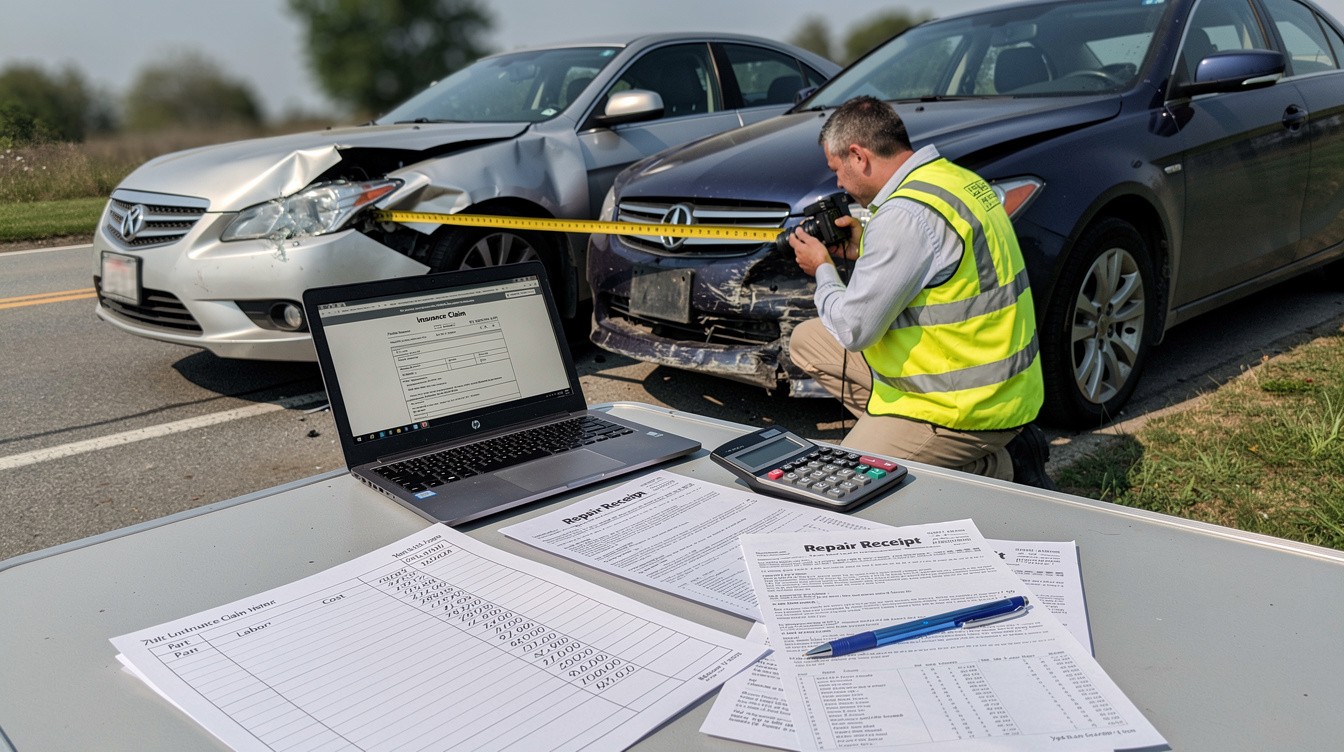
Insurance adjusters inspect your vehicle to establish a baseline repair cost. A licensed adjuster typically visits the accident scene or repair facility and creates an initial damage estimate using industry software like CCC One or Mitchell. This estimate reflects what the insurer believes repairs will cost, but adjusters often work quickly and miss hidden frame damage, electrical issues, or structural problems that surface only during detailed teardown. If your repair shop discovers additional damage during work, the adjuster must reinspect and issue a revised estimate.
California law requires insurers to pay the reasonable cost of repairs at the shop you choose, not just what their estimate claims. If your selected body shop finds $8,000 in damage but the adjuster estimated $6,500, the insurer must cover the full $8,000 if those repairs are necessary and reasonable. You strengthen your position by obtaining written repair estimates from multiple shops before accepting any settlement and keeping detailed photos of damage from multiple angles. Request that your repair facility provide itemized invoices clearly marking whether parts are OEM (original equipment manufacturer), aftermarket, or reconditioned, since California law requires parts to be comparable in kind, quality, safety, fit, and performance.
Determining Actual Cash Value
Determining your vehicle’s actual cash value is where disputes frequently arise. Actual cash value in California means the fair market value of a vehicle in its condition immediately before the accident, accounting for depreciation. Insurers typically use valuation databases like NADA Guides, Kelley Blue Book, or Edmunds to establish a baseline, but these tools often produce low figures because they don’t account for your vehicle’s specific condition, mileage history, or regional market factors.
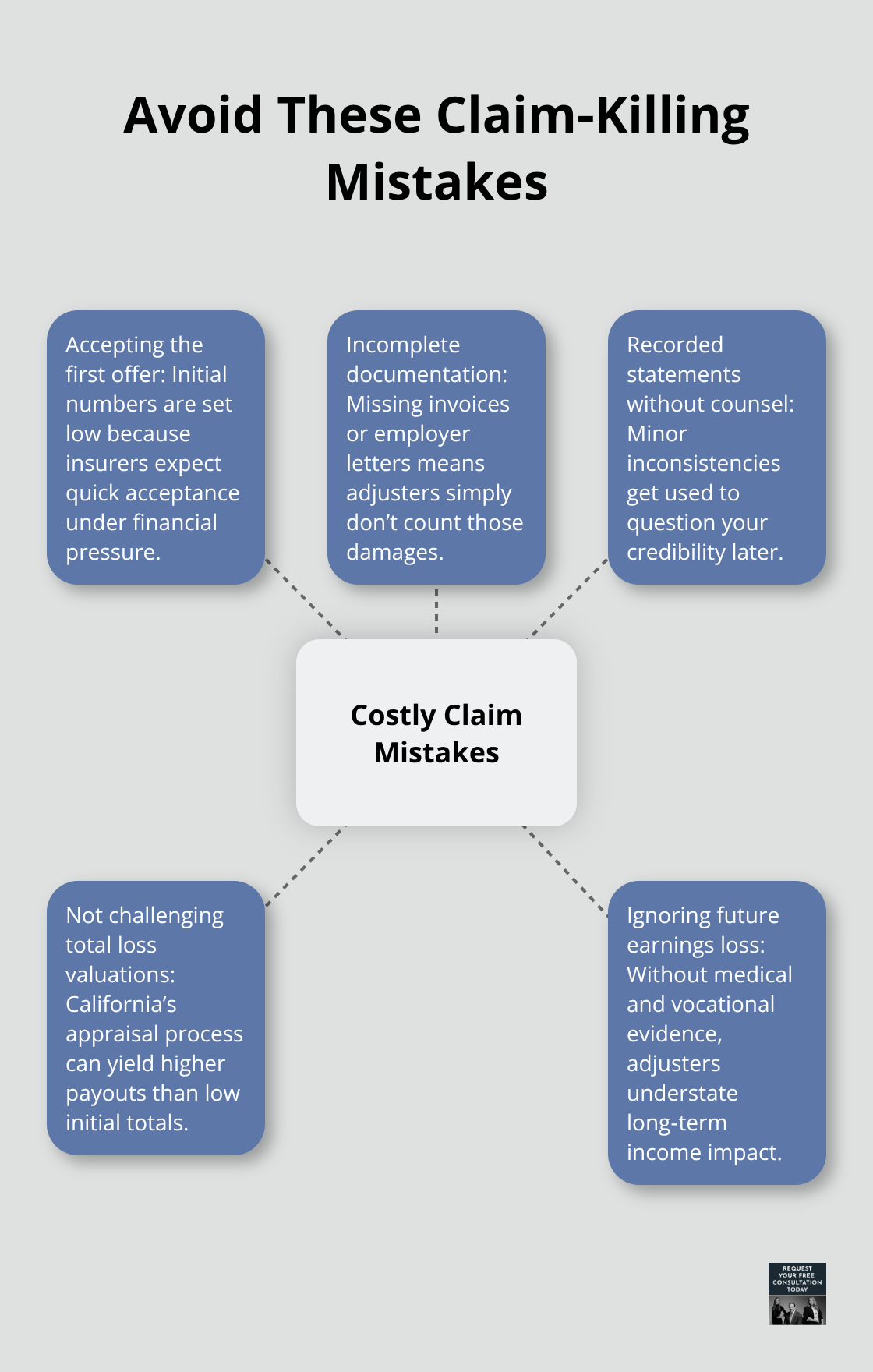
A 2018 Honda Civic with 80,000 miles and full service records in good condition may be worth significantly more than what a generic database suggests. You should request the specific comparable vehicles the insurer used and research actual sales prices for identical models in your area through local dealerships and used car listings. Many Santa Cruz County and Sacramento residents find that their vehicle’s true market value exceeds the insurer’s initial offer by 10 to 20 percent.

Challenging Low Total Loss Valuations
California insurance law includes an appraisal provision allowing you to challenge a total loss valuation. You select one appraiser, the insurer selects another, and if they disagree, they choose an umpire whose decision becomes binding. This process costs money upfront but often recovers significantly more than accepting a low initial offer. Once you understand how physical damage claims work, the next critical area involves medical expenses and how insurers calculate the costs tied directly to your injuries.
Medical Damages and Lost Wages in Auto Accidents
Insurance adjusters calculate medical damages by tallying every bill directly tied to your accident. This includes ambulance fees, emergency room visits, diagnostic imaging, surgical procedures, medications, physical therapy, and ongoing treatment. The critical point is that adjusters typically use the billed amount for medical expenses, not what your insurance actually paid after negotiating discounts. If a hospital bills $15,000 for your treatment but your insurance negotiated it down to $9,000, California law restricts your recovery to the actual amount paid by your insurer, according to the Howell v. Hamilton Meats & Provisions decision. This distinction matters enormously. You must gather itemized medical records and billing statements from every provider involved in your care, then cross-reference them against what your insurance actually paid. Many people lose thousands in recoverable damages simply because they don’t track this carefully or fail to provide complete documentation to the adjuster.
Documenting Medical Expenses and Treatment Costs
Your medical documentation directly determines what the adjuster will compensate. Collect itemized invoices from hospitals, clinics, physical therapists, and specialists showing the exact services rendered and amounts billed. Request an explanation of benefits (EOB) from your health insurance showing what they actually paid versus what the provider wrote off.
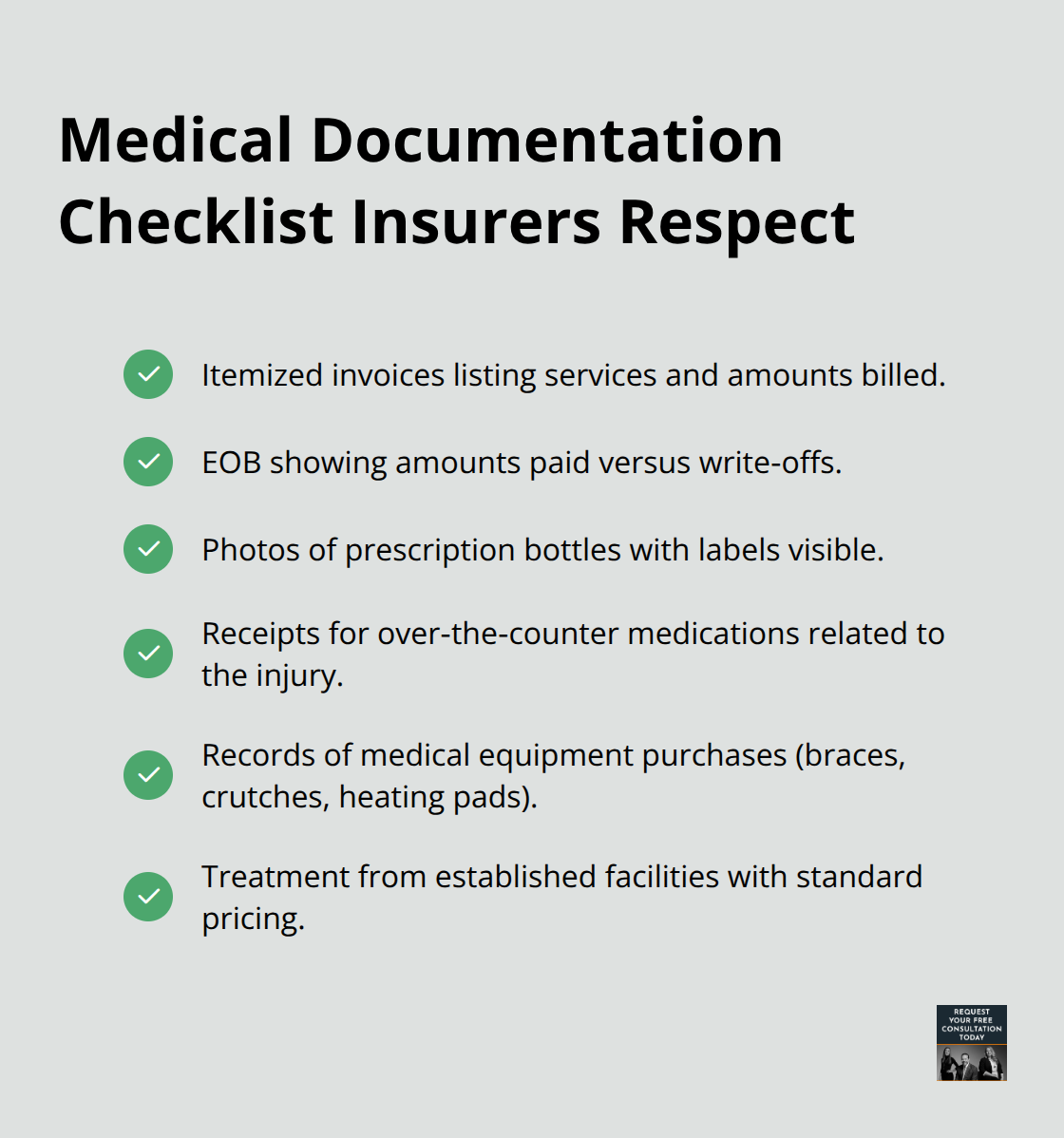
Photograph prescription bottles with labels visible, keep receipts for over-the-counter medications related to your injury, and maintain records of any medical equipment you purchased (braces, crutches, heating pads). Adjusters scrutinize medical bills for reasonableness, so if a provider’s charges seem inflated compared to regional standards, the insurer will challenge them. You strengthen your position by obtaining treatment from established medical facilities with standard pricing rather than boutique clinics with unusually high fees. The more organized and complete your medical documentation, the less room the adjuster has to dispute or reduce your claim.
Calculating Lost Income and Future Earnings
Lost wages are straightforward when you miss work during recovery. Provide your employer’s written statement confirming the dates you were absent and your hourly rate or salary. Self-employed individuals need to document lost income through tax returns, client invoices, or business records showing what you would have earned. The trickier calculation involves future earnings loss, which applies when an injury prevents you from returning to your previous job or requires you to accept lower-paying work. If a construction worker’s back injury means they can no longer perform heavy lifting and must switch to administrative work at significantly lower pay, they can recover the difference in lifetime earnings. This requires medical evidence that the limitation is permanent or long-term, vocational assessment of your earning capacity in alternative work, and actuarial calculation of present value. Most adjusters underestimate or ignore future earnings entirely unless you present compelling documentation.
Pain and Suffering Valuations Require Strategic Documentation
Pain and suffering damages compensate for non-monetary harms like physical pain, anxiety, disruption to daily life, and loss of enjoyment. Unlike medical bills and lost wages, there is no statutory formula, and this is where settlement negotiations become contentious. Insurance companies and attorneys commonly use a multiplier method as a starting point, multiplying your medical special damages by a factor between 1.5 and 5 depending on injury severity. A minor injury with $2,000 in medical bills might justify $3,000 in pain and suffering using a 1.5 multiplier, while a serious injury with $80,000 in medical expenses could support $400,000 in pain and suffering using a 5 multiplier. The multiplier rises with factors like invasiveness of treatment, duration of recovery, permanency of injury, and disruption to your lifestyle. Your documentation directly influences which multiplier applies. Keep a detailed injury journal documenting pain levels daily, treatment appointments, physical limitations, sleep disruption, and how the injury affected work, family time, and activities you enjoyed before the accident. Photographs showing visible injuries during recovery, medical records describing your condition, and testimony from family members about changes they observed all strengthen your pain and suffering claim. Adjusters who see minimal documentation often default to the low end of the multiplier range, costing you tens of thousands of dollars.
Understanding how adjusters value medical damages and lost wages sets the foundation for recognizing when settlement offers fall short of what you actually deserve. The mistakes many accident victims make during this phase-accepting inadequate offers, failing to document thoroughly, or providing statements without legal guidance-can permanently reduce your recovery. The next section examines these costly errors and how to avoid them.
Common Mistakes That Reduce Your Settlement
Insurance adjusters count on you making errors that reduce what they owe. The first offer arriving in your mailbox is rarely fair, yet many accident victims accept it within days of receiving the settlement letter. Insurers know that people under financial pressure from medical bills and lost income often grab the first check rather than negotiate. Data from the Insurance Information Institute shows that claimants who negotiate settlements receive 40 percent more than those accepting initial offers, yet roughly half of accident victims never counter. The adjuster’s opening number is deliberately low because they expect pushback. If the insurer estimates your case at $30,000, they might offer $18,000 initially, knowing you’ll negotiate to perhaps $24,000, which still leaves them $6,000 ahead of their true valuation. You have leverage the adjuster hopes you won’t use.
Negotiating Beyond the Initial Offer
Before you respond to any settlement offer, obtain written repair estimates from multiple body shops, compile complete medical documentation with actual amounts paid by insurance rather than billed amounts, calculate your lost wages with employer verification, and document your pain and suffering through detailed injury journals. Only then should you counter the offer in writing, citing specific evidence for your valuation. Most adjusters will move off their initial position if you present organized documentation supporting higher damages.
Building a Complete Documentation File
Adjusters face hundreds of claims monthly and process only what you provide. If your medical file lacks an itemized invoice from your physical therapist, the adjuster simply won’t count those visits in your damages calculation. You lose that money permanently. Similarly, if you don’t provide written confirmation from your employer stating the exact dates you missed work and your hourly rate, the adjuster reduces lost wages to whatever they can verify independently, which is usually nothing. Photograph every medical receipt, every prescription bottle, and every equipment purchase related to your injury. Maintain a daily journal documenting pain levels, treatment appointments, and functional limitations. Request written statements from family members describing how your injury changed your behavior and capabilities.
Protecting Yourself from Recorded Statements
The third mistake is agreeing to provide a recorded statement to the insurance company without legal guidance. Adjusters frame this as routine, but recorded statements create a permanent record that the insurer will use against you if your story shifts even slightly during recovery or if you later remember additional details about the accident. Statements made days after a traumatic event differ from statements made weeks later once the shock wears off, and insurers weaponize these differences to suggest you’re unreliable.
Many accident victims inadvertently admit partial fault or minimize their injuries during early recorded statements because they’re confused or in shock. We advise our clients to decline recorded statements until we’ve reviewed the claim file and prepared you for questioning. Your right to legal counsel before giving statements is absolute, and insurers cannot penalize you for exercising it.
Final Thoughts
Understanding how claims evaluate damages empowers you to recognize fair settlements and challenge lowball offers that insurers present. Adjusters follow predictable methods to calculate vehicle value, medical costs, lost wages, and pain and suffering, and when you understand these methods, you can push back against incomplete valuations. Insurance companies profit when you accept less than your claim is worth, and they count on confusion and financial pressure to make that happen.
Organized documentation shifts the balance in your favor. Repair estimates from multiple shops, complete medical records showing actual amounts paid, and a detailed injury journal give adjusters evidence they cannot easily dismiss. We at Schaar & Silva LLP handle negotiations while you focus on healing, and our team evaluates your property damage claims to ensure fair valuation while connecting you with support for emotional trauma that adjusters often overlook.
Gather your accident report, medical records, repair estimates, and employment verification, then contact us for a free case evaluation. We’ll review your claim, identify what the adjuster missed, and explain your options for Santa Cruz County and surrounding areas.
