
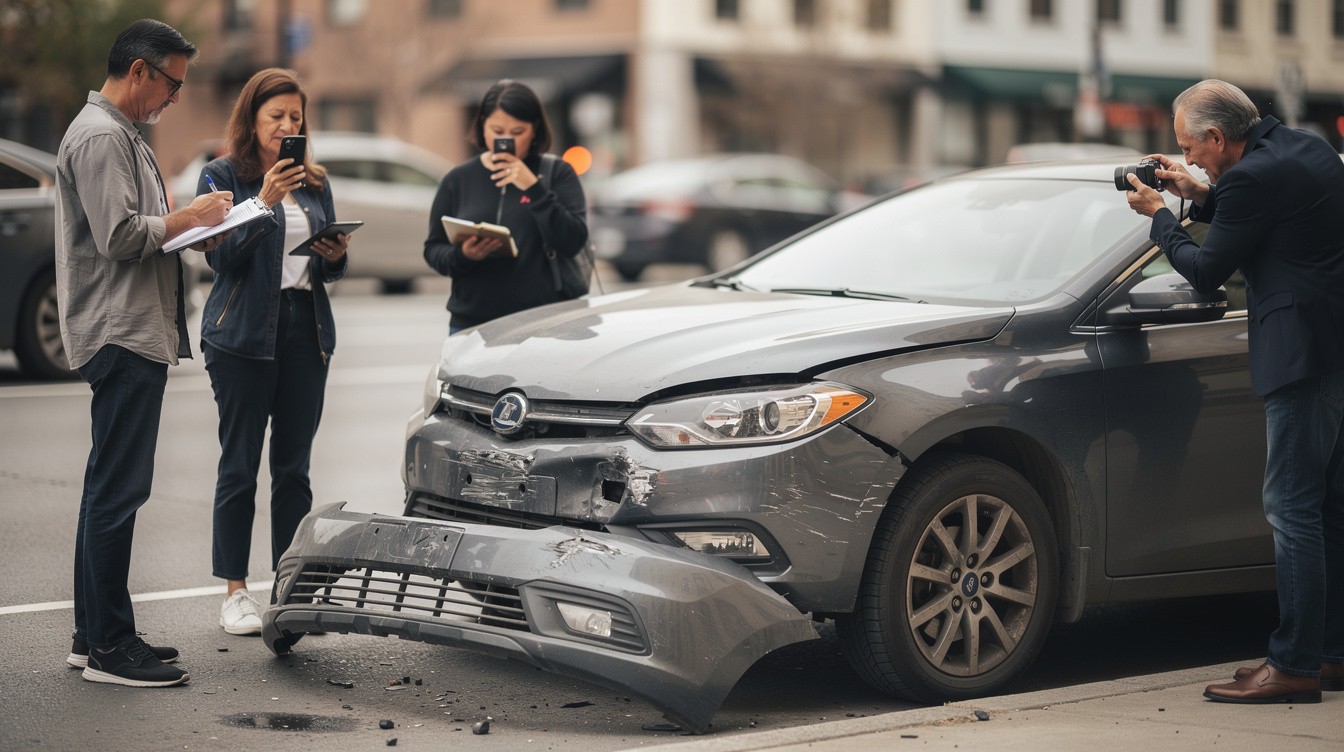
After a crash, witness statements after the accident can make or break your case. Insurance companies often dispute what happened, and having independent accounts from people who saw the collision firsthand shifts the balance in your favor.
At Schaar & Silva LLP, we’ve seen how credible eyewitness testimony turns weak claims into strong ones. The difference between a denied claim and fair compensation often comes down to the quality of witness information you collect at the scene.
Why Witness Statements Change Insurance Outcomes
Insurance Companies Deny Claims Without Independent Verification
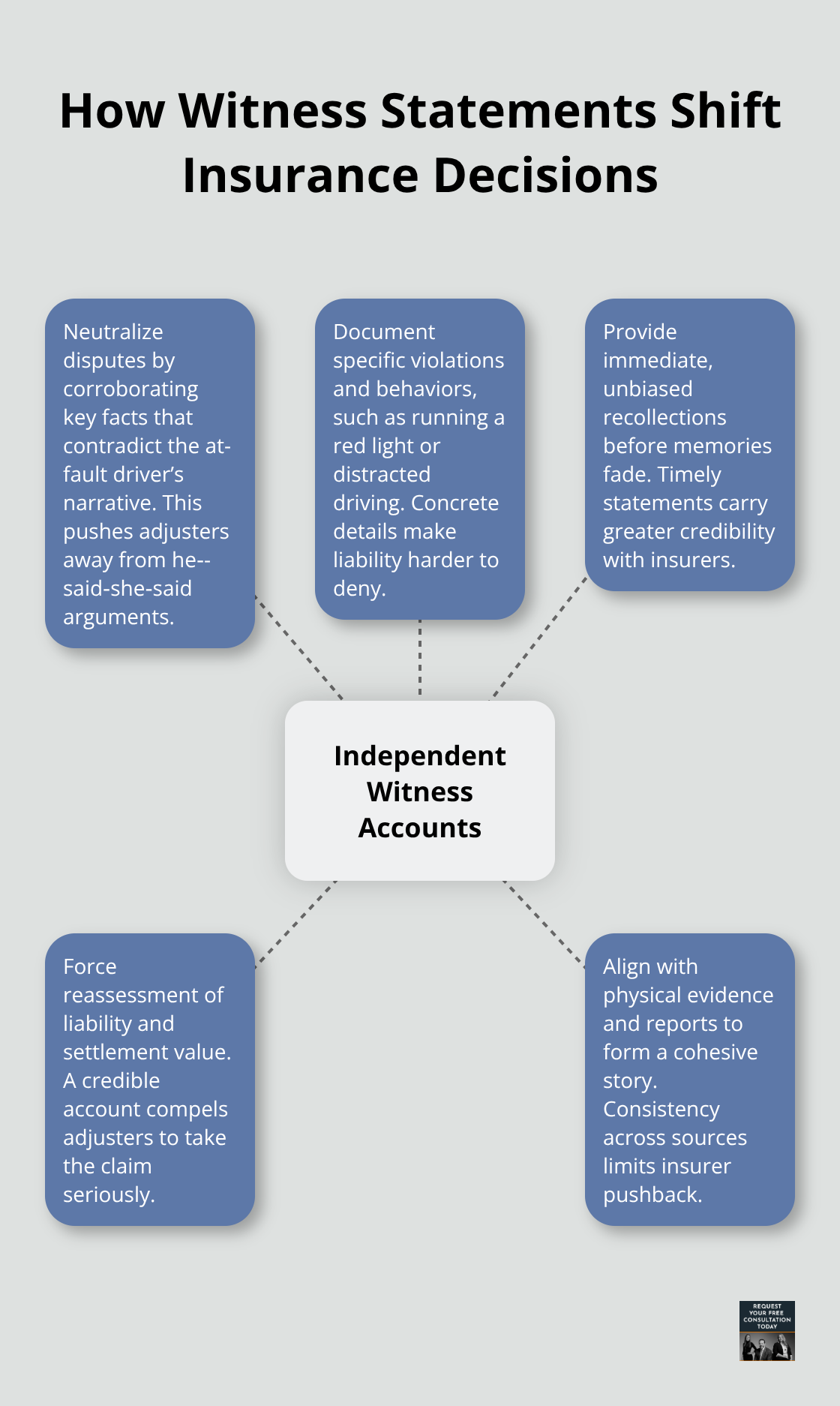
Insurance companies deny claims routinely, even when fault appears obvious to everyone at the scene. The difference between a denied claim and a fair settlement often hinges on independent verification of what actually happened. When you have neutral witnesses on record describing the collision, traffic violations, or driver behavior, you eliminate the he-said-she-said dynamic that insurers exploit. A single credible eyewitness account can shift negotiations in your favor because it contradicts the at-fault party’s narrative and forces the insurance adjuster to take your claim seriously.
Witness Testimony Captures Details That Fade Quickly
The strength of witness testimony lies in its immediacy and objectivity. Witnesses who speak up within hours or days of the crash remember details with accuracy that fades quickly otherwise. They can describe specific actions, like whether a driver ran a red light, checked their phone, or failed to brake. They can also document environmental conditions that matter to liability, such as poor lighting, rain, or road defects that contributed to the collision.
Multiple Witness Accounts Create a Factual Foundation
When you combine multiple witness statements that align with police reports and physical evidence, you create a factual foundation that’s difficult for an insurer to dispute. Witnesses with clear sightlines (especially those at intersections or crosswalks) carry particular weight because they had the best vantage point to observe the sequence of events and identify who acted negligently. Consistent accounts from independent observers force adjusters to acknowledge liability rather than dismiss your claim outright.
Act Quickly to Preserve Witness Information
The sooner you collect names, contact details, and detailed accounts from people who saw what happened, the stronger your position becomes when negotiating with insurers or preparing for court. Memories fade within days, and witnesses may become harder to locate later. This is why the next step-knowing exactly how to approach witnesses at the scene-matters so much to your case outcome.
Capturing Witness Details Before They Leave the Scene
Move Quickly to Collect Names and Contact Information
The moment after a crash is chaotic, but it’s also when witness memory is sharpest. Within the first few minutes, approach anyone who saw the collision and ask them to stay for a brief conversation. Most people will cooperate if you’re calm and direct. Collect their full name, phone number, and home address before they leave, because tracking down a witness weeks later becomes exponentially harder. If someone seems hesitant to provide their address, ask for their phone number and email instead-many people find this less invasive.
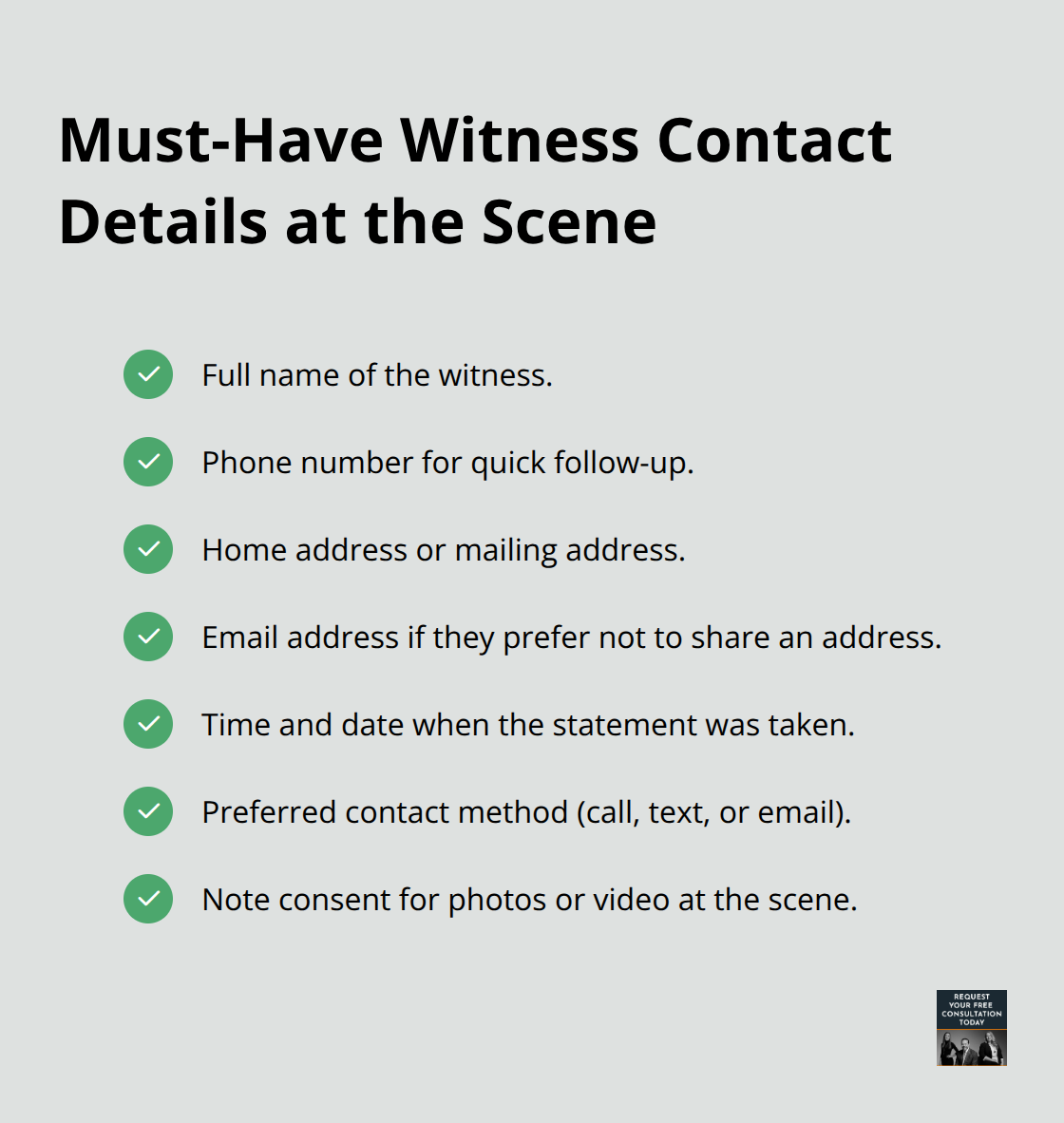
Write everything down immediately on your phone or a piece of paper, because you won’t recall details accurately later, and neither will they once they leave the scene.
Record What Witnesses Observed Without Leading Questions
Ask each witness to describe what they saw in their own words, without prompting or leading questions. Let them talk about what happened before impact, during the collision, and immediately after. Don’t interrupt or correct them, even if their account seems incomplete. Ask follow-up questions only if critical details are missing, such as whether the traffic light was red or green, if a driver was using a phone, or what the weather conditions were. Take photos or video of the witness at the location if they’re comfortable with it, as this documents their presence and perspective.
Document Police Information and Witness Credibility
If police arrive, note the officer’s name and badge number, then ask the officer for the incident report number so you can obtain the official report later. Many witnesses underestimate the value of their observations, so reinforce that their account matters and that you may contact them again to clarify details. Document the exact time you collected each statement and note whether the witness seemed alert and reliable, because insurance adjusters will scrutinize witness credibility later.
Offer Written Statements When Verbal Accounts Prove Difficult
If a witness is reluctant to provide information verbally, offer to send them a simple written statement template via text or email that they can complete and return. This approach removes the pressure of an on-the-spot conversation while still capturing their recollection. Once you’ve collected witness information at the scene, the next critical step involves organizing these statements and connecting them with other evidence that strengthens your claim.
Building Your Claim With Witness Evidence
Organize Witness Statements Chronologically
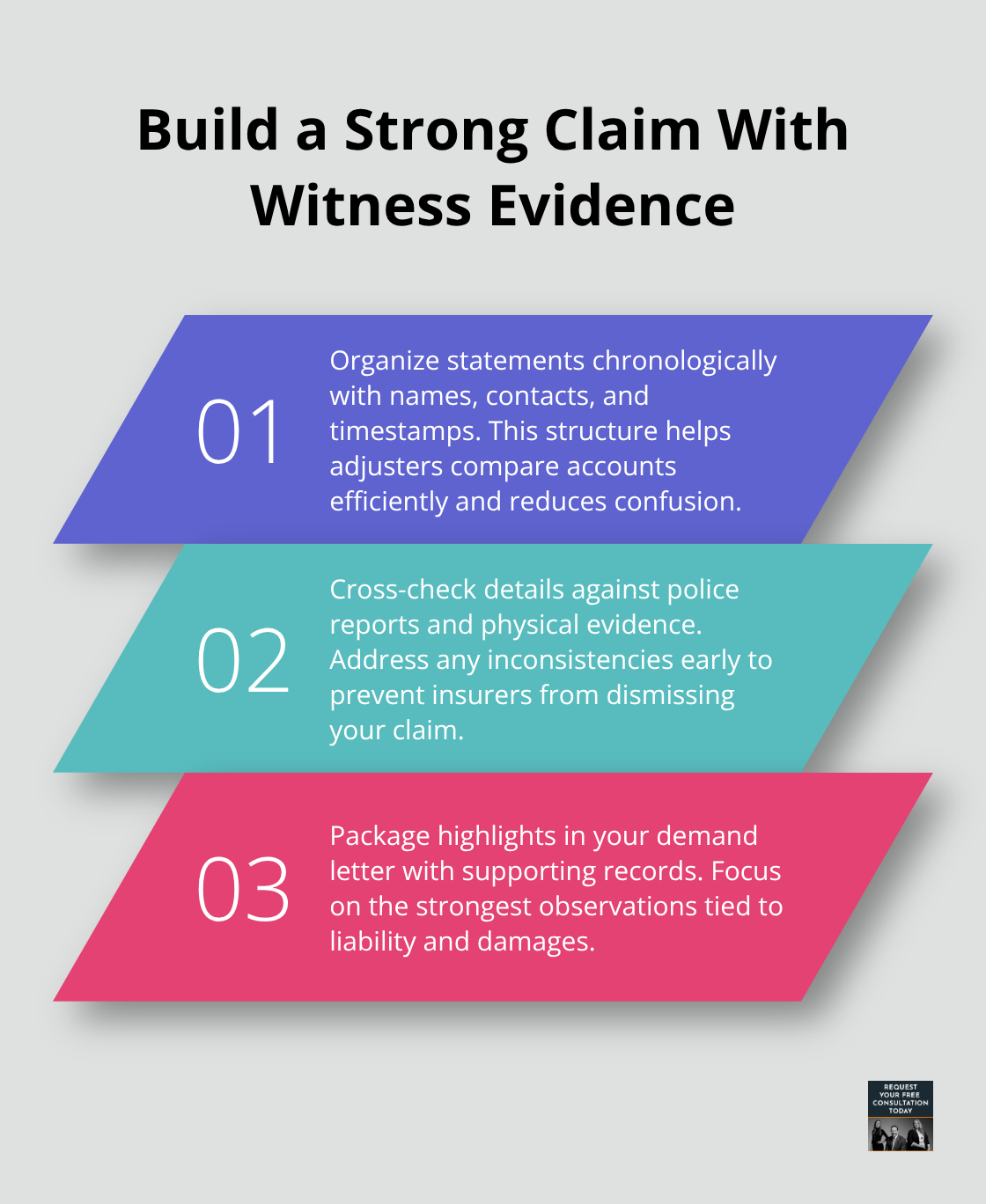
Transfer all handwritten notes into a single document the moment you collect them. List each witness’s name, contact information, and account in chronological order, with the exact time you recorded each statement clearly marked. Include any environmental details they mentioned, such as weather, lighting, or road conditions. This organization matters because insurance adjusters compare witness accounts against police reports and physical evidence, and inconsistencies can undermine credibility. When statements align with skid marks, vehicle damage patterns, or traffic camera footage, you create a unified narrative that’s far harder for an insurer to dismiss.
Meet California’s Standard of Proof
California’s standard of proof for negligence claims requires showing a preponderance of the evidence, meaning your witness accounts must demonstrate it’s more likely than not that the other driver caused the crash. Multiple consistent witness statements accomplish this more effectively than a single account, especially when witnesses had clear sightlines at intersections or crosswalks where visibility matters most. Witnesses positioned at these locations carry particular weight because they observed the sequence of events from the best vantage point.
Address Discrepancies Between Witness Accounts and Police Reports
Inconsistencies between witness statements and police reports require explanation, not concealment. If a witness says the traffic light was red but the police report suggests it was green, investigate further by requesting traffic camera footage or checking with nearby businesses for surveillance video. Insurance companies scrutinize these gaps aggressively, so addressing them proactively prevents adjusters from using them as reasons to deny your claim.
Present Witness Testimony in Your Demand Letter
Provide the insurance company with a summary statement that highlights the strongest accounts without overwhelming them with redundant information. Reference specific details witnesses observed, such as the at-fault driver’s actions immediately before impact, their failure to brake, or their distracted behavior. Include witness statements in your demand letter alongside medical records, accident reports, and repair estimates, because this comprehensive evidence package demonstrates you’ve built a factual foundation rather than relying on assumptions.
Prepare Witness Statements for Potential Litigation
If negotiations stall and litigation becomes necessary, organized witness statements give you flexibility in trial preparation and help expert witnesses corroborate their opinions about how the crash occurred. Consistent, well-documented witness testimony strengthens your position whether you settle with the insurance company or proceed to court.
Final Thoughts
Witness statements after a crash form the backbone of a strong accident claim. Without independent accounts from people who saw what happened, you face an insurance company that profits from denial. The difference between a fair settlement and a rejected claim often comes down to whether you collected credible eyewitness testimony at the scene while memories remained sharp and details stayed accurate.
Early collection of witness information gives you a decisive advantage because memories fade within days and witnesses become harder to locate as time passes. When you gather names, contact information, and detailed accounts immediately after the collision, you preserve the most reliable evidence available. This foundation makes it harder for insurers to dispute liability or minimize your damages, since you’ve documented what actually happened from multiple independent perspectives.
If you’ve been in a crash and collected witness information, contact Schaar & Silva LLP to discuss how your evidence strengthens your position. We serve Santa Cruz County, Sacramento, and Oakland and can guide you through the process of building a claim that reflects the true value of your losses.
