
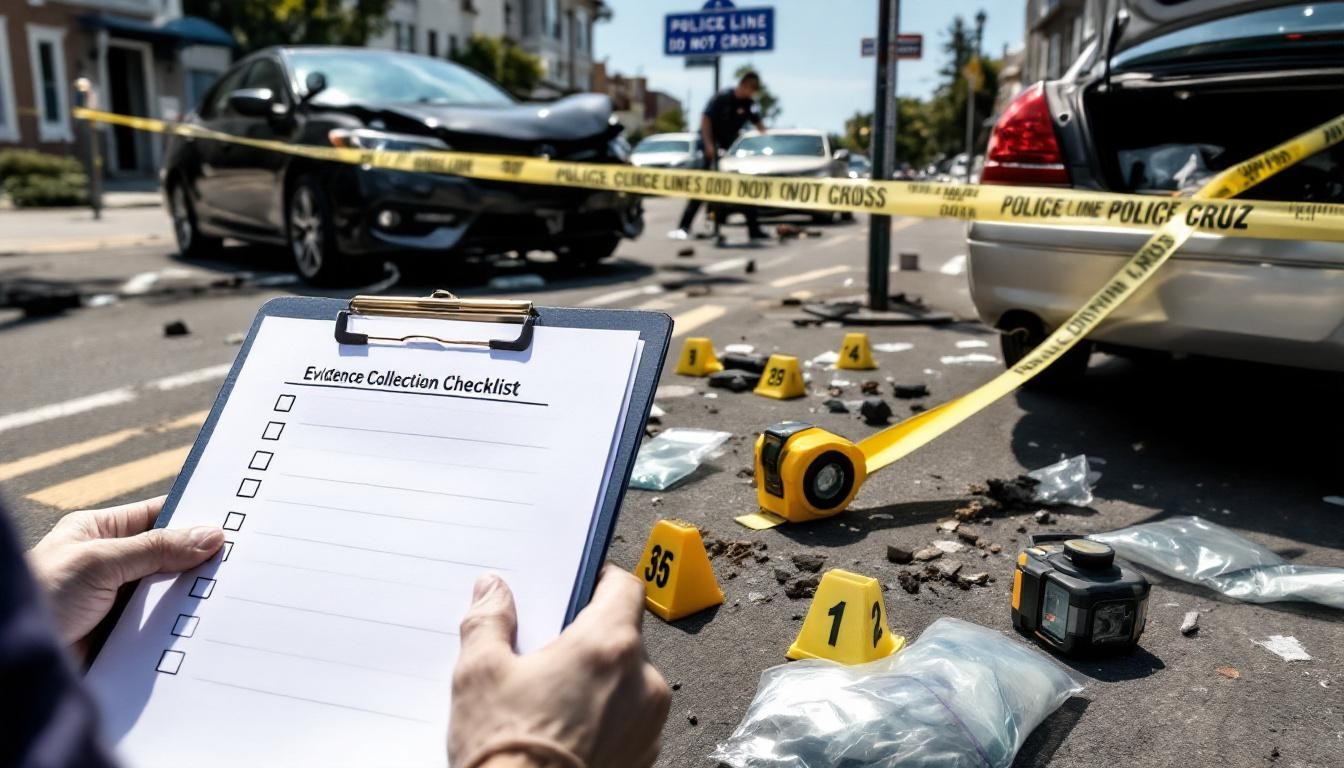
A car crash in Santa Cruz leaves you shaken and unsure what happens next. The decisions you make in the first hours matter more than you realize-they directly impact your ability to recover fair compensation.
Santa Cruz evidence collection isn’t complicated, but it requires knowing exactly what to gather and how to preserve it. We at Schaar & Silva LLP have helped hundreds of crash victims organize their documentation and build stronger claims.
What to Capture at the Scene
The first 30 minutes after a Santa Cruz crash determine how strong your evidence becomes. Most crash victims focus on exchanging information with the other driver, but they miss the critical documentation that insurance companies and courts actually need. Take comprehensive photos at the scene within 24 hours: wide shots of the intersection, close-ups of damage, vehicle positions, weather, road markings, signals, and any visible injuries. Photograph both vehicles from all angles, including the undercarriage if possible, and capture the accident location from multiple perspectives showing the relationship between the vehicles and surrounding landmarks. Documentation gaps weaken settlements, so shoot in good lighting and from heights that show depth and scale. If you cannot return to the scene safely, ask a family member or friend to take photos within the same day while details remain visible.
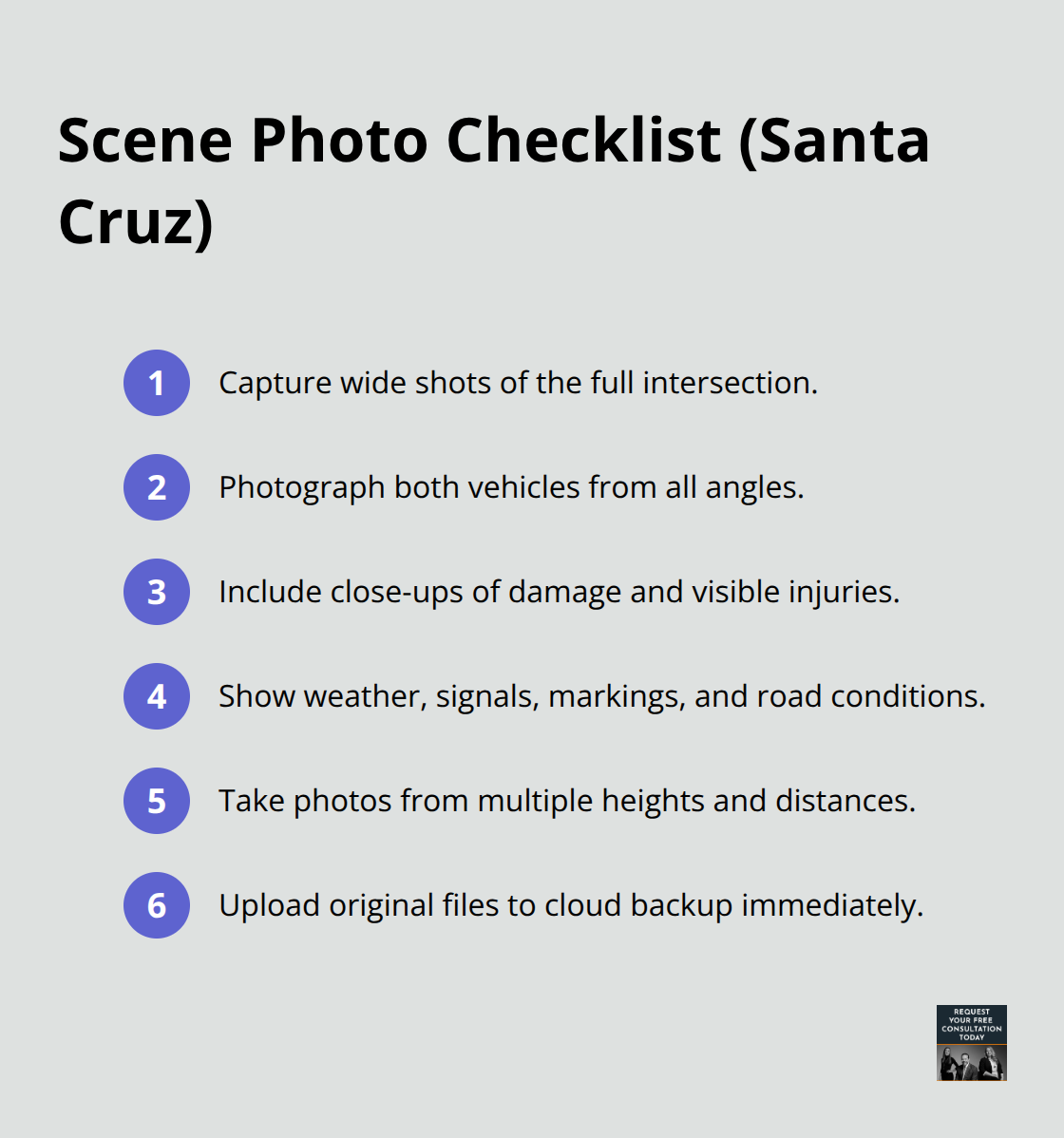
Store these images in cloud backup immediately-phone storage fails, but cloud copies survive device loss.
Capture witness statements while memories are fresh
Witness testimony provides independent verification that insurance companies cannot dismiss as biased. Ask anyone who saw the crash to write down what they observed, including the sequence of events, vehicle speeds, traffic signals, and weather conditions. Collect their full name, phone number, email, and residential address before they leave. Multiple witness accounts strengthen your position significantly in disputed liability cases, so prioritize gathering contact information from everyone present. Do not rely on verbal promises to contact you later-most witnesses disappear within hours. If someone refuses to write a statement, at least record their contact details and follow up within 48 hours with a phone call asking them to describe what they saw. Request the official Santa Cruz County Sheriff’s Office accident report as soon as possible via a Public Records Request, since police reports add objective, corroborated details that validate witness accounts.
Record driver and insurance information
Obtain the other driver’s full legal name, phone number, email, and residential address before leaving the scene. Record their driver’s license number, date of birth, and state of issuance. Photograph their license and insurance card with your phone to preserve exact policy information. Ask for the vehicle identification number (VIN) from the registration and photograph it from the dashboard. Note the make, model, year, color, and license plate number of their vehicle. If the other driver is evasive or refuses information, call the Santa Cruz Police Department Non-Emergency Dispatch at (831) 471-1131 immediately-officers will document refusal and obtain missing details. Never leave the scene without this data, as tracking down drivers later becomes exponentially harder. If a third vehicle caused the crash but left, note the direction of travel, partial license plate if visible, and vehicle description, then report it to police immediately. This information forms the foundation for your claim and protects you if the other driver later disputes what happened at the scene.
Medical Records and Police Reports Build Your Case
Request medical records immediately after your crash
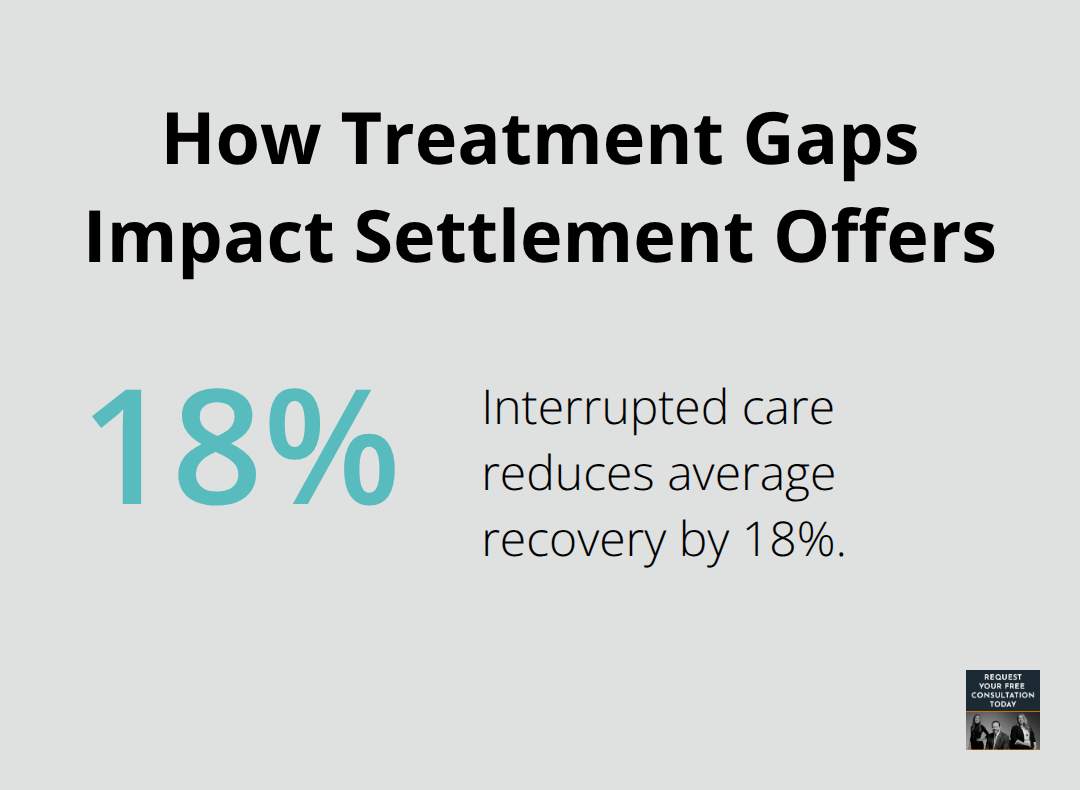
Medical documentation from your first healthcare visit onward creates the foundation that insurance companies use to calculate fair compensation. Contact your hospital, urgent care clinic, or primary care physician within 48 hours of your crash and request copies of all records related to the incident, including initial exam notes, imaging results, lab work, and discharge summaries. Many providers charge $10 to $25 per request, but obtaining records promptly prevents gaps that insurers exploit to deny or reduce settlements. You must maintain a continuous treatment timeline by collecting records from every provider you see-physical therapists, specialists, mental health professionals-since documentation gaps weaken your claim significantly. Treatment continuity directly influences settlement offers, with interrupted care reducing recovery by an average of 18 percent. Store these records in a dedicated folder with dates clearly labeled, and maintain both physical copies and digital backups in cloud storage.
If you delay requesting records, providers may charge higher fees or lose older documents in their archives, making retrieval impossible months later.
Obtain your official police report and review it carefully
The official Santa Cruz County Sheriff’s Office accident report serves as the objective third party that validates your account of what happened. File your request immediately through the Santa Cruz Police Department Records Section at (831) 420-5870 (Monday through Thursday, 9am to 4pm) or use the California Highway Patrol Online Crash Report System for crashes on state highways-reports typically arrive within 10 days for a small processing fee. Police reports include the officer’s narrative, witness statements, accident diagrams showing vehicle positions and impact points, and road condition observations that corroborate your version of events. When you receive your report, review it carefully for errors-if the officer misidentified fault indicators or missed witness statements, contact the filing agency with supporting evidence to request corrections. Keep your case number handy for all future communications, and use the accident diagram to compare against your photos and witness accounts, flagging any inconsistencies that might affect liability determination.
Organize your documentation for maximum impact
You now hold three critical pieces of evidence: medical records, police reports, and your scene photographs. Organize these materials chronologically in both physical and digital formats, cross-referencing dates and details across all documents.
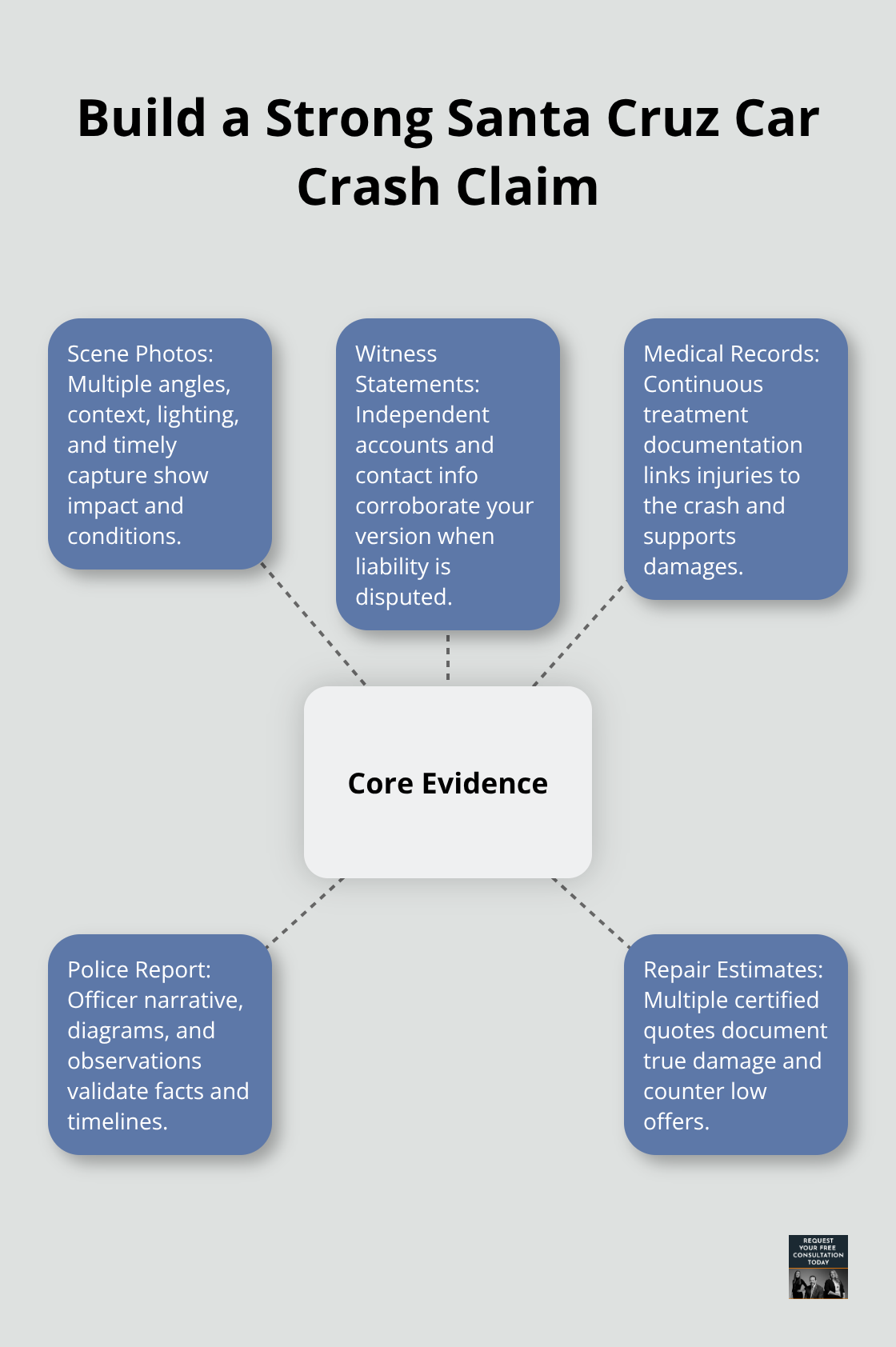
This organized approach reveals patterns that strengthen your position-for example, when medical records align with police observations about impact severity, your credibility increases substantially. Insurance adjusters process hundreds of claims monthly, and well-organized evidence stands out immediately, often resulting in faster settlements and higher offers. As your documentation grows with ongoing treatment and additional records, maintain this system consistently so nothing falls through the cracks.
Documenting Vehicle Damage for Maximum Recovery
Your vehicle damage documentation directly determines how much money you recover from the insurance claim. Most crash victims make a critical mistake: they accept the insurance adjuster’s damage estimate without question, not realizing that independent repair quotes often reveal significantly higher repair costs than the initial offer.
Collect repair estimates from multiple certified mechanics
You must obtain repair estimates from at least three different mechanics within two weeks of your crash, since estimates beyond this window may reflect price increases unrelated to the accident itself. Request written estimates that itemize every repair, including paint matching, frame straightening, parts replacement, and labor hours, since vague estimates weaken your negotiating position. Many mechanics charge $50 to $150 per estimate, but the difference between estimates frequently exceeds $2,000 to $5,000 on moderate damage, making this investment worthwhile.
Choose mechanics certified by ASE or affiliated with AAA, as their estimates carry more weight with insurance companies than uncertified shops. These credentials signal professional standards that adjusters respect when comparing repair costs.
Photograph vehicle damage comprehensively and immediately
You should photograph every panel of your vehicle from multiple angles within 48 hours of the crash, capturing close-ups of dents, scratches, broken glass, and undercarriage damage if accessible. Take photos in natural daylight from at least three different heights and distances, showing both the damage and surrounding vehicle context so adjusters understand the full scope of impact.
Store these photos in cloud backup immediately, and maintain the original files without editing or filtering, since insurers scrutinize enhanced or altered images. If your vehicle is undrivable, do not attempt repairs before obtaining estimates, as pre-repair modifications can invalidate damage claims and reduce settlement value.
Preserve your vehicle until insurance inspection completes
You must preserve your vehicle in its damaged condition until the insurance company completes its inspection and you receive final settlement approval. Many crash victims make the costly error of taking their damaged vehicle to a repair shop immediately, which prevents the insurer from independently verifying the damage and sometimes triggers disputes about pre-existing conditions.
Keep detailed records of where your vehicle is stored, including storage facility contact information and daily storage costs if applicable, since the at-fault party’s insurance typically covers reasonable storage fees. If your vehicle is leased or financed, notify your lender or leasing company of the damage immediately, as they may have specific requirements for damage documentation and repair authorization.
Track all damage-related dates and timelines
You should maintain a timeline document listing the date of the crash, date of each repair estimate, date of insurance inspection, and date of any repairs, cross-referencing these dates with your medical records and police report. This documentation shows how the accident timeline affects your overall recovery claim and strengthens your position when negotiating with insurance adjusters (who process hundreds of claims monthly and respond faster to well-organized evidence).
Final Thoughts
You’ve now gathered the evidence that matters: scene photos, witness statements, medical records, police reports, and repair estimates. Santa Cruz evidence collection requires organization and persistence, but the work you invest now directly determines your settlement outcome. Insurance adjusters respond faster and offer higher amounts when documentation is complete and well-organized.
Managing a crash claim while recovering from injuries exhausts you physically and emotionally. Medical appointments, repair shops, insurance calls, and mounting bills pile up while you heal, and this burden often forces crash victims to accept inadequate settlement offers simply to make the stress stop. We at Schaar & Silva LLP handle the administrative work so you can focus entirely on recovery, and we organize your evidence into a compelling case presentation that insurance companies take seriously. We manage all communications with insurers, handle deadlines, and evaluate every offer against your actual damages-pushing back when adjusters undervalue your case.
If your claim becomes disputed or settlement negotiations stall, we prepare your case for trial and leverage our experience with Santa Cruz courts to fight for fair compensation. Contact Schaar & Silva LLP to discuss your case and learn how we maximize your recovery while you focus on healing.
