

A rear-end collision can happen in seconds, but the effects of whiplash can last for months. If you’ve been in a car accident in Santa Cruz County, you might be experiencing neck pain, stiffness, or headaches that appeared days after the crash.
We at Schaar & Silva LLP help accident victims understand their whiplash claims and recover the compensation they deserve. This guide walks you through what causes whiplash, how to document your injuries, and how to calculate your damages.
How Whiplash Happens and Why Symptoms Vary
The Mechanics of Whiplash in Rear-End Collisions
Whiplash occurs when your head, neck, and brain move at different speeds during a crash, causing tissues to stretch or compress beyond their normal limits. In a rear-end collision, your body decelerates rapidly while your head continues forward due to inertia, then snaps backward as your neck muscles try to catch up. This violent motion tears soft tissues in your neck and upper spine. The severity depends on several factors: vehicle speed at impact, whether you saw the crash coming, your seat position, and headrest height. If your headrest is too low or positioned away from your head, it offers almost no protection and whiplash risk increases significantly.
Santa Cruz Intersection Crash Data
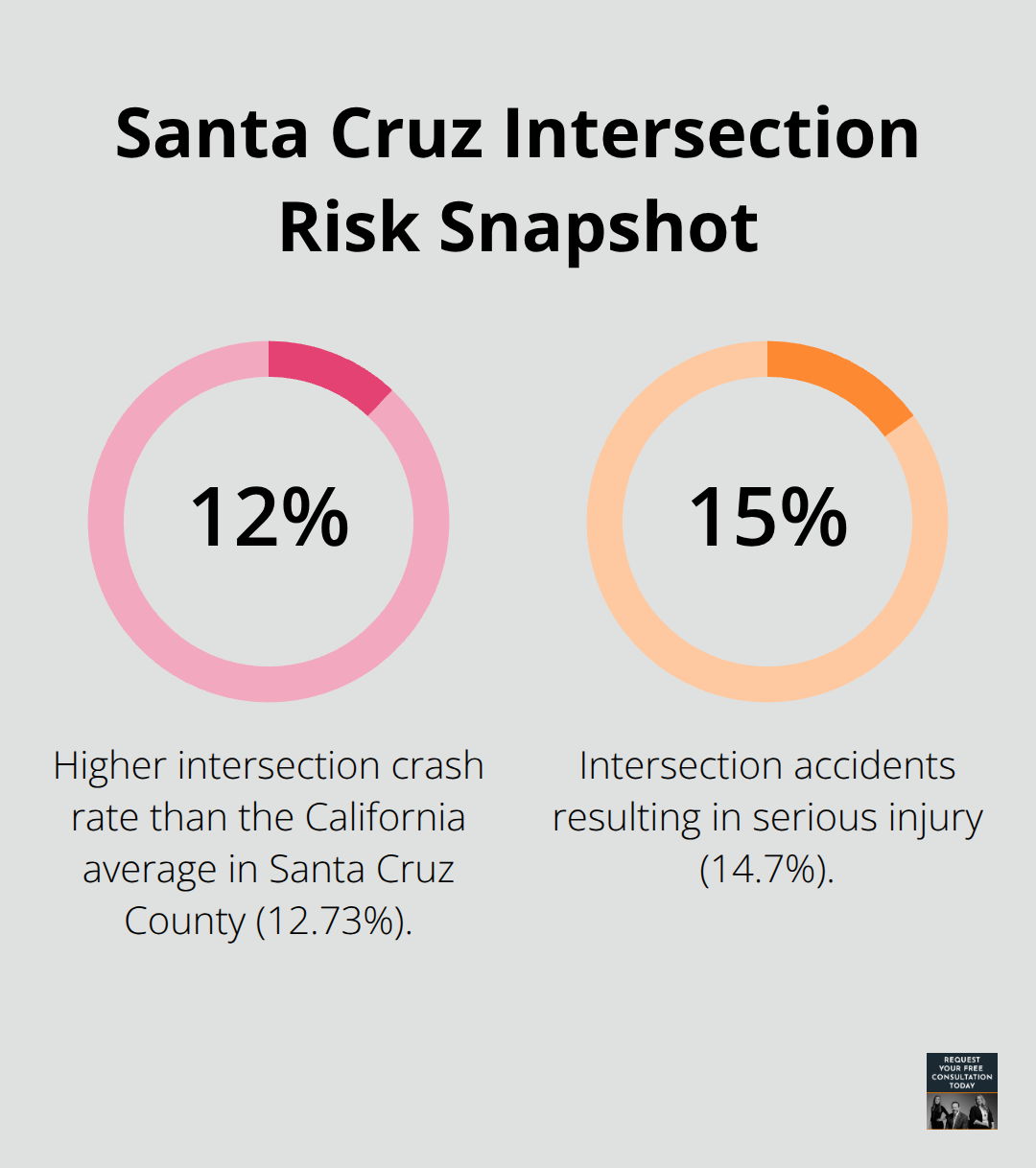
Santa Cruz intersections see crash rates 12.73% higher than the California average, with serious injury crashes occurring in 14.7% of intersection accidents. This elevated risk makes proper prevention and documentation critical in our area. The data underscores why accident victims in Santa Cruz County face substantial injury potential and why thorough medical evaluation matters immediately after any collision.
Understanding Whiplash Severity Grades
Symptoms appear on a spectrum defined by the Quebec Classification of Whiplash-Associated Disorders, which ranges from Grade 1 (pain and stiffness only) to Grade 4 (severe injury with neurological damage like weakness, numbness, or tingling). The dangerous part about whiplash is that many victims feel fine immediately after the crash, then experience pain, headaches, and stiffness 24 to 48 hours later. Women and people over 65 face higher risks of serious or lasting whiplash due to differences in muscle mass, bone density, and spine structure.
When to Seek Emergency Care
If you develop nerve-related symptoms such as weakness below the neck, severe headaches with vision changes, trouble swallowing, or dizziness, seek emergency care right away. Most Grade 1 and 2 injuries recover within days to weeks with proper treatment, but delayed symptom onset means you must seek medical evaluation within 48 hours of your crash even if you feel okay. Documenting when symptoms appeared, how they progressed, and which activities they affect strengthens your claim significantly when calculating damages later. This documentation becomes the foundation for the medical treatment decisions and claim strategy you’ll develop in the weeks ahead.
Getting the Right Medical Care and Building Your Medical Record
Seek Medical Evaluation Within 48 Hours
Within 48 hours of your crash, you need a medical evaluation even if you feel fine. The National Highway Traffic Safety Administration recommends this timeline because whiplash symptoms often emerge a day or two after impact, and early documentation protects your claim. In Santa Cruz County, Dominican Hospital and Watsonville Hospital both offer emergency evaluation and can refer you to follow-up care immediately. When you arrive, tell the medical team exactly what happened during the crash, where you felt impact, and any sensations you noticed immediately or in the hours after. Doctors need this detail to connect your symptoms to the accident itself, which becomes critical when your insurer reviews the claim.
Document Your Baseline Condition
Imaging like X-rays or MRI scans may not show soft tissue damage, but a thorough physical exam and neurological assessment will document your baseline condition. Ask for copies of all test results and examination notes before you leave; these become your foundation for damages later. Your medical record transforms from a collection of visit notes into evidence of actual damages when you document not just the diagnosis but the functional impact: can you work your job, drive safely, care for dependents, exercise.
Choose Physical Therapy That Tracks Functional Impact
Physical therapy and specialized treatment are where recovery happens, and Santa Cruz County has solid providers. Santa Cruz Physical Therapy offers orthopedic and neurologic recovery programs specifically designed for accident injuries, and they understand how to document functional limitations that matter to your claim. Treatment typically starts with immobilization using a cervical collar for the first few days, followed by gentle exercises to restore range of motion and strength. Anti-inflammatory medications, muscle relaxants, and sometimes nerve blocks reduce swelling and pain during this phase. After 7 to 10 days, cold therapy transitions to gentle heat, which improves blood flow and healing.
Track Every Visit and Functional Change
Many victims stop treatment too early because they feel better, but incomplete therapy often means symptoms return months later and your claim looks weaker. Track every medical visit, every medication, and how your symptoms affect work, sleep, and daily activities from day one. Write down when you couldn’t work, when you couldn’t sleep through the night, when you couldn’t lift objects or turn your head. Your insurer will use gaps in your medical record against you, so consistent treatment over weeks or months, even if symptoms improve, demonstrates the seriousness of your injury and strengthens your negotiating position significantly.
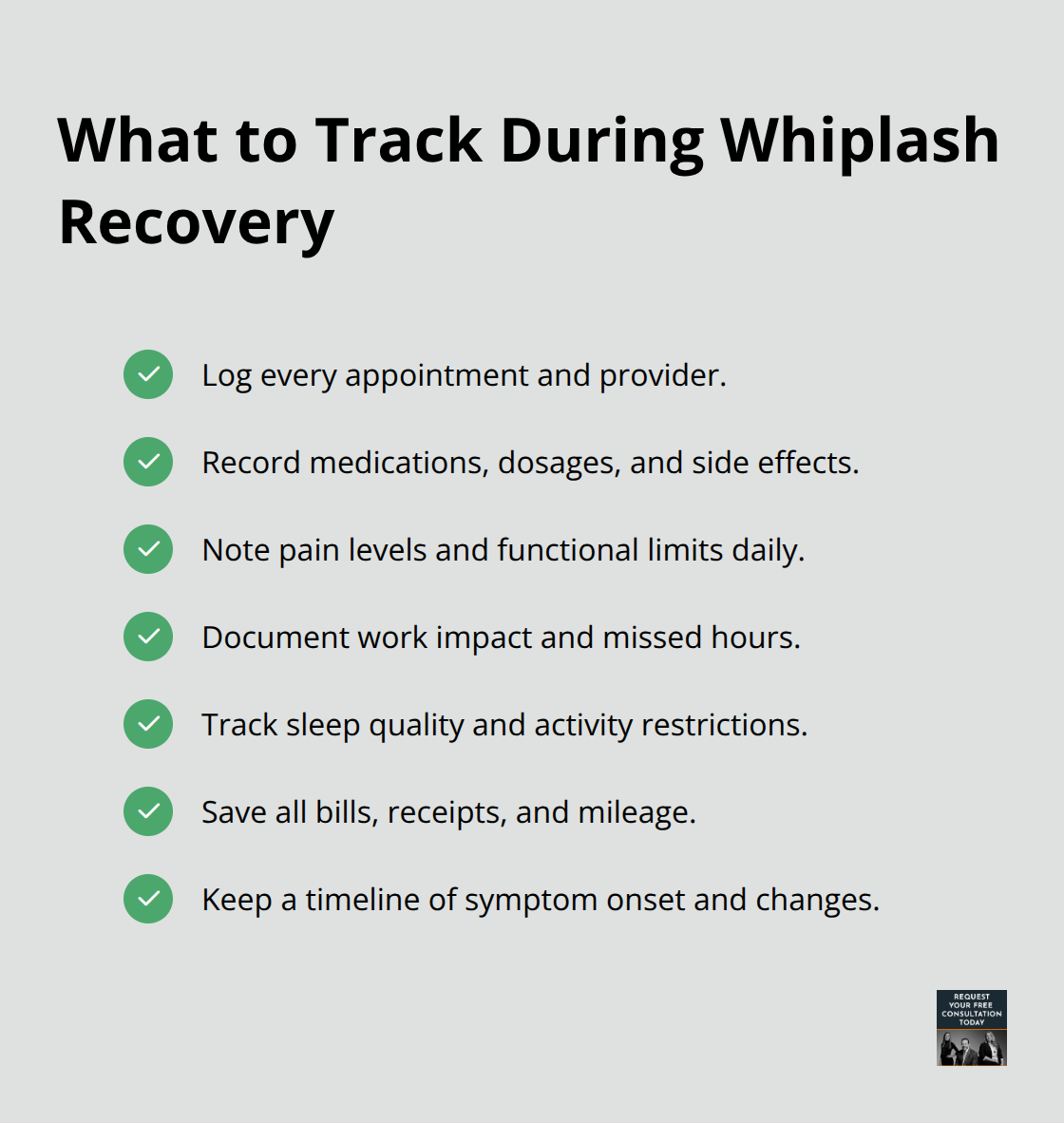
Build Your Recovery File for Damages Calculation
Your medical record now serves as the evidence your insurer needs to evaluate your claim fairly. Consistent documentation of treatment, functional limitations, and symptom progression creates a clear picture of your injury’s impact on your life. This recovery file becomes essential as you move forward to calculate your actual damages-the medical expenses, lost wages, and pain and suffering compensation that form the foundation of your claim.
Calculating Damages and Building Your Whiplash Claim
Medical Expenses Add Up Quickly
Your whiplash claim’s value rests on three categories of damages: medical expenses, lost income, and pain and suffering compensation. Most accident victims underestimate what they should recover because they focus only on immediate medical bills and miss the larger financial impact of their injury. Whiplash costs extend far beyond your initial emergency room visit.
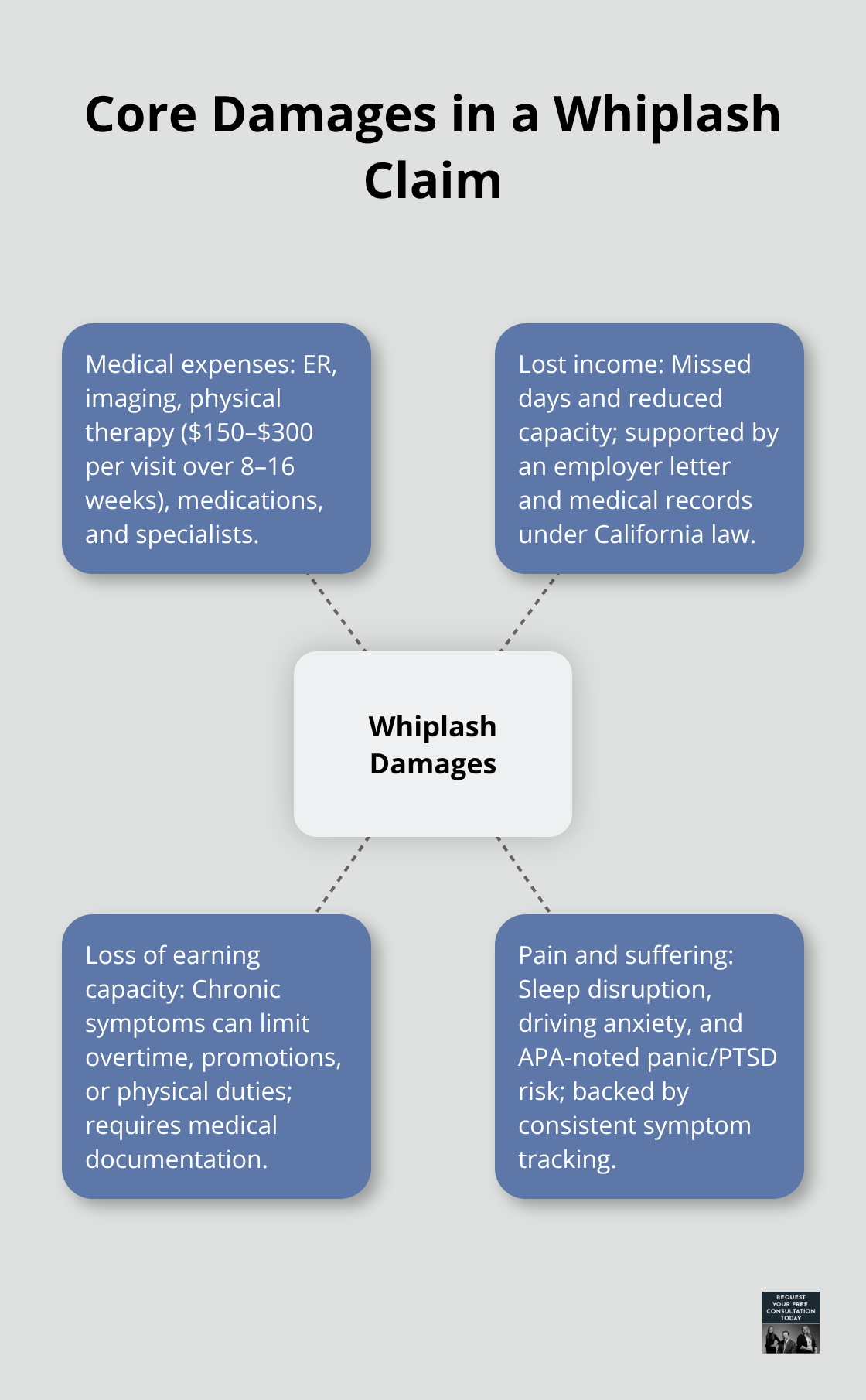
If you received physical therapy at Santa Cruz Physical Therapy or another local provider, those ongoing treatment sessions add up quickly-often running $150 to $300 per visit over 8 to 16 weeks. Prescription medications, imaging studies, specialist consultations, and any future treatment for chronic symptoms all count as recoverable medical expenses. Your insurer will calculate these costs by reviewing your medical records and invoices, but you must track every receipt and bill from day one because gaps in documentation mean gaps in your claim value.
Many victims also face hidden costs like transportation to medical appointments, time off work for treatment, and modifications to daily activities that insurance companies often overlook unless you document them explicitly in your recovery file. Our team at Schaar & Silva LLP can help direct you to medical lien services that facilitate payment of your bills until your case is resolved, removing the financial burden while you recover.
Lost Wages Often Exceed Medical Bills
Lost wages represent the second major damage category and frequently exceed medical expenses in whiplash cases. If your injury forced you to miss work during the acute phase or limited your ability to perform your job duties, you can recover those lost earnings. California law allows you to claim wages lost during treatment, recovery time, and any period when your symptoms prevented you from working at full capacity. Obtain a letter from your employer stating the dates you missed work and your hourly rate or salary, then calculate the total lost income.
Some whiplash victims experience chronic symptoms that reduce their earning capacity long-term, meaning they can no longer work overtime, pursue promotions, or perform physically demanding tasks. This loss of earning capacity is separate from immediate lost wages and requires medical documentation showing how your injury limits your future work ability.
Pain and Suffering Compensation Reflects Your Real Impact
Pain and suffering compensation covers the non-economic impact of your injury: the nights you couldn’t sleep due to neck pain, the anxiety about driving after the crash, the mental health effects documented by the American Psychological Association showing high rates of panic attacks in the first week post-accident and PTSD risk within six months. Insurance companies resist substantial pain and suffering awards, but your consistent medical documentation and functional impact tracking from your recovery file directly support these claims.
When you present an organized recovery file showing months of treatment, documented limitations, and clear connection between your injury and daily life disruption, you move from a theoretical claim to a concrete one that insurers take seriously in settlement negotiations. We at Schaar & Silva LLP connect you with specialists who can offer the psychological support you may require, ensuring your emotional trauma receives proper documentation and recognition in your claim.
Final Thoughts
Your whiplash Santa Cruz claim succeeds when you act fast and document everything from day one. Seek medical evaluation within 48 hours even if you feel fine, build your recovery file with every medical record and receipt, and track how your injury affects your work and daily life throughout treatment. California law gives you two years from the crash date to file an injury claim, but waiting weakens your position because evidence fades and your insurer uses delay against you when calculating damages.
We at Schaar & Silva LLP handle the legal complexities while you focus on healing. We connect you with medical lien services so you can access treatment without upfront bills, evaluate your property damage claim for fair valuation, and link you with psychological support specialists who understand trauma recovery. Our team has secured six and seven-figure verdicts and settlements for Santa Cruz County accident victims, demonstrating our track record with serious injury cases.
Contact Schaar & Silva LLP for a free case consultation to review your timeline, medical needs, and claim value. We serve Santa Cruz County and can evaluate whether your whiplash injury qualifies for the compensation you deserve.
