

A whiplash injury from a car accident can cause pain that lasts months or even years. Many people don’t realize how serious these injuries are until symptoms get worse over time.
We at Schaar & Silva LLP help accident victims in Santa Cruz, Sacramento, and Oakland understand what a fair whiplash settlement in California should cover. This guide walks you through the settlement process and shows you what factors affect your compensation.
Understanding Whiplash From Your Car Accident
[TASK_CLASS=ACTIVE]
Whiplash occurs when your head and neck experience a sudden, forceful back-and-forth movement during a collision. The National Highway Traffic Safety Administration reports over 1.2 million whiplash injuries occur annually in the United States from traffic crashes. This injury is clinically known as a Cervical Acceleration-Deceleration injury, and it damages the soft tissues in your neck, shoulders, and upper back. The force of impact does not need to be severe to cause whiplash. Low-speed rear-end collisions at 5 to 10 miles per hour can trigger these injuries, which is why insurance companies often mishandle claims with arguments that the impact was too minor to cause real damage. That argument is wrong. The actual damage depends on your body position, muscle tension at the moment of impact, and individual physical factors-not just the speed of the vehicles involved.
Recognizing Your Symptoms Early
Symptoms frequently appear hours or even days after the accident, which surprises many accident victims. Severe neck pain and limited neck motion rank among the most common signs, but you might also experience headaches at the base of your skull, shoulder or upper back pain, arm numbness or tingling, fatigue, dizziness, or cognitive issues like difficulty concentrating. This delayed onset matters when dealing with insurers. If you wait to seek medical attention, adjusters will argue your injuries were not caused by the crash. Instead, see a doctor within 48 hours of your accident, even if you feel fine. Medical documentation created immediately after your accident strengthens your claim significantly and prevents insurers from dismissing your injury as unrelated to the collision.
How Treatment Duration Affects Your Settlement
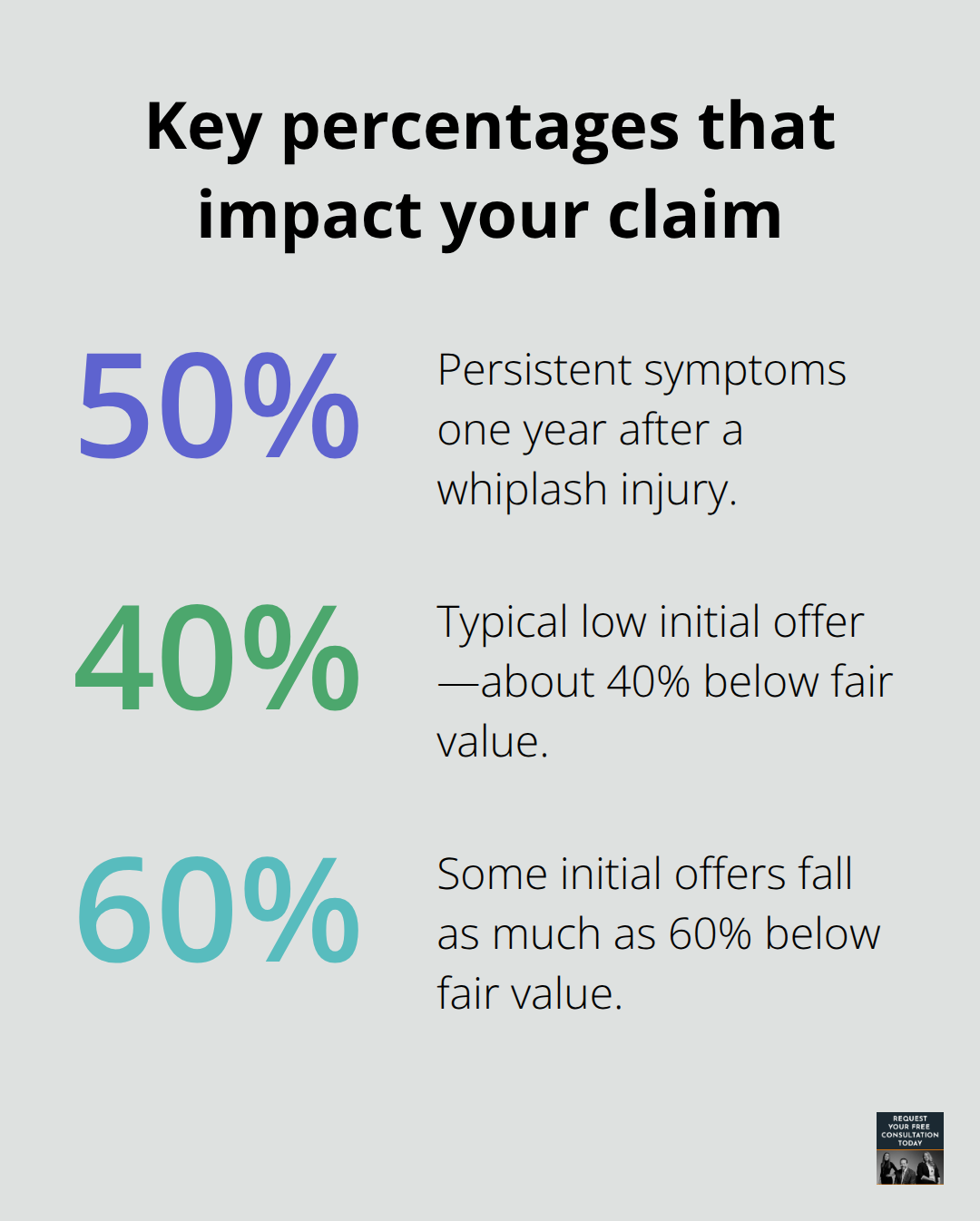
About 50 percent of whiplash sufferers experience persistent symptoms one year after the accident. Some people develop chronic pain that affects their ability to work, sleep, or enjoy daily activities. The Quebec Task Force classification system grades whiplash from Grade I (mild) to Grade IV (severe), and this grading directly influences settlement amounts.
Grade I whiplash typically settles around $2,500 to $10,000, while Grade IV can reach $100,000 or more depending on your specific injuries and medical treatment.
The duration of your treatment matters most for settlement value. If you receive only emergency room care, your settlement will be lower. If you undergo weeks or months of physical therapy, receive imaging like MRI scans, get injections, or require surgery, your claim value increases substantially. This is why continuing treatment through full recovery-rather than stopping early-directly impacts what you ultimately receive from your settlement.
What Happens Next in Your Claim
The medical bills you accumulate and the treatment you receive form the foundation of your settlement demand. Insurance companies will evaluate your case based on the severity of your injury classification, the length of your treatment, and the documentation supporting your ongoing pain and functional limitations. Understanding these factors positions you to recognize whether an initial settlement offer reflects the true value of your claim or falls short of what you deserve.
What Actually Drives Your Settlement Amount
Medical Documentation Forms Your Settlement Foundation
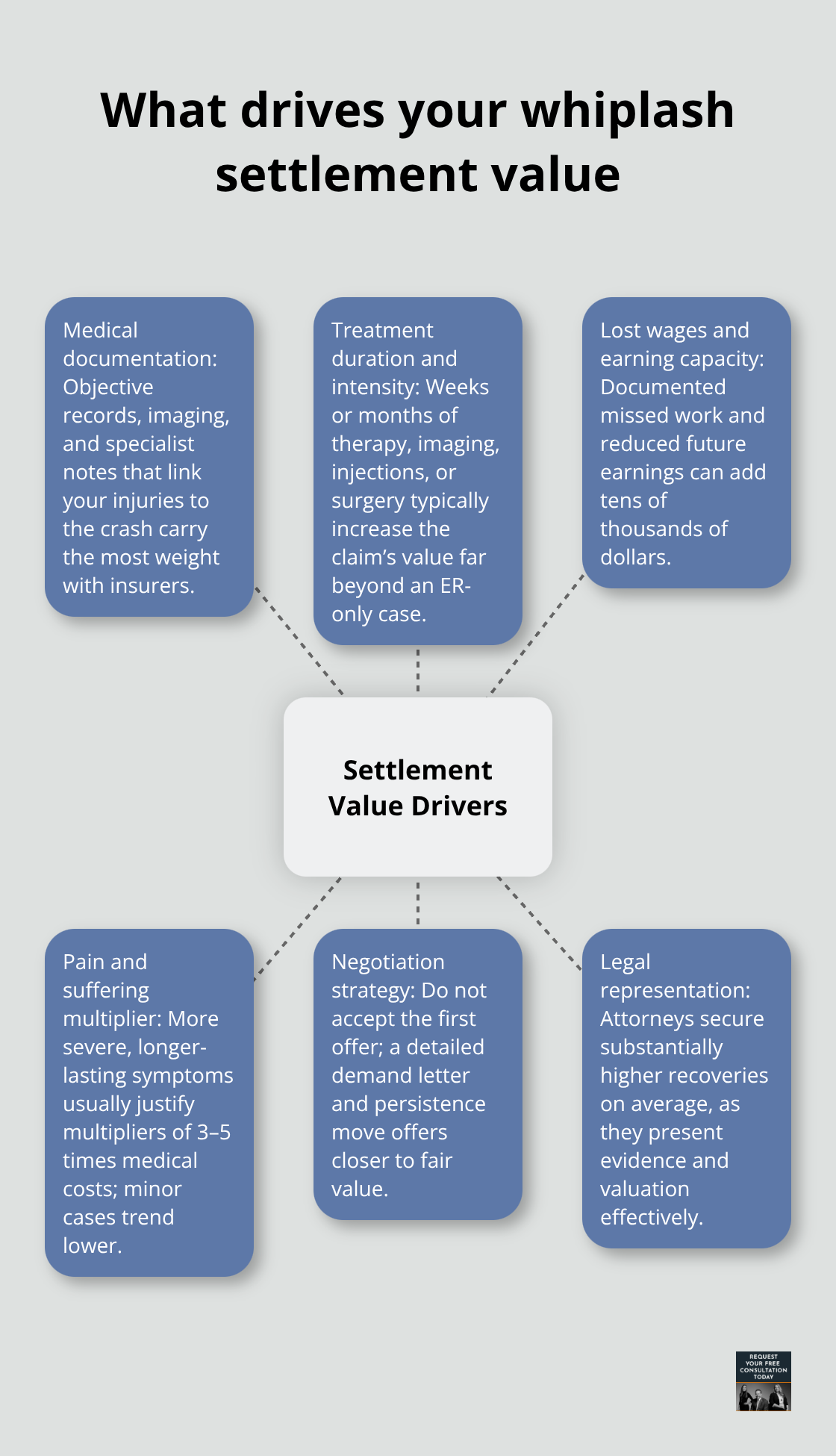
Medical documentation determines your whiplash settlement in California more than any other factor. Insurance adjusters ignore your pain descriptions and focus entirely on what medical records prove. When you visit an orthopedist, neurologist, or physical therapist within 48 hours of your accident, that provider creates objective documentation linking your injury to the crash. MRI scans showing disc herniation, EMG tests revealing nerve damage, and imaging studies demonstrating structural injury substantially increase settlement value.
A whiplash case with only an ER visit typically settles between $2,500 and $10,000. The same injury with 12 weeks of physical therapy, specialist evaluations, and imaging often settles between $35,000 and $65,000. The difference is not your pain level-it is the medical evidence proving your pain is real and connected to the accident. If your treatment ends early because you feel slightly better, your settlement will reflect that decision. Insurance companies interpret treatment gaps as evidence your injury was never serious. Continue treatment through complete recovery, not just until symptoms improve temporarily.
Lost Wages and Earning Capacity Add Significant Value
Lost wages and reduced earning capacity represent the second major settlement factor, and many accident victims fail to calculate this correctly. If you missed work during recovery, that income loss is recoverable. If your injury prevents you from returning to your prior job or forces you into lower-paying work, those lost earnings add tens of thousands of dollars to your claim.
Document every day you missed work and obtain written statements from your employer confirming your absence and wage loss. Calculate future earning capacity if your injury creates permanent limitations. These calculations often surprise accident victims-the numbers are typically higher than expected.
Pain and Suffering Multipliers Reflect Injury Severity
Pain and suffering damages-the non-economic compensation for your physical pain, emotional distress, and loss of daily function-typically apply a multiplier to your medical bills, ranging from 1.5 to 5 times your documented medical expenses. Minor whiplash with limited treatment receives a lower multiplier (around 1.5 to 2 times medical costs). Severe whiplash with long-term treatment, ongoing symptoms affecting work and sleep, or permanent impairment receives a higher multiplier of 3 to 5 times medical costs.
Insurance Research Council data shows that accident victims represented by an attorney recover approximately 3.5 times more than those negotiating alone. This difference exists because attorneys understand how to properly value future medical costs, calculate lost earning capacity accurately, and present pain and suffering damages persuasively to insurers.
Why Your Initial Offer Falls Short
The initial settlement offer from an insurance company is rarely the best offer available. Accepting it quickly means leaving substantial money on the table. Insurance adjusters use software and formulas designed to minimize payouts, not to reflect fair value. They count on accident victims accepting early offers without understanding what their cases are truly worth. Negotiation typically produces significantly better results, especially when you have documented medical evidence, calculated lost wages, and a clear understanding of your pain and suffering value. The settlement process rewards preparation and persistence, not quick acceptance.
How the Settlement Process Works in California
Contact the Insurance Company Strategically
You must contact the at-fault driver’s insurance company within 14 days of your accident, but strategy matters during that initial call. Provide only basic accident information: date, time, location, and vehicle descriptions. Do not provide a recorded statement or detailed injury description at this stage. Insurance adjusters use recorded statements to find contradictions they can later exploit to reduce your settlement. Tell the adjuster you will submit medical documentation once your treatment is complete. This approach prevents the insurer from using your early statements against you when your symptoms worsen or new injuries emerge weeks later. California’s pure comparative negligence law means the insurance company will scrutinize every word you say to argue you share fault for the accident, so controlled communication protects your claim value significantly.
Submit Complete Medical Documentation
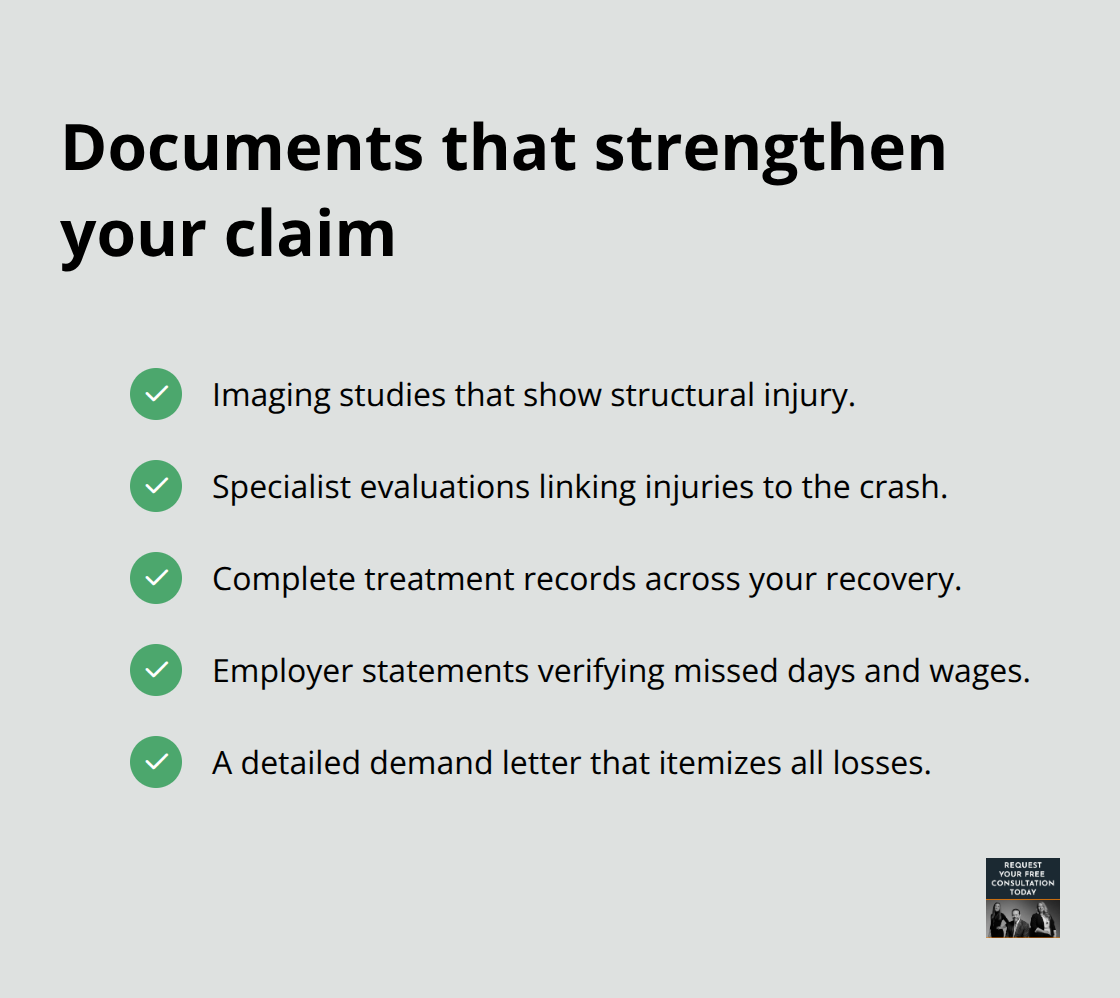
Negotiation begins after you submit medical records, bills, and lost wage documentation to the insurance company. Expect their initial offer to arrive within 2 to 4 weeks of submitting your file, and expect it to fall 40 to 60 percent below fair value. Insurance Research Council data confirms that represented claimants recover approximately 3.5 times more than unrepresented victims, which reflects the reality that insurers lowball offers knowing most people will accept them without pushback. Your medical file must include imaging studies, specialist evaluations, and treatment records spanning your entire recovery period (not just the first few weeks). The strength of your documentation determines whether the insurance company takes your claim seriously or dismisses it as minor.
Counter With a Detailed Demand Letter
Counter their offer with a detailed demand letter that itemizes your past medical expenses, projects future treatment costs, calculates lost wages with employer documentation, and assigns a reasonable pain and suffering value using the multiplier method. Many settlements resolve during this negotiation phase without proceeding to mediation or litigation. The timeline from initial claim to settlement typically spans 3 to 6 months for straightforward cases, though complex injuries with ongoing treatment or disputes about liability can extend 12 to 18 months. Insurance companies often increase their offers substantially when they recognize you understand your claim’s true value and will not accept inadequate compensation.
Prepare for Litigation if Necessary
If the insurance company refuses fair negotiation, your attorney prepares your case for trial to demonstrate willingness to litigate rather than accept inadequate offers. This preparation typically motivates insurers to increase their settlement proposals substantially before trial costs escalate. Most whiplash claims settle out of court, but the credible threat of litigation changes how insurance companies evaluate your case. They understand that juries in California have awarded substantial verdicts for whiplash injuries, including a $1.14 million verdict for cervical spine injury in Los Angeles County and a $225,000 verdict for mild traumatic brain injury with cervical strain. When insurers recognize you have documented evidence and legal representation, settlement negotiations shift in your favor.
Final Thoughts
Your whiplash settlement in California depends on the medical evidence you gather, the wages you document, and your willingness to negotiate rather than accept the first offer. Insurance companies count on accident victims accepting inadequate settlements without understanding their claim’s true value. The data is clear: represented claimants recover approximately 3.5 times more than those negotiating alone, and this difference reflects the reality that proper documentation, strategic communication, and knowledge of settlement ranges transform outcomes significantly.
The most common mistake accident victims make is stopping treatment too early or failing to see specialists who can document the extent of their injury. Your settlement amount rises directly with the quality and duration of your medical records-a whiplash settlement in California with only emergency room care settles far below one with weeks of physical therapy, imaging studies, and specialist evaluations. Continue treatment through complete recovery, not just until symptoms temporarily improve, and document every day you miss work to calculate your lost earning capacity if your injury affects your ability to earn.
We at Schaar & Silva LLP help accident victims in Santa Cruz, Sacramento, and Oakland navigate this process from start to finish. Contact us for a free consultation to evaluate your case and understand what your whiplash settlement should realistically cover.
