

After a car crash, calculating fair compensation for pain and suffering can feel overwhelming. Insurance companies often use formulas that undervalue what you’ve actually experienced, leaving victims with settlements far below what they deserve.
We at Schaar & Silva LLP help people in Santa Cruz County, Sacramento, and Oakland understand how pain and suffering settlements work and what factors actually matter in your case.
What Counts as Pain and Suffering After a Car Crash
Pain and suffering in California law covers two distinct categories that go far beyond your medical bills. Physical pain includes injuries like neck and back pain, broken bones, road rash, burns, headaches, and in severe cases, paralysis or respiratory distress. Emotional pain encompasses diminished quality of life, PTSD, insomnia, and cognitive issues like brain fog that persist long after the accident. California courts recognize both as legitimate damages you can recover, but they require different proof than economic losses. Insurance companies will push back hard on pain and suffering claims because they’re not tied to a receipt or invoice-they depend on your ability to document and communicate what you’ve actually experienced.
How Insurance Companies Measure Your Pain
The insurance industry relies on two primary methods to calculate pain and suffering, and both can shortchange you if you don’t understand them. The multiplier method takes your economic damages (medical bills, lost wages, out-of-pocket expenses) and multiplies that number by 1 to 5, depending on injury severity. If you have $20,000 in medical costs, an insurer might offer $20,000 times 2.5, equaling $50,000 for pain and suffering. The per diem method assigns a daily dollar amount to your suffering and multiplies it by the number of days you were affected. At $200 per day over 180 days, that yields $36,000. Neither method captures the real impact on your life, which is why many victims accept offers that undervalue their actual losses.
Building Your Case with Real Evidence
Insurance companies won’t simply take your word for pain and suffering. Your medical records form the foundation-they document injuries, treatment duration, and ongoing limitations. A daily pain journal (tracking your symptoms, medication use, and activities you couldn’t perform) strengthens your claim significantly. Medical opinions from treating physicians about your prognosis and functional limitations carry substantial weight. Witness testimony from family members, coworkers, or friends who observed your condition before and after the accident adds credibility. Third-party witnesses with no stake in the outcome prove especially persuasive.
Documentation That Matters Most
In cases involving brain and spinal injuries, detailed medical documentation of cognitive changes, mobility restrictions, or chronic pain becomes critical to demonstrating how the accident permanently altered your life. Treatment records showing ongoing therapy, medication adjustments, or specialist visits reinforce that your suffering extends beyond the initial injury. Photographs of visible injuries, repair estimates for your vehicle, and employment records showing missed work days all support your claim’s credibility. Insurance adjusters respond to concrete evidence-the more you provide, the harder they find it to minimize what happened to you.
Moving Forward With Your Claim
The strength of your pain and suffering settlement depends entirely on how thoroughly you document your experience and present it to insurers. Gathering evidence immediately after your accident (while details remain fresh and witnesses are accessible) makes a measurable difference in your final recovery. What you’ve experienced matters, and the right documentation proves it.
What Actually Drives Your Settlement Number
Injury Severity and Recovery Timeline Shape Your Claim Value
Injury severity matters far more than insurance companies want to admit, and the gap between what you deserve and what they offer often comes down to how well you document the trajectory of your recovery. A broken bone that heals in eight weeks generates dramatically different settlement leverage than a spinal injury causing chronic pain two years post-accident. Insurance adjusters know this, which is why they scrutinize your medical records for any indication that your condition improved faster than expected. If your doctor notes you returned to full activity after three months, that becomes ammunition to slash your pain and suffering valuation, even if you experienced setbacks later.
The timeline of your recovery directly influences the per diem method calculation-more days of documented suffering equals higher compensation. Photograph your injuries immediately after the accident and at regular intervals during recovery; these images provide visual evidence of severity that medical reports alone cannot convey. For brain injuries specifically, document cognitive changes through dated journal entries describing memory problems, concentration difficulties, or personality shifts, since these subjective symptoms lack the objective markers that broken bones provide.
Work Disruption and Lost Daily Activities Build Persuasive Evidence
Your ability to work and perform daily activities creates the most persuasive evidence in settlement negotiations because it translates pain into economic reality that adjusters understand. If the accident forced you to take unpaid leave, miss client meetings, or reduce work hours, those lost earnings support a higher pain and suffering claim-the multiplier method uses your economic damages as the baseline, so larger documented losses yield proportionally larger settlements.
Beyond lost wages, document activities you abandoned: household responsibilities you could no longer handle, hobbies you stopped pursuing, or childcare duties that shifted to others. A parent unable to play with their children for six months, or someone who stopped running because of back pain, builds a compelling narrative about quality of life destruction.
Medical Records Demonstrate Ongoing Functional Limitations
Medical records showing physical therapy sessions, specialist consultations, or medication changes over months demonstrate ongoing functional limitations rather than quick recovery. Insurance companies count on victims accepting initial offers without fighting back, but those who compile detailed records of work disruption and lifestyle changes consistently achieve settlements reflecting actual harm.
When you gather this documentation systematically and present it strategically, you shift the negotiation dynamic away from what insurers want to pay toward what your actual losses demand. The next section explores how insurance companies actively work to undervalue your claim and what tactics they deploy to minimize your settlement.
Negotiating Settlement With Insurance Adjusters
Insurance adjusters operate from a playbook designed to minimize what they pay, and understanding their tactics separates victims who accept lowball offers from those who achieve fair settlements. The multiplier and per diem methods discussed earlier serve as starting points, but adjusters systematically manipulate both approaches to their advantage. When using the multiplier method on a $20,000 medical bill, most adjusters default to the 1.5 to 2.0 range rather than the 3.0 to 5.0 range reserved for severe cases, even when your injuries clearly justify higher multipliers. They argue that your recovery appears faster than documented because you attended physical therapy twice weekly rather than three times, or that your pain journal lacks sufficient detail to prove ongoing suffering. The per diem method faces similar pressure-adjusters challenge your daily pain value as excessive and compress the number of days they acknowledge you suffered by pointing to any medical note suggesting improvement.
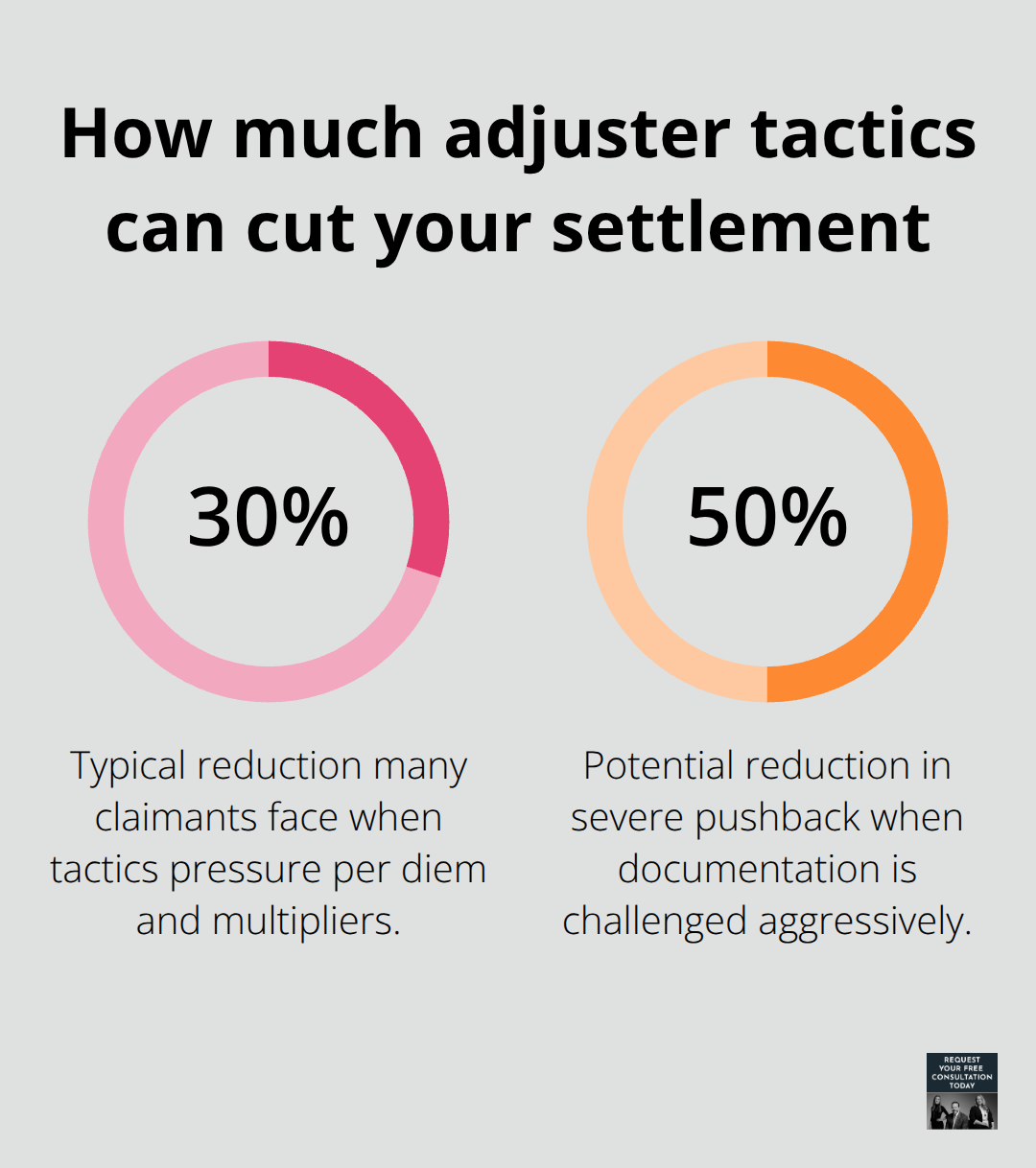
These aren’t isolated negotiating tactics; they’re systematic strategies that reduce settlements by 30 to 50 percent below what documented evidence supports.
How Adjusters Undermine Your Claim
Adjusters deploy specific undermining techniques that exploit gaps in your documentation or hesitation to challenge their authority. They request records beyond what’s necessary-depositions from your employer, surveillance footage, social media accounts-hoping to find contradictions that justify lower offers. They also delay settlement discussions while pressuring you to accept quick payments, knowing financial desperation clouds judgment. If you mention any activity that contradicts your pain claims (attending a family gathering, returning to light work, exercising), adjusters weaponize these moments to argue you recovered faster than your medical records indicate. The most damaging tactic involves offering a seemingly reasonable settlement early in the process, before you’ve compiled comprehensive documentation, betting you’ll accept rather than endure months of negotiation.
Why Legal Representation Changes the Dynamic
Having legal representation fundamentally shifts this dynamic in your favor. An attorney handles insurance communications directly, preventing adjusters from exploiting your inexperience or emotional vulnerability. Your legal team compiles medical records, obtains physician statements about functional limitations, and structures your pain documentation to withstand adjuster scrutiny. When adjusters attempt early lowball offers, your attorney responds with counteroffer documentation that forces them to justify their valuations against evidence they cannot dismiss.
Special Considerations for Complex Cases
For people in Sacramento dealing with wrongful death or brain and spinal injuries, this advocacy becomes especially critical because emotional manipulation combines with complex medical causation arguments that adjusters use to justify minimal offers. These cases demand attorneys who understand how to present neurological evidence and causation documentation in ways that counter adjuster resistance. The strength of your settlement ultimately depends on how thoroughly your legal team anticipates and counters each undermining tactic adjusters deploy.
Final Thoughts
Pain and suffering settlements require more than hoping insurance companies will do the right thing. Victims who systematically document their injuries, track functional limitations, and understand how adjusters calculate offers consistently recover significantly more than those who accept initial proposals. Your medical records, daily pain journals, and testimony about lost work capacity form the foundation of what you deserve, and insurance companies count on victims accepting lowball offers out of frustration or financial pressure.
After a car crash in Santa Cruz County, Sacramento, or Oakland, your immediate actions determine your settlement outcome. Photograph injuries while they’re visible, start documenting pain and limitations the same day, and preserve all medical records and employment documentation. If you’ve experienced wrongful death, brain injury, spinal injury, or pedestrian accident trauma, the complexity of your case demands professional guidance from someone who understands how to present medical evidence that adjusters cannot dismiss.
We at Schaar & Silva LLP help people throughout Santa Cruz County navigate pain and suffering claims with the documentation and advocacy that produces real results. Contact Schaar & Silva LLP to discuss how we can strengthen your claim and fight for the settlement that reflects what you’ve actually experienced.
