
After a vehicle crash, insurance companies will scrutinize every detail of your claim. The difference between a denied claim and full compensation often comes down to the evidence you gather in those first critical hours and days.
We at Schaar & Silva LLP have seen countless claims weakened simply because people didn’t document vehicle crash damages properly. This guide walks you through exactly what to collect and how to organize it so your losses are impossible to ignore.
What to Photograph and Document Right After Your Crash
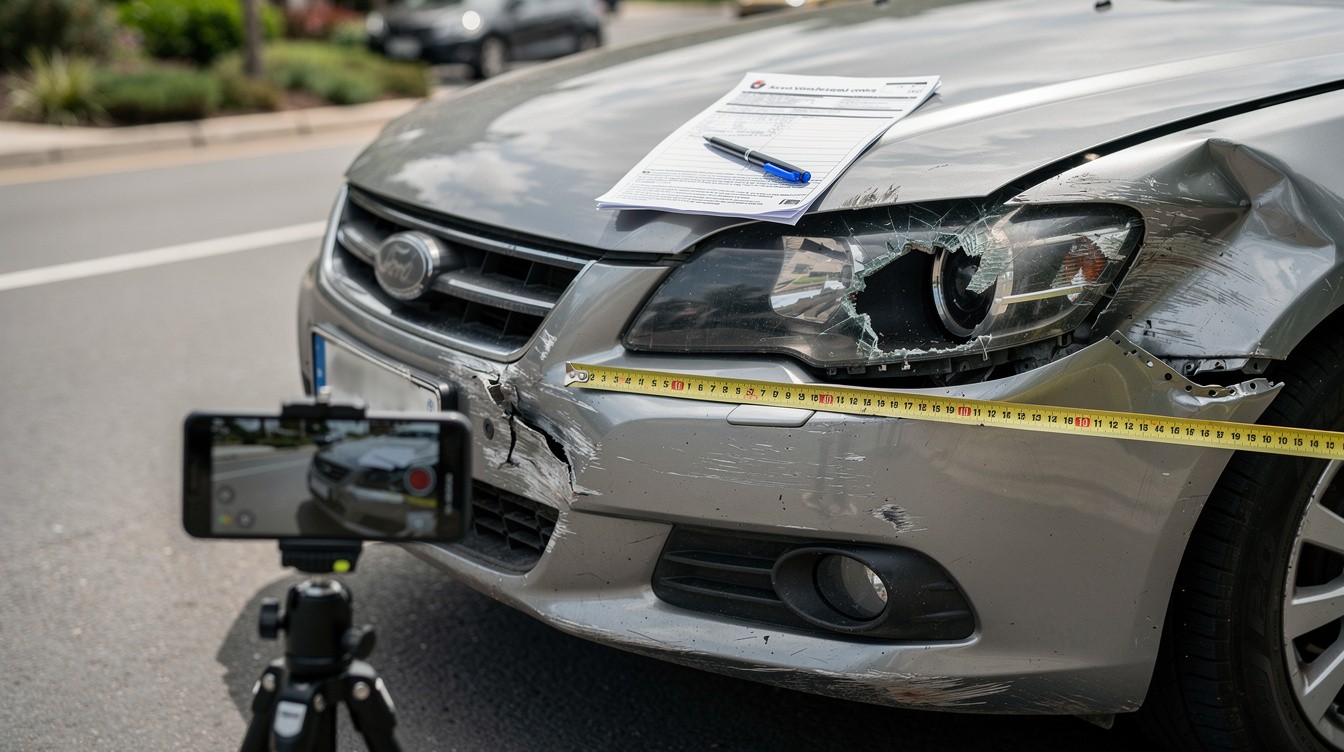
The moment after a vehicle crash, your phone becomes your most important tool. Photograph your vehicle from at least four different angles: front, rear, both sides, and close-ups of every damaged area. Shoot video as well, panning slowly across the entire scene to capture the overall damage context. Photograph the other vehicle, road conditions, traffic signs, and any visible skid marks or debris. Poor lighting or rain should not stop you. Modern smartphone cameras perform well in low light, and documenting in bad weather actually strengthens your claim because it shows the hazardous conditions that contributed to the crash.
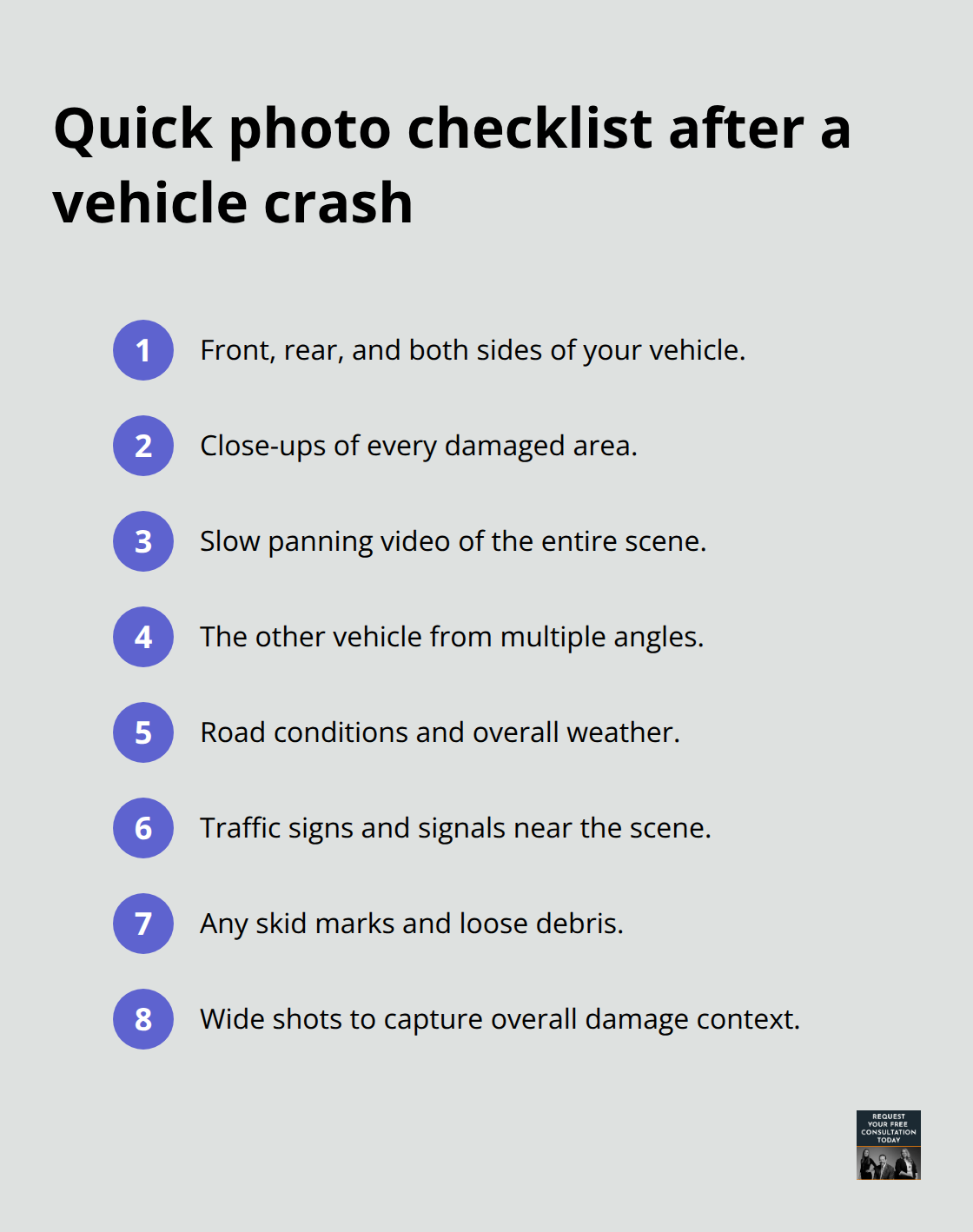
Insurance adjusters expect this photographic evidence. If you delay documentation by days or weeks, adjusters become skeptical about whether the damage truly came from the crash or accumulated over time.
Obtain a Professional Damage Assessment Before Repairs
Before you repair anything, obtain a written damage assessment from a licensed auto body shop. This assessment should itemize every damaged component, estimate repair costs, and include photographs. This document creates a contemporaneous record of damage directly linked to the crash. Insurance companies know that body shop assessments carry weight in claim disputes. If you repair your vehicle without this assessment, you lose the ability to prove exactly what damage existed immediately after the crash.
Some repair shops offer this service free or for a small fee. The investment pays off because adjusters use these assessments to calculate repair costs and validate your claim. Keep the original assessment and all repair receipts organized in one folder.
Track Transportation and Repair Costs
As you move through repairs, track every expense related to the crash. Calculate transportation costs to and from repair shops using the IRS standard mileage rate (67 cents per mile for 2024). Save receipts for rental vehicles, rideshare services, or public transportation you use while your vehicle is being repaired. These costs add up quickly and represent real losses that your claim should cover.
Organize Your Documentation for Maximum Impact
When you eventually file your claim or work with legal representation, your organized documents form the foundation of your property damage claim. Adjusters review complete, well-organized evidence more favorably than scattered paperwork. The next step involves gathering evidence of losses beyond your vehicle itself-medical expenses, lost income, and personal property damage that often gets overlooked in the immediate aftermath.
Beyond Your Vehicle: What Losses Adjusters Often Miss
Medical Records Tell the Real Story of Your Injuries
Medical bills pile up fast after a crash, but bills alone won’t convince an adjuster. You must collect every medical record from emergency room visits, urgent care clinics, hospital stays, imaging reports (X-rays, CT scans, MRIs), physical therapy sessions, and prescription records. Request these records directly from each provider within 30 days of your crash because memory fades and evidence degrades. Insurance adjusters scrutinize medical causation-they want to see physician notes that explicitly link your injuries to the crash impact.
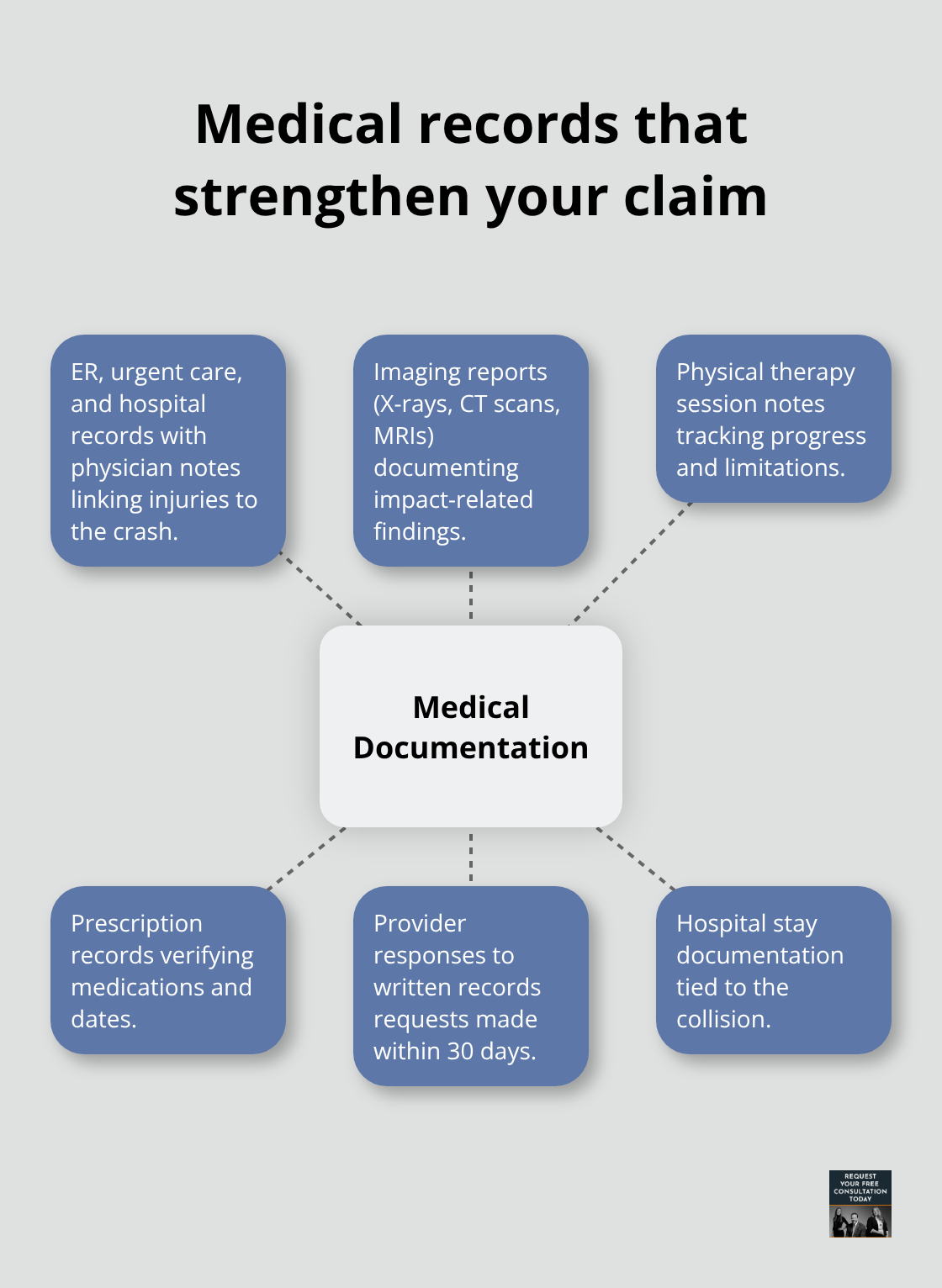
A doctor’s explanation of your diagnosis and how the crash caused it carries far more weight than a bill sitting by itself.
If a medical provider treated you under a letter of protection, ask about it in writing because this affects how bills appear in your claim. Keep originals and copies organized chronologically from the crash date forward.
Lost Wages and Income Documentation
Lost wages represent money out of your pocket that deserves full recovery. Gather pay stubs from at least two pay periods before the crash to establish your normal earning rate. If you are self-employed, pull tax returns for the prior two years and bank statements showing income deposits. Ask your employer for a written letter confirming the dates you missed work and your hourly rate or salary. This documentation creates an undeniable record of income you lost due to the crash. Insurance adjusters often overlook future earning losses, so presenting this evidence clearly strengthens your claim.
Personal Property and Transportation Costs Add Up
Personal property damage beyond your vehicle gets overlooked constantly. Damaged clothing, electronics, eyeglasses, or luggage inside your vehicle at the time of the crash should be documented with photographs and receipts showing original purchase prices. Rental car costs, rideshare expenses, and public transportation fees while your vehicle was being repaired all count as recoverable losses. Photograph everything damaged before you discard it. Calculate transportation costs to medical appointments using the IRS standard mileage rate (67 cents per mile for 2024).
How Documentation Multiplies Your Settlement Value
When you organize this documentation chronologically in one folder with clear labels, adjusters see a credible claim built on evidence rather than guesswork. Insurance companies use formulas to calculate settlement value, and the baseline starts with your documented economic damages. A larger, well-supported foundation of economic losses directly increases what adjusters offer for pain and suffering, which typically applies a multiplier of 1.5 to 5 times your economic damages depending on injury severity. The strength of your documentation determines whether that multiplier lands at the low or high end of the range. With organized evidence in hand, you’re ready to navigate the next critical phase: presenting your complete claim to adjusters and deciding whether settlement negotiations or legal representation serves your interests best.
How to Present Your Claim So Adjusters Take It Seriously
Organize Your Evidence Chronologically
Your documentation only matters if you present it in a way that forces adjusters to pay attention. Most people hand over a disorganized stack of papers and hope for the best, which is exactly why their claims get undervalued. Start by creating a single master folder organized chronologically from the crash date forward. Label each section clearly: accident scene photos and police report, medical records in order of treatment dates, pay stubs and income documentation, repair estimates and receipts, and personal property damage.
Adjusters process dozens of claims weekly, and they move faster through organized files. When your evidence sits scattered across emails, text messages, and loose papers, adjusters struggle to calculate your full losses. Insurance companies use damage formulas that start with documented economic losses, then apply multipliers for pain and suffering. If your economic damages are incomplete or hard to verify, adjusters apply the lowest multiplier available.
Create a Clear Summary of Your Total Losses
A well-organized file with clear valuations for each loss category signals that you understand your claim’s value and won’t accept lowball offers. Create a one-page summary that totals your economic damages by category. List vehicle repair costs, medical expenses, lost wages, transportation costs, and personal property damage with specific dollar amounts and supporting documentation references.
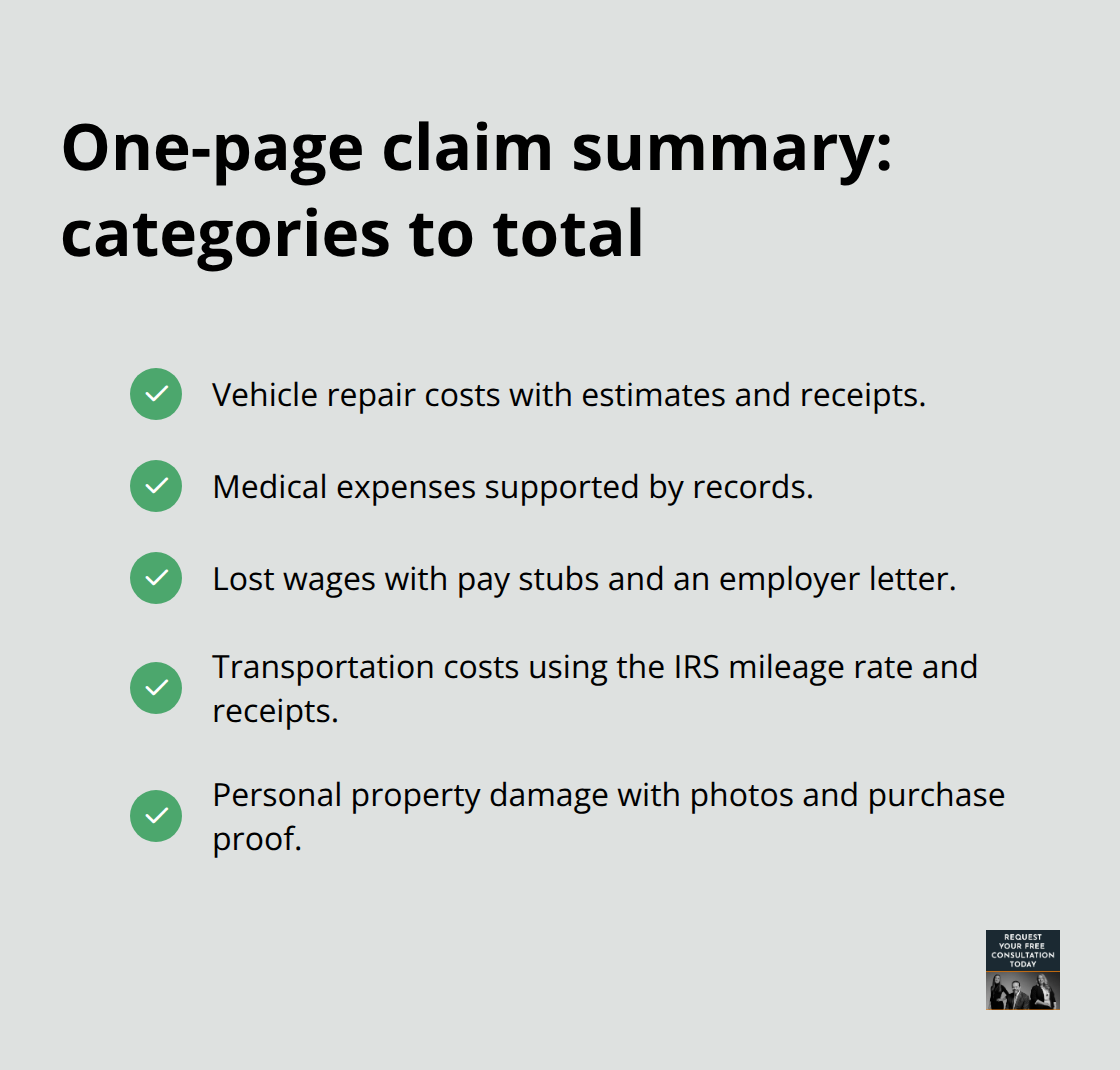
This summary should appear on top of your organized file so adjusters see your total claim value immediately. Insurance adjusters working on commission have financial incentive to minimize payouts, so presenting clear valuations removes their ability to claim they miscalculated or misunderstood your losses. The difference between handling this alone and having professional guidance often amounts to thousands of dollars in your pocket.
Know When to Seek Professional Review
When you have questions about whether certain expenses qualify or how to value future medical care, professional review protects your interests. Questions about medical lien services, property damage valuations, or the psychological impact of your crash deserve answers from someone who handles these claims regularly. Schaar & Silva LLP serves Santa Cruz County and can review your file and explain your options if you need guidance navigating the claims process.
Final Thoughts
Thorough documentation transforms vehicle crash damages from a vague claim into undeniable proof that adjusters cannot dismiss. When your file contains clear valuations for each loss category, repair receipts, medical records linked to the crash, and proof of income loss, you eliminate the gaps that adjusters exploit to reduce settlements. Most people hand over scattered paperwork and accept the first offer, which is why their claims get undervalued by thousands of dollars.
Your next step depends on your comfort level navigating the claims process alone. If you have questions about medical liens, property damage valuations, or whether certain expenses qualify for recovery, professional guidance protects your interests. We at Schaar & Silva LLP serve Santa Cruz County and can review your documentation to explain your options and help you understand what your claim is actually worth.
Contact us for a free consultation to discuss your situation and learn how we can assist with medical bill services, property damage evaluation, and connecting you with support resources during your recovery.