
After a car accident, the path to settlement feels uncertain. You’re dealing with injuries, insurance calls, and mounting questions about how long everything will take.
At Schaar & Silva LLP, we’ve guided hundreds of accident victims through the settlement timeline for auto crashes. This guide breaks down exactly what happens from the moment of impact through final resolution, so you know what’s coming next.
What to Do Right After Your Crash
The first hours after an accident determine how smoothly your settlement will move forward. Police reports create an official record that insurance companies rely on, and medical documentation establishes the link between the crash and your injuries. Many accident victims make critical mistakes during this phase by failing to document injuries properly or by giving recorded statements to insurance adjusters without understanding the implications. The National Highway Traffic Safety Administration reports that over 42,000 fatal crashes occurred on U.S. roads in 2022, yet countless survivors lose settlement leverage because they didn’t take the right steps immediately after impact.
Call Police and Notify Your Insurer
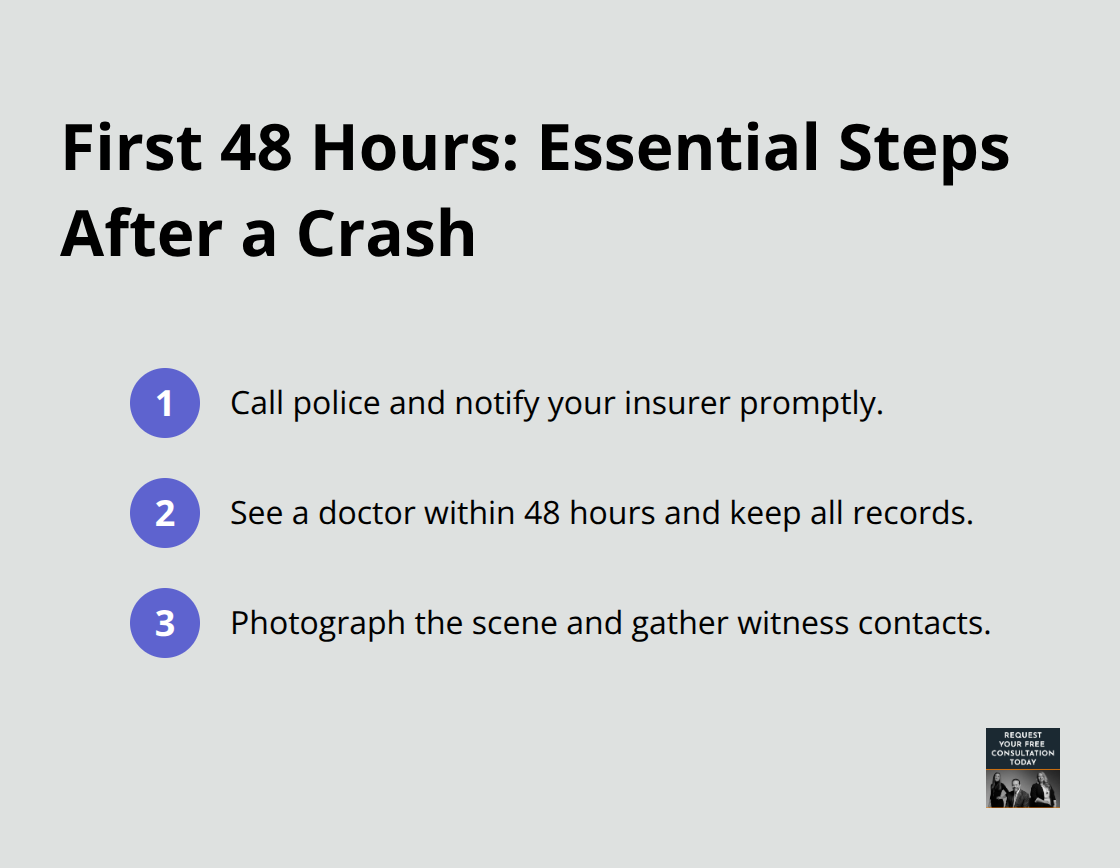
Call 911 if anyone is injured, regardless of how minor the injuries seem. Police reports create an official accident record that insurance companies treat as credible evidence. When you file a report with your insurance company, stick to factual statements about what happened and avoid admitting fault or speculating about causes.
Insurance adjusters will contact you within days, and you should not provide recorded statements without understanding that these recordings can be used against your claim later. Document the other driver’s information, vehicle details, and insurance company name at the scene, then provide this information to your own insurer promptly.
Seek Medical Care Within 48 Hours
Visit a doctor within 48 hours of the accident, even if you feel fine. Delayed medical visits create gaps that insurance companies exploit to argue your injuries weren’t serious. Medical records become your most powerful settlement tool, so request copies of all treatment notes, imaging results, and physician assessments from your healthcare providers and keep them organized in one location.
Photograph Everything at the Scene
Take photographs of vehicle damage, road conditions, traffic signals, and your injuries at the scene. Collect contact information from any witnesses who saw the crash happen. These visual records and witness statements support your claim when insurance adjusters question the severity of the accident or your injuries.
The documentation you gather now directly impacts how insurance companies evaluate your claim in the weeks ahead.
Moving Your Claim Forward
Organizing Your Documentation Package
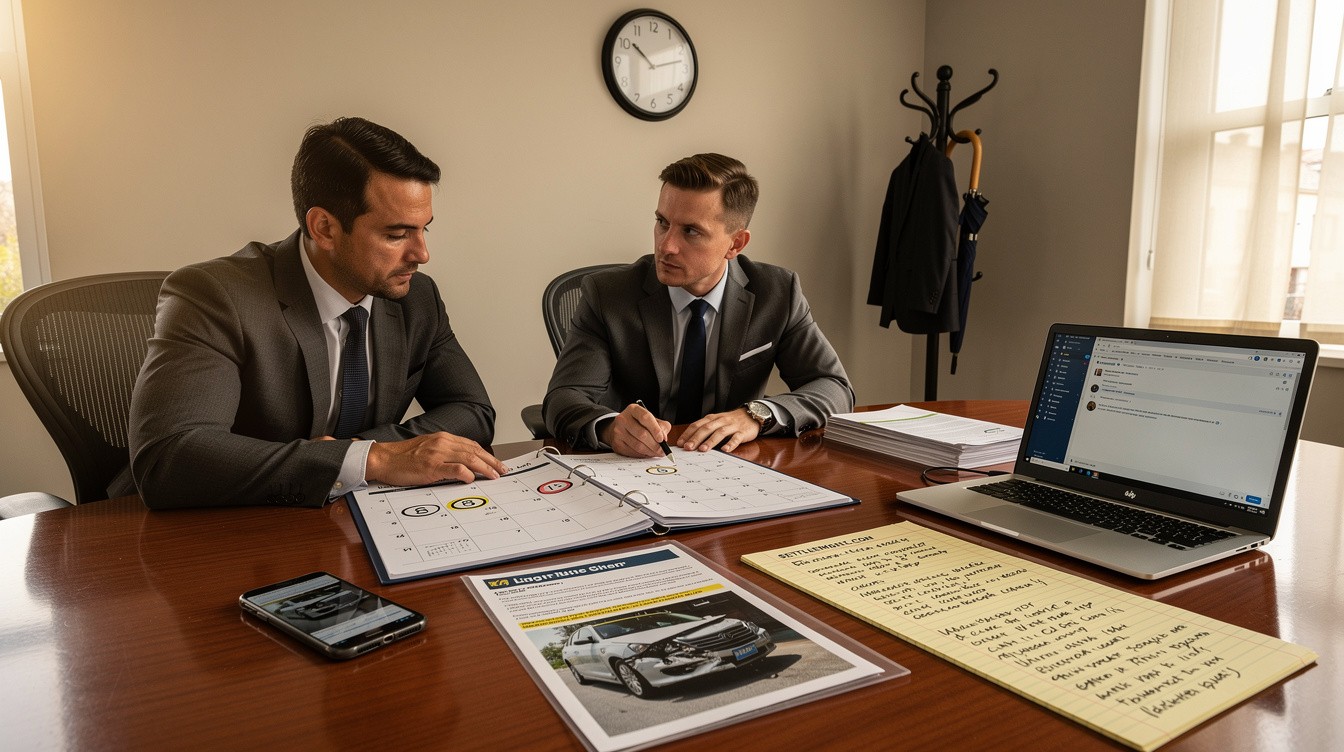
After the initial documentation phase, your claim enters the submission and negotiation stage, which typically lasts two to six months depending on the accident’s complexity and injury severity. Most claims settle during this phase without going to court. You’ll need to compile your medical records, repair estimates, and lost wage documentation into a formal demand package that tells the insurance company exactly what your case is worth.
Start requesting medical records immediately from every healthcare provider you’ve seen since the crash, including emergency room visits, follow-up appointments, physical therapy, and mental health treatment. Insurance companies receive thousands of claims annually, so yours will move faster if your documentation is organized and complete. The Insurance Information Institute reports that the average auto accident claim takes approximately 30 days to process once all documentation is submitted, though claims with serious injuries or disputed liability can take significantly longer.
Building Your Demand Package
Your demand package should include itemized medical bills, repair estimates from at least two body shops, documentation of lost wages, and a narrative explaining how the accident affected your daily life. Insurance adjusters review thousands of claims, so clear organization matters more than length. Structure your package with a cover letter that summarizes your total damages, followed by organized sections for medical expenses, property damage, and lost income.
Include receipts for any out-of-pocket expenses related to your recovery (transportation to appointments, medications, home care services). Attach copies of your medical records in chronological order so the adjuster can trace your treatment timeline. This level of detail demonstrates that you’ve calculated your damages carefully and aren’t inflating numbers.
Navigating the Negotiation Phase
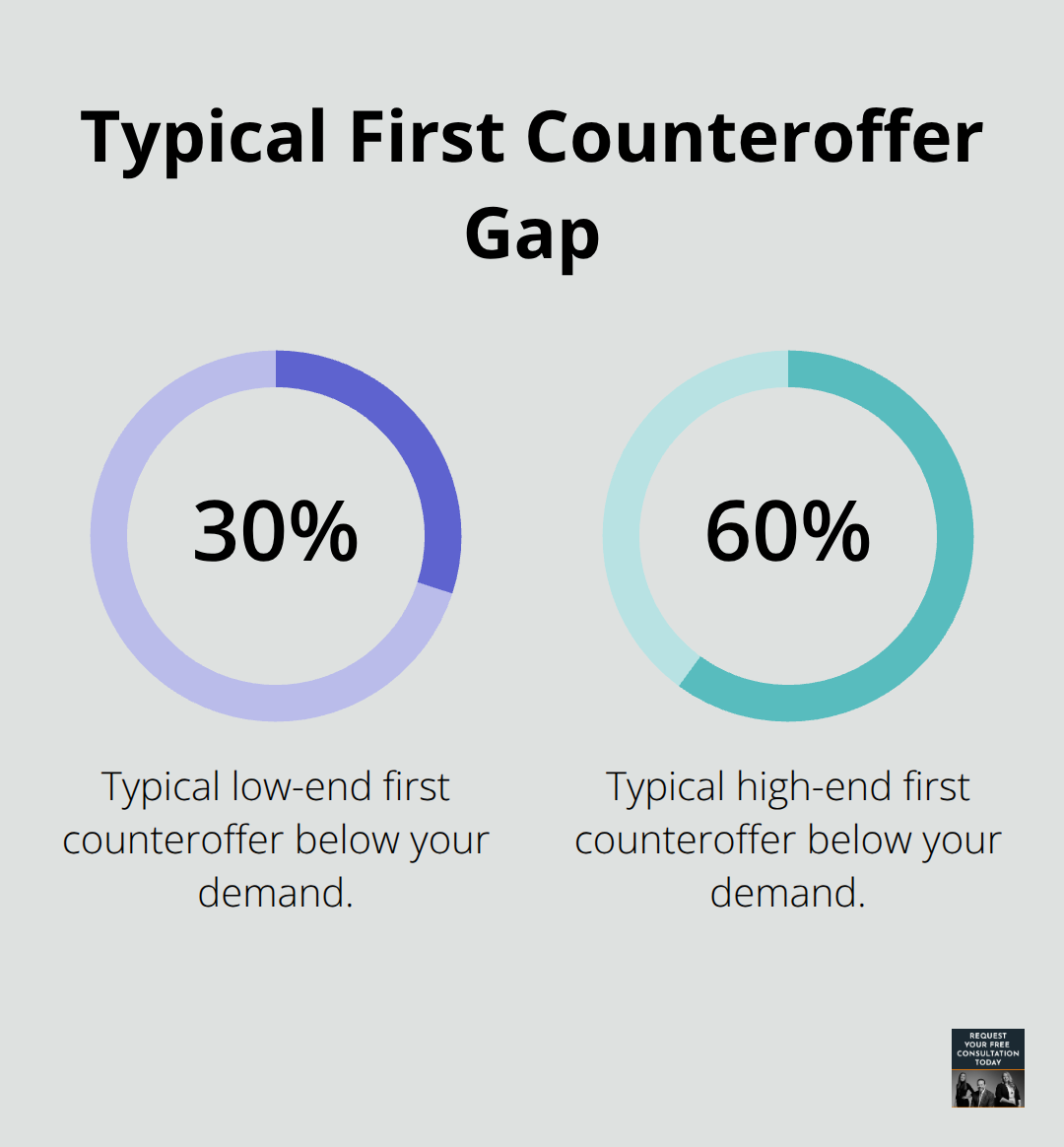
Once you submit your demand, the negotiation phase begins immediately. Most adjusters respond within 14 days with a counteroffer that’s typically 30 to 60 percent lower than your demand. This is normal and expected.
Respond with specific reasons why their offer doesn’t account for your actual damages, referencing medical evidence and repair estimates rather than emotional arguments.
Many accident victims accept the first offer out of frustration or financial pressure, leaving thousands of dollars on the table. If the insurance company’s offer remains significantly below your documented damages after two or three rounds of negotiation, you may need to consider filing a lawsuit. At that point, understanding what litigation involves becomes essential for your next decision.
Litigation and Court Resolution
When Settlement Negotiations Fail
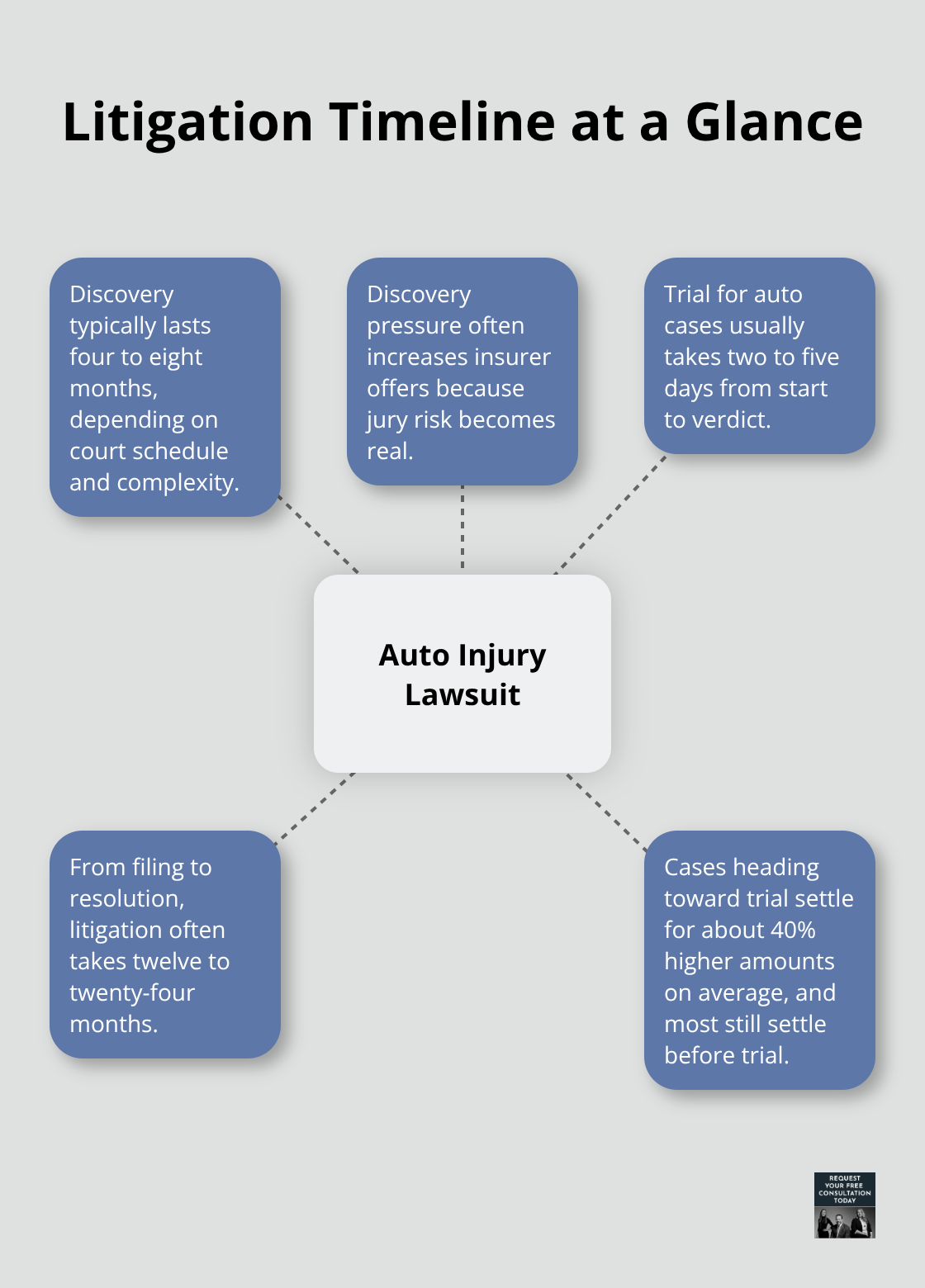
If the insurance company’s final offer remains significantly below your documented damages after three rounds of negotiation, filing a lawsuit becomes the practical path forward. Many accident victims assume litigation is expensive and time-consuming, but insurance companies count on your fear of court to accept lowball offers. The American Bar Association reports that cases proceeding to trial settle for approximately 40 percent higher amounts than those resolved through negotiation alone, though most lawsuits still settle before trial rather than reaching a verdict.
Filing a Lawsuit and Discovery Process
Your attorney files a complaint in civil court, which triggers a formal process called discovery where both sides exchange evidence, medical records, and witness statements. This exchange of information often prompts insurance companies to increase their offers significantly because they now face real consequences if a jury decides the case. Discovery typically lasts four to eight months depending on the court’s schedule and case complexity.
During discovery, your attorney can depose the other driver and any witnesses, request the insurance company’s internal communications about your claim, and obtain accident reconstruction reports that strengthen your position. The discovery phase forces the insurance company to evaluate your case more seriously than during informal negotiation. Once discovery concludes, most cases settle because both sides now understand what a jury would likely award.
Trial Preparation and Courtroom Proceedings
If settlement negotiations still fail after discovery, your case proceeds to trial preparation, which involves organizing evidence for courtroom presentation, preparing you to testify, and developing a strategy to present your injuries and damages to a jury. Trial typically lasts two to five days for auto accident cases, and the jury verdict becomes binding once rendered.
The entire litigation process from filing to trial resolution typically takes twelve to twenty-four months depending on court schedules and case complexity, which is significantly longer than the initial settlement phase but often results in substantially higher compensation. Medical evidence becomes increasingly important during litigation, so maintaining consistent treatment throughout this period strengthens your case considerably.
Final Thoughts
Your settlement timeline for an auto crash depends on several factors working together. Simple cases with clear liability and minor injuries typically resolve within two to six months through insurance negotiation, while cases involving serious injuries, multiple vehicles, or disputed fault often take twelve to twenty-four months when litigation becomes necessary. Medical recovery plays a significant role because insurance companies won’t settle until your treatment reaches completion or stability, and the severity of your injuries matters tremendously since serious injuries require more documentation and typically trigger higher settlement offers that take longer to negotiate.
Liability disputes add months to your timeline, and property damage complexity also influences duration, particularly when repair estimates vary significantly or when your vehicle becomes a total loss requiring valuation disputes. Insurance company responsiveness varies widely, with some adjusters moving quickly while others delay responses strategically hoping you’ll accept lower offers out of frustration. Documentation that arrives organized and complete from the start accelerates your settlement timeline auto crash resolution, while missing records or incomplete information can extend your case by weeks or months.
We at Schaar & Silva LLP guide accident victims through each phase of this timeline while handling the legal complexities so you can focus on recovery. Our team serves Santa Cruz County, Sacramento, and Oakland and understands the specific challenges accident victims face in your region. Contact Schaar & Silva LLP to discuss your case and get a realistic timeline for your situation.
