

A vehicle crash can leave you facing medical bills, lost income, and vehicle repairs you didn’t expect. You deserve compensation for these costs and the pain you’ve endured.
At Schaar & Silva LLP, we help people in Santa Cruz County, Sacramento, and Oakland understand what vehicle crash compensation they’re owed. This guide breaks down the types of damages available, what affects your claim amount, and how to get the most from your settlement.
What Compensation Can You Actually Recover
Medical Expenses and Future Care Costs
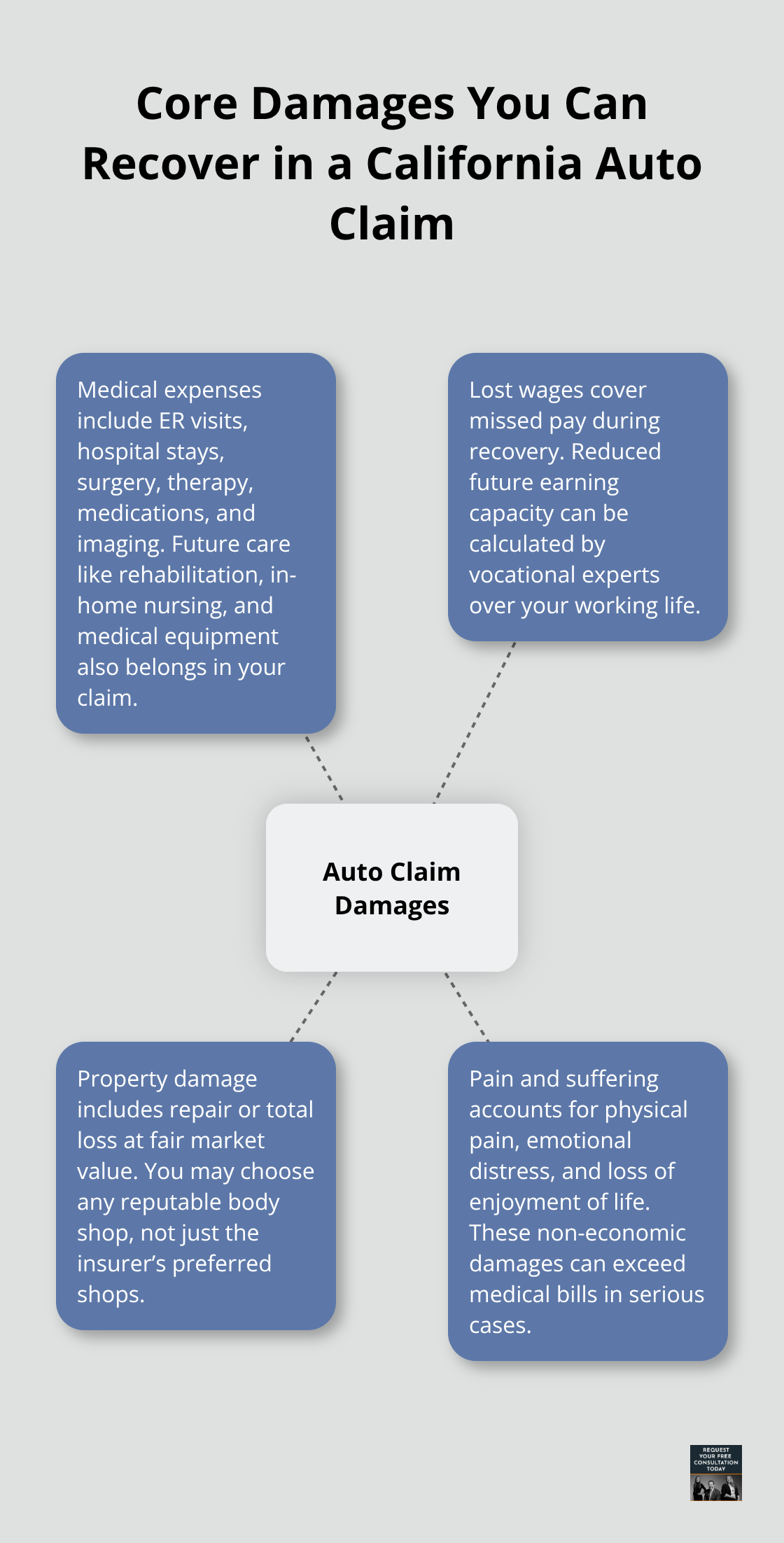
After a vehicle crash, California law entitles you to recover multiple categories of damages, and understanding each one helps you avoid settling too quickly. Medical expenses form the foundation of most claims-hospitals, emergency room visits, surgery, physical therapy, medications, and diagnostic imaging all count. If your injury requires ongoing treatment, those future medical costs belong in your claim too. California courts recognize recovery of future medical expenses for brain and spinal cord injuries, including in-home nursing care, additional surgeries, ongoing rehabilitation, medications, medical supplies, mobility aids, and home or vehicle modifications. A life care plan prepared by qualified professionals documents these needs with specific cost projections based on your medical records and clinical guidelines.
Lost Wages and Earning Capacity
Lost wages represent income you missed while recovering, calculated from your actual pay stubs and employment records-not estimates. If your injury reduces your ability to earn in the future, vocational experts assess your lost earning capacity over your lifetime, accounting for potential retraining and career changes. This calculation often reveals substantial damages that initial settlement offers overlook.
Property Damage Recovery
Property damage covers vehicle repair or replacement at fair market value; you can take your car to any auto body shop you choose, not just shops your insurer recommends. If a repair estimate exceeds your insurer’s initial assessment, the body shop can submit a higher estimate for review, and your insurer may cover the additional costs if they agree the work is necessary.
Pain and Suffering Damages
Pain and suffering damages compensate for physical pain, emotional distress, and reduced quality of life-these non-economic damages often exceed medical bills in serious injury cases. California permits compensation for both current and future necessary medical care arising from negligence, and attorneys coordinate life care planners, vocational experts, and economists to build credible projections that overcome insurer skepticism.
Understanding Settlement Deductions
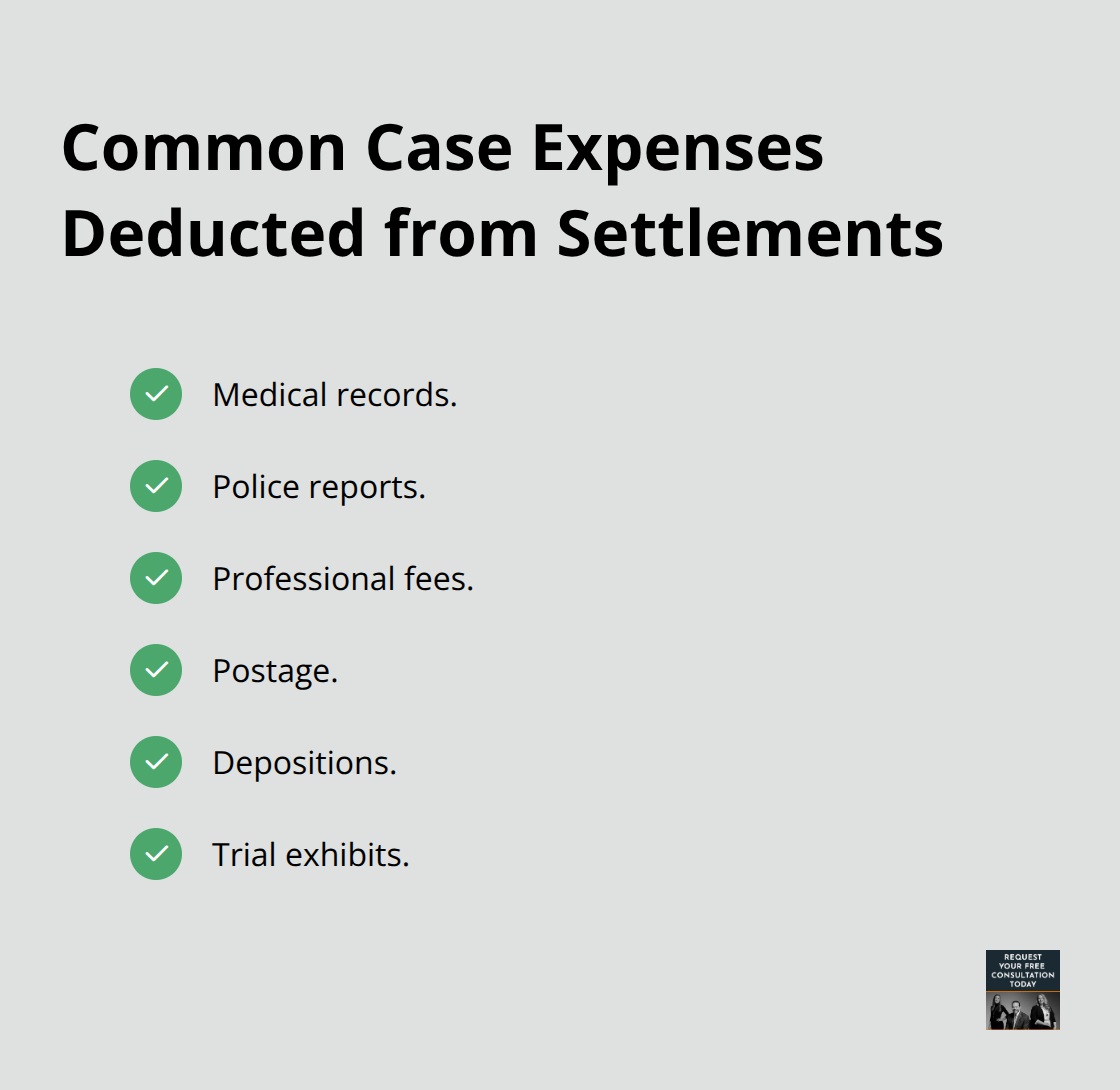
Settlement amounts are reduced by attorney fees and case expenses; for example, a $30,000 settlement with $10,000 in medical bills, a one-third contingency fee, and $500 in case costs yields approximately $9,500 to you. Common case expenses include medical records, police reports, professional fees, postage, depositions, and trial exhibits.
The severity of your injuries, the other driver’s degree of fault, insurance policy limits, and the quality of your documentation all influence what you ultimately receive. Schaar & Silva LLP helps clients in Santa Cruz County evaluate property damage claims and connect you with medical lien services to manage bills while your case resolves. Understanding these deductions upfront prevents surprises when you receive your settlement check, and this knowledge positions you to negotiate more effectively with insurers before accepting any offer.
What Determines Your Settlement Amount
How Injury Severity Shapes Your Claim
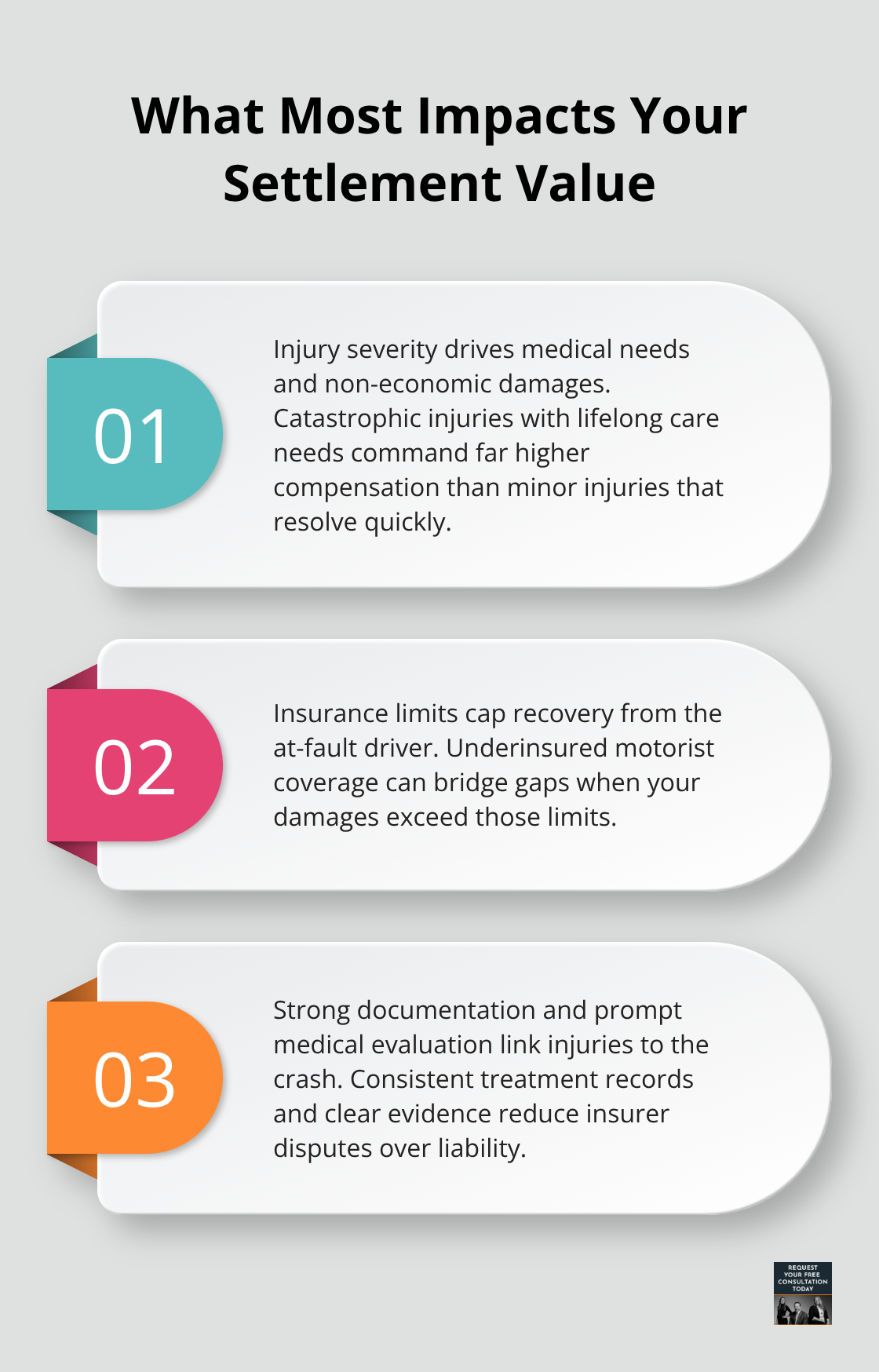
The compensation you receive depends on factors that go far beyond the severity of your injuries alone. Injury severity matters enormously-a brain or spinal cord injury that requires lifelong care generates substantially higher damages than a minor fracture that heals within weeks. California courts recognize that younger plaintiffs may require decades of future care, dramatically increasing claim value compared to older injured parties with shorter life expectancies. The degree of fault also shifts your settlement substantially; if the other driver was texting while driving or violated local traffic laws like cell phone restrictions in Corpus Christi, fault becomes clearer and settlement offers typically rise. Drunk driving cases tend to increase damages significantly because courts view impaired driving as reckless negligence.
Insurance Limits and Coverage Gaps
Insurance policy limits create a hard ceiling on what you can recover from the at-fault driver’s policy-if their coverage maxes out at $15,000 but your damages total $50,000, you’ll need to pursue underinsured motorist coverage through your own policy to close that gap. Documentation quality determines whether insurers accept your claim or fight it; medical records from treating physicians carry far more weight than informal notes, and photographs of vehicle damage, accident scene conditions, and traffic signals all strengthen your position during negotiations.
Evidence That Strengthens Your Position
The evidence you gather immediately after the crash influences settlement value more than most people realize. Police reports, witness statements with contact information, and photos of skid marks or sight-line obstructions help establish fault clearly, reducing insurer disputes over liability. Medical bills and treatment records must connect directly to the crash-a doctor’s evaluation within days of the accident carries more credibility than treatment sought months later.
If you delay reporting the accident to your insurer, they may question whether injuries truly resulted from the collision.
Regional Costs and Documentation Standards
Local cost variations matter significantly too; 24-hour in-home nursing care costs far more in Oakland than in smaller towns, so your life care plan should reflect regional pricing rather than national averages. Settlement amounts are often negotiated downward by adjusters who undervalue non-economic damages like pain and suffering, but strong documentation of your medical treatment duration and extent pushes back against lowball offers. When you understand how these factors interact in your specific situation, you position yourself to recognize what settlement amount actually reflects your full damages rather than accepting the first offer that arrives.
Building Your Strongest Claim
Secure Official Documentation Immediately
Obtain the police report within days of the accident-this document forms the foundation of your claim because insurers rely heavily on official findings of fault and accident circumstances. Call the non-emergency police line if you haven’t already and request the report number; you’ll need this to retrieve the full document from your local police department. Photograph everything at the scene if you’re safe to do so: vehicle damage from multiple angles, license plates, traffic signals, road conditions, skid marks, and any sight-line obstructions that contributed to the crash. Write down the exact time, weather conditions, and sequence of events while details remain fresh. Collect the other driver’s name, phone number, insurance company, policy number, and driver’s license information-photograph their insurance card directly rather than relying on handwritten notes.
Gather Witness Information and Evidence
Talk to witnesses immediately and record their names and contact information; witness statements often carry significant weight when insurers dispute liability, and tracking them down weeks later becomes exponentially harder. The evidence you collect at the scene influences settlement value substantially. Police reports, witness statements, and photos of skid marks or sight-line obstructions help establish fault clearly, reducing insurer disputes over liability.
Document Your Medical Treatment Thoroughly
Medical documentation determines settlement value more than almost any other factor, so seek medical evaluation within days of the crash even if you feel fine-some injuries like internal bleeding or soft tissue damage don’t surface immediately, and a doctor’s report creates the critical link between your injuries and the collision. Keep all medical records, bills, and receipts organized in one place throughout your recovery; insurers scrutinize gaps in treatment and will question why you stopped therapy if months pass between visits. Medical bills and treatment records must connect directly to the crash-a doctor’s evaluation within days of the accident carries more credibility than treatment sought months later.
Navigate Insurance Reporting and Settlement Decisions
Report the accident to your own insurer promptly but understand that notification differs from filing a claim-you’re simply informing them of the incident, not admitting fault or triggering coverage determinations yet. Do not provide recorded statements or sign documents from the other driver’s insurer without legal review; adjusters use your own words to minimize claim value, and statements made under pressure often contain details that hurt your case later. Never settle early when medical treatment is ongoing, because you cannot know your full damages until you understand the complete scope of injuries and future care needs. If you sustained a brain or spinal cord injury, future medical costs including 24-hour in-home nursing care, ongoing rehabilitation, and mobility aids can extend decades, making early settlement profoundly damaging to your long-term financial security.
Work with Legal Professionals to Protect Your Rights
A legal professional from the beginning prevents costly mistakes and positions you to negotiate from strength rather than desperation. We at Schaar & Silva LLP help clients evaluate settlement offers against their actual damages and connect you with medical lien services to manage bills while your case develops. Our team can assist in evaluating the extent of property damage and ensure you receive a fair valuation for your loss.
Final Thoughts
Vehicle crash compensation covers medical expenses, lost wages, property damage, and pain and suffering-but only if you act strategically and understand your rights. Injury severity, fault determination, insurance limits, and documentation quality all shift what you ultimately receive, and a brain or spinal cord injury that requires decades of care generates vastly different damages than a minor fracture. The other driver’s degree of fault matters enormously too-texting while driving or violating local traffic laws strengthens your position substantially during negotiations, and regional cost variations mean your life care plan must reflect Oakland or Sacramento pricing rather than national averages.
Gather official documentation immediately after the crash, including the police report and photographs from the accident scene. Medical records from a doctor’s evaluation within days of the collision create the critical link between your injuries and the crash, and this documentation determines settlement value more than almost any other factor. Never settle early when treatment is ongoing, because you cannot know your full damages until you understand the complete scope of injuries and future care needs.
We at Schaar & Silva LLP help clients in Santa Cruz County, Sacramento, and Oakland navigate vehicle crash compensation from start to finish. Our team assists in evaluating property damage claims, connects you with medical lien services to manage bills while your case develops, and ensures you recognize what settlement amount actually reflects your full damages. Contact us for a free case review to understand what your specific situation is worth and avoid accepting lowball offers that leave you financially vulnerable long-term.
