

A car accident can turn your life upside down in seconds. Medical bills pile up, lost income adds stress, and you’re left wondering what happens next with your California auto accident claim.
We at Schaar & Silva LLP help people in Santa Cruz County, Sacramento, and Oakland navigate this process every day. This guide walks you through what to expect, what damages you can recover, and the mistakes that could cost you money.
How California Auto Accident Claims Work
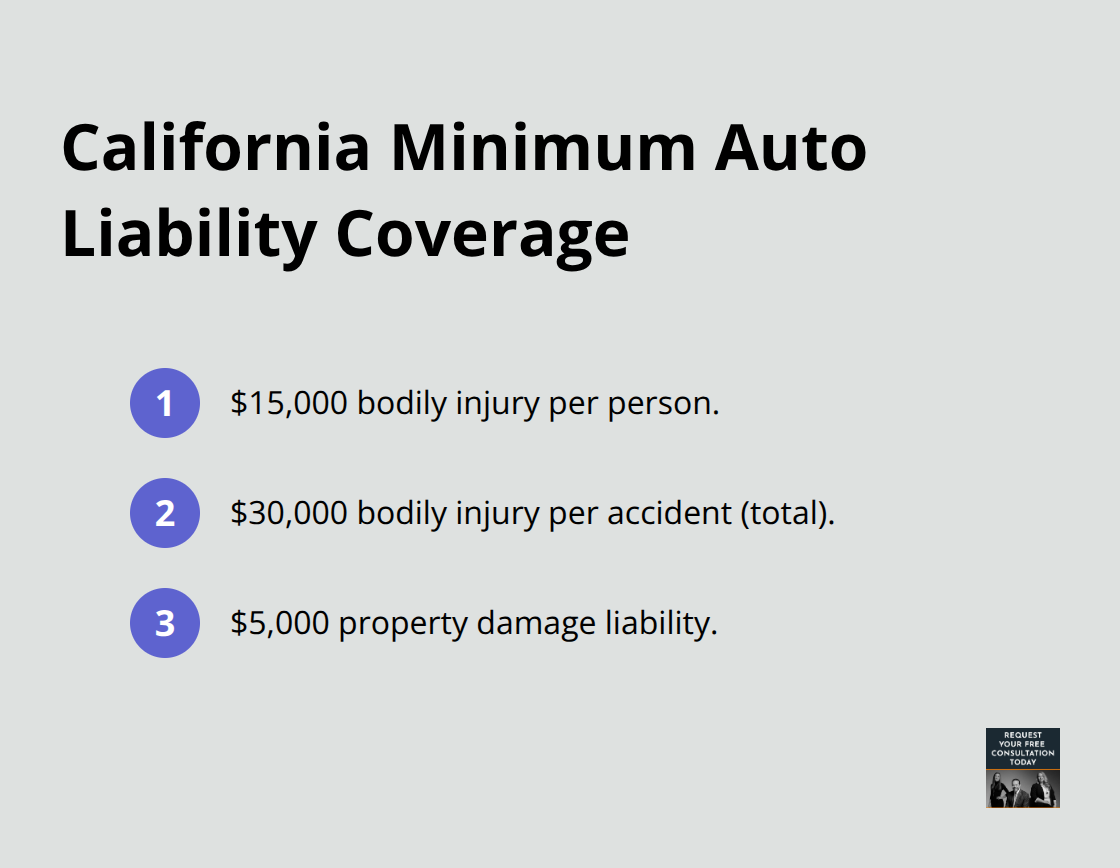
California uses a fault-based system, meaning the driver responsible for the accident pays for damages through their insurance. This matters because it determines who files a claim and how much you can recover. The state requires all drivers to carry minimum liability coverage of $15,000 per person and $30,000 per accident for bodily injury, plus $5,000 for property damage under Vehicle Code Section 16020.
When another driver hits you, you typically file a claim with their insurance company. If you caused the accident, your own insurance covers the other party’s damages. California also allows you to carry uninsured or underinsured motorist coverage, which protects you if the at-fault driver lacks sufficient insurance.
Insurance Requirements and the Claims Timeline
The Department of Insurance enforces Fair Claims Settlement Practices that require insurers to acknowledge claims promptly, investigate within reasonable timeframes, and decide on claims within 40 days. After settlement, insurers must pay within about 30 days. This timeline matters because delays compound your financial stress. Understanding these deadlines helps you track whether your claim moves forward on schedule and when you should follow up if communication stalls.
What Happens in the First 10 Days
You must report the accident to police if anyone was injured, killed, or property damage exceeded $1,000. If police don’t visit the scene, you have 10 days to file a report with the Department of Motor Vehicles. During this window, collect the other driver’s name, phone number, address, license plate, and insurance details. Take photos of vehicle damage, road conditions, and your injuries. Get written statements from witnesses with their contact information. These steps create a paper trail that strengthens your claim later.
Documentation That Protects Your Claim
Many people skip documentation and regret it when insurance companies question the accident circumstances. Your medical records become critical evidence, so you should seek care immediately even if injuries seem minor. Emergency department visits create official documentation that links your injuries directly to the accident. This evidence matters most when settlement negotiations begin and insurers evaluate what your case is worth. The stronger your documentation, the harder it becomes for insurance companies to minimize your damages or deny your claim outright.
What Damages Can You Actually Recover
After a car accident, your damages fall into three categories that California law recognizes: economic damages (medical bills and lost income), non-economic damages (pain and suffering), and in rare cases, punitive damages.
Medical Expenses and Future Healthcare Costs
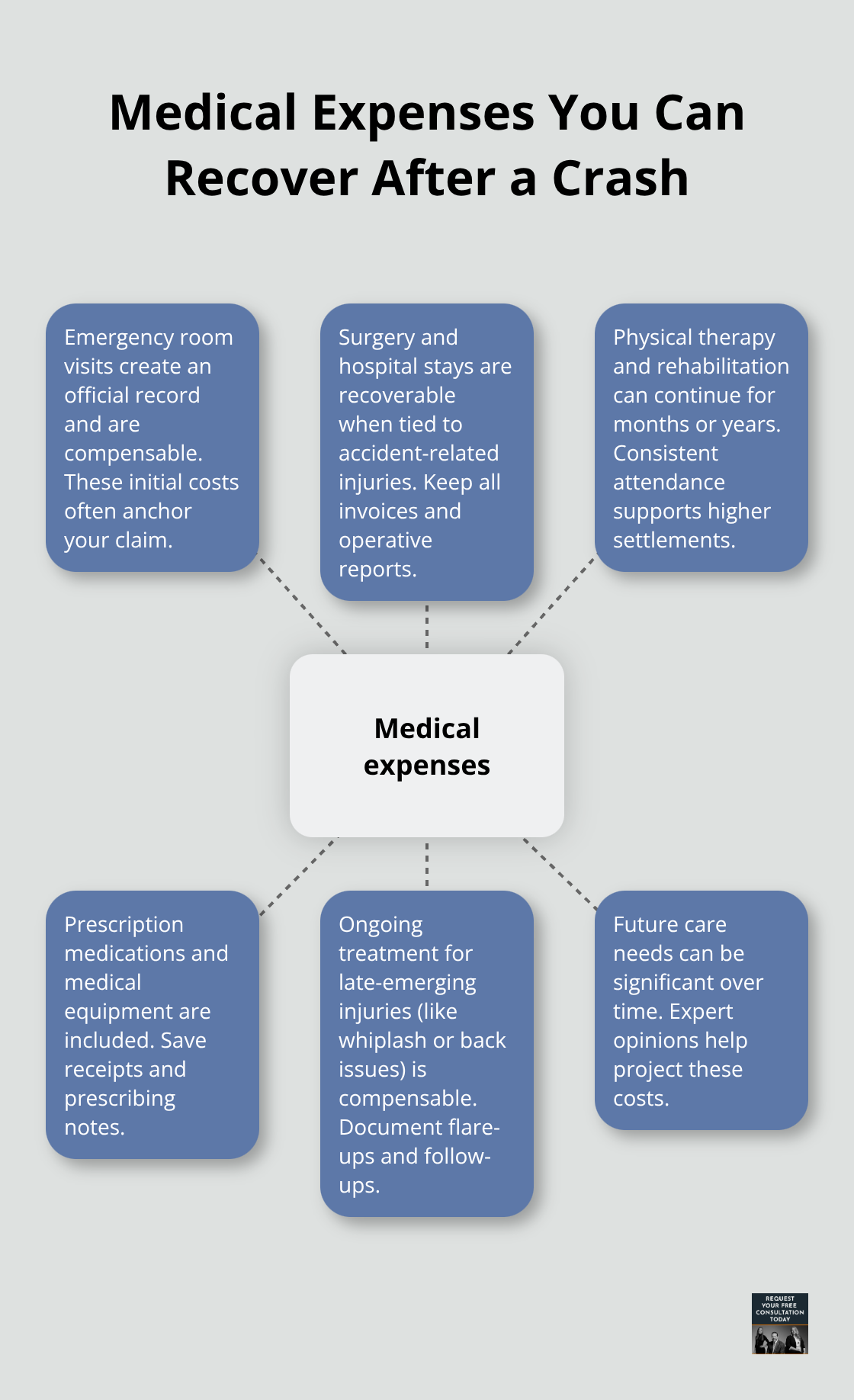
Medical expenses represent your largest immediate cost. You can recover emergency room visits, surgery, physical therapy, medications, and ongoing treatment for injuries that develop months after the crash. Many people underestimate future healthcare costs because injuries like whiplash or back problems often require years of treatment.
If you had a $5,000 emergency room bill but need three years of physical therapy at $150 per session twice weekly, your actual medical damages could reach $50,000 or more.
Document every medical appointment and keep receipts for all prescriptions, medical equipment, and treatments. Your medical records become the foundation of your damage calculation, so gaps in treatment can lower settlement offers. If you delay seeking care after an accident, insurance companies will argue your injuries weren’t serious enough to require immediate attention, which weakens your claim.
Lost Wages and Loss of Earning Capacity
Lost wages represent income you stopped earning because of the accident. If you missed work during recovery, you can recover those wages at your normal hourly rate or salary. California courts also recognize loss of earning capacity, which applies when injuries permanently reduce your ability to work at your previous income level. A carpenter who suffered a hand injury might return to work but earn less because they can’t perform the same tasks. You can recover the difference between your pre-accident and post-accident earning potential over your remaining work years.
Gather pay stubs, tax returns, and employment letters from your employer documenting your income and missed work days. If you’re self-employed, tax returns and business records become critical evidence.
Pain and Suffering Compensation
Pain and suffering compensation covers physical pain, emotional distress, and reduced quality of life from the accident. California law allows this recovery because injuries cause genuine hardship beyond medical bills. A person who suffered a broken leg experiences pain during healing, loss of mobility, and emotional stress from depending on others.
Courts and juries evaluate pain and suffering by considering injury severity, treatment duration, and permanent effects. Settlements for pain and suffering typically range from one to five times your medical expenses, though severe injuries command higher multiples. Insurance adjusters often use formulas that multiply your medical bills by a set number, but this approach undervalues serious cases. The stronger your medical documentation and the clearer your testimony about how the injury affected daily life, the higher your pain and suffering award.
Understanding what damages you can recover sets the stage for the next critical step: avoiding costly mistakes that many accident victims make when filing their claims.
Mistakes That Drain Your Settlement
Insurance companies count on accident victims making critical errors during claims. The first mistake happens when you accept their initial offer without understanding what your case is worth. Adjusters present settlement numbers that sound reasonable but often fall 30 to 50 percent below fair value. They rely on your financial desperation and medical stress to push you toward quick acceptance.

Why Initial Settlement Offers Fall Short
If you owe $8,000 in medical bills and lost $4,000 in wages, an adjuster might offer $15,000, making it seem generous. That offer ignores your pain and suffering, future medical needs, and reduced earning capacity. Once you sign, you cannot reopen the claim or ask for more money. The settlement becomes final, and no additional compensation follows.
Recorded Statements: What Adjusters Really Want
The second major mistake involves recorded statements to insurance companies. Adjusters request these calls claiming they need details about the accident, but they’re actually building a case against you. Anything you say can be twisted or used to minimize your damages. You might mention that you felt fine the next day, and they’ll use that to argue your injuries weren’t serious. You might describe the accident slightly differently than police reports show it, and they’ll claim inconsistency undermines your credibility.
California law gives you the right to decline recorded statements and instead provide written responses through an attorney. This protects you from misquotation and ensures your words stay accurate throughout the claims process.
Social Media Posts Become Evidence Against You
The third mistake is posting about your accident on social media. Insurance companies monitor victim accounts looking for anything that contradicts your claim. A photo showing you at a friend’s birthday party weeks after the accident gets used to argue you’ve recovered. A comment about feeling better becomes evidence your injuries resolved faster than medical records suggest. Even innocent posts about daily activities get weaponized against you.
Insurance adjusters screenshot everything and use it during settlement negotiations or trial preparation. The safest approach is making your accounts private and avoiding any accident-related posts until your case concludes. What seems harmless online can cost you thousands in reduced settlements.
Final Thoughts
After a California auto accident claim, the decisions you make in the first weeks determine your financial recovery. You now understand how fault works, what damages you can recover, and the mistakes that cost victims thousands in lost compensation. The next step involves getting professional guidance to navigate settlement negotiations or court proceedings.
We at Schaar & Silva LLP work with accident victims throughout Santa Cruz County, Sacramento, and Oakland to handle the legal side while you focus on healing. Our team evaluates your medical records, lost income documentation, and accident details to calculate what your case is actually worth, then communicates directly with insurance adjusters to remove the pressure you feel to accept lowball offers quickly. Many people don’t realize that having an attorney changes how insurers approach settlement discussions because they know we’ll take cases to trial if necessary.
Settlement negotiations typically begin within weeks of filing your claim, with insurance companies presenting offers that we counter with evidence supporting higher amounts until both sides reach agreement or decide litigation is necessary. Most California auto accident claims settle before trial, but some require a lawsuit to obtain fair results. Contact us for a free case evaluation to discuss your specific situation and learn what your claim is worth.
