
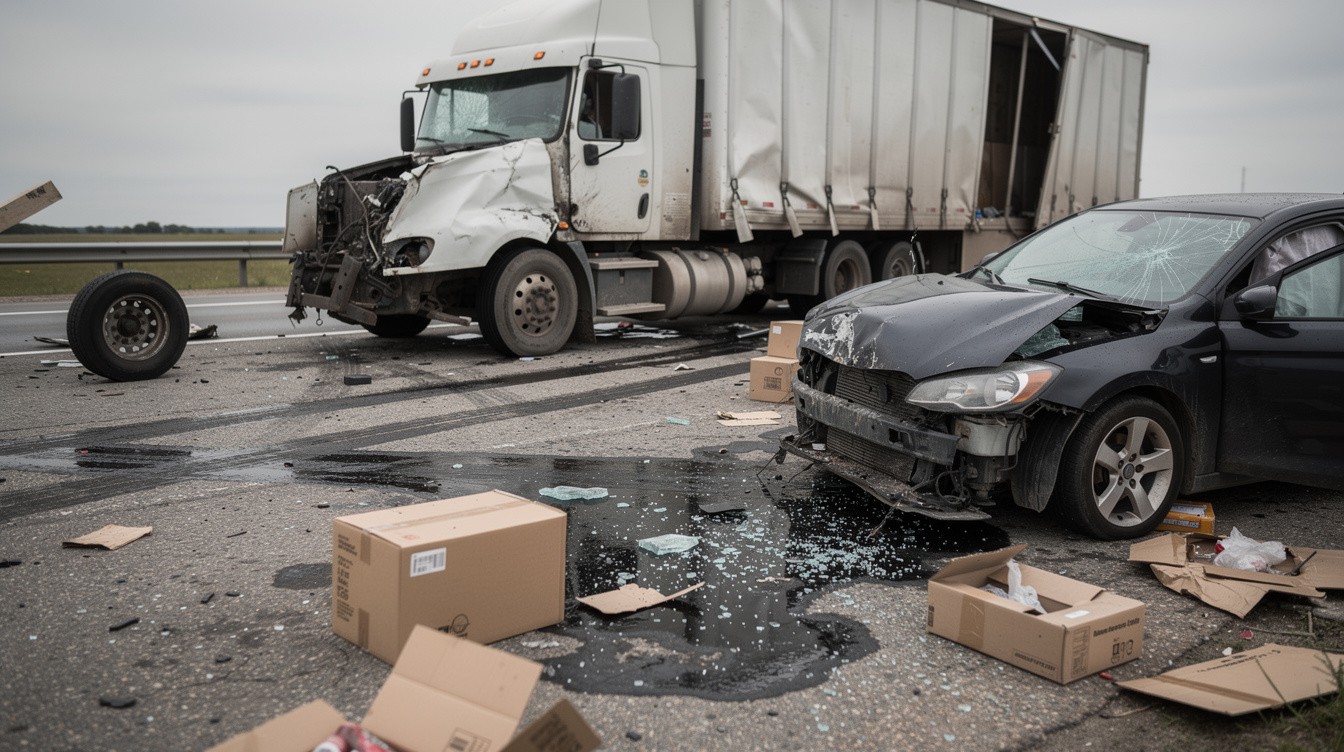
A truck crash can leave you facing medical bills, lost income, and vehicle repair costs that pile up fast. The question most accident victims ask is simple: what compensation can I actually recover?
At Schaar & Silva LLP, we help truck crash victims in Santa Cruz County, Sacramento, and Oakland understand exactly what damages are available to them. This guide breaks down the types of compensation you can pursue and the mistakes that could cost you money.
What Damages Can You Actually Recover?
Truck crash damages fall into three distinct categories, and understanding the difference matters for your settlement. Economic damages cover your tangible financial losses: medical bills, lost wages, vehicle repairs, and ongoing treatment costs. Non-economic damages compensate for pain, suffering, loss of companionship, and reduced quality of life. Punitive damages are rare but apply when a truck driver or company acted with gross negligence or intentional misconduct. Most victims recover from the first two categories. The Large Truck Crash Causation Study analyzed 967 crashes between 2001 and 2003 and found that brake problems appeared as a factor in nearly 30% of truck crashes compared to only 5% for passenger vehicles. This data matters because it establishes patterns of negligence that strengthen damage claims.
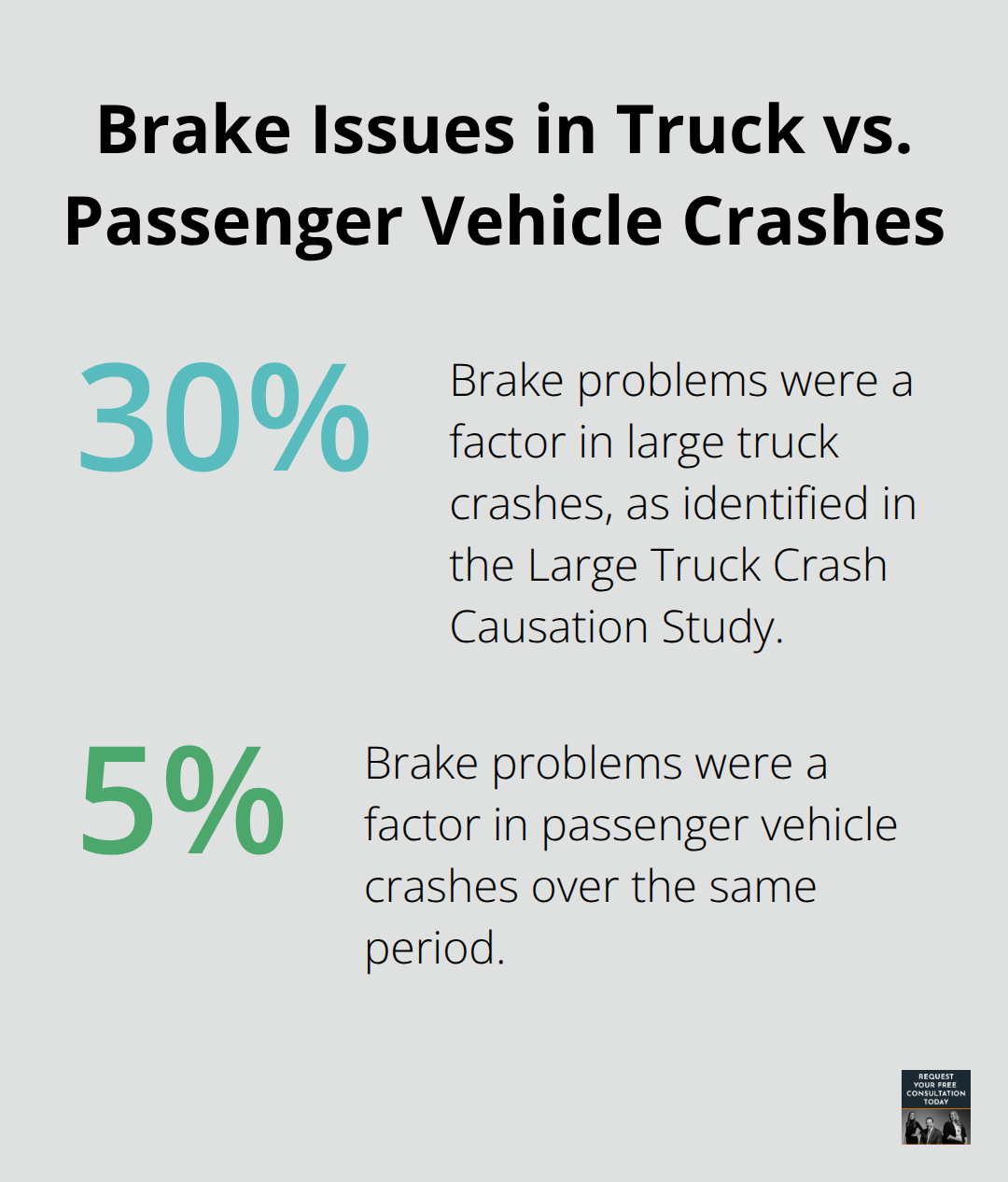
When a truck company fails to maintain brakes properly, that’s not an accident-it’s preventable negligence that directly increases your damages.
Medical Expenses That Add Up Over Time
Your immediate hospital bills represent only the beginning. If you suffered a brain or spinal injury, future medical costs span decades and include in-home nursing care, additional surgeries, ongoing rehabilitation, medications, mobility aids like wheelchairs, and home modifications to accommodate disabilities. A life care plan itemizes these expenses based on medical records and physician consultations, giving you a concrete figure rather than guessing. Economists then apply inflation projections and discount rates to calculate lifetime costs. Vocational experts assess whether you can return to work and quantify lost earning capacity. This approach transforms vague medical needs into specific dollar amounts that courts and insurers understand. Property damage to your vehicle is straightforward-repair estimates establish the value-but medical expenses require documentation from treating physicians and expert testimony to be fully compensable.
Income Loss and Long-Term Financial Impact
Lost wages include not just your paycheck but also benefits like health insurance and retirement contributions. If you were self-employed, lost income becomes more complex but equally recoverable with proper tax records and financial documentation. Future lost wages demand vocational assessment to determine whether your injuries prevent you from working in your previous capacity or any capacity at all. A younger person with decades of earning potential ahead faces substantially higher damages than someone near retirement. The burden of proof is preponderance of the evidence-meaning more likely than not-not an impossible standard. Insurers routinely dispute future damages as speculative, which is why thorough documentation from medical professionals and financial experts becomes non-negotiable. Without this evidence, you leave money on the table.
Why Documentation Determines Your Recovery
The strength of your damage claim rests entirely on what you can prove. Medical records, physician reports, and diagnostic results form the foundation of your case. Insurers will challenge every figure you present, so you need evidence that withstands scrutiny. Life care planners, vocational experts, and economists provide the testimony that transforms medical needs and lost income into credible numbers. Local or regional data on care costs helps establish reasonableness. Visual demonstratives and detailed life care plans communicate your long-term needs to insurers or juries far more effectively than verbal arguments alone.
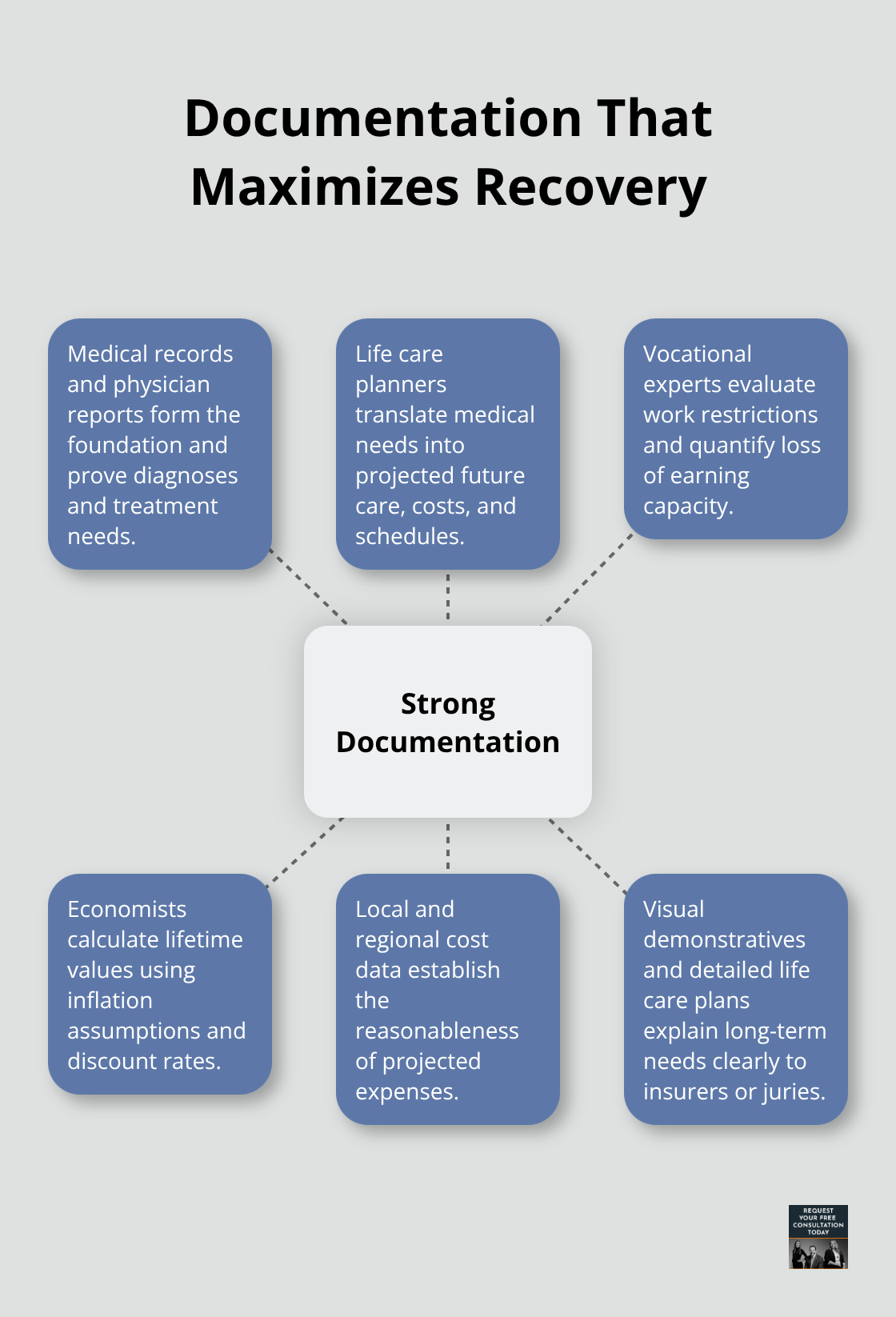
The difference between a strong claim and a weak one often comes down to whether you invested in proper documentation early.
How Much Can You Actually Recover in Medical, Wage, and Vehicle Costs
Medical Expenses That Extend Far Beyond the Emergency Room
Calculating fair compensation requires more than adding up your bills. Medical expenses in truck crashes extend far beyond the emergency room visit. If you suffered a brain or spinal injury, your lifetime medical costs can reach hundreds of thousands of dollars. In-home nursing care, additional surgeries, ongoing physical therapy, prescription medications, mobility aids, and home modifications to accommodate disabilities all accumulate over decades.
A life care plan itemizes these future expenses based on your medical records and treating physician input, transforming vague medical needs into specific dollar amounts. Economists then apply inflation rates and discount calculations to establish what those future costs are worth in today’s dollars. This approach separates a credible claim from one insurers dismiss as speculative.
Lost Wages and Your Earning Capacity
Lost wages demand the same rigor as medical expenses. Your damages include not just your paycheck but health insurance premiums, retirement contributions, and any benefits your employer covered. If you were self-employed, your tax returns and business income records become critical evidence. Vocational experts assess whether your injuries prevent you from returning to your previous job or any job, then calculate your lost earning capacity across your remaining work years.
A 35-year-old earning $60,000 annually faces substantially different damages than someone age 62. The difference in lifetime earning potential directly translates to higher compensation for younger victims. Without tax returns, pay stubs, and vocational assessment, insurers will minimize this portion of your claim.
Property Damage and Vehicle Replacement Costs
Vehicle repairs are straightforward-repair shop estimates establish the value. However, don’t overlook rental car costs while your vehicle was being repaired or replacement vehicle expenses if your car was totaled. These secondary costs add up quickly and belong in your damage calculation.
Meeting the Burden of Proof
The burden of proof for all these damages is preponderance of the evidence, meaning more likely than not. This standard is far easier to meet than criminal standards, yet insurers routinely challenge every figure you present. Property damage claims succeed with repair shop estimates and photographs. Medical expenses require documentation from treating physicians, hospital records, and expert testimony about future care needs.
Local cost variations within California significantly affect lifetime care calculations-nursing care costs differ substantially between Sacramento and smaller surrounding communities. Insurers will argue that future damages are too speculative or that your medical needs will change. This is exactly why thorough documentation from the beginning matters so much.
Why Documentation Determines Settlement Outcomes
Without life care plans, vocational reports, and economist testimony backed by regional data, you hand the insurance company ammunition to reduce your settlement. Proper documentation transforms vague medical needs into specific dollar amounts that courts and insurers understand. The difference between a weak claim and a strong one often comes down to whether you invested in proper analysis early. Cases with identical injuries have settled for vastly different amounts-sometimes $50,000 versus $250,000-based solely on the quality of documentation and expert support behind the claim. What happens next depends on whether you avoid the common mistakes that cost victims thousands in lost compensation.
Mistakes That Cost You Thousands in Your Settlement
The First Settlement Offer Is Never Their Best Offer
Insurance companies count on you accepting their opening position without understanding what your claim is actually worth. The first offer they present falls 40 to 60 percent below what cases ultimately recover with proper documentation and legal representation. An insurer might offer $25,000 when your medical expenses, lost wages, and pain and suffering justify $75,000 or more. Accepting that first check ends your legal rights permanently. Once you sign a release, you cannot return and request additional compensation, even if you discover later that your injuries were more severe than initially apparent or that your future medical needs extend decades longer than you anticipated.
The insurance adjuster handling your case has financial incentives to minimize payouts. Their performance metrics reward them for closing claims at the lowest possible cost. This fundamental conflict of interest means their settlement offer reflects their interests, not yours. Maximizing your settlement requires understanding the full scope of recoverable damages before engaging in serious negotiations.
Recorded Statements Without an Attorney Present Undermine Your Case
Providing recorded statements to insurance companies without legal counsel represents another critical mistake that weakens your position. Insurance companies request these statements early, when you’re still injured, disoriented, and unfamiliar with the legal implications of what you say. Anything you state can be used against you later to reduce your damages or deny liability.
You might mention pain levels that seem mild in the moment but worsen significantly over weeks, and the insurer will cite your early statement to argue your injuries were minor. You might accidentally accept partial responsibility for the crash while describing what happened, and the insurer will weaponize that admission to reduce your compensation under California’s comparative negligence rules. Recorded statements create a permanent record that the insurance company controls and can replay selectively to juries or judges.
Social Media Posts Become Evidence Against You
Social media posts about your accident create similar problems but with a wider audience. Photos showing you smiling at a restaurant or standing at a friend’s birthday party become evidence that insurers use to argue your injuries don’t prevent normal activities. Insurance companies routinely monitor accident victims’ social media accounts and screenshot posts to undermine damage claims.
A photo taken during a good pain day gets presented as proof that your condition isn’t serious. Comments about your accident can be twisted to suggest you were partially at fault or that your injuries are exaggerated. The safest approach treats your social media accounts as if they’re exhibits in court-because increasingly, they are.
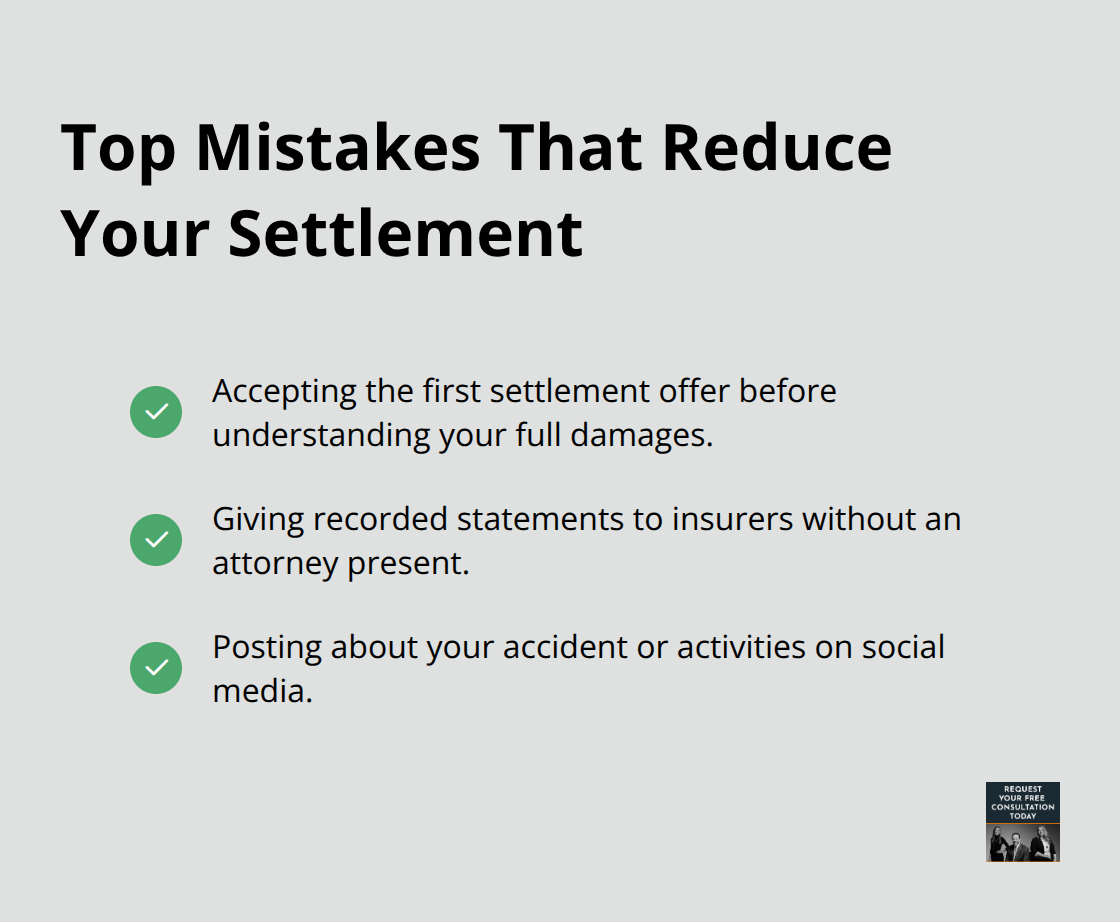
What you post today can reduce your settlement months from now.
Final Thoughts
Truck crash damages span economic losses like medical bills and lost wages, non-economic harm such as pain and suffering, and in rare cases, punitive damages when negligence is egregious. The Large Truck Crash Causation Study showed that brake problems factor into nearly 30% of truck crashes, establishing clear patterns of preventable negligence that strengthen your claim. Understanding what you can recover matters far less than avoiding mistakes that insurance companies exploit to reduce your settlement.
Legal representation transforms how your case unfolds. An attorney protects you from recorded statements that undermine your position, prevents social media activity from sabotaging your claim, and stops you from accepting lowball offers that leave thousands on the table. We at Schaar & Silva LLP help truck crash victims in Santa Cruz County, Sacramento, and Oakland build claims that insurers cannot easily dismiss.
Contact us for a free consultation to discuss what your case is worth and what truck crash damages you can pursue. The two-year deadline for filing a wrongful death claim in California means waiting costs you time and legal options. Reach out to Schaar & Silva LLP today and let us handle the legal complexities while you focus on recovery.
