
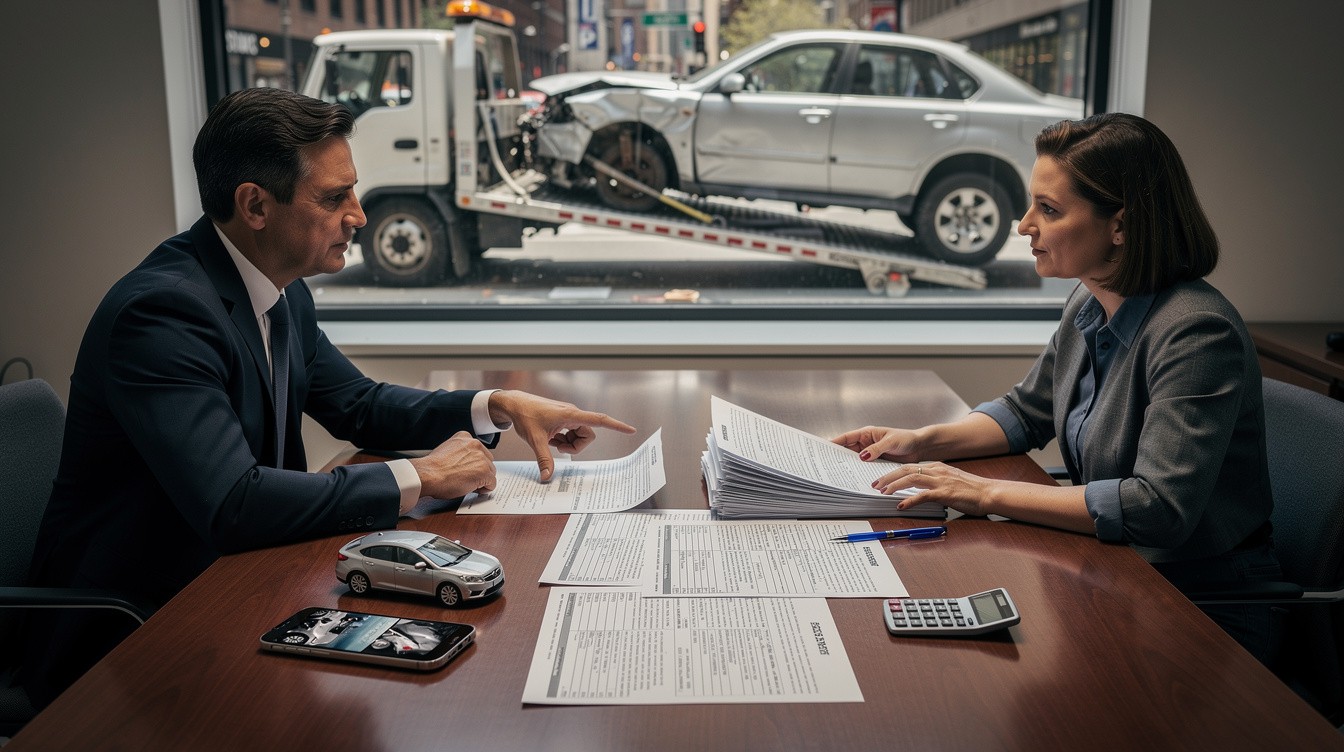
A car accident can turn your life upside down in seconds. Medical bills pile up, you miss work, and your vehicle needs repairs-all while dealing with pain and stress.
At Schaar & Silva LLP, we help people in Santa Cruz County, Sacramento, and Oakland get the California auto accident compensation they deserve. This guide walks you through the types of compensation available, how to build a strong claim, and the mistakes that could cost you money.
What Compensation Can You Actually Recover
After a car accident, California law entitles you to recover compensation across three major categories, and understanding each one prevents you from leaving money on the table.
Medical Expenses and Treatment Costs
Medical expenses form the foundation of most claims, and this goes far beyond your initial emergency room visit. You can recover costs for hospitalization, surgery, physical therapy, mental health treatment, prescription medications, and ongoing care related to your injuries. If your injuries require future treatment, you can claim those anticipated costs too, which is why documenting every medical expense matters from day one. Many people focus only on what they’ve already paid and miss future medical needs that should be included in their settlement demand.
At Schaar & Silva LLP, we help clients in Santa Cruz County navigate medical bill assistance and connect you with services that facilitate payment of your bills until your case resolves. This support allows you to focus on healing rather than financial stress during recovery.
Lost Wages and Income Reduction
Lost wages represent the second major category, and this includes not just the paychecks you missed while recovering, but also lost earning capacity if your injuries prevent you from returning to your previous job or earning at your previous level. If you’re self-employed, calculate your lost income based on your average earnings before the accident. For salaried employees, gather recent pay stubs and tax returns to establish your income clearly. Some people can return to work but at reduced capacity or in a lower-paying position, and that income reduction is recoverable as well.
Property Damage and Vehicle Replacement
Vehicle repair or replacement represents the third compensation category, and California law states that your insurer must pay either the cost to repair your vehicle or its actual cash value, whichever is less. Actual cash value means the fair market price a knowledgeable buyer and seller would agree to, not the price you paid years ago. If your vehicle is totaled, get an independent appraisal if you disagree with the insurer’s valuation, and request that the appraiser and the insurer’s appraiser select an umpire whose decision becomes binding if they cannot agree. For vehicle repairs, you have the right to choose any repair shop, not just the insurer’s recommended facility. If you use your own shop, the insurer must pay reasonable costs based on industry standards. If repairs reveal additional damage beyond the initial estimate, the insurer may re-inspect and adjust the payout accordingly. Rental car coverage and towing expenses may be included in your policy (depending on your specific coverage limits), so review your declarations page to confirm what applies to your situation.
Understanding these three compensation categories positions you to build a stronger claim. The next section shows you exactly how to document each type of loss and gather the evidence that strengthens your position with the insurer.
How to Document Your Claim and Build a Strong Case
Act Immediately at the Accident Scene
The first 24 hours after an accident determine how strong your claim becomes. Stop only if it’s safe to do so, then call 911 if anyone is injured and notify police. Before you leave, collect the other driver’s name, address, phone number, driver’s license number, license plate, VIN, and contact information for all passengers and witnesses. Take photos of vehicle damage, road conditions, traffic signs, and the overall scene from multiple angles-these photos become your visual evidence. California law requires you to report accidents involving injuries or property damage over $750 to the DMV within 10 days, so mark that deadline on your calendar immediately. Notify your insurance agent and the at-fault party’s insurer right away, but never admit fault in any communication.
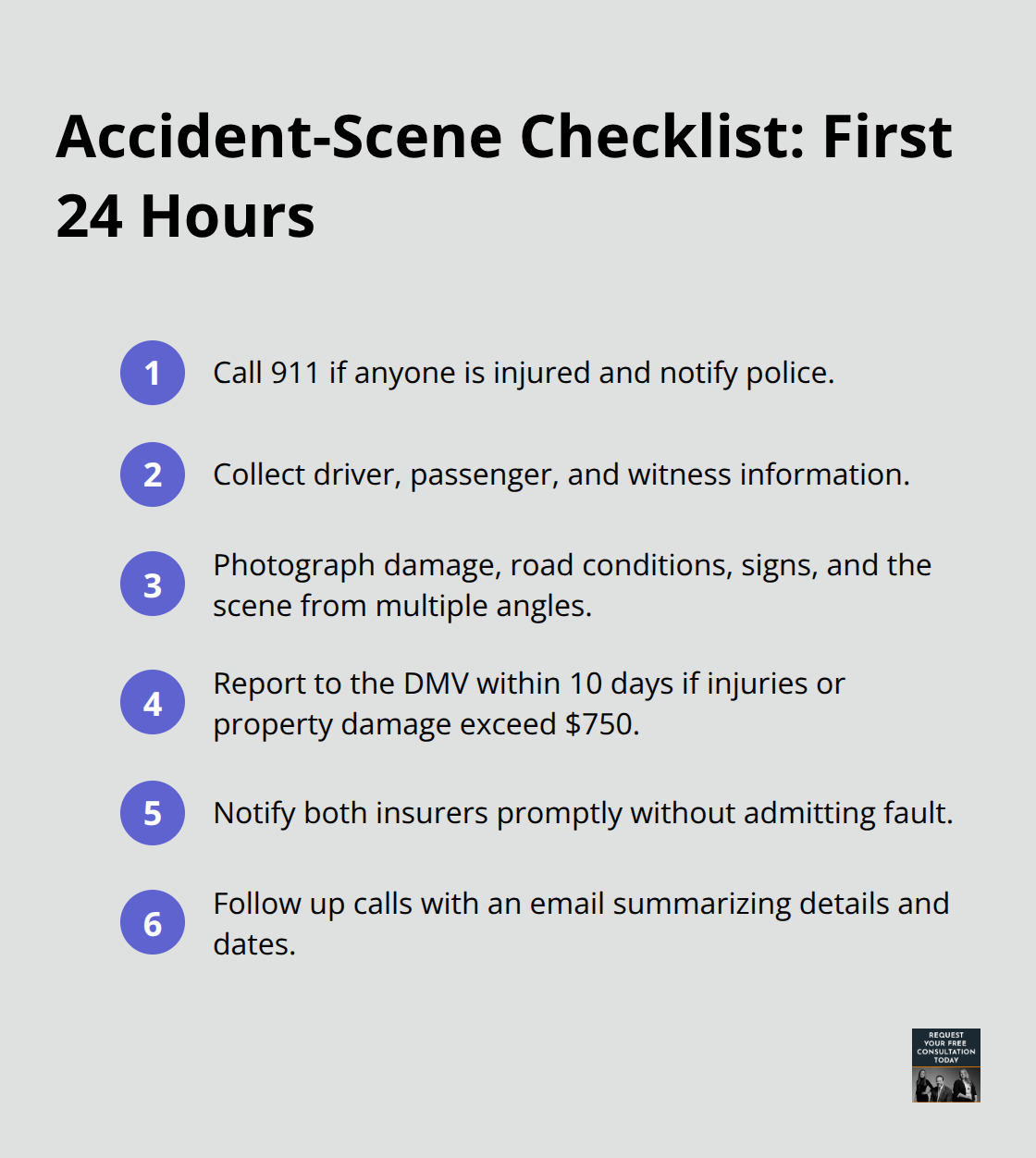
The California Department of Insurance advises documenting everything in writing, so after you call your agent, follow up with an email summarizing the conversation, the accident details, and the date you reported it.
Collect Medical Records Systematically
Medical records and bills form the backbone of your compensation claim, and you must gather them systematically from day one. Request copies of your medical records from every healthcare provider you visit, including emergency rooms, hospitals, physical therapy clinics, mental health providers, and your primary care doctor. Your insurer will ask for these records, so organize them chronologically and keep both digital and paper copies. For lost wages, gather recent pay stubs covering the past two to three years, your most recent tax return, and written confirmation from your employer stating the dates you missed work and your hourly rate or salary. Self-employed people should compile profit and loss statements or bank statements showing average monthly income before the accident.
Track Every Expense and Create a Timeline
Track every expense related to the accident including medical copays, prescription costs, transportation to medical appointments, and any out-of-pocket expenses. Save receipts, invoices, and repair estimates for your vehicle. Create a detailed timeline documenting when you received treatment, what was discussed, and how your injuries affected your daily activities and work capacity. This documentation prevents the insurer from downplaying your injuries or suggesting you recovered faster than you actually did.
The evidence you gather now directly impacts how the insurer evaluates your claim and what settlement offer they present. Understanding what mistakes to avoid during this process ensures your documentation strategy doesn’t backfire.
Common Mistakes That Reduce Your Compensation
Accepting the First Settlement Offer Too Quickly
Insurers count on accident victims to make preventable errors that shrink their final settlement. The most damaging mistake is accepting the first settlement offer without understanding what your claim is actually worth. Insurers deliberately lowball initial offers, banking on injured people who need money immediately and lack documentation of their full damages. Before you accept anything, compile your complete medical records, lost wage calculations, and repair estimates. Your first offer typically covers only obvious expenses and ignores future medical costs or lost earning capacity. If you accept early, you forfeit the right to claim additional damages later. Many people in Sacramento and Oakland settle for 30 to 50 percent of what they could recover with proper documentation and negotiation. Never sign settlement paperwork until you fully understand what you’re releasing and what damages you’re giving up forever.
Social Media Posts Undermine Your Injury Claims
Social media posts about your accident actively undermine your claim and hand ammunition to the insurer’s defense team. Insurance adjusters routinely search social media for statements, photos, or activity that contradicts your injury claims. A post saying you’re feeling better, photos showing you at social events, or comments minimizing your injuries become evidence used against you in negotiations or trial. Even deleted posts can be recovered through screenshots or archived versions. The California Department of Insurance guidance emphasizes avoiding any public communication about your accident.
Delaying Medical Treatment Weakens Your Position
Delaying medical treatment after an accident signals to insurers that your injuries weren’t serious, which they use to justify lower settlement offers. Seek medical attention within 48 to 72 hours of the accident, even if you feel relatively okay. Delayed symptom onset is common in traumatic brain injuries and spinal injuries, so early medical evaluation creates documentation linking your symptoms to the accident. If you wait weeks or months before seeing a doctor, insurers argue the delay proves your injuries weren’t caused by the crash.
Waiting Too Long to Pursue Legal Action
The longer you wait to pursue legal action, the more evidence deteriorates, witnesses become unavailable, and memory fades. California law gives you two years from the accident date to file a personal injury claim for most cases, but waiting until near that deadline weakens your position because critical evidence may no longer be accessible.
Final Thoughts
Your recovery after a car accident involves more than healing from injuries-you must navigate insurance claims, gather documentation, and protect your rights while managing medical treatment and financial stress. The two-year deadline for filing a personal injury claim moves faster than most people realize, and waiting until the last moment weakens your position because evidence deteriorates, witnesses become harder to locate, and your memory of details fades. Acting within the first few weeks after your accident preserves critical evidence and positions you for stronger California auto accident compensation.
At Schaar & Silva LLP, we help people in Santa Cruz County, Sacramento, and Oakland navigate the entire recovery process from start to finish. We connect you with services that manage your medical bills until your case resolves, evaluate property damage claims to ensure fair vehicle valuation, and recognize that emotional trauma from accidents is real by connecting you with psychological support when needed. Contact Schaar & Silva LLP to discuss your accident and understand what compensation you can recover.
Many people benefit from a professional review of their case early on, when the evidence is fresh and your options are clearest. Your recovery matters, and getting it right from the start makes all the difference.
